Home Blog

MEMORABILIA: Astonishing collection of 25 Olympic torches offered in a single collection at RR Auction sale ending 23 July

The incredible Fred Raymon Collection of 25 Olympic and Winter torches, available to bid on at RR Auction (Image: RR Auction).

The Sports Examiner: Chronicling the key competitive, economic and political forces shaping elite sport and the Olympic Movement. ★

A sponsored post by RR Auction.

Imagine if you could buy, all at once, a collection of most of the Olympic torches since the torch relay was introduced at the 1936 Berlin Games?

You can, but you have to hurry.

The Fred Raymon Collection of Olympic memorabilia is on sale from RR Auction, with primary bidding opportunities closing at 4 p.m. Eastern time on Thursday (23rd). Raymon, a teacher in New York State who passed away last year, was a devoted Olympic collector and attended many of the Games with the Track & Field News Olympic Tour.

His assembled a collection of 25 torches that is now on sale in a single lot:

Olympic Games (17): Berlin 1936, London 1948, Melbourne 1956, Rome 1960, Tokyo 1964, Mexico City 1968 (type 1), Munich 1972, Montreal 1976, Moscow 1980, Seoul 1988, Sydney 2000, Athens 2004, Beijing 2008, London 2012, Rio 2016, Tokyo 2020, Paris 2024.

Winter Games (8): 1980 Lake Placid, Nagano 1998, Salt Lake City 2002, Turin 2006, Vancouver 2010, Sochi 2014, PyeongChang 2018, Beijing 2022.

These are all considered to be in generally fine condition; the Lake Placid 1980 torch is considered exceptionally rare.

The collection is already at $44,291 after 11 bids and is forecast to go as high as $115,000 at the end!

That’s only one of 308 lots in this auction with 37 more items expected to bring $10,000 or more:

● $40,000: 1894 IOC Session commemorative medal
● $40,000: 1896 Athens second-place medal
● $40,000: 1924 Chamonix Winter gold medal
● $40,000: 1968 Mexico City Olympic torch (type 6)
● $40,000: 1992 Albertville Winter torch

● $40,000: 2006 Turin Winter gold medal (cross country)
● $30,000: 1964 Tokyo gold medal (fencing)
● $30,000: 1980 Lake Placid Winter torch
● $30,000: 1994 Lillehammer Winter torch
● $25,000: 1904 St. Louis participation honorary badge/medal

● $25,000: 1908 London gold medal (field hockey)
● $20,000: 1900 Paris bronze trophy gifted by Pierre de Coubertin
● $20,000: 1972 Sapporo Winter torch
● $20,000: 1976 Innsbruck Winter torch
● $20,000: 1912 Stockholm gold medal (shooting) ~ Fred Raymon Collection

● $20,000: 1924 Chamonix Winter IOC official’s badge
● $20,000: 1936 Berlin gold medal
● $20,000: 1992 Barcelona medal set (unawarded)
● $20,000: Olympic Order in Gold (awarded 1992)
● $18,000: 1956 Melbourne Olympic torch

● $15,000: 1920 Antwerp Paavo Nurmi trophy, gifted by Pierre de Coubertin
● $15,000: 1930 FIFA World Cup gold medal
● $15,000: 1956 Cortina Winter torch
● $15,000: 1968 Mexico City gold medal (volleyball)
● $15,000: 1988 Calgary Winter torch

● $15,000: 2024 Paris Olympic torch
● $14,000: 1906 Athens Intercalated Games gold medal
● $12,500: 1920 Antwerp gold medal (tug of war)
● $12,500: 1920 Antwerp gold medal (sailing)
● $12,000: 1996 Atlanta gold medal (baseball)

● $12,000: 2004 Athens silver medal (taekwondo)
● $11,000: 1904 St. Louis participation medal
● $10,000: 1912 Stockholm tennis participant badge
● $10,000: 1920 Antwerp gold medal (shooting)
● $10,000: 1968 Mexico City medals set (basketball)

● $10,000: 2026 Milan Cortina Winter torch
● $10,000: 50 Games participation medals set ~ Fred Raymon Collection

The rare Lake Placid torch is already at $20,000 after seven bids. The 1896 Athens second-place medal is bronze, with reportedly only 150 struck in total.

The 1968 Mexico City medal set for basketball includes a gold, silver and bronze medal, which were not awarded during the Games. The 1992 Olympic Order in Gold belonged to Barcelona organizing committee vice president Javier Gomez-Navarro, who was also Spain’s sports minister from 1987-93; he passed away in 2024. His estate also included the rare 1894 commemorative medal of the first IOC Session.

The highly-unusual FIFA “gold medal” from the first World Cup in 1930 in Uruguay was presented to then-FIFA President Jules Rimet (FRA), one of the driving forces behind the creation of the event.

A real rarity is a 1910 badge for members of the International Olympic Committee, expected to go for $800. And amid all of the amazing artifacts, is another Olympic torch item: a Munich 1972 souvenir lighter in the shape of a torch ($100 opening bid).

An excellent selection of Olympic diplomas is also available, for those looking for wall decor that your Olympic-fan friends won’t have.

This is a fairly astonishing collection of unique Olympic items, but a one-time-only opportunity to acquire a close-to-complete collection of Olympic torches, from a devoted collector. But you have to hurry; primary bidding closes at 4 p.m. Eastern time on Thursday.

A sponsored post by RR Auction.

For information about advertising and sponsored posts, please contact us here.

You can receive our exclusive TSX Report by e-mail by clicking here. You can also refer a friend by clicking here.

LANE ONE: Lessons of the 2026 FIFA World Cup, nos. 10 to 6, on rings, hydro breaks and how the NFL made the tournament a success

The Sports Examiner: Chronicling the key competitive, economic and political forces shaping elite sport and the Olympic Movement.★

To get the daily Sports Examiner Recap by e-mail: sign up here!

≡ FIFA WORLD CUP 2026 ≡

After 39 days and 104 matches at 16 sites, the 2026 FIFA World Cup is finally over, and, happily, the team with the best defense was the clear winner. Spain shut down the two brightest scoring stars of the tournament – France’s Kylian Mbappe and Argentina’s Lionel Messi – in consecutive matches to win their second World Cup title and second in the last four.

But there was a lot more to this event, which will be seen as a turning point for football – good or bad – into the future. A look at the top 10 lessons from the second World Cup held in the U.S., both of which were record breakers. Let’s start with nos. 10 to 6:

● 10: FIFA needs a better jeweler
The 2026 World Cup will be remembered for the American touches which FIFA brought into the tournament, one of which was the creation of championship rings for the winning team (30 of those), and 1,996 to be sold to fans for $12,000 each.

Championship rings started in baseball with the 1922 New York Giants as a memento following their World Series win and became a regular feature with the 1931 St. Louis Cardinals. Today, the standard is the NFL Super Bowl ring and by that standard, FIFA has a lot of catching up to do:

The 2026 FIFA World Cup championship ring and the Kansas City Chiefs 2024 Super Bowl ring (Photos: FIFA, Kansas City Chiefs).

The Kansas City Chiefs, the Super Bowl LVIII winners (2024), created a ring with Minnesota-based Jostens with 505 round diamonds, 19 baguette diamonds, five marquise diamonds and 38 red rubies.

FIFA? Not close: “18k yellow gold, 89 pavé diamonds and 36 sapphires, made by a Swiss-based manufacturer.” Surely, with $15 billion in revenue from the tournament, FIFA could have done better, at least for the rings given to the team members. All they had to do was call Jostens (I have; they’re great.)

● 9. Cape Verde validated the 48-team format
Tiny Cape Verde, with 491,233 people as of 2021, was the proof that FIFA was looking for in justifying the expansion of the tournament to 48 teams … beyond its search for money.

Not expected to do much at all, Cape Verde – and especially keeper Vozinha – fought Spain to a 0-0 draw in its opening match, tied Uruguay 2-2 and tied with Saudi Arabia, 0-0. That was good enough to move on to the elimination round as the second-place team in Group H, and it took mighty Argentina extra time to advance with a 3-2 win.

Of the 16 teams which did not advance to the round-of-32 – the size of the 2022 tournament in Qatar – three were from Europe, seven were from Asia, three from CONCACAF and one from Africa, one from South America and one from Oceania.

Asia clearly underachieved in the tournament but nine of the 10 African teams advanced to the round-of-32, a great success for them.

● 8. What about those hydration breaks?
This was enormous hand-wringing in advance of the tournament about hot weather in the open-air venues, especially in the U.S. and Mexico. And there were many steamy matches, with high humidity, and even the iconic England-Mexico round-of-16 match had to be delayed for an hour to let a thunderstorm pass through Mexico City.

So, FIFA instituted “hydration breaks” in the middle of each half, to be three minutes in length, with the time added on during stoppage. These worked and had three impacts worth noting.

First, it did help the players participating in hot and humid conditions, no question, and from a player-safety perspective – on which FIFA is constantly criticized – this worked well. Cramping was not eliminated, but it was reduced.

Second, it created a significant opportunity for coaches to make game-plan changes in the middle of a half, rather than waiting for the end of the period. Momentum shifted in match after match as tactics were changed, especially during the group stage.

Finally, the breaks presented a multi-million dollar opportunity for commercial sales, especially by Fox, the U.S. broadcaster, which was estimated to take in as much as $300 million in added sales thanks to the break. It will be hard for FIFA to say no to huge amounts of added rights fees from the U.S. broadcasters in the future for the 2030 World Cup in Morocco, Spain and Portugal and into the future, at least as long as Gianni Infantino (SUI) is in charge.

For purists, the imposition of any break in each half is horrific. But for those who appreciate in-game strategic and tactical adjustments, this was a revelation and a reason – beyond player safety – to keep a break going forward.

● 7. Was 2026 the best it will be for U.S. television?
No doubt, the 2026 World Cup was a bonanza for Fox’s English-language coverage and Telemundo in Spanish. The two combined for a 50.1 million audience for the U.S.-Belgium round-of-16 matches and the semifinals – without the U.S. – averaged 15.09 million on Fox and 10.6 million on Telemundo (and Peacock) for a 25.69 million total for the two games.

Because the 2022 World Cup in Qatar was moved to the winter and was during the NFL season, Fox paid a reported $485 million for the 2026 rights in 2015 – three years before the Canada-Mexico-U.S. bid was selected in 2018 – as a discounted rate from FIFA, to avoid possible litigation over the date change.

The result was a North American World Cup and a fabulous gift to Fox especially. It certainly won’t be the same for the new rights sales for 2030 and beyond. One estimate circulated during the tournament suggested that FIFA will try to combine the English and Spanish-language rights in the U.S. into a single package, with a sale price of $1.5 to $2.0 billion per edition.

Disney (ABC/ESPN), Fox, Netflix and YouTube are all suggested as interested.

But 2030 and beyond are going to be different. The U.S. matches were gigantic, as were those featuring Mexico. However, during the group stage – which is where 72 of the 104 matches took place – audiences (including for the U.S. and Mexico games) averaged 5.05 million on Fox and 4.6 million on Telemundo for a 9.65 million total on average.

That’s in optimum placement times for both teams. Come 2030, it is hardly certain that the U.S. and Mexico will receive protected group placements as they did this time. And the times at which those teams will play in Morocco or Portugal or Spain are certainly not guaranteed to be favorable to U.S. broadcasters, no matter how much they pay. And the timings are likely to be worse in Saudi for 2034!

Will it be worth it? Will the U.S. men even get out of their group(s)? The finance staffs at the interested U.S. broadcasters are already crunching the numbers.

● 6. FIFA can thank the NFL for its 2026 success
Let’s be clear: the 2026 FIFA World Cup does not come to the U.S., Mexico and Canada if not for the magnificent, in-place venues already in place thanks primarily to the National Football League.

There were 11 sites in the U.S. – all NFL stadiums – plus three existing Mexican venues and two in Canada, both of which also host Canadian Football League teams.

The benefits are many: no new construction, existing operations teams already in place, existing broadcast support and concessions and restrooms and security and all the rest.

The tournament worked and while there were glitches – there always are – the tournament set the expected record for attendance at 6,810,966 or 65,490 per match. That surpassed the much smaller 1994 World Cup, the only prior one held in the U.S., which totaled 3,587,538 spectators.

What is amazing, however, is that the 24-team, 52-match 1994 World Cup had a larger – and still record – game average attendance of 68,991!

In that event, nine venues were used instead of 16; all were in the U.S. and five were NFL venues of the time and four were college football sites, including the then-94,194 capacity Rose Bowl in Pasadena, California, far larger than any of the 2026 sites.

FIFA’s efforts in the build-up to the 2026 FIFA World Cup looked to the NFL especially for every possible way to extract money from attending fans, something which the NFL is exceptionally good at. The difference, which has not been lost on fans, is that the NFL is a for-profit business. FIFA is a non-profit association, at least legally.

And before soccer fans get fired up about catching up to the NFL, it’s worth noting that FIFA’s gigantic $15 million revenue haul from the once-every-four-years tournament is far away from the NFL’s annual revenue of $23 billion in its 2024-25 fiscal year. And it’s going up.

Next: lessons no. 5 to no. 1.

Rich Perelman
Editor

Receive our exclusive, weekday TSX Recap by e-mail by clicking here.
★ Sign up a friend to receive the TSX Recap by clicking here.
★ Please consider a donation here to keep this site going.

For our updated, 681-event International Sports Calendar for 2026 and beyond, by date and by sport, click here!


PANORAMA: Alpes 2030 to save €100 million with Lyon moves; Fox wins 15th Canoe Slalom gold in OKC Worlds; 2 a.m. Tour de France doping test!

Canoe Slalom Olympic and World Champion Jessica Fox of Australia (Photo: Int'l Canoe Federation).

The Sports Examiner: Chronicling the key competitive, economic and political forces shaping elite sport and the Olympic Movement.★

To get the daily Sports Examiner Recap by e-mail: sign up here!

≡ THE 5-RING CIRCUS ≡

● Olympic Winter Games 2026: Milan Cortina ● The Italian Competition Authority imposed fines of more than €2.5 million across six companies for ambush marketing related to the 2026 Winter Games, stating:

“The Italian Competition Authority has closed its investigations launched starting from January 2026 into Harmont & Blaine S.p.A., Rialto S.p.A. (‘Il Gigante’ supermarkets), MD S.p.A. (‘MD’ supermarkets), Magazzini Gabrielli S.p.A. (‘Oasi’ supermarkets), RetailPro S.p.A. (‘Pro7′ supermarkets) and Butan Gas S.p.A., finding the companies to have breached the prohibition against ambush marketing. The companies have been fined over 2.5 million euro in total.”

In specific, the companies were found to create “an association between their brand and the Olympics, thereby misleading the public as to the identity of the official sponsors” through “advertising campaigns and promotional activities which frequently featured or evoked, in different forms, the Olympic symbols (five rings) and emblems, and/or official names such as ‘Milano-Cortina/Milano-Cortina2026.’” (€1 = $1.14 U.S.)

● Olympic Winter Games: Alpes 2030 ● At a hearing of the French National Assembly Committee on Cultural Affairs and Education, organizing committee chief Edgar Grospiron emphasized that the shuffling of venue sites – notably moving the ice events from Nice to Lyon – has helped the project (translation from the original French):

“The requirements of the International Federations and the International Olympic Committee led us to consolidate the entire ice skating hub in the Lyon metropolitan area. Does this generate additional costs or delays? No, it generates substantial savings.

“Where we would have had to build a new ice rink, we are no longer building one; we will use existing facilities and install temporary ice rinks inside them.

“In Lyon, there’s been a significant optimization of our operations and a reduction in costs. All of this contributes to an enhanced Olympic experience, since Lyon is ultimately closer to the other mountain venues. This concept is more coherent and simpler to organize. The overall concept of the Games is strengthened as a result.

“The two most distant locations are a maximum of three hours apart by car, whereas it was eleven hours to Nice. There are more obvious cost optimizations to be made.”

The organizing committee Director General, Vincent Roberti, noted: “Being in Lyon rather than Nice allows us to save approximately 100 million euros compared to the initial budget.”

Grospiron said that 24% of the €591 million domestic sponsorship target has been met so far.

● Archery ● The fourth and final stage of the U.S. Archery Team Qualifier series was the Buckeye Open in Dublin, Ohio, with American stars Brady Ellison and Jennifer Mucino-Fernandez taking the men’s and women’s Recurve titles.

Ellison won 7-3 in the final over T Sanchez and Mucino-Fernandez took her third qualifying series title in a row, this time over fellow Paris Olympian Catalina GNoriega, 6-0.

The Compound wins went to James Lutz by 148-144 over Grady Kane in the men’s final, and Alexis Ruiz, 147-146, against Olivia Dean in the women’s division.

● Athletics ● Olympic and World Champion Ryan Crouser of the U.S. said he will miss the rest of the season due to continuing problems with his right elbow, which will require surgery.

He broke the olecranon, just at the bottom of the elbow, in May and it must be removed, and other work will be done to get his elbow and arm functioning properly.

● Canoe-Kayak ● The International Canoe Federation’s Slalom World Championships got going in Oklahoma City, Oklahoma on Monday and continue through Saturday in a preview of the 2028 Olympic competitions at Riversport OKC.

A total of 256 entries from 50 countries will contest 12 events, with the individual Kayak Cross (time trial) held on Monday and Australian superstar Jessica Fox winning in 51.05, ahead of Katerina Bekova (CZE: 51.08) and Lois Leaver (GBR: 51.17). Evy Leibfarth was the top American finisher, in 17th (54.20).

For the amazing Fox, it’s her 23rd Worlds medal and 15th gold, and third in Kayak Cross events.

The men’s Kayak Cross (time trial) final went to Britain’s Joseph Clarke in 46.54, for his 12th Worlds medal and seventh gold. He was 0.16 ahead of Jakub Krejci (CZE: 46.70) with Spain’s defending champion David Llorente third (46.98). It’s Clarke’s fifth Worlds gold in Kayak Cross events.

● Cycling ● Doping tests were carried out in the middle of the night for Tour de France stars Jonas Vingegaard (DEN) and four-time winner Tadej Pogacar (SLO), reportedly at 2 a.m. and 5 a.m., respectively, on Sunday morning prior to the 15th stage. Said double Olympic gold medalist Remco Evenepoel (BEL), currently second:

“It’s pretty disrespectful. To be honest, [if] I had it, I would send my team to wake them [doping control officials] up to feel how it is.

“It’s something inhuman, it’s something that we should not accept as athletes. Everyone knows sleep is the only recovery moment we have, and if that gets disturbed. … This is the hardest and the biggest race in the world. This is a shame that this happened, and I hope it doesn’t happen any more in the future.”

The International Testing Agency told the AP:

“The ITA is conscious that nighttime testing may be disruptive to riders’ rest and recovery. However, the ITA, on behalf of the UCI, has the responsibility to ensure the effectiveness of the cycling anti-doping program and the integrity of cycling races.”

Vingegaard crashed during Sunday’s stage and had to withdraw from the race.

● Football ● The Spanish news agency EFE reported that 80 people were injured in nationwide celebrations of Spain’s win in the FIFA World Cup final, with 12 arrests (seven in Madrid). Two people were reported to have died, including a 13-year-old in Ciudad Rodrigo, killed when a fountain that several people climbed aboard collapsed.

Britain’s Sky Sports posted that FIFA will investigate the actions of Argentine players after their loss to Spain in the World Cup final on Sunday, with a brawl, pushing and shoving of Spanish players following the final whistle, notably midfielder Leandro Paredes, defender Nahuel Molina and assistant coach Robert Ayala.

● Tennis ● The Associated Press reported that the Women’s Tennis Association has included one-time-only SRY gene testing as part of the women’s eligibility policy, which will bring the sport into line with the International Olympic Committee’s regulations for the protection of the female category. The new policy includes:

“In this policy, ‘biological male’ means an individual who, regardless of their legal sex or gender identity, has an SRY gene and therefore has or previously had testes or streak testes; and ‘biological female’ means an individual who, regardless of their legal sex or gender identity, has no SRY gene and therefore has or previously had ovaries or streak ovaries.”

● Volleyball ● The men’s FIVB Nations League round-robin has been completed, with Japan standing undefeated and top-seeded into the playoffs that will start on 29 July in Ningbo (CHN).

2024 Olympic runners-up Poland and Slovenia followed at 10-2, then 2025 World Champion Italy, the U.S. and Turkey at 8-4 in places 4-6. Japan, the 2024 Nations League silver winners, will meet host China (1-11) in the top of the bracket, with the winner to take on the Italy-U.S. victor in the semifinals.

Receive our exclusive, weekday TSX Recap by e-mail by clicking here.
★ Sign up a friend to receive the TSX Recap by clicking here.
★ Please consider a donation here to keep this site going.

For our updated, 681-event International Sports Calendar for 2026 and beyond, by date and by sport, click here!
FOOTBALL: It took extra time, but Torres’ goal in the 106th gives Spain the FIFA World Cup, 1-0, over Argentina

The 2026 FIFA World Cup trophy in a special Louis Vuitton presentation case (Photo: FIFA).

The Sports Examiner: Chronicling the key competitive, economic and political forces shaping elite sport and the Olympic Movement.★

To get the daily Sports Examiner Recap by e-mail: sign up here!

≡ FIFA WORLD CUP ≡

The most amazing, thrilling, entertaining and compelling game of the final weekend of the historic 2026 FIFA World Cup was England’s 6-4 win over France in the third-place match. But it was Spain that took home the trophy with a single goal after 106 minutes.

Spain 1, Argentina 0 (after extra time) The FIFA World Cup final had pretty good weather conditions at MetLife Stadium in East Rutherford, New Jersey with 80 F temperatures and 42% humidity.

Argentina was looking for some history with a second consecutive title, not done since Brazil – and Pele – in 1958 and 1962, in their seventh World Cup final (three prior wins in 1978-86-2022). Spain was in its second final, after winning in 2010.

The game had some action early, with two shots from the right side by Spain teen striker Yamine Lamal in the fifth minute and then a counterattack by Argentina, blunted by Spain keeper Unai Simon, who came way out to meet the challenge and clear the ball from Argentina star Lionel Messi.

Spain settled in to its typical possession game and by the hydration break, had 62% possession and was credited with one shot to none for Argentina. Spain continued in possession for long stretches into the 40th, but could not score. The half ended 0-0, with Spain probing and Argentina defending; Spain had 65% possession and was credited with all three shots.

With the Super Bowl-style halftime show expanding the break, play resumed 27 minutes later, instead of the normal 15.

Spain continued to probe and had a couple of chances, but no goals through the hour, and Argentina still with no shots. A Yamal cross in the 67th led to a header by striker Ferran Torres in front of goal that was caught by keeper Emiliano Martinez. The hydro break follows with Spain at 64% possession and now 8-0 on shots. But still tied.

Incredibly, still no shots for Argentina at the 90-minute mark while Martinez had eight saves. At last, an Argentine shot came at 90+2 – but not credited – and on the ensuing possession, there was a foul by midfielder Enzo Fernandez that sent Spanish defender Pau Cubarsi flying at 90+3 and he was handed a second yellow, meaning he was disqualified and Argentina was now playing with 10.

Spain kept the pressure on, but could not score, notably with Martinez making two more saves – for 10 total, a World Cup final record – at 90+7 and 90+8. Spain finished regulation with 66% of the ball and an astounding 15-0 shots total. This is the first 0-0 final in regulation since 2014 and fourth overall (1994-2010-14).

On to extra time, and striker Nico Williams scored for Spain in the 96th as the ball got away from Martinez in the box after another shot, but a foul was called on sub midfielder Mikel Merino. Spain had most of the possession and Merino barely missed on a header, but after 105 minutes, 0-0, with 67% of the ball and 19-0 on shots for Spain.

Suddenly at the start of the second extra period, it changed. In the 106th (0:39 in), off a long cross by defender Pedro Porro from right to left, Williams got to the ball near the left endline and headed a pass back to Ferran Torres, who sent a left-footed rocket past Martinez for the score. 1-0 on the 20th shot for Spain, against none for Argentina.

Argentina was all on offense now, but Spain continued to hold possession. Torres scored again in the 113th on a long lead pass from Yamal, but it was called for offside. A Messi blast in the 117th from beyond the box smashed off of Merino’s face and he was down, but stayed in.

A free kick led to an Argentine cross in front of the Spain net in the 120th, resulting in a corner from Messi and then another corner with sub forward Giuliano Simeone skying the ball over the bar. Spain held on for the 1-0 win and their second World Cup.

They were, decidedly, the better team: 65% possession and 20-2 on shots. Martinez was outstanding in goal, with a World Cup Final record of 11 saves, but Simon finished with a World Cup tournament record of seven shutouts.

Messi was controlled, with just 15 touches in the first half, 14 in the second half, eight in the first extra time period but 17 in the second extra period for 54 total.

The World Cup end-of-tournament awards announced during the post-game ceremonies included the Golden Ball winner, for the best player: Spanish midfielder Rodri. Plus:

Golden Boot for top scorer: Kylian Mbappe (FRA)
Golden Glove for top keeper: Unai Simon (ESP)
Best Young Player: Pau Cubarsi (ESP: 19)

The ceremony included the leaders of the three host countries: U.S. President Donald Trump, Mexican President Claudia Sheinbaum and Canadian Prime Minister Mark Carney.

≡ PANORAMA ≡

TicketData.com reporting showed the price for the final came down a little, but was still high at the end:

● $913 for the Group Stage
● $1,015 for the Round-of-32
● $1,453 for the Round-of-16
● $1,188 for the Quarterfinals
● $2,246 for the Semifinals
● $582 for Third Place
● $7,477 for the Final

The presence of Argentina in the semis and final raised prices. While the Spain-France semi had a lowest “get in” price of $1,315, it was $3,177 for Argentina and England on Wednesday, rising from $2,599 the day before.

So, for the final:

● $12,200 on 22 June
● $8,987 on 01 July
● $7,224 on 15 July
● $9,025 on 18 July
● $7,477 on 19 July

Through all 104 matches, the median (not average) of the lowest “get-in” prices was $916.

World Cup sales and merchandising continued unabated right through the final:

● FIFA sold places at a news conference ahead of the final, for $80 for adults and $35 for children. Italy’s Il Fatto Quotidiano reported on the event held at the Javits Center in New York:

“Yet another attempt to turn football into a show has ended badly. Taking advantage of the Fanatics Festival, FIFA and Fanatics organized a conference – event open to the public (different from the traditional press conference, which started late) – with fans acting as paying spectators and an audience of sports and entertainment celebrities … But what was supposed to be one of the tournament’s most symbolic events turned into one of the most unpleasant episodes of this World Cup.”

Spain coach Luis de la Fuente was booed by Argentine ticket buyers; moreover, this was not the actual press conference with the media, but turned out to be a separate event.

● Souvenir pieces of the turf from the final were being sold at $450 apiece, drawing criticism from New Jersey politicians, pointing to millions of taxpayer dollars to install it.

However, FIFA told The Athletic, “The turf sale initiative is a host city-led initiative, not a FIFA revenue driver as incorrectly reported in recent days. FIFA receives a nominal royalty fee (<5%) for use of its IP, but a larger share of the revenue generated by this program goes to the NYNJ Host City Committee. In addition, only approximately five yards of turf will be utilized for this program. Claims that FIFA stands to generate $11 million in revenue are categorically false.”

● FIFA announced that for the first time, the championship team will receive rings, styled after the traditional rings given to winners of American league champions in baseball, basketball, football and on.

Thirty will be given to the winning team and 1,996 will be sold to fans (of course), at $12,000 each.

Not surprisingly, FIFA said that its “revenues to top USD 15 billion in revenue this year for the 2023-2026 cycle,” essentially all from the 2026 World Cup tournament. That’s up from an expected $11 billion forecast in FIFA’s budget.

The hyper-priced tickets, hospitality and resale markets were reported as the primary drivers.

FIFA President Gianni Infantino (SUI) told representatives of FIFA’s national associations:

“I think I can say that this FIFA World Cup here in particular has opened a lot of doors, a lot of opportunities, a lot of possibilities. This will have an impact on what we can do all over the world, but the revenues and the financial economic success come only if the sporting side is right. If we do the right thing from a sporting point of view.

“So, when we see the success of this FIFA World Cup, we need to really be aware of the fact that the FIFA World Cup is the pinnacle of football in the world, and that everyone in football, big or small, depends on the success of the FIFA World Cup. We need to be very, very careful, and put the FIFA World Cup always at the centre of everything we do in football. Everything else has to come after that and with that together.

“When we will speak about calendars, about when (and) how to organise events, we need to care about all of you. FIFA is a democracy. The members have to decide, and you will decide what you think is right for the future. There are discussions about whether we should increase more (from 48) to 64 (teams), but this will be debated and this will be discussed.”

Infantino is up for election for a third full term in 2027.

FIFA reported that its Social Media Protection Service, a digital filtering project available to all teams, coaches, players and officials participating in FIFA tournaments, scanned 53 million posts and comments on unspecified social platforms and identified seven million “potentially harmful posts and comments since the start of the FIFA World Cup 2026.”

A follow-on to the expansion of the tournament: more than “200,000 abusive and threatening posts and comments” were reported for action to platforms; this is compared to “just” to 19,600 at the 2022 World Cup in Qatar.

Receive our exclusive, weekday TSX Recap by e-mail by clicking here.
★ Sign up a friend to receive the TSX Recap by clicking here.
★ Please consider a donation here to keep this site going.

For our updated, 681-event International Sports Calendar for 2026 and beyond, by date and by sport, click here!

PANORAMA: Kerr calls mile world record “overwhelming”; Montreal’s 1976 Stade Olympique to be modernized; Pogacar cements Tour de France lead

Slovenian cycling star Tadej Pogacar at the 2025 Tour de France (Photo: Wikipedia via Zan Kolman).

The Sports Examiner: Chronicling the key competitive, economic and political forces shaping elite sport and the Olympic Movement.★

To get the daily Sports Examiner Recap by e-mail: sign up here!

≡ THE 5-RING CIRCUS ≡

● Olympic Games 1976: Montreal ● Exactly 50 years to the day that the Montreal Games opened – 17 July – the Province of Quebec announced that the Stade Olympique will be modernized, with new seating areas, premium seats, new concessions and restrooms and a tighter configuration of the lower bowl, moving in as much as 90 feet (meaning a track will no longer fit inside).

The renovation will benefit the CF Montreal franchise in Major League Soccer and is expected to be completed in 2028. The total cost has not been finalized, and a renovation of the venue’s signature roof is continuing, at a cost of C$870 million ($C1 = $0.71 U.S.).

● Olympic Games 2028: Los Angeles ● LAist reported that some 2028 Olympic ticket buyers received small refunds, due to taxes which were erroneously added to the price of tickets for events at the Intuit Dome (refund amounts generally under $11) and for preliminary football matches in Columbus, Ohio (generally under $40).

● International Olympic Committee ● Britain’s The Guardian reported that the IOC will not sanction Gianni Infantino (SUI), the FIFA President, who has been an IOC member since 2020.

A complaint filed by the activist FairSquare organization insisted that Infantino violated the political neutrality requirements of the IOC when he referred a request for leniency on the red card issued to U.S. striker Falorin Balogun during the USA-Bosnia & Herzegovina playoff game to the FIFA Disciplinary Committee, following a request from U.S. President Donald Trump.

The Guardian’s source explained that the IOC does not want to be in the position of telling independent sports federations how they should be interpreting their own rules.

● Athletics ● Britain’s Josh Kerr was more than thrilled, but also satisfied with his 3:42.66 world mile record at the London Diamond League on Saturday:

“It is very overwhelming. There was a lot of hype. I am surrounded by amazing people, so I have continued to put the work in, so I knew I had a 3:42 in me. I nearly lost it there at the end, but I got over the line. If I am to leave my mark on the sport, as a British athlete with the legends I have behind me, to follow in those footsteps, I have to deliver those performances.

“Those performances take every part of you, every part of your team. Out there, I am just the body, but there is an incredible amount of work behind the scenes. Today is a result of all that hard work. I am lucky to be able to string the training together. It felt like I had a kitchen full of incredible chefs, and they are like, what the heck are we going to make, and this is the dish I want to make, so lets go to work and get the world record. The last lap was incredible. I was deaf in the last 110 meters.”

The U.S. got five wins in London, including a dominant 12.89 in the men’s 110 m hurdles from world-record holder Ja’Kobe Tharp:

“I knew if I could execute, it was going to be a bad day for everybody else. No race is ever perfect but I was happy enough with how I ran. I was soaking up the atmosphere, I love racing in front of big crowds, so it definitely helped me.”

The shocker came from 2025 NCAA champ Cierra Jackson in the women’s disc, winning over Olympic and World Champion Valarie Sion on her final throw and a lifetime best of 71.72 m (235-4), and now no. 15 all-time:

“I texted my coach before and he said to get the crowd clapping on the last throw. It always makes me so nervous to do the clap. There are other events going on so you don’t know if they are going to clap for you or not, but then the whole stadium did.

“This is my favorite bit of track and field. I was super nervous going into that throw. I couldn’t feel my hands, my stomach was hurting, I just took a deep breath and threw and I watched it fly. My stomach started hurting immediately, I have never felt that feeling before. I was like ‘oh my god,’ and then I saw the mark and I could not breathe.

“My friends were hugging me and were so excited. I was shocked, I still am shocked. I am going to call my mom, it is 5 a.m. at home, so have got to wait until it is a decent time for her!”

≡ RESULTS ≡

● Athletics ● At the USATF National 8 km Championships in Kingsport, Tennessee – a night race – three-time U.S. Worlds Cross Country team member Andrew Colley built up an early lead and was never headed, winning the men’s race in 22:38 to 23:12 for James Quattlebaum and 23:14 for Murphy Smith. It’s the second national title for Colley this year; he won the 25 km nationals on 9 May in Grand Rapids, Michigan as well.

It was another runaway on the women’s side, as Emily Venters – who won the USATF 6 km title on 11 July – took this race in 25:05, comfortably ahead of Allie Ostrander (25:42) and Averi Lowen a distant third in 27:11.

● Badminton ● At the BWF World Tour Japan Open in Tokyo, the reigning European men’s Singles champ, Christo Popov (FRA), won here with a 21-11, 21-19 win over Koki Watanabe (JPN). India’s two-time Olympic medalist V. Sindhu Pusarla took the women’s Singles, 21-17, 21-17 against home favorite Akane Yamaguchi (JPN).

Indonesia won the men’s Doubles, South Korea took the women’s Doubles and China was the Mixed Doubles winner.

● Basketball ● The eighth FIBA Girls U-17 World Cup was held in Brno (CZE), with the U.S. looking for a seventh title and fourth straight. The Americans won their group at 3-0, with two routs and a 74-72 win over Australia.

In the playoffs, the U.S. stomped Mexico, 112-36, then skipped past Slovenia, 77-57 before facing Canada in the semis. The Americans trailed at the quarter, 26-23, then caused 11 Canadian turnovers in the second, ran up a 25-7 score and took a 48-33 halftime lead on the way to an 86-60 win.

On the other side of the bracket, Australia and Spain met in the semifinals, with the Spanish winning by 58-51. It was Spain’s fourth final in this tournament, losing to the U.S. three times before in 2012-14-22.

This was no runaway, as the U.S. had a 27-23 lead at the quarter and 41-39 at the half. Spain got to the lead at 70-69, but the Americans took the lead back at 74-73 and held the Spanish scoreless over the final 5:12 and finished on an 11-0 run to win, 82-73. Forward Micah Ojo led with 20 points and guard Arianna Robinson had 14. Spanish point guard Isabel Hernandez led all scorers with 28.

Australia edged Canada, 64-57, to win the bronze medal.

● Cycling ● Friday’s Tour de France route of 205.8 km had one giant climb in the final quarter, but then downhill to the finish, ending in a nine-rider chase to the line, won by Swiss Mauro Schmid in 4:06:58, just ahead of Harold Tejada (COL) in the same time.

Saturday’s 14th stage was a major climbing test, with five major ascents and a finishing effort to Le Markstein over 155.3 km and it was another statement by four-time winner Tadej Pogacar (SLO). He finished off the field with an 8 km solo and won in 4:00:07, way ahead of Isaac Del Toro (MEX) and Paul Seixas (FRA) by 38 seconds. Two-time winner Jonas Vingegaard (DEN) was fourth at +0:44. So, Pogacar now has a 4:30 lead on Vingegaard and 5:04 on Olympic hero Remco Evenepoel (BEL) with a week to go.

The hilly, 183.9 km Sunday stage had a major uphill finish to the Plateau de Solaison, and Vingegaard and two teammates from his Visma-Lease A Bike group fell about 12 km out – prior to the final climb – and Vingegaard had to abandon the stage with injuries and leave the race. The stage came down to a duel between Pogacar and Evenepoel, won by the Belgian with both timed in 4:23:09. Mexico’s Del Toro was third (+0:06). With six stages left, Pogacar’s lead is now a seemingly insurmountable 5:00 over Evenepoel and 5:06 over Del Toro.

The 30th UCI BMX World Championships was in Brisbane (AUS), with Sunday’s final day of racing cancelled due to strong winds that made riding unsafe. So, the results reverted to the qualifying on Saturday, with Australia’s Jesse Asmus winning his first Worlds gold in 33.386 (heat one: first). He was followed by heat four winner Ross Cullen (GBR: 33.695) and heat five winner Mathis Ragot Richard (FRA: 33.796).

That’s 10 straight men’s Worlds with a medal for France!

The women’s title went to defending champ Bethany Shriever (GBR: 36.585 in heat four), then Australia’s Paris Olympic champ Saya Sakakibara (36.908 in heat two) and bronze to 2018 World Champion Laura Smulders (NED: 37.030 in heat one).

It’s Shriever’s fourth Worlds gold: 2021-23-25-26.

At the USA Cycling Mountain Bike National Championships in Roanoke, Virginia, 2021 World Short Track champ Christopher Blevins – the 2023 national champion – won the men’s Cross Country Olympic title comfortably, 48:58 to 49:39 over defending champ Bjorn Riley, with Riley Amos third in 51:17.

Riley won the Short Track title over Blevins at the line, with both at 20:21. Ivan Sippy and Riley Amos were 3-4, both in 20:34.

The women’s Short Track race went to Paris Olympian Savilla Blunck in 19:12 with Gwen Gibson well behind by 0:26. In the women’s Cross Country Olympic race, Blunk was untouchable, racing away from the first lap to win her third senior U.S. XCO national championship – also in 2022 and 2023 – in 1:10:55, with Gibson second again, at +2:40. Crystal Anthony took third (+11:30).

● Gymnastics ● Seventeen-year-old Reese Esponda took the senior’s women’s All-Around title at the U.S. Open in Hartford, Connecticut, scoring 54.900 to edge two-time Olympic gold medalist Jade Carey (54.050) and Zoey Molomo (53.900).

Esponda was second on Vault (14.150), third on Beam (13.750) and won on Floor (13.950) to take the win, while Carey won the Vault (14.300). Two-time Worlds Team gold medalist Skye Blakely won in Uneven Bars (14.100) and Beam (14.250), the only event she contested.

● Sailing ● The 2026 Long Beach Olympic Classes Regatta focused on the four classes which will compete there at the 2028 Olympic Games, with China’s Tokyo 2020 Olympic bronzer Kun Bi winning the men’s IQ Foil class over 2024 Olympic runner-up Grae Morris (AUS) in the medal-race final. Morris had been the leader in the ranking races, 34 net points to 77. American Noah Lyons made the final and was fourth in the medal race.

Britain’s two-time Olympic bronze winner Aimee Wilson, the ranking-race leader with 47 net points, won the medal race in the women’s division and took the gold over New Zealand’s Aimee Bright (94 ranking-race points).

In the men’s Formula Kite final, Singapore star and two-time World Champion Maximilian Maeder came out on top with six wins in the ranking races (25 net points!) and won the medal-race final. Riccardo Pianosi (ITA) was second in the ranking races and won the medal-race silver; American Noah Runciman was fourth in the medal race.

French Paris Olympic runner-up Lauriane Nolot was second in the ranking races with 40 net points, but took the title with her medal race win over ranking-races leader Jessie Kampman (NED).

The other Olympic boat classes will have a parallel regatta starting Monday in San Pedro, the Olympic harbor for 2028 for those events.

Receive our exclusive, weekday TSX Recap by e-mail by clicking here.
★ Sign up a friend to receive the TSX Recap by clicking here.
★ Please consider a donation here to keep this site going.

For our updated, 681-event International Sports Calendar for 2026 and beyond, by date and by sport, click here!

FOOTBALL: Third-place match ends in a shooting gallery as England holds on vs. France, 6-4, for FIFA World Cup bronze; Mbappe scores two!

The Sports Examiner: Chronicling the key competitive, economic and political forces shaping elite sport and the Olympic Movement.★

To get the daily Sports Examiner Recap by e-mail: sign up here!

≡ FIFA WORLD CUP ≡

The penultimate match of the FIFA World Cup was entertaining from the start, with England up 4-0 at half, then French storming back with three scores in 21 minutes and a sensational 6-4 final.

England 6, France 4 It was steamy as expected at Hard Rock Stadium in Miami with 89 F temps and 61% humidity, with seven changes in the English line-up, with stars Harry Kane, Jude Bellingham and keeper Jordan Pickford all on the bench.

England got going right away, with midfielder Declan Rice taking advantage of a turnover near midfield, then dribbling forward and stopping just short of the box and launching a right-footed laser that sailed right into the French net for a 1-0 lead just 2:14 into the game!

England forward Bukayo Saka scored on a right-side breakaway and a left-footed strike in the 11th, but was called for offsides. The English were back at it again in the 18th and off a corner by Rice to the back post, defender Ezri Konsa headed the ball into the goal to go to 2-0!

The hydro break could not come too soon for France, which had 54% possession, and four shots to five for England. The game slowed a bit, but French star Kylian Mbappe was stopped on a couple of chances, including a blast from the left side in the 35th that was stopped by keeper Dean Henderson.

England got loose on an ensuing play and Saka sent a long ball ahead to forward Marcus Rashford, whose shot was blocked by French keeper Mike Maignan, who came well off his line. It came to Saka, who tried a shot that was blocked, then to Rashford, who sent it on to Saka, ready with a left-footed volley into the goal – with Maignan out of the play – for a 3-0 lead in the 37th!

In stoppage time, England was officially in dreamland as Saka scored again at 45+1 off another long lead pass from midfielder Eberechi Eze, who finished with a left footed shot into the far post and it was 4-0 and officially a rout. The half ended with 55% English possession and 10-5 on shots. Magnan was credited with two saves in six England shots on goal.

France made four substitutions to start the second half, and it paid immediate dividends, as a pass from midfielder Michael Olise at the top of the box found a cutting Mbappe and he scored into the far corner to close to 4-1 after 2:31 (48th). That’s Mbappe’s ninth goal in this World Cup to take the lead in the Golden Boot standings, and it’s his 21st World Cup goal all-time, tying him with Argentina’s Lionel Messi for the most ever.

Suddenly, France got back into it in the 54th, as another long lead from Mbappe on the left side found forward Bradley Barcola on the left side and he rolled into the box on the left side and sent a left-footed shot to the far side of goal for the score and a 4-2 deficit.

The game was open with scoring chances on both sides and in the 66th, it was Mbappe again, scoring on a left-footed shot from the middle of the box on a give-and-go from Olise; it’s 4-3 and Mbappe’s 10th goal in this World Cup. And he almost scored again in the 68th, but missed the final touch and the hydro break came. England was still at 55% possession and had 15 shots to 12, but a lead of just one now after three French goals in 21 minutes!

English star Jude Bellingham came on as a sub and almost scored in the 80th, and on the ensuing possession, Olise was wide on a fabulous chance in the 81st. Back and forth and in the 85th, English defender Djed Spence was submarined by Malo Gusto for a penalty, and Saka got his hat trick to the right side of the net. 5-3.

And of course that wasn’t enough. At 90+6, another French pass, this time from defender Dayot Upamecano got the ball to striker Ousmane Dembele, who dribbled into the left on the right side, and sent a rolling ball into the left side of the net to cut it to 5-4.

And Bellingham finished it at 90+8, dribbled from midfield into the French box, faking, dribbling, waiting and getting past all the defenders got a right-footed score to end the game at 6-4. Astounding. England ended at 54% of the ball and shots ended at 19-19.

It’s the first England medal in the World Cup since it won the title in 1966 and first win in three third-place games. France won the World Cup in 2018, lost to Argentina in 2022 and now finished fourth.

≡ PANORAMA ≡

One more match left, the final with Spain vs. Argentina on Sunday, 19 July at MetLife Stadium in East Rutherford, at 3 p.m. Eastern.

Argentina is trying to write some history with a second consecutive title, not done since Brazil – and Pele – in 1958 and 1962, and their seventh final (three prior wins in 1978-86-202). Spain is in its second final, after winning in 2010.

There has been concern over the impact of smoke from Canadian wildfires, but rain in the area on Saturday has helped to clear things up. The forecast is actually quite a bit cooler then projected earlier, with projected game-time temperature of 82 F, now expected to be sunny, with 46% humidity.

TicketData.com reporting showed the price for the third-place shriveled at the end:

● $913 for the Group Stage
● $1,015 for the Round-of-32
● $1,453 for the Round-of-16
● $1,188 for the Quarterfinals
● $2,246 for the Semifinals
● $582 for Third Place

The lowest-price tickets for the third-place were $2,409 on 25 June, $1,325 on 15 July and down to $582 on Saturday.

The presence of Argentina in the final has raised asking prices for the final. While the Spain-France semi had a lowest “get in” price of $1,315, it was $3,177 for Argentina and England on Wednesday, rising from $2,599 the day before.

So, for the final:

● $12,200 on 22 June
● $8,987 on 01 July
● $7,224 on 15 July
● $9,025 on 18 July

Through 103 of 104 matches, the median (not average) of the lowest “get-in” prices is $914.

Receive our exclusive, weekday TSX Recap by e-mail by clicking here.
★ Sign up a friend to receive the TSX Recap by clicking here.
★ Please consider a donation here to keep this site going.

For our updated, 681-event International Sports Calendar for 2026 and beyond, by date and by sport, click here!

ATHLETICS: Kerr storms to 3:42.66 mile world record at London Diamond League, with U.S. wins for Benjamin, Miller, Tharp, Kendricks, Jackson!

Britain's Josh Kerr winning the 2024 World Athletics Indoor 3,000 m title (Photo: Dan Vernon for World Athletics).

The Sports Examiner: Chronicling the key competitive, economic and political forces shaping elite sport and the Olympic Movement.★

To get the daily Sports Examiner Recap by e-mail: sign up here!

≡ LONDON DIAMOND LEAGUE ≡

Huge anticipation for the Novuna London Athletics Meet, the 11th chapter in the 2026 Diamond League, in London’s Olympic Stadium, with home hero Josh Kerr, the 2023 World 1,500 m champ, aiming at the mile world record of 3:43.13 of Hicham El Guerrouj (MAR) from 1999.

It was a command performance, with Kerr calling his chase “Project 222″ for the 222 seconds that a 3:42 time represents and heavily supported with custom shoes and a “speedsuit” by sponsor Brooks.

Once the race started, Kerr was third behind the two pacers, with 400 m in 54.75, then 800 m in 1:50.63. Kerr took over at 1,000 m, with American Yared Nuguse, the Paris Olympic 1,500 m bronzer, chasing. He led through 1,200 m in 2:46.39 with only Nuguse close and Kerr moved away with 300 to go.

Kerr was clear with 200 m to go and the massive crowd was roaring and Kerr rolled to the finish and completed his called shot with a world record of 3:42.66! Nuguse was second in 3:45.69, then Britain’s Jake Heyward in 3:46.73. American Nathan Green got a lifetime best of 3:48.05 in fifth, Ethan Strand was seventh in 3:49.13 and Sam Prakel was ninth in 3:49.63.

There was a historic moment after, with Kerr being congratulated by World Athletics President Sebastian Coe (GBR), himself an iconic mile world-record holder. Kerr ran 400 m splits of 55.3, 55.8, 54.4 and 54.9, and 1.2 seconds for the final 9.34 m to get the record.

That was one of two world-leading marks on the day:

Men/Mile: 3:42.66, Sam Kerr (GBR) ~ World Record
Men/400 m hurdles: 46.61, Karsten Warholm (NOR)

World-record holder Warholm got his usual hot start in lane seven and was still challenged by German Emil Agyekum on his outside in eight. But it was over off the eighth hurdles and Warholm pulled away for a world-leading 46.61, with Agyekum getting a national record of 47.45 in second. Qatar’s Anderrahmane Samba was third in 48.10; American Caleb Dean was seventh in 50.45.

There was an absolute stunner in the women’s discus, with 2025 NCAA champ Cierra Jackson of the U.S., coming in with a best of 67.25 m (220-7) from earlier this season at the wind tunnel at Ramona, Oklahoma, standing third at 67.07 m (220-0) behind  U.S. Olympic and World champ Valarie Sion (68.39 m/224-4) and Worlds runner-up Jorinde van Klinken (NED: 67.99 m/223-0) after five rounds.

But in the sixth, Jackson got the throw of her life and landed the disc at 71.72 m (235-4) and took the win! She’s now no. 15 all-time and no. 2 all-time U.S., with the no. 3 performance … and in the (more doping controlled) 21st Century, she no. 3! She got a 7% improvement over her lifetime best on her last chance. Sion was second; American Lagi Tausaga, the 2022 World Champion, was sixth at 63.15 m (207-2).

These were the most amazing of what was a hot meet from top to bottom:

The men’s 800 m was aimed at the world record of 1:40.91 and Olympic champ – and 1,000 m world-record-setter Emmanuel Wanyonyi (KEN) took over after the pacesetter moved away, with Britain’s Paris Olympic finalist Max Burgin and American Brandon Miller – the Pre Classic winner and a late addition – going with him.

Wanyonyi had the lead coming off the final turn, but Miller had another gear and shot past with 90 m to go and ran away to win in a lifetime best 1:42.19, crushing his prior PR of 1:43.14 from 2025. He’s now no. 5 all-time U.S.!

Ireland’s Mark English came hard in the final 50 m to get second in 1:42.97, then Burgin in 1:43.30 and Wanyonyi faded to fourth in 1:43.41. American record holder Bryce Hoppel was 10th in 1:45.32.

World Champion Oblique Seville (JAM) got out well in the men’s 100 m, but NCAA champ – and Nigerian record-holder – Kayinsola Ajayi was right there and took over by 55 m. Ajayi moved away in the final 15 m and crossed first in 9.84 – equaling his own national record – and turned to his left to stare down Seville as they finished! And he did it into a 0.7 m/s headwind. Seville ran 9.87 in second, with Britain’s Romell Glave getting a lifetime best at 9.97 in third.

The crowd was cheering for British star Olympic silver winner Matthew Hudson-Smith, but he was challenged by U.S. Olympic 400 m hurdles winner Rai Benjamin and fellow American Jacory Patterson. Down the straight, Benjamin had a small lead with 50 m left, then Hudson-Smith moved up but Benjamin fought him off to win in a lifetime best of 44.05. Hudson-Smith was 44.18 and Patterson was a close third in 44.25. Americans Khaleb McRae (44.90) and Vernon Norwood (44.97) were 6-7.

American world-record setter Ja’Kobe Tharp was the headliner in the men’s 110 m hurdles and he was out well, with 2022 Worlds silver winner Trey Cunningham of the U.S. right with him. But Tharp rolled away in the middle of the race and was unchallenged to the finish in 12.89 (+0.3). Cuba’s Kendry Menendez moved up in the final third to get second in 13.01, with Cunningham third (13.12) with fellow Americans Jamal Britt (13.16) and World Champion Cordell Tinch (13.17) in 4-5.

In the vault, five were still in at 5.85 m (19-2 1/4), with two-time World Champion Sam Kendricks of the U.S. and two-time Worlds bronzer Kurtis Marschall (AUS) over on their first tries. Worlds silver winner Emmanouil Karalis (GRE) and Norway’s Sondre Gottormsen were over on their second tries and world-record man Mondo Duplantis (SWE) missed once and passed.

At 5.95 m (19-6 1/4), Duplantis was over immediately, as was Kendricks, Marschall and Karalis cleared on their second and Guttormsen was out and finished fifth. Next was 6.04 m (19-9 3/4), and Duplantis retired, worried about a left leg strain. No one cleared, and Kendricks got the win from his 5.95 first-time clearance; Marschall got third. It was Kendricks’ first win in a Diamond League meet since 2019. 

The women’s 200 m had Paris 100 m gold winner Julien Alfred (LCA) rolling off the start and in the lead in lane six. But Paris 200 m champ Gabby Thomas of the U.S. was right there off the turn, but Alfred moved away in the final 50 m to win in 21.66 (+0.1), with Thomas second in 21.81. Shaunae Miller-Uibo (BAH), the two-time women’s 400 m Olympic champ – now 32 – was third in 22.24. Americans Anavia Battle (22.55) and Cambrea Sturgis (22.57) were 7-8.

Alfred is now undefeated outdoors in seven races in the 100 (3) and the 200 (4).

Olympic champ Marileidy Paulino (DOM) was out well in the women’s 400 m, but Jamaica’s former NCAA champ Nickisha Pryce was in front through 300 m outside in lane eight. But Paulino turned on the jets, used her arms and rocketed to the front and won in 48.97. Norway’s Henriette Jaeger came up for second in 49.15 and Pryce finished fourth in 50.09.

The women’s 800 m was all focused on Olympic champ Keely Hodgkinson (GBR), who took over with 300 m to go, but had 400 m hurdles star turned 800 m runner Femke Broeders-Bol (NED) settling in behind. Broeders-Bol moved up but Hodgkinson had more speed and got to the line in 1:56.21 to 1:56.46. Ethiopia’s Tsige Duguma, the Olympic silver winner, came up for third on the straight in 1:56.92; American Addy Wiley was seventh in 2:00.01.

The women’s 3,000 m had Britain’s 2024 European 10,000 m bronzer Megan Keith in front at 2,000 m, but countrywoman Hannah Nuttall took the lead at the bell over Paris 1,500 m silver winner Jessica Hull (AUS). But with 200 to go, Hull took over and she ran away from the field to win in 8:24.69, no. 6 in the world for 2026. Fellow Australian Rose Davies moved up on the straight to get second in a lifetime best of 8:25.38, then Sarah Healy (IRL: 8:25.63) and Nuttall (8:26.48).

Australia’s 2025 women’s World high jump champ Nicola Olyslagers grabbed the lead with a first-time clearance at 1.99 m (6-6 1/4) and only Olympic champ Yaroslava Mahuchikh (UKR) the only other to clear, on her second. The bar moved to 2.01 m (6-7), and both made on their third tries! Neither could clear 2.03 m (6-8), so Olyslagers won on misses. Eleanor Patterson (AUS), the 2022 Worlds winner was third at 1.96 m (6-5).

American Claire Bryant took the lead in the women’s long jump with 6.71 m (22-0 1/4) in the first round, with Italy’s World Indoor runner-up Larissa Iapichino taking over at 6.82 m (22-4 1/2) in round two. Bryant came close at 6.80 m (22-3 3/4) in round four.

Olympic champ Malaika Mihambo (GER) fouled her first four jumps, then everything came together in round five and got out to 7.05 m (23-1 3/4) and took over. That was good enough to win, but Bryant got a seasonal best of 6.94 m (22-9 1/4) in round six to take second.

That was quite a meet. With a break for national championships, the Commonwealth Games and more, the Diamond League is on hiatus for over a month until 21 August in Lausanne (SUI).

Receive our exclusive, weekday TSX Recap by e-mail by clicking here.
★ Sign up a friend to receive the TSX Recap by clicking here.
★ Please consider a donation here to keep this site going.

For our updated, 681-event International Sports Calendar for 2026 and beyond, by date and by sport, click here!
PANORAMA: €1 billion deficit for Milan Cortina Winter Games? Kerr tries for mile record with “Project 222″ race in London Saturday!

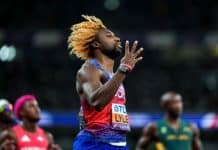
The Milan Cortina 2026 slogan: "IT's your vibe!" (Photo: Milan Cortina 2026)

The Sports Examiner: Chronicling the key competitive, economic and political forces shaping elite sport and the Olympic Movement.★

To get the daily Sports Examiner Recap by e-mail: sign up here!

≡ THE 5-RING CIRCUS ≡

● Olympic Winter Games 2026: Milan Cortina ● The Italian daily Il Fatto Quotidiano reported that the regional Veneto Court of Auditors has found that while the losses through the end of 2025 for the Fondazione Milano Cortina 2026 – the organizing committee – were at €176.456 million, the total debts related to the Games will be about €1.0 billion when final accounting is made at the end of 2026. (€1 = $1.14 U.S.)

In case of losses, the bill will be shared by the Italian national government, and the hosting regions of Lombardy and Veneto, which had already made budget provisions to support Games deficit payments ahead of time.

● Russia ● The International Olympic Committee replied to European Commissioner for Intergenerational Fairness, Youth, Culture and Sport Glenn Micallef (MLT) and his call to reverse its recommendation to re-admit Russian athletes to international competitions.

The IOC Press Office told Reuters on Wednesday, “The IOC has to navigate the complex realities and consequences of the current geopolitical context.

“The IOC must uphold its mission to preserve a values-based and truly global sporting platform that provides hope to the world.”

● Alpine Skiing ● Italian star Federica Brignone, 36, who miraculously returned to win two Olympic golds in Cortina 10 months after a massive crash in April 2025, is still recovering.

She the French all-sports newspaper L’Equipe, “My body will never fully recover from the injury.

“I’m training but I’m also continuing to take care of myself. This spring was difficult; I was still having a hard time walking. I started training in mid-May, but I’m not doing what I did before the injury. I can ride my bike and swim, I go to the gym, but I can’t run or do any real weight-bearing work. My body has regained muscle tone, it’s getting better and better, but it’s still far from being perfect, or at least not like it was before. I’m in pain all the time.”

As for skiing, she added, “I’ll try to put on my skis at the beginning of August. I don’t know yet if I’ll be able to compete in the upcoming season.”

● Athletics ● Stage 11 of the Wanda Diamond League is the Novuna London Athletics Meet on Saturday, with the main events window from 9-11 a.m. Eastern time.

The headline has been the “Project 222″ world-record shot in the men’s mile by 2023 World 1,500 m champ Josh Kerr (GBR), aiming to run 3:42 – 222 seconds – to break the 1999 world mile mark of 3:43.13 by Hicham El Guerrouj (MAR).

Sponsored by Brooks, the highly-publicized effort includes a special “speed suit,” personalized running spikes and setting up an altitude chamber in his bedroom at home. He won’t be alone, however, as the race also includes Paris Olympic 1,500 m bronzer Yared Nuguse of the U.S. and Ethan Strand, third in the Pre Classic mile.

Lots of other stars will be on hand, including Olympic 800 m winners Emmanuel Wanyonyi (KEN) – fresh off his 1,000 m world record – and Britain’s Keely Hodgkinson in the women’s race. The British star will have to deal with Olympic runner-up Tsige Duguma (ETH) and the rapidly-improving Femke Broeders-Bol (NED) in her first season in the 800 m.

The men’s 110 m hurdles has new world-record man JaKobe Tharp, 2025 World Champion Cordell Tinch and Jamal Britt, now no. 5 all-time, in a re-run of the hot Gyulai Memorial race in Budapest in which Tharp won in 12.85.

World-record stars include Karsten Warholm (NOR) in the men’s 400 m hurdles and Sweden’s Mondo Duplantis in the men’s vault, and a re-match in the women’s 200 m before Olympic winner Gabby Thomas of the U.S. and St. Lucia’s Julien Alfred, who won the Monaco 200 m in 21.51 to stand third all-time.

● Basketball ● USA Basketball announced that men’s National Team coach Erik Spoelstra will have long-time NBA coaches J.B. Bickerstaff and Mark Daigneault – the head coaches at Detroit and Oklahoma City – and Gonzaga coach Mark Few as assistants for the 2027 FIBA World Cup and the 2028 Olympic Games.

Few was an assistant coach with the Paris 2024 gold medalists, working with head coach Steve Kerr. This will be the first time for Bickerstaff and Daigneault as members of a World Cup or Olympic staff.

● Cycling ● Belgium’s Tim Merlier won his third stage in the 2026 Tour de France on Thursday, getting to the line at the end of the 179.1 km 12th stage in Chalon-sur-Saone in 3:38:53 at the head of a mass sprint.

The hilly course finished with a downhill section and while the first 144 riders received the same time, the final sprint ended up with a series of crashes that impacted a half-dozen riders. Olav Kooij (NED) finished second and Belgian Jasper Philipsen was third, just as they were in stage 11.

The leaderboard did not change, with Slovenian star Tadej Pogacar still in the lead by 3:36 over two-time champ Jonas Vingegaard (DEN). Friday’s 205.8 km stage has two major climbs in the final quarter of the race that could shake things up.

● Football ● Following the display by Argentine players of a fan-created banner on the field following their 2-1 FIFA World Cup semifinal win over England that read “Las Malvinas son Argentinas” – in English, “The Malvinas are Argentine” – the British government has asked for a review by FIFA.

Argentina claims sovereignty over what it calls the Malvinas, known in Britain as the Falkland Islands; after an Argentine takeover in 1982, a British force was sent and recaptured the islands, which have been in British hands ever since.

FIFA regulations prohibit messaging of “a political, ideological, religious or offensive nature” that is not related to a sporting event, punishable by a fine or other actions. It was reported that the FIFA Disciplinary Committee has opened an inquiry.

An analysis of FIFA tracking data through the quarterfinal round (100 of 104 matches) of the World Cup by the Marathon Handbook site showed that in terms of sheer distance covered in the tournament, the leader is Spanish midfielder Rodri at 71.7 km total, followed by midfielder Neil El Aynaoui (MAR: 70.47 km), then Belgian defenders Brandon Mechele (68.41 km) and Timothy Castagne (65.18 km). Spanish defender Marc Cucurella was fifth at 64.61 km.

It also showed that ranked 618th – last – was Argentine superstar Lionel Messi, at 8.1 km total. First in scoring, last in travel.

● Triathlon ● World Triathlon President Antonio Arimany (ESP) is beginning a worldwide media tour to promote the link-up with the Professional Triathletes Organisation and the creation of a 2027 competition program which will include the PTO’s T100 events (2 km swim + 80 km bike + 18 km run) with the World Triathlon Championship Series, to be renamed the “T50 World Championship Series” for its 1.5 km swim + 40 km bike + 10 km run program.

Arimany told The Associated Press:

“Our goal is for the sport to be attractive not only for triathlon fans but to be attractive for sport fans. We need to grow the sport to be more attractive to the general public.

“This is not an achievement for next year, this is a goal that we have for the next six, seven years. And we really would like to have triathlon at the level of tennis or golf. Of course, we cannot reach football or other sports because we are not a team sport, but compared to individual sports we need to find a way how we can grow in popularity.”

● Wrestling ● The International Testing Agency disqualified Egyptian Freestyle 74 kg class wrestler Ramadan Hussen for “an infusion system composed of an empty used infusion bag of 500 mL, a flow regulator and a needle” found at the Paris 2024 venue, the Grand Palais. The ITA explained:

“Following investigations conducted by the ITA, including forensic DNA analysis on the paraphernalia, the ITA was able to conclude that the paraphernalia had been used by Ramadan Hussen (Egypt). Accordingly, the ITA charged the athlete with a violation of Article 2.2 of the International Olympic Committee Anti-Doping Rules applicable to the Olympic Games Paris 2024 (IOC ADR) for Use of a Prohibited Method, more particularly use of intravenous infusions and/or injections of more than a total of 100 mL per 12-hour period.”

Hussen placed 12th. As far as sanctions go, this matter is being taken up by the ITA separately on behalf of United World Wrestling.

Receive our exclusive, weekday TSX Recap by e-mail by clicking here.
★ Sign up a friend to receive the TSX Recap by clicking here.
★ Please consider a donation here to keep this site going.

For our updated, 681-event International Sports Calendar for 2026 and beyond, by date and by sport, click here!
LOS ANGELES 2028: Metro denied $379 million State funding for Games transit; hopes for $875 million in Federal funds also fading

The Sports Examiner: Chronicling the key competitive, economic and political forces shaping elite sport and the Olympic Movement.★

To get the daily Sports Examiner Recap by e-mail: sign up here!

≡ NO MONEY FOR METRO ≡

Bad news for 2028 Games funding for the Los Angeles Metropolitan Transportation Authority, as reported during the Metro Executive Management Committee meeting on Thursday by Government Relations Senior Director Raffi Hamparian.

He explained a significant direction change in the Federal budget deliberations in Congress, which would be to the detriment of Metro:

“It appears the House of Representatives is moving in the direction of adopting a Continuing Resolution; for our purposes, that is relevant because we have a number of equities pending in the Transportation spending bill in the House, and it would appear that there will be no successful effort to try to get that adopted by the beginning of the Federal fiscal year, September 1.

“In shorthand, I would say, basically, what Congress would be doing – and this is sort of the House perspective and it hasn’t been shared by the Senate yet – it may be kicking the can down the road ‘til after the November election and dealing with what some would characterize as a bit of a mess of all these spending bills, after Election Day.

“So, that is significant. We had a number funding priorities in the Fiscal Year ‘27 bill, including $875 million for the Olympic Games and a number of other issues. And it appears, that as of this morning, the House is going to seek to kick that can down the road.”

Metro has been asking for $2 billion in Olympic and Paralympic Games support, against which the $875 million – proposed in the House version of the Transportation, Housing and Urban Development [THUD] appropriations bill – would have helped.

Madeleine Moore, the Deputy Executive Officer of Government Relations for Metro, added more bad news relative to the requests for Games funding from the State of California:

“The Governor formally signed the FY 2026-27 budget on June 29th. …

“The final budget, additionally, does not include any funding related to Metro’s $379 million transportation infrastructure ask for the 2028 Olympic and Paralympic Games, though it does contain provisions related to the Games Route Network that will be conducted in collaboration with Caltrans.”

She added that this funding is being sought in the additional budget “trailer” bills expected in August, that make more specific directions to the broad budget bill allocations:

“This was a priority. The $379 million ask was a priority of our L.A. County delegation. They are fully engaged, fully committed; we’ve been speaking to key members, leadership and budget staff these past few days, even though it’s recess, to really hit the ground running when they return in August, with the hope that we can secure [funding].

“We’ve been very clear: we need funding this session, that this is not something they can kick the can down the road for, in order to have time to complete the projects.”

Metro’s operations staff has said that it needs money this year in order to secure rentals of equipment and land for maintenance, staging and training operations for 2028. Its agreement with the LA28 organizing committee calls for Metro to provide support services for the public during the Games period to the extent it obtains outside funding to do so.

Receive our exclusive, weekday TSX Recap by e-mail by clicking here.
★ Sign up a friend to receive the TSX Recap by clicking here.
★ Please consider a donation here to keep this site going.

For our updated, 681-event International Sports Calendar for 2026 and beyond, by date and by sport, click here!

PANORAMA: IOC’s Dubi says ticket prices in U.S. a “completely different situation”; handball re-admits Russia; IOC funding 1,516 athletes for 2028

IOC Olympic Games Executive Director Christophe Dubi (SUI) (Image: IOC video screen shot).

The Sports Examiner: Chronicling the key competitive, economic and political forces shaping elite sport and the Olympic Movement.★

To get the daily Sports Examiner Recap by e-mail: sign up here!

≡ THE 5-RING CIRCUS ≡

● Olympic Games 2028: Los Angeles ● In a two-years-to-go interview with France Info, International Olympic Committee Olympic Games Executive Director Christophe Dubi (SUI) noted that ticket pricing in the U.S. is beyond European imaginations (compute translation from the original French):

“Of the 11 million tickets, 50% will be under $200 (approximately €175). For a European, that seems expensive, but not necessarily in the American market. In particular, there are a million tickets under $28 (approximately €25) . The Games need to remain accessible. And under $200 is a real benchmark in the United States. Most major events are over $200, and often much more, whether it’s sports or shows… They’re often very, very expensive. Reaching this 50% target of under $200 is a great achievement. …

“When you see the prices, it’s true they can be surprising, but there’s a real market. For example, if you’re in the United States and you wonder about the cost of a prime seat ticket for an NBA game. Or for the NHL, it’s unthinkable for us. Unthinkable. It doesn’t exist. Except those seats are the first to go. It’s a completely different situation.

“And I won’t even mention the prices for the hospitality areas, where they’ll spend several million dollars on the equivalent of five or six games, depending on the team’s performance. Again, it’s unthinkable for us, but it works in their model. Some prices are truly incredible from a European perspective , even for the Olympics, but those tickets are all gone.”

Dubi, very enthusiastic about the success of the 2028 Games, also said that some venue changes for sports could still be made due to climate concerns:

“There are operational adjustments, and more radically, there can be choices we make, like in 2021 with the relocation of the Tokyo Marathon to Sapporo. It was a huge decision, and something that is entirely possible in 2028.”

The International Olympic Committee noted Wednesday the size of its Olympic Scholarship program for the LA28 Games:

“Two years ahead of the Games, 1,516 athletes (715 women and 801 men), representing 176 NOCs and 39 disciplines, are being supported through Olympic Solidarity scholarships on the road to LA28.”

The IOC said it has budgeted $71 million for scholarship funding for summer and winter sports for the 2025-28 quadrennial. Scholarship holders won 75 medals at Paris 2024.

● Winter Paralympic Games 2026: Milan Cortina ● Results of the anti-doping program for the 2026 Winter Paralympics showed 844 samples collected from 334 athletes across 473 tests. Of these, 67% were from men and a third from women; the 334 total represents 56.7% of the 611 athletes entered.

There were four positives, all “related to the use of eye drops by athletes with a vision impairment.” All of the cases were resolved without sanctions as the use of the substances was “through a permitted (ophthalmic) route.”

● Russia ● The International Handball Federation became the latest to re-admit Russian and Belarusian teams:

“Following the decisions of the International Olympic Committee (IOC) Executive Board on 7 May and 7 July 2026, the IHF Council decided to align the IHF’s position with the IOC’s latest recommendations by lifting, with immediate effect, the ban imposed on 4 March 2022 on the participation of Russian and Belarusian teams, officials, referees, lecturers and experts in IHF events and activities.”

In the fifth paragraph of the six-paragraph announcement, there was also: “The IHF reiterates its longstanding commitment to the Ukraine Handball Federation and continues to stand in solidarity with Ukraine.”

The IHF is the 11th summer Olympic federation to fully re-admit Russia.

● Cycling ● The modestly-hilly 11th stage of the 113th Tour de France had the expected mass sprint finish, with the first 119 riders given the same time. The winner was Norway’s Soren Waerenskjold in 3:10:06, followed by Olav Kooij (NED) and Belgian Jasper Philipsen.

Race leader Tadej Pogacar (SLO) maintained his 3:36 edge on two-time winner Jonas Vingegaard (DEN).

● Modern Pentathlon ● Reporting better late than never on the USA Pentathlon national championships at the end of June in Charlotte, North Carolina, Temirkhan Sabdenbak moved up from national junior champ in 2025 to the senior level in 2026, piling up 1,594 points to win over Luke Filar (1,549). Sabdenbak was in the top three in all four events and won the Laser Run by 11 seconds to secure the title.

Kseniya Voronina won the women’s gold, her first, scoring 1,434 to out-distance 2024 national winner Phaelen French (1,405). Voronina won the fencing and swimming, then was third in obstacle and 11th-fastest in the Laser Run, but still won comfortably.

Filar and French did not go away empty-handed, however, as both won the U.S. Junior titles and Filar also won the men’s U-19 gold!

● Table Tennis ● The USA Table Tennis national championships in San Jose, California finished last week with Kanak Jha winning the men’s tournament for the seventh time, defeating Nikhil Jumar, 4-3 (11-7, 9-11, 11-13, 11-7, 7-11, 11-4, 11-3).

Sally Moyland defended her women’s title, defeating Amy Wang in a rematch of the 2026 final, 4-2 (11-8, 11-8, 6-11, 12-14, 11-9, 11-6).

In the men’s Doubles, Nandan Naresh and Daniel Tran won their second U.S. championship in three years by 3-2 over Ved Sheth and Alex Luo (11-7, 7-11, 16-14, 10-12, 11-8). Moyland and Irene Yeoh won the women’s Doubles by 3-1 against Hildy Chen and Lilian Ma (11-8, 8-11, 11-6, 11-9), and Moyland also won in Mixed Doubles with Jishan Liang, over Daniel Tran and Jessica Reyes-Lai, by 3-1 (11-7, 11-4, 9-11, 11-8).

● Taekwondo ● At the World Taekwondo Team Championships in Chuncheon (KOR), China won the men’s title for the second time in a row, defeating Kazakhstan. Morocco won the women’s tournament, defeating Russia in the final.

● Triathlon ● Bermuda’s Flora Duffy, the Tokyo 2020 Olympic women’s champion, confirmed her retirement at age 38 on 15 July, completing a career which included four World Triathlon World Championships in 2016-17-20-22, Commonwealth Games golds in 2018 and 2022 and a bevy of other titles in triathlon events of all styles.

She explained, “I feel at peace and content with the decision. It just got to a point with my body where I just kept breaking down and getting injured when I tried to train at the level needed to race the highest level. My body was just giving me clear signs and the timing felt right. I’ve had a long career. I’ve had a great career so I’m very happy with it all and just full of gratitude for the whole journey.”

Receive our exclusive, weekday TSX Recap by e-mail by clicking here.
★ Sign up a friend to receive the TSX Recap by clicking here.
★ Please consider a donation here to keep this site going.

For our updated, 681-event International Sports Calendar for 2026 and beyond, by date and by sport, click here!
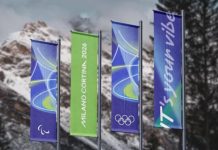
FOOTBALL: Argentina comes from behind to edge England, 2-1, in FIFA World Cup semi, will face Spain for the trophy

The 2026 FIFA World Cup “Trionda” ball by adidas (Photo: adidas).

The Sports Examiner: Chronicling the key competitive, economic and political forces shaping elite sport and the Olympic Movement.★

To get the daily Sports Examiner Recap by e-mail: sign up here!

≡ FIFA WORLD CUP ≡

Argentina 2, England 1 This indoor matches in Atlanta started out physical and then got rougher, with six fouls in the first 10 minutes, and no shots. It’s the sixth World Cup meeting of the two sides – last in 2002 – with England leading, 3-2; the last “friendly” was in 2005.

No score and eight fouls in the first 20 minutes, with England probing and Argentina looking for super-scorer Lionel Messi, with no impact. The hydration break came in the 25th, with 10 fouls and no shots officially credited. Argentina had 58% possession.

England continued with a high press and it led to a free kick in the 33rd for the first recorded shot of the match. By the 40-minute mark, it was 16 fouls, a yellow card and three shots, only one of which was close, a liner from Argentine midfielder Enzo Fernandez in the 39th that was just over the crossbar.

The half ended scoreless, with Argentina at 56% of the ball and two shots to one … and 12 fouls to seven.

Argentine striker Julian Alvarez got loose at the right side of the England goal in the 47th, with the first shot-on-goal in the game saved by English keeper Jordan Pickford and another kicked into the side of the net. The game opened up a bit, with both sides taking some extended possession. Then England struck off a goal kick, with a long ball down the right side brought down by striker Harry Kane, then deflected, then picked up by midfielder Declan Rice, who forwarded it to striker Morgan Rogers on the right side.

He sent a seeing-eye cross from right to left into the box to a charging Anthony Gordon crossing into the box and firing with the right foot past Argentine keeper Emiliano Martinez in the 55th. Just like that, 1-0.

Argentina came right back and forward Giuliano Simeone had the ball running dangerously down the right side of the box, but was tackled perfectly by defender Djed Spence in the 58th for a corner, but before he could get a shot off.

Argentina held possession trying to break down a deep-set English defense, with England on the counter where possible. Messi’s corner in the 69th found the head of striker Nico Martinez, but his header was brilliantly saved by Pickford. The hydro break followed, it was Argentina with 69% possession, 6-4 on shots and 13-9 on fouls, but trailing.

The Argentines came out sending cross after cross into the box, with midfielder Alexis Mac Allister hitting the left post on a free header in the 76th, then Pickford saving him again a moment later. Argentina was all-out on offense with five in the box, and England stacked in defensively. But in the 85th, a right-footed strike from distance by Fernandez at the top of the box sailed into the net for the 1-1 tie, bending away from Pickford.

In stoppage time, Argentina stayed on offense, and at 90+2 Mac Allister’s shot hit the post and on the ensuing play, a cross into the box from the right side by Messi found sub forward Lautaro Martinez for a perfect header at 91+2 for the 2-1 lead. Amazing: two goals in 6:24.

England was frantic to try for the tie, but could not and Argentina heads to its second straight World Cup final, trying to become the first repeat winners since Brazil in 1962. Argentina ended with 64% possession, 15-5 on shots and 15-11 on fouls.

Britain’s The Mirror reported on extra security controls for the game:

“England’s clash with Argentina on Wednesday night has been classed as the ‘highest risk’ match at the World Cup after a meeting of the FBI, officials, and local police. The FBI, FIFA, and police met on Monday as they sought to discuss the historical divide between the two nations and concerns over issues that could escalate between supporters.”

Two matches left:

Third: France vs. England on 18 July in Miami Gardens (5 p.m. Eastern)
Final: Spain vs. Argentina on 19 July in East Rutherford (3 p.m. Eastern)

The final at MetLife Stadium in New Jersey looks to be toasty: projected game-time temperature of 88 F, now expected to be sunny, with 55% humidity. That will have an impact.

TicketData.com reporting showed that the average lowest “get-in” price for the semis rebounded – due to Argentina-England – from the quarterfinals:

● $913 for the Group Stage
● $1,015 for the Round-of-32
● $1,453 for the Round-of-16
● $1,188 for the Quarterfinals
● $2,246 for the Semifinals

There was a big difference in the pricing of the two semifinals:

● $1,315 for ESP-FRA semi ~ was $4,506 on 22 June (final pricing)
● $3,177 for ARG-ENG semi ~ was $4,596 on 22 June (final pricing)

The Argentina-England game price rose from $2,599 to $3,177 from Tuesday to Wednesday!

● $1,325 for third place ~ was $2,409 on 25 June
● $7,224 for first place ~ was $12,200 on 22 June

Through 102 of 104 matches, the median (not average) of the lowest “get-in” prices is $916.

With FIFA President Gianni Infantino (SUI) running for a third full term in 2027, InsideWorldFootball reported:

“A number of national association presidents have told Insideworldfootball that they have been put under pressure by FIFA staff members to send nomination letters. They have even been sent examples of letters from FIFA staff with the wording they want to see supporting Infantino’s re-election.

“The use of FIFA’s staff to lobby or campaign for presidential candidates is a clear breach of FIFA’s Governance Regulations and the FIFA Code of Ethics that requires political neutrality and that all officials and employees avoid leveraging FIFA resources or their positions to influence elections. …

“The lobbying of nations began with Africa’s member associations – traditionally Infantino’s core support base – before turning to Concacaf’s Caribbean and Central American nations with support from their regional associations.”

Receive our exclusive, weekday TSX Recap by e-mail by clicking here.
★ Sign up a friend to receive the TSX Recap by clicking here.
★ Please consider a donation here to keep this site going.

For our updated, 681-event International Sports Calendar for 2026 and beyond, by date and by sport, click here!
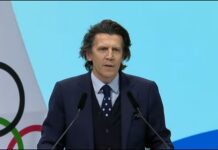
PANORAMA: LA28 organizers open volunteer application portal; World Rowing keeps Russia in “neutral”; Pogacar extends Tour de France lead

The Sports Examiner: Chronicling the key competitive, economic and political forces shaping elite sport and the Olympic Movement.★

To get the daily Sports Examiner Recap by e-mail: sign up here!

≡ THE 5-RING CIRCUS ≡

● Olympic Games 2028: Los Angeles ● The LA28 organizers opened applications for volunteers for the 2028 Olympic and Paralympic Games on Tuesday, two years before the opening of the Games of the XXXIV Olympiad.

About 60,000 volunteers are expected to be needed; per the announcement:

“Roles will be available in eight categories that applicants can express their interest in, including communications, driving, experience, medical, Ceremonies, operations, sport and technology. Some roles will require specialized skills which applicants can indicate within their application, including in areas such as medicine and language translation.”

Carl Lewis, the four-time 1984 Olympic gold medalist, has been named an Official Ambassador of the LA28 Volunteer Program.

ESPN’s Jeff Passan reported that negotiations are continuing between LA28, Major League Baseball and the MLB Players Association over conditions that would lead to an agreement for major league players to participate in the 2028 Olympic Games.

The Players Association wants changes to proposals “over hotel rooms, tickets and a mandatory-participation agreement” related to the Games. The story notes the Players Association would prefer an agreement more along the lines of the NHL’s deal to participate in the 2026 Olympic Winter Games in Italy. An advisor to the MLB PA has suggested that players be paid to appear at the Games – in fact, with the IOC’s new grant program, all of the players would receive $10,000 – but the demand from the Players Association would be much greater.

● Russia ● The Russian news agency TASS reported that World Rowing will continue to use its system of “neutral athletes” for Russian and Belarusian athletes. The World Rowing statement included:

“World Rowing has taken note of the IOC Executive Board’s decision of July 7 regarding the Russian Olympic Committee and its recommendations to the International Federations.

“The World Rowing competition eligibility system, established by our Executive Board and updated in February 2026, already allows athletes holding a Russian or Belarusian passport to compete as Individual Neutral Athletes (AIN) in all world rowing competitions, subject to strict neutrality requirements. This system remains unchanged and will continue to function.”

● Basketball ● The three-time defending champion U.S. won Group A with a 3-0 record at the FIBA girls U-17 World Cup being held in Brno (CZE). But it wasn’t easy.

The Americans crushed Ivory Coast, 117-24, then won a thriller from Australia, 74-72, and eased past Latvia, 105-53. They will meet 0-3 Mexico in the round-of-16 to start playoff action on Wednesday. The gold-medal game is Sunday.

● Cycling ● Four-time winner Tadej Pogacar (SLO) widened his lead at the 113th Tour de France with a stirring 10th stage victory Tuesday on the 166.6 km route to Le Lioran that included six moderate climbs. He overtook leader Richard Carapaz (ECU) about 29 km from the finish, on the penultimate climb and raced away to cross in 3:58:08. That was 32 seconds up on double Olympic champ Remco Evenepoel (BEL) and 34 seconds ahead of Paul Seixas (FRA). Carapaz faded to 11th.

Pogacar’s lead is now up to 3:36 over two-time winner Jonas Vingegaard (DEN) and 4:06 on Evenepoel.

There were eight injuries related to a car crash at the end of Sunday’s stage in Ussel, in which a vehicle reportedly belonging to the French all-sports newspaper, L’Equipe, ran into the barriers lining the final  straight about 500 m from the line.

The driver apparently was ill and eight spectators were injured, one of whom was in critical condition. The riders came to the line after the incident, with the vehicle moved and the barriers replaced.

L’Equipe and the Tour de France are both part of the French-owned Amaury Sports Organization.

● Gymnastics ● Suni Lee, the Tokyo 2020 All-Around champion and 2024 All-Around bronze winner, said Tuesday in an Instagram post she will resume her competitive career, after taking a break since the Paris 2024 Games.

Lee, 23, has won six Olympic medals (2-1-3) and three Worlds medals (1-1-1), from 2019-24.

● Swimming ● USA Swimming and arena, a long-standing partner, have renewed their agreement for competitive swimwear through 2028. Per the announcement:

“Over the course of the partnership, arena will continue to support USA Swimming through national events, digital and social storytelling, grassroots initiatives, and athlete engagement opportunities. The collaboration also creates meaningful opportunities to connect with USA Swimming’s membership of athletes, coaches, officials, volunteers, and swim families.”

It’s worth noting that USA Swimming has successfully navigated the labyrinth of having two major swimwear companies as sponsors of its programs: arena as a sponsor of the federation and Tyr as the title sponsor of its world-class Pro Swim Series!

Australia’s double Olympic relay gold medalist Shayna Jack, 27, said she will retire from swimming, saying in a video:

“I’m extremely proud of everything I’ve achieved in my swimming career. I cannot wait to finish at the Commonwealth Games, Glasgow.

“I have always loved the Commonwealth Games, so it is a perfect way to give back to my Australian community, do myself proud and walk away with a smile on my face.”

Jack, a Freestyle sprinter, won two Paris 2024 Olympic relay golds and five Worlds relay golds, plus an individual silver in the 50 m Free in 2023 and bronze in the 100 Free in 2024. She served a two-year ban for unintentional use of ligandrol from 2019-21 and then returned to the pool.

With the Commonwealth Games to go, she has lifetime bests of 23.99 in the 50 m Free (no. 18 all-time) and 52.28 in the 100 m Free (no. 11 all-time).

● Volleyball ● The FIVB Women’s Nations League round-robin has been completed with the U.S. winning at 10-2 and Italy also 10-2 in second place. They were 1-2 at the Paris 2024 Olympic Games, with Italy winning the gold.

The Americans lost only to Canada and Poland and won 32 of 43 total sets played. They will face China (6-6) in the championship quarterfinals in Macau which begin on 23 July. They could have a rematch with Canada (8-4) in the semis.

Receive our exclusive, weekday TSX Recap by e-mail by clicking here.
★ Sign up a friend to receive the TSX Recap by clicking here.
★ Please consider a donation here to keep this site going.

For our updated, 681-event International Sports Calendar for 2026 and beyond, by date and by sport, click here!
ATHLETICS: U.S.’s Tharp sensational in 12.85 win at Gyulai Memorial in Budapest, among five American wins and two world leaders

U.S. hurdles star and new world-record holder Ja’Kobe Tharp (Photo: USA Track & Field).

The Sports Examiner: Chronicling the key competitive, economic and political forces shaping elite sport and the Olympic Movement.★

To get the daily Sports Examiner Recap by e-mail: sign up here!

≡ GYULAI MEMORIAL ≡

The final Gold-level meet on the World Athletics Continental Tour for 2026 was the annual Istvan Gyulai Memorial in Budapest (HUN), named for the former Secretary General of what is now known as World Athletics.

The meet was terrific, headlined by another sensational performance from world-record holder Ja’Kobe Tharp of the U.S. in the 110 m hurdles. He came on quickly and mauled an excellent field, winning in 12.85 (wind -0.4 m/s), the fifth-fastest time in history!

Fellow Americans Jamal Britt (13.01) and World Champion Cordell Tinch (13.06) went 2-3. In the space of about six weeks, Tharp is re-writing the all-time list:

● 12.75 Ja’Kobe Tharp (USA) ~ 10 Jun. 2026 World Record
● 12.80 Aries Merritt (USA) ~ 07 Sep. 2012 World Record
● 12.81 Grant Holloway (USA) ~ 26 Jun. 2021
● 12.84 Devon Allen (USA) ~ 12 Jun. 2022
● 12.85 Tharp ~ 14 Jul. 2026

Tharp has also run 12.90 to win the NCAA title and was second at the Pre Classic to Britt in 12.91, so out of the top 21 performances all-time (through 12.91), he has four since 10 June! He said afterwards:

“It felt pretty good. I didn’t have the best start, but a win is a win. I came here to get the job done, and that’s exactly what I did. It feels great to set a meeting record. Whoever held that record before was obviously a very good athlete [Russian Sergey Shubenkov in 2018], so it’s a great feeling to take it.

“The atmosphere in the stadium is incredible. I honestly love competing here. This was the strongest field I’ve raced against all year, and I usually run my fastest times in high-quality races. Today proved that once again.”

That was one of five wins for American athletes in Budapest:

Women//200 m: Olympic champ Gabby Thomas led an American sweep, winning in 21.83 (0.0), ahead of Kayla White, who got a lifetime best of 21.92, and Anavia Battle (22.21).

Women/100 m hurdles: Olympic champ Masai Russell remained undefeated with her eighth win in a row in 12.33 (+0.4), again leading an American sweep, ahead of Rayniah Jones (12.47) and Alaysha Johnson (12.49).

Women/400 m hurdles: Worlds silver winner Jasmine Jones got a seasonal best of 52.91, moving to no. 3 on the world list, to win, ahead of Jamaica’s two-time Worlds bronze winner Rushell Clayton (53.34).

Women/Long Jump: Monae Nichols, the 2024 World Indoor silver winner, won at 6.88 m (22-7) to lead an American 1-2, ahead of 2025 World Indoor champ Claire Bryant (6.72 m/22-0 3/4).

Sweden’s Mondo Duplantis was on world-record watch again in the men’s vault, winning at 6.07 m (19-11) and taking three shots at a new world mark of 6.32 m (20-8 3/4). He’s now missed that height nine times. Australia’s Kurtis Marschall, twice a Worlds bronzer, got a lifetime best of 6.00 m (19-8 1/4).

There were two world-leading performances (or ties):

Men/Hammer: Canada’s Olympic champ Ethan Katzberg won at 83.64 m (274-5) and had an earlier world-leading throw of 83.55 m (274-1) in the series! The winning toss was his fifth-best throw ever.

Women/High Jump: Australia’s 2022 World Champion, Eleanor Patterson, cleared 2.00 m (6-6 3.4) to equal her own world-leading mark from June, also achieved by Olympic winner Yaroslava Mahuchikh (UKR).

Not to be overlooked were a 44.02 men’s 400 m win by Muzala Samukonga (ZAM), now seventh on the 2026 world list, a heated finish in the men’s 1,500 m for Kenyan 19-year-olds Phanuel Koech and Danson Kiplangat, 3:31.09 to 3:31.10, a 7:31.90 3,000 m win for Mathew Kipsang (KEN), with American Anthony Camerieri second (7:32.64). German Emil Agyekum won the 400 m hurdles in 47.58, with Americans Trevor Bassitt (47.59) and Caleb Dean (47.62) right behind.

Olympic champ Julien Alfred won the women’s 100 m in a speedy 10.87 (-0.3) with Cambrea Sturgis of the U.S. fifth in 11.07.

Although the Continental Tour Gold schedule is complete, the Diamond League continues on Saturday (18th) in London (GBR).

Receive our exclusive, weekday TSX Recap by e-mail by clicking here.
★ Sign up a friend to receive the TSX Recap by clicking here.
★ Please consider a donation here to keep this site going.

For our updated, 681-event International Sports Calendar for 2026 and beyond, by date and by sport, click here!
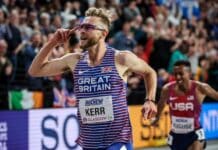
FOOTBALL: Spain shuts down France, 2-0, in FIFA World Cup semi; Infantino says 64-team expansion will be studied; ‘26 prices keep dropping

The Sports Examiner: Chronicling the key competitive, economic and political forces shaping elite sport and the Olympic Movement.★

To get the daily Sports Examiner Recap by e-mail: sign up here!

≡ FIFA WORLD CUP ≡

One of the finalists for the World Cup is now known: Spain, the 2010 champions, who reached their second-ever championship final in dominant fashion.

Spain 2, France 0 The first semi was in air-conditioned AT&T Stadium in Arlington, Texas, a respite from 85 F temps and high humidity outside. Inside, Spain had possession as expected, with the French happy to counterattack.

Then a crazy play in the 20th created a penalty for Spain, as French defender Lucas Digne tried to clear a ball in the box and he ended up kicking pressing Spanish forward Lamine Yamal in the left thigh! Forward Mikel Oyarzabal took the penalty in the 22nd and scored with the left foot, to the top of the net. The hydration break came with Spain at 56% possession and 2-1 on shots, but up a goal.

The French suffered another loss in the 29th, with defender William Saliba injured and had to leave the game for Maxence Lacroix. And Spain almost got a second goal in the 38th, as a turnover led to a cross into the box by Yamal for Fabian Ruiz that looked like a goal-in-the-making, but it was blocked by French defender Dayot Upemecano.

France continued attacking, but the half ended 1-0, with Spain at 56% of possession and 5-2 on shots. And Spain continued to possess the ball at the start of the second half, and against the French press, the Spanish took control as defender Pedro Porro sent the ball to midfielder Dani Olmo at the top of the box and he wheeled to a cutting Porro, who had space in the middle of the box and sent a right-footed blast into the goal for a commanding, 2-0 lead in the 58th.

Yamal scored on a spectacular, 1×2 shot in the 61st off a fast-break pass over the top, but it was called for offsides. France got going after that, with star scorer Kylian Mbappe getting the team’s first shot-on-goal in the 65th. The hydro break came in the 69th, with Spain at 54% of the ball, 8-5 on shots, but France pressing.

But the Spanish continued in possession, keeping the game in the French half. France mounted more pressure after the 80-minute mark, with Spanish keeper Unai Simon coming out to slow one attack and blocking a cross on another at the endline. That was enough.

The game finished 2-0, with the Spanish at 51% possession and shots at 10-10. For Spain, they have allowed one goal in seven games and scored 13, seemingly a lifetime away from their opening 0-0 tie against Cape Verde. The French, brilliant throughout the tournament, were overmatched by the Spanish defense and will play for third.

≡ PANORAMA ≡

Three matches left:

Semifinal: 15 July in Atlanta: England vs. Argentina (3 p.m. Eastern)
Third: 18 July in Miami Gardens (5 p.m. Eastern)
Final: 19 July in East Rutherford (3 p.m. Eastern)

The final at MetLife Stadium in New Jersey looked to be toasty: projected game-time temperature of 88 F with light rain in the forecast. That will have an impact.

TicketData.com reporting showed that the lowest “get-in” price for the quarterfinals went down from the round-of-16:

● $913 for the Group Stage
● $1,015 for the Round-of-32
● $1,453 for the Round-of-16
● $1,188 for the Quarterfinals

As far as the “final four” matches go, prices have come down from the highest levels, back during the group stage:

● $1,315 for ESP-FRA semi ~ was $4,506 on 22 June (final pricing)
● $2,599 for ARG-ENG semi ~ was $4,596 on 22 June
● $1,603 for third place ~ was $2,409 on 25 June
● $7,243 for first place ~ was $12,200 on 22 June

Through 101 of 104 matches, the median (not average) of the lowest “get-in” prices is $914.

FIFA President Gianni Infantino (SUI) continued to breathe life into the idea of a 64-team tournament for 2030, saying in an interview:

“When organising a World Cup, it’s important to organise it for the whole world – not just Europe and South America – but effectively the entire world. Every nation should be allowed to dream of participating in the World Cup.

“You can see that the quality of the teams is extremely high – and it’s getting higher and higher all over the world. If you don’t give smaller countries a chance to participate in the World Cup, they’ll lack the incentive to keep improving.”

The way the award of the 2030 World Cup was arranged, “centennial” single matches will be played in Argentina, Paraguay and Uruguay as well as the majority of the tournament in Morocco, Portugal and Spain. This allowed FIFA, using its continental rotation, to skip directly to Asia and Saudi Arabia for 2034.

By expanding to 64 teams, the three South American hosts would at least get a full set of group matches. The idea was floated in April 2025 by FIFA Council member Ignacio Alonso of Uruguay, and again at the FIFA Congress Alessandro Dominguez (PAR), the President of the South American confederation, CONMEBOL.

The Asian, European and CONCACAF federations have all panned the idea.

The Times (London) reported that the decision to waive the red-card suspension of American striker Falorin Balogun was made solely by the head of the FIFA Disciplinary Committee, Mohammad al-Kamali (UAE).

The story stated that none of the other 17 members of the committee were consulted. However, the decision was issued in the name of the Disciplinary Committee. Al-Kamali became the head of the Disciplinary Committee last year.

Questions have been raised about a red card shown to England’s Jarell Quansah against Mexico, but the Disciplinary Committee imposed a two-match ban.

Fascinating LinkedIn post by the vastly-experienced Hill Carrow, the chief executive of the North Carolina 2029 World University Games, about what he saw during the World Cup:

“During my travels in recent weeks, I transited through several U.S. World Cup Host City airports. Because we are hosting the NC USA 2029 FISU World University Games in central North Carolina in July of 2029, I wanted to make sure and take note of how each of those airports were welcoming the world – particularly sports fans – to their communities, knowing the airport typically represents the first impression of a host city.

“The airports included Atlanta Hartsfield (Hartsfield-Jackson Atlanta International Airport), Boston Logan, Newark Liberty (Newark Liberty Intl-Ewr), and San Francisco International Airport.

“I decided to rank them based on the best ‘event presentations’ in each airport and my rankings came out this way: #1 – Newark Liberty Terminal A: not only lots of very noticeable welcoming soccer signage, but really neat FIFA merch vending machines in the middle of the concourses; #2 San Francisco International: can’t miss the display of giant soccer balls, and the ball incorporated into the SFO logo was spot on; #3 Atlanta Hartsfield: for America’s busiest airport, while there was enough signage that you knew the World Cup was in town, they could have done a way better job of acknowledging and emphasizing the magnitude of the event; and #4 Boston Logan: here the lack of soccer-oriented signage, displays and the like led me to rank them lowest in my FIFA World Cup 2026 – Canada, Mexico and the United States Airport-Event Decor bracket.”

Receive our exclusive, weekday TSX Recap by e-mail by clicking here.
★ Sign up a friend to receive the TSX Recap by clicking here.
★ Please consider a donation here to keep this site going.

For our updated, 681-event International Sports Calendar for 2026 and beyond, by date and by sport, click here!
PANORAMA: U.S. women’s football to face no. 1 Spain in October; Britt, Sion win USATF Tour and $50,000; new logo for luge!

The new logo for the Federation Internationale de Luge (FIL)!

The Sports Examiner: Chronicling the key competitive, economic and political forces shaping elite sport and the Olympic Movement.★

To get the daily Sports Examiner Recap by e-mail: sign up here!

≡ THE 5-RING CIRCUS ≡

● Olympic Games 2028: Los Angeles ● The International Olympic Committee confirmed the qualification “system” for cricket in late June and made a change in the distribution of quota places in surfing.

This means that, so far, 49 “systems” have been approved for sports and disciplines for the 2028 Games, with two sports remaining: athletics and football. These are expected soon.

The full list of approved qualifying programs is available here.

● Pan American Games ● Panam Sports confirmed that Guatemala City (GUA), Rosario (ARG) and Panama City (PAN) are the candidates for the III Junior Pan American Games in 2029. The vote will be taken during the 27-28 August General Assembly in Lima (PER).

● U.S. Olympic & Paralympic Museum ● The USOPM Board confirmed a contract extension of five years for chief executive Marisa Wigglesworth, through 2031. Per the announcement:

“Since joining the Museum in July 2023, Wigglesworth has worked alongside the Board and staff to define and advance organizational priorities, strengthen operations and build a strong foundation for the Museum’s future.”

● Athletics ● Fascinating U.S. mirror of the World Marathon Majors Six Star Medal introduced in 2016, which provides special recognition to individuals who had run on all of the World Marathon Majors races.

The Professional Road Running Organization (PRRO) announced last month a new “PRRO-lific Finisher Program,” which will award a special medal for those who have finished in six well-known and high-profile American road races over time:

Gate River Run 15K (Jacksonville, Fl.): finishers from 2017-26
Credit Union Cherry Blossom 10 Mile (Washington, D.C.): 1973-2025
Lilac Bloomsday 12K (Spokane, Wa.): 2010-25
Steamboat Classic 4 Mile (Peoria, Il.): 2015-25
Boilermaker 15K (Utica, N.Y.): 2014-25
Quad-City Times Bix 7 (Davenport, Ia.): 1981-2025

A database of all finishers is being completed; also:

“Runners who have completed four or more of the PRRO races will receive guaranteed entry into any other PRRO race needed to complete their PRRO-lific series, provided their entry request is made at least six weeks before the date of the requested race; this includes events which may have lotteries or entry ceilings.”

The USATF Tour concluded with the Sunset Tour meet in Los Angeles and the Ed Murphey Classic in Tennessee and rising hurdles star Jamal Britt not only won his event in a speedy 12.91w, he also finished on top of the USATF Tour men’s point standings and won $50,000.

Olympic and World Champion Valarie Sion was the winner of the women’s $50,000 prize, for her outstanding season in the discus.

● Football ● U.S. Soccer announced a two-match series between FIFA women’s no. 1 Spain and the no. 2 U.S. for 10 October in Washington, D.C. and 13 October in Chester, Pennsylvania. It will be the first meeting since 2022.

Said U.S. head coach Emma Hayes (GBR): “We’ve desperately wanted to get Spain on our schedule, but the difficulties of scheduling the top teams during the women’s international calendar are well known, so to be able to get these two games on the East Coast will be the perfect tests before we head into World Cup qualifying at the end of the year.”

● Luge ● The Federation Internationale de Luge (FIL) introduced a new logo, designed by longtime commercial marketing partner Infront – since 1998 – to update the sport’s visual look. From the announcement:

“At the heart of the identity is a simplified wordmark that incorporates several elements of the sport. The distinctive curve of the ‘f’ is inspired by the shape of a luge runner, while the sweeping forms of the logo also evoke the globe and the international nature of the federation. The green sled represents the ideal racing line and FIL’s commitment to innovation and sustainability, while the forward-leaning typography conveys the speed and dynamism at the heart of luge.”

The FIL also extended its agreement with Infront for marketing services to the 2029/30 season.

Receive our exclusive, weekday TSX Recap by e-mail by clicking here.
★ Sign up a friend to receive the TSX Recap by clicking here.
★ Please consider a donation here to keep this site going.

For our updated, 681-event International Sports Calendar for 2026 and beyond, by date and by sport, click here!

FOOTBALL: FIFA World Cup economic impact in Mexico touted at 45-50 billion pesos, from 15-150 billion less than predicted, with less int’l travel

A portion of the economic impact graphic (translated) from the CONCANACO Servytur of the 2026 FIFA World Cup in Mexico.

The Sports Examiner: Chronicling the key competitive, economic and political forces shaping elite sport and the Olympic Movement.★

To get the daily Sports Examiner Recap by e-mail: sign up here!

≡ MEXICAN ECONOMIC IMPACT ≡

The Mexican Confederation of Chambers of Commerce, Services and Tourism (CONCANACO Servytur) announced last week that the economic impact of the 13 matches held in Mexico totaled between 45-50 billion pesos, or about $2.57 to $2.86 billion U.S. (MXN 1 = $0.057 U.S.):

“[A]n estimated national economic impact of between 45 and 50 billion pesos, driven by tourism and consumption by Mexican families during the tournament that showcased Mexico to the world and demonstrated the country’s capacity to organize global-scale events.

“Of the total, approximately 35 billion pesos corresponded to tourist spending generated in Mexico City, Guadalajara, and Nuevo León; 15 billion pesos to additional household consumption of food, beverages, entertainment, and convenience products; and nearly 5 billion pesos more to ticket sales. Fan Fest in Mexico City solidified its position as one of the main drivers of economic activity: 39 dates, 18 venues, and an estimated economic impact of 2 billion pesos, of which 1.8 billion pesos had already been generated by July 6.

“In the lodging sector, the average hotel occupancy rate across the three venues reached 66%, with peaks between 80% and 90% on match days, and rates increased by an average of 120%. An estimated 2.1 million tourists stayed overnight in hotels, and 700,000 used short-stay platforms. Latin American travelers stayed for up to 16 days and visited other cities outside the host cities. CANIRAC reported sales increases of 15% to 30% on Mexico’s match days and the creation of 15,000 temporary jobs.”

This is part of the story. The Spanish sports daily, Diario AS, noted the actual outcome was far less than predicted:

● “Before the tournament began, estimates of the World Cup’s economic impact varied widely. The Mexican Confederation of Chambers of Commerce, Services and Tourism (CONCANACO Servytur) projected between 65 billion and 200 billion pesos (US$3.7 billion to US$11.4 billion) in economic activity, while organizations such as IMEF and Moody’s Analytics were far more conservative, arguing that the tournament’s overall contribution would be relatively modest.”

● “Before kickoff, analysts estimated the tournament would add between 0.14% and 0.5% to Mexico’s GDP. Current economic indicators place the impact at approximately 0.14% to 0.15%, in line with Moody’s Analytics’ forecasts.”

The CONCANACO graphic that accompanied the statement noted further:

● Average hotel occupancy in the three host cities was 66% during the match period, up just 8% over the comparable period in 2025.

● Occupancy was 80-90% on match days, with about 70% of visitors staying in hotels and 23% in Airbnb-style accommodations.

● Pricing rose dramatically for accommodations: up 20% from 2025 during the period and with increases of 100% in Monterrey, 50% in Mexico City and 40% in Guadalajara.

● While tourism accounted for about 35 billion pesos in spending, 15 billion (30%) came from increased spending by Mexican families across the country.

This describes a success, but hardly of epic proportions.

A long article on TravelandTourWorld.com reviewed the accommodations and economic impact in the Los Angeles, noting a last-minute surge:

“[T]he city witnessed a significant late surge in accommodations bookings as FIFA World Cup supporters finalised their travel plans just days before key matches. … the booking trend has highlighted changing traveller behaviour, with shorter reservation windows increasingly replacing long-term planning for major global sporting events.”

The story points to changing travel patterns thanks to changing technologies for travel and housing:

“Digital booking platforms provide continuous access to accommodations availability, allowing customers to compare prices almost instantly.”

● “Flexible cancellation policies introduced during the pandemic have encouraged travellers to postpone final decisions.”

● “Mobile booking technology has simplified last-minute reservations.”

As far as the matches at SoFi Stadium in Inglewood were concerned, the hotel winners were spots close to the venue, in Santa Monica – also fairly close by to the north – and downtown Los Angeles.

In short, the lack of booking activity in the run-up to the World Cup was changed late: when the matches arrived, so did the traveling fans.

No statistics were cited; these will eventually come out in the post-match analysis. But it is instructive as technology continues to change the way people attend faraway events.

Receive our exclusive, weekday TSX Recap by e-mail by clicking here.
★ Sign up a friend to receive the TSX Recap by clicking here.
★ Please consider a donation here to keep this site going.

For our updated, 681-event International Sports Calendar for 2026 and beyond, by date and by sport, click here!
VOX POPULI: LA28’s Transportation Plan Needs More Than Optimism

Former Southern California RTD President Nick Patsaouras and his 2024 book, “The Making of Modern Los Angeles.” (Photos courtesy Nick Patsaouras.)

[Nick Patsaouras, originally an electrical engineer, was president of the Southern California Rapid Transit District during the 1984 Olympic Games, and has served as a Board member with the Los Angeles Department of Water and Power, the Board of Zoning Appeals and others. His 2024 book, The Making of Modern Los Angeles (ORO Editions) chronicled an insider’s view of the growth of the city. His opinions, are, of course, solely his own.]

Some readers of my 8 July article (“LA28: Olympic Glory or Fiscal Disaster”) regarding LA28’s lack of transportation plans asked me to be more explicit as it relates to bus-only lanes during the Olympics. Here is what Angelenos need to understand.

LA28 is not only about the fans. The 2028 Olympics in Los Angeles will require special traffic lanes and routes so athletes, officials, media, emergency vehicles, and possibly buses can move reliably between venues. These routes may affect local streets, parking, business access, church access, deliveries, and neighborhood circulation. The problem is that the public has not yet seen enough clear information about where these lanes will go, who will pay for them, and how residents and businesses will be protected. For ordinary spectators, this could affect whether they can get to a venue on time, whether shuttle buses are reliable, whether rideshare drop-offs are organized, and whether they are stranded after an event.

A major unresolved issue is the Games Route Network, or “GRN.” This is the special network of streets and highways that will be used to move Olympic athletes, officials, media, and other accredited participants around the region. In plain English, these are the Olympic priority routes. Some routes may operate similar to temporary bus-only or restricted-access lanes.

The Games Mobility Executive, or “GME,” is the coordination structure meant to bring together the LA28 organizers, the Los Angeles Metropolitan Transportation Authority (Metro), the California Department of Transportation (Caltrans), the City of Los Angeles, and other venue cities. Its job is to make sure the transportation plan works across city boundaries. But a coordinating body is not the same thing as a funding source or a final decision-maker.

The problem is that responsibility is being pushed around: “the buck is being passed.” Caltrans is focused mainly on freeway segments. Local cities are being asked to plan street-level routes. LA28 appears to be acting as the convener, but not necessarily as the funder. Metro needs information to plan buses and passenger movement, but it cannot plan effectively if LA28 and the venue cities do not share details. The result is a dangerous gap: the agencies are talking, but the public still does not know who is truly accountable.

One unanswered question is whether these priority routes will help regular people get to the Games, or whether they will mainly serve the Olympic “Games family”: athletes, officials, VIPs, federations, media, and other credentialed participants. If Metro buses and spectator shuttles are not allowed to use these lanes, then the public may face delays while watching empty or lightly used Olympic lanes move official vehicles.

A recent FIFA World Cup shuttle problem in Inglewood from June 15 shows why this question matters.

Residents and businesses along a shuttle route reportedly found access to their properties restricted without adequate advance warning. The City of Inglewood later had to apologize publicly and make clear that it had not received sufficient notice. The problem was eventually managed, but it was a warning sign: even a small breakdown in communication can create anger, confusion, and loss of trust.

LA28 continues to project confidence, but confidence is not a transportation plan. If official Olympic priority routes will impact local streets, businesses, churches, homes, and spectators, the public deserves to know where those lanes will be, who can use them, who will pay for them, and how access will be protected.

Los Angeles can still deliver a successful Olympics, but success will require more than optimism. It will require transparency, coordination, and respect for the people who live and work along the routes.

Comments are welcome here.

[≡The Sports Examiner encourages expressions of opinion – we really do – but preferably based on facts. Send comments to [email protected]. We do not guarantee publication of any comment, but all comments submitted will be considered and your submission implies your agreement to publication (and light editing if needed to meet our grammatical and punctuation standards) at our sole discretion. Please include your name and hometown on any comment submitted for publication.≡]

You can receive our exclusive TSX Report by e-mail by clicking here. You can also refer a friend by clicking here, and can donate here to keep this site going.

For our updated, 681-event International Sports Calendar for 2026 and beyond, by date and by sport, click here!

RUSSIA: Table Tennis and Modern Pentathlon formally readmit Russian athletes; European Union foreign ministers rip IOC decision

The logo of the Russian National Olympic Committee.

The Sports Examiner: Chronicling the key competitive, economic and political forces shaping elite sport and the Olympic Movement.★

To get the daily Sports Examiner Recap by e-mail: sign up here!

≡ RUSSIAN READMISSION ≡

The International Table Tennis Federation became the 10th summer Olympic federation to readmit Russian competitors without restrictions follow the International Olympic Committee’s recommendation of 7 July:

“Following consideration of this development, and in line with the ITTF Executive Board’s recent decision concerning the reinstatement of athletes with a Belarusian passport, and in consideration of the principle of equal treatment of athletes and the need for any restrictions on participation to remain necessary, proportionate and objectively justified, the ITTF Executive Board has decided that athletes holding a Russian passport shall be reinstated and permitted to participate in ITTF table tennis and Para table tennis events, under the ordinary conditions applicable to all athletes, with effect from 28 July 2026.

“This decision applies to ITTF-sanctioned events and covers both individual and team events. Athletes, coaches, officials, support personnel, delegations, Member Associations, and event organisers remain subject to all applicable rules, including eligibility, entry, accreditation, anti-doping, integrity, safeguarding, disciplinary, and competition requirements.”

However, the ITTF also noted that its authority only goes so far and will not be universally welcomed:

“The decision is without prejudice to any applicable law, host-country requirement, visa restriction, sanctions regime, public authority instruction, security assessment, anti-doping requirement, integrity assessment, safeguarding measure, disciplinary rule, accreditation requirement, or competition rule.”

Although previously leaked, the Union Internationale de Pentathlon Moderne (UIPM) formally confirmed Russian re-entry as of 3 August:

“Athletes and teams from Russia will have free rein to represent their country in UIPM Sports from next month, following the UIPM Executive Board’s decision to lift all restrictions against their participation.”

Both federations made the obligatory “statement of solidarity” with Ukrainian athletes.

The Russian news agency TASS reported that World Triathlon will allow Russian athletes to compete in the Mixed Relay at World Triathlon Championships Series competitions. And while Russian junior and youth athletes are permitted to compete without restrictions in World Triathlon-sanctioned events, senior-level individual athletes continue to be required to compete as “neutrals.”

On Monday, former Estonian Prime Minister Kaja Kallas, the European Union High Representative for Foreign Affairs and Security Policy said that E.U. foreign ministers were steadfast against the IOC’s decision and told a news conference:

“The International Olympic Committee’s decision to invite Russian athletes back to international competitions is blind to reality.

“Ministers strongly condemn such a decision, as it coincides with Russia killing a record number of Ukrainian civilians. So it looks like the International Olympic Committee is rewarding such attacks.”

The French National Olympic Committee (CNOSF) issued its own statement questioning the details of the IOC’s decision and the follow-on consequences (computer translation from the original French):

“The French National Olympic and Sports Committee (CNOSF) understands and supports the IOC’s desire to preserve athletes’ fundamental right to compete and the principle that they should not be held responsible for their government’s decisions. It also acknowledges the safeguards maintained by the IOC, particularly the recommendation to allow a full return only after a transition period accompanied by a credible and independent anti-doping control system.

“However, the Olympic Charter stipulates that National Olympic Committees should not base the selection of athletes solely on their sporting performances, but also on their ability to embody, defend and promote, through sport, a peaceful society.

“In the current context, the French National Olympic and Sports Committee (CNOSF) questions, in the case of Russia, how this principle will be respected. How can the Russian National Olympic Committee be expected to guarantee the requirement, enshrined in the Olympic Charter, to select athletes who will serve as role models for the values of peace promoted by the Olympic movement?

“We remain convinced that any participation of Russian or Belarusian athletes, even under a neutral banner, must be subject to particularly rigorous monitoring in order to avoid any political, military or propaganda instrumentalization of sport.”

Receive our exclusive, weekday TSX Recap by e-mail by clicking here.
★ Sign up a friend to receive the TSX Recap by clicking here.
★ Please consider a donation here to keep this site going.

For our updated, 681-event International Sports Calendar for 2026 and beyond, by date and by sport, click here!
PANORAMA: Canada, Estonia, others push back on IOC’s Russia plan; L.A. police may close academy to put more officers on streets in 2028

Olympic 100 m champ Julien Alfred (LCA) screams with delight over her 2026 Monaco Diamond League 200 m win (Photo: Chiara Montesano for Diamond League AG).

The Sports Examiner: Chronicling the key competitive, economic and political forces shaping elite sport and the Olympic Movement.★

To get the daily Sports Examiner Recap by e-mail: sign up here!

≡ THE 5-RING CIRCUS ≡

● Olympic Games 2028: Los Angeles ● The Los Angeles Times reported that the Los Angeles Police Department is considering closing the Police Academy during part of 2028 in order to reassign more than 300 training officers to street duty in advance of the 2028 Games.

The LAPD has explained it does not have enough officers to maintain normal policing and cover security needs for the Games, and expects to bring in officers from other jurisdictions during the Games period in 2028. Using training officers will increase the number of actual LAPD officers on duty during the planed 66 days of police operations to secure the Olympic and Paralympic Games.

● Olympic Winter Games 2034: Utah ● The International Olympic Committee continued ski mountaineering for the 2030 Winter Games in the French Alps, added Freeride skiing and snowboarding and cut Nordic Combined. What does this mean for the 2034 Games in Utah, which has already planned for a program based on the 2022 Winter Games?

The Deseret News reported that Utah 2034 organizing committee Chair Fraser Bullock said, “We’re wide open to new experiences and new things that could enhance the Games,” but also noted:

“I think they’ve pretty much added everything that was under consideration. We’ve got a very full program that’s fantastic. So we’ll have a very busy set of venues. Therefore, we don’t see a need to add any additional disciplines at this point in time.”

The IOC has initiated a process to review disciplines rather than sports and the decisions in 2034 are expected probably in 2027. The Utah organizers are unlikely to be enthusiastic on adding anything which would require a new venue to be added or built, since the Games plan is based on existing venues.

● International Olympic Committee ● The IOC’s removal of its recommended restrictions on Russian athletes on 7 July even caught the attention of the editorial board of the Wall Street Journal. Editorial page deputy director Dan Henninger, a big Olympics fan, opined on the “Hits and Misses” segment of the “Journal Editorial Report:

“I’m giving a big miss to the International Olympic Committee, which has lifted its ban on Russian athletes and is going to allow them to compete in the 2028 Olympic Games in Los Angeles.

“Russia was banned after Putin invaded Ukraine in 2022 and the spectacle of the IOC lifting this ban at the very time that Putin is increasing his bombardment and destruction of civilian buildings across Kyiv is a travesty and a disgrace, and just such a violation of the Olympic ideal.”

Canadian Secretary of State for Sport Adam van Koeverden wrote on X on 8 July:

“I am appalled by the IOC’s decision to provisionally lift their sanction on the Russian Olympic Committee” and added in a statement:

“Canada maintains, as it has since 2022, that the countries of Russia and Belarus should not be represented in international sports competitions while Russia’s illegal and unjustifiable full-scale invasion against Ukraine continues.

“Canada will maintain restrictions in condemning on the participation of Russian and Belarusian athletes at events hosted in Canada that receive funding from the Government of Canada.”

The government of Estonia said it will propose that the European Commission end support for IOC programs, such as the Erasmus+ project, with Estonian Culture Minister Heidy Purga stating, “It is impossible to understand decisions that seek to bring aggressor countries back into international sport as if nothing had happened.”

European Commissioner for Sport Glenn Micallef (MLT) told Politico:

“Athletes should not pay the price for the decisions of their governments. But sport cannot become a back door for normalizing aggression. If dialogue cannot guarantee that, the EU and its member states must be ready to consider proportionate steps to defend the values international sport is built on.”

The IOC receives the vast majority of its funding from private-sector sources from the sales of Olympic Games broadcast rights and corporate sponsorships.

● Athletics ● Olympic 100 m champion Julien Alfred (LCA) made a statement at the Monaco Diamond League meet on Friday, winning in 21.51, moving her to no. 3 on the all-time list and shattering her prior best of 21.71. She was thrilled:

“It´s not about the reaction time, it´s about how you finish. I don´t care about my reaction time, I was first, that´s all that matters. I have been preparing for this for such a long time, to finally see it pay off, I am just happy.

“I didn´t realize how fast it was, ‘til I crossed the line. I looked at the clock and saw my time and that´s why I was screaming like at the Olympics. Because I have been looking forward to this for such a long tine. I am just so happy to see that time. There is no limits right now. Today, I was actually hoping to see 21.6, I got 21.5, so I am happy nonetheless.”

Jamaican World men’s 100 m champ Oblique Seville won his 100 m race in 9.88 and explained:

“The start wasn’t that great, but I still have to finish well. What matters is winning. I love competing in Europe because last year I haven´t lost a race here. The aim is to be unbeatable.”

American Jordan Anthony, the World Indoor 60 m champ, was second in 9.92 and is still in transition from college track … and being a wide receiver in football:

“It was a funny race. I came to Europe in May, my first race was June 4, I think. It was Rome. A lot of people do not know my dad passed in June a couple of years ago. So June always hits heavy for me.

“So I had to go through mental health stuff, but that is what makes us professional athletes. You have got to overcome certain situations that you deal with in the outside world. And this was just like a starter. I showed myself like I am still who I say I am.

“It just took a couple of steps back and a few steps forward to understand the dance routine. So now I understand the dance routine and I can perfect it. I do not regret coming to this sport because it is different and it is fun. But I do miss the feeling of scoring a touchdown. You cannot replicate that.”

≡ RESULTS ≡

● Archery ● Tokyo Olympic men’s champion Mete Gazoz (TUR) won the Recurve gold at the World Archery World Cup in Madrid (ESP), defeating Italian Mauro Nespoli in the final by 6-0. It’s his third career World Cup title. Czech Marie Horackova, the 2023 World Champion, won the women’s gold, also winning 6-0, over Turkey’s Elif Gokkir.

South Korea won the men’s Team title (the U.S. was fourth) and the women’s Team final, 5-1, over the U.S. trio of Casey Kaufhold, Jennifer Mucino and Catalina GNoriega. Spain won the Mixed Team final.

In the Compound division, Colombia’s Pablo Gomez edged 2013 World Champion Mike Schloesser (NED), 148-147. Britain’s Ella Gibson won the women’s final, 148-145, over Malaysia’s Fatin Mat Salleh. The team titles went to Denmark (men) and Colombia (women) and Britain (Gibson and Ajay Scott) in the Mixed Team final.

● Athletics ● Lots of fast, but mostly wind-aided times at the Ed Murphey Classic in Memphis, Tennessee, but Jamaica’s Kadrian Goldson won the men’s 100 m in 9.89 with legal +1.9 m/s wind. An earlier 100 with +4.0 m/s wind produced a 9.85 winner for American Ajani Dwyer.

The 200 went to Zimbabwe’s Denzel Simusilela (19.84w +3.9) over countryman Tapiwa Makarawu (19.88w) and Canada’s Aaron Brown (19.88w). World leader Samuel Ogazi (NGR) won the 400 in 44.87 and 2019 World Champion Donavan Brazier won the 800 in 1:44.94. The wind carried rising U.S. star Jamal Britt to a 12.91w (+3.2) win in the 110 m hurdles.

Two field event marks of note, with Russell Robinson getting a (legal-wind) lifetime best in the triple jump at 17.54 m (57-6 1/2), no. 5 in 2026 and no. 12 on the all-time U.S. outdoor list. In the shot, Jordan Geist got a PR 22.44 m (73-7 1/2) to win, no. 3 in 2026 and equal-11th all-time U.S.

The women’s 100 m went to Tamari Davis in 10.89w (+2.1) and the 200 to Nigeria’s Favour Ofili in 21.74w (+2.8). Davis won an earlier 100 in 10.87w (+3.4).

There were spirited 800 m races at the Sunset Tour at Occidental College in Los Angeles, with Abe Alvarado (MEX) edging Yusuf Bizimana (GBR), 1:44.07 to 1:44.08 in the men’s race and Americans Makayla Paige – the NCAA Indoor champ – winning with a lifetime best of 1:58.14 to 1:58.17 for Emily Mackay, the 2024 World Indoor 1,500 m bronzer.

Former Utah All-American Emily Venters won the USATF Women’s 6 km Championship in Canton, Ohio, moving away from the rest of the field in the final 2 km and winning in 18:08. Elise Cranny was second in 18:12 and Annie Rodenfels finished third in 18:16.

It’s the first national title for Venters.

● Canoe-Kayak ● Hungary took five wins to highlight the ICF Sprint World Cup in Montreal (CAN), but Portugal’s Fernando Pimenta, Serbian Marko Dragosavljevic and Ukraine’s Liudmyla Luzan each collected two solo or doubles golds.

Pimenta, a five-time World Champion, won the men’s K-1 1,000 m final (3:35.60) and then the 5,000 m race in 21:57.79. Luzan, who won four 2025 Worlds golds, took the C-1 200 m final in 44.68, with American Tokyo Olympic winner Nevin Harrison in fifth (45.84). Luzan then teamed with Anastasiia Rybachok in the C-2 500 m to win in 2:02.02.

Dragosavljevic tied for the win in the K-1 200 m with Italian Worlds silver winner Andrea Di Liberto at 35/78 and then teamed with Zarko Jakovljevic to win the K-2 500 m in 1:26.67.

Hungary scored golds in the men’s C-1 5,000 m with Balazs Adolf (24:50.90), the C-2 500 m with Kristof Kollar and Istvan Juhasz (1:36.88), the C-4 500 m (1:32.96), the men’s K-4 500 m 91:22.10) and Zsofia Csorba in the women’s 5,000 m (28:43.11).

Olympic C-2 champ Bowen Ji (CHN) won the men’s C-1 500 m in 1:50.61, and Paris C-1 1,000 m winner Martin Fuksa (CZE) took that event in 4:09.49. Paris K-2 and K-4 gold medalist Jacob Schopf (GER) won the K-1 500 m in 1:36.43, with American Jacob Ecker in fifth (1:37.90).

Paris C-2 Olympic winner Mengya Sun (CHN) won the C-1 500 , final in 2:10.67, and New Zealand 2021 K-1 World Champion Aimee Fisher took the K-1 1,000 m in 4:11.69. Reigning World Champion Melina Andersson (SWE) won the K-1 5,000 m in 24:43.29. Poland’s World women’s K-2 500 m champs Martyna Klatt and Anna Pulawska won that event in 1:38.25.

● Cycling ● The 113th Tour de France continued with a sprint stage on Friday of 175.1 km finishing in Bordeaux with Belgium’s Tim Merlier getting to the line first at 3:44:20 with the top 100 riders receiving the same time. Norway’s Soren Waerenskjold was second.

On Saturday, the modestly-hilly 180.4 km route to Bergerac was another mass finish, with the top 89 riders getting the same time and Merlier winning again, in 3:52:50! Biniam Girmay (ERI) was second. It’s Merlier’s fifth career Tour stage win.

Sunday’s 154.6 km, hilly race to Ussel was shortened from the planned 185.5 km due to extremely high temperatures in the Massif Central region, but it was still hot during the route, with a rest day on Monday. A breakaway group of 15 attacked with 95 km to go, but was down to eight by 40 km and four by 10 km left, with 2023 World Champion Mathieu van der Poel (NED) winning in 3:27:51, ahead of Tobias Johannessen (NOR) and British Olympic star Tom Pidcock.

No change among the race leaders, with four-time winner Tadej Pogacar (SLO) leading two-time winner Jonas Vingegaard (DEN) by 2:42.

Rio 2016 Olympic champion Jenny Rissveds enjoyed the UCI Mountain Bike World Series in Pal Arsinal (AND), winning the Cross Country Olympic race in 1:18:48, well ahead of Martina Berta (ITA: 1:19:04), with American Savilla Blunck in fourth (1:19:15).

That gave her a sweep of the weekend, as she won her third women’s Short Track race of the season previously in 21:50, barely ahead of Laura Stigger (AUT) and Ronja Blochlinger (SUI), both in the same time.

American Bjorn Riley won the men’s Short Track race in 20:54, just ahead of Adrien Boichis (FRA: 20:55) and Chris Blevins of the U.S. (20:57), then Boichis took the XCO race cleanly in 1:14:48 ahead of countryman Mathis Azzaro (1:16:00), with Blevins in fourth (1:16:50).

In the Downhill racing, Britain enjoyed a 1-2 in the men’s event, as Jordan Williams won his second straight race, this time over Reece Wilson, 2:41.666 to 2:43.997, with Americans Ryan Pinkerton (2:44.166) and Asa Vermette (2:44.207) finishing 3-4. Four-time World Champion Valentina Hoell (AUT) won her fifth race out of six this season in the women’s final, in 3:06.717, with Gracey Hemstreet (CAN) second (3:07.202).

● Gymnastics ● Two-time World All-Around champ Darya Varfolomeev (GER) was on top again at the World Gymnastics Rhythmic World Cup in Milan (ITA), taking the A-A gold at 119.400, ahead of 2022 World A-A winner Sofia Raffaeli (ITA: 113.050). Americans Rin Keys (108.600) and Megan Chu (108.500) finished 12-13.

Varfolomeev followed up with wins on Ball (28.950) and Clubs (31.000) while Raffaeli won on Hoop (29.650). Bulgarian star Stiliana Nikolova won on Ribbon (28.650), with Keys in sixth (26.650).

● Shooting ● More world records at the Trap finals of the ISSF World Cup in Lonato (ITA), including home favorite Erminio Frasca taking the men’s final with a perfect 30/30 score, ahead of Spain’s Andres Garcia (28). Now 43, Frasca was the 2006 Worlds silver winner, but took down the record of 29 by Turkey’s Tolga Tuncer from May 2026.

India’s Neeru Neeru won the women’s Trap final for her first major international gold, scoring 27/30 over 2022 World Champion Carole Cormenier (FRA: 25). American Rachel Tozier was seventh.

One more record came in the Mixed Team final, as Australia’s James Willett and Catherine Skinner teamed up to score 37/40 for a world mark, bettering the 36 total by Wan-Yu Liu and Kun-Pi Yang (TPE) from May. Britain and Turkey won silver and bronze.

● Sport Climbing ● /Updated/American Annie Sanders won her fourth individual World Climbing World Cup in Chamonix (FRA) in women’s Lead, totaling 52+ to edge Bulgarian Aleksandra Totkova (48) in the final. Spain’s Alberto Gines Lopez won the men’s final over Luka Potocar (SLO): 39+ to 38+.

In the Speed finals, the all-Indonesian final saw former world-record holder Veddriq Leonardo win in 4.89, to 5.11 for Antasyafi Robby Al Hilmi. Fellow Indonesian star Desak Made Rita Kusuma Dewi, the 2023 World Champion, won the women’s final in 6.22 over Giulia Randi (ITA: 6.51). American Isis Rothfork was fourth.

● Triathlon ● Reigning World Champion Matt Hauser (AUS) was a close winner in the World Championship Triathlon Series Sprint in Hamburg (GER), crossing the finish in 50:07, with Portugal’s Vasco Vilaca right behind at 50:10 and Henry Graf (GER: 50:15) in third.

Hauser, the defending champion in this race, was second out of the water and started the run three seconds back of leader Alberto Garcia of Spain. But he had the fastest time in the field at 14:18, with Vilaca at 14:19 for the 1-2 finish.

The women’s title went to France’s Leonie Periault, the 2024 European silver medalist, in 55:51, beating Lisa Tertsch (GER: 55:56), Tilda Mansson (SWE: 56:03) and American Taylor Spivey (56:05).

Periault, also the 2025 Hamburg winner, was 35 seconds behind the leader in the swim, but just eight seconds back at the start of the run. She rolled through the field on the way to the fastest 5 km split in 15:56 to win, with Tertsch third-fastest at 16:06 and Mansson moving up thanks to a 15:58 final segment.

In the Mixed Relay World Championship race – an LA28 qualifier – Periault, Tom Richard, Emma Lombardi and Dorian Connix teamed up for France to win in 1:18:37, four second up on Hungary, followed by Britain (1:18:50) and the U.S. quartet of Gina Sereno, Seth Ryder, Spivey and Morgan Pearson (1:19:03). The French were the front throughout, but Connix took the tape thanks to the fastest final leg.

Receive our exclusive, weekday TSX Recap by e-mail by clicking here.
★ Sign up a friend to receive the TSX Recap by clicking here.
★ Please consider a donation here to keep this site going.

For our updated, 681-event International Sports Calendar for 2026 and beyond, by date and by sport, click here!
FOOTBALL: England, Argentina advance at FIFA World Cup; 50.1 million saw USA-Belgium; five deaths of Mexican fans, 25% of hoped-for tourism

The Sports Examiner: Chronicling the key competitive, economic and political forces shaping elite sport and the Olympic Movement.★

To get the daily Sports Examiner Recap by e-mail: sign up here!

≡ FIFA WORLD CUP ≡

The semis are set: France and Spain in Arlington, and England and Argentina (again) in Atlanta. Here’s how it happened:

England 2, Norway 1 (in extra time) ● It was 88 F and 68% humidity at Hard Rock Stadium in Miami Gardens for the start of this quarterfinal, with England in total possession to start the game and Norway sometimes placing its entire team in front of the ball.

At the first hydration break, the English had 73% of possession and the only shot of the game.

But out of the break, the game changed and the Norwegians were thinking offense. A header by scoring star Erling Haaland in the 35th was saved by England keeper Jordan Pickford. Then, in the 36th, forward Andreas Schjelderup was simply standing on the left side of the field with the ball, then slammed a left-footed liner across the English goal and into the top of the net in the 36th for a 1-0 lead!

After another foray into the England zone and a shot by midfielder Martin Odegaard in the 40th, Norway settled back into defense-and-counter mode. But it only worked for so long.

In the 47th, English forward Anthony Gordon crossed from left to right to of the box to midfield star Jude Bellingham, who then rolled toward goal, had space and sent a left-footed shot from the middle of the box into the net to tie the game at 1-1. Norway contended the goal kick that preceded this action hit the overhead camera wire and should have been re-taken; it was not called (FIFA said it didn’t happen).

England star striker Harry Kane scored at 45+4 off a feed from Bellingham, but it was called offsides. The half ended tied, with England at 68% possession and Norway up, 5-4, on shots.

Both sides were looking for the lead, and in the 54th, off a Norway corner, a shot by midfielder Patrick Berg was saved by Pickford, then rebounded in front and was kicked in for a goal by defender Torbjorn Heggen. But the goal was nullified for a Haaland foul – a two-hand shove – on defender Elliot Anderson before the corner was taken.

It was a defensive battle, with the second hydro break showing England at 61% possession but both sides at six shots. So there were a total of three shots in the “third quarter.”

A Norway corner in the 76th caused a lot of chaos in front of the England net and a header by midfielder Sander Berge hit the crossbar, and was barely cleared. A promising cross by England striker Bukayo Saka from the right endline in the 87th looked ready for a score, but it was cleared by midfielder Fredrik Aursnes.

In the 90th, English sub defender Djed Spence pressured Norway keeper Orjan Nyland on a ball played back, and hit Nyland’s kick, which popped out of bounds, but could have been an England goal! But it finished 90 minutes at 1-1, with England at 58% possession and Norway up on shots, 9-7.

In extra time, England was on offense from the start, and in the 93rd, a shot from the top of the box by striker Morgan Rogers was saved by Nyland, but the rebound was volleyed into the goal by Bellingham, his sixth goal in the tournament. 2-1.

In the 99th, a run by Spence into the box resulted in a foul by midfielder Oscar Bobb that was initially called for a penalty, but it was nullified after video review. .

An exhausted Haaland was subbed out by Norway for the second extra period for Jordan Larsen. Norway was looking to equalize, but Nyland had to double-save Spence and Saka on the 108th. Norway would not find a goal and it ended 2-1, with 53% possession at the end for England and 14-13 on shots.

England survived in the heat, and advances to an indoor match in Atlanta for the semi. Norway will be remembered for a long time for this historic run. 

Argentina 3, Switzerland 1 (in extra time) Warm conditions of 83 F and 66% humidity at Arrowhead Stadium in Kansas City for this quarterfinal, with a stunning early strike from Argentina early on.

After being down 2-0 to Egypt in the Round-of-16, the Argentines wanted a better start. They had a corner in the 9th on the right side of the field, and resulted in a shot from midfielder Alexis Mac Allister was deflected by a Swiss defender for another corner. From the other side of the field, star Lionel Messi sent the corner to the middle of the box and Mac Allister got his head on it and sent it to the far side of the Swiss net for the 1-0 lead in the 10th.

At the hydration break, the Swiss had 52% possession and shots were 3-3, but Argentina was in control. The Swiss controlled the ball, and finally got a real chance in the 31st on a run into the box by forward Dan Ndoye, but he was pushed aside by Argentine defender midfielder Rodrigo De Paul and Ndoye then fell over keeper Emiliano Martinez in the middle of the box.

The Swiss continued with the ball and the half ended 1-0, with Switzerland at 57% in possession and the shots still at 3-3, i.e., no shots recorded in the “second period.”

Down a goal, the Swiss looked for the equalizer at the start of the second half, but the Argentine defense was tight. Ndoye was finding some room for crosses and a dangerous header in the 65th, and midfielder Granit Xhaka sent a curling shot from the top of the box in the 66th that Martinez had to save.

Then in the 67th, another play by Ndoye tied it! He came down the left side, forwarded the ball to defender Ricardo Rodriguez, who kicked it back to Ndoye, who sent a screamer to the far side of the net for the tie. 1-1.

The game changed dramatically in the 70th, as striker Breel Embolo went down, with a yellow card given to Argentine midfielder Leandro Paredes. But video review reversed the call, and Embolo got the yellow and because he had one, was disqualified (red card). Now, the Swiss play with 10 men. The hydro break followed, with 53% Swiss possession, a 9-to-5 shots lead and now playing a man down.

In the 84th, Messi tried to catch the Swiss sleeping and broke for the goal as a cross was tried, but Swiss keeper Gregor Kobel was ready and caught the shot, with offsides called on Messi. Messi also missed a shot just wide right at 90+2 and Kobel had to fend off a couple more shots before the 90-minute whistle blew. Now, Argentina had 55% possession in the game and a 10-9 shots edge, but extra time was next.

Argentina held the ball against the packed-in Swiss defense, but no goals in the first extra period. Argentina possession was up to 59% now and shots were 17-11, so 7-2 for the defending champions in the period.

Argentina continued probing and Kobel stopped a Messi blast on goal in the 112th. But a few seconds later, striker Julian Alvarez had the ball on the left side at the top of the box, moved to his right and sent a long, right-footed strike that just cleared Kobel’s hand and ended up in the far right corner of the Swiss goal for the 2-1 lead.

The Swiss looked for another goal and pressing, were subject to a fast break the other way. Thiago Armada’s shot was blocked by Kobel, but sub striker Lautaro Martinez was there to finish on the rebound at 120+1 for the 3-1 final. Argentina finished with 59% possession and a 22-11 shots edge on the way to 12th straight game without a loss in World Cup play.

≡ PANORAMA ≡

On to the last four matches of the tournament:

Semifinal: 14 July in Arlington: France vs. Spain (3 p.m. Eastern)
Semifinal: 15 July in Atlanta: England vs. Argentina (3 p.m. Eastern)

Third: 18 July in Miami Gardens (5 p.m. Eastern)
Final: 19 July in East Rutherford (3 p.m. Eastern)

And then it will be over.

/Updated/TicketData.com reporting showed that the lowest “get-in” price for the quarterfinals went down from the round-of-16:

● $913 for the Group Stage
● $1,015 for the Round-of-32
● $1,453 for the Round-of-16
● $1,188 for the Quarterfinals

And all of the quarterfinal matches dove in price (from their highest point) as the games got closer:

FRA vs. MAR: $3,194 on 23 June to $1,027 on 9 July (–68%)
ESP vs. BEL: $4,395 on 22 June to $1,087 on 10 July (–59%)
ENG vs. NOR: $4,144 on 3 July to $1,805 on 11 July (–56%)
ARG vs. SUI: $4,167 on 22 June to $832 on 11 July (–80%)

Through 100 of 104 matches, the median (not average) of the lowest “get-in” prices was $912.

U.S. television ratings have soared for the country’s two favorite teams: the Americans and Mexico.

The epic England-Mexico round-of-16 match drew 23.5 million for English-language coverage on Fox and 23.20 million in Spanish on Telemundo for a 46.7 million final total, upgraded from the preliminary report.

The U.S.-Belgium match did even better, with a 37.2 million final total on Fox and 12.9 million on Telemundo for a 50.1 million total. This match was seen by more U.S. viewers, outside of the NFL, than any sporting event since game seven of the Cubs-Cleveland World Series in 2016.

The entire round-of-16 averaged 14.5 million on Fox and 11.1 on Telemundo for a 25.6 million average total. For comparison, the Knicks-Spurs five-game NBA Finals series averaged 20.9 million on ABC.

A story by Mexican Sports Journalists Federation President Evencio Flores on the AIPS Web site about the impact of the World Cup in Mexico noted:

“The rosy figures from agencies, financial, tourism, and economic entities tried to convince us that everything would become a land of plenty, with overflowing coffers, cities teeming with visitors, that after the World Cup, we would all be happy, by decree, forever and ever.

“Reality crushed us, took root within us, overwhelmed us.

“The economic impact barely reached 50 billion pesos [~$2.82 billion U.S.], 25% of what was expected, with only 800,000 visitors out of the 5.5 million the Ministry of Tourism had announced.”

Rather amazingly, there was also this:

“Zero serious security incidents at two of the three venues (except for five deaths during a celebration at the Angel of Independence in Mexico City). The Mexican government achieved what many believed impossible: that the World Cup would not be remembered for tragedies. That, for the international narrative, is worth more than the nearly $3 billion earned.”

Really: “except for the five deaths”?! Following the 2-0 Mexican win over Ecuador in the Round-of-32 on 30 June, it was reported that “Three people died from asphyxiation during crowd congestion along Paseo de la Reforma, while a fourth victim died later in a hospital after being transported from the celebration area” and a fifth fatality was disclosed during a 6 July briefing by Mexican officials, related to the World Cup, but not necessarily to the Mexico-Ecuador match and crowd.

During the entire scope of the World Cup in Mexico (at three sites), there were 120 total requiring significant treatment, plus the five deaths. True, these tragedies were not at the stadiums, but any injury to spectators – let alone a death – around a sporting event is a major tragedy.

Receive our exclusive, weekday TSX Recap by e-mail by clicking here.
★ Sign up a friend to receive the TSX Recap by clicking here.
★ Please consider a donation here to keep this site going.

For our updated, 681-event International Sports Calendar for 2026 and beyond, by date and by sport, click here!
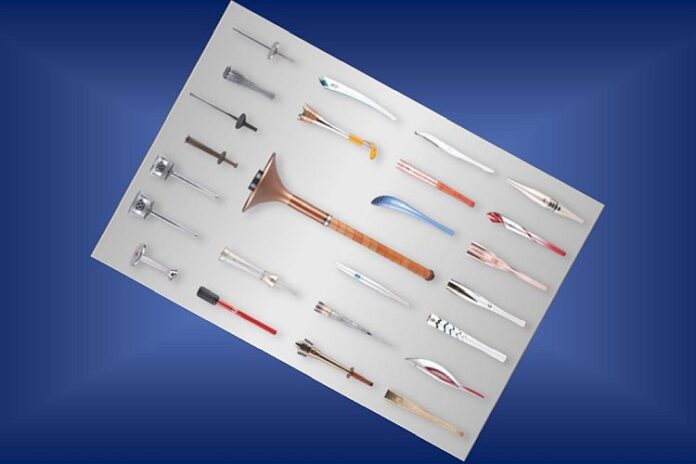
FOOTBALL: Spain edges Belgium, 2-1, will face France in FIFA World Cup semis; FIFA offers new finals tickets at up to $32,970

The Sports Examiner: Chronicling the key competitive, economic and political forces shaping elite sport and the Olympic Movement.★

To get the daily Sports Examiner Recap by e-mail: sign up here!

≡ FIFA WORLD CUP ≡

The second quarterfinal of the FIFA World Cup was in Southern California, and drew a full house, with the “lowest” price for tickets seen at $4,396 on 22 June, but down to $1,087 on Friday.

Spain 2, Belgium 1 European champion Spain and perennial power Belgium played a high-quality game at SoFi Stadium in Inglewood, California in the World Cup quarters, with Spain starting out in normal form, with most of the possession.

But the defense was tight and there were only four shots by the time of the first hydration break, with the Spanish at 64% of the ball and 3-1 on shots. Belgium was playing without star midfielder Youri Tielemans due to injury.

But Spain’s pressure finally paid off in the 30th. After a build-up on the right side, a pass by defender Pedro Porro into the box resulted in a shot from star midfielder Dani Olmo, saved by Belgian keeper Thibault Courtois.

But the rebound came straight out and was slammed home by midfielder Fabian Ruiz for the 1-0 lead.

Spain kept coming – especially teen striker Lamine Yamal – but Belgium increased its offensive effort, and midfield star Kevin De Bruyne got the ball to defender Timothy Castagne on the right side, who sent a perfect cross into the box that was headed in for the 1-1 tie by forward Charles De Ketelaere in the 41st.

It was the first goal allowed by Spain in the tournament. There was no more scoring in the half, with Spanish possession down to 62% and Spain ahead on shots, 9-2. Belgium made the most of its opportunity in the “second quarter.”

In the second half, Courtois was called on for more saves – four by the time of the hydration break – and at the stoppage, Spanish possession was back up to 67% and 13-4 on shots. But no more goals.

On the re-start, Courtois had to come out after an initial save, but was hurt on a Spanish shot and had to be replaced in the 71st by Senne Lammens. The Spanish pressure continued unabated, without success until the 88th. A shot by defender Pau Cubarsi straightaway from the top of the box was saved by Lammens, but rebounded in front of him and was followed up with an easy score by midfielder Mikel Merino for the 2-1 lead.

Belgium as on the attack, of course, for the final minute and seven in stoppage time, but could not score and it ended, 2-1. Spain ended with 68% possession and 17-5 on shots and after winning the trophy in 2010, the Spanish have gone out in the group stage, then twice in the Round-of-16. They are in their third semi, after 1950 and 2010.

≡ PANORAMA ≡

Two more quarterfinals to go on Saturday:

● Norway vs. England: In Miami Gardens. (5 p.m. Eastern)
● Argentina vs. Switzerland: In Kansas City. (9 p.m. Eastern)

The semifinals will be on 14-15 July in Arlington (Spain vs. France) and Atlanta and the final in East Rutherford on the 19th. The third-place game in Miami Gardens will be on the 18th.

FIFA released more tickets for sale for the World Cup Final, with 1,178 seats in Category 2 at a staggering $7,380 each, reportedly in the top deck of MetLife Stadium in East Rutherford, Nee Jersey.

There were 68 tickets offered in “Front Category 1″ priced from $19,995 to $32,970.

Britain’s The Independent reported, “On Fifa’s official marketplace, resale tickets for the final were listed from $7,440.50 to $11,499,998.85.”

Receive our exclusive, weekday TSX Recap by e-mail by clicking here.
★ Sign up a friend to receive the TSX Recap by clicking here.
★ Please consider a donation here to keep this site going.

For our updated, 681-event International Sports Calendar for 2026 and beyond, by date and by sport, click here!
ATHLETICS: Wanyonyi gets 1,000 m world record at Monaco Diamond League; Alfred screams 21.51 in women’s 200 m, Masai Russell wins again!

Kenya’s Emmanuel Wanyonyi on the way to a 1,000 m world record at the 2026 Monaco Diamond League (Photo: Chiara Montesano for Diamond League AG).

The Sports Examiner: Chronicling the key competitive, economic and political forces shaping elite sport and the Olympic Movement.★

To get the daily Sports Examiner Recap by e-mail: sign up here!

≡ MONACO DIAMOND LEAGUE ≡

The 10th stop on the 2026 Diamond League tour was the annual Herculis Monaco at the Stade Louis II, in warm and humid conditions, that produced a world record and world leads in four other events:

Men/1,000 m: 2:11.83, Emmanuel Wanyonyi (KEN) ~ World Record
Men/Long Jump: 8.61 m (28-3), Miltiadis Tentoglou (GRE)
Women/200 m: 21.51, Julien Alfred (LCA)
Women/3,000 m: 8:08.95, Agnes Ngetich (KEN)
Women/Vault: 4.95 m (16-2 3/4), Nina Kennedy (AUS)

The rarely-run men’s 1,000 m was designed as a shot at the 1999 world record of 2:11.96 by Noah Ngeny (KEN) and the second pacer Louey Ouerrat (FRA) came through at 1:45.11 for 800 m, so the chase was on.

Wanyonyi, the Olympic 800 m champ and Britain’s Jake Wightman, the 2022 World 1,500 m champ, were the ones battling for the win and Wanyonyi – barely ahead in the final turn – ran away in the final 50 m and got the world record at 2:11.83 with Wightman at 2:12.77 (no. 5 all-time) and then Algeria’s Djamel Sedjati (2:13.94). American Bryce Hoppel was fifth in 2:15.80, now no. 5 all-time U.S.

Wanyonyi said afterwards that this was his first-ever 1,000 m!

With three laps to go in the Steeple, Kenya’s Paris Olympic finalist Simon Koech had the lead behind the pacer and then he and countrymen Edmund Serem and Leonard Bett were 1-2-3 by 2,000 m. But Koech broke away and took the bell all alone and he won by 50 m in 8:03.35. Japan’s Ryuji Miura moved up on the final lap to get second (8:10.30), then Serem (8:11.15) and American Matt Wilkinson (8:11.76). Carson Williams of the U.S. was seventh (8:17.36).

Olympic champ Tentoglou (GRE) was on it in the men’s long jump from the start, taking the lead at 8.48 m (27-10) in round one and extending to a world-leading 8.52 m (27-11 1/2) in round two. Paris Olympic silver winner Wayne Pinnock (JAM) reached a seasonal best of 8.39 m (27-6 1/2) in round one and stood second.

But Tentoglou wasn’t satisfied and blew up the final round with a sensational 8.61 m (28-3)! Cuba’s Jorge Hodelin got up for third in round five at 8.38 m (27-6).

The women’s 200 m had Olympic 1-2 – Gabby Thomas of the U.S. and Alfred – in lanes 7 and 6 and Alfred was out well on the turn. She had a small lead into the straight, but she moved away from Thomas, with collegiate record-holder Adaejah Hodge (IVB) coming up for second. Alfred crossed in a brilliant 21.51 (+0.9), now no. 3 all-time, with the no. 5 performance in history!

Hodge finished in 21.76, then Thomas in 21.84 and Americans Kayla White fourth in 22.04, Cambria Sturgis in 22.40 and Anavia Battle in 22.42. Alfred was amazing.

Kenya’s Faith Kipyegon was the headliner in the women’s 3,000 m, designed as a shot at the world record. With four laps to go, it was World Cross Country champ Ngetich (KEN) alone behind pacer Jess Hull (AUS: Olympic 1,500 m silver!) and took over at 2,000 m in 5:24.08. Ngetich was all alone – by 80 m – at the bell and finished alone at 8:08.95, the no. 3 performer and performance in history!

Aleshign Baweke (ETH) led the chase pack in 8:23.81, then Senayet Getachew (ETH: 8:24.02) and then Kipyegon (8:24.21).

In the women’s vault, only Kennedy and American Amanda Moll cleared 4.72 m (15-5 3/4), with Emily Grove of the U.S. third at 4.62 m (15-1 3/4). At 4.82 m (15-9 3/4), Kennedy cleared, but Moll missed once and passed to 4.87 m (15-11 3/4) and missed twice and was out. Kennedy missed once, but having secured the win, passed to the world-leading height of 4.95 and made it on her first try. It was a lifetime best and moved Kennedy to equal-fourth on the all-time list!

Tokyo Olympic champ Katie Moon of the U.S. was fifth at 4.62 m and Hana Moll was seventh at 4.52 m (14-10).

There were many more highlights:

World Champion Oblique Seville (JAM) was in lane five, with Olympic 200 m champ Letsile Tebogo (BOT) was in four in the men’s 100 m. Off the gun, the field was close through 30 m, but Seville took control cleanly after mid-way and won clearly in 9.88 (+0.2). American World Indoor 60 m champ Jordan Anthony was strong in the final 20 m and was second in 9.92, ahead of Emmanuel Eseme (CMR: 10.00). Tebogo was fifth in 10.04; Sam Blaskowski of the U.S. was seventh in 10.06.

Botswana’s 400 m World champ Collen Kebinatshipi was in the lead on the backstraight, but American 2025 World Indoor bronzer Jacory Patterson came into the lead off the final turn. No problem for Kebinatshipi, who pushed hard on the straight and won easily in 43.44, a lifetime best and now no. 4 all-time!

Patterson was second in 43.96, a seasonal best and Olympic 400 m hurdles champ Rai Benjamin of the U.S. was third in 44.13, moving up in the final 50 m.

Swiss European champ Dominic Lobalu had the lead in the men’s 5,000 m at the 3,000 m mark at 7:43.48, then Kenyan Cornelius Kemboi in front with two laps to go. Seven were together at the bell, with 2022 Worlds silver winner Jacob Krop in the lead and Krop and American Graham Blanks were 1-2 into the final turn. Lobalu and Blanks were 1-2 into the straight and it looked like Blanks would win with 25 m to go, but Lobalu found speed in the final meters and won in 12:52.54. Blanks finished in 12:52.60, then Birhanu Balew (BRN: 12:52.91) and Krop (12:53.71). American Abdi Nur was ninth in 13:09.49.

Only three cleared 2.26 m (7-5) in the high jump – Oleh Doroshchuk (UKR), Sarvesh Kushare (IND) and Kimani Jack (GBR) – then at 2.28 m (7-5 3/4), Jack cleared on his first, then Doroshchuk cleared on his third. On to 2.30 m (7-6 1/2), Jack was over again on his first, and Doroshchuk on his second. At 2.32 m (7-7 1/4), Doroshchuk upped the ante with a first-try clear, and that was good enough to win.

American JuVaughn Harrison was fourth at 2.23 m (7-3 3/4).

The non-Diamond League men’s Vault had only six jumpers and three cleared 5.85 m (19-2 1/4): Sweden’s Mondo Duplantis, France’s Baptiste Thiery and two-time Worlds bronzer Kurtis Marschall (AUS). Thiery and Marschall failed at 6.00 m (19-8 1/4) and Duplantis moved on to 6.07 m (19-11), then went to 6.15 m (20-2), but missed all three.

Olympic champ Marileidy Paulino (DOM) was only third off the final turn in the women’s 400 m, but made a charge past rising Czech star Lurdes Manuel and then had to fight off American Aaliyah Butler in the final 50 m to win in a meet record 48.67, with Butler getting a lifetime best in second at 48.84! That moves Butler to no. 4 all-time U.S. and improves on her prior best of 49.09 from this meet in 2025.

Manuel was third in 49.44; American Jasmine Jones was eighth in 51.09, a lifetime best for the 400 m hurdles star, in only her second race at the distance!

The women’s 100 m hurdles was all over quickly, as Olympic champ Masai Russell of the U.S. was in charge right away and ran a clean race, rolled cleanly and won easily in 12.20 into a headwind of 0.4 m/s. It’s the equal-sixth performance all-time; she has four of the seven!

American Alaysha Johnson was second in 12.38, with Nadine Visser (NED: 12.49) third; Rayniah Jones of the U.S. was fifth in 12.54.

World Indoor champ Leyanis Perez (CUB) had the lead in the women’s triple jump almost from the start at 14.80 m (48-6 3/4), but then exploded in the final round to a lifetime best of 15.06 m (49-5) to win. She needed to, since Saly Sarr (SEN) had the lead after round four; after the Perez took the lead, Sarr got a personal record right behind her at 14.99 m (49-2 1/4). Olympic champ and world leader Thea LaFond (DMA) was third at 14.79 m (48-6 1/4). Perez is now the 30th woman to jump 15 m or more!

In the women’s javelin, China’s 18-year-old star, Ziyi Yan, won her fourth Diamond League meet this season, taking the lead in the second round, but saving her best for the sixth at 68.75 m (225-6). Two-time European silver winner Adriana Vilagos (SRB) was a distant second at 63.18 m (207-3).

The Diamond League moves to London next Saturday (18th).

Receive our exclusive, weekday TSX Recap by e-mail by clicking here.
★ Sign up a friend to receive the TSX Recap by clicking here.
★ Please consider a donation here to keep this site going.

For our updated, 681-event International Sports Calendar for 2026 and beyond, by date and by sport, click here!
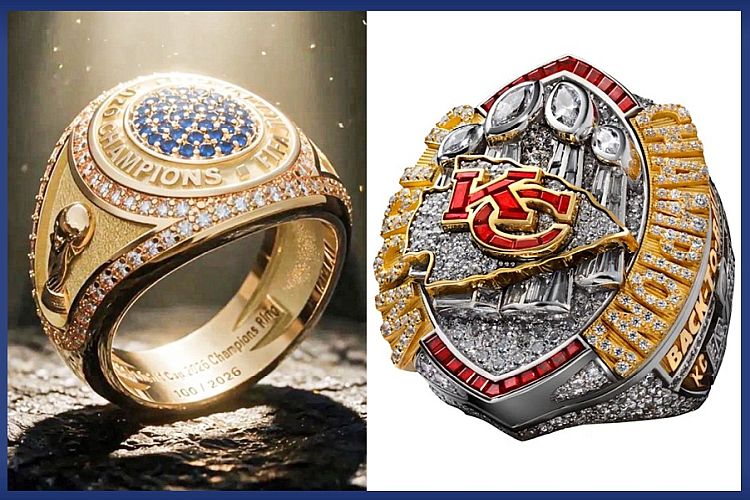
FOOTBALL: France handles Morocco, 2-0, at FIFA World Cup; La Liga chief rips FIFA on Balogun reversal, Egypt coach asks about “external factors”

The Sports Examiner: Chronicling the key competitive, economic and political forces shaping elite sport and the Olympic Movement.★

To get the daily Sports Examiner Recap by e-mail: sign up here!

≡ FIFA WORLD CUP ≡

France 2, Morocco 0 This was a rematch of the 2022 World Cup semi, won by France, 2-0, in 86 F and 60% humidity at Gillette Stadium in Foxborough, Massachusetts.

France was on offense from the start, dominating the chances, but with Morocco taking possession time in between French attacks. The game looked to take a turn in the 25th, as French star striker Kylian Mbappe was brought down in the box by defender Noussair Mazraoui for a penalty.

There was a long review, but Mbappe finally got to take the shot in the 28th, with a stutter-step approach and a clean save by Morocco keeper Yassine Bounou! He guessed correctly. By the hydration break just after, France had 59% of possession and was 7-0 on shots.

More of the same in the rest of the half, with Bounou the hero again in the 35th with striker Desire Doue sending a right-footed shot from the middle of the field that the keeper kicked away, and another save of a ripped shot in the 46th by defender Lucas Digne, that hit the crossbar.

France had 13 shots before Morocco got its first at the end of the half, as a free kick was given for a handball just outside the box. Defender Achraf Hakimi took the kick, but send it wide of the French goal on the final play of the half. Thanks to some time holding the ball inbetween French attacks, Morocco ended with 51% of ball and a 0-0 score.

Morocco started on offense in the second half, but could not score, with the ball turning back to French attacks within 10 minutes. Mbappe finally broke through in the 60th, after a Moroccan turnover at the top of the box at the left side, and once he got possession of the loose ball, he curled a right-footed shot into the far right side of the goal for the 1-0 lead. He now has 20 World Cup goals in 20 World Cup games.

France continued to press and broke the game apart in the 66th as striker Ousmane Dembele moved right at the top of the box and sent a right-footer liner into the right side of the net for the decisive 2-0 lead. It’s his fifth goal of the tournament.

The hydro break showed France now with 52% possession in the game and 17-2 on shots. Mbappe went off with what appeared to be a foot injury in the 76th, but he was walking well.

Morocco worked for a comeback goal, but the French remained on the hunt for more and shots were 20-4 by the end of 90 minutes. It ended 2-0, with Bounou making six saves to one for France’s Mike Maignan. Morocco ended with 52% possession, but the French ended 22-5 on shots. The French continue their hunt for their third straight final.

≡ PANORAMA ≡

Three more quarterfinals to go:

Friday, 10 July:
● Spain vs. Belgium: In Inglewood. (3 p.m. Eastern)

Saturday, 11 July:
● Norway vs. England: In Miami Gardens. (5 p.m. Eastern)
● Argentina vs. Switzerland: In Kansas City. (9 p.m. Eastern)

The semifinals will be on 14-15 July in Arlington and Atlanta and the final in East Rutherford on the 19th. The third-place game in Miami Gardens will be on the 18th.

Norwegian players complained about construction and road noise at their Ft. Lauderdale hotel in advance of Saturday’s match with England, and the team was relocated to another spot, closer to Hard Rock Stadium.

The team has also had issues with illnesses, but FIFA will pay for 50 rooms, security and transportation, while the Norwegian federation will cover any player charges for upgraded facilities.

Egyptian coach Hossam Hassan told reporters after the stunning 3-2 loss to Argentina in the round-of-16 that “external factors” may have been in play:

“We looked better than the reigning champions – better in everything – but the result was influenced by internal factors on the pitch and external factors off it. Perhaps they wanted to keep the world champion in the competition. Perhaps they wanted [Lionel] Messi to stay in the running.

“In football, there are sometimes external factors that go beyond the technical aspects. The world champion received support at every level.

“There seem to be pressures from the Argentina side on this outcome. We were objecting to the selection of the referee because of the French situation [Argentina beat France in the 2022 World Cup final], but everybody has to suffer at some point, and we suffered.

“We haven’t seen respect or fair play. A penalty was ruled out [a foul ruled on Mo Salah]. It was not even checked by the VAR [Video Assistant Referee], and our second goal was remarkably, for whatever reason, disallowed.

“I want to put it in beautiful words and say, ‘hard luck,’ but we have been treated unfairly and it has been an injustice.”

The news for U.S. star midfielder Christian Pulisic was worse than just the 4-1 loss to Belgium in the round-of-16 on Monday. U.S. Soccer said Thursday that he suffered a bone bruise and a microfracture of his right tibia and fibula, apparently in the 52nd minute while attempting a shot and hitting the leg of Belgian Youri Tielemans.

The anger over FIFA’s review and revision of the red card given to U.S. striker Folarin Balogun brought a direct comment from the head of Spain’s La Liga, Javier Tebas. His comment included:

“The lifting of the suspension of American player Balogun is neither a mere anecdote nor an isolated mistake. It is, quite simply, the tip of the iceberg of a governance model that has been undermining the credibility of FIFA and football in general for many years.

When rules can be interpreted or changed at will; when the most far-reaching decisions are made without real dialogue or agreement with the national leagues — even though they are the ones that keep professional football alive 365 days a year (the vast majority of professional clubs and players do not take part in international competitions); when a unilateral agenda is imposed without listening to football’s main stakeholders, the problem stops being a specific decision and becomes the system itself. …

“The Balogun case only reinforces this perception; it is only the tip of the iceberg. Moreover, if rules are systematically applied arbitrarily, trust disappears. And without trust, there is no institutional credibility.

“Worse still, a large part of the football world is aware of this, but far too many people prefer to keep a complicit silence. Because staying silent is more comfortable than defending independence, transparency, and good governance.”

FIFA said that a record total of 6,259,584 people have attended matches through the round-of16, with a per-match average of 65,204. The largest crowds have been at the Azteca in Mexico City (80,824 capacity) for five FIFA World Cup 2026 matches, with a total attendance of 404,120.

As for food: “More than 1.4 million bottles of water and 5 million beers have been sold during the tournament. More than 1 million concession items have been sold across Stadium Fan Experience areas alone, with the top three items being beer, water and pizza.”

A total of 607,350 hospitality packages have been sold so far across all venues:

“Sixty per cent of hospitality guests are regular fans looking for a premium experience, while 40 per cent are B2B clients. The three host nations – the United States, Mexico and Canada, in that order – account for 82% of customers. The UK, Brazil, Argentina, Qatar, India, Colombia and China complete the top 10. Hospitality packages have been sold to guests from 154 countries.”

The volunteer corps for the tournament has totaled 43,328 so far, from 162 countries and territories; the paid workforce is 4,738 people, from 134 different nationalities. FIFA noted a “total of 5,230 accredited media representatives.”

Also, FIFA stated that fan festival attendance has reached 7.7 million across all sites.

The top souvenir item is the team scarf, with 103,000 sold all together.

The quarterfinals and the round-of-16 show that despite all of the improvement in teams around the world, it is still Europe which dominates the field of possible winners:

Quarterfinalists:
2026: 6 Europe, 1 South America, 1 Africa
2022: 5 Europe, 2 South America, 1 Africa
2018: 6 Europe, 2 South America
2014: 4 Europe, 3 South America, 1 CONCACAF
2010: 4 South America, 3 Europe, 1 Africa

Round-of-16:
2026: 7 Europe, 4 South America, 3 CONCACAF, 2 Africa, 0 Asia
2022: 8 Europe, 2 South America, 1 CONCACAF, 2 Africa, 3 Asia
2018: 10 Europe, 4 South America, 1 CONCACAF, 0 Africa, 1 Asia
2014: 6 Europe, 5 South America, 3 CONCACAF, 2 Africa, 0 Asia
2010: 6 Europe, 5 South America, 2 CONCACAF, 1 Africa, 2 Asia

In terms of advancement from the group stage, the big winner of the expansion to 48 teams and 32 in the knock-out round was Africa, and always-strong Europe also did better than in 2022:

● 13: Europe (of 16 entries; vs. 8/13 in 2022)
● 9: Africa (of 10 entries; vs. 2/5 in 2022)
● 5: South America (of 6 entries; vs. 2/4 in 2022)
● 3: North & Central America & the Caribbean (of 6 entries; vs. 1/4 in 2022)
● 2: Asia (of 9 entries; vs. 3/6 in 2022).

The 16 elimination-round teams in 2018 in Russia included 10 from Europe, four from South America and one each from Asia and CONCACAF.

While World Cup ticket prices for the round-of-16 all slid down in the final days and hours before kickoff, the overall average remained high for the lowest “get-in” prices:

● $913 for the Group Stage
● $1,015 for the Round-of-32
● $1,453 for the Round-of-16

The most expensive round-of-16 ticket was England-Mexico at $3,820 and Swiss-Colombia was the least-priced, but still at $434.

The pricing is from TicketData.com reporting; The France-Morocco “get-in” price topped out at $3,194 on 23 June, but settled at $1,027 on Thursday, down 68%.

Receive our exclusive, weekday TSX Recap by e-mail by clicking here.
★ Sign up a friend to receive the TSX Recap by clicking here.
★ Please consider a donation here to keep this site going.

For our updated, 681-event International Sports Calendar for 2026 and beyond, by date and by sport, click here!
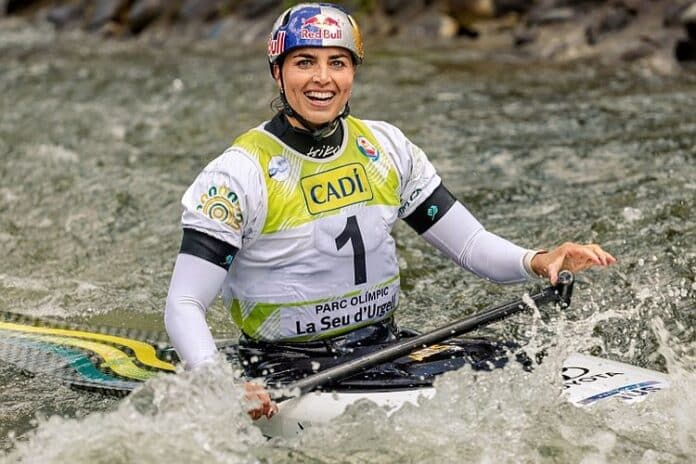
PANORAMA: Pogacar re-takes Tour de France lead; IOC skeds four-part 2028 Q-Series; Ukraine’s Heraskevych says IOC at “new low”

The Sports Examiner: Chronicling the key competitive, economic and political forces shaping elite sport and the Olympic Movement.★

To get the daily Sports Examiner Recap by e-mail: sign up here!

≡ THE 5-RING CIRCUS ≡

● Olympic Games 2028: Los Angeles ● The International Olympic Committee announced details for its Olympic Q-Series, designed to raise the profile of some of the smaller disciplines. The 2028 program:

04-07 May: Tokyo (JPN): Basketball/3×3, Cycling/BMX Freestyle, Skateboard, Sport Climbing

11-14 May: Shanghai (CHN): Basketball/3×3, Cycling/BMX Freestyle, Sport Climbing, Volleyball/Beach

01-04 June: Montreal (CAN): Cycling/BMX Freestyle, Flag Football, Skateboard/Park only, Volleyball/Beach

08-11 June: Orlando (USA): Flag Football, Volleyball/Beach, Skateboard/Park only Sport Climbing

The series will provide direct qualification to the LA28 Olympic Games.

LA28 announced that the International Broadcast Center is moving from the new Hollywood Park Studios to the Warner Bros. Studios The Ranch Lot in Burbank, California. Per the announcement:

“The Ranch will house the International Broadcast Center (IBC), the global operational headquarters for Media Rights Holders (MRHs) who have secured the exclusive rights to distribute Games coverage. This campus offers the scale, technical infrastructure and production facilities required to support one of the world’s largest temporary broadcast operations and will be fully operational for several months before, during and after the LA28 Games.”

As for the Hollywood Park Studios, “LA28 will utilize Hollywood Park Studios’ state-of-the-art production facilities to support Main Press Center operations, provide space for broadcasters conducting live stand-ups, and accommodate a variety of Games-time operational functions.”

The Main Press Center and Paralympic Press Center are, for now anyway, still at the NFL Los Angeles building in Inglewood.

● Russia ● The All-Russian Athletics Federation has filed a claim with the Court of Arbitration for Sport to try and force World Athletics to allow its athletes to compete. Per the federation statement:

“Experienced international lawyers specializing in sports law, including within the Court of Arbitration for Sport, have been involved in representing RusAF during the arbitration process.

“The lawsuit was filed within the five-day period stipulated by the Constitution of World Athletics and it meets all procedural requirements.

“It should be pointed out that the decision of World Athletics affects the fundamental interests of Russian athletics and restricts the rights of Russian athletes to participate in competitions on a discriminatory basis. The RusAF continues resorting to all available legal tools in order to protect the interests of its national athletes.”

World Athletics told the Russian news agency TASS, “We take note of the All-Russian Athletics Federation’s appeal to the CAS and will vigorously defend our position.”

On Wednesday, the International Volleyball Federation (FIVB) announced the removal of restrictions on Russian athletes and teams and “Russian athletes and technical officials in all disciplines will be allowed to return to FIVB, World and Official competitions.”

This follows the IOC’s Tuesday recommendation to allow Russian athletes and teams to be re-integrated into international competitions.

On Thursday, Russian Olympic Committee President Mikhail Degtyarev said that the Union Internationale de Pentathlon Moderne (UIPM) had also lifted all restrictions.

● Ukraine ● Ukrainian skeleton racer Vladyslav Herasvyevch, famously barred from racing at the Milan Cortina 2026 Winter Games because of his insistence on wearing a “memory helmet” picturing Ukrainians lost to the Russian invasion, wrote on X of the IOC’s recommendations on Russia:

“Absolutely shameful decision.

“The IOC leadership is hitting yet another new low with its actions.

“The current IOC leadership increasingly looks like yet another Russian asset that is simply working for Russian propaganda.

“And all of this is happening against the backdrop of residential buildings being shelled in Ukraine, which literally happens every other day.

“A huge number of Russian sports federations continue to operate in the occupied territories, and the IOC completely ignores this.

“I hope that the NOCs [National Olympic Committees] of other countries will not tolerate this arbitrariness and will finally show a strong stance against these shameful decisions.”

● Athletics ● The Diamond League resumes with the annual Herculis meet in Monaco on Friday, with good fields in many events, and a world record is always a possibility with Swedish vault star Mondo Duplantis lined up to compete.

This is the 10th Diamond League meet of the year, and the stars include the sprints, with World men’s 100 m champ Oblique Seville (JAM) facing Olympic 200 m winner Letsile Tebogo (BOT) and American Jordan Anthony, the 60 m World Indoor winner.

The women’s 200 m has Paris 2024 Olympic champion Gabby Thomas of the U.S. and Paris 2024 Olympic 100 m winner Julien Alfred (LCA), both facing collegiate record-setter Adaejah Hodge (IVB).

The men’s 400 m has the Pre Classic 1-2 of World Champion Collen Kebinatshipi (BOT) and American Rai Benjamin (expected not to be in lane nine again) and Olympic silver winner Matthew Hudson-Smith (GBR). The women’s 100 m hurdles has American Olympic champ Masai Russell continuing her chase of the world record.

Kenyan star Faith Kipyegon headlines the 3,000 m after her third in the Pre Classic mile.

World Junior men’s 200 m record holder Gout Gout (AUS), with a best of 19.67 this season, is out for the season with a torn left hamstring, suffered during a training session in Brisbane.

He will miss the World U-20 Championships in Eugene in August. The injury was reported as a “grade-three tear.” Gout, 18, wrote on Instagram:

“I’m very disappointed but I have no other possibility but to accept the situation. I understand that this is part of athletics.

“My focus now will be on my rehab in the coming weeks and months and ensuring I come back in 2027 better and stronger and faster.”

● Cycling ● Tour de France race favorite Tadej Pogacar (SLO) made a statement Thursday during the first climbing stage of the event, destroying the field with an attack on the second of three major climbs – the Col de Tourmolet – and finished the 186.2 km route in Gavarnie-Gedre in 4:32:07.

That was 2:38 up on two-time Tour de France winner Jonas Vingegaard (DEN) and 2:57 ahead of Mexico’s Isaac Del Toro. Pogacar broke away with about 42 km to go and not only won the stage, but re-took the race lead from Torstein Traeen (NOR), who finished 29:55 back.

Pogacar is now 2:42 up on Vingegaard and 3:27 up on Del Toro through six of 21 stages.

Receive our exclusive, weekday TSX Recap by e-mail by clicking here.
★ Sign up a friend to receive the TSX Recap by clicking here.
★ Please consider a donation here to keep this site going.

For our updated, 681-event International Sports Calendar for 2026 and beyond, by date and by sport, click here!
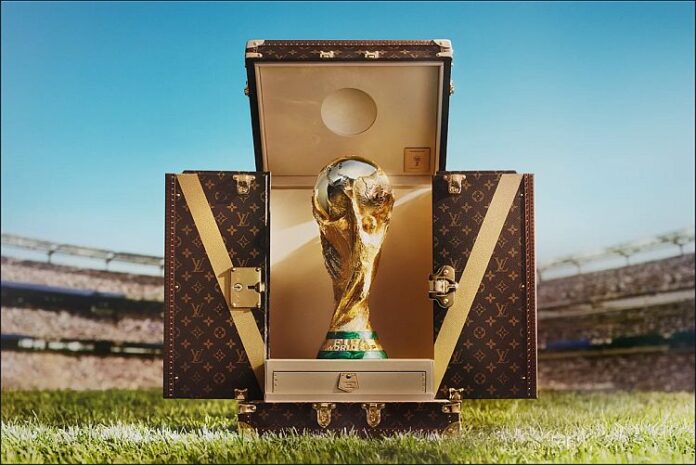
VOX POPULI: LA28: Olympic Glory or Fiscal Disaster?

Former Southern California RTD President Nick Patsaouras and his 2024 book, “The Making of Modern Los Angeles.” (Photos courtesy Nick Patsaouras.)

[Nick Patsaouras, originally an electrical engineer, was president of the Southern California Rapid Transit District during the 1984 Olympic Games, and has served as a Board member with the Los Angeles Department of Water and Power, the Board of Zoning Appeals and others. His 2024 book, The Making of Modern Los Angeles (ORO Editions) chronicled an insider’s view of the growth of the city. His opinions, are, of course, solely his own.]

The 100-meter sprint is the most thrilling athletic event in the Olympics, crowning the fastest human on Earth with unmatched publicity, explosive drama, and extraordinary global attention.

It has always been like that.

In the earliest Games in ancient Greece, Olympiads were referred to after the short-sprint champion, reflecting the belief that speed signaled divine favor and human excellence. In 776 B.C., for instance, Coroebus, a cook or baker from the city of Elis, won the sprint, and that Olympiad became known by his name, the Coroebus Olympiad.

Unfortunately, current trends regarding LA28 suggest Los Angeles may be remembered not as a champion, but as a loser. The city’s Olympic reputation could shift from the “miracle of 1984” to the “fiscal disaster of 2028” – a harsh but lasting judgment earned through overexposure, political incompetence and miscalculation, and a failing organizing committee facing serious operational and managerial risks.

Budget concerns have been raised, often referring to academic papers which propose that recent Olympic host city budgets show an average overrun of 172%. Applied to LA28, that benchmark would put the cost at about $12.3 billion. The Los Angeles 1984 Games produced a surplus of $232.5 million, which has locally funded youth sports programs for decades.

The concern is warranted: if LA28 runs into financial trouble, Los Angeles will be responsible for the costs because it voluntarily accepted unlimited liability for the Games.

In short, a fiscal disaster would begin with Olympic cost overruns. City taxpayers would cover the first $270 million, the state would cover the next $270 million, and Los Angeles would be responsible for anything beyond that. If the Games exceed their revenue by more than $540 million – a historically common outcome – the City alone would pay the remaining costs, facing possible bankruptcy if the City is unable to pay its bills according to the requirements of the California Government Code.

The risks do not end there. The City may also have to cover billions in unbudgeted services, including security, sanitation, and transit. And if the Games cannot be delivered, Los Angeles could face breach-of-contract liability.

So how did this happen? City officials accepted a high-risk contract, relied on optimistic projections and the legacy of 1984, failed to secure key reimbursement agreements, and underestimated the cost realities of the modern Olympic Games.

The draft Enhanced City Resources Master Agreement (ECRMA) sets out how Los Angeles will recover its Olympic-related costs. Originally due in October 2025, it has been delayed nearly nine months by complex negotiations over taxpayer protections and still requires formal approval from the City Council and Mayor Karen Bass.

But the ECRMA is only a baseline. Los Angeles and LA28 still must negotiate separate venue-by-venue contracts for more than fifteen sites within City limits, including the Crypto.com Arena, L.A. Memorial Coliseum, the Convention Center, Dodger Stadium, Peacock Theater and others. Those agreements, defining the services that will be provided at each venue, must be finalized by July 1, 2027, and they must agree on the cost of those services by October 1, 2027.

Los Angeles World Airports, the Port of Los Angeles and the Department of Water and Power would need to enter into their own service agreements with LA28.

Other venue cities still have to reach their own agreements with LA28, though only Los Angeles is a guarantor.

Is this a vital safeguard for the city’s fiscal health? Some Los Angeles City Council members, such as Monica Rodriguez, remain vigilant and concerned, noting that the true, final financial impact on the city’s budget cannot be fully determined until the Federal security allocations and venue-specific contracts are finalized.

Transportation is one of the major cost drivers and operational foundations of the 2028 Games. Yet urgent issues remain, as I noted here in April, and they could create a traffic Armageddon in addition to financial risks.

The Los Angeles Metropolitan Transportation Authority and the City have committed to adding 100 miles of priority bus lanes before the 2028 Summer Olympics. However, some businesses and residents along the proposed routes have not been consulted. LA28’s transportation leadership may be unfamiliar with the resistance that bus-only lanes on Pico and Olympic boulevards faced in the 1990s.

In the 1990s, proposals to convert parts of Pico and Olympic boulevards into bus-only lanes faced strong opposition from local businesses and residents. Backed by the Los Angeles Department of Transportation and former County Supervisor Zev Yaroslavsky, the plans drew objections from business owners who argued that parking restrictions would hurt their operations by reducing rush-hour customers and limiting access for religious and community activities.

LA28 has not provided Metro with enough data to plan effectively, including information on executive lanes and spectator activity around venues. It also has venue traffic plans that have not yet been shared with cities or transit agencies.

Another concern is whether the 1,700 additional buses needed to move spectators will be available and fully funded. Metro is likely to receive only a fraction of the $2 billion in Federal funding it has requested. The House version of the fiscal-year 2027 Transportation, Housing and Urban Development (THUD) Appropriations bill has proposed $875 million in support of the Games.

That is definitely not enough, assuming it gets through Congress, and even then, funding will likely not arrive until February 2027. Under the Memorandum of Understanding between Metro and LA28, Metro is not required to provide service beyond its standard operations unless it receives full funding. Specifically, the MOU states “Metro shall not be obligated for any Metro Enhanced [Olympic] Services, in full or in part, unless and until sufficient New Consideration [funds] is designated, dedicated or committed to Metro.” If that funding falls short, LA28 could have to rely on private charter buses, but the funding, planning, and execution of such a backup plan remain unclear.

With less than two years before the 2028 Olympic torch is lit, City leaders must ensure that Los Angeles and California are not left with the bill, and that L.A. avoids embarrassment on the world stage.

Although the Mayor is focused on reelection, she should use her bully pulpit to press LA28 Chair Casey Wasserman and his handpicked board to open LA28’s books and share information with its partners. The City cannot know whether LA28’s private revenue from sponsorships, ticket sales, and other sources will be enough to cover costs.

Because LA28 is a private nonprofit rather than a City agency, it is not subject to the California Public Records Act and is not required to disclose internal financial records. It can keep its books private. But given that Los Angeles is the financial backstop of the LA28 Games, the city can strongly argue that transparency is necessary to assess its risk.

Every elected official should be focused on the potential fiscal disaster facing Los Angeles. Aside from Council member Rodriguez, however, most have remained silent. The public deserves clear, ongoing answers – especially from Mayor Bass and mayoral candidate Council member Nithya Raman – about whether the LA28 agreement fully protects the city.

The successful 1984 Los Angeles Games remain instructive. Mayor Tom Bradley refused to put taxpayers at risk. He secured a deal that protected the city from cost overruns, limited the International Olympic Committee’s leverage, empowered a private organizing committee, relied on existing venues, negotiated from a position of strength, and kept City obligations tightly controlled. Los Angeles taxpayers faced no financial exposure.

Unfortunately, today, Los Angeles faces the very risk Tom Bradley worked so hard to avoid: becoming the deep pocket for Olympic overruns.

Comments are welcome here.

[≡The Sports Examiner encourages expressions of opinion – we really do – but preferably based on facts. Send comments to [email protected]. We do not guarantee publication of any comment, but all comments submitted will be considered and your submission implies your agreement to publication (and light editing if needed to meet our grammatical and punctuation standards) at our sole discretion. Please include your name and hometown on any comment submitted for publication.≡]

You can receive our exclusive TSX Report by e-mail by clicking here. You can also refer a friend by clicking here, and can donate here to keep this site going.

For our updated, 681-event International Sports Calendar for 2026 and beyond, by date and by sport, click here!
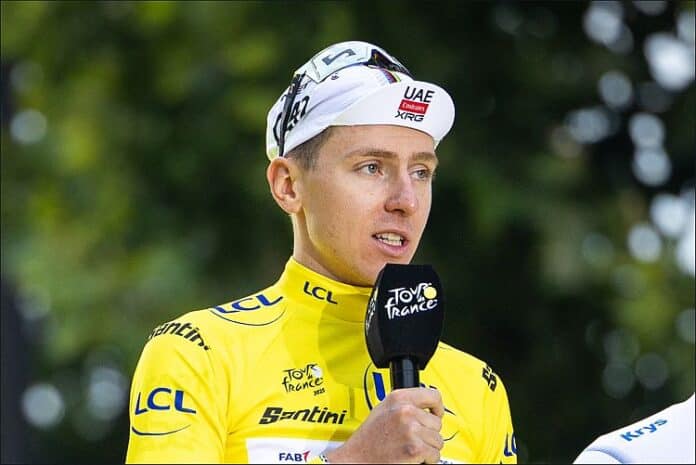
PANORAMA: IOC ending support of World Olympians; Ukraine asks for stand against Russian symbols; skeet world record for U.S. star Hancock!

The Sports Examiner: Chronicling the key competitive, economic and political forces shaping elite sport and the Olympic Movement.★

To get the daily Sports Examiner Recap by e-mail: sign up here!

≡ THE 5-RING CIRCUS ≡

● Olympic Winter Games Alpes 2030 ● Our first reaction is, inevitably, one of disappointment.”

That’s International Ski & Snowboard Federation President Alexander Ospelt (LIE), reacting to the removal of Nordic Combined from the Olympic program for the 2030 Winter Games. He added:

“Nordic Combined has been a part of the Olympic Winter Games since the very first edition, in 1924, and is a cornerstone of Nordic skiing across all levels, especially in terms of athlete development. Not only that, but it is also a discipline that has been observing clear and tangible growth and an ever-broader international participation over the last few years thanks to the inclusion of women’s competitions. This is a very hard decision for FIS and for our National Ski Associations.”

Interim FIS Secretary General Urs Lehmann (SUI), explained, “The fact that Nordic Combined will not be in the Games in 2030 changes nothing regarding our support for the discipline as an integral part of the FIS World Cup calendar and of the FIS Nordic World Ski Championships. If anything, it’s a reason for us to back them up even more strongly.”

The federation said it will work to restore the discipline for the Utah 2034 Winter Games. There was good news in the addition of Freeride for both skiing and snowboard. Ospelt observed, “Freeride is a success story on the development level: within a couple of decades, the discipline created a structured pathway for athletes to compete, from the junior level all the way to the elite.”

The International Skating Union scored a considerable win with the International Olympic Committee’s approval of the addition of synchronized skating to the 2030 Winter Games program.

The ISU made strategic decision in December 2025, introducing “Synchro9″ with nine skaters on a team instead of the 16-20 allowed up to that time, with up to 16 on the ice at one time. As the ISU announcement noted, “the ambition behind the Synchro9 model is to drive the growth of Synchronized Skating through a dynamic new event concept, a simplified judging system, and a show-enhanced, television-friendly approach.”

It worked.

● Int’l Olympic Committee ● The IOC is ending its long ties with the World Olympians Association, an idea it moved toward under prior President Thomas Bach (GER) and will now implement under Kirsty Coventry (ZIM):

“[T]he IOC Executive Board (EB) has decided to phase out its cooperation with the World Olympians Association (WOA). Until the agreement ends one year from now, the IOC will, in line with its contractual obligations, continue to provide support to WOA with the aim of allowing the organisation to adapt its operations.

“WOA’s activities and governance have, over the years, been marked by a number of serious concerns, and the cooperation between the IOC and WOA has been challenging. …

“Despite the IOC’s efforts and goodwill to continue the cooperation, challenges and concerns have persisted. The IOC has therefore concluded that the current model is no longer compatible with the best interests of Olympians, and that a more direct engagement model is necessary.”

The WOA has been responsible for the recognition and registration of the “OLY” identifier; it seems likely that the IOC will try to take this role once its agreement with the WOA ends.

● Russia ● Russian Sports Minister Mikhail Degtyarev welcomed the International Olympic Committee’s decision on Russian athlete eligibility, noting on his Telegram page:

“As of today, over 20 international sports federations have allowed [Russian] youth athletes to compete under the Russian flag and to the tune of the national anthem, while 10 federations cleared all athletes without restrictions. The IOC’s decision will significantly speed up this process.

“There is still a lot of work to be done to implement the IOC’s decisions in international organizations, but the IOC is sending a clear message – the Olympic movement must not be politicized.”

The Ukrainian Ministry of Foreign Affairs was, of course, angry with the IOC’s recommendations, stating in a post on X:

“The IOC’s decision to lift its recommendations restricting the participation of Russian athletes sends a deeply concerning signal to the international community.

“We call on the governments of countries hosting international sporting events not to permit the display of Russian state symbols on their territory. Under this flag, Russia continues its unprovoked and illegal war against Ukraine.

“Every day, civilians are killed, cities are destroyed, and international law is violated. The symbols of an aggressor state have no place at international sporting events. …

“We also call on international sports federations to maintain the existing restrictions on representatives of the aggressor state, in line with their commitment to protecting the integrity and values of international sport.”

Despite the IOC Executive Board announcement on Tuesday, Swede Olle Dahlin, the President of the International Biathlon Union, said his federation’s ban on Russian entries remains in place. He said in a statement:

“The IBU has taken note of the IOC’s decision regarding its recommendations to IFs on Russian athletes’ participation in international competitions. As the IOC reiterated, decisions on participation fall within the autonomy of each IF.

“The IBU’s position is unchanged, and the IBU Congress decision of 2022 remains in place. The IBU Executive Board set up a monitoring group which will continue to regularly evaluate the situation and provide regular reports to the Executive Board.”

● Basketball ● The U.S. defeated Mexico, 94-93, in Monday’s FIBA men’s World Cup qualifying game in Zacatecas (MEX), as guard Mike James hit two free throws with seven seconds left for the winning points. He had 19 and forward Torrey Craig led the U.S. with 23.

The victory gave the Americans a 5-1 record in the first round of qualifying, winning Group A and moving on to the second qualifying round.

● Cycling ● Stage four of the 113th Tour de France was a hilly stage of 181.9 km that ended in Foix, with a final sprint as much of the final quarter of the route was downhill. Danish sprinter Mads Pedersen got to the line first in 4:10:45 at the head of 10 men in the final pack. American Quinn Simmons was second and Sean Quinn was seventh.

The major race contenders were content to finish 12:59 back and Norway’s Torstein Traeen is now the leader by 0:28 over Quinn; Slovenia’s four-time winner Tadej Pogacar is now fourth, 7:53 behind.

● Shooting ● At the ISSF Shotgun World Cup in Lonato (ITA), Olympic star Vincent Hancock of the U.S. shot a world-record, perfect 36/36 in the finals of the men’s Skeet competition to lead a U.S. 1-2.

He managed a one-shot win over countryman Christian Elliott, who missed his 12th shot, but made all the rest to finish at 35/36, which equaled the old world mark by Italian Gabriele Rossetti in May 2026. Hancock, 37, is a four-time Olympic champion and won his 23rd career World Cup gold.

The women’s Skeet title went to Italy’s Sara Bongini, who equaled the world record at 35/36 with Sweden’s two-time Worlds bronzer Victoria Larsson and the final went to a shoot-off with Bongini winning, 3-2. Both equaled the mark set by Adel Sadakbayeva (KAZ) in January 2026. American stars Sam Simonton (22) and Dania Jo Vizzi (21) finished fifth and sixth.

The competitions continue with the Trap events.

● Swimming ● Canadian world-record setter Summer McIntosh withdrew from the remainder of the Canadian Trials in Montreal after winning the women’s 200 m Butterfly and the 400 m Medley, writing on Instagram, in part:

“I’m so sorry, but on the advice of my doctors and coach, I’ve made the difficult decision to scratch from my remaining events at the 2026 Canadian Trials.

“I started feeling ill yesterday morning, and while I hoped I’d be able to keep racing, this is the right decision.

She was the leading qualifier in the 400 m Free morning heats on Tuesday before withdrawing.

Receive our exclusive, weekday TSX Recap by e-mail by clicking here.
★ Sign up a friend to receive the TSX Recap by clicking here.
★ Please consider a donation here to keep this site going.

For our updated, 681-event International Sports Calendar for 2026 and beyond, by date and by sport, click here!
FOOTBALL/Update: A classic as Argentina stuns Egypt late, 3-2; Swiss penalty Colombia at FIFA World Cup; unbelievable stadium food items

The Sports Examiner: Chronicling the key competitive, economic and political forces shaping elite sport and the Olympic Movement.★

To get the daily Sports Examiner Recap by e-mail: sign up here!

≡ FIFA WORLD CUP ≡

Shock as the operative word on Tuesday, as Egypt was up 2-0 on defending champion Argentina with 11 minutes left, but Lionel Messi & Co. found a way to win, again. And after the Swiss won on penalties, six European teams are into the quarters. .

Argentina 3, Egypt 2 This match in Atlanta was turned upside down in the 15th minute, with a long cross from the right side of the field, well beyond the box, from midfielder Marawan Attia, that was headed in by defender Yasser Ibrahim between two defenders, into the right side of the Argentina net for the 1-0 lead!

Argentina got to work on an equalizer and in the 19th, forward Haissem Hassan was called for a penalty for submarining Argentine defender Nicolas Tagliafico in the box. Superstar Messi lined up for the penalty shot, but his drive to the right side was saved quite easily by Egypt keeper Mostafa Shoubir. It was the second penalty missed by Messi at the World Cup, also against Austria.

By the hydration break, Argentina had 55% of possession and shots were one apiece. The Argentines continued their assault, in Shoubir kept they scoreless. He stopped midfielder Alexis Mac Allister’s header in the 28th, and then a Messi free kick from above the box in the 31st hit the left post. In the 39th, striker Julian Alvarez’s run through the box led to a shot that was saved again by Shoubir.

At the half, Argentina had 60% possession and a 7-2 lead on shots, with Argentina starting on offense right way, but unable to find the net.

Egypt looked to strike again on a fast break in the 58th, with scoring star Mo Salah sending the ball to the left to oncoming midfielder Mostafa Zico, who sent a strike into the net for the 2-0 lead. But a foul was called on midfielder Marawan Attia at the start of the attacking play, way back in the Egyptian zone, nullifying the goal!

Another Egyptian fast break in the 67th looked almost the same as the one that was nullified earlier: Salah moved out, forwarded the ball to Hassan, who found Zico coming in from the right side and he finished with authority for the 2-0 lead (confirmed).

With 63% possession and 12-3 on shots, Argentina went into the second hydro break in serious trouble. The pressure continued and on the 79th, it finally worked with a cross by Messi from the right side in front of Egyptian goal that was headed in by defenders Cristian Romero to close to 2-1.

A Messi cross in the box was barely missed by striker Lautaro Martinez on a header in the 82nd, then a loose ball in the box was tipped by Martinez to defender Gonzalo Montiel, who popped it to his right to Messi, whose left-footed shot from the center of the box got through to the left side of the goal for the 2-2 tie in the 83rd!

Off a follow-up Egyptian flurry, Argentina regained possession and the ball moved to the right side of the field for Martinez, who sent a looping pass into the box where it was scored by Enzo Fernandez on a header as he essentially stopped in the box to create space, as the Egyptian defender kept going, at 90+2. Unbelievably, 3-2.

Egypt demanded the goal be nullified for a foul in the Argentina box before the scoring play begin, but this was waved off. After 11 minutes of extra time, it was over; Argentina had 64% possession and was 19-5 on shots, but it was three goals on 13 minutes that made the difference.

Switzerland 0 (4) Colombia 0 (3) on penalties ● This was a tight match in Vancouver, with Colombia looking for offense and the Swiss ready for the counter. The first hydro break saw no score and 58% for Colombia and the only two shots of the match.

Both keepers had to make saves in the “second period,” but still no score at half, with more Swiss possession (down to 51% for Colombia at half), with five shots for the South Americans and two for the Swiss.

The second half saw both teams working harder for a goal,

The Swiss had 51% possession for the game at the second hydro break, with Colombia still leading on shots 7-5 (meaning there were five in the “third period” compared with seven in the whole first half). Both sides had two shots on goal.

The game was more open in the final minutes of regulation, with Swiss forward Dan Ndoye barely missing a shot from near the right endline at 90+1. But regulation time ended 0-0, with the Swiss at 52% of the ball and Colombia up on shots, 7-6. On to extra time.

It was more of the same: tight defending, and physical play. But in the 99th, Colombian Jhon Lucumi almost scored on a header, which was tipped over the crossbar by the right hand of Swiss keeper Gregor Kobel. And Kobel stopped a promising drive from distance by midfielder Jaminton Campaz in the 101st. But it was still 0-0, with Colombia at 12-6 on shots (5-0 in the period).

In the second period, a Swiss turnover in their own end resulted in a chance in the 115th, but Campaz’s shot from the right of goal went over the crossbar. But it finished 0-0, with the Swiss at 53% of the ball through 120 minutes and Colombia with 15 shots to seven.

The shoot-out saw both sides made two of their first three, then Colombia’s Cucho Hernandez had his shot saved by Kobel and Swiss forward Cedric Itten and midfielder Ruben Vargas made theirs for a 4-3 win. The Swiss reward is to face Argentina in Kansas City, in their first quarterfinal since 1954.

≡ PANORAMA ≡

The tournament is down to the final eight, and once again, it is Europe which dominates the field of possible winners:

2026: 6 Europe, 1 South America, 1 Africa
2022: 5 Europe, 2 South America, 1 Africa
2018: 6 Europe, 2 South America
2014: 4 Europe, 3 South America, 1 CONCACAF
2010: 4 South America, 3 Europe, 1 Africa

Looking at the final 16, despite all of the great play by smaller countries and that nine of 10 African teams made it to the round-of-32, Europe and South America were once again – as usual – responsible for most of those still playing:

2026: 7 Europe, 4 South America, 3 CONCACAF, 2 Africa, 0 Asia
2022: 8 Europe, 2 South America, 1 CONCACAF, 2 Africa, 3 Asia
2018: 10 Europe, 4 South America, 1 CONCACAF, 0 Africa, 1 Asia
2014: 6 Europe, 5 South America, 3 CONCACAF, 2 Africa, 0 Asia
2010: 6 Europe, 5 South America, 2 CONCACAF, 1 Africa, 2 Asia

After 27 straight days of matches, 8 July will be a football-free days in preparation for the quarterfinals on 9-10-11 July:

Thursday, 9 July :
● France vs. Morocco: In Foxborough. (4 p.m. Eastern)

Friday, 10 July:
● Spain vs. Belgium: In Inglewood. (3 p.m. Eastern)

Saturday, 11 July:
● Norway vs. England: In Miami Gardens. (5 p.m. Eastern)
● Argentina vs. Switzerland: In Kansas City. (9 p.m. Eastern)

The semifinals will be on 14-15 July in Arlington and Atlanta and the final in East Rutherford on the 19th. The third-place game in Miami Gardens will be on the 18th.

While World Cup ticket prices for the round-of-16 all slid down in the final days and hours before kickoff, the overall average remained high for the lowest “get-in” prices:

● $913 for the Group Stage
● $1,015 for the Round-of-32
● $1,453 for the Round-of-16

The most expensive round-of-16 ticket was England-Mexico at $3,820 and Swiss-Colombia was the least-priced, but still at $434.

The data is from TicketData.com reporting; mid-Tuesday average asking prices for the quarterfinals was $1,470.

In a FIFA “Disciplinary Preview” for the Monday matches, two U.S. Soccer staff members – team manager Sam Zapatka and the U.S. Soccer vice president of security, Frank Pannell, were listed as “suspended.

No more information was listed.

Fox Sports said the overnight report on the average English-language viewing audience from the USA-Belgium match was 30.0 million, the most ever in the U.S. for a soccer game, peaking at 36.895 million from 9:15 to 9:30 p.m. Eastern time, early in the second half.

Delish.com reviewed some of the most outrageous stadium concessions offered for the World Cup, leading off with this:

“The stadium food experience used to follow a pretty straightforward routine: Wait in an egregious line, overpay, and then try not to spill ketchup, mustard, or nacho cheese all over your jersey. Apparently, FIFA World Cup venues did not get the hot dogs-and-chicken-tenders-only concessions memo.

“Instead, host cities across the U.S. have gone full chaos mode — in the best possible way — with some of the most imaginative stadium fare we’ve seen. We’re talking outrageous, extravagant, occasionally confusing foods that make you wonder, ‘Who even approved this?’”

Of course, the lead-off item was the $75 Miami “Fancy AF Tots” with “deep-fried hash brown patties with caviar, crème fraîche, and chives—and a 5-pound (!!) empanada.”

There is also the “Twinkie Cheeseburger” at SoFi Stadium, a hamburger “topped with a Texas Twinkie, which is a bacon-wrapped jalapeño stuffed with brisket and cream cheese. Honestly? It’s even more ridiculous than my first thought.”

Receive our exclusive, weekday TSX Recap by e-mail by clicking here.
★ Sign up a friend to receive the TSX Recap by clicking here.
★ Please consider a donation here to keep this site going.

For our updated, 681-event International Sports Calendar for 2026 and beyond, by date and by sport, click here!
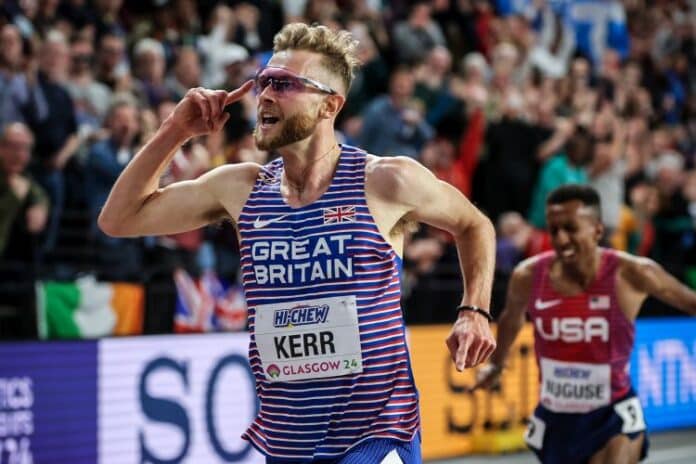
ALPES 2030: IOC Executive Board eliminates Nordic Combined, adds synchro figure skating and Freeride for 2030 Winter Games

The Sports Examiner: Chronicling the key competitive, economic and political forces shaping elite sport and the Olympic Movement.★

To get the daily Sports Examiner Recap by e-mail: sign up here!

≡ 2030 WINTER GAMES ≡

The long-awaited decisions on the sports program for the 2030 Winter Games in the French Alps were announced Tuesday by the International Olympic Committee:

Biathlon: Mixed Singles Team event added

Figure Skating: Synchro9 event added

Speed Skating: Men’s and women’s Team Sprint event added

Ski & Snowboard: Freeride was added as a discipline, with four events
Ski & Snowboard: Freestyle Ski Cross Mixed Team event added
Ski & Snowboard: Snowboard Mixed Team Parallel event added
Ski & Snowboard: Ski Jumping women’s Super Team event added
Ski & Snowboard: Nordic Combined removed

Ski Mountaineering: Continued from 2026, with five events.

In addition, the Snowboard Parallel Giant Slalom event was retained for 2030, after also being on the chopping block with Nordic Combined. As far as the Parallel Giant Slalom:

“The IOC EB noted that PGS – as part of the discipline of snowboard – had demonstrated significant improvement since Beijing 2022 across a number of popularity indicators. It was therefore decided to retain the PGS events on the Alpes 2030 programme, provided that they will not have a standalone field of play.”

The removal of Nordic Combined had been discussed by the IOC for several years, which saw too few countries competing in it and a concentration of medals among just a few countries, year after year. The International Ski & Snowboard Federation (FIS) had made a significant push in adding women’s Nordic Combined to its World Cup program, but now it’s out for 2030. This is a discipline that had been in every Winter Games since the beginning, in 1924. The IOC’s comment included:

“Across most of the popularity indicators, Nordic combined ranked lowest among all Olympic Winter Games disciplines at Sochi 2014, PyeongChang 2018, Beijing 2022 and Milano Cortina 2026. At the most recent Olympic Winter Games, it was the lowest-ranked discipline in 11 of the 14 popularity indicators assessed.

“In addition, the discipline continues to face challenges in terms of universality and participation at the Olympic Games. Only five National Olympic Committees (NOCs) won medals in Nordic combined across the last four editions of the Olympic Winter Games.”

During the follow-up news conference, it was explained that the affected International Federations had been kept clearly informed during the evaluation process, but that the actual decisions were not formally revealed until after the Executive Board meeting with all of the federations. 

The outcome of these changes allowed the IOC to announce its prized goal of equal numbers of men and women athletes at the Winter Games for the first time:

“Some 3,046 athletes (1,525 female and 1,521 male, including athletes in ski mountaineering proposed by the OCOG as an additional sport) are set to compete across 126 events – 56 for women, 55 for men and 15 mixed.”

Under the new IOC discipline evaluation process, all will be reviewed ahead of Utah 2034, based on a 14-point program, which has been provided to the International Federations, so they know what they have work on.

Receive our exclusive, weekday TSX Recap by e-mail by clicking here.
★ Sign up a friend to receive the TSX Recap by clicking here.
★ Please consider a donation here to keep this site going.

For our updated, 681-event International Sports Calendar for 2026 and beyond, by date and by sport, click here!
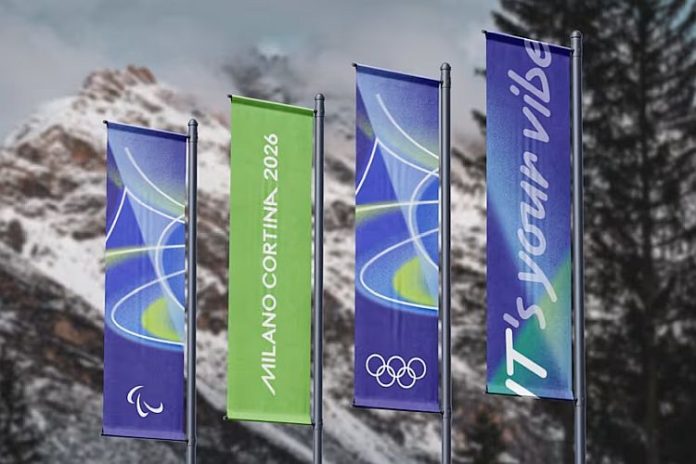
INT’L OLYMPIC COMMITTEE: IOC Executive Board provisionally reinstates Russian Olympic Committee, drops Russian athlete restrictions

International Olympic Committee President Kirsty Coventry (ZIM) listens at a 1 February 2026 news conference (IOC video screen shot).

The Sports Examiner: Chronicling the key competitive, economic and political forces shaping elite sport and the Olympic Movement.★

To get the daily Sports Examiner Recap by e-mail: sign up here!

≡ RUSSIAN RETURN ≡

The headline was this:

“IOC provisionally lifts suspension of Russian Olympic Committee – Recommendations to IFs with regard to Russian athletes’ participation no longer applicable”

The International Olympic Committee’s Executive Board, meeting online on Tuesday, followed up on the newly-passed Olympic Charter amendments to underscore the importance of the neutrality of sport, and agreed:

● “The International Olympic Committee (IOC) Executive Board (EB) has provisionally lifted the suspension of the Russian Olympic Committee (ROC) that had been in effect since 12 October 2023.”

● “The decision was taken following a thorough analysis by the IOC’s Legal Affairs Commission, considering that the ROC no longer includes as its members any regional sports organisations in territories falling under the jurisdiction of the National Olympic Committee (NOC) of Ukraine.”

● “In addition, the ROC confirmed that it does not, and will not, conduct any activities in these territories. The IOC EB will continue to closely monitor the situation relating to any ROC activities in those territories, and reserves the right to take any further measures if deemed necessary.”

The IOC issued recommendations asking International Federations not to have Russian or Belarusian athletes or officials in international sport quickly after the Russian invasion of Ukraine in February 2022. Now, most of those restrictions are over.

IOC President Kirsty Coventry (ZIM) explained in a follow-up news conference:

“We made it clear that we wanted to ensure all athletes have the possibility to compete at the Olympic Games and not be held responsible for their government’s actions, and I believe that is what this decision speaks to.

“It allows for Russian athletes to take part in sport competitions, but we’ve also been very clear that we do not condone any violence and war around the world, and we will continue with that stance.

“We also made it very clear that we would not be changing any of the recommendations when it pertains to state officials of Russia and we would not be taking a decision at this point to look at any potential events in Russia, so none of that has changed. …

“We will review the protocols around anthem and flag in the future.”

The Russian Olympic Committee was informed of the decision immediately following the Executive Board meeting. The IOC’s head of National Olympic Committee relations, James Macleod (GBR) also noted, “We have also had a conversation with the Ukrainian Olympic Committee and a number of other NOCs that have voiced their concerns around this matter.”

Macleod explained that the IOC Legal Affairs Commission “was set up in 2025 to look at the specific reasons for the suspension and whether those had been corrected. And they have been working for a whole year, gathering evidence, whether it has been submitted by the Russian Olympic Committee, or indeed, the Ukrainian Olympic Committee, to be able to have a very balanced view on that, and to come to a recommendation to the Executive Board, which they did today.”

As for Los Angeles 2028, the IOC’s statement indicated that the new Olympic Charter provisions will apply:

“In accordance with the Olympic Charter, and as applicable to all NOCs in general when selecting the athletes participating in the Olympic Games, the ROC must ensure that Russian athletes’ ‘selection [for the Olympic Games] shall be based not only on their sports performance, but also on their ability to serve as role models who respect, uphold and promote a peaceful society through sport as set forth in the Olympic Charter.’ (Bye-law 2.1 to Rules 27 and 28).”

As for doping, the statement further explained that any returning Russian athletes “must be part of a national (RUSADA/ROC) anti-doping programme (including risk assessment, test distribution plan and results management) that is delegated to the International Testing Agency (ITA).”

Seven International Federations have fully readmitted Russian athletes, but others have either allowed only “neutral” athletes or no Russian athletes at all.

Observed: This outcome was telegraphed by the changes to the Olympic Charter at the 146th IOC Session that was just completed. The IOC and the International Federations will now be faced with a series of problems created by this decision, including – at the least – inevitable protocol clashes when Russian and Belarusian athletes are face-to-face with Ukrainian and other Eastern European athletes whose own countries may be subject to Russian aggression.

The IOC’s next decision is on the Youth Olympic Games in Dakar (SEN) in November, where the Ukrainian Olympic Committee has asked for permission for its athletes not to attend ceremonies where the Russian flag and/or anthem are presented. There was no word on this today.

Receive our exclusive, weekday TSX Recap by e-mail by clicking here.
★ Sign up a friend to receive the TSX Recap by clicking here.
★ Please consider a donation here to keep this site going.

For our updated, 681-event International Sports Calendar for 2026 and beyond, by date and by sport, click here!
PANORAMA: Olympic jump star Davis-Woodhall admits to depression; U.S.’s Hunt sets Speed world record; FEI shows new high of 4,937 events in ‘25

American climbing star Emma Hunt after her 4 July 2026 Speed world record in Krakow, Poland (Photo: World Climbing).

The Sports Examiner: Chronicling the key competitive, economic and political forces shaping elite sport and the Olympic Movement.★

To get the daily Sports Examiner Recap by e-mail: sign up here!

≡ THE 5-RING CIRCUS ≡

● Olympic Games 2024: Paris ● One of the signature legacies of the 2024 Games was the re-opening of the Seine River for swimming and it continues in 2026, with the opening of three areas for public enjoyment.

Designated areas at Bercy (near City Hall), Grenelle (views of the Eiffel Tower) and eastern Paris at Bras Marie opened on Saturday (4th), under the observation of lifeguards and only when water quality tests show adequate conditions.

● Russia ● Another instance of visa refusal keeping a Russian team from competing in Europe, this time in archery, as Spain declined to allow entry of Russians to the World Archery World Cup in Madrid from 7-12 July.

A Russian squad of 13 competitors and six coaches had been lined up to compete.

● Athletics ●It feels, it sounds incredible. I just can’t really believe it.”

That was the reaction from 18-year-old Tate Taylor, the winner of the Pre Classic men’s 200 m in a lifetime best 19.75, no. 5 in the world for 2026, beating Paris Olympic champ Letsile Tebogo (BOT: 19.93). Headed to Texas Tech, he added:

“I really don’t even know what to say. … I was like, man, that’s just crazy ridiculous. I wasn’t going to expect to win this race. I knew it was going to be close. I told my dad, I told my coach, if they’re gonna beat me they’re gonna have to throw something crazy down to beat me, but I definitely wasn’t expecting to win.”

Even for the winners, it’s not all sunshine. Olympic and World champ Tara Davis-Woodhall took the women’s long jump at 7.13 m (23-4 3/4) and had three jumps over 23 feet, but said afterwards:

“Just to get here was a struggle this week. We’re dealing with some mental health problems. Just so you know, I have depression. I have anxiety. This week was really difficult. I couldn’t fathom just being here for some reason.

“I couldn’t get myself to like envision it, so the fact that I showed up today, the fact that I even gave myself a chance every single time. I have to show up for myself every single day because no one else will. My support team, oh my God, they’re the best people in the whole world. They just were here for me throughout the entire way and without them I wouldn’t be here and I’m just like grateful and thankful.”

● Cycling ● Favorite and four-time champion Tadej Pogacar (SLO) won the third stage of the 113th Tour de France as the race crossed over the border from Spain on Monday, and took the yellow jersey as the race leader.

Due to wildfires in the southern Pyrenees areas, the final 40 km of the 195.9 km route that started in Granollers in Spain and finished in Les Angles in France, was closed to spectators. There was an early crash, but the race finally came down to the major contenders with 11 km to go.

A pack of 10 raced to the finish and Pogacar crossed first in 4:45:11, two seconds up on two-time winner Jonas Vingegaard (DEN), Richard Carapaz (ECU) and France’s Paul Seixas. Pogacar and Vingegaard are tied on time, but Pogacar now gets the leader’s position on criteria.

● Equestrian ● The 136-member Federation Equestre Internationale published its annual report for 2025, showing an increase in total events staged last year, reaching an all-time high of 4,937. Of these, jumping continues to be the overwhelming leader:

● 1,790: Jumping ~ Olympic event
● 921: Endurance
● 868: Dressage ~ Olympic event
● 735: Eventing ~ Olympic event
● 315: Driving

There were small totals for Vaulting and for Para events. Jumping reached an all-time high in 2025 and the top countries holding events were the U.S. (613), France (522) and Italy (342).

In all, the FEI has 44,039 registered athletes, with the most in Jumping (24,958: 56.7%), followed by Endurance (6,205), then Eventing (5,498), Dressage (3,998) and Vaulting (2,022). France has the most athlete registrations with 5.494.

In terms of horses, there are 80,297 equine athletes registered, with 53,388 (66.5%) in Jumping, then 9,081 in Endurance and 8,866 in Eventing. France again led, with 11,313.

The federation’s finances showed CHF 87.103 million in assets (CHF 1 = $1.24 U.S.) and reserves of CHF 61.141 million. Revenues, including a portion of the International Olympic Committee television rights fee for 2024, totaled CHF 60.587 million and expenses were CHF 58.409 million for a surplus (after investment gains) of CHF 2.178 million. Essentially, the federation has a year’s worth of expenses in reserve.

Certainly solid, and positive considering the continuing growth in the number of events held, new athletes and horses registered.

● Sport Climbing ● While she finished third, American Emma Hunt became a barrier-breaker at the World Climbing Series Speed races in Krakow, Poland, winning her quarterfinal in 5.99, a world record and the first women to race under six seconds.

She broke the 2025 record of 6.03 by Poland’s Aleksandra Miroslaw, who ended up fourth in what she said was her final competition.

● Swimming ● Canadian teen sensation Summer McIntosh claimed a world record in a fourth event on Sunday with a brilliant 2:01.65 in the women’s 200 m Butterfly at the Canadian Swim Trials in Montreal. It was a mark she had been targeting, in part because it had been considered untouchable, as it was set in the “supersuit” era in 2009 at 2:01.81.

She told the CBC afterwards:

“That was the one world record that I’ve always dreamt of as a kid. To now do it is really incredible.

“As you can see my emotions, this is the absolute world [to me]. Growing up this is the one world record I thought I would never break and to do it tonight is really special in front of a home crowd. It means the absolute world and I’m in shock right now.”

She told the fans from the deck:

“Thank you so much for supporting me, you guys were the reason I broke it tonight. That last 50 was pure adrenaline and I could hear the crowd going crazy and I knew I was probably under or close to world-record pace so that’s really what kept me going.”

She won the women’s 400 m Medley on Monday in 4:27.35, the no. 8 performance in history; she now owns nine of the top 10. She also has her other world-record events on the program this week: the 400 m Free and 200 m Medley.

Receive our exclusive, weekday TSX Recap by e-mail by clicking here.
★ Sign up a friend to receive the TSX Recap by clicking here.
★ Please consider a donation here to keep this site going.

For our updated, 681-event International Sports Calendar for 2026 and beyond, by date and by sport, click here!
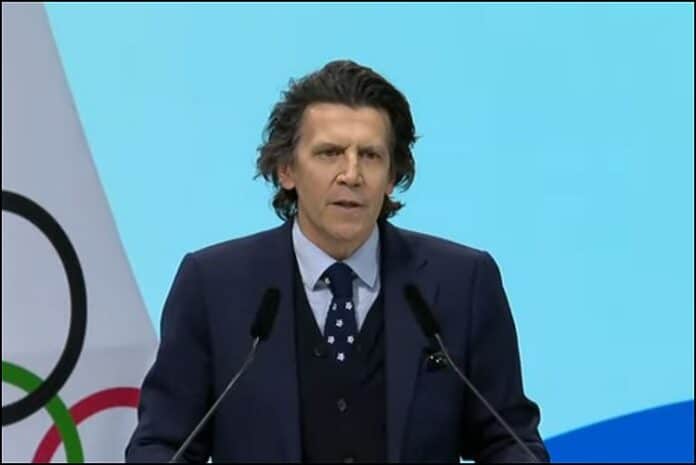
FOOTBALL: Fury at FIFA’s Balogun decision, racism aimed at Mbappe; Spain outlasts Portugal, 1-0, and Belgium clubs U.S., 4-1

The Sports Examiner: Chronicling the key competitive, economic and political forces shaping elite sport and the Olympic Movement.★

To get the daily Sports Examiner Recap by e-mail: sign up here!

≡ FIFA WORLD CUP ≡

The 2026 FIFA World Cup round-of-16 will finish tomorrow. Today, the reverberations of FIFA’s reinstatement of American striker Falorin Balogun were being felt across the sport.

U.S. President Donald Trump confirmed during a Monday briefing that he spoke to FIFA President Gianni Infantino (SUI) about the red card given to Balogun during the U.S.-Bosnia & Herzegovina match:

“All I did was ask for a review. I didn’t say, you have to do this. This man is a smart, tough man, Gianni Infantino. He’s a smart, tough man, and his stock has gone through the roof because the job he has done has been great. I feel like we have to have all the best players on the field.”

“I didn’t think it was a foul. I thought it was two great athletes that crashed each other and got entangled.

Further: “A U.S. official told ABC News that Trump and Infantino discussed why a red card was issued, and that the U.S. government provided additional evidence that was used in the appeal process.”

Infantino confirmed that he spoke to Trump, noting “During our conversation, I explained that there was an ongoing legal process involving FIFA’s independent judicial bodies and that the case would be decided in due course by the competent bodies. That is how FIFA’s system works, and it is a principle that I will always uphold.”

The European confederation, UEFA, went ballistic, posting Monday:

“Yesterday’s decision to suspend for a probationary period of a year the implementation of the one-match automatic suspension following the red card issued to the player Folarin Balogun crossed a red line. …

“When the certainty of rules is no longer guaranteed by its guardians, the integrity of the game is at stake and the credibility of a competition is undermined. Equally, such decision creates a precedent in the ongoing tournament, where similar situations will now require an equal treatment, to the detriment of the competition. …

“We express our disbelief at such an unprecedented, incomprehensible and unjustifiable decision.”

Red-card suspensions have been reduced or postponed from qualifying rounds to allow players to compete in the World Cup. The Associated Press reported:

“Balogun’s case seems to be the first since 1962 in which a sending-off during a World Cup match didn’t result in a suspension. On that occasion, the president of host nation Chile argued for Brazilian midfielder Garrincha to be allowed to play the final after he had kicked a Chilean opponent.”

The Belgian federation filed an appeal of the decision, but this was rejected on Monday: “The request was rendered inadmissible on the grounds that the RBFA is not a party to the proceedings and, as such, has no standing to appeal the decision.”

As for the games:

Spain 1, Portugal 0 These two ancient foes met in Arlington, and as usual, Spain was in possession from the start. But star forward Mikel Oyarzabal missed an open shot from the left side of the box in the 8th, just barely wide right. Portugal keeper Diogo Costa had to make back-to-back saves in the 16th off of shots by Lamine Yamal and Rodri to keep it scoreless.

Spain had 58% of possession and a 5-3 shots edge at the hydration break, still without a score. Portugal star strikers Joao Felix and Cristano Ronaldo both challenged Spain keeper Unai Simon in the 36th, but Simon saved both. In the 41st, a left-footed rocket from defender Nuno Mendes from just inside the box was deflected by Spanish defender Pedro Porro and hit the crossbar, bouncing away.

It was still 0-0 at half, with Spain holding 55% of the ball – much less than in its prior games – and leading on shots by 8-5 (and 3-2 for shots actually on goal). The second half was closely played, with both holding the ball, but still no score. At the second hydro break, Spain had 56% of possession and an 11-6 shots edge (but only 4-2 on shots on goal).

The “fourth quarter” was back and forth, but with tight defenses on both sides and a minimum of clear chances. Finally, at 90+1, off a free kick, Spain forward Ferran Torres had the ball above the box and sent a through ball into the middle of the box and midfielder Mikel Merino ran onto it and popped a shot to the left side of the Portugal net for the 1-0 lead very late.

At 90+6 in the final seconds, Portugal midfielder Bernardo Silva got to a header in the box and put it just over the crossbar, and at 90+8, a final header try by midfielder Joao Neves missed and it ended at 1-0.

Spain finished at 56% and 15-10 on shots. They were better, barely, but Spain advances, barely. It ends the great World Cup career of Ronaldo.

Belgium 4, U.S. 1The Belgians were on offense in Seattle right away, with defender Timothy Castagne sending a laser from the top of the box in the first minute that was saved by U.S. keeper Matt Freese.

It was warm at the start, with 80 F temperatures, and the Belgians were hot right away. And in the 9th, off a failed clearance, midfielder Nicholas Raskin sent a cross from left to right in front of the American net and striker Charles De Ketelaere ran onto it and scored on a tap-in for the 1-0 lead. Through the first 12 minutes, Belgium had seven shots to none for the U.S.

The U.S. finally got some possession at the 20-minute mark, but at the hydration break, Belgium had 56% possession and still 7-0 on shots.

Then, Balogun was fouled on top of the box in the 31st, giving the U.S. a free kick by Malik Tillman – who scored against Bosnia & Herzegovina – and his right-footed blast tipped off of Belgian defender Hans Vanaken and into the net for the 1-1 tie! It was the first American shot of the game.

Belgium was unimpressed and in the 33rd, rolled into the U.S. zone and at the left endline, forward Leandro Trossard sent another cross into the middle of the box and De Ketelaere headed it between two defenders for his second goal! 2-1.

The Belgians continued to control, but the U.S. got some late possession with Balogun being active in the box. But the half finished 2-1 and Belgium at 11-3 on shots and 53% possession.

The U.S. was more aggressive to start the second half, and had more possession. But in the 57th, Belgium got possession at midfield and a pass over the top by defender Brandon Mechele saw Freese come out to clear it, but his effort hit De Keteleare and rolled to Vanaken, who kicked the ball toward the American goal with Freese clear and U..S. defender Tim Ream could not stop it. 3-1.

U.S. midfield star Christian Pulisic was injured on a tackle in the 54th and had to come out in the 59th. At the hydration break in the 69th, Belgium had a 13-4 shots lead even as the U.S. now had 55% possession for the match.

The U.S. kept coming and sub midfielder Sebastian Berhalter had a close miss from the top of the box of the 79th and Balogun’s drive in the 82nd was saved by Belgian keeper Thibault Cortois. But at 90+3, a failed U.S. clearance at the left of goal was possessed by sub star striker Romelu Lukaku, who then rolled to the middle of the box and slammed home a right-footed strike for the 4-1 final.

The U.S. finished with 56% possession, but Belgium had 15-7 on shots. The American record against Belgium is now 1-7, with seven straight losses. In this century, the U.S. is now 2-7-6 (W-L-T) against European teams in the World Cup. Belgium moves on to face Spain.

All three host countries went out in the round-of-16.

≡ PANORAMA ≡

The round-of-16 runs from 4 to 7 July:

Tuesday, 7 July:
● Argentina vs. Egypt: In Atlanta (12 p.m. Eastern)
● Switzerland vs. Colombia: In Vancouver (4 p.m. Eastern)

After 27 straight days of matches, 8 July will be a football-free days in preparation for the quarterfinals on 9-10-11 July:

Thursday, 9 July:
● France vs. Morocco: In Foxborough. (4 p.m. Eastern)

Friday, 10 July:
● Spain vs. Belgium: In Inglewood. (3 p.m. Eastern)

Saturday, 11 July:
● Norway vs. England: In Miami Gardens. (5 p.m. Eastern)
● Argentina or Egypt vs. Switzerland or Colombia: In Kansas City. (9 p.m. Eastern)

Paraguayan Senator Celeste Amarilla posted racist messages on X about French star Kylian Mbappe after France’s tense and physical 1-0 win over Paraguay in the round-of-16, and after Mbappe ignored keeper Orlando Gill’s attempted handshake after the match:

“This brute hasn’t even learned to write; instead of mother’s milk, he sucked on coconuts, and the most educated thing he heard were chimpanzees. You should’ve shown him the finger, Orlando Gill; I do it in the senate and nothing happens!!!”

Mbappe responded on X:

“Madame Celeste Amarilla, You are a despicable woman and unworthy of your position. You do not represent Paraguay, that country which has sweated passion and honor throughout the competition.

“Through your recklessness and your brazen racism, the entire world has already forgotten the journey and the historic effort that your players accomplished during this World Cup, making way for an incompetent woman who gives the worst possible image of her country.

“I will never allow people like her the freedom to spread their hatred and racism across the world.”

Spanish reporter Romain Molina posted on X (computer translation of the original French):

“Several people on the UEFA board have been working behind the scenes for some time to put forward a candidate against Infantino [for FIFA President] in 2027

“Since the decision to curry favor with Trump (because that’s all it is), other leaders in world football – and not just European ones – have been discussing the idea of finding an alternative because ‘it’s no longer possible’

“That said, there’s often a difference between talking and acting, and a courage that the vast majority of football leaders sorely lack.”

Receive our exclusive, weekday TSX Recap by e-mail by clicking here.
★ Sign up a friend to receive the TSX Recap by clicking here.
★ Please consider a donation here to keep this site going.

For our updated, 681-event International Sports Calendar for 2026 and beyond, by date and by sport, click here!
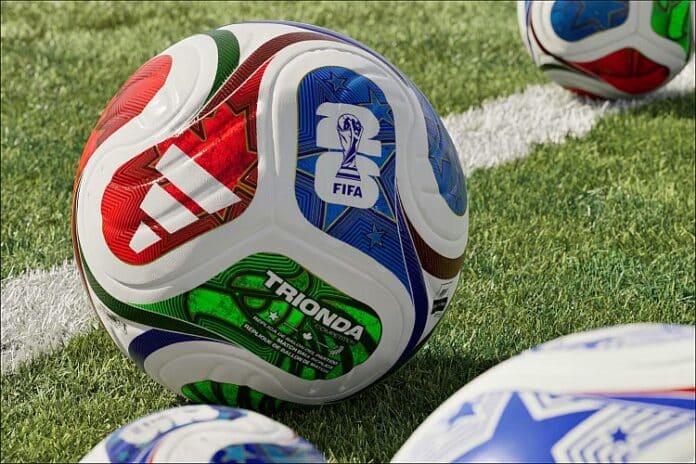
ATHLETICS: AIU ineligibles list expands to 736 total, with India, Kenya and Russia still at the top of the chart

The Sports Examiner: Chronicling the key competitive, economic and political forces shaping elite sport and the Olympic Movement.★

To get the daily Sports Examiner Recap by e-mail: sign up here!

≡ AIU SANCTIONS REPORT ≡

We’re halfway through 2026, so it’s time to revisit the Athletics Integrity Unit’s “Global List of Ineligible Persons” to look for trends in doping in track & field.

Unfortunately, there are more people than ever on this list.

The lengthy list shows 736 people on the roster, up from 683 people at the end of 2025 and 481 at the end of 2024, with 13 countries with 10 or more entries:

● 161 India (21.9% of the entire total)
● 148 Kenya (20.1%)
● 66 Russia (9.0%)
● 35 China (4.8%)
● 24 Ethiopia (3.3%)

● 20 Italy
● 19 South Africa
● 19 Turkey
● 19 Ukraine
● 17 United States

● 15 Morocco
● 13 Nigeria
● 10 Pakistan

So, the top three countries account for 51.0% of the total, and the total has risen 53.0% since the end of 2024! Compared with the top ten on the December 2025 list, and India has surged to the top:

● 140: Kenya
● 137: India
● 75: Russia
● 31: China
● 21: South Africa

● 19: Turkey
● 17: Ethiopia
● 17: Ukraine
● 15: Italy
● 15: United States

At the end of 2024:

● 119: Kenya
● 108: India
● 73: Russia
● 26: China
● 20: Turkey

● 18: Italy
● 18: South Africa
● 17: Ukraine
● 16: United States
● 15: Morocco

India, Kenya and Russia have been at the top of the listings now for multiple years; it’s worth noting that Indian ineligibles were 65 as late as 2022 and Kenyan ineligibles were 54 in 2022. China has also been rising, from 26 in 2024 to 31 at the end of 2025 and 35 now.

U.S. totals have stayed about the same: 16 at the end of 2024, then 15 at the end of 2025 and now 17 in mid-2026.

The AIU has been busy and it appears they are getting busier, and need to be. AIU Chair David Howman (NZL) said last December at the VI World Conference on Doping in Sport that the anti-doping movement cannot declare victory:

“But let’s be honest and pragmatic – the system has stalled. Intentional dopers at elite level are evading detection. We are not effective enough nowadays in catching cheats. We have great education programmes which help but they don’t impact the intentional rule-breakers in elite sport.

“Our ineffectiveness in dealing with those who are beating the rules is hurting the anti-doping movement’s credibility, with the resulting risk that our clean-sport message falls on deaf ears.”

He said that not only do anti-doping agencies need the most modern tools to find dopers, but that incentives to actually find cheaters – and not simply meet compliance standards – are needed. These have yet to be found.

Receive our exclusive, weekday TSX Recap by e-mail by clicking here.
★ Sign up a friend to receive the TSX Recap by clicking here.
★ Please consider a donation here to keep this site going.

For our updated, 681-event International Sports Calendar for 2026 and beyond, by date and by sport, click here!
FOOTBALL: Norway, Haaland dominate Brazil; England outlasts Mexico; Balogun ruled eligible at FIFA World Cup

The Sports Examiner: Chronicling the key competitive, economic and political forces shaping elite sport and the Olympic Movement.★

To get the daily Sports Examiner Recap by e-mail: sign up here!

≡ FIFA WORLD CUP ≡

Halfway through the round-of-16 and two eagerly-anticipated match-ups on Sunday, with the “lowest-price” tickets for the England at Mexico match reaching $4,894 three hours before kickoff, finally settling to $3,820 at the scheduled start.

Oh yes, Brazil is out and Norway’s Erling Haaland still cannot be stopped.

Norway 2, Brazil 1 It was hot at MetLife Stadium in East Rutherford – which will also be the site of the final – with 84 F temps and 64% humidity. But the game began coolly.

Norway controlled possession from the start, with Brazil content to look for counter-attacks – Brazil? – and the Vikings stunned with goal in the third minute from midfielder Patrick Berg with a right-footer in the box, but it was called off for offsides.

It looked like Brazil had a chance to take the lead in the 11th, as striker Matheus Cunha was submarined by Norwegian defender Kristoffer Ajer for a penalty (after a video review). Midfielder Bruno Guimaraes took the penalty in the 14th and it was saved cleanly by Norwegian keeper Orjan Nyland, guessing correctly to his left.

At the hydration break, Norway had 72% of possession, but the only two shots in the game were from Brazil.

There were some chances for both sides before the half, but no scores, with seven shots for Brazil, to four for Norway, which had 65% of possession.

The second half was more of the same: Norway with the ball and Brazil sitting back in defense. But they missed their opportunities; sub striker Endrick missed scoring on a breakaway in the 59th, and forward Rayan’s shot was saved by Nyland in the 62nd.

At the second hydro break, Norway continued at 68% possession with Brazil up on shots, 11-6.

Norway started taking advantage on the re-start, and striker Andreas Schjelderup’s blast was barely stopped by Brazil keeper Alisson in the 75th. Then Schjelderup sent a cross from left to right into the box and in front of goal in the 80th and super-scorer Haaland headed it into the goal for the 1-0 lead.

Nyland made another save in the 86th, deflecting a long try with his fingertips off the post! Then Haaland closed the door in the 90th, with a left-footed rocket from the top of the box flying past Alisson to the far right side of the net for the 2-0 lead. He scored his second goal on his 26th touch in the game and now has seven goals in the tournament, tied for the most.

A penalty was called at 90+9 on Norwegian defender Leo Ostigard for an elbow in the box on Casemiro. Sub striker Neymar took the penalty at 90+10 and scored easily for 2-1. That’s where it ended, with 66% possession for Norway, with Brazil at 14-9 for shots.

It’s Brazil’s sixth straight World Cup without winning it, a record drought that continues. Norway, playing in its first World Cup in 1998, is now in the quarters.

England 3, Mexico 2Rain delayed the start of the match at the Azteca in Mexico City, with 65 F temperatures to 7 p.m. local time. The game was tense from the start, with the first real chance on a header from forward Raul Jimenez in the 15th that was saved at the corner of the net by English keeper Jordan Pickford.

Mexico got off three shots by the hydration break to none for England and had 53% of possession. England was cautious, but Mexico was thinking offense.

Mexico dominated possession, but in the 36th, forward Bukayo Saka ran down the right side of the field, curled in and sent a perfect cross across the goal that was met by a header from star midfielder Jude Bellingham for a 1-0 lead.

Then England got possession again, and the ball was advanced to super-striker Harry Kane on the right side of the box and his cross found a steaming Bellingham coming again on the left side of goal and volleyed the pass into the net with his right foot in the 38th. Officially: 1:38 between the goals! And England had only 40% of the ball up to this point.

But Mexico was back on offense and in the 42nd, it closed to 2-1. A free kick from forward Roberto Alvarado came into the middle of the box, was deflected and then slammed into the net by star forward Julian Quinones. It’s his fourth goal of the tournament.

Mexico kept coming and Pickford stopped a header with his left hand from Jimenez at 45+3. Then defender Cesar Montes’ shot from point-blank range off a free kick was deflected by Bellingham to save a score. The half came at 2-1 and Mexico at 63% of the ball and 7-3 on shots … but down a goal.

And England had a chance to score quickly, as in the 49th, defender Nico O’Reilly got a good shot at the edge of the box, but his blast went off the crossbar. Then the game changed, as a tackle by English defender Jarell Quansah was ruled dangerous and he was removed with a red card, leaving England with 10 men, in the 54th.

But the unthinkable happened in the 58th, as Mexican keeper Raul Rangel tackled – with his hands – forward Anthony Gordon on a run into the box for a penalty! Kane lined up for the penalty and smashed it into the net and a 3-1 lead in the 60th.

In the 66th, a review for a possible penalty on Kane was confirmed on a try for a clearance. Jimenez took the penalty and converted to close to 3-2. The hydro break followed in an increasingly tension-filled game with Mexico at 60% and up to 10-5 on shots.

England stacked in the defense and saw through 90 minutes, but had to deal with 11 minutes ot stoppage time. Unbelievably, they managed it, with blocks, headers, some terrific work from Pickford – including a final punch on a corner – and with 33% of possession and with six shots to 20 for Mexico, it ended 3-2.

Mexico lost for the first time in a competitive match in the Azteca 13 years and only its third loss in the Azteca ever in competitive matches (70-3-17).

≡ PANORAMA ≡

The round of 32 is done. The round-of-16 runs from 4 to 7 July:

Monday, 6 July:
● Portugal vs. Spain: In Arlington (3 p.m. Eastern)
● U.S. vs. Belgium: In Seattle (8 p.m. Eastern)

Tuesday, 7 July:
● Argentina vs. Egypt: In Atlanta (12 p.m. Eastern)
● Switzerland vs. Colombia or Ghana: In Vancouver (4 p.m. Eastern)

After 27 straight days of matches, 8 July will be a football-free days in preparation for the quarterfinals on 9-10-11 July.

U.S. striker Folarin Balogun had his red-card suspension lifted by the FIFA Disciplinary Committee on Sunday:

“By operation of Article 27 [of the FIFA Disciplinary Code], the implementation of the automatic match suspension for USA player Folarin Balogun is suspended for a probationary period of one (1) year.”

He had received a red card for a tackle in the 64th minute of the win over Bosnia & Herzegovina; the relevant parts of article 27 read, “1. The judicial body may decide to fully or partially suspend the implementation of a disciplinary measure. 2. By suspending the implementation of the sanction, the judicial body subjects the person sanctioned to a probationary period of 1 to 4 years.”

The Associated Press reported that U.S. President Donald Trump called FIFA chief Gianni Infantino (SUI) about the red-card incident after the USA-B&H game.

So, Balogun will be available for the round-of-16 match against Belgium on Monday. The Belgian federation’s statement started with:

“The Royal Belgian Football Association (RBFA) is astonished by FIFA’s decision to declare suspended United States player Folarin Balogun eligible to play in the USA–Belgium match on Monday.”

Criticizing the decision as improper and unusual, the RBFA added, “In order to safeguard the legitimate rights of all participating teams and to protect the fundamental principles of fair play in our sport, both at this FIFA World Cup and at future editions of the tournament, the RBFA is investigating all potential options.”

After World Cup tickets for the group stage averaged $913 for the lowest “get-in” price, the 16 matches of the round-of-32 averaged $1,015 according to TicketData.com reporting.

Receive our exclusive, weekday TSX Recap by e-mail by clicking here.
★ Sign up a friend to receive the TSX Recap by clicking here.
★ Please consider a donation here to keep this site going.

For our updated, 681-event International Sports Calendar for 2026 and beyond, by date and by sport, click here!
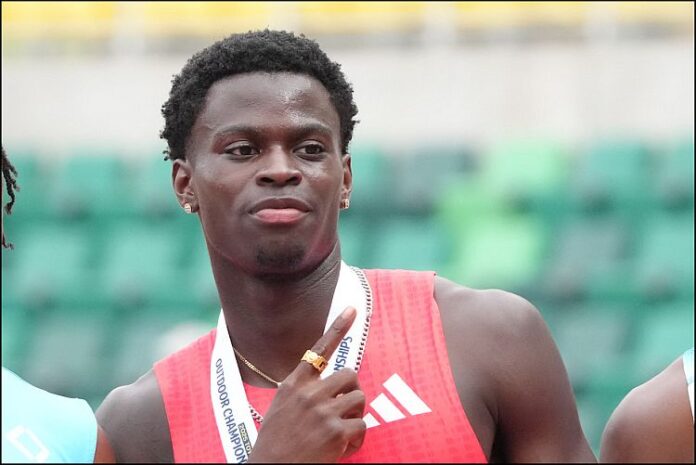
PANORAMA: Privately-built LA28 cricket site open in Pomona; McIntosh gets 200 Fly world record! U.S. dominates FIBA U-17 World Cup

Canadian swim star Summer McIntosh (Photo: Aniko Kovacs for World Aquatics).

The Sports Examiner: Chronicling the key competitive, economic and political forces shaping elite sport and the Olympic Movement.★

To get the daily Sports Examiner Recap by e-mail: sign up here!

≡ SPOTLIGHT ≡

● Swimming ● Canadian superstar Summer McIntosh, 19, claimed another world record on the first night of the Canadian Swimming Trials in Montreal, winning the women’s 200 m Butterfly in 2:01.65.

That shaves 0.16 off the “supersuit” world mark of 2:01.81 from 2009 by China’s Zige Liu, the last of the women’s polyurethane-suit records. McIntosh won by almost nine seconds, as Mary-Sophie Harvey was second in 2:10.58.

McIntosh now has world records in four events: the 400 m Freestyle in 2025; the 200 m Medley in 2025, the 400 m Medley in 2025 – all at the Canadian Trials – and now the 200 m Fly, also at the Trials. She plans to swim her other world-record events later in the week.

≡ THE 5-RING CIRCUS ≡

● Association of National Olympic Committees ● With the support of the Association of National Olympic Committees of Africa (ANOCA), Algerian Mustapha Berraf, the ANOCA President since 2018, is running to be the ANOC President with elections in December.

Berraf has been a member of the International Olympic Committee since 2019 and was close to former President Thomas Bach (GER). Other candidates are expected to join the race.

● Athletics ● Sad news that famed Jamaican coach Stephen Francis passed away on Saturday (4th) at just 64 years of age. As a founder of the Racers MVP club in Kingston in 1999, he coached such stars as Asafa Powell, Kishane Thompson, Shelly-Ann Fraser-Pryce, Elaine Thompson-Herah, Shericka Jackson and Tina and Tia Clayton.

MVP Track & Field Club President Bruce James said: “Stephen Francis changed the trajectory of Jamaican athletics for the better. He proved that Jamaican athletes, guided by Jamaican coaches, supported by Jamaican management, and training in Jamaica, could become the very best in the world.”

A new world lead in the men’s triple jump on Friday evening in Barletta (ITA) as World Indoor champion Andy Diaz reached 17.72 m (58-1 3/4). It’s his third-best jump ever and his only fair jump of the meet!

● Bobsled & Skeleton ● USA Bobsled & Skeleton agreed to extend chief executive Aron McGuire’s contract through the 2030 Olympic Games. McGuire has been in place since 2020 and has expanded the federation’s commercial reach as well as continuing to succeed on the ice, with six Olympic medals combined in 2022 and 2026 and seven World Championship medals in the last four years.

From the 2019-20 season to the 2024-25 season, USABS annual operating revenues grew from $3.10 million to $4.42 million, a 43% increase. Assets grew from $4.30 million to $6.27 million, up 46%.

● Cricket ● The new home field in Pomona, California for the Los Angeles Knight Riders of Major League Cricket opened for play on Thursday, 2 July 2026, losing to the Washington Freedom, 110/4 in 17.1 overs to 108/10 in 17.5.

The Associated Press reported that about 2,000 people attended the opener of the Knight Riders Cricket Ground. The $21 million facility was built and opened in about 70 days, with seating for 5,000 and lit for night matches, that will be expanded to 20,000 next year.

The site will be used for the 2028 Olympic tournament as cricket returns to the Games for the first time since 1900.

● Swimming ● SwimSwam.com reported that the International Swimming League, dormant since 2021, sent a letter to athletes owed money from the third season, for which many have been either unpaid, or only partially paid. It included:

“ISL will pay your outstanding prize money in four equal annual instalments, totalling 100% of the amount owed to you.

“The first instalment of 25% will be paid by December 31st 2026, with subsequent instalments no later than December 31st 2027, December 31st 2028, and December 31st 2029 respectively.”

ISL is targeting a return in late 2026 or 2027; it lost money in each of its three seasons of $20 million ro more.

≡ RESULTS ≡

● Badminton ● At the BWF World Tour Canadian Open in Markham, Japan won four of the five titles, with Riko Gunji (JPN) taking the women’s Singles over Line Christophesen (DEN), 21-15, 15-21, 21-6. The men’s final was all-Japan with Yudai Okimoto sweeping Riki Takei, 21-13, 21-3.

Denmark won the men’s Doubles and Japanese teams won the women’s Doubles and Mixed Doubles.

● Basketball ● The U.S. had won all seven editions of the FIBA Boys U-17 World Cup and rolled into the final of the 2026 edition in Istanbul (TUR). The Americans were 3-0 in group play, winning 115-84, 128-66 and 131-80.

In the playoffs, they beat Cameroon, 141-85; Puerto Rico by 149-82 and Australia by 114-65 in the semifinals. The final was against 5-1 Serbia, with the U.S. piling up a 30-19 lead at the quarter and 57-45 lead at the half. The Americans finished with a convincing 107-81 win, with forwards Clarence Rosser Jr. scoring 27 points and Joaquim Boumtje Boumtje adding 20, as the U.S. shot 53.6% from the field.

Australia won the third-place game over Turkey, 77-69.

In the third window of the FIBA World Cup 2027 Americas Qualifying, the U.S. men’s team of G League players and free agents managed a 82-81 win over the Dominican Republic in Santo Domingo, thanks to a game-winning three-pointer from Torrey Craig.

The next game comes on 8 July against Mexico in Zacatecas City. The U.S. leads Group A at 4-1 so far.

● Beach Volleyball ● At the Beach Pro Tour Elite 16 in Gstaad (SUI), it was an all-American women’s final as 2025 Worlds runner-ups Kristen Cruz and Taryn Brasher won over Megan Kraft and Kelly Cheng, 21-19, 21-15. It was the ninth Elite 16 or Finals win for Cruz and Brasher.

In the third-place match, Katja Stam and Raisa Schoon (NED) swept Americans Julia Donlin and Lexy Denaburg, 21-19, 21-11.

The men’s final was won by Stefan Boermans and Alexander Brouwer (NED) over Americans Trevor Crabb and Chase Budinger in a three-set battle, 26-28, 21-17, 15-11. It was the first Elite 16 win for the Dutch pair.

Third place went to Evandro Oliveira and Arthur Lanci (BRA), 22-20, 21-16, over Philipp Waller and Moritz Pristauz (AUT).

● Cricket ● Australia won the ICC Women’s T-20 World Cup, held in England for its seventh title in the 10 editions of the event.

The Aussies went 5-0 in the group stage, while England won the other group, also at 5-0. Both advanced to the final, with Australia winning by seven wickets: 153/3 (17.1 overs) to 150/4 (20 overs). It was the fourth title in the last five tournaments for Australia.

● Cycling ● The 113th Tour de France got started in Spain with a Team Time Trial in Barcelona, won by Team Visma-Lease A Bike, led by two-time Tour winner Jonas Vingegaard (DEN), in 21:47.

Sunday’s individual stage of 168.5 km from Tarragona to Barcelona, with a modest hill in the middle, ended up with a 13-rider sprint that came down to the four leading contenders in the race, won by Mexico’s Isaac del Toro in 3:40:01, followed by teammate four-time champ Tadej Pogacar (SLO), Belgian Remco Evenepoel and Vingegaard. Vingegaard continues as the race leader, with Pogacar six seconds behind.

France extended its winning streak at the UCI Mountain Bike World Series to three in a row in La Thuile (ITA), with Luca Martin, the 2024 World U-23 Champion, taking his second straight Cross Country Olympic race win, in 1:24:36. Well behind were teammates Mathis Azzaro (1:25:43) and Adrien Boichis (1:25:56). American Bjorn Riley was fourth (1:26:32).

The Short Track race was won by Boichis (19:39) over Martin (19:40).

Rio 2016 Olympic champion Jenny Rissveds (SWE) won the women’s Short Track in 20:27, a second ahead of Swiss Sina Frei and American Savilla Blunck (20:43). Sunday’s Cross Country Olympic race was won by Italian Martina Berta, the 2024 Worlds bronzer, in 1:31:04, ahead of Blunck (1:31:16).

The men’s Downhill was won by Britain’s Jordan Williams in 3:25.767, ahead of American Asa Vermette (3:26.728). World Champion Valentina Hoell (AUT) was the women’s winner in 3:58.469, with Swiss Lisa Baumann a close second (3:58.744).

● Gymnastics ● Belarus women went 1-2 at the World Gymnastics Trampoline World Cup in Coimbra (POR), with Katsiaryna Yarshova winning at 58.57 ahead of Olympic silver winner Viyaleta Bardzilouskaya (57.94). China’s Tokyo 2020 champion, Xueying Zhu, was third (57.84).

The men’s title went to 2025 World Champion Zisai Wang (CHN: 67.01) over Olympic winner Ivan Litvinovich (BLR: 66.03) and Paris bronze medalist Langyu Yan (CHN: 65.91).

Yarshova and Zlata Miniakhmetava won the women’s Synchro; Portugal’s Lucas Santos and Gabriel Albuquerque won the men’s Synchro final. Americans Lourens Willekes and Cody Gesuelli were seventh. The U.S.’s Aliah Raga won the women’s Double Mini (26.20) and Ruben Padilla won the men’s title (32.00).

● Sport Climbing ● The World Climbing Series in Krakow (POL) was focused on Speed, with a strong American performance, starting with Paris 2024 bronze medalist Samuel Watson claiming the men’s gold in 4.60, over China’s Yicheng Zhao (4.69).

The women’s win went to 2023 World Champion Desak Made Rita Kusuma Dewi over Poland’s 2021 Worlds winner, Natalia Kalucka, 6.54 to 6.62. Emma Hunt of the U.S. took the bronze.

The U.S. won the Speed Mixed Relay with Watson and Hunt setting a combined world record of 11.00 in the semifinals and then another WR in the final at 10.89. Indonesia won silver in 11.30.

The men’s Speed Relay was won by China (11.07) over the U.S. (11.72); China also won the women’s relay in 12.89 over Poland (14.00).

● Table Tennis ● At the second U.S. Smash was in Ontario, California, it was an all-China women’s final, with top-seeded World Champion Yingsha Sun outlasting Man Kaui by 4:3 (11-9, 11-6, 9-11, 11-5, 7-11, 10-12, 11-4).

The men’s final saw sixth-seed Sora Matushima (JPN) defeat Russian “neutral” Vladimir Sidorenko by 4:2 (11-5, 11-13, 11-7, 11-4, 5-11, 11-7).

The men’s Doubles was an all-China final, as Rubio Wen and Licen Yuan upset top-seeded Shidong Lin and Youzheng Huang, 3:2 (11-9, 8-11, 6-11, 1-7, 11-9). China’s top-seeded Manyu Wang and Man Kuai won the women’s Doubles over Miwa Harimoto and Hina Hayata, 3:1 (13-11, 4-11, 14-12, 11-8). In the Mixed Doubles final, South Korea’s Jooghoon Lim and Yubin Shin defeated China’s Chuqin Wang and Yingsha Sun, 3:2 (11-9, 6-11, 7-11, 11-7, 11-8).

● Water Polo ● The seventh World Aquatics Boys U-18 World Championship was in Rio Maior (POR), with Croatia winning its second title with a 7-6 penalty shoot-out win over the U.S., which won its first-ever medal in this event.

The Americans were 2-1 in pool play, then edged Hungary, 12-11, in the quarters and beat Montenegro by 17-13 in the semis. The final was 14-14 in regulation time and went to a penalty shoot-out, won by the Croatians, 7-6 (formally, a 21-20 final score).

Tyler Anderson of the U.S. was chosen as Most Valuable.

Receive our exclusive, weekday TSX Recap by e-mail by clicking here.
★ Sign up a friend to receive the TSX Recap by clicking here.
★ Please consider a donation here to keep this site going.

For our updated, 681-event International Sports Calendar for 2026 and beyond, by date and by sport, click here!
FOOTBALL: Moroccan strikes sink Canada; Mbappe’s penalty punishes Paraguay as FIFA World Cup round-of-16 opens

The Sports Examiner: Chronicling the key competitive, economic and political forces shaping elite sport and the Olympic Movement.★

To get the daily Sports Examiner Recap by e-mail: sign up here!

≡ FIFA WORLD CUP ≡

Things are getting serious now, in the round of 16. It’s worthwhile to observe that despite all of the great play by smaller countries and that nine of 10 African teams made it to the round-of-32, Europe and South America are once again – as usual – responsible for most of those still playing:

2026: 7 Europe, 4 South America, 3 CONCACAF, 2 Africa, 0 Asia
2022: 8 Europe, 2 South America, 1 CONCACAF, 2 Africa, 3 Asia (in QAT)
2018: 10 Europe, 4 South America, 1 CONCACAF, 0 Africa, 1 Asia (in RUS)
2014: 6 Europe, 5 South America, 3 CONCACAF, 2 Africa, 0 Asia (in BRA)
2010: 6 Europe, 5 South America, 2 CONCACAF, 1 Africa, 2 Asia (in RSA)

The winners of today’s matches will meet in the quarters on 9 July in Foxborough, Massachusetts.

Morocco 2, Canada 0 Outside temperature were 92 F in Houston, but the round-of-16 opened indoors in NRG Stadium with Canada all over the Moroccan zone from the kick-off. But no goals were scored by the 24th-minute hydration break, despite 61% possession for Canada and four shots to none. For Morocco, they also lost star forward Ismael Saibari to injury in the 22nd, with Soufiane Rahimi replacing him.

The stands were a sea of red – the prime color of both teams – and Morocco was continuously on defense and tempers flared in the 40th with yellow cards booked for both teams. The half ended scoreless with Canada at 67% possession, but just four shots; Morocco had one. More to the point, Canada committed 15 fouls and Morocco 6, Morocco received four yellow cards to Canada’s two.

The second half started the same way, but Morocco got loose in the 50th, off a free kick from the right side by defender Achraf Hakimi, a pass to the left to midfielder Azzedine Ounahi resulted in a right-footed laser that flew through the defense and into the Canadian net for the 1-0 lead on Morocco’s second shot of the game!

Canada continued to push, and the game saw two more yellow cards; at the second hydro break, Canadian possession was down to 62% and shots were still just 5-2 (that’s one shot apiece in the “third period”).

All of the offense was from Canada, then came a fast break for Morocco in the 82nd, with a pass forward to midfielder Brahim Diaz, who dribbled to the right, then stopped and passed left for a one-timer from Ounahi that flashed into the right side of the net for a 2-0 lead.

A third goal almost came in the 85th as a pass this time from Ounahi to the middle of the box for Rahimi resulted in a header that hit the crossbar!

The Moroccans were on the defensive for much of the game, but won handily, making it a 3-0 final with Rahimi scoring almost at the end, on the 98th, on a pass from right to left from Diaz, and then a right-footed finish.

Morocco actually ended with 56% possession, but had just five shots to 11 for Canada. The game had 38 fouls, 24 by Canada. But Morocco is in the quarterfinals once again.

France 1, Paraguay 0 This match started at Lincoln Financial Field in Philadelphia at 5 p.m. Eastern time with 98 F temperatures and 38% humidity. Ugh.

The Paraguay approach was simple: defend. It worked well in the first half, despite 81% possession for France; they had only one shot before the first hydration break, and that came at the 22-minute mark. But the game was also testy, with a face-off between the teams in the 35th minute and some pushing and shoving.

It was scoreless at the half, with France at 80%, and a 5-2 edge on shots. But no goals – and no shots on goal! – and 96 F temps to start the second half. Happily, the field was finally covered in shade by the 60-minute mark.

The French continued to press in the second half, and got closer to a goal, but a major break in the game came in the 67th. Paraguay midfielder Diego Gomez tripped sub forward Desire Doue in the box as he zig-zagged between three defenders, leading to a video review and a penalty.

French superstar scorer Kylian Mbappe stutter-stepped, then sent a liner into the far right side of the goal in the 70th for a 1-0 lead. The second hydro break came with the French at 78% of the ball and 11-3 on shots.

Paraguay kept chasing a goal, but a French fast break in the 89th saw Mbappe smash a liner from distance that was impressively saved by Paraguay keeper Orlando Gill. Then Paraguay got a turnover in the French zone and French keeper Mike Maignan had to make the save on a drive from midfielder Mauricio.

With Paraguay pressing, a fast break at 90+6 ended with Mbappe taking two shots at goal – including a rebound – and Gill saved both to keep his team in the game. It ended 1-0, with France ending at 76% of possession, France up 15-5 on shots and Paraguay with 13 fouls to 11.

Confirmed: France will meet Morocco in the quarters on 9 July in Foxborough; France beat Morocco, 2-0, in the 2022 World Cup semis.

≡ PANORAMA ≡

The round of 32 is done. The round-of-16 runs from 4 to 7 July:

Sunday, 5 July:
● Brazil vs. Norway: In East Rutherford (4 p.m. Eastern)
● Mexico vs. England: In Mexico City (8 p.m. Eastern) ~ subject to change due to possible thunderstorms

Monday, 6 July:
● Portugal vs. Spain: In Arlington (3 p.m. Eastern)
● U.S. vs. Belgium: In Seattle (8 p.m. Eastern)

Tuesday, 7 July:
● Argentina vs. Egypt: In Atlanta (12 p.m. Eastern)
● Switzerland vs. Colombia or Ghana: In Vancouver (4 p.m. Eastern)

After 27 straight days of matches, 8 July will be a football-free days in preparation for the quarterfinals on 9-10-11 July.

Receive our exclusive, weekday TSX Recap by e-mail by clicking here.
★ Sign up a friend to receive the TSX Recap by clicking here.
★ Please consider a donation here to keep this site going.

For our updated, 681-event International Sports Calendar for 2026 and beyond, by date and by sport, click here!

ATHLETICS: Mile world leads for Myers and Hiltz, plus Fabbri, as Taylor shocks Tebogo in 200 at Pre Classic

Photo finish of Melissa Jefferson-Wooden and Sha’Carri Richardson in a 1-2 finish in the 2026 Pre Classic women’s 100 m (Omega finish photo).

The Sports Examiner: Chronicling the key competitive, economic and political forces shaping elite sport and the Olympic Movement.★

To get the daily Sports Examiner Recap by e-mail: sign up here!

≡ PRE CLASSIC ≡

It was another hot meet at the Prefontaine Classic in Eugene, Oregon, with three world leads, but a dozen more stories behind them:

Men/Mile: 3:46.06, Cam Myers (AUS)
Men/Shot Put: 22.74 m (74-7 1/4), Leonardo Fabbri (ITA)
Women/Mile: 4:17.49, Nikki Hiltz (USA)

Australia’s Myers rolled to the front and took the bell ahead of Hobbs Kessler and Yared Nuguse. Myers kept the lead into the final straight and ran away from an excellent field to win in an outdoor world-leading 3:46.06, a week after his world-leading 3:28.00 1,500 m at the Paris Diamond League! Nuguse was second in 3:46.61 and Ethan Strand came on during the final 100 m to get third in 3:46.97, ahead of Kessler (3:47.48). Myers moves to no. 8 on the all-time list, with a national record; he just turned 20. Wow.

Two-time World Champion Joe Kovacs of the U.S. set the pace with the first throw of the men’s shot at 21.02 m (68-11 3/4). That inspired world leader 2023 Worlds runner-up Fabbri, who exploded to 22.74 m (74-7 1/4), the 2026 world leader! Jamaican Olympic bronzer Rajindra Campbell fired up to 22.16 m (72-8 1/2) in the first round to move into second, and then American Jordan Geist passed Kovacs at 21.55 m (70-8 1/2). In fact, Kovacs was sixth after round one.

Geist reached 21.98 m (72-1 1/2) in round two and Tripp Piperi jumped to fourth at 21.70 m (71-2 1/2) in round five. But Fabbri could not be caught and stands atop the world list.

Triple Olympic 1,500 m champ Faith Kipyegon (KEN) was back for another Pre Classic appearance in the women’s mile, and she and Paris 2024 silver medalist were 1-2 with two laps to go. Kipyegon took the bell, with a half-dozen in contention, and U.S. champ Hiltz moved up on her shoulder with 200 m to go.

Kipyegon was in front on the straight, but Hiltz and Dorcus Ewoi (KEN) both got past Kipyegon in the final 25 m and Hiltz won in a world-leading 4:17.49, with Ewoi at 4:17.62 and Kipyegon third in 4:17.80. It’s the no. 6 performance all-time U.S. outdoors for Hiltz.

Those were great, but the sprints and hurdles were even wilder:

Men/100 m: World Champion and world leader Oblique Seville (JAM) was in lane seven, with no. 2 Kayinsola Ajayi (NGR) in four. Ajayi was out well, but so was Seville, but Ajayi – who won the NCAA title for Auburn – ran away in the final 40 m to win in 9.84 (+0.1) to equal his lifetime best. He left no doubt, with Seville a clear second in 9.89, then Americans Christian Coleman in 9.95 and Kenny Bednarek in 9.96.

Men/200 m: Paris Olympic 200 m champ Letsile Tebogo (BOT) was in lane seven, but a scratch allowed high school record man Tate Taylor to enter in lane three. Jamaica’s Bryan Levell was in the lead off the turn, but on the straight, Taylor blew away the field and won in a startling 19.75, into a 0.9 m/s headwind! Tebogo was a well-beaten second in 19.93, then Maka Charamba (ZIM) in 20.11, with Levell fading to fifth in 2020.

Taylor – who is 18 – had a best before today of 19.94, and was a 20.14 guy coming into the season! He’s now no. 3 all-time on the World Junior list.

Men/110 m hurdles: New world-record holder Ja’Kobe Tharp is a pro now and faced an all-star field, including World Champion Cordell Tinch and rising star Jamal Britt. Tharp was out well, but so was Britt and Britt took over in mid-race and won decisively in 12.86 (+1.8 m/s), a lifetime best and now no. 5 all-time (and equal-5th performance)! Tharp was second in 12.91, with DeMario Prince (JAM: 13.01) and Tinch (13.07) following.

Britt started the season with a best of 13.07, equaled that four times and now has four more PRs in 2026. Amazing. Olympic champ Grant Hoilloway was in the NBC booth for the meet and said before the race that he tore his hamstring in January, and is working his way back.

Women/100 m: This was expected to be hot and the heats were won by collegiate record holder Adaejah Hodge (UVB) at 10.82 (-0.2) over 2023 World Champion Sha’Carri Richardson (10.83) and reigning World Champion Melissa Jefferson-Wooden at 10.95 (-0.2).

In the final, Jefferson-Wooden got the best start and she and Richardson were close through the finish, with Jefferson-Wooden getting the nod in 10.78 with Richardson at 10.79. Hodge was third at 10.80 and made up ground over the final 50 m. Jamaican Jonielle Smith was fourth in 10.89.

Women/100 m hurdles: One of the best fields in the history saw World Indoor winner Devynne Charlton (BAH) get out best, but to her right was Olympic champion Masai Russell of the U.S. Russell took over in the middle of the race and was a clear winner of 12.24 (+0.8), with world-record holder Tobi Amusan (NGR) coming on late to get second in 12.34 and Charlton third in 12.41. Russell’s 12.24 is the equal-10th performance all-time.

There was a lot more:

The men’s 400 m had World Champion Collen Kebinatshipi (BOT) in lane five and he took the lead right away, But 400 m hurdles Olympic champ Rai Benjamin started well and was strong on the turn and came into the straight with the lead. Kebinatshipi pushed hard in the final 50 m and got to the line first in 44.00 to 44.11, a lifetime best for Benjamin! Chris Bailey was third in 44.58, ahead of Jacory Patterson in 44.88.

World-record holder Mykolas Alekna (LTU) was in front of the men’s discus after round one at 68.81 m (225-9), but 2022 World Champion Kristjan Ceh (SLO) moved into the lead in round three at 69.94 m (229-5). But Alekna was not done, and exploded into the lead in round five at 71.96 m (235-9). That held up to win, with Ceh second and Paris Olympic champ Roja Stona (JAM) in third at 67.42 m (221-2) in round three.

NCAA champ Sanu Jallow (GAM) took the bell in the women’s 800 m, but Olympic champ Keely Hodgkinson (GBR) had the lead with 200 m to go. She led into the straight, then Kenyan Lilian Odira took over on the straight and won easily in 1:56.19, with Hodgkinson in 1:56.73 and American Addy Wiley coming up for third in 1:57.70. Jallow was fourth in 1:58.12.

The women’s Steeple saw a breakaway by Tokyo Olympic champ Peruth Chemutai (UGA), Paris Olympic champ Winfred Yavi (BRN) and World Champion Faith Cherotich (KEN), followed by Kenyan Doris Lemngole and two-time Olympian Marwa Bouzayani (TUN). The Tunisian took the lead with two laps to go, but Yavi took the bell with Cherotich just behind. But Cherotich took over with 200 m to go and ran away from Yavi to win in 8:51.74 to 8:52.84, with Bouzayani third in 8:54.32.

Ethiopian Asayech Ayichew had the lead in the women’s two-mile with three laps to go, then countrywoman Aleshigh Baweke took over with two laps left. Then Hirut Meshesha took the bell and it was she and Baweke 1-2 into the final turn. Baweke had the speed on the straight to win in 9:20.02, with Meshesha at 9:20.20 and American Shelby Houlihan coming up for third in the straight in 9:21.42.

The women’s long jump was blown open in round one by World Indoor silver winner Larissa Iapichino (ITA) at 7.12 m (23-4 1/2) , but Olympic champ – and world leader – Tara Davis-Woodhall had an answer, taking over at 7.13 m (23-4 3/4) in round two. Alyssa Jones moved up to third at 6.99 m (22-11 1/4) in round three, while Davis-Woodhall jumped 7.06 m (23-2) just to back up her leading mark. American Monae Nichols got out to 7.05 mw (23-1 3/4w) to move into third in round four.

Davis-Woodhall rode the wind – at 4.4 m/s – to a 7.12 mw (23-4 1/2w) in the final round and finished as the winner with three jumps over 7 m!

American Chase Jackson, the two-time World Champion, was looking for a big mark in the women’s shot and took the first-round lead at 20.56 m (67-5 1/2) over world leader Jessica Schilder (NED: 20.11 m/65-11 3/4). That’s how it ended, with Fanny Roos (SWE) in third at 19.70 m (64-7 3/4).

In the women’s hammer, Olympic and World Champion Cam Rogers (CAN) got busy in the first round and powered out to 77.81 m (255-3) and dared anyone to catch her. It took until the sixth round, but China’s Worlds bronzer Jiale Zhang finally did, reaching 77.94 m (255-8) to steal the win! American DeAnna Price, the 2019 World Champion, was third most of the day but got her best in the final round as well, at 76.95 m (252-5).

Next up on the Diamond League schedule is Herculis meet in Monaco on 10 July (Friday).

Receive our exclusive, weekday TSX Recap by e-mail by clicking here.
★ Sign up a friend to receive the TSX Recap by clicking here.
★ Please consider a donation here to keep this site going.

For our updated, 681-event International Sports Calendar for 2026 and beyond, by date and by sport, click here!
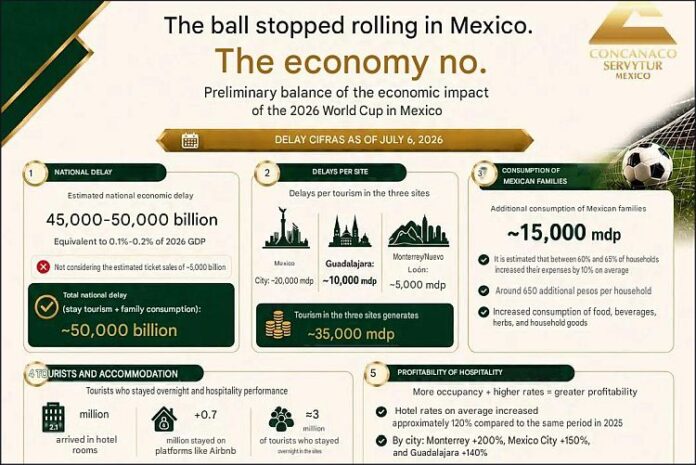
ATHLETICS: World Athletics Council maintains full ban on Russia, Belarus in latest review

The Sports Examiner: Chronicling the key competitive, economic and political forces shaping elite sport and the Olympic Movement.★

To get the daily Sports Examiner Recap by e-mail: sign up here!

≡ RUSSIA STILL BANNED ≡

“The Council reaffirmed the decision it made in March 2022, revisited in 2023 and 2025 and discussed again in March 2026 to exclude Russian and Belarusian athletes, officials and supporting personnel from international competition.”

That’s the short summary of the outcome of the latest World Athletics Council’s review of deliberations on the question of Russian and Belarusian participation in athletics, which has been essentially banned since the 2016 explosion of the state-sponsored doping scandal in place from 2011-15.

Doping and the war against Ukraine have been the drivers of the World Athletics ban, even as seven other International Federations have reinstated Russian and Belarusian athletes and more have allowed competition on a “neutral” basis. The last doping-related ban by World Athletics was lifted in March 2025.

The World Athletics Council, meeting online, decided to maintain its outright ban. Per the announcement:

“In its deliberations, the Council was cognisant of the wider impact of the conflict on Ukraine athletics, for example, the ability to hold domestic competitions regularly, impacting on their ability to achieve qualification standards and/or earn ranking points, the numbers of Ukrainian athletes who are able to compete, and the severely compromised athletics infrastructure within Ukraine, coaches and support personnel.

“The dedicated fund that World Athletics established in 2022 to support Ukraine is helping ameliorate some of that impact, but there is no doubt the ability of Ukraine and its athletes to train and compete remains severely compromised.”

World Athletics President Sebastian Coe (GBR) explained further:

“The Council and the Working Group on the status of Russians/Belarusians in International Competitions & Events have been consequential and methodical in reviewing the sanctions imposed on Russia and Belarus and in identifying a conditional pathway back into international competition.

“We presented options for the Council to consider on this matter, however, the original decision remains on the sanctions that protect the integrity and fairness of our competitions, with no tangible movement towards peace negotiations having materialised.”

The Russian Athletics Federation was, of course, unhappy; its statement included:

“Russian Athletics is disappointed by yet another discriminatory decision by the World Athletics Council to bar Russian athletes from participating in competitions held under the auspices of World Athletics.

“It is clear that this decision runs counter to Olympic principles and to current trends in global sport.

“Of particular concern is the fact that an entire generation of young athletes has no opportunity to compete at a high international level. This deprives them of an important stage in their careers and reduces their chances of further progress. This applies, above all, to youth and junior athletes who consistently deliver strong results, feature in the top European and world rankings, and are rightly regarded as medal contenders at the European Championships, World Championships and Youth Olympic Games.

“Our main objective is the return of Russian athletes to the international arena. Russian Athletics is firmly committed to using all available mechanisms to achieve this goal.”

An appeal to the Court of Arbitration for Sport may be the next step for the Russian federation.

Receive our exclusive, weekday TSX Recap by e-mail by clicking here.
★ Sign up a friend to receive the TSX Recap by clicking here.
★ Please consider a donation here to keep this site going.

For our updated, 681-event International Sports Calendar for 2026 and beyond, by date and by sport, click here!
ATHLETICS: World leads from Katzberg and Wolfe at Pre Classic, and a surprise men’s 800 m win for Miller!

Another win for two-time World Indoor Champion Sandi Morris of the U.S. (Photo: Tim Healy for TrackTown USA)

The Sports Examiner: Chronicling the key competitive, economic and political forces shaping elite sport and the Olympic Movement.★

To get the daily Sports Examiner Recap by e-mail: sign up here!

≡ PRE CLASSIC ≡

The Prefontaine Classic is a two-day affair in 2026, with a tantalizing program on Friday evening in Eugene, Oregon that included two world-leading marks:

Men/Two-Mile: 8:10.13, Parker Wolfe (USA)
Men/Hammer: 83.33 m (273-4), Ethan Katzberg (CAN

The men’s two-mile was aimed at the American outdoor record of 8:07.07 by Matt Tegenkamp in 2007, and Mezgebu Sime (ETH) had the lead at 2,000 m, followed by Wolfe. Wolfe took the lead at 2,400 m and had the lead at the bell. And he stayed there, charging down the final straight to win in 8:10.13 and hold off Mohamed Abdilaahi (GER: 8:10.34) and the late-sprinting Grant Fisher in third (8:10.96). 

Olympic and World Champion Katzberg dominated the hammer, with four of his throws over 80 m and his world-leading mark in the second round. American Rudy Winkler was a solid second at 81.12 m (266-2), and Trey Knight was fifth (76.48 m/250-11).

World Indoor champ Cooper Lutkenhaus – still just 17 – was the headliner in the men’s 800 m, and he followed the pacer and had the lead with 300 m to go. But Paris Olympian Brandon Miller unleashed an all-out sprint around the final turn and zoomed past Lutkenhaus and won easily in 1:43.68. Lutkenhaus was second in 1:44.62, with 2019 World Champion Donavan Brazier coming up for third in 1:44.86, followed by American record holder Bryce Hoppel (1:45.05).

In the men’s mile, Australia’s two-time Olympian Olli Hoare took over from the pacer with 600 m to go and he took the bell. American Davis Bove took over with 200 m to go and led Stefan Nillessen (NED) on the straight, but they were passed by Liam Murphy and he and Nillessen ran together to the line. Murphy got there first, in 3:50.49, with Nillessen at 3:50.50 and Abel Teffra third in 3:51.13. Bove was fourth in 3:51.42.

NCAA champion Dejeanea Oakley (JAM) was only third into the final straight of the women’s 400 m, but came on in the final 50 m to win in 49.64. American Aaliyah Butler was strong early, but also surged on the straight to pass Stacey Ann Williams (JAM) for second, 49.97 to 50.12. Alexis Holmes of the U.S. was fourth in 50.36.

Canada’s Lucia Stafford stayed with the pacer through the first 1,000 m of the women’s 1,500 m and was all alone and had 15 m at the bell. She was 20 m up with 200 to go, but the lead vaporized around the turn. Stanford’s Juliette Whittaker took over with 75 m to go and she was passed in the final 25 m by Wilma Nielsen (SWE) in 4:05.60, to 4:05.78. Lindsey Butler of the U.S. was third (4:04.46) and Stafford faded to ninth in 4:07.14. Portland Lincoln High junior Ellery Lincoln was eighth in 4:07.06, moving to no. 4 all-time among U.S. preps.

Five women cleared 4.70 m (15-5) in the vault, and Olympic and World Champion Katie Moon cleared 4.80 m (15-9), But Gabriela Leon, Emily Grove and Hana Moll all missed and finished 3-4-5. Two-time World Indoor champ Sandi Morris passed to 4.85 m (15-11) and zoomed into the lead with a first-time clearance!

Moon missed once and passed to 4.90 m (16-0 3/4), but missed twice. So Morris was the winner, and missed all three at 4.90. Morris moves to no. 2 on the world outdoor list for 2026.

Olympic and World Champion Valarie Sion grabbed hold of the women’s discus from the start, leading off the event at 67.48 m (221-5). She improved to 68.64 m (225-2) in the second round, but 2025 Worlds silver winner Jorinde van Klinken (NED) got close at 68.21 m (223-9). That’s how it ended, with Alida van Daalen (NED: 65.02 m/213-4) in third.

The Saturday portion of the meet starts at noon with field events, and NBC joins from 1-3 p.m. Pacific time.

Receive our exclusive, weekday TSX Recap by e-mail by clicking here.
★ Sign up a friend to receive the TSX Recap by clicking here.
★ Please consider a donation here to keep this site going.

For our updated, 681-event International Sports Calendar for 2026 and beyond, by date and by sport, click here!
FOOTBALL: Egypt penalties Australia, Argentina survives Cape Verde in an instant classic at the FIFA World Cup

The Sports Examiner: Chronicling the key competitive, economic and political forces shaping elite sport and the Olympic Movement.★

To get the daily Sports Examiner Recap by e-mail: sign up here!

≡ FIFA WORLD CUP ≡

The final day of the round-of-32 continued with drama, with two extra-time games on Friday and an all-time classic between Cape Verde and Argentina that will long be remembered.

Looking at the final 16, despite all of the great play by smaller countries and that nine of 10 African teams made it to the round-of-32, Europe and South America are once again – as usual – responsible for most of those still playing:

2026: 7 Europe, 4 South America, 3 CONCACAF, 2 Africa, 0 Asia
2022: 8 Europe, 2 South America, 1 CONCACAF, 2 Africa, 3 Asia
2018: 10 Europe, 4 South America, 1 CONCACAF, 0 Africa, 1 Asia
2014: 6 Europe, 5 South America, 3 CONCACAF, 2 Africa, 0 Asia
2010: 6 Europe, 5 South America, 2 CONCACAF, 1 Africa, 2 Asia

Asia had Australia, Japan and South Korea in the last 16 in Qatar 2022, but all went out in the round-of-32 this time.

Egypt 1 (4), Australia 1 (2) on penalty kicks Egypt’s “Pharoahs” were on offense from the opening kick at AT&T Stadium in Arlington,

In the 13th, a free kick in the Australian zone by midfielder Emam Ashour’s shot was blocked and the rebound came to striker Omar Marmoush, who pushed it to the right side to defender Karim Hafez. He saw Ashour near the back post and floated a cross from right to left and Ashour came off the picket line to meet it and headed it in for the 1-0 lead.

That score held through the hydration break, with Egypt at 64% of possession, but Australia had four shots to three for the Pharoahs. After the break, the Socceroos were pressing more and created some chances, but there were no more goals in the half. Egypt had 56% of the ball, but the Aussies ended the half with a 5-3 shots advantage.

The second half started with a near-miss for Egypt’s Marmoush, with a drive in the box going just wide. But Australia got even on a free kick in the 55th, also starting with a free kick on the left side, with midfielder Aiden O’Neill sending a looping kick into the box – right in front of goal – and among all the bodies, the ball actually bounced off the head of Egypt defender Mohamed Hany and into the net for the 1-1 tie.

The defenses were tightening and at the second hydro break, Egyptian possession steady at 56% and Australia had a 7-4 shots edge, meaning only three shots were taken in the “third period.” The game continued to be end-to-end, but both defenses were packed in, blocking shots and crosses.

Egypt had the ball for much of the five-minute stoppage time and at 90+4, a header by defender Ramy Rabia was online but was saved by the left hand of Australia keeper Patrick Beach, pushing the ball over the bar. No goals, so on to extra time. Egypt ended regulation at 56% possession and Australia had 12 shots to 10.

The first extra period settled nothing, with two shots for Egypt and none for Australia as the defenses were tight. Egypt was on offense to start the second extra period, with striker Mo Salah especially busy, but Beach and the Aussie defenders were equal. Beach was actually substituted out in the 119th minute for Matthew Ryan, ostensibly thinking of the coming penalty kicks.

Egypt ended play with 58% of the ball and the Socceroos had a 16-14 shots lead in this defensive struggle. On to penalties, with Australian midfielder Harry Soutter missing the first shot over the top and defender Lucas Herrington hitting the crossbar on the fourth and Egypt making four straight for the 4-2 decision. It’s Egypt’s first-ever World Cup elimination round win.

Argentina 3, Cape Verde 2 (extra time) Warm conditions in Miami Gardens at Hard Rock Stadium, with 86 F and 70% humidity at kickoff, but with some cloud cover. Argentina has the most chances early, as expected, but no scoring through the hydration break. The defending champs had 64% of the ball and a 2-1 edge on shots.

But right after the re-start, superstar Lionel Messi snuck behind the defense and took a cross over the top from defender Lisandro Martinez, touched it down in the 29th at the right of goal and scored with his left foot, his record 20th career World Cup goal. 1-0.

Argentina got another good look in the 45th with midfielder Enzo Fernandez sending a blast from the top of the box to the far right corner, but it was saved by Cape Verde keeper Vozinha. But the half ended 1-0 with Argentina at 64% possession and 4-1 on shots.

The Argentines looked completely in control – 63% possession and 3-1 on shots actually on goal – but Cape Verde had the ball on the right side of goal, with striker Ryan Mendes dribbling to the right and sending the bell to midfielder Deroy Duarte close to the right post and he turned and right-footed the ball into the net for the stunning 1-1 tie in the 59th!

In reply, Argentina upped the pressure right away and Messi got free on a pass into the slot by forward Lautaro Martinez, and was one-on-one in front of goal, but his shot was saved in the 63rd by Vozinha. Then Messi quick-took a free kick from just beyond the box in the 72nd and sent a liner that was punched away by the alert Vozinha.

The hydration break came in the 73rd, with a 1-1 tie, and Argentina with 66% possession now and 9-5 on shots. Awake, but tied.

Argentina kept pressing, and Cape Verde defender Pico Lopes made a foot save in the 81st on a shot that got past Vozinha. Messi got a free kick at 90+4 just above the box, and blasted it, but Vozinha saved it, his seventh of the game. At the end of regulation: Argentina had 68% of the ball and 15-6 on shots.

Argentina took over immediately in extra time, with Lisandro Martinez scoring from the right side at the top of the net after a clearance on a corner from the other side, in the 93rd. 2-1.

But not over. Defender Sidny Lopes Cabral was open on the left side and sent a right-footed liner to the far corner of the Argentina goal for the 2-2 tie in the 103rd, and Lopes Cabral ran into the stands to embrace his family! Argentina had 64% possession after the first period, with shots at 21-9.

Argentina took the lead again in the 111th, off a Messi corner that curled in and was headed by defender Cristian Romero at the back post, off the hand of Cape Verde defender Diney Borges (ruled an own goal). But Cape Verde came back again, with Lopes Cabral taking a free kick in the 116th that was barely saved by Argentina keeper Emiliano Martinez.

Argentina survived, 3-2, in an instant classic. The champs had 64% of the ball and ended 22-16 on shots. Vozinha, in a game for the ages, had eight saves. 

Colombia 1, Ghana 0 ● In Kansas City; Colombia was looking to score quickly in warm, sticky conditions with 85 F temps and 67% humidity at the start. And they did, taking the lead in the 14th, with striker Luis Suarez sending a seeing-eye pass from the right endline to midfielder Jhon Arias in front of goal and volleyed it into the far right corner of the net.

Colombia dominated, with 79% possession at the hydro break and 3-1 on shots. Ghana’s offense came alive in the “second period,” but without a goal to show for it. Ghana keeper Lawrence Ati Zigi made a fabulous one-handed save at 45+1 on a header by Colombia defender Johan Mojica to keep it at 1-0. The half came quickly after, with Colombia at 67% possession, but Ghana with six shots to five.

Ghana had a great chance in the 53rd, when forward Antoine Semenyo crossed the ball right across the Colombia goal from nearly the endline, but there was no one to touch it in. Then Colombia appeared to make it 2-0 in the 56th on striker Luis Diaz’s volley into the net from an Arias cross to the front of goal, but it was called offsides.

The game as more end-to-end, and the hydro break was called in the 69th, with Colombia at 63% possession and 9-6 on shots (and 4-1 in the “third quarter”). Ghana just could not get organized around the Colombian goal. But the Colombians kept attacking the goal, but could not find the net, or were stopped by Zigi, who finished with seven saves.

At the end, Colombia controlled possession and it ended 1-0, with Colombia holding 61% of the ball and 20 shots to eight (and a third straight shutout).

≡ PANORAMA ≡

The round of 32 is done. The round-of-16 runs from 4 to 7 July:

Saturday, 4 July:
● Canada vs. Morocco: In Houston (1 p.m. Eastern)
● Paraguay vs. France: In Philadelphia (5 p.m. Eastern)

Sunday, 5 July:
● Brazil vs. Norway: In East Rutherford (4 p.m. Eastern)
● Mexico vs. England: In Mexico City (7 p.m. Eastern)

Monday, 6 July:
● Portugal vs. Spain: In Arlington (3 p.m. Eastern)
● U.S. vs. Belgium: In Seattle (8 p.m. Eastern)

Tuesday, 7 July:
● Argentina vs. Egypt: In Atlanta (12 p.m. Eastern)
● Switzerland vs. Colombia: In Vancouver (4 p.m. Eastern)

After 27 straight days of matches, 8 July will be a football-free days in preparation for the quarterfinals on 9-10-11 July.

A report from Octagon Media Rights Consulting showed that 97-98% of all U.S. English-language viewers on Fox stayed with the World Cup broadcasts during the hydration breaks. Although bitterly criticized by purists, what turned out to be commercial breaks were treated like commercials during other sporting events.

Halftime viewing saw a 14% decrease, noted to be similar to the experience with NFL games.

The FIFA Social Media Protection Service, which uses artificial intelligence to scan social-media channels for abusive messages, checked more than six million posts during the group stage and identified 225,000 referred to platform operators for manual review.

The subsequent inquiries resulted in about 89,000 messages being deleted – about 1.5% – and FIFA’s announcement noted that “1,000 accounts have been identified for further investigation, while 181,000 hateful comments have been hidden as part of moderation effort.”

Analysis of the abusive comments showed the leading category was racial abuse, at about 11%.

The specific platforms reviewed were not specified.

Receive our exclusive, weekday TSX Recap by e-mail by clicking here.
★ Sign up a friend to receive the TSX Recap by clicking here.
★ Please consider a donation here to keep this site going.

For our updated, 681-event International Sports Calendar for 2026 and beyond, by date and by sport, click here!
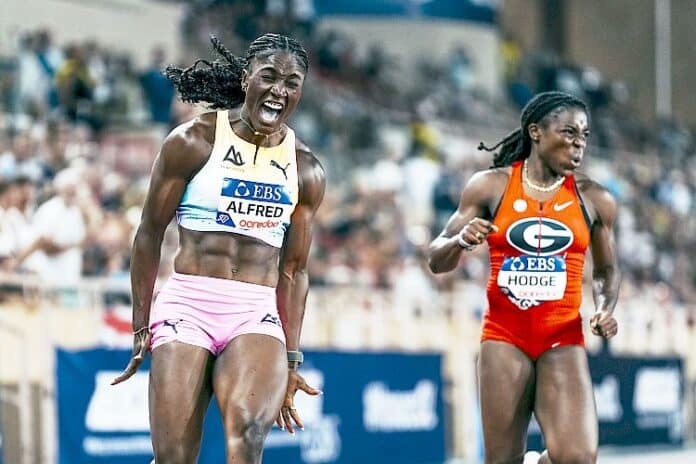
PANORAMA: Russian canoe team exits Junior Worlds due to Canada visa issues; Pre Classic starts Friday; 113th Tour de France starts Saturday

American sprint star Melissa Jefferson-Wooden winning the 2025 Pre Classic women's 100 m (Photo: Diamond League AG).

The Sports Examiner: Chronicling the key competitive, economic and political forces shaping elite sport and the Olympic Movement.★

To get the daily Sports Examiner Recap by e-mail: sign up here!

≡ THE 5-RING CIRCUS ≡

● Olympic Winter Games 2030: French Alps ● The speed skating events will be held at the iconic, 12,500-seat Thialf arena in Heerenveen (NED), but FrancsJeux.com reported that there are costs attendant to the honor:

“The central government will contribute €30 million. The province of Friesland will provide €5 million and the municipality of Heerenveen €2.5 million, for a total public commitment of €37.5 million. This amount will cover, in particular, the Olympic Village (the exact location of which is yet to be determined) , security, transportation, and infrastructure for spectators and the media.” (€1 = $1.14 U.S.)

● Association of National Olympic Committees ● ANOC has opened nominations for President for the term of 2026-30:

“As per the ANOC Constitution, for nominations to be eligible they must be submitted to ANOC by an NOC and endorsed by at least one other NOC by no later than 9 September 2026. ANOC will then send the final names of the nominees for the presidency to the NOCs by no later than 9 October 2026.”

The election for this potentially powerful position will take place at the ANOC General Assembly on 7-8 December 2026 in Hong Kong. Dr. Robin Mitchell (FIJ) has been on charge since 2018, first in an acting capacity for the deposed Kuwait’s Sheikh Al-Fahad Al-Sabah and then elected for a full term from 2022-26.

● Russia ● A Russian team of junior athletes will not compete at the International Canoe Federation World Junior and U23 Championships in Halifax (CAN). The Russian Canoe Federation told the Russian news agency TASS:

“Russian athletes are forced to miss the Junior and Youth World Championships in Canada.

“Canadians have only issued visas to underage athletes, who, given the current difficult situation, cannot be allowed to compete without adult supervision. Coaches and athletes on the youth team are still waiting for visas, even though the World Championships have already begun.”

● Archery ● Doping in archery? Yes, as Mexican Compound archer Mariana Bernal, a member of Mexico’s 2025 World Championships women’s Team Event gold medalists, was banned for three years by the International Testing Agency after testing positive in October 2025 for the steroid nandrolone.

She did not challenge the positive and earned a one-year reduction from the normal four-year sanction.

● Athletics ● The only Diamond League meet in the U.S. this season – and in most seasons – comes to Hayward Field in Eugene on Friday (3rd) and Saturday (4th) for the Prefontaine Classic.

The Friday night program will be shown on NBCSN and Peacock at 11:30 p.m. Eastern (8:30 p.m. local), including the women’s discus with Olympic and World Champion Valarie Sion, women’s vault with Olympic champ Katie Moon, twice World Indoor winner Sandi Morris and NCAA champions Hana and Amanda Moll.

The men’s 800 m has new American star Cooper Lutkenhaus, the World Indoor champ and the women’s 400 m has NCAA winner and world no. 2 Dejanea Oakley (JAM). The men’s two-mile is aiming at Matt Tegenkamp‘s 2007 American Record of 8:07.07, with stars Grant Fisher and Parker Wolfe the likely contenders.

Saturday has many highlights-in the making, starting with World Champions Melissa Jefferson-Wooden, Sha’Carri Richardson and Shericka Jackson (JAM) in the women’s 100 m, World Champions Collen Kebinatshipi (BOT) and Michael Norman, Olympic champ Quincy Hall and Olympic 400 m hurdles champ Rai Benjamin in the men’s 400 m, World Champion Cordell Tinch, new world-record holder Ja’Kobe Tharp and rising star Jamal Britt in the 110 m hurdles, world-record holder Tobi Amusan (NGR) and Olympic champ Masai Russell in the 100 m hurdles and Kenyan superstar Faith Kipyegon in the women’s mile, and a lot more.

The Saturday Diamond League slate will be shown on NBCSN and Peacock from 4-5 p.m. Eastern and then on NBC and Peacock beginning at 5 p.m.

● Cycling ● The annual highlight of the world cycling calendar – the Tour de France – starts on Saturday in Barcelona (ESP) for the first of 21 stages. The first three stages will start in Spain before crossing over to France at the end of Monday’s route. Of the 21 stages:

● 1 Team Time Trial (stage 1)
● 1 Individual Time Trial (stage 16)
● 7 Flat stages
● 4 Hilly stages
● 8 Mountain stages

The overwhelming favorites are the winners of the last six Tours: Slovenia’s Tadej Pogacar (2020-21, 2024-25) and Denmark’s Jonas Vingegaard (2022-23). Belgium’s Olympic winner Remco Evenepoel, rising star Paul Seixas (FRA) and Mexico’s Isaac Del Toro are likely contenders if the favorites fail.

Pogacar can become the fifth to win the Tour five times, last done by Miguel Indurain (ESP) in 1995.

● Tennis ● The Women’s Tennis Association Finals was due to be held in Riyadh (KSA) for a third straight year in 2026, but on Wednesday, a joint statement explained:

“Following two impactful years of the WTA Finals in Riyadh, the WTA requested to move the 2026 WTA Finals to a new host location. The Saudi Tennis Federation accepted WTA’s proposal, and the two organizations mutually agreed on the conclusion of the hosting arrangement and remain proud of the achievements realized through their partnership.”

On Thursday, the WTA said the event will be held at the famed Indian Wells Tennis Garden from 8-15 November.

Receive our exclusive, weekday TSX Recap by e-mail by clicking here.
★ Sign up a friend to receive the TSX Recap by clicking here.
★ Please consider a donation here to keep this site going.

For our updated, 681-event International Sports Calendar for 2026 and beyond, by date and by sport, click here!
FOOTBALL: Spain, Swiss roll, Portugal overcomes Croatia in gripping finish at FIFA World Cup; new poll says about half of U.S. is interested

The Sports Examiner: Chronicling the key competitive, economic and political forces shaping elite sport and the Olympic Movement.★

To get the daily Sports Examiner Recap by e-mail: sign up here!

≡ FIFA WORLD CUP ≡

The penultimate day of round-of-32 matches saw Spain completely outclass Austria, but the Portugal-Croatia match had a non-stop second half for the ages.

Spain 3, Austria 0 Spain is one of the tournament favorites and showed their prowess at SoFi Stadium in Inglewood, taking 10 shots in the first half to just two for offensively-cautious Austria and getting a goal in the 36th minute for a 1-0 lead.

Spain got a shot-on-goal in the first minute from star striker Lamine Yamal in the first minute, that was saved, and by the hydration break, the Spanish had three shots to none for Austria. Spanish defender Marc Cucurella scored in the 29th, but the goal was wiped off for a foul.

But Spain did go up 1-0 in the 36th, as a charge up the middle of the field by midfielder Pedri led to a pass to Cucurella on the left, and his cross to striker Mikel Oyarzabal left-footed the finish in the net. It was almost 2-0 at 45+2 as midfielder Alex Baena’s free kick hit the crossbar from 25 yards out and the half ended 1-0.

The second half was more of the same, but Austria had a look at the game in the 61st, as a header from sub forward Sasa Kalajzdic went over the crossbar. But five minutes later, a pass from the left endline by Baena flew into the box and was scored on a header by the onrushing defender Pedro Porro for the 2-0 edge.

That was going to be enough, but Spain scored one more in the 89th, as Oyarzabal took a left-side cross from Cucurella in the box and finished into the right-side corner of the Austrian net for the 3-0 final.

European champs Spain ended with 64% possession and a 23 shots to five, and even more 10 shots on the Austrian goal vs. none for Austrian on the Spanish goal. Decisive in every way.

Portugal 2, Croatia 1 Both sides had chances in the first five minutes on a hot day (88 F, 58% humidity) in Toronto, especially from midfielder Bruno Fernandes for Portugal in the 4th, but no score.

Portugal had more possession and made some threats, but none found the net, including a header by defender Renato Veiga in the 13th, off a corner that was on line, but ended up over the net. At the hydro break, Portugal had 64% possession and an 8-3 edge on shots, but no score.

The “second period” was more of the same. Portugal had the ball, threatened over and over again and did not score. The Croatian attack was most on the counter and Portugal ended the half at 69% of the ball and 9-3 on shots; each had one shot on goal.

Portugal was still holding most of the possession in the 54th, then a Croatian cross from defender Josip Stanisic from the right side went past a header try in the middle of the box by striker Igor Matanovic and fell to forward Ivan Perisic, who gained possession, settled down and then sent a left-footed laser to the far right side of the Portugal goal for a 1-0 lead.

Croatia scored again in the 56th via midfielder Nikola Vlasic on a rush to the goal to meet a cross from the right, but it was called offside. Portugal almost tied in the 58th on a tremendous strike from forward Rafael Leao, but it slammed off the crossbar!

Portugal star forward Cristiano Ronaldo appeared to tie it in the 60th on a long pass into the box than he brought down, controlled and ripped into the net, but called offsides, barely. Off a corner in the 65th, Veiga was pulled down in the box by Croatia’s Vlasic and a penalty was given. Ronaldo lined up, stutter-stepped and scored on the penalty for the 1-1 tie in the 68th. Of course, the hydro break followed, with Portugal at 65% possession and 11-7 on shots, but now even.

Portugal keeper Diogo Costa had to make saves in the 72nd and 74th and 77th minutes to keep Croatia from scoring, then midfielder Petar Sucic scored in the 80th, but was called offside.

Portugal finally got some possession and at 90+4, a left right-side cross into the box, in front of goal by Leao was somehow found between three Croatian defenders by forward Goncalo Ramos, who headed it into the goal for 2-1 with about eight minutes of play still left.

In desperation time at 90+12, a Croatian cross by Perisic from the left side flew into the goal area for a contested header with Matanovic and Veiga on the ball, which rolled left, was popped forward by Mario Pasalic in front of the goal, and ended up in the net, touched by either Portugal midfielder Ruben Neves or Croatian defender Josko Gvardiol for a 2-2 tie!

But a review showed that because Matanovic touched the ball – there is a chip in it that registers touches – Pasalic was clearly offsides on the play. No goal and Portugal held on to win, 2-1.

Portugal finished with 60% possession and 15 shots to 13 with astounding drama throughout the second half.

Switzerland 2, Algeria 0 ● From the kick-off in Vancouver, Algeria was on the move, dominating play in the first 10 minutes, looking for shots and controlling play in the Swiss zone.

But a break-out in the 10th saw Swiss midfielder Johan Manzambi running with the ball through the left side of the Algerian zone, all the way to the endline! As he got close to goal, Algerian keeper Luca Zidane came out and the ball was crossed to an oncoming striker Breel Embolo, who finished easily for the 1-0 lead!

The hydro break came with 60% Algerian possession, but shots were 3-3. Algeria continued to run at the Swiss defense in the “second period,” but could not score. Shots went wide, especially from crosses into the box, and the half ended 1-0. Algeria had 59% possession and a 5-4 shots edge, but trailed.

The Swiss came out on fire in the second half, taking possession in the Algerian zone off a bad clearance, and a cross was deflected to striker Dan Ndoye at the top of the box. He had space and sent a hard shot to the left side of the Algerian goal for a 2-0 lead in the first minute of the half!

An immediate Algerian answer with a cross and a shot from striker Riyad Mahrez was blocked. But the Swiss fast breaks looked much more promising and the Swiss speed was a real problem. The hydro break came with Algeria at 56% of the ball, with shot at 6-6, but goals at 2-0.

Algeria could not solve the Swiss defense and the game got increasingly physical. A Swiss cross in the 81st from the right endline to the front of goal from midfielder Denis Zakaria set up Embolo for a score, but he and Zidane both missed it, and the ball rolled to midfielder Fabian Rieder and he missed what seemed a sure score, with Zidane making the stop.

It ended 2-0, with 56% possession buying Algeria nothing but frustration; the Swiss had an 11-8 shots edge. In the end, it wasn’t close.

≡ PANORAMA ≡

The round-of-32 matches will continue through Friday:

Friday, 3 July:
● Australia vs. Egypt ● In Arlington (2 p.m. Eastern)
● Argentina vs. Cape Verde ● In Miami Gardens (6 p.m. Eastern)
● Colombia vs. Ghana ● In Kansas City (9:30 p.m. Eastern)

The round-of-16 runs from 4 to 7 July:

Saturday, 4 July:
● Canada vs. Morocco: In Houston (1 p.m. Eastern)
● Paraguay vs. France: In Philadelphia (5 p.m. Eastern)

Sunday, 5 July:
● Brazil vs. Norway: In East Rutherford (4 p.m. Eastern)
● Mexico vs. England: In Mexico City (8 p.m. Eastern)

Monday, 6 July:
● Portugal vs. Spain: In Arlington (3 p.m. Eastern)
● U.S. vs. Belgium: In Seattle (5 p.m. Eastern)

Tuesday, 7 July:
● Argentina or Cape Verde vs. Australia or Egypt: In Atlanta (12 p.m. Eastern)
● Switzerland vs. Colombia or Ghana: In Vancouver (4 p.m. Eastern)

A proposed class-action suit against the ticket resales platform StubHub was filed on Tuesday (30th) in Federal court in New York for $5 million or more in damages related to the non-delivery of tickets purchased there. Per the complaint:

“[Fans] were lied to and purchased World Cup tickets for large sums of money — only to incur tremendous financial losses. This is a new low for a sports ticketing industry that has been rampant with consumer protection issues time and time again to the detriment of the fans who make sports special.”

Even where StubHub has refunded the ticket cost, buyers who made travel plans based on the availability of their purchases were out those costs.

The complaint seeks damages “thousands of people” in the U.S. who did not receive tickets, alleging issues related to consumer protection law and false advertising.

An interesting poll by research firm Ipsos from 26-28 June, following the last U.S. group-stage match, which showed that only 38% of Americans were excited to follow the World Cup going forward. An impressive 83% of Americans had heard of the tournament, but as for the remaining games, 17% were really excited, 21% were somewhat excited; 24% not too excited and 37% not at all excited. Giving credit to those who were not too excited, maybe half the country will pay attention.

As to how people have and will follow the tournament: 42% have or will watch broadcast or streaming television, 18% said they will look at clips afterwards and 55% said they have no plan to watch at all.

Respondents said they keep up with the tournament on social media (40%) and 27% are watching from a bar or restaurant and 19% have or plan to go to a watch party. Ipsos noted:

“The poll, which was conducted before the U.S. match against Bosnia-Herzegovina in the first knockout stage of the World Cup, also found that 46% of Americans and 82% of World Cup viewers are at least somewhat excited about the U.S. men’s national team advancing to the knockout round.

“More broadly, America’s overall excitement about the World Cup has grown compared to before the tournament started, with excitement rising from 25% in May to 38% in July. In addition, half (49%) of World Cup viewers say the tournament has increased their personal interest in soccer (48% no impact, 3% decrease).”

As far as the tournament itself so far, 53% said it was going “somewhat well” so far, with 37% unsure and 9% negative. As for FIFA, only 19% of respondents had a positive view, 25% were unfavorable and 55% did not know.

Receive our exclusive, weekday TSX Recap by e-mail by clicking here.
★ Sign up a friend to receive the TSX Recap by clicking here.
★ Please consider a donation here to keep this site going.

For our updated, 681-event International Sports Calendar for 2026 and beyond, by date and by sport, click here!
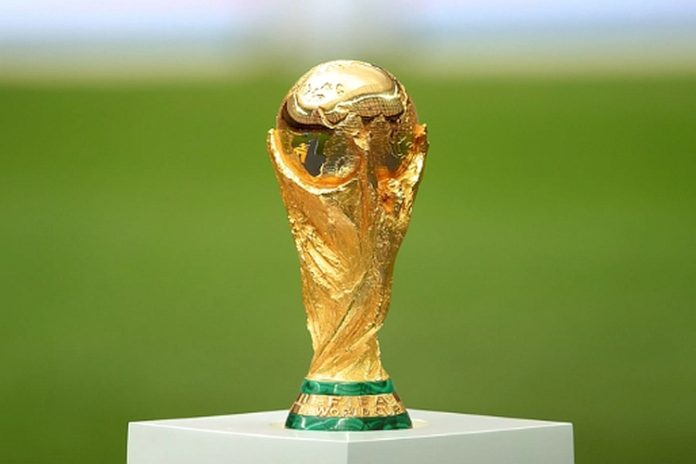
PANORAMA: Third €20 mil sponsor for Swiss 2038 Winter Games bid; Russia leaves Trampoline World Cup as no flag allowed; Tharp turns pro

U.S. hurdles star and new world-record holder Ja’Kobe Tharp (Photo: USA Track & Field).

The Sports Examiner: Chronicling the key competitive, economic and political forces shaping elite sport and the Olympic Movement.★

To get the daily Sports Examiner Recap by e-mail: sign up here!

≡ THE 5-RING CIRCUS ≡

● Olympic Winter Games 2030: French Alps ● With the events originally planned for Nice now moved to Lyon, the question of the financial balance between the regions of Auvergne-Rhône-Alpes region (Lyon) vs. Provence-Alpes-Cote d’Azur (Nice) has been raised. But Renaud Muselier, the President of the Regional Council of Provence-Alpes-Côte d’Azur – now with just one venue cluster – told Le Dauphine:

“We were all caught off guard by this affair, but we’ll find a solution. It’s not because of the Auvergne-Rhône-Alpes region that they were able to get the ice rink back; it’s because of a far-right mayor in the south [Lyon’s Eric Ciotti] who didn’t want the Games.

“Right now, I don’t know. … Everything is complicated. We contributed to the budget of the Organizing Committee for the 2024 Olympic and Paralympic Games and to SOLIDEO; they’re not the same thing. The same goes for the financial guarantees.”

The head of the Auvergne-Rhône-Alpes region, Fabrice Pannekoucke, said: “We have defined financial agreements and commitments regarding the financial cost, which, in my opinion, must remain in place . Because if we find ourselves in a changing situation today, it’s not the north that went looking for something.”

● Olympic Winter Games 2038: Switzerland ● Swiss corporations are starting to line up behind the 2038 Winter Games bid, which is in “Privileged Dialogue” with the International Olympic Committee to work out the details of an acceptable bid by the end of 2027.

Sportswear company On was the first to jump in, and within the past week, telecommunications company Sunrise has joined as a “flag bearer” as has automation company ABB. Per the ABB announcement:

“The company has committed to provide CHF 20 million to the delivery guarantee undertaken by private companies. The guarantee would be called upon if a deficit were to arise after the 2038 Olympic and Paralympic Games take place.” (CHF 1 = $1.24 U.S.)

● International Olympic Committee ● The Associated Press reported that the IOC will not consider separate National Olympic Committee status for Greenland and the Faroe Islands, after a request from the Danish Parliament.

The IOC pointed to its requirement since 1996 of “an independent state recognized by the international community.” Greenland and the Faroe Islands are semi-autonomous parts of Denmark.

The IOC statement added, “This position has been explained and communicated very clearly to the concerned parties on numerous occasions over the past years.”

● Russia ● For the second week in a row, a European gymnastics World Cup host has refused to allow the Russian flag to be flown, this time at a Trampoline World Cup in Coimbra (POR). Alexey Ryzhkov, head coach of the Russian trampoline team, told the Russian news agency TASS:

“We were preparing for the World Cup in Portugal. But the competition organizers informed us that, due to the Portuguese authorities’ position, they would not be able to ensure the Russian team’s participation with national symbols.

“We were offered the option of competing only as neutral athletes. Given that the decision of the international gymnastics federation [World Gymnastics] is not being implemented, the team withdrew from the tournament.”

A Russian team withdrew from a World Gymnastics Rhythmic World Challenge Cup event in Cluj-Napoca (ROU) last week when the mayor – a former Romanian Prime Minister – refused to allow the Russian flag to be shown in the arena.

TASS reported that Russian rowers were denied entry visas into Poland to compete at the ICF World Junior and U23 Slalom Championships in Krakow.

● Archery ● American archers dominated the Pan American Championships held in Tlaxcala (MEX) last weekend, taking 16 medals in all (8-4-4).

U.S. individual victories came from Jennifer Mucino-Fernandez in the women’s Recurve class, Gauis Carter in men’s Compound, Alexis Ruiz in women’s Compound, and Ava Jones in women’s Barebow.

American teams won the men’s Recurve, women’s Recurve, men’s Compound and Mixed Compound team titles.

Brazilian three-time Worlds medal winner Marcus D’Almeida won the men’s Recurve title, his second career Pan Am title, also in 2022.

● Athletics ● Fast, wind-aided men’s 100 m at the World Athletics Continental Tour Silver Raiffeisen Austrian Open in Eisenstadt, with Tokyo 2020 gold medalist Lamont Marcell Jacobs (ITA) riding a big 4.1 m/s wind to a 9.67w victory, the third-fastest time under all conditions!

Britain’s Romell Glave was second (9.76w) and 400 m world-record man Wayde van Niekerk (RSA: 9.83) was third.

Auburn’s Ja’Kobe Tharp, who set the 110 m hurdles world record of 12.75 at the NCAA Championships, announced on Instagram that will skip his final year and turn professional. His post included:

“I’ve only ever wanted to show the world who I am. If you know me personally, you know this was only a matter of time. I said I was going to do it. I worked for it. And now we’re here. Imma keep chopping heads ’til my sword breaks.

“Now it’s time for the next chapter.

“I’m beyond grateful to announce that I’m officially taking the next step and pursuing my professional track & field career with adidas.

“Thank you to everyone who believed in me, even when the results didn’t show what was coming. And to anyone chasing a dream: don’t run from adversity. Let it shape you. One day you’ll realize the hardest seasons were preparing you for the life you prayed for.

“This is only the beginning.”

Receive our exclusive, weekday TSX Recap by e-mail by clicking here.
★ Sign up a friend to receive the TSX Recap by clicking here.
★ Please consider a donation here to keep this site going.

For our updated, 681-event International Sports Calendar for 2026 and beyond, by date and by sport, click here!
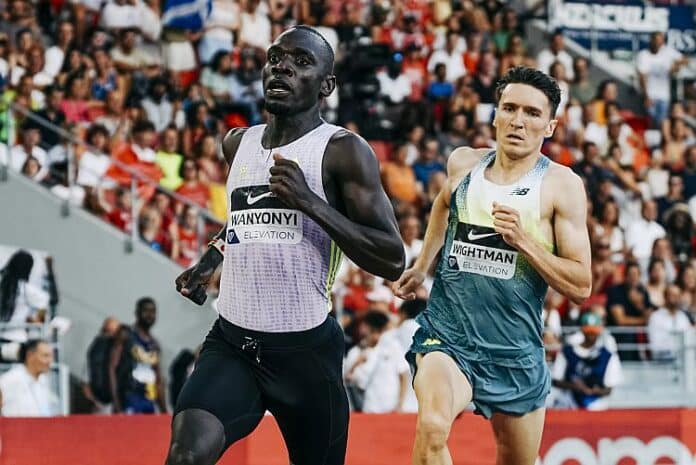
FOOTBALL: Europe comes back, as Kane saves England and Lukaku, Tielemans save Belgium, U.S. wins at FIFA World Cup

The 2026 FIFA World Cup “Trionda” ball by adidas (Photo: adidas).

The Sports Examiner: Chronicling the key competitive, economic and political forces shaping elite sport and the Olympic Movement.★

To get the daily Sports Examiner Recap by e-mail: sign up here!

≡ FIFA WORLD CUP ≡

The round-of-32 matches continued with intense drama; going into Wednesday, five of the seven elimination matches had been decided by one goal or on penalties. That trend continued:

England 2, Dem. Rep. Congo 1 This match in Atlanta went into shock almost immediately, as D.R. Congo striker Brian Cipenga scored on a seeing-eye shot in the seventh minute. He took a cross from right to left from defender Cancel Mbemba, almost to the back post and he punched it past England keeper Jordan Pickford.

England could not solve the energetic D.R. Congo defense and even with 54% possession at the break, the Leopards had the only shot in the game. But the English pressure continued to build. Midfielder Jude Bellingham’s header in the 30th was saved by DRC keeper Lionel Mpasi. A try from forward Marcus Rashford was deflected away in the 37th.

It was almost 2-0 in the 42nd, as defender Aron Wan-Bissaka sent a looping pass from right to left for DRC striker Yoanne Wissa, who hit the post with his shot. Almost immediately after, England striker Harry Kane went down in the box in a collision with Mpasi, but no foul was called. Finally, another Bellingham blast at 45+2 was saved with an Mpasi body block as the half ended. England had 59% possession and was 8-3 on shot and was down 1-0.

The second half saw even more pressure from the English, but still no goals through the hydro break, despite 60% possession and 10-5 on shots; the Leopards were mostly on the counterattack now.

England brought on three subs by the 70th, and forward Anthony Gordon helped right away, as Kane finally scored for the 1-1 tie in the 75th on a header in the center of the box from Gordon’s left-side cross.

Both sides were looking for the winner now, and off a Leopards attack, England got a fast break going in the 86th. A Bellingham shot was saved and came back out to Gordon, who passed to his right to Kane at the top of the box. Kane did the rest, rolling right and slamming the ball into the top of the net for the 2-1 lead, his fifth goal of the tournament.

England held on and won, with 60% possession and 16-7 on shots. And they had Kane. Their “reward” is to go to the Azteca and face Mexico.

Belgium 3, Senegal 2 (extra time) Which Belgian team would show up in Seattle, after a 1-0-2 group performance? Senegal (1-2) was on the hunt right away and had possession, with a close miss in the 13th as a cross was tipped by Belgian keeper Thibaut Cortois and a follow-up by striker Ismaila Sarr hit the right post!

And Senegal kept the pressure on and took a 1-0 lead in the 25th off a cross from striker Sadio Mane that turned into a header from Sarr that hit the post, but came back to midfielder Habib Diarra, who tapped in it. That led to the hydro break, with Senegal at 65% possession and 5-2 on shots, followed by three fans running onto the field, who had to be removed.

Belgium did better after the break, but could not break down the Senegal defense and the half ended 1-0. Possession was now even with Senegal at 7-5 on shots.

And Senegal kept pressing in the second half and got to 2-0 in the 51st, with a long pass by defender Moussa Niakhate to Sarr running beyond the defense, bringing it down and then smashing the ball into the net. At the hydro break, Belgian possession was up to 55%, but with Senegal still up, 11-9, on shots.

Belgium kept looking for an opening and finally found one in the 86th, as a cross from the right endline by defender Thomas Meunier found striker Romelu Lukaku in front and he sent a right-footed flick over the keeper and into the top of the Senegal net for 2-1.

Belgium kept pressing and stunningly, in the 89th, found the equalizer on a wild scramble in front of the Senegal goal, with a cross by striker Leandro Trossard from the left side – above the box – to the front of goal that was headed by midfielder Youri Tielemans into the goal as keeper Mory Diaw missed a punch. Wow: 2-2.

All that desperation flipped the 90-minute statistics, as Belgium finished regulation with 53% possession and a 16-13 shots edge. Belgium offered the most pressure during the first extra period, but no scoring. Belgium remained at 53% possession and 18-13 on shots.

In the second period, Senegal forward Ibrahim Mbaye missed a shot at the far side of the Belgium net in the 108th. In the 118th, Belgium forward Dodi Lukebacio had a golden opportunity on a deflected cross from the left side from forward Diego Moreira, but he hammered it off the crossbar. On a video review, a foul on Tielemans in front of goal by Senegal defender Lamine Camara in front of the goal was determined to be a penalty.

Tielemans took the penalty at 120+5 and scored, and was immediately dogpiled in the corner of the field, for the 3-2 lead. At 120+11, Senegal took a free kick from just above the box, but midfielder Pape Matar Sarr’s kick was over the bar. Over; Belgium ended with 52% of the ball and shots were 19-19. Incredible.

U.S. 2, Bosnia & Herzegovina 0 The U.S. was playing in front of a home crowd in Santa Clara and controlled possession from the start. But the best early goal chance was a corner from B&H in the 11th that looked like it was curling into the net (!), but was punched away from U.S. keeper Matt Freese.

By the hydro break, the U.S. had 78% possession and was 2-1 on shots. American striker Folarin Balogun was busy, getting tripped by defender Amar Dedic in the box in the 29th, but nothing was called (including after a video review) and Balogun scored in the 31st on a left-footed blast from the middle of the box off a Weston McKennie feed, but it was waived off for offsides.

A loose ball in the 45th turned into a goal, as a loose ball in the midfield ended up at the feet of midfielder Tyler Adams, who passed to midfielder Malik Tillman. He turned and sent a through-ball into the box for Balogun, which he collected after a deflection by a defender, turned and then popped between two defenders and popped the ball into the net for a 1-0 lead.

A flurry of American activity in stoppage time ended with Balogun popping another shot toward the net, but it hit the crossbar and dropped over at 45+7. Close, but the U.S. ended the half at 62% possession and 5-1 on shots.

The U.S. started with energy in the second half, but play was physical and ragged. On a play for the ball in the 63rd in the U.S. zone, Balogun stepped on the right foot of Bosnian defender Tarik Muharemovic and was called for a red card, bringing the U.S. down to 10 men. The hydro break came in the 69th, with 55% of the ball for the U.S., but just 5-4 on shots (0-3 in the half).

B&H took possession, but the U.S. was aggressive with some time in the Bosnian zone, and picking up with a high line instead of sitting back. Pulisic actually scored on a loose ball in the 69th, off a shot from Tillman, but the play was called offsides.

Then after a foul gave the U.S. a free kick just above the box, Tillman sent a spectacular curling shot into the goal in the 82nd for the 2-0 lead as the crowd erupted.

The U.S. was now more packed in in front of its goal on defense, and it was a bit chaotic, and there was 10 minutes of stoppage time declared. But the American attacked actually produced a shot by defender Alex Freeman after 90+4, but two follow-up shots by midfielder Amar Memic from distance went just wide of Freese.

It ended 2-0, with the U.S. at 48% possession thanks to the red card, and B&H had a 10-8 shots edge. Next is Belgium in Seattle on Monday.

All three host country teams won their round-of-32 games!

≡ PANORAMA ≡

The round-of-32 matches will continue through Friday:

Thursday, 2 July:
● Spain vs. Austria ● In Inglewood (3 p.m. Eastern)
● Portugal vs. Croatia ● In Toronto (7 p.m. Eastern)
● Switzerland vs. Algeria ● In Vancouver (11 p.m. Eastern)

Friday, 3 July:
● Australia vs. Egypt ● In Arlington (2 p.m. Eastern)
● Argentina vs. Cape Verde ● In Miami Gardens (6 p.m. Eastern)
● Colombia vs. Ghana ● In Kansas City (9:30 p.m. Eastern)

Fascinating ratings data for U.S. viewership of the World Cup, with Fox’s English-language coverage averaging 5.05 million, including the pre-match coverage, and Telemundo averaging 4.6 million (with Peacock) in Spanish.

That’s way up from the 4.71 million for Fox and Telemundo (+ Peacock) combined for the Qatar 2022 tournament.

The U.S. team drove the Fox ratings, with average audiences of 18.04, 16.22 and 17.02 million viewers (17.09 million average) for their three matches; Telemundo’s U.S. coverage average was 7.1 million per match for a 24.12 million combined average!

Mexico’s matches on Telemundo and Peacock averaged 12.1 million each.

The World Cup English-language average of 5.05 million compares with the 2026 NBA Playoffs which averaged 6.35 million across ESPN-ABC, NBCUniversal and Amazon Prime Video. Close behind was the 2025 MLB post-season, which averaged 6.33 million viewers on U.S. television platforms.

Receive our exclusive, weekday TSX Recap by e-mail by clicking here.
★ Sign up a friend to receive the TSX Recap by clicking here.
★ Please consider a donation here to keep this site going.

For our updated, 681-event International Sports Calendar for 2026 and beyond, by date and by sport, click here!
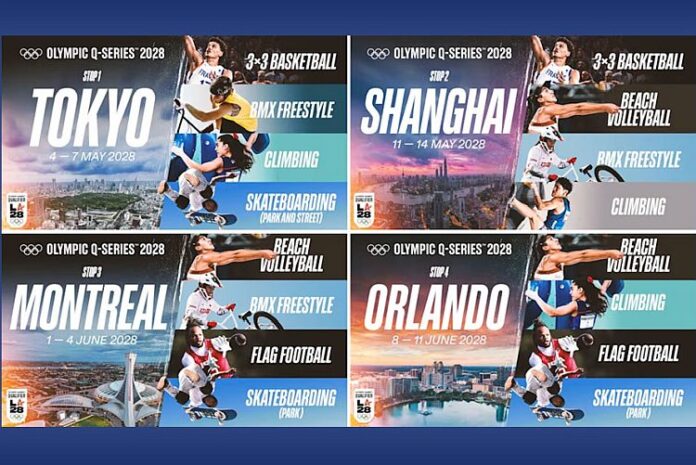
U.S. OLYMPIC & PARALYMPIC COMMITTEE: USOPC salutes new IOC grant program, looking at future (increases) of medal bonuses

The Sports Examiner: Chronicling the key competitive, economic and political forces shaping elite sport and the Olympic Movement.★

To get the daily Sports Examiner Recap by e-mail: sign up here!

≡ USOPC BOARD MEETING ≡

U.S. Olympic & Paralympic Committee Board Chair Gene Sykes said in a Wednesday news briefing that the organization appreciates the new International Olympic Committee grant program of $10,000 per Olympian per Games, starting with Milan Cortina 2026:

“This is a welcome decision and impactful for athletes all around the world. …

“We expect the process to begin at the end of this year and payments to be made to athletes through their respective NOCs in 2027. This is an important to continue in the support of athletes, and we’re grateful that it adds to the steps we are already taking in the United States. And we’ve spent a great deal of time adding to our list of things that help athletes with their financial wellness.”

So, what about upgrades to the USOPC’s existing “Operation Gold” program that pays $37,500-22,500-15,000 for gold, silver and bronze medals at Games? Chief executive Sarah Hirshland explained:

“We actually have a working group that is formed right now consisting of members of our team, members of the Team USA Athletes Commission and representatives from the NGB community, who are looking at and evaluating both the investment in our what we call ‘athlete stipends’ – funding that we provide athletes on an ongoing basis – and the Operation Gold funding that we provide.

“And we’re doing some evaluation on looking at all of that and assessing both, what is the best framework and how do we look at that framework; how do we then identify where there are gaps in funding and fill those gaps.

“So I don’t have an outcome for you today, but I can assure you it’s top-of-mind and we’re giving it lot of attention.”

Hirshland also noted that the USOPC Foundation received more than $150 million in donor commitments in 2025 and had more than 11,000 first-time donors.

As for the 2028 Olympic Games, Sykes noted that “we had a visit with LA28 leadership, which provided us an update as the Games approach the two-years-to-go milestone. Their organizational activity is ramping up significantly, with LA28 continuing to grow in staff and advanced planning across venues, transportation and athlete and fan experience.

“They’ve built upon an excellent [IOC] Coordination Committee meeting in Los Angeles, which I attended in early June, and confidence in the organizing effort remains very high.”

He noted the significant commercial and ticket sales successes so far, and with a second ticket sales period coming in August, he pointed out that “for a private-funded Games, this demand is critically important.”

Hirshland noted that Sykes was re-elected as the USOPC Board Chair for another four-year term, his second, which means he will continue as a member of the International Olympic Committee (his membership is linked to his position with the USOPC).

Sykes explained that the USOPC had certified, as part of its continuing audit function, four governing bodies as compliant: the U.S. Equestrian Team, USA Table Tennis, USA Team Handball and USA Water Polo, and a fifth, USA Judo, “with conditions.” The conditions were not announced.

Hirshland said that the USOPC supports the “Protect College Sports Act” (S. 4668), “recognizing that a strong collegiate system is essential for the long-term health of the Olympic and Paralympic pipeline and the future of Team USA. … It would replace the current patchwork of state NIL (name-image-likeness) laws. And the revised bill provides important protections for Olympic and Paralympic collegiate sports, addressing a gap that existed in the original draft.”

Sykes is already known as a track & field enthusiast, but he was almost glowing when he talked about his visit to the third World Rowing Cup last weekend in Switzerland

“It was wonderful to watch Team USA compete and bring home 12 medals. It was a thrill to be there representing the USOPC, and as a former rower – in fact I started my own athletic career as a rower – to celebrate these athletes and this team. …

“Under high-performance director Josy Verdonkschot [NED], Team USA is showing depth and momentum across events, and with eyes now turning to the World Trials in August and the World Championships in Amsterdam this fall, there are very, very high expectations for this team. And, of course, this team will contribute many of the athletes that will be in Long Beach in LA28.

“I can tell you, I saw rowing in Paris, and I expect we’re going to have a tremendous uptick in performance in rowing, and it’s very exciting to imagine the number of medals that our athletes will bring back to Team USA by virtue of this performance.”

The U.S. won two medals (1-0-1) at Paris 2024 and four medals (2-0-2) at the 2025 World Rowing Championships.

Receive our exclusive, weekday TSX Recap by e-mail by clicking here.
★ Sign up a friend to receive the TSX Recap by clicking here.
★ Please consider a donation here to keep this site going.

For our updated, 681-event International Sports Calendar for 2026 and beyond, by date and by sport, click here!
FOOTBALL: Haaland saves Norway, two more goals for Mbappe as France stomps Sweden, Mexico cruises in FIFA World Cup

The Sports Examiner: Chronicling the key competitive, economic and political forces shaping elite sport and the Olympic Movement.★

To get the daily Sports Examiner Recap by e-mail: sign up here!

≡ FIFA WORLD CUP ≡

Lots of drama in the FIFA World Cup round-of-32, but the stars were out on Tuesday and made the difference for Norway and France.

Norway 2, Ivory Coast 1 This match, at AT&T Stadium in Arlington, saw Ivory Coast the aggressor from the start, but the Norwegian defense was tight. It was scoreless at the hydration break, with the Norwegians at 57% possession, but just three total shots in the game, and only one for Norway.

The Norwegian offense was more focused after the break and in the 39th, and midfielder Martin Odegaard forwarded the ball to Antonio Nusa on the left side, just above the box. He had time and set up for a right-footed, curling shot that found the far side of the Ivory Coast net for the 1-0 lead.

The Vikings were suddenly all over the Ivory Coast net, with close misses for scoring star Erling Haaland in the 43rd, and striker Alexander Sorloth in the 45th. But there as no more scoring and the half ended 1-0, with Norway at 56% of the ball and a 6-5 shots edge.

But the Elephants were vigorous in the second half and Norway keeper Orjan Nyland had to make a strong save on a blast by striker Nicolas Pepe in the 55th. Norway also had chances and defender Torbjorn Heggem almost scored off a corner in the 67th, but it was amazingly saved by Elephants striker Amad Diallo on the goal line. At the second hydro break, it was still 1-0, with possession even now and Ivory Coast with a 10-8 shots edge.

Norway was more defensive now and it cost them, as Diallo came forward took a give and go with Pepe from the right side, rolled into the middle of the box and left-footed the shot and scored in the 74th for the 1-1 tie.

But the Norwegians knew what they had to do: get the ball to Haaland. It finally happened in the 86th, with a perfect cross from the right side of the goal from midfielder Patrick Berg, which drew the defense to him and found Haaland standing in the middle of the box. Haaland just kicked it in and scored his 60th goal for country in just 53 appearances. 2-1.

It got more and more physical in stoppage time, with pushing and shoving during a dead ball at 90+5, leading to an Diallo free kick above the box, which was saved only with a full-stretch, left-handed slap by Nyland! That was the end, with Norway’s first-ever knock-out round win.

Norway had 53% of possession, but Ivory Coast had the most shots, 14-9. Norway is on to face Brazil next.

France 3, Sweden 0 The script was clear for this match in East Rutherford, as tournament co-favorites France were going to be on offense and the Swedes were going hold on as long as possible.

The French had 65% possession at the first hydration break and a 3-1 lead on shots, but no goals. But the pressure continued, with star striker Kylian Mbappe hitting the post in the 34th, then an acrobatic, bicycle-style shot from midfielder Michael Olise in the 34th that hit the far post.

Sweden was playing six men across the back line now, but in the 45th, off a short pass from a corner, striker Ousmane Dembele popped the ball into the box for Mbappe at the left side. He dribbled and created his own shot that sailed into the goal for the 1-0 lead in a moment of individual brilliance.

Swedish midfielder Elliott Stroud shot the ball over the bar on a good chance at 45+2, one of best attempts of the half. The French walked off the field holding 71% of possession and a 15-3 advantage on shots.

France was even more dominant in the second half. Striker Bradley Barcola received a cross into the box from Olise and did the rest, finding the net for a 2-0 lead in the 53rd and creating what looked like an insurmountable advantage for Les Bleus.

At the second hydro break, French possession was a little less at 66% and 20-4 on shots (5-1 in the “third period”).

Olise had shots saved in the 61st and 65th, but Mbappe sealed it with a 3-0 advantage in the 74th, taking a pass from Olise behind the defense and then scoring by sending the ball into the far corner. It’s another multi-goal game for the star and he now has 18 career World Cup goals!

The game ended with the French ay 61% possession and 25-8 on shots and looking very much like a tournament favorite, with an unstoppable scorer.

Mexico 2, Ecuador 0 The start of the match in Mexico City was delayed for an hour due to a rainstorm at the Azteca, but the home team was in full flight from the start. A brilliant exchange in the 6th almost scored, with a glorious cross from the right side of the field by midfielder Luis Romo all the way to the far post for a header by striker Raul Jimenez, but it went wide!

Ecuador’s John Yeboah got through the box for a shot that missed in the 17th, but in the 22nd, a lone run down the left side turned into a 1-0 lead for Mexico, off a right-foot rocket from striker Julian Quinones after he rolled into the box and curled a shot to the left, just inside the post.

Mexico had 60% of the ball by the first break and 7-1 on shots. Ecuador didn’t help itself with a turnover, and Quinones forward the ball to Jimenez for a right-footed shot just inside the box that flew into the far side of the net in the 31st for the 2-0 lead.

Ecuador found some offense in the final 10 minutes, as Yeboah sent a blistering shot in the 40th that Mexican keeper Raul Rangel was able to push away. But the half ended 2-0, with Mexico at 56% of the ball and 10-2 on shots.

The pace slowed in the second half, but Mexico also scored in the 67th, on a Cesar Montes header off a corner was barely saved by Ecuadorian keeper Hernan Galindez. At the second break, Mexico was cruising with 14 shots to three, but Ecuador now had 54% of possession.

In the 74th, Ecuador striker Kevin Rodriguez barely missed a goal off a long pass ahead, and despite several more tries, could not find the net and it ended 2-0. A red card was handed out to Ecuador defender Piero Hincapie at 90+5 for covering his mouth while talking to forward Santiago Gimenez.

Mexico won an elimination game for the first time since 1986, and ended 15-7 on shots, but Ecuador had 57% of possession. The Azteca crowd was elated.

Mexican “fans” did their best to disturb the Ecuadorian team during the early hours of Tuesday morning, as The Associated Press reported:

“From midnight until the early hours of the morning, dozens of fans gathered outside the Westin Hotel in Santa Fe, an upscale area on the outskirts of the capital, using loudspeakers, horns and motorcycles to disturb the visiting team’s rest.”

The Ecuadorian federation filed a protest, stating “Such conduct stands in stark contrast to the principles of fair play, equity, and unity that a World Cup should embody.

“The FEF respectfully calls upon the competent authorities to pay greater attention to these events and to adopt the necessary measures to safeguard the safety of our players, coaching staff, and fans.”

≡ PANORAMA ≡

The round-of-32 matches will continue through Friday:

Wednesday, 1 July:
● England vs. Dem. Rep. Congo ● In Atlanta (12 p.m. Eastern)
● Belgium vs. Senegal ● In Seattle (4 p.m. Eastern)
● U.S. vs. Bosnia & Herzegovina ● In Santa Clara (8 p.m. Eastern)

Thursday, 2 July:
● Spain vs. Austria ● In Inglewood (3 p.m. Eastern)
● Portugal vs. Croatia ● In Toronto (7 p.m. Eastern)
● Switzerland vs. Algeria ● In Vancouver (11 p.m. Eastern)

Friday, 3 July:
● Australia vs. Egypt ● In Arlington (2 p.m. Eastern)
● Argentina vs. Cape Verde ● In Miami Gardens (6 p.m. Eastern)
● Colombia vs. Ghana ● In Kansas City (9:30 p.m. Eastern)

It wasn’t all misery for teams which did not advance out of the group stage. Jordan’s King Abdullah II, posted a message praising the team’s performance in their first World Cup appearance, despite an 0-3 record in Group J:

“Our national team heroes, you have represented a noble face for Jordan and laid the foundation for future successes that we look forward to. The nation awaits you and is proud of you, for you are in the hearts of all Jordanians.

“And to the loyal Jordanian fans: you have reflected the most beautiful image of our nation, embodying true belonging. Jordan is stronger with its unity, more beautiful with its people, and greater with the love that unites its sons.”

Japanese fans came with a plan to the World Cup, bringing with them more than 15,000 blue plastic trash bags to cheer on the Samurai Blue in the stands and then for use in cleaning the stadium later.

The traveling bags idea apparently started at the 1998 World Cup in France, and for 2026, the APA Hotel Company – a sponsor of the Japan federation – produced the bags.

Receive our exclusive, weekday TSX Recap by e-mail by clicking here.
★ Sign up a friend to receive the TSX Recap by clicking here.
★ Please consider a donation here to keep this site going.

For our updated, 681-event International Sports Calendar for 2026 and beyond, by date and by sport, click here!
PANORAMA: IOC asked to grant NOC status to Greenland, Faroe Isles; UCI report shows strong reserves; canoeing to focus on 500 m races

The Sports Examiner: Chronicling the key competitive, economic and political forces shaping elite sport and the Olympic Movement.★

To get the daily Sports Examiner Recap by e-mail: sign up here!

≡ THE 5-RING CIRCUS ≡

● International Olympic Committee ● The Danish Parliament sent a letter to the IOC on 18 June, asking for recognition of the Faroe Islands and Greenland as separate, new National Olympic Committees:

“For many years, both the Faroe Islands and Greenland have sought broader international recognition of their distinct democratic institutions, societies, cultures and sporting identities within the Kingdom of Denmark. The Presidium considers that their aspirations should be assessed on equal terms, including in relation to the possibility of independent representation within the Olympic movement.”

The message noted that this is outside the current procedure, but that there can be exceptions:

“The Presidium fully recognizes that, since 1996, the International Olympic Committee has applied a practice under which admission has generally been limited to territories recognized by the international community, including the United Nations, as independent states.

“At the same time, it remains relevant that exceptions to this practice continue to exist, in that a number of territories – including Aruba, Bermuda and Puerto Rico – participate under their own flags on the basis of recognition granted before the policy was adopted in 1996. The Presidium notices that the Faroe Islands applied for admission in 1983, before the rules were amended in 1996.”

There are currently 206 National Olympic Committees, vs. 193 member states of the United Nations.

● Biathlon ● US Biathlon is asking its donors and friends for more support now that the 2025-26 Olympic season has passed:

“As we reach the final day of our June Fundraising Drive, our athletes, programs, and community need your support now more than ever. We just received a 22% cut in funding from the USOPC, leaving us with a significant gap in our budget going forward.

“Your support is critical to help us continue our momentum at every level, from grassroots to elite. Midway through our 2030 Plan, we are seeing real progress across our organization, from our high performance program to laser biathlon and development to coaching growth and biathlon education, and your support is critical as we head into this next quadrennial.”

● Canoe-Kayak ● The International Canoe Federation Board agreed by 26-1 “in principle, that the future Olympic Canoe Sprint programme should be centered on 500-metre racing, complemented by long-distance racing” for the Brisbane 2032 Games.

The concept was adopted, in part, but the International Olympic Committee’s emphasis on reducing the number of custom venues needed for a specific sport or discipline. Canadian Sprint Olympian John Edwards explained:

“Too often we have found ourselves linked to two-kilometre [rowing] venues that are located well away from where people live.

“There is a real opportunity to bring Canoe Sprint closer to the public by racing on waterways that sit at the heart of our cities. Montreal is a great example of how successful that can be when the venue becomes part of the community and for potential daily users rather than being separated from it.

“I also like the inclusion of long-distance racing because it brings back important characteristics of Canoe Sprint, including wash riding and turning. These are skills that have always been part of our sport and deserve to be showcased.”

The ICF announcement noted that this does not change the current Olympic event program, which includes 200 m and 1,000 m races, which has to be agreed in consultation with the IOC. At its World Cup events, 5,000 m races are routinely included

● Cycling ● The Union Cycliste Internationale posted its annual report on Tuesday (30th), citing some significant cumulative worldwide television audiences for its world championship programs:

● 299 million: World Road Championships
● 123 million: World Track Championships
● 57 million: World Mountain Bike Championships
● 37 million: World Cyclo-Cross Championships
● 30 million: World BMX Freestyle Championships
● 28 million: World Gravel Championships
● 23 million: World BMX Racing Championships

The financial report, which showed an operating loss of CHF 4.2 million (CHF 1 = $1.24 U.S.), was described as good:

“The year 2025 was characterised by very solid financial results for the UCI’s operational activities. In line with the financial model for the current cycle, an operating loss had been anticipated; however, the results achieved were significantly better than expected. Furthermore, the UCI also benefited from the favourable performance of its investment portfolio, which contributed to a significant improvement in the net profit for the year.”

The UCI plans its four-year financial plan around its Olympic television rights dividend, which for Paris 2024 was about $25.7 million. Part goes to reserves and a portion assigned to be spent for development in the following three years. For 2025:

● CHF 42.569 million revenue
● CHF 46.900 million expenses
● CHF –4.241 million operating loss

There was investment income which ended the year with a smaller loss of CHF – 1.506 million.

The overall financial health included CHF 135.875 million in assets and CHF 74.579 million in reserves, about 18 months of expenses in a non-Olympic year.

● Tennis ● Superstar Serena Williams returned to women’s Singles play at Wimbledon for the first time since 2022, but lost in her first-round match against Australian Maya Joint, 6-3, 6-7(6), 6-3, in a match that lasted 2:22.

Receive our exclusive, weekday TSX Recap by e-mail by clicking here.
★ Sign up a friend to receive the TSX Recap by clicking here.
★ Please consider a donation here to keep this site going.

For our updated, 681-event International Sports Calendar for 2026 and beyond, by date and by sport, click here!
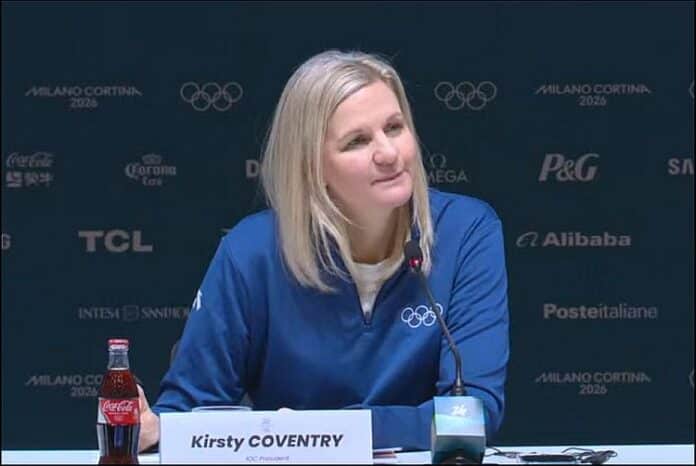
LOS ANGELES 2028: LA28 organizers promise human rights organization grants at City Council Games committee; no agreement on City payments

Los Angeles City Hall (TSX photo).

The Sports Examiner: Chronicling the key competitive, economic and political forces shaping elite sport and the Olympic Movement.★

To get the daily Sports Examiner Recap by e-mail: sign up here!

≡ L.A. CITY 2028 GAMES HEARING ≡

Responding to moans from civil rights and human rights organizations for funding to deal with what they are sure will increases in violations attendant to the 2028 Olympic Games, the LA28 Olympic and Paralympic organizing committee promised to create a grant program to support human-rights prevention in and around the 2028 Games.

Multiple speakers at a snap, two-hour-plus Tuesday meeting of the L.A. City Council’s Ad Hoc Committee on the 2028 Olympic and Paralympic Games reviewed the LA28 human-rights strategy plan submitted in December. Created under the supervision of former U.S. Ambassador to Croatia and career foreign-service officer Juliette Noyes, the document was praised for its breadth, but panned for specific, funded support to deal with labor wage theft, human trafficking and homelessness.

Council President Marqueece Harris-Dawson noted the Council’s expectation that “We want to be sure that all of the resources that are needed are in place, and the people that are needed are in place, the human capital that’s needed, is in place.”

In a later response, LA28 chief executive Reynold Hoover told the committee, “After the last time we were here, we heard loud and clear from both the community as well as all of you, and I would just like to say that I am pleased to announce our next step, which is an upcoming human rights program, in which we will dedicate funding in a grant program for community groups.”

This will be modeled after the LA28 Resilience Champions Fund, which issued its first grants in May to eight organizations for projects of $100,000 each. A total amount for the human rights program has not yet been determined. Hoover added:

“We heard the concern about funding associated with it. We are not the experts on human rights,” and noted a “task force effort among a number of different agencies” is a good approach.

Noyes explained the strategy document at length, pointing out that “major events like this can create unintended consequences for vulnerable communities, That’s why our strategy anticipates those challenges in the context of the ‘28 Games. We plan to address these issues in a framework of community engagement and accountability. …

“We will carry out due diligence, for example, by conducting background checks for key staff members. We will monitor worker protections in our supply chain, and we will train staff and volunteers to help defend human rights. We recognize that protecting human rights requires not just goodwill partnership in LA28-managed programs. It also required resources to bolster existing systems and processes to help fill gaps in human rights protections.”

She also spoke to fears concerning displacement due to the Games: “In terms of addressing the rights of unhoused communities, as required in our Games Agreement, our approach is built on proactive communication and coordination with the City. Based on lessons from previous Games, the largest disruptions to these communities typically stem from the construction of major new facilities. Because LA28 will not be building new permanent venues, we expect to avoid these major disruptions.”

Council member Hugo Soto-Martinez pointedly asked Hoover about what the U.S. Immigration and Customs Enforcement agency (ICE) will be doing during the Games, and in a tense exchange, Hoover explained:

“We work with our Federal partners, with our State partners, City and County, on law enforcement for the Games. I fully expect that the Federal government is going to be supportive of these Games and deliver the Games and respect human rights in the process.”

Soto-Martinez shot back and insisted that Hoover answer the question; the reply: “I don’t know what ICE is going to do, or not do in 2028, on the 14th of July, or before, when the Games come. I can tell you that the relationship that we have with the Federal government and this Administration, and members of Congress, has been incredible. …

“What ICE is going to do or not do, that’s not my answer. I can’t answer that question for you. That’s not my job. My job is to put on a Games in a safe, responsible and fiscally appropriate way, and that’s what I believe I’m going to do.”

Council member Imelda Padilla complained to Hoover about a failure of LA28 to come through for her on promises for an event in her district that had to be canceled.

No action was taken on the report, and the discussion was continued to the next meeting of the committee by Harris-Dawson.

After 85 minutes on human rights, the discussion turned to the draft agreement between the City of Los Angeles and LA28 on the Enhanced City Resources Master Agreement, a blueprint for how LA28 will buy services from the City – related to the Games – specified by follow-on agreements for each of the Olympic and Paralympic venues for which the City will provide services “above and beyond” “normal and customary” services for those sites.

Los Angeles City Administrative Office Matt Szabo explained, “this is the document that says, for the services that are required [by LA28], this is how much and how the City will be paid, based on the services.”

Council member Monica Rodriguez was not comfortable with this form of agreement, especially what happens to the City if LA28 has a shortfall, or even if it has a surplus, if that is insufficient to cover all of the City service costs related to the Games, noting “I have a lot of concerns as to the lack of cost containment, especially with the other venues and the other cities.”

Rodriguez wants a closed session of the Council on this issue, which Harris-Dawson agreed to, subject to the approval of the City Attorney. The committee, at the end of the hearing, moved consideration of the agreement to the full Council, but with no recommendation for approval.

That’s the next step.

Receive our exclusive, weekday TSX Recap by e-mail by clicking here.
★ Sign up a friend to receive the TSX Recap by clicking here.
★ Please consider a donation here to keep this site going.

For our updated, 681-event International Sports Calendar for 2026 and beyond, by date and by sport, click here!
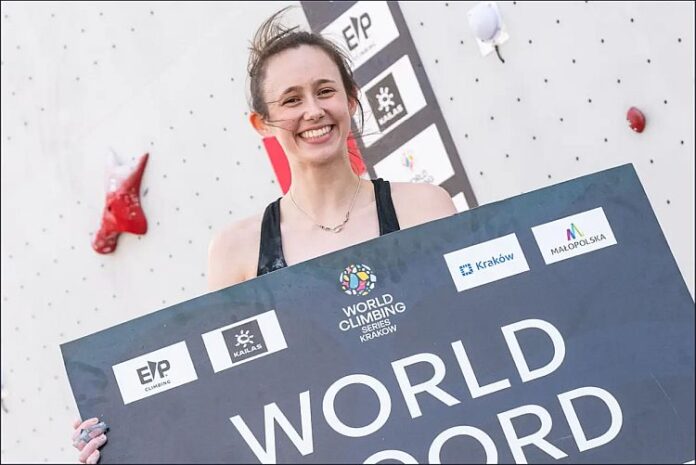
U.S. OLYMPIC & PARALYMPIC COMMITTEE: 2025 audit shows USOPC at $1.11 billion in assets, $654 million reserves, $282 million revenue

The Sports Examiner: Chronicling the key competitive, economic and political forces shaping elite sport and the Olympic Movement.★

To get the daily Sports Examiner Recap by e-mail: sign up here!

≡ USOPC ANNUAL REPORT ≡

The newly released, multi-part “Impact Report” from the U.S. Olympic & Paralympic Committee, believed to be the world’s only billion-dollar National Olympic Committee, included audited financial statements which showed a significant increase in total assets:

2025: $1.114.6 billion
2024: $1,018.1 billion
2023: $971.2 billion

The driver of the increase for 2025 came from investments, which rose from $661.2 million to $760.0 million in a single year, while the organization essentially broke even in terms of revenues and expenses for the year.

Actual revenues during 2025 – a non-Olympic year – were $281.7 million, way down from the $515.1 million for 2024, but was nicely ahead of the $253.7 million for 2023, also a non-Olympic year.

Expenses were at $308.2 million, down from the 2024 Olympic year total of $385.6 million, but considerably more than the $287.4 million in 2023. So, 2025 showed an operating loss of $26.4 million, but this was overcome by contributions with donor restrictions, with $36.2 million available during the year and therefore, a bottom-line net of $9.75 million.

Of the $281.7 million in primary revenue, it came from essentially three sources:

● $154.6 million in sponsorships and licensing
● $61.0 million in investment income
● $38.4 million in contributions

That’s $254.0 million out of $281.7 million in total, or 90.2%. Interestingly, the USOPC received a cryptocurrency donation of $9.97 million during 2025, which was converted to cash the next day at a loss of $147.000.

The expense side of $308.2 million was broken into two main sections:

● $253.8 million (82.3%) in athlete, sport and community support
● $54.4 million (17.7%) in fundraising, sales and administration

Direct support to athletes and National Governing Bodies was $109.8 million, or 35.3% of the entire budget. Included in this are:

● $43.41 million paid directly to athletes
● $21.27 million paid for services, such as athlete travel
● $68.44 million paid to National Governing Bodies (some further paid to athletes)
● $1.42 million paid for NGB services

Among the sports, the largest grant totals of all four of these components went to:

● $16.12 million: USA Track & Field
● $15.14 million: U.S. Ski & Snowboard
● $8.38 million: USA Cycling
● $7.43 million: USA Swimming
● $6.29 million: USA Wrestling
● $5.60 million: USA Bobsled & Skeleton
● $5.54 million: USA Volleyball
● $4.41 million: US Rowing
● $3.86 million: USA Gymnastics
● $3.80 million: US Speedskating

Six other NGBs (and their athletes) received more than $2 million total and five others received between $3.00 and $3.75 million. Nine received less than $10,000.

The USOPC has been active in support of two organizations financially – USA Gymnastics and the U.S. Olympic & Paralympic Museum – with loans of $6.15 million in 2021 and $2.9 million in 2023, respectively. Both are being paid off quarterly.

Observed: The USOPC is, no doubt, the richest NOC in the world, but even so, it cannot even begin to fulfill all of the requests for funding it receives. Its fundraising is going well, especially with LA28 on the horizon, but the demands continue to grow.

In view of the IOC’s new, all-Olympians stipend of $10,000 coming online, there will be added pressure to increase the USOPCs “Operation Gold” honoraria for LA28 medal winners beyond the $37,500-22,500–15,000 currently available.

Receive our exclusive, weekday TSX Recap by e-mail by clicking here.
★ Sign up a friend to receive the TSX Recap by clicking here.
★ Please consider a donation here to keep this site going.

For our updated, 681-event International Sports Calendar for 2026 and beyond, by date and by sport, click here!
RUSSIA: International Skating Union approves “neutral” status for Russian and Belarusian entries in skating

The Sports Examiner: Chronicling the key competitive, economic and political forces shaping elite sport and the Olympic Movement.★

To get the daily Sports Examiner Recap by e-mail: sign up here!

≡ ISU COUNCIL ≡

“The International Skating Union (ISU) Council has decided to revise the position in ISU Communication 2469 to reintroduce skaters affiliated with ISU Members in Russia and Belarus to participate in ISU Events or International Competitions during the 2026/2027 season as AIN (Neutral) Athletes (read ISU Communication 2804).

“Athletes representing Russia and Belarus will be able to compete without items of state recognition, namely national flags, national kit and national anthems. Participation will be dependent on no evidence of breaches of athletes’ neutral status, which reinforces the primacy of fair sport on the ice.”

Tuesday’s announcement follows the International Olympic Committee’s emphasis on neutrality in sport, underlined during the 146th IOC Session last week in Lausanne (SUI).

However, there are qualifications to the “neutral” status:

“Eligibility will be withheld only where a skater is shown to fall within the disqualifying criteria, namely that they are currently in active service with the armed forces or a national security agency of Russia or Belarus, or that, since February 2022, they have taken active part in military operations in the war against Ukraine or have actively and publicly supported that war.

“Each case is assessed individually and on the evidence by the ISU Council (which may delegate the assessment to an independent eligibility panel), and is kept under review. This approach is consistent with the eligibility criteria applied by the IOC to neutral athletes.”

The ISU decision noted that Russian and Belarusian athletes will reappear slowly at the top level of federation competitions since they have been out of events since 2022 and have no ranking points in figure skating, speed skating or short track.

While the athletes can return, officials cannot:

“At this time, the ISU has prioritized the readmission of Athletes. ISU Communication 2469 remains in effect regarding the participation of Officials from Russia and Belarus. However, the ISU recognizes the need to develop a pathway for these officials to return to their duties and is developing such a plan.”

Russian response to the decision was positive, but not wild, given that other federations have fully readmitted Russian athletes and officials. Dmitry Svishchev, First Deputy Chairman of the Russian State Duma Committee on Physical Culture and Sport, told the Russian news agency TASS:

“This is a joint effort between the federations and the Russian Olympic Committee. This is an important decision for our athletes, who have gained confidence in their preparations for the next season.

“The ISU Council’s decision was almost certainly influenced by the recent IOC decision to amend the Charter, which eliminates the politicization of sport. Now it’s important that all admission decisions are implemented without opposition from certain countries.”

Receive our exclusive, weekday TSX Recap by e-mail by clicking here.
★ Sign up a friend to receive the TSX Recap by clicking here.
★ Please consider a donation here to keep this site going.

For our updated, 681-event International Sports Calendar for 2026 and beyond, by date and by sport, click here!
TRANSGENDER: U.S. Supreme Court upholds rights of states to bar transgender females from women’s sport

The United States Supreme Court (Photo: Wikipedia via the U.S. Capitol).

The Sports Examiner: Chronicling the key competitive, economic and political forces shaping elite sport and the Olympic Movement.★

To get the daily Sports Examiner Recap by e-mail: sign up here!

≡ WEST VIRGINIA vs. B.P.J. ≡

This is now a part of the law of the United States:

“To provide equal opportunity for female athletes, schools do not merely maintain, for example, one soccer team, one basketball team, one ice hockey team, and one lacrosse team that are equally open to female and male athletes. That approach would deny equal opportunity to female athletes because, as all agree, females and males have inherent physical differences relevant to athletic performance.”

That’s from the opening of U.S. Supreme Court Justice Brett Kavanaugh’s majority opinion, issued Tuesday (30th) in the companion cases of West Virginia vs. B.P.J. and Little v. Hecox:

“These cases concern two of those state laws, from West Virginia and Idaho. The question before the Court is: Under Title IX and the Equal Protection Clause of the Fourteenth Amendment, may schools maintain women’s and girls’ sports for biological females? In other words, may schools determine eligibility for women’s and girls’ sports based on biological sex? The answer is yes.”

The opinion notes that 27 states have such regulations and cited the International Olympic Committee’s new “Policy on the Protection of the Female (Women’s) Category in Olympic Sport and Guiding Considerations for International Federations and Sports Governing Bodies” from March of this year.

In terms of the facts of the specific West Virginia case:

“B. P. J. is a biological male who identifies as female. In third grade, B. P. J. socially transitioned and adopted a new name. Soon thereafter, B. P. J. took puberty blockers to prevent male puberty, and in sixth grade, B. P. J. also began to take hormones.

“Shortly after passage of the West Virginia law, as B. P. J. was about to enter sixth grade, B. P. J.’s middle school principal informed B. P. J.’s mother that B. P. J. could not participate on the girls’ cross-country and track-and-field teams. B. P. J. is now in high school, where the same policies apply”

B.P.J. has been competing during the course of the litigation and won the Class AAA state girls shot put title. In the Idaho case:

“Hecox is a biological male who identifies as female. Hecox underwent male puberty. In college, Hecox began to take hormones. Hecox attends Boise State University and has competed for the women’s club soccer team. Hecox also has tried out for the women’s Division I track and cross country teams.”

Regarding the discrimination claims under Title IX of the Education Amendments of 1972, Kavavaugh explained:

“Title IX prohibits discrimination on the basis of sex. Title IX’s implementing regulations expressly permit schools to maintain separate teams for ‘members of each sex.’

“The term ‘sex’ in the 1972 Title IX statute, the 1974 Javits Amendment, and the 1975 Title IX regulations cannot plausibly be interpreted to refer to anything other than biological sex.”

He concludes:

“Separate sports teams for biological males and biological females are reasonable: Given the inherent physical differences between the sexes, allowing only biological females to play on women’s and girls’ teams can reduce the risk of physical injury and ensure fair competition.”

Kavanaugh then discusses the equal-protection arguments under the 14th Amendment to the U.S. Constitution, and he was clear in favor of the positions of West Virginia and Idaho:

“As to competitive fairness, the States contend that allowing biological males to play women’s and girls’ sports would put female athletes at a debilitating disadvantage. Again, sports are generally zero sum. Every biological male who makes the team takes a roster spot from a female athlete. Every biological male who earns playing time reduces the playing time of a female athlete. Every biological male who starts takes a starting position from a female athlete. Every biological male who wins a race takes the gold medal away from a female athlete. And so on.

“Even if only one or a few males were to play on a women’s or girls’ team, that would still place specific individual female athletes at a significant competitive disadvantage.

“Based on all of the above, the States argue—and we agree—that the interests in safety and competitive fairness are important for purposes of equal protection analysis.”

Kavanaugh was clear, however, that “these cases do not present the distinct question of whether, under Title IX and the Equal Protection Clause, schools may allow biological males who identify as female to participate on girls’ and women’s sports teams. That question is currently the subject of litigation in some lower courts.” So, that’s for another day.

The cases were remanded back to the relevant Circuit Courts for further actions consistent with the Court’s opinion.

Separate concurring opinions were filed by Justice Clarence Thomas and Neil Gorsuch; an opinion concurring in part and dissenting in part was filed by Justice Sonia Sotomayor, joined by Justices Elana Kagan and Ketanji Jackson, and Jackson also filed a concurring and dissenting opinion.

Observed: As Kavanaugh notes, this settles the question about states with existing laws regarding prohibition of transgenders in women’s sports. It does not create a blanket ban, and as Kavavaugh points out, that question is also making its way to the Supreme Court, slowly.

Receive our exclusive, weekday TSX Recap by e-mail by clicking here.
★ Sign up a friend to receive the TSX Recap by clicking here.
★ Please consider a donation here to keep this site going.

For our updated, 681-event International Sports Calendar for 2026 and beyond, by date and by sport, click here!