



















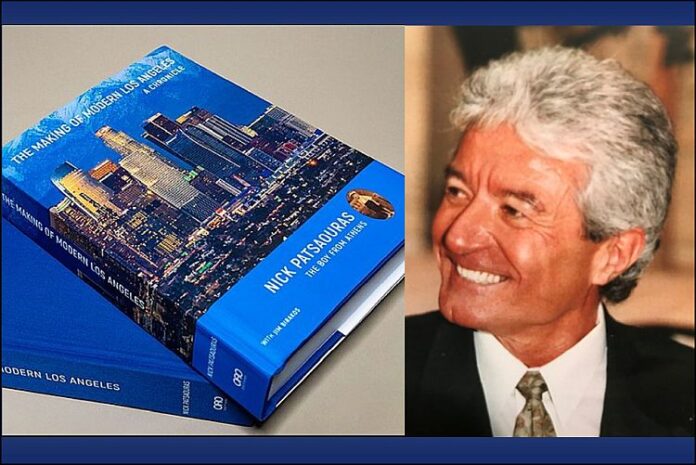
[Nick Patsaouras, originally an electrical engineer, was president of the Southern California Rapid Transit District during the 1984 Olympic Games, and has served as a Board member with the Los Angeles Department of Water and Power, the Board of Zoning Appeals and others. His 2024 book, The Making of Modern Los Angeles (ORO Editions) chronicled an insider’s view of the growth of the city. His opinions, are, of course, solely his own.]
Some readers of my 28 July article (“LA28: Olympic Glory or Fiscal Disaster”) regarding LA28’s lack of transportation plans asked me to be more explicit as it relates to bus-only lanes during the Olympics. Here is what Angelenos need to understand.
LA28 is not only about the fans. The 2028 Olympics in Los Angeles will require special traffic lanes and routes so athletes, officials, media, emergency vehicles, and possibly buses can move reliably between venues. These routes may affect local streets, parking, business access, church access, deliveries, and neighborhood circulation. The problem is that the public has not yet seen enough clear information about where these lanes will go, who will pay for them, and how residents and businesses will be protected. For ordinary spectators, this could affect whether they can get to a venue on time, whether shuttle buses are reliable, whether rideshare drop-offs are organized, and whether they are stranded after an event.
A major unresolved issue is the Games Route Network, or “GRN.” This is the special network of streets and highways that will be used to move Olympic athletes, officials, media, and other accredited participants around the region. In plain English, these are the Olympic priority routes. Some routes may operate similar to temporary bus-only or restricted-access lanes.
The Games Mobility Executive, or “GME,” is the coordination structure meant to bring together the LA28 organizers, the Los Angeles Metropolitan Transportation Authority (Metro), the California Department of Transportation (Caltrans), the City of Los Angeles, and other venue cities. Its job is to make sure the transportation plan works across city boundaries. But a coordinating body is not the same thing as a funding source or a final decision-maker.
The problem is that responsibility is being pushed around: “the buck is being passed.” Caltrans is focused mainly on freeway segments. Local cities are being asked to plan street-level routes. LA28 appears to be acting as the convener, but not necessarily as the funder. Metro needs information to plan buses and passenger movement, but it cannot plan effectively if LA28 and the venue cities do not share details. The result is a dangerous gap: the agencies are talking, but the public still does not know who is truly accountable.
One unanswered question is whether these priority routes will help regular people get to the Games, or whether they will mainly serve the Olympic “Games family”: athletes, officials, VIPs, federations, media, and other credentialed participants. If Metro buses and spectator shuttles are not allowed to use these lanes, then the public may face delays while watching empty or lightly used Olympic lanes move official vehicles.
A recent FIFA World Cup shuttle problem in Inglewood from June 15 shows why this question matters.
Residents and businesses along a shuttle route reportedly found access to their properties restricted without adequate advance warning. The City of Inglewood later had to apologize publicly and make clear that it had not received sufficient notice. The problem was eventually managed, but it was a warning sign: even a small breakdown in communication can create anger, confusion, and loss of trust.
LA28 continues to project confidence, but confidence is not a transportation plan. If official Olympic priority routes will impact local streets, businesses, churches, homes, and spectators, the public deserves to know where those lanes will be, who can use them, who will pay for them, and how access will be protected.
Los Angeles can still deliver a successful Olympics, but success will require more than optimism. It will require transparency, coordination, and respect for the people who live and work along the routes.

Comments are welcome here.
[≡The Sports Examiner encourages expressions of opinion – we really do – but preferably based on facts. Send comments to [email protected]. We do not guarantee publication of any comment, but all comments submitted will be considered and your submission implies your agreement to publication (and light editing if needed to meet our grammatical and punctuation standards) at our sole discretion. Please include your name and hometown on any comment submitted for publication.≡]

You can receive our exclusive TSX Report by e-mail by clicking here. You can also refer a friend by clicking here, and can donate here to keep this site going.
For our updated, 681-event International Sports Calendar for 2026 and beyond, by date and by sport, click here!