















Home Blog

LOS ANGELES 2028: L.A. City Council increases financial pressure on LA28 organizers via a new, pay-as-you-go motion

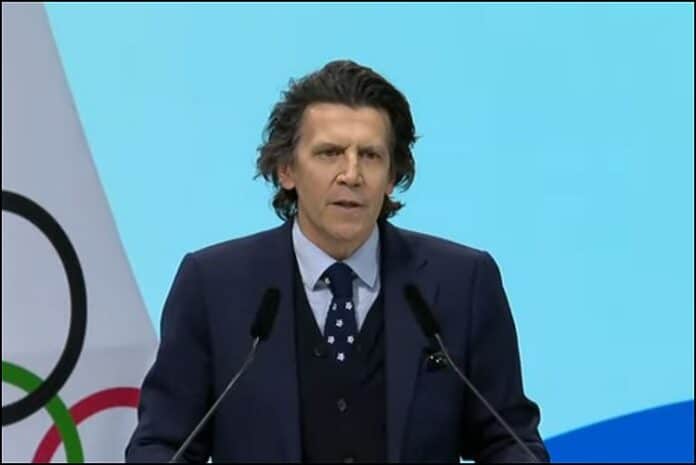
Los Angeles City Council President Marqueece Harris-Dawson (Image: L.A. City video screenshot).

The Sports Examiner: Chronicling the key competitive, economic and political forces shaping elite sport and the Olympic Movement.★

To get the daily Sports Examiner Recap by e-mail: sign up here!

≡ PAY NOW, PLEASE ≡

Combine a city in a difficult financial environment with an unlimited guarantee for losses stemming from an Olympic and Paralympic Games in which it has little control over the private-sector organizing committee, and extreme irritation over what the organizing committee has promised so far on local procurement and you have a Friday motion from Los Angeles City Council President Marqueece Harris-Dawson.

The introduction noted:

“The delivery of the 2028 Games will require substantial City resources, including public safety, transportation, sanitation and other essential services that extend beyond the City’s normal operations. Ensuring that the City is fully reimbursed for these Enhanced City Resources, including costs at the time of delivery and infrastructure improvements requested by LA28 beyond what the City has already planned, is critical to protecting the City’s General Fund and maintaining fiscal responsibility.”

The motion itself included these financial conditions:

“I THEREFORE MOVE that the Council instruct the City Administrative Officer (CAO) and Chief Legislative Analyst (CLA), and request the City Attorney, to [finalize and present to Council within 14 days an Enhanced City Resources Master Agreement (ECRMA) between the City and the Organizing Committee for the Olympic and Paralympic Games 2028 (LA28) which advances financial protections for the City, which shall include the following:

“a. LA28 shall reimburse the City for all Enhanced City Resources (ECR) exceeding the City’s ‘normal and customary’ operations required for and in direct support of the Games;

● “b. Reimbursement shall include the costs of ECR at the time of delivery;”

● “c. LA28 shall reimburse the City for all LA28-requested infrastructure improvements beyond the normal and customary responsibilities of the City;”

“e. A payment schedule shall be established to provide advanced payment to the City for estimated costs of ECR based on when the costs are anticipated to be incurred.”

The final paragraph added:

“I FURTHER MOVE that the Council instruct the CAO and CLA to negotiate an amendment to the Games Agreement to ensure LA28’s contingency funds are available for ECR expenditures incurred by the City that are not reimbursed by any relevant entities, prior to those contingency funds being declared Surplus and disbursed to any Legacy Entity.”

The last addition responds to a memorandum from City Attorney Hydee Feldstein Soto, who wrote to the Council last month that “The ECRMA as drafted by LA28 limits the obligation to reimburse City costs before LA28 is permitted to create its own legacy fund with the surplus.”

Responding to LA28’s negotiating position, Council member Monica Rodriguez introduced a motion last Wednesday to codify that the City be reimbursed by LA28 to the extent of any funds available:

“I THEREFORE MOVE that the City Council instruct the Chief Legislative Analyst, in coordination with the City Administrative Officer and the City Attorney, to prepare language for establishing a new section within the City Charter through the ongoing Charter reform process that codifies a ‘Zero-Cost Principle for the LA28 Games,’ ensuring that the City shall not incur unreimbursed costs associated with hosting the 2028 Olympic and Paralympic Games and no Legacy Fund shall be established until the City is reimbursed.”

Conveniently, the Los Angeles City Charter is undergoing a revision process right now. The Enhanced City Resources Master Agreement was supposed to have been completed by 1 October 2025, but is overdue.

Harris-Dawson’s motion would add an advanced funding and payment schedule to the requirement that LA28 pay for the City’s Games-related costs, essentially in advance, instead of being reimbursed afterwards. The Games Agreement already calls for LA28 to set aside $270 million in funds in a specific fund to cover the City’s first bloc of liability for a Games deficit.

The worry from City Attorney Feldstein Soto mentioned specifically the 2028 Games costs for security, which are projected to be as much as $1 billion for the City and which LA28 has not committed to pay. Both the City and LA28 are expecting the U.S. Federal government to pay this cost and while talks are ongoing, a Federal commitment to cover the City’s security costs has not been made as yet. Further, while $1 billion in Federal funds for security for the Games was made in the Fiscal Year 2026 budget, no allocation has been included in the Trump Administration’s Fiscal Year 2027 budget plan.

The Harris-Dawson motion was seconded by Council members Ysabel Jurado and Traci Park and was forwarded to the Ad Hoc Committee on the 2028 Olympic and Paralympic Games, chaired by … Harris-Dawson.

No date for the next meeting of the Ad Hoc Committee has been announced.

Observed: The Council members are angry with the LA28 organizers on multiple fronts, not only on costs, but on guarantees of local spending in the organizing committee’s procurement plan, with the LA28 strategy document on human rights released but not yet discussed publicly.

Then there are ticket prices and the disclosure in the purchasing process of 24% in service fees, included in the overall prices paid by buyers. Time ran out in the Ad Hoc Committee meeting before that was discussed in depth, with Council member Katy Yaroslavsky stating briefly, “The tickets are not affordable. The 24 percent surcharge is not affordable” and asking why a City fee was not attached to help pay for City services.

Receive our exclusive, weekday TSX Recap by e-mail by clicking here.
★ Sign up a friend to receive the TSX Recap by clicking here.
★ Please consider a donation here to keep this site going.

For our updated, 681-event International Sports Calendar for 2026 and beyond, by date and by sport, click here!

PANORAMA: Brisbane 2032 confirms first sponsor; IOC’s Coventry asks Europe to keep neutrality in sport; N.J. governor upset on FIFA transit costs

(Image: International Olympic Committee.)

The Sports Examiner: Chronicling the key competitive, economic and political forces shaping elite sport and the Olympic Movement.★

To get the daily Sports Examiner Recap by e-mail: sign up here!

≡ THE 5-RING CIRCUS ≡

● Olympic Games 2032: Brisbane ● As had been previously leaked, Commonwealth Bank (CommBank) was announced Thursday as the first commercial partner of the 2032 Brisbane organizing committee.

The company is Australia’s largest bank, originally created as a government bank in 1911 and fully privatized in 1996.

The agreement has implications for the International Olympic Committee, where it has been reported that JPMorgan Chase is in discussions about becoming a TOP sponsor. The presence of CommBank would necessarily limit JPMorgan Chase rights to just the 2028 Los Angeles Games, absent an ultra-creative work-around to allow both to share the Olympic Rings after 2028. 

● International Olympic Committee ● IOC President Kirsty Coventry (ZIM) spoke to the EU Sport Forum in Paphos, Cyprus in a recorded video message, emphasizing the importance of sport autonomy, including:

“Sport – and the Olympic Games in particular – offer the opposite of the division we see in this world. They offer a rare space where people meet not as adversaries, but as fellow human beings. A much-needed space of peaceful competition.”

● “The athletes reminded us what excellence, friendship and respect look like in a world that sometimes forgets these values. They showed us what humanity can be at its very best, inspiring generations around the world with the Olympic spirit.

“Athletes can only inspire us if they are able to compete. They can only do so if we keep sport strictly neutral ground. If politics does not take over on the field of play. For all of us, this means that we must protect the autonomy of sport. So that we can tell all the athletes, no matter where they come from: yes, you can compete freely, without political interference beyond your control.”

● “And so I call on the EU and its Member States to stand by these principles that you have recognised so often: respect the autonomy of sport and support the political neutrality of the IOC and of the Olympic Games. Because only then can the power of sport truly unfold.”

There was no indication in this message of any change in the IOC’s stance on Russia and Belarus, which currently has encouraged International Federations to return youth and junior athletes to international competition, but not senior-level athletes or teams.

The IOC announced a team of 25 athletes to serve as “Athlete Role Models” for the 2026 Youth Olympic Games in Dakar (SEN) in October. These included Americans Christopher Bak for rowing and Ricardo Torres Jr. for boxing.

● Athletics ● Kenyan distance star Rhonex Kipruto, now 26, the one-time road world-record holder at 5 km and 10 km, is a confirmed doper according to a decision announced by the Court of Arbitration for Sport.

The Thursday announcement of the decision on his appeal of a six-year sanction for blood doping ended with a reduction in his ban to five years:

“The CAS Panel considered the scientific evidence and expert opinions submitted by the Parties and found that the Athlete’s blood profile was the result of blood manipulation, constituting a doping infraction. …

“The Panel also reviewed the six-year period of ineligibility that was imposed, made up of four years for an intentional ADRV [doping violation] plus two years for aggravating circumstances. The aggravating circumstances submitted by World Athletics included several instances of blood doping and that the Athlete engaged in a deliberate and sophisticated doping regime. The Panel determined that, bearing in mind the principle of proportionality, the aggravating circumstances warrant an additional period of ineligibility of one year instead of two.”

His results, including the world-record runs in 2020, were nullified. However, his ban will now end on 10 May 2028, prior to the 2028 Olympic Games in Los Angeles.

The bankruptcy plan for Grand Slam Track was approved Thursday by the U.S. Bankruptcy Court in Delaware and will now proceed with the filing of claims from those owed money and the distribution of the amounts available from primary investor Winners Alliance.

A separate action by the committee for unsecured creditors is still alive and will be heard later as to whether it will be allowed to proceed.

● Football ● New Jersey Governor Mikie Sherrill complained on X about the cost of hosting FIFA World Cup 2026 matches:

“FIFA is charging fans up to $10,000 for a single ticket to the final.

“They’re charging over $200 for ‘premium’ parking at the American Dream Mall – while eliminating parking at MetLife Stadium. They’re set to make $11 billion off of the World Cup overall.

“But New Jerseyans should foot a $48 million bill for transportation costs? Not happening.”

In a second post, she added: “I’m not going to burden New Jersey taxpayers with that bill for years. FIFA must cover the cost of transportation. But if they don’t – I’m not going to let New Jersey come out on the losing end of this.”

Instead, while the rate plan for New Jersey Transit is to be announced on Friday, it has been reported at more than $100 per person for each of the eight matches, compared to the usual fare of $12.90. FIFA replied in a statement:

“We are quite surprised by the NJ Governor’s approach today on fan transportation. The original FIFA World Cup 2026 Host City Agreements signed in 2018 required free transportation for fans to all matches.

“Recognizing the financial strain this placed on the host cities, back in 2023 FIFA adjusted the Host Agreement requirements across all host cities as follows: All Match Ticket holders and accredited individuals shall be able to access transport (public or additionally planned transport) at cost to allow travel to Stadiums on match days.”

New Jersey Transit chief executive Kris Kolluri told NJ.com. “It will cost us $48 million. We will charge FIFA fans for those tickets, and it will not be subsidized by our commuters.”

● Sport Climbing ● World Climbing, the international federation for sport climbing, confirmed a major increase in prize money across the 13 IFSC World Cup events, with 38 individual events now set to pay €20,000 per event, down to eight places: €6,000-4,000-2,800-2,000-1,600-1,400-1,200-1,000. (€1 = $1.18 U.S.)

This is way up from the €11,700 per event in 2024; some 2025 events used this higher prize payout. This will total €760,000 for the World Cup, plus another €90,000 for nine speed-relay events to a rise to €850,000 in all. Another €9,000 will be distributed to World Climbing Series Rankings seasonal winners.

Receive our exclusive, weekday TSX Recap by e-mail by clicking here.
★ Sign up a friend to receive the TSX Recap by clicking here.
★ Please consider a donation here to keep this site going.

For our updated, 681-event International Sports Calendar for 2026 and beyond, by date and by sport, click here!
ATHLETICS: World Athletics rejects applications to represent Turkey by 11 stars, including five Paris medalists

The Sports Examiner: Chronicling the key competitive, economic and political forces shaping elite sport and the Olympic Movement.★

To get the daily Sports Examiner Recap by e-mail: sign up here!

≡ TURKISH TRANSFERS NIXED ≡

The World Athletics Nationality Review Panel has today refused the applications of 11 athletes seeking to transfer their allegiance to Türkiye.”

Thursday’s stunning announcement ends months of speculation about a team of stars who were reported to file for changes of allegiance in 2025, enough time to allow for the three-year waiting period and still allow for eligibility at the 2028 Olympic Games in Los Angeles. The list of athletes involved includes five Paris 2024 Olympic medalists:

● Catherine Relin (Selin Can) Amanang’ole (KEN)
● Rajindra Campbell (JAM) ~ 2024 Olympic shot put bronze medalist
● Jaydon Hibbert (JAM) ~ 2022 World Junior triple jump champion
● Brian Kibor (KEN)
● Brigid Kosgei (KEN) ~ 2024 Olympic marathon silver medalist
● Ronald Kwemoi (KEN) ~ 2024 Olympic 5,000 m silver medalist
● Nelvin (Can) Jepkemboi (KEN)
● Favour Ofili (NGR) ~ 2022 Commonwealth Games 200 m silver medalist
● Wayne Pinnock (JAM) ~ 2024 Olympic long jump silverr medalist
● Rojé Stona (JAM) ~ 2024 Olympic discus gold medalist
● Sophia Yakushina (RUS)

The statement noted:

● “The panel found that the applications formed part of a coordinated recruitment strategy led by the Türkiye government acting through a wholly-owned and financed government club, to attract overseas athletes through lucrative contracts, with the aim of facilitating transfers of allegiance and enabling those athletes to represent Türkiye at future international competitions, including the Los Angeles 2028 Olympic Games.”

“As a result of the decisions, the athletes are not eligible to represent Türkiye in national representative competitions or other relevant international events. The panel noted, however, that this does not prevent the athletes from competing in one-day meetings or road races in a personal or club capacity, or from living and training in Türkiye.”

So, these stars are now in limbo as far as competing in the World Championships or Olympic Games.

Under World Athletics eligibility rules, approvals of transfers are also conditional on “the Athlete demonstrating that as at the end of the waiting period:

● “i. they are or will be aged twenty or over; and

● “ii. they are or will be a Citizen of the Country or of the parent Country of the Territory which the Member represents; and

● “iii. they have or will have a genuine, close, credible and established link to that Country or Territory (e.g., through Residence there).”

The statement underscored:

“While citizenship is a starting point, additional criteria are applied to ensure a genuine connection between the athlete and the country they represent and to protect the integrity, credibility and development of the sport globally.”

Last June, the Sportsmax site reported:

“All four athletes are said to be part of a broader initiative driven by Turkish sporting authorities and facilitated by a prominent American sports agent. According to sources, each athlete is set to receive a minimum of US$500,000, along with generous monthly stipends and six-figure bonuses for medals earned at global championships. Reports further suggest that the athletes have agreed to eight-year contracts, effectively committing to Türkiye through the 2032 Olympic cycle.”

An unanswered question now in front of World Athletics is whether sanctions should be applied to the national federation in Turkey.

Receive our exclusive, weekday TSX Recap by e-mail by clicking here.
★ Sign up a friend to receive the TSX Recap by clicking here.
★ Please consider a donation here to keep this site going.

For our updated, 681-event International Sports Calendar for 2026 and beyond, by date and by sport, click here!
LOS ANGELES 2028: Echoing 1978, L.A. City Council member Rodriguez asks for City Charter amendment to assure all City costs reimbursed by LA28

The Los Angeles City Hall, a 1928 Art Deco downtown icon (Photo: Tim Ahern via Wikipedia)

The Sports Examiner: Chronicling the key competitive, economic and political forces shaping elite sport and the Olympic Movement.★

To get the daily Sports Examiner Recap by e-mail: sign up here!

≡ L.A. OLYMPIC COST WORRIES ≡

“This lack of clarity exposes the City to substantial financial risk and undermines the long-standing ‘zero-cost’ principle under which the Games were approved. Given the magnitude and evolving nature of these negotiations, it is imperative that the City Council pursue all available measures to safeguard the City’s fiscal stability and ensure the uninterrupted delivery of core services to residents before, during, and after the Games.

“I THEREFORE MOVE that the City Council instruct the Chief Legislative Analyst, in coordination with the City Administrative Officer and the City Attorney, to prepare language for establishing a new section within the City Charter through the ongoing Charter reform process that codifies a ‘Zero-Cost Principle for the LA28 Games,’ ensuring that the City shall not incur unreimbursed costs associated with hosting the 2028 Olympic and Paralympic Games and no Legacy Fund shall be established until the City is reimbursed.”

The palpable angst of Los Angeles City Council members, vividly demonstrated by an angry Tuesday hearing of the Council’s Ad Hoc Committee on the 2028 Olympic and Paralympic Games over the organizing committee’s procurement policy manual, and continuing worry about a possible LA28 deficit that would have to be paid for by the City of Los Angeles and possibly also the State of California, spilled over late Tuesday into a motion made by Council member Monica Rodriguez, quoted in part above.

At specific issue in her motion are the continuing discussions over an “Enhanced City Resources Master Agreement” (“ECRMA”) between LA28 and the City, defining what services the City would “normally provide” and what added services – beyond the norm – that LA28 would pay for.

The current LA28 negotiating position has been criticized by City Attorney Hydee Feldstein Soto, who wrote last month in a memorandum made public:

“The ECRMA as drafted by LA28 limits the obligation to reimburse City costs before LA28 is permitted to create its own legacy fund with the surplus.”

“Thus, there are two remaining issues in the ECRMA that must be resolved in the City’s favor for LA28 to fulfill their promised ‘no cost to taxpayers’ foundational principle – (1) what happens if the federal government does not pay the assumed $1 billion [in security costs] and (2) what happens if the City’s extraordinary expenses exceed $1 billion?”

Rodriguez has picked up on this, first in a letter last week to LA28 chief executive Reynold Hoover that was reported on by Scott Reid of the Southern California News Group, and now in this motion.

Her timing is fortuitous in that a City Charter reform project is ongoing, and echoes a parallel tug-of-war over the City and Olympic costs back in 1978, when the International Olympic Committee awarded the Games to a private organizing committee in Los Angeles, after the City refused to guarantee the finances of the event.

To ensure this position did not change, a City Charter amendment was placed on the 7 November 1978 municipal ballot as “Charter Amendment N,” which opened with:

“Except as herein specifically permitted, the City of Los Angeles, its officers, employees, agencies and instrumentalities shall be prohibited both directly and indirectly from appropriating funds, issuing bonds, lending credit, diverting funds received or to be received under existing grants, levying taxes or assessments, incurring expenses, making or undertaking any capital expenditures, or entering into any agreements in aid or in furtherance of the promotion of the 1984 Summer Olympic Games unless the direct and indirect costs to be incurred (or incurred prior to the adoption of this section but after selection of the City of Los Angeles by the International Olympics Committee as the host city of the 1984 Summer Olympic Games) by the City of Los Angeles, its officers, employees, agencies and instrumentalities in connection therewith do not exceed the direct receipts received or to be received no later than June 30, 1985 by the City in connection with said 1984 Olympic Games.”

This was interpreted as requiring the City to be reimbursed for any expenses directly related to the 1984 Games, and passed overwhelmingly, by 74-26% (as Charter §436, it was repealed in 1993).

It appears Rodriguez is ready for a re-run.

Another motion based on the unhappy Tuesday Council committee meeting came from Council President Marqueece Harris-Dawson and members Curren Price Jr. and Hugo Soto-Martinez, who submitted a Wednesday motion to try and place specific commitments on the LA28 organizers as to the amount of purchases it will actually make for the Games and from whom, including:

“Through multiple engagements with LA28, the City has consistently called for a formal, written commitment in the procurement plan establishing a tiered vendor preference structure: City of Los Angeles businesses first, followed by Los Angeles County, and then the broader five-county region. As the public entity bearing primary financial liability for the Games, the City has both a responsibility and a right to ensure that the Games is a net positive to the City’s economy and that its small businesses are first in line to benefit.”

“In its Impact and Sustainability report, LA28 has pledged to direct 75% of addressable spend to Los Angeles, San Bernardino, Orange, Ventura and Riverside counties and 25% to small businesses.

“However, LA28’s procurement plan falls significantly short of community expectations to meaningfully support businesses within the City of Los Angeles through LA28 procurement opportunities. lt provides no transparency on total addressable spend, no sector-specific allocations, and no anticipated contract values. Without clear accountability measures, large multinational firms could secure the majority of funding, leaving local businesses with only a small share of the overall economic benefit.”

So, the motion asks for policy and enforcement mechanisms “mandating that LA28 prioritize City of Los Angeles businesses, establish transparent procurement and contracting protocols while providing comprehensive quarterly reports.”

Both motions were referred, of course, to the Council’s Ad Hoc Committee on the 2028 Olympic and Paralympic Games.

Observed: The Council committee members were visibly upset at Tuesday’s meeting, including Rodriguez and Harris-Dawson, and the gloves are off, especially as the City’s financial situation remains precarious and incumbent Mayor Karen Bass is polling at 25% in advance of June elections and not leading these discussions.

A key to the success of the 1984 Olympic Games was the close cooperation – including on no fiscal responsibility for the City – between the organizing committee and City Hall. The lack of cooperation and coordination led to some of the problems at the Atlanta 1996 Games. So it is crucial that the LA28 organizers and the City get through this rough patch – somehow – together.

Receive our exclusive, weekday TSX Recap by e-mail by clicking here.
★ Sign up a friend to receive the TSX Recap by clicking here.
★ Please consider a donation here to keep this site going.

For our updated, 681-event International Sports Calendar for 2026 and beyond, by date and by sport, click here!
U.S. OLYMPIC & PARALYMPIC COMMITTEE: USOPC Chair Sykes praises U.S. Milan Cortina performance, says LA28 ticket fees a “standard charge”

U.S. Olympic & Paralympic Committee Chair Gene Sykes (Photo: IOC video screen shot).

The Sports Examiner: Chronicling the key competitive, economic and political forces shaping elite sport and the Olympic Movement.★

To get the daily Sports Examiner Recap by e-mail: sign up here!

≡ BOARD UPDATE ≡

“Very confident” was the way U.S. Olympic & Paralympic Committee President Gene Sykes described the work of the LA28 organizing committee, whose report was a central feature of the USOPC Board meeting just completed. At a Wednesday news briefing, Sykes explained:

“LA28 is making tremendous progress. Operationally, they have done a number of things in the community … they have built a team that is now quite a large team and will be as many as 5,000 full-time members by the time of the Games, with tens of thousands of volunteers. Their big, complicated project now feels very near and they’ve made very impressive progress.”

He noted the sponsorship sales program is doing “incredibly well” and as for the ongoing first session of ticket sales, “they shared with us the number, which they haven’t shared publicly, but it’s incredibly impressive, and they’ve been selling tickets at a remarkable rate.

“I would also say they’ve taken great efforts to make sure tickets are available at all prices; over a million tickets will be priced at $28 per seat. So we were quite encouraged to hear from them, and quite confident in the direction of LA28 from an operational standpoint.”

He was questioned about the technical glitches in the sales effort and the ticket pricing, including the negative reaction to the 24% service fee attached to the ticket cost (although the entire cost was shown in the listed ticket prices):

“We actually had a very thorough discussion with the LA28 about this today, so they are not only very aware of the issue, but they had given us a lot to think about. The 24% ticket charge is a standard charge, sort of a normal charge that is embedded in the ticket price, so from their standpoint, I think they are operating with professional operators in sports and event ticketing [AXS and Eventim] that have worked with events all around the world.”

As for the prices themselves, “There are some tickets which are high-priced, but they have made a great effort to have low-priced tickets. They’ll have a million tickets priced at $28, and $28 tickets for all medal events. So I know they are thinking very seriously about how to manage the ticket activities so that it satisfies everybody; that’s on their minds.”

As for the technical issues and what is on sale now, Sykes referred those issues back to LA28, but added, “I think they’ve really planned for this quite well and we’re pleased with the progress that we understand, and we know that they have to make sure that the community understands the answers” to those questions.

Sykes also spoke to the angry Tuesday hearing of the Los Angeles City Council’s Olympics and Paralympics committee, explaining:

“I think the frustration has been over a certain agreement that has not yet been completed with the City of L.A., and I believe actually that has a lot to do with various parts of the City administration not having the same point of view, and LA28 trying to bring things to a conclusion, and reach an agreement. I think that’s been challenging, but we remain confident that they will do a very good job.”

Asked about what the USOPC Board believes LA28 Chair Casey Wasserman’s role should be going forward in view of the controversy surrounding his long-ago interchange with child sex traffickers Ghislane Maxwell and Jeffrey Epstein, Sykes replied:

“We take the concerns seriously. … The USOPC Board has actually had many discussions about this topic and we’ve actively engaged and listened to our stakeholders, including athletes, and we’re closely monitoring the impact on our community.

“We’ve also shared our concerns with the LA28 Board, which is responsible for determining who serves as its Chair.”

He again praised the work of the LA28 staff, led by chief executive Reynold Hoover.

Sykes lauded the U.S. Olympic and Paralympic athletes competing in the Milan Cortina Games, calling their performance “simply outstanding” and adding:

“You carried yourself with a talent that makes us stand up and cheer, sometimes almost in disbelief in what we were witnessing. And you also carried the pride of your community and the entire nation. For that, we’re eternally grateful.”

USOPC chief executive Sarah Hirshland noted the exceptional breadth of performances, with 85 Olympic medal winners and 28 Paralympic medal winners on the U.S. squad. Moreover, the U.S. won medals in 11 of 16 Olympic disciplines – more than any other country – and four of five Paralympic disciplines. This is good and there is more to come:

“Paris [2024] and Milan results are evidence of a system that is working hard in support of athletes. Add in some home soil and home crowds [for 2028] and we feel the conditions for something very special are coming together quite nicely.”

Hirshland also voiced continuing concern over the mess in collegiate sports, observing:

“As football economics force universities to spend more to be competitive, Olympic-sport programs can often be the first budgets to be cut. When those programs disappear, the pipeline shrinks and the ripple effects reach all the way to the Olympic and Paralympic Games.”

She called on Congress “to pass legislation stabilizing collegiate sports before the crisis fully arrives. Bipartisan Congressional legislation to lock in sustained, long-term investment is critical.”

Sykes noted that the USOPC Board formally certified USA Lacrosse as a new National Governing Body, and that USA Surfing will be re-certified as an NGB as of 1 June 2026. Both had the backing of their respective International Federations. No update was provided on the ongoing NGB situations for badminton, cricket and skateboarding.

Receive our exclusive, weekday TSX Recap by e-mail by clicking here.
★ Sign up a friend to receive the TSX Recap by clicking here.
★ Please consider a donation here to keep this site going.

For our updated, 681-event International Sports Calendar for 2026 and beyond, by date and by sport, click here!
LOS ANGELES 2028: L.A. Metro getting desperate for 2028 Games funding; LA28 chair Wasserman lobbying Trump Administration and Congress

The Sports Examiner: Chronicling the key competitive, economic and political forces shaping elite sport and the Olympic Movement.★

To get the daily Sports Examiner Recap by e-mail: sign up here!

≡ METRO BOARD MEETING ≡

Funding for the proposed transportation support program for the 2028 Olympic and Paralympic Games dominated the discussions during a special Board Meeting on Wednesday afternoon of the Los Angeles Metropolitan Transportation Authority.

The directors were all well aware that the Trump Administration’s submitted budget for Federal Fiscal Year 2027 did not include the $2 billion requested by Metro, and they all urged continued and intensified lobbying of the Congress to insert appropriations into the final spending bill if possible.

Metro Director of Innovation Seleta Reynolds agreed and explained:

“It is absolutely urgent for us to resolve some funding certainty for the most important investment that remains unfunded, which is the Games Enhanced Transit Service, and having that run as originally envisioned is critical to making sure that we do not have venues that are crowded, private vehicles and TNCs [transportation network companies, e.g. Uber].”

She reiterated that getting GETS funding “is absolutely urgent and we will be in a position where we will have to entertain some really unpleasant scenarios for all of us. If there is chaos at the venues, it will create a strain on law enforcement that will cause them to have to spend valuable and precious time directing traffic and resolving potential crashes, instead of focusing on real core safety and security issues.

“So there is a waterfall of downside risks to not funding GETS as envisioned.”

Of the $94.3 million in Federal 2028 Games transportation funding approved earlier this year, about $89 million is actually expected to come to Southern California. Reynolds said that the spending plan is already in place, for “legacy capital projects that we needed to get done, as well as making he up-front investments on the operational capacity that are also incredibly necessary to serve the Games.”

That includes, specifically, the high-profile – and highest-priority – GETS and the Games Route Network.

Metro’s Government Relations Executive Officer Michael Turner told the Board that Metro staff are continuing to lobby for Federal support; “we have kept up the communication with the Administration, even though we were not included in the budget. Some of this attention now focuses on the appropriations process, and so we are looking to see how we can advance this request through the appropriations process.”

A “drop-dead” date for funding of October 2026 was noted by L.A. County Supervisor and Metro Board member Lindsey Horvath, to know what funding will be available, and it was stated that go/no go decisions will have to be made then if funding is not secured by that time. There is also a hard push in Sacramento to obtain a requested $379.29 million from the State of California in Games-related funding, which should be resolved before October.

LA28 Senior Vice President and head of transportation Bill Panos spoke to the Board and noted that there are shared opportunities for discussions and lobbying “with our chairman. Our Chairman right now, by the way – Casey Wasserman – is back in D.C. as was talked about, actually advocating for money – this transportation funding – right now, and other funding for LA28 as we speak.”

Panos also explained that the venue security perimeters, developed in coordination with the U.S. Secret Service as part of a National Special Security Event, have been decided on a preliminary basis for most of the sites. “As soon as they are established, then we have to look at them, engage with the community and we modify them as we find out more information as we go forward.” He said he’s not involved in the discussions, but also needs the information since the LA28 transit plan will need to work within the determined limits.

It was noted that $1 billion in Federal spending support had been allocated for security for the Games in 2025 and there was discussion about how some of Metro’s Games activities might be characterized in a way which might make it eligible for some of those funds.

On the plan for a water taxi service from San Pedro to Long Beach for the 2028 Games, a request for information is being distributed to see if there are operators who are interested and willing to talk seriously about the project.

A lengthy presentation on preparations for support services for the upcoming 2026 FIFA World Cup was delivered, with a program costing about $25 million constructed to help riders get to the eight matches at SoFi Stadium, as well as to fan festivals.

A total of 65 borrowed buses have been obtained from transit agencies in California and Arizona, but it was noted that to get each one fully prepped and ready costs as much as $30,000, including replacing or re-treading tires.

The $25 million cost has been covered by grants received from the U.S. government of about $9.6 million – part of a $100 million national grant by Congress – plus $4.4 million from the State of California and commercial sponsorships and expected rider revenue (fares and park-and-ride lots) that is to total about $11 million.

Receive our exclusive, weekday TSX Recap by e-mail by clicking here.
★ Sign up a friend to receive the TSX Recap by clicking here.
★ Please consider a donation here to keep this site going.

For our updated, 681-event International Sports Calendar for 2026 and beyond, by date and by sport, click here!

PANORAMA: Diamond League prizes stay at $9.24 million in ‘26; tailgating not banned (except, so far, in Boston) for ‘26 FIFA World Cup

The Diamond League trophy (Photo: Diamond League AG).

The Sports Examiner: Chronicling the key competitive, economic and political forces shaping elite sport and the Olympic Movement.★

To get the daily Sports Examiner Recap by e-mail: sign up here!

≡ THE 5-RING CIRCUS ≡

● Athletics ● The Wanda Diamond League announced the prize money pool for 2026 will remain at $9.24 million, but with an increase in the number of higher-paying Diamond+ disciplines this season.

For the standard Diamond events, prize money will be $10,000-6,000-4,000-3,000-2,500-2,000-1,500-1,000 and $500 for ninth and beyond for some distance events.

Diamond+ disciplines, limited to four last season, will be increased to eight this season, with a corresponding reduction in payments for second place and below from 2025:

2025 Diamond+: $20,000-10,000-6,000-5,000-3,000-2,500-2,000-1,500 and $750 for ninth and beyond for some distance races.

2026 Diamond+: $20,000-6,00–4,000-3,000-2,500-2,000-1,500-1,000 and $500 for ninth and beyond for some distance races.

The prize money for the Diamond League Final events:

Diamond: $30,000-12,000-7,000-4,000-2,500-2,000-1,500-1,000 and $500 for ninth and beyond for some distances races.

Diamond+: $60,000-20,000-9,000-4,000-2,500-2,000-1,500-1,000 and $500 for ninth and beyond for some distance races.

The announcement notes the prize pool is 500,000 each at the first 14 meets and $2.24 million for the final. Also:

“Including promotional fees for top athletes, a total of around 18 million USD will be paid to athletes over the course of the series 17th season in 2026, with many more millions being invested in athlete services such as travel and transport, accommodation and medical and physio provision.”

● Badminton ● Two-time Olympic champion Viktor Axelsen (DEN) announced his retirement on Wednesday, at age 32. He told Badminton Europe:

“As most people know, I have been struggling with my back for quite some time. After I had surgery in April last year and went through a long rehabilitation process, I unfortunately had a setback in October. Since those tournaments, I have not been able to play or train at the level required. I have not been able to play or train due to pain, and that is why I am unfortunately forced to make this extremely difficult decision. …

“Making this decision has been extremely difficult and at times felt unfair. At the same time, my body has done an incredible job over many years, and I see it as a huge privilege to have been able to play, train, and win so many major tournaments at the highest level. Very few people get to experience what I have experienced and meet so many amazing people. That’s why I look back on my career with joy.”

After a men’s bronze at Rio 2016, Axelson won the Olympic title at Tokyo 2020 and Paris 2024, as well as World Championships golds in 2017 and 2022.

● Figure Skating ● Japanese figure skating star Yuma Kagiyama, 22, the men’s silver winner at the 2022 and 2026 Olympic Winter Games, said he will be taking the 2026-27 season off.

He wrote on Instagram, “I want to use this time to rediscover what makes figure skating so special, take on new challenges, and reflect on myself as I look toward the future.”

● Football ● Reports of a FIFA ban on tailgating at 2026 World Cup events was refuted by the federation (sort of), in a post on X:

“FIFA does not have a formal policy that restricts tailgating (eating and drinking around parked cars in stadium areas).

“However, site-specific restrictions may be imposed in alignment with host city public safety authorities in certain venues based on local regulations.

“Additional fan information for all FIFA World Cup 2026 matches will be communicated in advance of the tournament.”

The idea may have been hatched from this on the local Boston World Cup host committee Web site: “No Tailgating: Please note that the traditional ‘tailgating’ (eating and drinking around parked cars) is not permitted for these events.”

● Table Tennis ● The Court of Arbitration for Sport ended the appeal of the 2025 International Table Tennis Federation’s Presidential election, marred by a near-riot during the federation’s Annual General Meeting in Qatar.

Former long-time ITTF officer Khalil al-Mohannadi (QAT) lost in a 104-102 vote to incumbent Petra Sorling (SWE) and his supporters tried to get the election overturned on the floor and failing this, appealed to the Court of Arbitration for Sport.

The ITTF announcement of the CAS action of 14 April 2026 followed the heretofore unannounced withdrawal of the appeal by Al-Mohannadi and the Qatar federation on 7 January 2026.

As for the chaotic and threatening incidents at the Annual General Meeting, which had to be suspended, “It is also noted that the operationally independent Integrity Unit’s separate inquiry into misconduct surrounding the AGM of 27 May 2025 remains ongoing.”

The ITTF also announced that “neutral”-athlete requirements will continue to apply to Russian and Belarusian senior-level athletes, but approved the “development of a distinct regulatory regime for youth and age-group competitions under which such athletes may participate under standard youth competition protocols in ITTF Sanctioned Events.”

Receive our exclusive, weekday TSX Recap by e-mail by clicking here.
★ Sign up a friend to receive the TSX Recap by clicking here.
★ Please consider a donation here to keep this site going.

For our updated, 681-event International Sports Calendar for 2026 and beyond, by date and by sport, click here!

GYMNASTICS: World Gymnastics warns Russian Ilteriakova on ignoring Ukrainian anthem; two weeks of action confirmed in Louisville for 2028

The Sports Examiner: Chronicling the key competitive, economic and political forces shaping elite sport and the Olympic Movement.★

To get the daily Sports Examiner Recap by e-mail: sign up here!

≡ THE LATEST ≡

“During the ceremony, when the national anthem of the Ukrainian winner was played and the flags were displayed electronically on the screen behind the podium, Ms Sofiia Ilteriakova (“the Athlete”) did not turn to face the flags, as required by the FIG Rules for Award Ceremonies.

“AIN Athletes bear full responsibility to avoid any action that could be perceived as disrespectful or politically motivated.”

That’s from the World Gymnastics announcement on the Rhythmic World Cup incident in Sofia (BUL) on 30 March 2026, where Russian “neutral” Ilteriakova, 15, did not turn at the victory ceremony for Ukraine’s Taisiia Onofriichuk for the Hoop event.

The decision of the FIG Ad-Hoc Committee:

“Having considered all the circumstances, including the clarifications provided by the Athlete, the Ad-hoc Committee has decided to issue a warning to the Athlete. Any similar violation of the FIG Rules for Award Ceremony or any other breach of the Ad-hoc Rules committed by the Athlete will result in the withdrawal of her AIN status.”

The statement indicated such lenient treatment may not be forthcoming in the future:

“[T]his unfortunate incident has highlighted the need to clarify the protocol governing our award ceremonies, in accordance with the Olympic Charter. Work is underway to optimise both the enforcement of this protocol and its communication to all relevant parties, to ensure full compliance going forward.”

Observed: The World Gymnastics post also reiterated, “Sport must remain separate from politics” and this federation has shown significant interest in returning Russian and Belarusian athletes to competition. At present, and at least in some part thanks to the disrespectful action of Ilteriakova, that has not happened yet.

USA Gymnastics formally confirmed Louisville, Kentucky as the site of two weeks worth of gymnastics action in 2028, including multiple events:

5-10 June 2028: USA Gymnastics Championships, for rhythmic gymnastics, acrobatic gymnastics, and trampoline & tumbling.

8-11 June 2028: USA Gymnastics XCelebration, a new “national competitive opportunity for roughly 2,000 women’s artistic gymnasts in the Xcel Platinum, Diamond, and Sapphire divisions who qualify through their respective regional meets.”

15-18 June 2028: Gymnastics For All Gymfest, a 600-athlete program of “group gymnastics.”

16-19 June 2028: U.S. Olympic Trials in artistic gymnastics for men and women, at the 22,090-seat KFC Yum! Center in Louisville, to select the American teams for the 2028 Olympic Games in Los Angeles.

The non-elite events will take place at the Kentucky International Convention Center; the USA Gymnastics National Congress and Trade Show will also be held during this period. A fan festival will be organized as “Fourth Street Live!” during the two weeks of programming.

Observed: This concept of bunching together as many segments of the regional and national gymnastics audience – athletes, families and fans – is a highly organized and clever way to maximize not only the athlete and fan experience, but the economic impact to the host community of Louisville.

This is a thoughtful and smart way to try and ensure as much visitation and spending in Louisville as possible and over a much longer period than just the high-profile artistic Olympic Trials.

Tickets for the Trials will go on sale in 2027 and for the other events, in 2028.

Receive our exclusive, weekday TSX Recap by e-mail by clicking here.
★ Sign up a friend to receive the TSX Recap by clicking here.
★ Please consider a donation here to keep this site going.

For our updated, 681-event International Sports Calendar for 2026 and beyond, by date and by sport, click here!
PANORAMA: Grand Slam Track bankruptcy plan passes; USA Fencing intros foam-sword school program; L.A. approves World Cup street banners!

City of Los Angeles-approved street banners for the 2026 FIFA World Cup (including two for Adrin Nazarian’s Council district) (images from L.A. City Council motions).

The Sports Examiner: Chronicling the key competitive, economic and political forces shaping elite sport and the Olympic Movement.★

To get the daily Sports Examiner Recap by e-mail: sign up here!

≡ THE 5-RING CIRCUS ≡

● Olympic Games 2036 ● A new bidder for the 2036 Olympic Games or a later Games, ha emerged out of the 2026 Milan Cortina Olympic Winter Games: a joint bid from the Piedmont, Lombardy, and Liguria regions together with the cities of Turin, Milan and Genoa.

The idea is to once again maximize the use of existing facilities, this time for an Olympic Games, but with a widespread geographical footprint. This is the second possible 2036 bid from Italy, with Rome also interested. Both will have to coordinate with the Italian National Olympic Committee (CONI) and then begins discussions with the International Olympic Committee, which already has a variety of interested countries at the table.

● Athletics ● The Grand Slam Track bankruptcy process is continuing, with the voting concluded on the proposed reorganization plan, paying about 70% of about $7.0 million in athlete claims and 14-16% of the $12.9 million in claims from unsecured vendors.

With the agreement to the revised plan by the unsecured-creditors committee, the proposal votes passed easily: 123-0 among the athletes, 16 of whom opted to be re-classified as unsecured creditors, and 23-1 among the unsecured creditors (and get less money), most of whom did not vote.

A motion to therefore approve the plan will be presented in the U.S. Bankruptcy Court in Delaware on Thursday (16th) and is expected to be approved.

“You want to reach a certain level when you compete. That’s why there will be no races in May and June – that’s pretty clear. There will be nothing at the Bislett Games [10 June]. I don’t know when he’ll be ready after that either.”

That’s Daniel Wessfeldt (SWE), the manager for Norwegian distance star Jakob Ingebrigtsen, still on the mend from Achilles surgery. Speaking with the Norwegian paper Verdens Gang, he added:

“It’s about how training goes at the end of April and into May. It could progress quickly and he could regain fitness, and then it might be possible to compete in the second part of the season. …

“He cannot risk anything at the start of the season. The signs are very positive when you see how relaxed Jakob is when he is not in pain.

“He has now had an operation that went well, but it takes time to build up the volume of training required to reach that level. If everything continues to go well, he could be very strong in the latter part of the season.”

If he regains fitness, Ingebrigtsen will target the 1,500/5,000 m double at the European Championships in Birmingham (GBR) in August. Ingebrigtsen was hurt at the end of March of 2025 and tried to race at the 2025 Worlds, but was eliminated in the 1,500 m heats and was 10th in the 5,000 m.

● Fencing ● Another expansion for USA Fencing, with a new program to introduce the fundamentals of fencing into elementary, middle and high schools across the U.S.

The “En Garde! Fencing” project uses foam foils and video-based instruction to teach the sport, with the program building so that participants can continue past high school into local fencing clubs across the nation. And:

“The entire program is provided at no cost to participating schools. Equipment is included. The curriculum is easy to follow. And USA Fencing support is built in from the start.”

The key to advancing a sport in the U.S. is to start in schools. Fencing is now there.

● Football ● /Updated/The U.S. women faces world no. 5 Japan in Seattle in the second of three matches in a week, with American coach Emma Hayes (GBR) sending out an entirely different line-up – all 11 – from the first match and Japan almost matching with nine changes.

The result was a tightly-played match in rain with mid-40s temperatures, with plenty of ball movement, but no scoring except for a 27th-minute goal by Japanese midfielder Maika Hamano, who took a pass from striker Maya Hijikata on the right side, and dribbled to her left to create space and then sent a shot over the head of keeper Phallon Tullis-Joyce.

Tullis-Joyce made four saves and even with six U.S. subs in the last half-hour, no one could score, even as the Americans had 67% possession for the game and a 12-9 shots advantage. Akane Okuma got the shutout for Japan in goal.

The 1-0 final was the first loss for the U.S. women after 10 straight wins and the first shut-out after 42 games with a goal. The final match comes in Denver, Colorado on Friday.

On Tuesday, the Los Angeles City Council approved by 15-0 a package of motions to authorize $81,024 across four Council districts for “staffing, security, equipment, programming, and related operational costs to support FIFA World Cup Community Celebration events.”

Districts 2, 3, 6 and 14 each received $20,256 for the programs. In addition, street banners were approved for placement by the Los Angeles Sports and Entertainment Commission at Los Angeles International Airport, in the downtown Los Angeles area and at Exposition Park, site of the largest of the planned fan festivals.

Banners were also approved on a 15-0 vote for Council member Adrin Nazarian’s District 2, promoting two watch parties in the North Hollywood area on 26-27 June.

U.S. Soccer Sporting Director Matt Crocker (WAL) resigned on Tuesday, and will be hired for a similar position by the Saudi Arabian football federation. He joined USSF in April 2023 and oversaw the hiring of coaches Mauricio Pochettino (ARG) for the men’s program and Emma Hayes (ENG) for the women.

With the 2026 FIFA World Cup coming up quickly, no replacement will be immediately named.

● Gymnastics ● The Louisville Courier-Journal reported that the 22,090-seat KFC Yum! Center in Louisville will host the USA Gymnastics Olympic Trials from 16-19 June 2028. The formal announcement is expected on Wednesday (15th) at a news conference at the Churchill Downs race track.

Receive our exclusive, weekday TSX Recap by e-mail by clicking here.
★ Sign up a friend to receive the TSX Recap by clicking here.
★ Please consider a donation here to keep this site going.

For our updated, 681-event International Sports Calendar for 2026 and beyond, by date and by sport, click here!
AQUATICS: IOC says World Aquatics can make its own decisions on Russia; Nordic feds to stop hosting events that would include Russians

Training at the 2025 World Aquatics Championships in Singapore (Photo: Hiroyuki Nakamura for World Aquatics).

The Sports Examiner: Chronicling the key competitive, economic and political forces shaping elite sport and the Olympic Movement.★

To get the daily Sports Examiner Recap by e-mail: sign up here!

≡ REINSTATEMENT REACTION ≡

The reinstatement of Russia and Belarus by World Aquatics on Monday reverberated within the Olympic Movement, with the International Olympic Committee telling the Russian news agency TASS:

“It is up to each International Federation (IF) as the sole authority for its international competitions, outside of the Olympic Games, to decide on this question.”

Participation in the Olympic Games is up to the IOC, of course.

As to why the aquatics federation decided to make the change now, in a quiet year without an all-discipline World Aquatics Championship, one long-time observer suggested that there was no specific reason for the timing, but a general belief within the federation that the International Olympic Committee – which last December recommended allowing Russian and Belarusian youth and junior athletes to compete without restrictions – will do so with all Russian and Belarusian athletes “soon.” The federations for judo and taekwondo had already reinstated Russia and Belarus.

However, the IOC’s recommendations from December also included, “IFs should continue to refrain from organising or supporting international sports events in Russia.” World Aquatics has ignored this also.

For other national aquatics federations – including those for artistic swimming, diving, swimming and water polo – the issue now presented is not simply competing against Russian and Belarusian athletes and teams, but also having them at competitions in their countries.

On Tuesday, Erkki Susi, the President of the Estonian Swimming Federation, released this statement:

“The Estonian Swimming Federation (EUL), which currently chairs the Nordic Swimming Federation, has discussed this issue with other federations on numerous occasions. The common position of the Nordic swimming federations is clear: this decision is not supported, and objections to this matter are also known at the level of the European Swimming Federation.

“At the same time, World Aquatics’ decisions are binding under the European Swimming Federation’s statutes, so they automatically bind the European and Estonian federations. The Nordic federations emphasized that athletes should not be harmed or suspended from participation; the common position of the Nordic countries is to allow their athletes to continue competing at the international level.

“However, the Nordic swimming federations confirm that they do not intend to organize international swimming competitions in the coming years until the current situation and the decisions made change.”

The Nordic federation includes Denmark, Estonia, Faroe Islands, Iceland, Finland, Latvia, Lithuania, Norway and Sweden.

The angriest of all federations, of course, is Ukraine, still trying to repel the Russian invasion that started in February 2022. Ukraine’s two-time Skeleton Olympian Vladyslav Heraskevych, who was famously disqualified from the Milan Cortina Winter Games for insisting on wearing his “memory helmet” with images of fallen Ukrainian athletes during the 2026 Games, protested the World Aquatics decision on X, calling out specific Russian swimming stars by name:

“This is unacceptable and disgraceful.

“In its statement, World Aquatics (@WorldAquatics) claims it can keep the conflict away from pools and competition venues. But of course, this does not apply to Ukrainian sports facilities and pools, which are constantly being struck by Russian missiles. It does not apply to Ukrainian athletes, who are also dying in the war unleashed by Russia.

“At the same time, this does not apply to Russian athletes either – those who actively support the war and the occupation of Ukraine.

“Take, for example, Evgeny Rylov, who as far back as 2022 participated in a rally at Luzhniki alongside Putin, wearing a propagandistic ‘Z’ on his chest.

“In October 2024, Russian swimmers Kolesnikov and Zhilkin took part in propaganda video created by organisation ‘Zdorovoye Otechestvo’ to congratulate Putin on his birthday.

“World Aquatics is trying to act as though none of this exists. With this decision to restore Russian flags and anthem, they are providing their competition platforms for the spread of Russian propaganda – propaganda that is killing us, Ukrainians.”

(Rylov was the Tokyo 2020 Olympic 100-200 m men’s Backstroke champion; Kliment Kolesnikov won two Tokyo 2020 men’s medals; Andrey Zhilkin won two European Championships relay golds in 2018 and 2020.)

World Aquatics may also be impacted by the results of the national elections in Hungary on Sunday, in which the 16-year reign of Prime Minister Viktor Orban was ended as the Tisza party – led by Peter Magyar – won 52.1% of the vote and 137 seats in the 199-seat National Assembly, Orban and his Fidesz party, received 39.5% and won 56 seats.

The Orban government had supported the move of World Aquatics to a new headquarters being built for the federation in Budapest, as part of a larger, privately-financed development project. Groundbreaking was on 7 October 2025, based on an agreement “between the Hungarian State and World Aquatics [and] was signed in 2023.”

The 20,000 sq m (215,200 sq. ft.) headquarters and training center is expected to open in 2028, but the question must be asked if it will continue if the new Hungarian government is not as enthusiastic as the Orban regime was.

Time will tell. The new parliament must convene within 30 days of the election date, that is by 12 May.

Receive our exclusive, weekday TSX Recap by e-mail by clicking here.
★ Sign up a friend to receive the TSX Recap by clicking here.
★ Please consider a donation here to keep this site going.

For our updated, 681-event International Sports Calendar for 2026 and beyond, by date and by sport, click here!
LOS ANGELES 2028: LA28’s Hoover tells irritated L.A. City Council committee $4 billion to be spent locally, but the tension remains high

The Olympic and Paralympic flags on display at Los Angeles City Hall (TSX photo)

The Sports Examiner: Chronicling the key competitive, economic and political forces shaping elite sport and the Olympic Movement.★

To get the daily Sports Examiner Recap by e-mail: sign up here!

≡ AN ANGRY CITY COUNCIL ≡

For the Los Angeles City Council, the 2028 Olympic and Paralympic Games have nothing to do with athletes, excitement or joy. It’s about money.

And that was the near-sole focus of Tuesday morning’s near-two-hour meeting of the Council’s Ad Hoc Committee on the 2028 Games. The agenda had only three items, dealing with procurement, the new LA28 human rights strategy – both made available publicly last week – and a City allocation of funds for sidewalk and infrastructure repairs around Olympic and Paralympic venues in the City.

The flash point of the meeting was over spending by LA28 for the Games, starting with a report by the City’s Director of the Bureau of Contract Administration, John Reamer Jr. He explained:

“I am looking at the procurement plan. I did not find specifics in this plan, related to the items that were identified in the Impact and Sustainability Plan … what needs to happen and how it’s going to happen. That’s what I was looking for.”

He was cheered by the commitment to update the plan as the Games gets closer. He said that the LA28 plan needs to include a priority for contracting with business physically within the City of Los Angeles, and monthly reports on contracting amounts and types.

City Council member Monica Rodriguez demanded to know what the amount of “local spend” will be, and focused on the LA28 definition of “addressable spend,” meaning the amount of money that LA28 will actually spend locally to put on the Games: “75/25 doesn’t mean jack, if you don’t associate with actual spend … 75% of what and 25% of what?”

LA28 has said it will 75% of the “addressable spend” in the Southern California area and 25% with small businesses.

She also seized on the carve-out for “value in-kind” goods and services provided by International Olympic Committee or LA28 sponsors, proposing that this could eliminate LA28 spending on an entire venue: “our sponsors are going to be providing these build-outs or whatever fulfillment in-kind, so we have no control over that. That to me just sounds like a game of end-running. This is a whole new level of Olympics … around trying to end-run our own procedures in the City of Los Angeles.”

LA28 chief executive Reynold Hoover told the committee that “value-in-kind” from sponsors will not decrease the spending on the Games by LA28. Moreover:

“When we talk about 75% of addressable spend, that is direct spending, not V-I-K, direct spending that we are doing for local and small businesses here in L.A. I will say that we are estimating that number is close to $4 billion. That number is going to probably fluctuate as we go and as we get more fidelity in our planning and programming.

“That means that at 25% for small businesses, it has the potential to be around a billion dollars in economic benefit to our local and small businesses.”

Undaunted, the committee members continued to press for commitments to favor in-City businesses first and foremost – even if the prices were a little higher – but Hoover was clear that LA28 wants to obtain the best opportunities to contract through competitive bidding. Hoover was also not ready to commit on reporting any more than the existing annual report specified in the 2021 Games Agreement with the City.

There was also a fight over certification of businesses, with Rodriguez insisting that – essentially – LA28 adopt the City’s process for qualifying contractors. And she simply doesn’t believe in the organizing committee plan:

“What is materializing in this plan is, it feels like a lack of honest commitment with measurable goals, with dollars, to say this is a firm commitment that we have. This is how we are going to stand true to that.”

Still concerned about what she sees as an “end-around” using value-in-kind from sponsors, Rodriguez railed against LA28 sponsor AECOM “and others,” complaining “at this point, I almost feel like, why should we host any more business events to promote RAMP [Regional Alliance Marketplace for Procurement], what we need to do is just force them to engage with the small, local businesses and do it so we can hold their feet to the fire. Because that’s going to be another bypass from going through RAMP; they’re going to go their own way.”

She also raised the question of verifying LA28’s financial situation, that despite Hoover’s assurance of strong sponsorship and ticket sales, “How the hell would we know? … This ‘trust us’ isn’t working.”

Of the hearing, she said, “This just feels like a waste of time.” Council President Marqueece Harris-Dawson, noting the meeting time was running short, broke in, “I think we’re going to hold this item on the desk and come back to it. This is entirely unresolved from our point of view.” So there will be another hearing, also on the human rights strategy document, which was not discussed at all.

The committee passed by 7-0 a motion for the City to spend $5.28 million, mostly to “repair sidewalks near 2028 Olympic and Paralympic Games venues, fan zones and key access routes” with youth training programs (ages 18-26) to provide some of the labor. That measure still requires Council approval to move forward.

Hoover spoke briefly about the first session of ticket sales, which is still ongoing, noting that “the L.A. and Oklahoma City local pre-sale has seen first-week sales significantly exceed those of any previous Olympic Games. … In this drop, the average ticket price was under $200, fees included. $28 tickets were made available for every sport and are still available today on our Web site.” Acknowledging some sell-outs of currently-available tickets, he explained that additional ticket sale sessions will be added for later this year.

Receive our exclusive, weekday TSX Recap by e-mail by clicking here.
★ Sign up a friend to receive the TSX Recap by clicking here.
★ Please consider a donation here to keep this site going.

For our updated, 681-event International Sports Calendar for 2026 and beyond, by date and by sport, click here!
ATHLETICS: Is Valarie Sion the greatest women’s discus thrower in history? Throwing in Ramona makes her look like it!

Olympic discus champion Valarie Sion (nee Allman) of the U.S. (Photo: Christel Saneh for Diamond League AG).

The Sports Examiner: Chronicling the key competitive, economic and political forces shaping elite sport and the Olympic Movement.★

To get the daily Sports Examiner Recap by e-mail: sign up here!

≡ SION BEST OF 21ST CENTURY? ≡

There is no question about the state-sponsored doping programs undertaken by Eastern European countries in the 1970s and 1980s, which were documented as Communist governments fell at the end of the 1980s and secret files were released.

Eastern Bloc throwers won every women’s discus title from 1952 – the first appearance of the Soviets – through 1988, excepting Los Angeles 1984. There, Dutch thrower Ria Stalman won amid the Warsaw Pact boycott, but later admitted taking drugs to try and keep up with the East Germans and others, not knowing that a boycott was coming.

And now, more than 35 years later, these doped-up throwers still dominate the women’s all-time list, with nine of the top 10 throws of all time:

● 76.80 m (252-0) Gabriele Reinsch (GDR) ‘88
● 74.56 m (244-7) Zdenka Silhava (CZE) ‘84
● 74.56 m (244-7) Ilke Wyludda (GDR) ‘89
● 74.44 m (244-3) Reinsch ‘88
● 74.40 m (244-1) Wyludda ‘88
/5/
● 74.08 m (243-0) Diana Gansky (GDR) ‘87
● 73.90 m (242-5) Gansky ‘87
● 73.84 m (242-3) Diana Costian (ROU) ‘88
● 73.78 m (242-1) Costian ‘88
● 73.52 m (241-2) Valarie Sion (USA) ‘25 ~ at Ramona, Oklahoma
/10/

The next four performers are also from Eastern Bloc countries, from 1984 to 1987, so nine of the top 10. Only Sion (nee Allman) broke into the top 10 all-time, in 2025.

Although doping has not been eradicated – look at the Russian state-sponsored doping scandal from 2011-15 – it is considered not nearly as rampant as in the ‘70s and ‘80s. In fact, in the era of the World Anti-Doping Agency – created in November 1999 – the list of the top marks in the 21st Century is dominated by something else: throwing in the tiny town of Ramona, Oklahoma, at the Oklahoma Throws World Invitational!

Located in northeast Oklahoma, the Seal Throwing Club in Ramona puts on the annual thrown-a-thon at Millican Field and offers perfect carrying winds for enormous throws in the discus. Check out this list of the top 15 throws of the 21st Century – including secondary throws in series, indicated by an exclamation mark (!), in the “WADA Era” beginning 1 January 2000:

● 73.52 m (241-2) Valarie Sion (USA) ‘25 ~ at Ramona
● 73.10 m (239-10) Sion ‘26 ~ Ramona
● 73.09 m (239-9) Yaime Perez (CUB) ‘24 ~ Ramona
● 71.96 m (236-1) Perez! ‘24 ~ Ramona
● 71.50 m (234-7) Perez! ‘24 ~ Ramona
/5/
● 71.46 m (234-5) Sion ‘22
● 71.45 m (234-5) Sion ‘25
● 71.41 m (234-3) Sandra Elkasevic (CRO) ‘17
● 71.38 m (234-2) Elkasevic ‘18
● 71.16 m (233-5) Sion ‘21
/10/
● 71.00 m (232-11) Sion! ‘26 ~ Ramona
● 70.99 m (232-11) Jorinde van Klinken (NED) ‘26 ~ Ramona
● 70.89 m (232-7) Sion ‘24
● 70.73 m (232-0) Sion ‘24
● 70.72 m (232-0) Lagi Tausaga (USA) ‘25 ~ Ramona
/15/

Ramona has five of the top 10 and eight of the top 15 throws in the era of coordinated anti-doping enforcement. The same numbers apply to Sion, with five of the top 10 and eight of the top 15, but with just three of those in Ramona, so she’s done some great work outside of Oklahoma.

Further, consider Sion’s performance in the biggest meets:

● Two-time Olympic champion (Tokyo 2020 and Paris 2024), something only Russian Nina Romashkova (1952, 1960), East German Evelyn Jahl (1976, 1980) and Croatian star Sandra Elkasevic (2012, 2016) have managed.

● World Champion in 2025 and Worlds medalist in three straight championships: bronze in ‘22, silver in ‘23 and then gold in ‘25. East German Martina Hellmann won in 1983 and 1987, German Franka Deitzsch won three times in 1999, 2005 and 2007, and Elkasevic won in 2013 and 2017. Elkasevic also won medals in five straight Worlds (2-2-1) from 2013 to 2022.

In terms of marks, Sion has everyone in this century beat, but on the Olympic and World Championships podium, she is a bit behind Elkasevic, also one of the best ever. Then again, Sion is only 31 and clearly on the road to Los Angeles for the 2028 Olympic Games, with the 2027 Worlds in Beijing (CHN) along the way.

She could become the first-ever three-time Olympic women’s discus champion, and in a class by herself. And who is to say what she might do in two more trips to Ramona?

Receive our exclusive, weekday TSX Recap by e-mail by clicking here.
★ Sign up a friend to receive the TSX Recap by clicking here.
★ Please consider a donation here to keep this site going.

For our updated, 681-event International Sports Calendar for 2026 and beyond, by date and by sport, click here!
PANORAMA: LA28 indicates sell-outs of some sports; Ukraine rages at Russian re-entry in aquatics; new member record for USA Wrestling!

The Sports Examiner: Chronicling the key competitive, economic and political forces shaping elite sport and the Olympic Movement.★

To get the daily Sports Examiner Recap by e-mail: sign up here!

≡ THE 5-RING CIRCUS ≡

● Olympic Games 2028: Los Angeles ● Ticket sales are continuing through 19 April, but some sessions and sports inventories for the first sales sessions are sold out. From the LA28 feed on X from 5 April, during the local-area sale:

“If you’re not seeing the tickets to the session or category you wanted, that means there are no more in this particular ticket drop. Additional sessions or categories may be added to future ticket drops based on inventory availability. Keep an eye out for the next Olympic ticket draw, which will be announced and take place later this year, for a chance to be randomly selected to participate in a future ticket drop.”

SwimSwam.com reported Monday (13th) that swimming tickets were not longer available and noted an LA28 post:

“Due to high demand during the LA & OKC Locals Presale, certain sports do not have any more inventory in Drop 1. If you search a sport and no sessions come up, it is no longer available in this drop. More inventory will be added in subsequent drops, the next of which will be later this year.”

While many tickets have been purchased, there have also been problems, often along the lines of this poster on 12 April:

“Hey @LA28, I can’t log into my account to buy tickets. I’ve been assigned a time slot that already has started and this message keeps appearing all the time, can you help me please?”

And on Monday:

“@LA28 My time slot is today 4/14/26 at 10am for tickets. I did not receive the follow-up email with the access link. I logged into LA28 there is nothing indicating my slot for today. Previously, I saw my time slot as the email indicated in my account. I need help.”

The first public ticket sale will end on the 19th; no dates have been announced for future sales.

● Russia ● To no one’s surprise, the World Aquatics decision to re-integrate Russia and Belarus into international competition was vehemently opposed by Ukraine Minister of Youth and Sports Matvii Bidnyi:

“Sport should unite around fair rules and respect for life. Returning the flag to a country that disregards and systematically destroys these rules is a wake-up call for the entire sports community.

“Today, our athletes are training under fire, and against this background any talk of ‘neutrality’ or the return of the aggressor’s paraphernalia looks shameful and divorced from reality.”

The Ukrainian men’s water polo team forfeited the seventh-place match against Russia at the World Aquatics water polo Division II World Cup in Msida, Malta, on Monday.

● International Sports Journalists Association ● The AIPS overwhelmingly re-elected Italian journalist Gianni Merlo for a sixth and final term as president at the AIPS Congress in Lausanne, Switzerland on Sunday.

Merlo, 78, has been a high-profile reporter for the Italian all-sports daily La Gazzetta dello Sport since 1974, with a special passion for track & field, but at home writing about all sports. He has worked since becoming AIPS President in 2005 to lift media access and support at events worldwide.

He won 83 out of 108 votes to win over Hungary’s Zsuzsa Csisztu and Merlo said afterwards he has, really, a new position:

“The plan is to improve on what we’ve done until now because our association must evolve every year. There is new media and many other things and it is important for us to have working groups to study the issues affecting our profession nowadays. We cannot stop now because the situation around the world is changing so quickly so we must begin to think ahead immediately. We must be in contact with the people that have a real vision of what will happen in the future to be ready.

“In this case I will be a coach of a new team where we will find who will be the new striker. And I think that the team is very good and we can do a lot. It depends on the will of everybody. My first duty is to bring them together to play in the proper way with a good strategy on the field. Let’s see because from tomorrow we will begin the first meeting.”

● Artistic Swimming ● Arizona teen star Mona Schwickert, 16, dominated the U.S. national championships in Buffalo, New York, winning the women’s Solo Technical (22.4000) and women’s Solo Free (231.400), teaming with Sophie Schroeder to take the senior Duet Technical and Duet Free titles and was a member of the winning senior Team Free event. Her Scottsdale Senior club took a silver in the women’s senior Team Technical final.

The men’s Solo Technical was won by Xavier Wang (225.1183), and Chris Leahy won the Solo Free (121.8613). Wang and Wendi Ning won the Mixed Duet Technical event.

● Athletics ● USA Track & Field noted that Lauren Harris’s 1:39:28 performance at the World Athletics Race Walk Team Championships women’s half-marathon in Brasilia (BRA) is a sizable improvement to her own American Record. She had timed 1:44:03 for the new distance in March.

● Badminton ● At the Pan American Championships in Lima (PER), it was an all-Canadian final in the women’s Singles, with Michelle Li winning by 21-16, 22-20 over Wen Yu Zhang, for her seventh career Pan Am title. She previously won in 2013-14-16-18-19-22.

Top-ranked Victor Lai (CAN) won the men’s title with a 21-11, 21-9 win over Uriel Canjura (ESA).

The U.S. swept the doubles events. The duo of Zhi Yi Chen and Presley Smith won the men’s Doubles, 21-13, 21-8, over Kevin Lee and Ty Lindeman (CAN), and the American pair of Lauren Lam and Allison Lee defeated countrywomen Francesca Corbett and Jennie Gai, 21-18, 21-18. Smith and Gai teamed up to win the Mixed Doubles, 21-16, 21-15, over Davi Silva and Sania Lima (BRA).

● Football ● Mexican President Claudia Sheinbaum confirmed Friday that Iran’s matches at the 2026 FIFA World Cup will be played in Inglewood, California and Seattle, Washington:

“FIFA ultimately decided that the matches could not be moved from their original venues. Such a move would have required a huge logistical effort from the organization.”

Front Office Sports reported that the Los Angeles-area host committee for the 2026 FIFA World Cup will charge admission for its fan festivals, which for prior tournaments have been free.

Rising host area costs, especially for security and transportation, have caused considerable grief for host committees. The New York-New Jersey host group said in December it will charge admission for at least some of its fan festivals.

For Los Angeles, with a main site at the Los Angeles Memorial Coliseum from 11-15 June and 10 smaller sites – each running from 1-4 days – admission will be charged for all attendees aged 12 and higher. The exact pricing has not yet been announced.

● Wrestling ● USA Wrestling announced another annual registration record, passing 374,000 members with the current membership year not closing until 31 August. The surging sign-ups shredding the prior year’s record of 371,955. Per the announcement:

“This is the fourth consecutive year USA Wrestling has set its all-time membership record. USA Wrestling eclipsed 300K members for the first time in the 2023-24 membership season, meaning the organization will be approximately 100K members larger than just 2022-23.”

The top states for registrations – so far – are Illinois (28,371), California (27,957) and Washington (20,042).

Receive our exclusive, weekday TSX Recap by e-mail by clicking here.
★ Sign up a friend to receive the TSX Recap by clicking here.
★ Please consider a donation here to keep this site going.

For our updated, 681-event International Sports Calendar for 2026 and beyond, by date and by sport, click here!
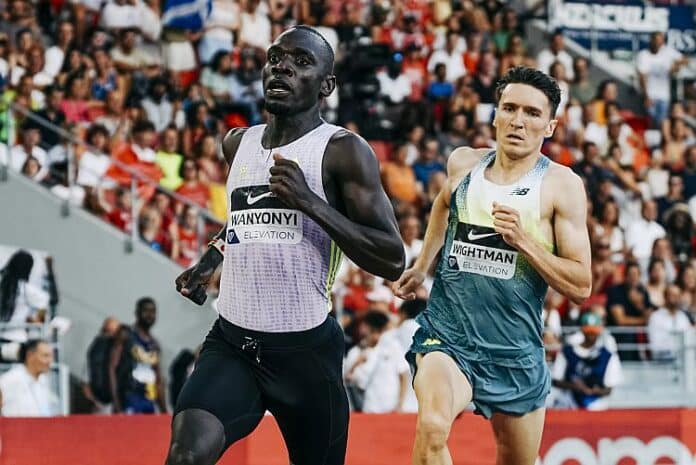
LOS ANGELES 2028: L.A. Metro’s 2028 plan progressing, but still looking for $2 billion in Federal and $379 million in State support

The Sports Examiner: Chronicling the key competitive, economic and political forces shaping elite sport and the Olympic Movement.★

To get the daily Sports Examiner Recap by e-mail: sign up here!

≡ METRO PLANNING UPDATE ≡

A special meeting of the Los Angeles Metropolitan Transportation Authority Board of Directors called for Wednesday, 15 April, includes an update on Olympic preparations, with progress, but with a gaping hole in funding as 2028 draws closer.

The presentation on the “Mobility Concept Plan” progress to date notes that environmental review clearances for projects have been received or are expected to be received by the end of May and designs are being completed.

Funding is another issue, and Metro’s Memorandum of Understanding with the LA28 organizers is clear that the 2028 Games bus system will only be installed to the extent Metro gets outside money to fund it. So far, the report shows approvals for $236.62 million related to the capital projects:

● $59.62 million for light rail improvements
● $38.00 million for mobility hubs
● $139.00 million of “Reconnecting Neighborhoods and Communities” funding

There was also a grant of “$94,316,766 available for transportation assistance,” approved by the U.S. Congress in the Fiscal Year 2026 transportation funding bill (§165) in February, “including assistance with transit planning, capital projects, and operating assistance, for surface, commuter, and public transportation systems necessary to support the mobility needs of the international quadrennial Olympic and Paralympic events.”

However, this is far short of what Metro is asking for relative to funding for the 2028 Games. The presentation cites:

● “Requesting $2B in Games-related mobility funding in FY27 presidential budget request”

“Requesting $379.29M in state funding to go towards Mobility Concept Plan projects”

There was no 2028 Games funding noted in Trump Administration’s summary of its Fiscal Year 2027 budget plan, either for transportation or security, and Metro lobbyists are working with the Congress – which has the actual budget authority – to include funding in the revision process.

Metro has said it has donations committed of 834 buses out of a projected fleet need of about 1,747 buses for the Games period, but as it continues to source buses from around the country, it is also preparing requests for proposals for “charter providers to support GETS [Games Enhanced Transit Service program.”

The staff report for Wednesday’s meeting also emphasized a significant effort in directional signage at stations, people to help guide passengers and “Trailblazing Signage” – “directional signage near select Metro stations for seamless connections” – within the last mile to half-mile to stations in downtown Los Angeles, the USC-Exposition Park area, Pasadena and the South Bay area.

A mobile app is also being developed to help offer end-to-end transit options for spectators trying to get to an Olympic venue.

A specific program of “heat mitigation” is also being developed to deal with hot conditions during the summer of 2028, in and around Metro installations.

Many of these concepts will be tried on a smaller scale for the 2026 FIFA World Cup matches in Inglewood, beginning on 12 June.

The presentation lays out the in-process work, but, does not indicate how the funding issues are going to get solved.

Receive our exclusive, weekday TSX Recap by e-mail by clicking here.
★ Sign up a friend to receive the TSX Recap by clicking here.
★ Please consider a donation here to keep this site going.

For our updated, 681-event International Sports Calendar for 2026 and beyond, by date and by sport, click here!
AQUATICS: World Aquatics reintegrates Russia and Belarus without restrictions, ignores IOC recommendations

The Sports Examiner: Chronicling the key competitive, economic and political forces shaping elite sport and the Olympic Movement.★

To get the daily Sports Examiner Recap by e-mail: sign up here!

≡ RUSSIA RE-ENTRY ≡

“Senior athletes with Belarusian or Russian sport nationality will be permitted to compete in World Aquatics events in the same way as their counterparts representing other sport nationalities, with their respective uniforms, flags and anthems.”

The announcement on Monday (13th) is a significant break with the carefully-created protocol inside the Olympic Movement. Last December, the 14th Olympic Summit, at which World Aquatics President Husain Al Musallam (KUW) was a participant, issued recommendations which specified:

● “[T]he Summit supported the IOC EB’s recommendation that youth athletes with a Russian or Belarusian passport should no longer be restricted in their access to international youth competitions, in both individual and team sports. The definition of youth competitions and the application of these recommendations depends for this purpose on the regulations of each International Federation (IF). The Summit participants committed to take these discussions back to their organisations for their consideration. It was recognised that implementation by the stakeholders will take time.”

● “In parallel, the IOC’s Recommended Conditions of Participation for International Federations and International Sports Event Organisers of 28 March 2023 should remain in place for senior competitions, and will be reviewed as necessary.”

Instead, World Aquatics decided:

“Following a decision of the World Aquatics Bureau, and in consultation with the Aquatics Integrity Unit (AQIU) and the World Aquatics Athletes’ Committee, the Guidelines for Athlete Participation in Aquatics Events During a Period of Political Conflict will no longer apply to senior athletes with Belarusian or Russian sport nationality.”

There was a small caveat to the admission, however, dealing with the continuing worries over Russian doping:

“Athletes with Belarusian or Russian sport nationality will only be permitted to compete once they have successfully passed at least four successive anti-doping controls carried out in partnership with the International Testing Agency (ITA) and completed background checks with the AQIU [Aquatics Integrity Unit].”

As Russia and Belarus have been readmitted as members, look for the Russian federations to immediately press to hold the 2031 World Aquatics Championships in Kazan, which hosted in 2015.

Until this move by World Aquatics, the International Judo Federation had been the largest federation to allow direct Russian and Belarusian participation, in November 2025.

Observed: The World Aquatics announcement is a direct confrontation with the International Olympic Committee and President Kirsty Coventry (ZIM). The principle of “athletes are not responsible for the actions of their governments” is now being pushed to its logical limit and the World Aquatics action, of course, opens the door to Russian soldiers competing in swimming, diving and water polo, potentially against Ukrainian individuals, and especially, teams.

It’s another headache for Coventry and another test of IOC leadership and control. It should be noted that World Aquatics chief Al Musallam is not an IOC member.

It is worthwhile to point out that the IOC owns the Olympic Games and sets the eligibility rules for the Games, so the World Aquatics rules do not pertain to the Games. But where does the IOC go now, with aquatics allowing everyone in, and World Gymnastics likely to follow. But World Athletics, under President Sebastian Coe (GBR), has been resolute in keeping Russian and Belarusian athletes out of international competitions.

Receive our exclusive, weekday TSX Recap by e-mail by clicking here.
★ Sign up a friend to receive the TSX Recap by clicking here.
★ Please consider a donation here to keep this site going.

For our updated, 681-event International Sports Calendar for 2026 and beyond, by date and by sport, click here!

PANORAMA: JPMorgan Chase a TOP sponsor for LA28? FIFA adds more-expensive World Cup tickets; van Aert edges Pogacar at Paris-Roubaix!

The Sports Examiner: Chronicling the key competitive, economic and political forces shaping elite sport and the Olympic Movement.★

To get the daily Sports Examiner Recap by e-mail: sign up here!

≡ THE 5-RING CIRCUS ≡

● International Olympic Committee ● The Financial Times reported Friday that JPMorgan Chase “is in talks to join the top rank of Olympic sponsors” in time for the 2028 Los Angeles Games.

Banking was an obvious unfilled category for the LA28 organizers and bank sponsors are usually a domestic sponsorship category. But with JPMorgan Chase in more than 100 countries, it certainly has the reach to be an effective IOC TOP sponsor.

If true, this would be the 12th sponsor in the IOC’s portfolio for 2025-28, more than all of its quadrennial programs except for Tokyo 2020 (14) and Paris 2024 (15), with more than two years left to go.

● Athletics ● A sign of the times for Grand Slam Track, moving toward a bankruptcy disposition in the Delaware courts: its Web site went down on Wednesday, 8 April 2026 and has not returned to service.

● Football ● It was reported last week that FIFA, trying to wring every possible dollar out of its 2026 FIFA World Cup, has increased the ticket prices of selected, close-to-the-field seats. A new “Front Category” seat has appeared for Category 1 and Category 2.

A Category 1 seat for the U.S.-Paraguay match on June 12 at SoFi Stadium in Inglewood, California had been posted at $2,735 during the first days of April, but a “Front Category 1″ seat was posted for $4,105 last week. A “Front Category 2″ seat was shown at $1,940 to $2,330. No public announcement of a new, higher-priced category was made.

Britain’s The Guardian reported that cities such as Chicago and Pittsburgh has decided not to pursue matches for the 2031 FIFA Women’s World Cup – set to be awarded to the U.S., Mexico, Costa Rica and Jamaica later this year – because of FIFA’s requirements and the investments required to meet them. The story noted:

“Chicago and Pittsburgh declined to enter the running for Women’s World Cup hosting rights, understood to be because of concerns about Fifa’s financial demands, and some cities are considering pulling out.

“A source working with one of the cities that has held talks with Fifa and World Rugby said the latter was offering far greater commercial freedom and has fewer demands regarding access to stadiums.”

The men’s rugby World Cup will take place in September and October in the U.S. and the story indicated that World Rugby has been more cooperative on terms than FIFA has shown for the 2026 World Cup.

● Swimming ● SwimSwam.com reported that two protesters, who appeared to be men, jumped into the pool just ahead of the women’s 50 m Freestyle final at the Malmsten Swim Open Stockholm on Saturday, carrying signs which may have been protesting the use of fossil fuels. According to the report:

“About 30 seconds in, a bystander on the pool deck jumped in and snatched both signs, while another person entered the water and guided the protesters to the side of the pool, where they were greeted by security and escorted out of the facility.”

It is unknown whether police became involved later.

≡ RESULTS ≡

● Archery ● The brilliant American star Brady Ellison won his 30th career World Archery World Cup final, this time in Puebla (MEX), with a 6-4 victory over Chih-chun Tang (TPE).

Ellison owns five Olympic medals and won the 2019 World Championships gold, among seven total medals. At 37, he shows no signs of slowing down. Olympic champion Mete Gazoz (TUR) won the bronze. 7-3, over Mexico’s Matias Grande.

The U.S. men’s Recurve team of Ellison, Christian Stoddard and Jack Williams won the gold final, 5-4 in a shoot-off against Turkey, after a 29-all tie after four ends.

In the all-China women’s Recurve final, Jingyi Zhu swept aside Qi Yu, 6-0. Not surprisingly, China won the women’s Recurve Team title, 6-0, over Turkey. In the Recurve Mixed Team final, China defeated the U.S. pair of Ellison and Casey Kaufhold, 5-1.

Denmark’s 2025 Worlds runner-up Mathias Fullerton won the men’s Compound final, 147-146, again Nico Wiener (AUT). American Stephan Hansen was fourth. Colombia’s 2021 World Champion, Sara Lopez, won the women’s final, 149-148, against Estonia’s Lisell Jaatma.

Columbia won the men’s Compound team gold and India edged the U.S. (Alexis Ruiz, Paige Pierce, Olivia Dean), 233-232, for the women’s Compound Team win. Denmark won the Mixed Team event, 157-156, over the Netherlands; the U.S. (Ruiz-Hansen) was third.

● Beach Volleyball ● Another win for 2025 World Championships silver medalists Kristen Cruz and Taryn Brasher at the Beach Pro Tour Elite 16 tournament in Saquarema (BRA).

Second last year at this event – and second-seeded – they rolled through the tournament and swept aside 2019 World Champions Melissa Humana-Paredis and Brandie Wilkerson (CAN), 21-15, 21-15, in the final.

It’s the second win of the season for Cruz and Brasher in the second Elite 16 event, both in Brazil, and fifth in two seasons.

The third-place match went to Nina Brunner and Tanja Huberli (SUI), with a 22-20, 21-11 win over Brazil’s 2025 Worlds bronze winners Carol Salgado and Rebecca Cavalcante.

The men’s final saw Tokyo Olympic champions Anders Mol and Christian Sorum (NOR) get past 2025 Worlds runner-ups Jacob Holting Nilsson and Elmer Andersson (SWE), 21-16, 23-21, for their first win of the season.

In the third-place match, Martins Plavins and Kristian Folkerots (LAT) won the bronze over Remi Bassereau Daubas and Calvin Aye (FRA), 21-16, 17-21, 15-13.

● Cycling ● A thrilling and wild 123rd running of the famed Paris-Roubaix race ended in a velodrome sprint with Belgian star Wout van Aert crossing ahead of favored Slovenian star Tadej Pogacar, with both in 5:16:52 for the 258.3 km ride from Compiegne to Roubaix.

Pogacar was trying for his third Monument win of the season already, but had trouble with a puncture with 120 km to go, then had to use an unfamiliar spare until his Visma-Lease A Bike team could get him his usual spare bike.

Nevertheless, he had made up perhaps 20 seconds and rejoined the peloton with 98 km left. Two-time defending champ Mathieu van der Poel (NED) suffered two punctures shortly thereafter and fell back.

At the front, Pogacar and van Aert had punctures again with about 72 km left, but with 50 km to go, both were in front again and van Aert attacked and he and Pogacar were alone. Pogacar led into the velodrome, but van Aert got by in the final 200 m and won at the line. Belgian Jasper Stuyven got third at +0:13 and van der Poel was an amazing fourth at +0:15.

Van Aert was second in this race in 2022, third in 2023 and finally got the win. Pogacar was second for the second straight year in the only “Monument” race he has yet to win.

The women’s Paris-Roubaix (143.1 km from Denain) came down to a three-way finish with defending champion Pauline Ferrand-Prevot (FRA), Dutch star Marianne Vos and German Franziska Koch. Vos, the 2012 Olympic Road champion, launched the sprint first, and while Ferrand-Prevot fell back, Koch came on to get to the line first in 3:30:16. Ferrand-Prevot was third, six seconds back.

American Megan Jastrab finished fifth, at +1:30.

The 65th Itzulia Basque Country saw French teen Paul Seixas lead from start to finish, taking the first two stages and then stage five for his biggest career win, in 20:07:35. The 19-year-old won by 2:30 over German Florian Lipowitz and 2:33 up on Tobias Johannessen (NOR).

Seixas won the opening Individual Time Trial, the hilly second stage and then beat Lipowitz to the line in the hilly fifth stage to sew up the title.

● Equestrian ● The FEI World Cup Finals was in Ft. Worth, Texas, with American Kent Farrington leading the Jumping competition coming into Sunday’s third and final section. He won both of the prior events and had 72 points to 64 for three-time champ Steve Guerdat (SUI) and 60 for France’s Kevin Staut.

Farrington led after the first round of finals, with the equivalent of zero faults, to seven for second-place Daniel Deusser (GER). Farrington, an Olympic Team silver winner in 2016, registered four fault points through the two rounds of finals and won aboard Greya. Deusser added no faults in the finals and finished second with seven, aboard Otello de Guldenboom. Fellow American Katherine Dinan (on Out of the Blue) took third at nine, also perfect during the two final rounds. Staut and Guerdat each had four fault points in the finals and finished 5-6.

Farrington’s win is the first for the U.S. since Beezie Madden in 2018.

In Dressage, the Thursday Grand Prix Final was won by Becky Moody (GBR) aboard Jagerbomb at 76.761%, ahead of American Christian Simonson (Indian Rock: 75.413%) and 2024 champion Patrik Kittel (SWE, on Touchdown: 72.869%).

The Grand Prix Freestyle had Moody (88.330%) and Simonson (83.810%) 1-2 again, with Sandra Sysojeva (POL, on Maxima Bella: 80.770%) in third. Simonson won the first medal for the U.S. in this event since 2019.

● Football ● The second-ranked U.S. women opened a three-match series vs. no. 5 Japan in San Jose, California on Saturday, and came away with an impressive 2-1 win.

The U.S. had a clear possession edge, unusual against Japan, throughout and in the ninth minute, a free kick by midfielder Sam Coffey from the right side of the pitch found Tiffany Rodman on the left side and her pass to striker Rose Lavelle ended with a right-footed slam into the net for a 1-0 lead. That’s how the half ended, with the U.S. at 59% possession and a 6-4 shots edge.

The complexion changed in the 48th, as Lavelle centered the ball from the left side of the Japanese goal to an oncoming Lindsey Heaps, who scored on a left-footed shot for a 2-0 lead.

The game appeared decided, but Japan continued to attack and in the 61st, substitute striker Riko Ueki got a header from sub midfielder Honoka Hayashi from the top of the box and Ueki’s header popped past U.S. keeper Claudia Dickey to cut the lead to 2-1. That ended a U.S. scoreless streak of 866 minutes!

Dickey had to make a couple more saves and the U.S. could not convert some difficult chances and the end finished at 2-1, with the Americans at 61% possession; Japan finished with 10 shots to nine for the U.S.

The second match is on Tuesday (14th) in Seattle, Washington.

● Gymnastics ● The final leg of the World Gymnastics Apparatus World Cup series was in Osijek (CRO), with Tokyo Olympic Floor champion Artem Dolgopyat (ISR) winning his second Floor gold of the season at 14.500, with American Kam Nelson in fourth at 13.966.

Armenia’s 18-year-old European Pommel Horse champ Hamlet Manukyan won his specialty at 14.733 and China’s Hengyu Liu took the Rings at 14.366. American Donnell Whittenburg, the 2025 World Rings Champion, finished fifth at 13.966.

On Sunday, Britain’s Paris 2024 bronzer Harry Hepworth won on vault (14.616), with Nelson also fourth (14.183). Colombian Angel Barajas, who won the Paris 2024 silver on the Horizontal Bar, won on Parallel Bars at 14.866, with Whittenburg second at 14.600. Paris 2024 bronze winner Chia-Hung Tang (TPE) took the Horizontal Bar gold at 15.233.

German Karina Schoenmaier, the 2025 European champ, won the women’s Vault at 14.000, while 2025 Worlds bronze winner Fanyuwei Yang took the Uneven Bars at 15.266. Paris bronze winner Manila Esposito (ITA) won on Beam at 13.666 and France’s 15-year-old Elena Colas – the 2025 World Junior A-A runner-up – won on Floor at 13.133.

At the Rhythmic World Cup in Tashkent (UZB), Russian “neutral” Maria Borisova took the All-Around win, scoring 113.50 to 112.65 for Germany’s Paris 2024 Olympic champ Darya Varfolomeev. American Rin Keys finished fourth at 109.05.

Uzbekistan’s home favorite – and 2022 Asian Games A-A champ – Takhmina Ikromova won the Hoop title at 29.70 with Keys fourth (28.25) and the Ball victory, scoring 28.55 with Keys taking silver at 28.00.

Varfolomeev won on Clubs (30.25) and on Ribbon (29.650); Keys won another silver on Ribbon (27.800) and was fourth on Clubs (27.25).

● Modern Pentathlon ● The opening event of the UIPM World Cup was in Cairo (EGY) and 2025 World Champion Moutaz Mohamed did not disappoint the home fans, winning the men’s competition with 1,608 points to 1,597 for 2025 Worlds runner-up Mathis Rochat (FRA). Mohamed was second in the swimming and won the Laser Run to take the gold, coming from fifth to win.

Hungary’s Blanka Guzi, the 2025 Worlds silver medalist, won the women’s gold at 1,488 over Belarusian “neutral” Anastasiya Malashenoka (1,478). Like Mohamed, Guzi was second in the swim and won the Laser Run to move from fifth to first.

The new UIPM rules for pentathlon, with the shorter 100 m swim and fifth shooting stage in the Laser Run, were in effect.

● Shooting ● China dominated the ISSF World Cup for Rifle and Pistol events in Granada (ESP), winning eight of the 10 events.

Paris Olympic gold medalist Lihao Sheng won the men’s 10 m Air Rifle, scoring 253.9, and Tokyo Olympic champion Changhong Zhang took the 50 m Rifle/3 Positions at 358.8.

Zifei Wang, the 2025 Worlds silver medalist, won the women’s 10 m Air Rifle (252.9) and Wang and Sheng took the 10 m Mixed Team gold.

In the men’s 10 m Air Pistol final, Shuaihang Bu won at 244.5, and Yuhao Yang won the 25 m Rapid-Fire Pistol, equaling the world record of 31/40 to win by one shot over Italy’s Massimo Spinella.

Yiyao Shen led a 1-2 in the women’s 10 m Air Pistol at 244.2, over 2025 World Champion Qianxun Yao (239.6). Tokyo Olympic bronzer Jiaruixuan Xiao won the 25 m Pistol in a shoot-off (5-4) with teammate Jieru Kong, after a 39-all tie.

German Anna Janssen, 24, took the women’s 50 m Rifle/3 Positions title with a world-record 362.9, ahead of teammate Nele Stark (361.5). That crushed the 358.2 mark from February by Sofiya Shulzhenko (KAZ). India won the 10 m Air Pistol Mixed Team event.

● Water Polo ● At the World Aquatics men’s World Cup in Alexandroupolis (GRE), Spain won the overall Division I title with a 2-1 record (7 points) in the second round, over Italy (2-1: 6 points) and Greece (2-1: 6). All three, along with Hungary (0-3: 0) advance to the Super Final later this year.

In the second group, only the winner advanced to the Super Final: Croatia, which had a 3-0 record and nine points. Serbia, the U.S. and the Netherlands were all 1-2 and finished 2-3-4.

Receive our exclusive, weekday TSX Recap by e-mail by clicking here.
★ Sign up a friend to receive the TSX Recap by clicking here.
★ Please consider a donation here to keep this site going.

For our updated, 681-event International Sports Calendar for 2026 and beyond, by date and by sport, click here!
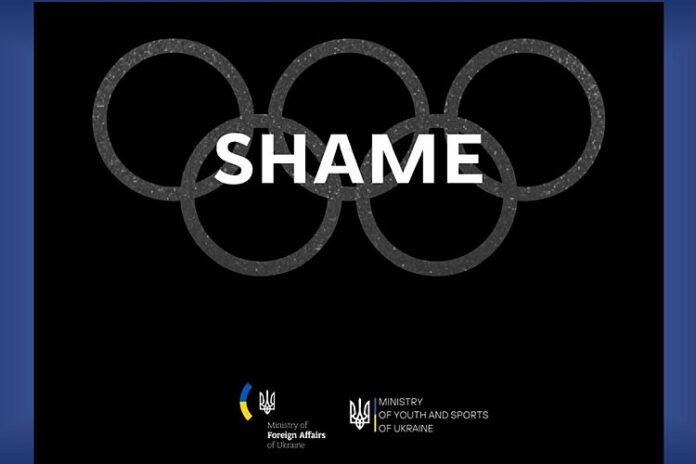
ATHLETICS: World leads for Sion and Jackson at wind-blown Oklahoma Throws; Oz’s 18-year-old Gout Gout runs 19.67 in Sydney!

Olympic and World Champion Valarie Sion (nee Allman) of the U.S. (Photo: Diamond League AG).

The Sports Examiner: Chronicling the key competitive, economic and political forces shaping elite sport and the Olympic Movement.★

To get the daily Sports Examiner Recap by e-mail: sign up here!

≡ WORLD LEADS ALL OVER ≡

The winds kept blowing at the Oklahoma Throws Series World Invitational in Ramona, Oklahoma, with world leads coming in two Saturday events, led by Olympic and World Champion Valarie Sion of the U.S.

After seeing her 30-meet win streak stopped on Friday, she exploded with a world-leading 71.00 m (232-11), then boomed her third throw way out to 73.10 m (239-10), the no. 2 throw in U.S. history! Her first-round throw now ranks as the sixth-longest ever by an American.

Worlds silver winner Jorinde van Klinken (NED) was second at 70.99 m (232-11), now no. 21 all-time and her third throw in her series over 70 m!

The second world lead of the day was in the women’s shot, where World Indoor champ Chase Jackson won at 20.13 m (66-0 1/2) in round three.

World Indoor bronze winner Roger Steen won the men’s shot at 21.77 m (71-5 1/4) to move to no. 2 on the 2026 year list, ahead of Paris 2024 bronzer Rajindra Campbell (JAM: 20.75 m/68-1). The men’s discus was great, but not quite as spectacular as on Thursday; Australia’s Matt Denny won again, this time at 73.58 m (241-5) on his final throw! He needed that to overtake German Steven Richter, who was the leader at 72.47 m (237-9) from round four. New American Record man Sam Mattis of the U.S. was fifth at 69.75 m (228-10).

Australian teen Gout Gout had the breakout race many have been waiting for, winning the Australian Championships 200 m in a blazing – and world-leading – 19.67 (wind: +1.7 m/s) in Sydney, ahead of Aidan Murphy (19.88 lifetime best).

The 18-year-old Gout’s time is a world U-20 record, eclipsing the 19.69 from Erriyon Knighton of the U.S. in 2022. Gout is now no. 16 all-time

There were two more world-leading marks at the meet, with fellow teen Cam Myers (19) winning the men’s 1,500 m in 3:29.85 and then taking the 5,000 m in a lifetime best 13:11.66!

The USATF 10-Mile nationals was held at the annual Cherry Blossom race in Washington, D.C., with ex-TCU star Graydon Morris winning the men’s race in a rout in 46:18, with Cole Sprout (46:35) and Aidan Reed (46:38) well back. Morris broke away in the final half-mile for the big margin.

The star-studded women’s race was a similarly-styled win for 2025 third-placer Emma Grace Hurley in a final duel with 2025 U.S. cross-country champ Weini Kelati, 50:42 to 50:46, with Karissa Schweizer third (50:55). Those three were at the front from the start, with Hurley taking over for good in the final half-mile.

At the World Athletics World Race Walking Team Championships in Brasilia (BRA), Japan’s 2025 World 35 km bronze winner Hayato Katsuki was a clear winner in the men’s marathon in 3:04:58, ahead of David Hurtado (ECU: 3:05:57) and Kazuya Iwai (JPN: 3:06:03). Bricyn Healey of the U.S. was 46th (3:48:15).

Italian Francesco Fortunato won the half-marathon in 1:27:25 in a close finish with Misgana Wakuma (ETH: 1:27:33) and Brazil’s 2025 World 20 km champ Caio Bonfim (1:27:36). Nick Christie of the U.S. was 39th (1:35:36).

Ecuador’s 2025 World 35 km bronzer Paula Torres took the women’s marathon in 3:24:37, an easy winner with Italian Sofia Fiorini second (3:25:42) and fellow Ecuadorian Nathaly Leon (3:31.47) in third. Maria Michta-Coffey was the top American in 16th (3:52:38). Ecuador won the team title from Italy, 12-13.

Peru’s 2022 double World Champion Kimberly Garcia dominated the women’s half, winning in 1:35:00, ahead of Alejandra Ortega (MEX: 1:35:21) and Aldara Meilan (ESP: 1:35:38). Lauren Harris of the U.S. was 13th (1:39:28). Ukraine was the team winner with 25 points to 28 for Spain and 30 for Australia.

Receive our exclusive, weekday TSX Recap by e-mail by clicking here.
★ Sign up a friend to receive the TSX Recap by clicking here.
★ Please consider a donation here to keep this site going.

For our updated, 681-event International Sports Calendar for 2026 and beyond, by date and by sport, click here!
ATHLETICS: Insane discus performances in Ramona: Denny 242-11, Mattis 237-8 American Record, Sion loses after 30 straight wins!

History for Australian discus star Matt Denny! (Photo: Diamond League AG).

The Sports Examiner: Chronicling the key competitive, economic and political forces shaping elite sport and the Olympic Movement.★

To get the daily Sports Examiner Recap by e-mail: sign up here!

≡ THE RAMONA WINDS ≡

It was blowing out in Ramona, Oklahoma, the favorite wind tunnel for discus throwers from around the world on Thursday at the Oklahoma Throws World Invitational on Thursday!

After Lithuania’s Mykolas Alekna got a world record 75.56 m (247-11) heave in 2025, there was great anticipation for 2026. And it was wild.

In the men’s competition, the “Lefty” event was won by American Reggie Jagers, who got his no. 2 throw ever at 69.09 m (226-8) to win. Then came the main men’s event, with Paris 2024 bronze winner Matt Denny (AUS) reaching 72.01 m (236-3) on his opening throw.

German Steven Richter reached 69.90 m (229-4), a lifetime best in round one, but he was just warming up. He got another PR in round two at 70.06 m (229-10) and then exploded in round three to take the lead at 74.00 m (242-09) to move to no. 4 all-time!

In the meantime, U.S. Olympian Sam Mattis bombed a 72.45 m (237-8) throw in the second round to briefly take the lead (until Richter’s third-round throw). The 72.45 m broke the long-standing American Record of 72.34 m (237-4) by Ben Plucknett from 1981!

Richter had another enormous throw of 73.96 m (242-8) in round four, so he was leading Mattis and Denny with two rounds left.

Denny had other ideas and sent a massive fifth-round throw out to 74.04 m (242-11) and regained the lead with the no. 7 throw in history!

In the sixth round, 2022 World Champion Kristjan Ceh (SLO) – who had been the world leader coming in with another win at Ramona on 29 March – finally got loose and reached 72.61 m (238-2) to move into third and pass Mattis.

That’s how they finished, with Olympic champ Roje Stona (JAM) fifth at 70.66 m (231-10) and 2025 Worlds bronzer Alex Rose (SAM) sixth at 70.43 m (231-1). This was reportedly the first competition ever with six men past 70 m (229-8).

Denny and Richter had the seventh and eighth throws in history over 74 m (242-9). Of the top 10 throws in history, eight have come at Ramona, in 2024, 2025 and 2026.

The women’s competition made news too, as Dutch star Jorinde van Klinken, the 2025 Worlds runner-up, reached 68.98 m (226-3) in round four to win and she had two more over 68 m. Countrywomen Alida van Daalen got a lifetime best at 67.99 m (223-0), an improvement of more than five feet!

In sixth was Olympic and World Champion Valarie Sion (nee Allman) of the U.S., who managed 65.18 m (213-10) in round three with five other fouls, going got the big one every time. It was Sion’s first loss after 30 straight wins, dating back to 1 September 2023.

The meet continues with more discus events on Saturday and Sunday!

Receive our exclusive, weekday TSX Recap by e-mail by clicking here.
★ Sign up a friend to receive the TSX Recap by clicking here.
★ Please consider a donation here to keep this site going.

For our updated, 681-event International Sports Calendar for 2026 and beyond, by date and by sport, click here!
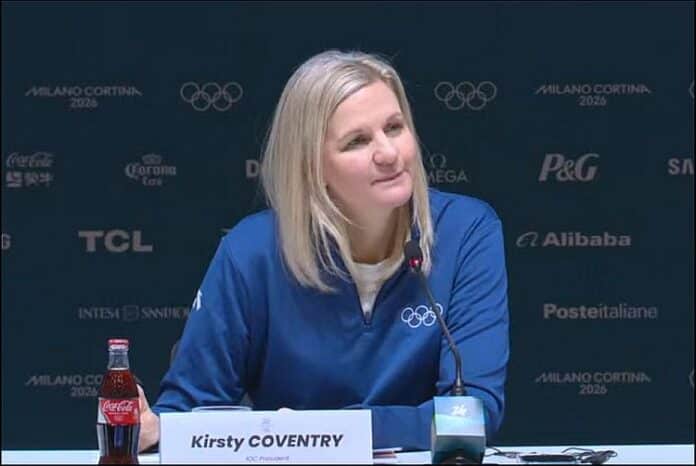
TSX SPECIAL: It’s here! Our updated, 681-event International Sports Calendar for 54 sports and disciplines for 2026 and beyond now posted!

The Sports Examiner: Chronicling the key competitive, economic and political forces shaping elite sport and the Olympic Movement.★

To get the daily Sports Examiner Recap by e-mail: sign up here!

≡ TSX CALENDAR ≡

Spring is here and sports are exploding everywhere, with the 2026 Olympic Winter Games in Milan Cortina already a memory. So it’s time for the most comprehensive schedule anywhere of Olympic-program sports and events to be available … all in one place!

It’s all in the latest update to our TSX calendar – an exclusive 681-event listing – for all of 2026 and a few of the larger events beyond to 2034, with 54 Olympic-program (Olympic and Olympic Winter) sports and disciplines shown, plus major meetings and conferences and multi-sport events out to 2034.

Please note: this listing will change! However, this edition is a good place to start for following many of the events coming up in the rest of a busy year ahead.

Two calendars are included in the single PDF download: an 15-page listing in chronological order and a 16-page listing by sport (and in date order within each sport).

It’s free! Get your download right now here!

You can receive our exclusive TSX Report by e-mail by clicking here. You can also refer a friend by clicking here, and can donate here to keep this site going.

VOX POPULI: The specter of a traffic Armageddon is looming for the 2028 Olympic Games

Former Southern California RTD President Nick Patsaouras and his 2024 book, “The Making of Modern Los Angeles.” (Photos courtesy Nick Patsaouras.)

[Nick Patsaouras was president of the Southern California Rapid Transit District during the 1984 Olympic Games, and parts of this comment are drawn from his 2024 book, The Making of Modern Los Angeles (ORO Editions). His opinions, are, of course, solely his own.]

In today’s world, “Armageddon” refers to a worst-case scenario, a total breakdown of normal functioning. That is exactly where the LA28 Olympic mobility plan finds itself. Los Angeles Metro requested nearly $2 billion in Federal funds for its plan, and expected to receive it, but the Trump administration’s budget unveiled last Friday excluded it.

Without those funds a fluid, Mayor Karen Bass‘ proclamation of a “no-car Games” is impossible. To fully understand the shortcoming, consider this: to create a bus fleet suitable for the Games, it must temporarily acquire, operate and store nearly 1,750 additional buses (the number has been scaled down from 3,000 to 2,700 to 1,750, whenever a critical milestone was not met). At the same time thousands of operators, mechanics and support personnel have to be hired, trained and State-certified.

It is a shock beyond Metro’s ability to absorb it. Without these funds, Los Angeles’ transportation system could hit the breaking point. “Without the full level of funding requested, the complete scope of the Games Enhanced Transit System would not be feasible, as the cost of operating this temporary system exceeds Metro`s available operating resources,” the agency has said.

In the 1984 Los Angeles Olympics, terminal gridlock was feared but did not occur. Athletes and fans were not stranded, because years of preparation by the Southern California Rapid Transit District (RTD) delivered a flawless transportation plan that yielded easy and unobtrusive travel.

The 1984 Olympic organizing committee Chair Paul Ziffren appointed me to the Olympic Citizens Advisory Commission and under his direction, as President of the Southern California Rapid Transit District (RTD – Metro`s predecessor) board of directors along with RTD planners, John Dyer, general manager, and Art Leahy, chief of bus operations, a complex transportation plan was devised. A second bus fleet from scratch was created, one that provided direct service to the major Olympic venues. Noteworthy is the fact that there was no rail network in 1984.

Then, the added 550-bus Olympic fleet ranked as the fourth largest public transit district in California. Its operation required more than one thousand workers, including four hundred temporary drivers who had to be hired, trained and certified. To their credit, RTD administrative employees left their desks and worked in the field as passenger assistants, providing fare exchange and information, and supervised bus traffic and security at the various terminals.

Complexity had been added to the transportation obligation with the Games being held in twenty-four venues spread over two hundred miles. In most past Olympic cities, events were scheduled in one central location. The numbers were staggering. Some seven hundred thousand visitors were expected to arrive in Los Angeles each one of the 16-day Olympic period. Most popular events, like track and field, were set for the Coliseum in Exposition Park, USC for swimming and diving, and UCLA for tennis and gymnastics – all known for severe parking shortages and dreadful traffic. RTD carried 40 percent of all spectators to these sites.

The system was tested for efficiency for months. Platoons of buses would arrive or depart from the Coliseum every ten seconds; reserved bus lanes were established; freeway ramps near Exposition Park had to be open only to buses; and bus operators had the opportunity to radio timely status reports to the State Traffic Coordination Center enabling immediate responses to bottlenecks.

Of course, traffic Armageddon was predicted to loom over the region during the 1984 Games but never materialized because of the planning and execution of the RTD’s plan. However, LA28 is another story. The sharp difference is today’s slow planning and lack of funding. So slow, in fact, that I rang the alarm bell in May 2025.

A wasteful chase for $3.2 billion in Federal funds for capital improvements that have a weak nexus to the Olympics has eaten up four years, a time interval that should have been dedicated to developing a coherent mobility plan. The remaining time before the Games is short and unprecedented in Olympic history for locking up funds, the vital blood flow for success.

Seleta Reynolds, Metro’s Chief Innovation Officer and head of Games mobility planning, stated at a January Metro Board meeting that finding and preparing the real estate where the buses will be staged involves a lead time of two years, meaning the agency would need “a chunk of funding available by the summer”; that is a couple of months away!

The known Olympic mobility plan, thus far, is an odd strategic error that will likely cause stagnation, obstruction, and congestion. Rather than directing the spectators away from vulnerable Metro hubs, it directs the flow to those hubs and lines, overwhelming them. Instead, spectators should be directed to large satellite bus-based park-and-ride hubs that can be scaled up to meet surges in a way that Metro Rail cannot. Shockingly, officials who traveled to Paris and viewed how stretched-to-the-limit the city’s rail capacity was, although it is five times the size of Metro Rail, thought that it was a good idea to double down on making Metro Rail stations the biggest mobility hubs for the 2028 Games.

A traffic Armageddon is unavoidable because Southern California’s transportation system is built around nineteen million residents, massive freight corridors, and chronic congestion. The 2028 Games must simultaneously support residents, goods movement, and Olympic demand, an impossible situation. The overlay of a second Olympic transportation system on top of the first is not possible without funds, timely and strategic planning.

On the monetary side, troubled Los Angeles can face exposure, and possible bankruptcy, that may result from LA28 funding shortcomings, precipitated among other challenges by a traffic nightmare. The organizing committee is privately funded for $7.1 billion, but only on paper (LA28 is hiding the books so far). Public guarantees kick in if that budget fails. The monetary exposure is carefully spelled out in the City’s guarantee agreement: if LA28 runs a deficit, Los Angeles is responsible for the first $270 million in losses. The California Legislature agreed to backstop the next $270 million, which means that statewide taxpayers must cover losses from $270 to $540 million. What most people do not know is that if losses exceed $540 million, every additional dollar is the responsibility of Los Angeles’ taxpayers, thus making the city`s financial exposure essentially unlimited.

In sum, we are faced with a dire situation, no clear path of successful operations and avoidance of financial jeopardy. And as unbelievable as it might sound, the Memorandum of Understanding between Metro and LA28, a document with number of ambiguities, was just signed in March. A startling revelation in the MOU is the statement “Metro shall not be obligated for any Metro Enhanced [Olympic] Services, in full or in part, unless and until sufficient New Consideration [funds] is designated, dedicated or committed to Metro.”

So, where do we stand, considering the MOU was signed in March and Trump excluded money in his budget for Metro to provide Olympics service last Friday? The silence is deafening from all quarters, including the Los Angeles Times.

The gap between LA28’s mobility plan and the system L.A. will have is widening to the point where discomfort has now reached a state of a worst-case scenario.

Comments are welcome here.

[≡The Sports Examiner encourages expressions of opinion – we really do – but preferably based on facts. Send comments to [email protected]. We do not guarantee publication of any comment, but all comments submitted will be considered and your submission implies your agreement to publication (and light editing if needed to meet our grammatical and punctuation standards) at our sole discretion. Please include your name and hometown on any comment submitted for publication.≡]

You can receive our exclusive TSX Report by e-mail by clicking here. You can also refer a friend by clicking here, and can donate here to keep this site going.

For our updated, 45-sport, 910-event International Sports Calendar for 2026 and beyond, by date and by sport, click here!
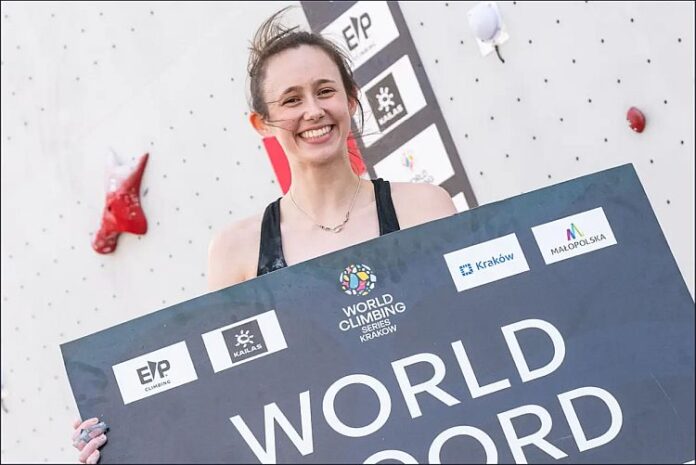
LOS ANGELES 2028: LA28 human rights policy released by City of L.A., organizers release procurement policy with 182 areas of spending identified

The Sports Examiner: Chronicling the key competitive, economic and political forces shaping elite sport and the Olympic Movement.★

To get the daily Sports Examiner Recap by e-mail: sign up here!

≡ HUMAN RIGHTS & PROCUREMENT ≡

A long-delayed release of the LA28 organizing committee’s Human Rights Strategy document came Tuesday evening (7th) in a City of Los Angeles document notice, linking to a 35-page report submitted on 19 December 2025.

The document was due by 31 December 2025 under the terms of the 2021 City Agreement with LA28 and was apparently delivered on time, but was not made public until now.

The requirement was for LA28 to identify potential risks related to the Games, and “processes and measures to address and remedy any adverse impacts.”

The 35-page LA28 strategy report reference a series of international norms in the area, including the International Olympic Committee Framework on Human Rights, issued in 2022, and lessons learned from prior organizers, such as Paris 2024.

The report identifies eight primary areas of focus, with the LA28 role identified primarily as one of preparation, training, and availability of communications so that someone who sees something can say something to the right people, quickly.

The report notes extensive existing programs to combat human rights abuses at the Federal, state and local level and adds specific tactics to each area of concentration:

1. Human Trafficking

“LA28 intends to publicize redress mechanisms for individuals to raise concerns and seek remediation. LA28 will also maintain a reporting hotline and website for individuals or groups to report, including anonymously, Games-related problems for which other reporting mechanisms do not exist. The LA28 reporting channels will be well-publicized and accessible. …

“Informational materials, such as brochures, posters, and/or digital content, will be available at event venues, non-Games venues, and online. For example, hotels, motels, and inns are required to post notices to combat human trafficking in conspicuous locations. Bystanders will be able to report concerns to authorities and other stakeholders with technology tools like multilingual hotlines to facilitate reporting and assistance for trafficking victims or others who have suffered human rights violations.”

Due diligence guidelines for vendors, sponsors, and contractors and required background checks will be implemented as well.

● 2. Labor Rights

“LA28 expects our contractors and subcontractors to uphold labor rights. … To this end, LA28 is promoting strong partnerships between government, employers, labor unions, community-based organizations, and others. LA28 has initiated discussions with all these stakeholders to collaborate on upholding wage, safety, contract, collective bargaining, and other rights for individuals involved in our delivery of the Games, and we intend to continue those discussions in the run-up to 2028.”

Local unions are in a continuing struggle with Los Angeles-area businesses over minimum wage increases and have been vocal in demanding that LA28 take their side. The organizers have not engaged in such discussions, at least not publicly, so far. So future discussions may or may not be friendly. This is an area that bears close watching.

3. Accessibility

“Looking ahead, LA28 will develop and implement a formal Accessibility Working Plan to promote an Olympic and Paralympic Games that are inclusive, barrier-free, and aligned with domestic and international best practices.”

● 4. Unhoused Communities

LA28 is not going to solve the vast Los Angeles homeless problem, but this is an area where using existing venues makes a big difference. The report notes:

“The prospect of relocating unhoused residents due to construction or redevelopment of land into sporting venues is reduced in Los Angeles because no major construction of permanent facilities is needed to host these Games. If the need arises to relocate individuals due to safety requirements, LA28 will inform key stakeholders, like City and County authorities and advocacy groups, that have the expertise, resources, and authority to work with unhoused communities, with as much advance notice as practicable, so that they can take appropriate actions in support of these individuals.”

What the City of Los Angeles is doing about homelessness is an issue that will partly be decided in the upcoming vote for Mayor and multiple City Council offices.

5. Civil Rights and Voice

The U.S. constitutional guarantees for “Freedom of speech, association, and peaceful assembly” were noted. In terms of protests, it’s up to the City of Los Angeles:

“During the Games, the City plans to provide free speech zones at each site hosting Games events and at other locations across the City, where communities will be able to freely express their views (excluding hate speech) and/or protest peacefully.

“Before the Games, the City of Los Angeles has indicated it intends to host ‘days of dialogue’ with communities and with the Consular Corps resident in Los Angeles to reinforce its commitment to allowing residents and visitors to express their views peacefully.”

6. Public Safety

“LA28 will work collaboratively with local law enforcement and LA28-contracted firms to deliver appropriate security-related training and readiness routines to address the potential escalation of situations quickly and smoothly. LA28 is also developing policies to manage specific situations, such as screening and management of altercations and crime at venues or Games-related events. …

“LA28 internal operational planning includes safeguarding measures like ‘lost children’ protocols at all Games sites and provision of safe spaces for persons with special needs, such as children or elderly persons, at many venues, and we will publicize these measures in numerous ways. We are preparing to provide hydration stations; adequate numbers of restrooms; cleaning of facilities; and access to sufficient food and beverages for spectators, athletes, and the workforce at sites.”

Primary responsibility, of course, rests with local police departments and the overall security planning for the Games is being led by the U.S. Secret Service.

7. Safeguarding Athletes

This is primarily up to others: “During the Games, the IOC and IPC oversee implementation of a range of safeguarding mechanisms,” with LA28’s workforce being responsible to watch and report issues which arise.

8. LA28 Staff and Volunteers

“LA28 is also preparing its staff to be active participants in the effort to prevent abuses during the Games. We conduct background checks for staff and volunteers for accreditation and critical Games-time roles. For individuals interacting with minors, we will work with the governing bodies on additional protections. For the limited youth volunteer tracks (e.g., ball girls and boys), LA28 will establish safeguards and additional protections in accordance with best practices and applicable laws and regulations.”

Observed: The document is a responsible reply to the Games Agreement requirement, but recognizes that much of the responsibility in this area is with governmental entities. As such, the report will not satisfy those who want to use the Games for their own causes and purposes.

On Wednesday, LA28 released a 19-page procurement plan, which has been continuously demanded by L.A. City Council members, insistent that the organizing committee spend as much of its $7.145 billion budget with local businesses as possible. The concept:

“This LA28 Procurement Plan shares how the Games-related expenditures will be deployed responsibly and in alignment with the LA28 Impact & Sustainability Plan (I&S Plan), including the target to ensure 75% of addressable spend is local within the Greater Los Angeles area and 25% of addressable spend is with small businesses.”

The first question, of course, is “what is addressable spend”? The plan explains:

“LA28’s local and small business targets are based on addressable spend. Addressable spend refers to the portion of LA28’s total expenditure that can be fulfilled in the local market.

“Not all operational needs translate into addressable spend. A sizable portion of LA28’s requirements may be satisfied through partner sponsorships, IOC contributions, sport federation requirements or existing public infrastructure, with some spending being required to go to specific organizations based on regulatory requirements or supply rights agreements.”

That said, the plan reiterates the LA28 position that “RAMP” is the primary marketplace for organizing committee contracts:

“LA28 uses a well-known platform, the City of Los Angeles’ Regional Alliance Marketplace for Procurement (RAMP.org). RAMP is the only platform where all competitive procurements will be published.”

Importantly, LA28 commits in the plan to offer contracts through RAMP that can allow for more vendors to participate:

● “Right-sizing contract requirements to avoid unnecessarily favoring large incumbents;

● “Prioritizing local and small businesses through targeted outreach, capacity-building and evaluation criteria;

● “Strategically unbundling large contracts into smaller, more accessible opportunities;

● “Establishing enforceable subcontracting requirements for prime contractors; and

● “Creating pre-qualified vendor pools and multiple award contracts to streamline engagement.”

At the back of the plan are five pages of small type identifying 41 areas and 182 lines of goods and services for which the organizing committee expects to contract and a breakdown of specific item groups within each, the general outline of spending and the relative size of expenditures in each.

This looks impressive as shown, but the actual impact on local businesses will depend on what is actually needed, where and when.

Receive our exclusive, weekday TSX Recap by e-mail by clicking here.
★ Sign up a friend to receive the TSX Recap by clicking here.
★ Please consider a donation here to keep this site going.

For our updated, 45-sport, 910-event International Sports Calendar for 2026 and beyond, by date and by sport, click here!

PANORAMA: LA28 statement on high ticket service fees; fire at 2016 Rio velodrome; Pogacar chasing cycling history at Paris-Roubaix Sunday!

The Sports Examiner: Chronicling the key competitive, economic and political forces shaping elite sport and the Olympic Movement.★

To get the daily Sports Examiner Recap by e-mail: sign up here!

≡ THE 5-RING CIRCUS ≡

● Olympic Games 2016: Rio de Janeiro ● There was a major fire at the Olympic velodrome on Wednesday, requiring a major response. Rio Mayor Eduardo Cavaliere told reporters, “The structure of the velodrome itself is preserved and the track has not been hit at all.”

The Associated Press reported that the fire was mostly on the fabric roof of the building, which has also been burned previously.

The International Fencing Federation had been holding some bouts of the ongoing Cadet and Junior World Championships at the site; all competitions have been moved to the main site, the Arena Carioca 1.

● Olympic Games 2028: Los Angeles ● Part of the reaction to the opening of LA28 ticket sales has been not only the cost, but also the handling fees which are part of the listed prices.

A New York Post review noted service charges of 24% – $504.63 – on a package of tickets costing $2,100 as shown on the check-out breakdown (ticket pricing on the LA28 buy site shows the total price, including taxes and fees). An LA28 statement provided to the Post included:

“The service fee is based on the percentage of the ticket price you pay.

“LA28’s ticket program is rooted in heavy analytics and extensive market demand research around entertainment and live sports in the U.S. Tickets are comparable to – or well under in many cases – professional sporting and major entertainment events in the U.S.

“Pricing is based on a variety of factors and heavily informed by what fans have told us, as well as venue capacity, type of session, seat location and historical demand.”

“That said, LA28 tickets go up to the thousands in select cases for the most premium seats at a handful of the most anticipated events. The most expensive tickets represent a small portion of the overall inventory, and there are also accessibly priced options at these same sessions we know will draw headlines.

“Roughly 5% of tickets are over $1,000. More than 75% of all Olympic tickets – which includes finals – are under $400, and nearly 50% of all Olympic tickets are under $200.”

● NCAA ● A Yahoo! Sports report published Wednesday said the NCAA is beginning the process of exploring new eligibility rules, based partly on age, that would limit collegiate participation to five years only:

“According to the concept, NCAA athletes would have five full years of eligibility from the time of their 19th birthday or their high school graduation, whichever is earliest.”

Exceptions would be made for maternity, military or religious service. “Redshirt’ seasons would be eliminated; the proposal as reported does not impact the ability to transfer.

The proposal will be considered by the NCAA Division I Cabinet next week; the timeline beyond that is unclear. The NCAA has been deluged with lawsuits by athletes trying for added years of eligibility and while the NCAA has won many of these suits, the cost of litigation is substantial, outcomes are unpredictable depending on the state involved, and are continuing to increase.

● Cycling ● Slovenian superstar Tadej Pogacar is chasing history on Sunday at the 123rd running of Paris-Roubaix – the “Hell of the North” – a brutal 258.3 km route from Compiegne to Roubaix, including 30 cobblestone sections.

Dutch star Mathieu van der Poel has won this race the last three years, with Pogacar second by 1:18 in 2025. It’s the only Monument race he hasn’t won.

The “Monuments” are the five ancient, one-day races in the sport, that go back before World War I and Pogacar owns 12 Monument wins, second all-time:

● Milan-Sanremo (ITA: 1907) ~ 1 Pogacar win, in 2026
● Ronde van Vlaanderen (BEL: 1913) ~ 3 wins in 2023-25-26
● Paris-Roubaix (FRA: 1896) ~ no wins
● Liege-Bastogne-Liege (BEL: 1892) ~ 3 wins in 2021-24-25
● Il Lombardia (ITA: 1905) ~ 5 wins in 2021-22-23-24-25

Only three Belgian riders – Rik Van Looy (1958-65), Eddy Merckx (1966-76) and Roger De Vlaeminck (1970-79) – have won all five and only Merckx has won each more than once.

Moreover, only Merckx and Pogacar have won as many as three Monuments in a season: Merckx in 1969-71-72-75 and Pogacar in 2025. With Pairs-Roubaix on Sunday and Liege-Bastogne-Liege on 26 April, Pogacar has cycling history within reach!

● Football ● A 38-stop “Canada Celebrates” program of activities, including live viewing, music, food and cultural programs was announced, from 1 June to 19 July, with seven stops from 9 April to 26 May as part of the FIFA World Cup Trophy Tour.

Seven major cities will be visited in April and May, then a parallel tour of eastern and western Canadian cities will host celebrations during the FIFA World Cup tournament itself:

Eastern: Newfoundland (1), Nova Scotia (1), Prince Edward Island (1), New Brunswick (1), Quebec (1), Ontario (8).

Western: Yukon (1), British Columbia (6), Alberta (1), Saskatchewan (1), Ontario (4).

FIFA World Cup 2025 matches will be held on Vancouver and Toronto.

● Water Polo ● In the World Aquatics men’s Division I World Cup in Alexandroupolis (GRE), Hungary and Italy topped the groups with 3-0 records. The U.S. finished 0-3 in Group B and will play in Group D, in which only the winner will advance to the Super Final.

All four teams in the second-phase Group C – Hungary, Italy, Greece and Spain – have qualified for the Super Final, in Australia, in July.

Receive our exclusive, weekday TSX Recap by e-mail by clicking here.
★ Sign up a friend to receive the TSX Recap by clicking here.
★ Please consider a donation here to keep this site going.

For our updated, 45-sport, 910-event International Sports Calendar for 2026 and beyond, by date and by sport, click here!

ATHLETICS: May 8 Diamond League meet in Qatar moved to June in view of Iran war, “should conditions allow”

The Sports Examiner: Chronicling the key competitive, economic and political forces shaping elite sport and the Olympic Movement.★

To get the daily Sports Examiner Recap by e-mail: sign up here!

≡ DOHA DIAMOND LEAGUE ≡

The continuing war in Iran has caused significant changes to the schedules of many international sporting events and on Wednesday, track and field’s Wanda Diamond League was hit.

With the opener scheduled for Doha (QAT) on 8 May and Iranian missiles shot at the country, the inevitable outcome was at least a postponement, confirmed Wednesday:

“In recent weeks, the Diamond League has been monitoring the situation in Doha, working in close coordination with meeting organisers, Qatari authorities and other stakeholders.

“In the interests of athlete and spectator safety, a decision has now been taken to postpone the meeting. Should conditions allow, it will now be held on June 19.

“As temperatures are expected to be higher in Doha in June, the meeting will also be moved from the Qatar Sports Club to the Khalifa International Stadium.

“The stadium, which hosted both the Diamond League and the World Athletics Championships in 2019, is temperature regulated, allowing athletes to compete safely even in hotter conditions.”

The statement noted that the situation will continue to be evaluated in view of the conflict in and around Iran.

So, the Diamond League schedule now looks like this:

16 May (Sat.): Shanghai (CHN)
23 May (Sat.): Xiamen (CHN)
31 May (Sun.): Rabat (MAR)

04 June (Thu.): Rome (ITA)
07 June (Sun.): Stockholm (SWE)
10 June (Wed.): Oslo (NOR)
19 June (Fri.): Doha (QAT) ~ new date
28 June (Sun.): Paris (FRA)

04 July (Sat.): Eugene (USA)
10 July (Fri.): Monaco (MON)
18 July (Sat.): London (GBR)

21 Aug. (Fri.): Lausanne (SUI)
23 Aug. (Sun.): Chorzow (POL)
27 Aug. (Thu.): Zurich (SUI)

04-05 Sep. (Fri.-Sat.): Final in Brussels (BEL)

There are still 15 meets in all (16 meet days), held across almost four months, in 13 countries – China and Switzerland have two each – and on five different days of the week.

4 on Sunday: Rabat, Stockholm, Paris, Chorzow
● Monday: none
● Tuesday: none
1 on Wednesday: Oslo
2 on Thursday: Rome, Zurich
4 on Friday: Doha, Monaco, Lausanne, Brussels I
5 on Saturday: Shanghai, Xiamen, Eugene, London, Brussels II

This is a continuing weakness of the Diamond League schedule, as fans – unlike those in other sports – cannot count on seeing a meet on a predictable, consistent schedule, instead of the usual arrangement reminiscent of the 1969 comedy, “If It’s Tuesday, It Must Be Belgium.”

But with some luck, there will be a Doha meet in the 2026 Diamond League; the meet has been held annually since 1997 and was part of the inaugural Diamond League season in 2010. It has always been held in May except for the Covid-impacted 2020 season, when it was held in September.

Receive our exclusive, weekday TSX Recap by e-mail by clicking here.
★ Sign up a friend to receive the TSX Recap by clicking here.
★ Please consider a donation here to keep this site going.

For our updated, 45-sport, 910-event International Sports Calendar for 2026 and beyond, by date and by sport, click here!
LOS ANGELES 2028: L.A. City Council member Rodriguez joins chorus for financial transparency from LA28 amid security cost worries

Los Angeles City Council member Monica Rodriguez (Photo: Rodriguez Council Office).

The Sports Examiner: Chronicling the key competitive, economic and political forces shaping elite sport and the Olympic Movement.★

To get the daily Sports Examiner Recap by e-mail: sign up here!

≡ RODRIGUEZ’S LETTER ≡

“With just 830 days remaining until the 2028 Summer Olympics and Paralympics, the City of Los Angeles still lacks clear, enforceable protections over hundreds of millions of dollars in public exposure.

“This is not a minor gap; it is a critical failure that must be fixed now. Bankruptcy cannot be the legacy of these Games.”

That’s from a letter sent by Los Angeles City Council member Monica Rodriguez, a self-styled budget hawk, to LA28 organizing committee chief executive Reynold Hoover, which was obtained and reported by Scott Reid of the Southern California News Group, apparently before the organizing committee had seen it.

Reid’s story quotes significant parts of the letter, including:

● “The Enhanced City Resources Master Agreement (ECRMA) must guarantee that the City is fully reimbursed for all costs before a single dollar is directed to an LA28 Legacy Fund. Taxpayer protection comes first. Every dollar owed to the City must be reconciled and paid before any surplus is retained or repurposed.”

● “These costs are uncertain, volatile, and likely to increase. Federal support is not guaranteed, and jurisdictions across the country will be competing for the same limited funding. These projections also fail to account for real-world risks like emergencies, weather events, and unforeseen operational demands that could increase the City’s financial burden.”

● “At the same time, the City is expected to stand behind these commitments without meaningful financial transparency into LA28’s financial operations. Under the current framework, LA28’s expenses, including executive compensation, bonuses, and vendor contracts, are reimbursed ahead of the City’s costs, yet the City lacks adequate visibility into how those funds are being spent. That is unacceptable.”

Rodriguez’s letter echoes a similar memorandum of concern from 24 March 2026 from City Attorney Hydee Feldstein Soto, which is one of the City agencies involved in the negotiation of the Enhanced City Resources Master Agreement:

● “[T]here are two remaining issues in the ECRMA that must be resolved in the City’s favor for LA28 to fulfill their promised ‘no cost to taxpayers’ foundational principle – (1) what happens if the federal government does not pay the assumed $1 billion and (2) what happens if the City’s extraordinary expenses exceed $1 billion?”

“The ECRMA as drafted by LA28 limits the obligation to reimburse City costs before LA28 is permitted to create its own legacy fund with the surplus. … The City requires unambiguous language in the ECRMA to foreclose any scenario in which funds might go back to the wealthy backers and investors of the LA28 organization without reimbursing taxpayer-funded extraordinary costs.”

Rodriguez demanded more information from LA28, asking for “complete transparency” into LA28 spending, calling it a matter of “public responsibility.”

The Enhanced City Resources Master Agreement was due to be completed, per the 2021 Games Agreement between the City and LA28, by 1 October 2025. Although $1 billion for security costs related to the 2028 Games was authorized in the Federal Fiscal Year 2025-26 budget, there was no additional funding identified in the 2026-27 Federal budget highlights document released last week.

(Update: A earlier version of this story had a misspelling of Feldstein Soto’s name; this has been corrected.)

Receive our exclusive, weekday TSX Recap by e-mail by clicking here.
★ Sign up a friend to receive the TSX Recap by clicking here.
★ Please consider a donation here to keep this site going.

For our updated, 45-sport, 910-event International Sports Calendar for 2026 and beyond, by date and by sport, click here!
UTAH 2034: Organizing committee concentrating now on youth classroom and sports impacts, but will offer its first “Games Plan” outline in June

The Sports Examiner: Chronicling the key competitive, economic and political forces shaping elite sport and the Olympic Movement.★

To get the daily Sports Examiner Recap by e-mail: sign up here!

≡ STEERING COMMITTEE ≡

Tuesday’s meeting of the Utah 2034 organizing committee’s Steering Committee did not have any splashy announcements, but confirmed continuing, behind-the-scenes progress on the organization of the 2034 Olympic and Paralympic Games.

There was a lot of discussion about the learning trip of a large delegation to the Milan Cortina 2026 Winter Olympic and Paralympic Games, with a total of 81 people attending, including State of Utah officials, representatives of four of the Games host communities and seven of the host venues.

This was a unique opportunity for the Utah folks, who will also be able to see the French Alps 2030 Games and how their approach will differ. It was noted that where the Milan Cortina organizers were able to meet their goal of 1.3 million tickets for the Olympic Games, the Utah 2034 projection is to have about 2.9 million tickets available.

As for the behind-the-scenes work:

● The Utah 2034 “Games Plan,” which is a more formalized blueprint of how and where the Games will be staged, is expected to be completed in its first edition on or about Olympic Day – 23 June 2026 – and released to the public.

● Discussions have started with the U.S. Olympic & Paralympic Committee on the marketing joint venture which will stand up following the 2028 Olympic Games in Los Angeles. Utah 2034 will only be able to begin sponsorship sales in 2029.

● A new technology infrastructure to help manage the Games development and then staging is being developed, in coordination with the International Olympic Committee.. This is an exciting project for Utah 2034 because of its long lead time to the Games, allowing exploration of new concepts in the tech field.

● A significant effort to energize and impact youth in the area and beyond is being developed for a 2026 roll-out. Chief executive Brad Wilson explained:

“Our objective is a pilot program in at least six school districts – rural to urban school districts – across the state this year, and it will evolve into a full-blown Olympic values-based education program, starting in 2027.

“It is remarkable to me that we are this far out, we’re going to be impacting the lives of school children across the state of Utah. And lastly, I would just say that our objective is not just to end inside the borders of this state of Utah. But as this program builds momentum, we want this curriculum to become available to school teachers coast-to-coast, in school districts all across America, that they can build on the momentum that we’ve got for 2034.”

Wilson also noted the desire to create a strategy to engage more young athletes, but not just Americans, to use the full set of facilities available now and that will be used for the Games. It was pointed out that 106 athletes competing at the Olympic Winter Games trained in Utah – from 20 nations – and who won a total of 26 medals. The existing Youth Sports Alliance will be a key element in youth engagement going forward.

The Steering Committee meeting, which was public, ended and a Utah 2034 Board meeting followed, which was private. Afterwards, Utah 2034 Executive Chair Fraser Bullock told reporters that the organizing committee is not doing any detailed Games planning, but has other goals right now:

“We’re leaving the bulk, the vast majority of the planning of the Games, to start four to five years out, so we recognize that because we don’t want to spend unnecessary resources at this point in time.

“So we’re focusing on a couple of key areas that are important. One is to generate revenues, and we have our Podium34 program ongoing that’s very successful [$250 million raised so far] and providing us the funding that we need in these early years.

“Number two, we’re gearing up for when we can raise more money, so we’re focused on the revenue side, and that’s not the Games day-to-day planning, per se, but they are important elements of putting on a Games.

“Then, operationally, we’re focused on the technology like we talked about, because that needs to be done so far in advance that it needs to start now. And finally, a big area of focus for us is to have an impact on our communities, because we don’t want to waste the next eight years and just have an impact in 2034. We want to have an impact all the way along. And that’s why we’re kicking off our education program, our youth-sport program; those aren’t elements of planning, those are elements of having an impact on our community.”

Receive our exclusive, weekday TSX Recap by e-mail by clicking here.
★ Sign up a friend to receive the TSX Recap by clicking here.
★ Please consider a donation here to keep this site going.

For our updated, 45-sport, 910-event International Sports Calendar for 2026 and beyond, by date and by sport, click here!
PANORAMA: A Paris 2024 insight on Olympic tickets; U.N. support for IOC sex-screening test; most expensive U.S. city to see a ‘26 World Cup game?

American ski star Lindsey Vonn (Photo: Wikipedia via Palsternakka).

The Sports Examiner: Chronicling the key competitive, economic and political forces shaping elite sport and the Olympic Movement.★

To get the daily Sports Examiner Recap by e-mail: sign up here!

≡ THE 5-RING CIRCUS ≡

● Olympic Games 2028: Los Angeles ● With the LA28 organizers opening ticket sales last week for Southern California and Oklahoma City residents and for worldwide sale this week, there’s a story worth reading about one person’s Paris 2024 experience.

Torched.la covers the “mega-event” preparations for the City of Los Angeles, with a focus on what government agencies are doing, planning and reacting to. Alissa Walker’s 3 April story reported how Anne Stark Ditmeyer, an American designer living in Paris, went to 24 Paris 2024 events – Olympic and Paralympic – and counseled:

“Don’t be worried if you don’t get the first drop. I didn’t buy any of my tickets until three months in advance.”

She had a wonderful time during the Paris Games and her experience is instructive for any major event you have ever thought about attending.

The continuing war between business and labor in the City of Los Angeles has a new front, in the coming June elections, as a petition to place an initiative to remove the City’s business tax has been certified as having the required number of signatures.

The petition was verified on 23 March 2026 and now has to move through the process to be included on the June ballot. If passed, it will end the City’s business tax as of 1 January 2028 and create an $800 million-plus hole in the City’s budget and could cripple some services.

The initiative is backed by business interests trying to reduce the tax burden in the City, and has been seen as a reaction to the increase in wages mandated by the City Council for hospitality workers to $30.00 per hour by 1 July 2028.

● Transgender ● United Nations Special Rapporteur on violence against women and girls Reem Alsalem (JOR) welcomed the International Olympic Committee’s initiative to institute sex testing for women’s sport. After all, she called for it in 2024.

In a statement last week, Alsalem explained:

“I welcome this policy as a necessary, proportionate and legitimate step to ensure the protection of women and girls, in line with international human rights law and standards. Evidence-based approaches, including the recognition of the material reality of sex, must guide the development, monitoring, and review of sport policy at all levels. …

“Contrary to reports, the policy does not disqualify anyone from participating in sports or competing professionally in categories corresponding to their biological sex. Rather, it ensures that women and girls are not disadvantaged or excluded from meaningful and fair competition in their own category.”

● Russia ● Russian Sports Minister Mikhail Degtyarev said that 116 athletes who might have qualified for the 2026 Olympic Winter Games in Italy but for the sanctions on Russia from the International Olympic Committee will receive cash bonuses. He told the Russian news agency TASS:

“We’ve amended the regulations governing payments to Olympic Games participants. We’ve decided to maintain payments to previous medalists who were disqualified from participating in the 2026 Games. Olympic champions will receive 500,000 rubles, silver medalists 350,000 rubles, bronze medalists 250,000 rubles, and participants 150,000 rubles. The list includes 116 athletes.”

Converting to U.S. dollars, these awards would be $6,376, $4,463, $3,188 and $1,913.

● Alpine Skiing ● Will American star Lindsey Vonn race again after her crashes, agony and surgeries prior to and during the Olympic Winter Games? She told Craig Melvin of NBC’s “Today” show:

“I don’t know the answer to that question because I know I’ll be happy if I do ski race again. That’s no question. But I don’t know. It might be fun to do one more — one more run. We’ll see.”

Asked directly about a comeback:

“I mean, much to my family’s dismay, yes. I think it’s just something that – I mean, I’ve been, like I said, so isolated and not able to really live life outside of skiing.”

“Like, I’m still kind of trapped in this, like, I didn’t have my Olympic dream situation … I need to walk and be out in public and, you know, be living life. And I think that will give me a different perspective. Right now I can’t say what the future holds because I can’t – my mind can’t get there yet. …

“I can move on. I mean, it’s not a question of can I. I already have, you know? And I already retired for six years. Like, I know what it’s like to not be a ski racer anymore. It’s just that ski racing is something I love to do. And I had so much fun this season that – and I never got to – I never got a final run.”

● Athletics ● World Athletics announced Tuesday:

“The marathon will remain a discipline at the World Athletics Championships in 2027 and 2029, but from 2030 it will move to its own standalone championships. From 2031 onwards, the marathon – or any other road running distance – will no longer form part of the World Athletics Championships.”

Instead, there will be a World Athletics Marathon Championship beginning in 2030, with men and women competing in alternate years. The initial race is aimed to be in Athens (GRE), site of the first modern Games in 1896; the 2026 Athens Marathon is on 8 November.

The plan is to see the Athens Marathon upgraded over time to elite status and to use the original, 1896 course – 40 km at the time – as much as possible. The choice of date in 2030 will be fascinating – along with prize money – considering the existing slate of fall major marathons in Chicago, Berlin and New York, plus the speedy course in Valencia (ESP) already in their long-time calendar slots.

● Boxing ● Paris 2024 women’s 57 kg champion Yu-ting Lin (TPE) won a women’s 60 kg bronze at the Asian Boxing Elite Championships, reaching the semifinals before losing on a 4:1 decision to North Korea’s Un Gyong Won, in Ulaanbaatar (MGL).

Lin was boxing at a new weight, after having been cleared by World Boxing to compete in the women’s division, following a sex-screening test now required by the federation. This was her first tournament since Paris 2024 and coach Tzu-chiang Tseng explained:

“Yu-ting hasn’t competed in a long time, and it was evident that her physical condition wasn’t quite up to par. Losing this time isn’t a bad thing; at least there’s room for improvement and a clear path forward.”

● Football ● The airline perks-tracking site Upgraded Points came out with a ranking on costs of attending a group-stage FIFA World Cup 2026 match and found Boston to have the biggest total bill, and Miami the smallest. The exercise was for one person, “calculated the expected price of a 3-day, 2-night trip in each of the 11 U.S. host cities during the group stage. That total includes a good seat, nearby lodging [Airbnb], airfare, rideshares, food and drinks during the stay, and 1 replica jersey.” The results (the story identified some of the matches selected):

● $8,929: Boston (for Scotland-Morocco)
● $7,139: Philadelphia (for Brazil-Haiti)
● $5,630: Los Angeles (for Belgium-Iran)
● $5,624: San Francisco
● $5,383: Houston
● $5,268: Atlanta
● $4,996: Dallas
● $4,716: Kansas City
● $3,260: Seattle (for Egypt-Iran)
● $3,082: New York
● $2,614: Miami (for Uruguay match)

Remember, this is for a group-stage match, with tickets purchased on the resale market, with significantly inflated costs.

An accompanying survey of 2,400 people across 22 countries measured sentiment about the U.S. as a host country, with 66.1% saying immigration events have made them more hesitant to go to the U.S. and 36.7% saying they are less likely to go to the U.S. vs. another country as host.

Reuters reported that the Unite Here 11 labor union that represents food service workers at SoFi Stadium in Inglewood, California, a FIFA World Cup 2026 venue, “warned workers could strike if their concerns are not addressed.”

The union’s demands, made to FIFA and to stadium owner Kroenke Sports & Entertainment included “A public commitment that ICE and Border Patrol will play no role in the tournament, protections for union jobs and working conditions, and support for affordable housing for hospitality workers.” It also wants AI and automation not to be used to replace jobs now filled by union workers.

● Nordic Skiing ● U.S. Ski & Snowboard will take over the U.S. Para Nordic Ski Team from the U.S. Olympic & Paralympic Committee, adding to its existing administration of the American Para alpine and snowboard teams, added in 2023.

The USOPC has operated the U.S. Para Nordic program since 2014, but will now hand it off to the U.S. National Governing Body for the FIS Nordic Skiing disciplines. The U.S. Para Nordic squad won 10 medals at the recent Winter Paralympic Games in Milan and Cortina (ITA), the most in program history!

Receive our exclusive, weekday TSX Recap by e-mail by clicking here.
★ Sign up a friend to receive the TSX Recap by clicking here.
★ Please consider a donation here to keep this site going.

For our updated, 45-sport, 910-event International Sports Calendar for 2026 and beyond, by date and by sport, click here!
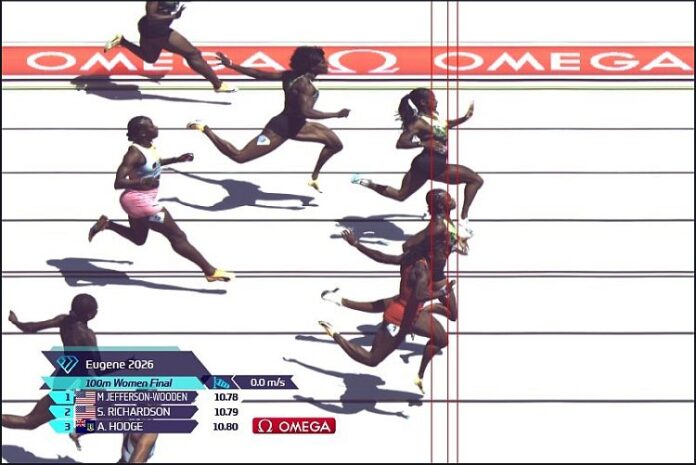
LOS ANGELES 2028: LA28 chief exec Hoover says initial ticket sales “exceeded all expectations” at State Assembly hearing; L.A., Metro ask for State money

The 6 April 2026 hearing of the California Assembly Select Committee on the 2028 Olympic And Paralympic Games and the Assembly Committee on Arts, Entertainment, Sports and Tourism (California State Assembly video).

The Sports Examiner: Chronicling the key competitive, economic and political forces shaping elite sport and the Olympic Movement.★

To get the daily Sports Examiner Recap by e-mail: sign up here!

≡ ASSEMBLY HEARING ≡

A second meeting of the California Assembly Select Committee on the 2028 Olympic And Paralympic Games, joined with the Assembly Committee on Arts, Entertainment, Sports and Tourism provided mostly an overview of the planning for the Games.

However, LA28 chief executive Reynold Hoover did offer some positive news on the beginning of ticket sales, so far only for Southern California and Oklahoma City residents:

“We just went on sale this past week; I will say in this room that we have exceeded all expectations in our revenue projections and our ticket sale projections. We have exceeded what Paris [2024] sold in their first days – in terms of Olympics – and we’ve actually outpaced all recent Olympics.

“And I think what that tells you is, it’s the power of the Games. … People want to come to L.A. and be a part of history.”

Hoover also detailed some of the progress on other organizing committee programs:

● He said that some 250,000 individuals have registered to volunteer for the Games, from many countries; “about 50,000 of them are Angelenos.” The plan is to register as many as 500,000, and to eventually select about 60,000 for the Games (Olympic and Paralympic).

● The LA28 staff total is now more than 650, eventually to rise to 1,000 by the end of the year. About 5,000 staff in total are expected to actually work at Games time.

● The Olympic Torch Relay is planned to be the largest ever held in the U.S., visiting all 50 states over the course of 100 days.

On transportation during the Games, a favored tactic implemented for the 1984 Games will return. Said Hoover:

“I think the Mayor is going to require deliveries after hours. So, during ‘84, commercial deliveries from 11 o’clock at night to, like, four or five o’clock in the morning, so that will take big trucks and delivery trucks off the roads.”

He also noted the now-available possibilities for remote work; “Mayor [Karen] Bass has already said she will ask people to remote work, those that are able to do that.” And he added that, compared to 1984, the availability of artificial intelligence to maximize the effectiveness of traffic routes related to the Games, will also be a help. Hoover said, “I feel very confident that both our athletes and the spectators, all of the officials, the Olympic Family, will be able to move around L.A.”

Assembly member Tom Lackey (R-34th District) thought more remote-work encouragement will be needed:

“I know that the Mayor has asked for people to do the stay-at-home, and if she could use a little stronger language – like direct them to stay home – or give them some kind of incentive to stay home, that’s the only thing that’s going to work, in large scale, in my opinion. … That’s the only way this is going to work, is if people will cooperate with us.”

There were many questions to Hoover, accompanied by Chief Athlete Officer Janet Evans, about small business opportunities for the Games, and these questions were also asked to Paul Krtekorian, the Executive Director of the City of Los Angeles Office of Major Events.

Krekorian explained the current program to use the Regional Alliance Marketplace for Procurement (RAMP) for businesses to see LA28 postings for contracts, as well as many others. But Krekorian was also looking for some State help for the 2028 Games, for cultural programming.

While LA28 will stage its mandated cultural program related to the Games, the City of Los Angeles has developed a community-based program, and “I’m confident that we’ll have significant support for those [cultural] programs, but it won’t be enough, and I can tell you that right now. It will not be enough, so one of the things we’ve asked you to consider is supporting some of those programs with state funding.”

He noted that the City is reaching out for philanthropic support as well within the Southern California community.

The final panelist, by video, was Los Angeles County Metropolitan Transportation Authoritychief executive Stephanie Wiggins, who is also looking for more money.

First, she said that Metro expects a attendee split of 40% from California, another 40% from around the U.S. and about 20% of international visitors. Further, of the 1,700-plus buses expected to be needed for the Games period, “we have, through pledges from across the country, already secured over half of the required buses.”

But Wiggins was also clear:

“We will need to secure additional funding to deliver [service] for the Olympic Games. We simply do not have the ability to fund operations ourselves. …

“Metro and our Games Mobility partners will need to make key investments to our system to be ready for the surge in users of our system and we are asking for the State’s help in funding some key legacy improvements.”

The ask is for $379 million for construction of station and line improvements and transit management, with Metro already having done – at its own cost – the engineering and environmental preparation work.

Receive our exclusive, weekday TSX Recap by e-mail by clicking here.
★ Sign up a friend to receive the TSX Recap by clicking here.
★ Please consider a donation here to keep this site going.

For our updated, 45-sport, 910-event International Sports Calendar for 2026 and beyond, by date and by sport, click here!

PANORAMA: Could Lyon replace Nice for the 2030 Winter Games? Utah 2034’s “Podium34″ already at $250 mil! Fencing double-double for U.S.’s Jaelyn Liu!

Another fencing Cadet-Junior double gold for American teen Foil star Jaelyn Liu! (Photo: Bizzi Team via USA Fencing).

The Sports Examiner: Chronicling the key competitive, economic and political forces shaping elite sport and the Olympic Movement.★

To get the daily Sports Examiner Recap by e-mail: sign up here!

≡ THE 5-RING CIRCUS ≡

● Olympic Winter Games 2030: French Alps ● With the new mayor of Nice, Eric Ciotti, saying that the venues and athlete village sites for the 2030 Winter Games should be changed, the mayor of Lyon – where the organizing committee has its headquarters – is ready to help.

Grégory Doucet, in office since 2020, is reported to be ready to offer facilities in Lyon for curling, figure skating and other ice sports, as well as the ceremonies. It’s only an offer at this stage, but offers the organizing committee options if the relations with Ciotti get frostier.

● Olympic Winter Games 2034: Utah ● The first-of-its kind “Podium34″ project called on philanthropy from the Utah community to support the organizing committee of the 2034 Winter Games with funding to start operations and to create new community and Games programs.

Formally announced in September 2025, but information earlier, the goal had been to raise $200 million. By the time of the launch last year, the published goal was $300 million. On Monday, Utah 2034 confirmed that the current level of commitment has reached $250 million and that the $300 million plateau will likely reached by the end of the year.

And the new goal will be?

● International Olympic Committee ● The IOC announced that long-time member Craig Reedie (GBR) passed away at age 84; no date was given.

A badminton player in his competitive days, he later became the President of the International Badminton Federation, later the Chair of the British Olympic Association. He was elected to the IOC in 1994 and from 2014-19 was the President of the World Anti-Doping Agency, steering through the minefield of the Russian state-sponsored doping program. He became an Honorary Member of the IOC in 2021.

● Athletics ● The annual Stawell Gift race, begun in 1878, is a throwback to the earliest days of track & field, a 120 m straightaway race on grass with ropes between the lanes, in Stawell (AUS). In 2026, American sprint stars Christian Coleman (2019 100 m World Champion) and Sha’Carri Richardson (2023 World 100 m Champion) were in the event and Richardson claimed a historic win.

The race is run with handicap starts and Richardson, who advanced to the final by just 0.007, started 10 m back of Emma Carr, but moved up smartly during the race and got to the front late, winning in a race-record 13.08 over Charlotte Nielsen (13.13 with a 9 m handicap). Richardson is only the third woman to win from a scratch start and collected the winner’s share of A$40,000 (~$27,627 U.S.); the women’s race started in 1989.

Australian Olufemi Komolafe won the men’s race in 11.93 with a 5 m handicap; Coleman was eliminated in the semifinals.

● Cycling ● A group of riders who sailed through a train-stop red light during the Ronde van Vlaanderen on Sunday – including winner Tadej Pogacar (SLO) – are the subject of an inquiry by Belgian officials.

Those who crossed early had to slow down to allow the peloton to catch up after the tracks were clear. Sanctions could include a fine and suspension.

● Fencing ● If you haven’t heard this name already, get used to it: Jaelyn Liu.

The Dallas-based American teen once again collected FIE World Championships golds in the women’s Foil in both the Cadet and Junior classes in Rio de Janeiro (BRA) on Saturday and Sunday, repeating her double golds from 2025 and becoming the first fencer to win a Cadet-Junior double-double!

This was her last year of eligibility in the Cadet class (under 17 as of 1 January) and juniors are eligible to age 20. She now has three Cadet Foil World titles (2024-25-26)and the 2025 and 2026 Junior Worlds golds, plus a team title in 2025. She already won her first FIE World Cup individual gold, in Hong Kong on 10 January of this year.

● Gymnastics ● Algerian star Kaylia Nemour was a double winner at the FIG Artistic World Cup in Cairo (EGY), taking the Uneven Bars – where she is Olympic champion – at 14.033 and then winning on the Beam – where she is the 2025 Worlds silver winner – scoring 14.266.

Spain’s Laia Font won the women’s Vault at 13.533 and China’s Qinqin Ke took the Floot at 12.966.

China also scored twice with men’s wins, with two-time Olympic Rings winner Yang Liu winning on Parallel Bars at 14.366 and teammate Hongyan Li winning on the Horizontal Bar (14.400).

Armenia claimed wins on Pommel Horse for 2025 European champ Hamlet Manukyan (14.800) and for 2022 World Champion Artur Davtyan on Vault at 14.666. Greek star Eleftherios Petrounias, the 2016 Olympic Rings winner, won his specialty at 14.366. Russian “neutral” David Marinov won on Floor, scoring 14.233.

● Skating ● The International Skating Union Council meeting announcement noted that it “received an update from the International Olympic Committee (IOC) on reintegration of athletes under the age of 17 from both Russia and Belarus into the international community. No timeline is currently available for a further update in this regard.”

The ISU 60th Ordinary Congress will be held from 10-12 June 2026, with elections due for President, Vice Presidents and other members.

● Volleyball ● Four-time Olympic medalist Jordan Larson, now 39, retired after her Saturday match with LOVB Omaha of League One Volleyball. One of the standout outside hitters in U.S. history, Larson starred as an All-American at Nebraska and went on to a sensational career with the American national team.

“The Governor” helped the U.S. win the 2014 FIVB Women’s World Championship and four Olympic medals: silver in 2012, bronze in 2016, gold at Tokyo 2020 and a silver at Paris 2024. She also played on club teams in Puerto Rico, Russia, Turkey, China and Italy in addition to the U.S. She said in an interview:

“Looking back, beyond the wins, the losses, and the medals, what I am most proud of are the relationships and experiences I have gained along the way.

“I have learned so much from so many people, from coaches and teammates to the fans who supported me throughout the journey. I was just a girl from a small town who was given the chance to live out her dream, and I am deeply grateful for how this game has shaped me both on and off the court.”

Receive our exclusive, weekday TSX Recap by e-mail by clicking here.
★ Sign up a friend to receive the TSX Recap by clicking here.
★ Please consider a donation here to keep this site going.

For our updated, 45-sport, 910-event International Sports Calendar for 2026 and beyond, by date and by sport, click here!
PANORAMA: Ueberroth family trust filing notes dementia diagnosis; no major 2028 Games funding in 2027 Trump budget plan; Pogacar wins Flanders!

Slovenian cycling star Tadej Pogacar celebrating his World Road Champs win in 2024 (Photo: Wikipedia via Albinfo).

The Sports Examiner: Chronicling the key competitive, economic and political forces shaping elite sport and the Olympic Movement.★

To get the daily Sports Examiner Recap by e-mail: sign up here!

≡ THE 5-RING CIRCUS ≡

● Olympic Games 1984: Los Angeles ● A quiet, sad case over a family trust originally filed in April 2025 in Orange County, California came into public view last week as The Athletic reported on a filing by Vicki Ueberroth Booth, to remove Michael McKee as the trustee.

Ueberroth Booth is the daughter of Peter Ueberroth, the head of the Los Angeles Olympic Organizing Committee for the 1984 Games and afterwards, Commissioner of Major League Baseball. He is now 88 and his wife Ginny, 86, have both seen their health erode and Peter was diagnosed with dementia in March 2024. McKee has been working with Ueberroth’s Contrarian Group since at least 2018.

Ueberroth Booth is asking the court to remove McKee as trustee after certain transactions were made, allegedly without the knowledge or input from others. Her attorney, Gabrielle Vidal, noted in a statement, “Filing this petition – and bringing sensitive and private family matters into a public forum – was not a decision made lightly, but a necessary one to protect their parents, safeguard what they built, and ensure that their wishes are honored.”

● Olympic Games 2028: Los Angeles ● On Friday, the Trump Administration’s proposed budget for Fiscal Year 2027 was released and the 92-page summary noted $12.5 billion in funding for the Federal Bureau of Investigation, of which a listed activity is to “keep U.S. citizens safe during large-scale events such as the 2028 Olympics.”

There is a small addition of $36 million for the U.S. Secret Service budget, of which a part will be used for preparation for operations for the 2028 Presidential campaign and the 2028 Olympic and Paralympic Games. There was no listing of a major allocation for security cost reimbursement to local agencies for the 2028 Games, something the City of Los Angeles and the LA28 organizers are asking for.

There was no mention of any additional funding for transportation support for the 2028 Games, with the Los Angeles Metropolitan Transportation Agency looking for $2 billion in support for the Games, down from its original request of $3.2 billion.

The released blueprint is only that, as the Congress will finally decide what gets funded.

● Pan American Games ● Applications are in for the third Junior Pan American Games in 2029, with three candidates now confirmed: Rosario (ARG), Guatemala City (GUA) and Panama City (PAN).

The three bidders must submit a formal proposal by 15 June and the actual candidates will be certified by 19 June. The selection will be made in August at the Panam Sports General Assembly in Lima (PER).

● SportAccord ● The annual SportAccord convention, which brings together the business and political worlds of the Olympic Movement has been postponed. Slated for 24-28 May in Baku (AZE), the ongoing conflict in Iran has made travel too difficult.

SportAccord announced that it is committed to holding the event, which draws about 1,700 attendees, in Baku, but at a later date.

● Basketball ● The Class of 2026 for the Naismith Hall of Fame was announced Saturday, with the 1996 U.S. women’s Olympic Team to be enshrined 30 years after dominating the Atlanta Games.

Also to be inducted in August are 2016 Olympic gold medalist Elena Della Donne, 2000 team member Chamique Holdsclaw, 2008 and 2012 gold winner Candace Parker and men’s 2004 gold medalist Amar’e Stoudamire.

Among the coaches, long-time NBA coach Mike D’Antoni (2008 and 2012) and Gonzaga’s Mark Few (2024) were Olympic assistants.

● Weightlifting ● The clean-up of doping issues in weightlifting is continuing with the International Testing Agency noting lifetime bans on former Pakistan federation head Hafiz Imran Butt and coach Irfan Butt imposed by the Anti-Doping Division of the Court of Arbitration for Sport:

“[T]he CAS ADD found that both athlete support personnel had been directly involved in the administration of prohibited substances, including steroids, to Pakistani athletes, including minors, and had played central roles in large-scale doping in Pakistan, having actively and continuously engaged in doping practices.”

The offenses took place between September 2014 and November 2016.

≡ RESULTS ≡

● Athletics ● As the outdoor season gets going, some noteworthy world-leading marks included a 9.89 men’s 100 m from Botswana’s Collen Kebinatshipi at the national championships in Gaborone on Friday. He posted the same time – a lifetime best – in both his heat and the final!

LSU’s Ella Onojuwevwo (NGR) ran the women’s 400 m in a lifetime best of 49.59 to win at the Battle on the Bayou and take the world outdoor lead. BYU frosh Jane Hedengren took the world women’s 10,000 m lead at 30:46.80 to win at the Stanford Invitational and move to no. 7 all-time U.S.

Olympic women’s hammer champ Cam Rogers (CAN) got a huge third throw at the Texas Relays, reaching 81.13 m (266-2), making her the no. 2 thrower of all time! Only Poland’s Anita Wlodarczyk has throw further at 82.98 m (272-3) in 2016. Rogers’ mark is the no. 8 throw in history (Wlodarczyk has three meets and seven throws further)!

At the Miramar Invitational in Florida, 2024 Olympic men’s 100 m silver winner Kishane Thompson (JAM) won the men’s 150 m – apparently on a turn – in 14.92; statisticians note that Usain Bolt passed 150 m in 14.44 en route to his 2009 world 200 m record of 19.19. Bolt also ran 14.35 for 100 m on the straight in 2009.

The men’s 100 m was won in a wind-aided 9.84 by Ackeem Blake (JAM); Lavanya Williams (JAM) won the women’s 100 m in 10.99w. American Jamal Britt got a world-leading win in the 110 m hurdles in 13.07 and Monae Nichols of the U.S. took the world lead in the women’s long jump at 6.95 m (22-9 3/4) and won with a wind-aided 7.07 m (23-2 1/2).

On the roads, at the Urban Trail de Lille races in France, 10,000 m World Champion Jimmy Gressier (FRA) won the men’s 5 km in 12:51, the world lead in 2026 and the equal-third performance of all-time! He finished just ahead of Addisu Yihune (ETH: 12:54, no. 5 all-time) and fellow Frenchman Yann Schrub (12:57, no. 7 all-time). Ethiopia’s Khairi Bejiga won the 10 km in 26:51.

Ethiopia swept the medals in the women’s 5 km, with Marta Alemayo (17) winning in 14:15, also moving to no. 3 in history. She was well ahead of Hawi Abera (14:22), who is the sixth-fastest ever! The women’s 10 km was another burner, this time for Kenya’s World Cross Country champ Agnes Ngetich – the world-record holder – a runaway winner in 28:58, the no. 3 performance ever.

● Curling ● The 67th World Curling men’s World Championship concluded in Ogden, Utah, with a familiar face on top once again: Sweden’s Niklas Edin.

Edin’s Swedish side, Canada (Matt Dunstone) and Scotland (Ross Whyte) all tied for the best mark in the round-robin at 10-2, with the U.S. (2018 Olympic champ John Shuster) also qualifying for the opening playoff round.

The U.S. advanced over Switzerland, 9-8, in the top of the bracket and faced Sweden, with the score knotted at six after 10 ends. Edin managed to score two in the 11th for the 8-6 win and a place in the final.

Canada and Dunstone edged Italy by 9-7 in the play-in, then took on Whyte in the semis and Dunstone again managed a 9-7 win and a place in the final.

The Swedes were up right away in the final, by 4-1 after three ends and the sides traded two-point ends in the fifth, sixth, seventh and eighth, with Edin up 8-6 after eight. Both scored once more but Edin won his eighth Worlds gold with a 9-6 final. Canada hasn’t won this title since 2017 and has finished second in six of the last eight championships.

The bronze-medal match was a see-saw affair, with Scotland up 3-0 after one, but it was 5-5 after five ends. Shuster closed to 7-6 after eight, but the Scots came up with four in the ninth for an 11-6 win.

● Cycling ● The second “Monument” race of the season was the 110th Ronde von Vlaanderen – Tour of Flanders – in Belgium, a 278.2 km route from Antwerp to Oudenaarde with the famous cobbled sections to irritate the peloton.

But it did not stop Slovenian superstar Tadej Pogacar. He attacked with about 55 km to go, breaking away with 2023 World Champion Mathieu van der Poel (NED), double Olympic winner Remco Evenepoel (NED) and Belgian star Wout van Aert.

About 3 km later, Van Aert and Evenepoel had been dropped and it was van der Poel – a three-time winner of this race – and defending champ Pogacar, going for his third win. Finally, with about 17 km left, Pogacar attacked and it was over. He won in 6:20:07, with van der Poel at +0:34, Evenpoel at +1:11 and van Aert at +2:04.

Pogacar has already won Milan-Sanremo and will go for a third Monument this season next week at Paris-Roubaix.

The women’s Tour, over 164.1 km, was a decisive win for Dutch star Demi Vollering, who won this race for the first time in 4:16:37, attacking with 18 km left. She finished 0:42 up on France’s 2024 Olympic Mountain Bike winner Pauline Ferrard-Prevot and Puck Pieterse (NED).

● Sailing ● The Olympic-class Trofeo Princesa Sofia regatta off Palma de Mallorca (ESP) was extra-competitive in 2026, with multiple classes coming down to the final race. But only the French managed more than one winner.

Nicolas Goyard won the men’s IQ Foil final, ahead of Noah Lyons of the U.S., and Lauriane Nolot, the 2023 World Champion, won the Formula Kite final. The other eight titles were evenly distributed.

Paris Olympic Laser champion Matt Wearn (AUS) took the ILCA7 class win, and two-time World Formula Kite champ Maximilian Maeder (SGP) won the men’s Formula Kite final. In the men’s 49er class, Germans Richard Schultheis and Fabian Rieger won a tight battle with Americans Nevin Snow and Ian Macdiarmid for gold and silver.

The other women’s winners were Tamar Steinberg (ISR) in the IQ Foil; Georgia Lewin-Lafrance and Antonia Lewin-Lafrance (CAN) in 49erFX, and Ireland’s Eve McMahon in ILCA 6.

The Mixed 470 win was by Spanish three-time Worlds medal winner Jordi Xammar, now with Marta Cardona; the Nacra 17 victory was taken by Sweden’s 2023 Worlds bronze winners Emil Jarudd and Hanna Jonsson.

● Ski Mountaineering ● The final ISMF World Cup of the season was in Villars-sur Ollon (SUI), with Swiss Remi Bonnet and France’s Axelle Gachet Mollaret dominant as usual.

World Champion Bonnet won the Vertical Race in 23:31.2, almost 30 seconds ahead of the field and then won the Individual Race in 1:27:43.1, more than 1:15 up on the pack. Gachet Mollaret, who won both events at the 2023 Worlds, took the women’s Vertical in 27:19.6, 15.2 seconds ahead of teammate Emily Harrop, and then the Individual Race in 1:30:53.7, ahead of Harrop by 57.5 seconds.

In the Sprints, Swiss Jon Kistler, an Olympic silver winner on the Mixed Relay, was the men’s winner in 2:32.8, beating France’s Olympic bronze winner Thibault Anselmet (2:33.8). Harrop, the Olympic silver winner, took the women’s Sprint in 2:56.1.

Spain’s Ana Alonso and Oriol Cardona Coll, the Olympic relay bronzers, won the Mixed Relay in 33:55.6 by more than 12 seconds.

● Swimming ● Two Paris 2024 Olympians dominated the USA Swimming Open Water Nationals in Sarasota, Florida: Mariah Denigan and Ivan Puskovitch.

Denigan, third in the women’s 10 km open-water champs in 2025, won the 10 km women’s title on Thursday, in 2:03:54, edging Brinkleigh Hansen (2:04:02 and five-time Worlds medal winner Ashley Twichell (2:04:04).

Denigan then came back on Friday to win the 3 km Knockouts, winning the 500 m final over 2024 World Junior 5 km champ Hansen and Brooke Travis. And Denigan completed the sweep by winning Saturday’s 5 km race in in 1:00:46, ahead of Twichell (1:00:53).

Puskovitch did the same, winning the 10 km title in 1:55:05, just ahead of defending champion Dylan Gravley (1:55:08) and Colin Jacobs (1:55:25). He then won the 3 km Sprints over Jacobs and finally took the 5 km win in 56:02, with Gravley second in 56:10.

● Table Tennis ● The reigning World Champions were on top at the ITTF World Cup in Macao, as China’s Chuqin Wang won the men’s final over Sora Matsushima (JPN), 4-3, and Yingsha Sun took the women’s final from teammate Manyu Wang, 4-1.

For Wang, this was his first World Cup gold after finishing third in 2024 and 2025. For Sun, it continued her dominant run in this event, with her third straight win. Wang was second for the second time, also in 2024.

Receive our exclusive, weekday TSX Recap by e-mail by clicking here.
★ Sign up a friend to receive the TSX Recap by clicking here.
★ Please consider a donation here to keep this site going.

For our updated, 45-sport, 910-event International Sports Calendar for 2026 and beyond, by date and by sport, click here!
LOS ANGELES 2028: Beyond simple tickets are hospitality “packages,” with a variety now on sale and many more to come in the future

The Sports Examiner: Chronicling the key competitive, economic and political forces shaping elite sport and the Olympic Movement.★

To get the daily Sports Examiner Recap by e-mail: sign up here!

≡ TICKETS ON SALE II ≡

While the LA28 ticket sale has started only to registered buyers in Southern California only, anyone can buy tickets via hospitality packages being sold by On Location, the exclusive hospitality agent for the International Olympic Committee and for LA28.

The hospitality concept is simple: tickets and some extras, for an added price. For the Los Angeles area, the most prized add-on is parking, but this is not being offered with any of the packages. Instead, there are three levels offered, varying on the specific site:

Leisure: This is the most prevalent package available so far, and varies somewhat by site. At the core is an on-venue, restricted-access hospitality lounge and some food service. At the Crypto.com Arena for artistic gymnastics, the offer is “Light LA street food, a welcome drink and soft drinks included; additional Food and Beverage offered pay-as-you-go.” Expedited venue entry may be available.

Premium: This has access to “in-venue lounge near your seats” and “Chef-curated regional cuisine” plus “Craft cocktails, wine, beer a soft drinks” with available before and during the event, plus an “LA28 Olympic Games gift.” Priority entry to the venue may be available.

Signature: Only available at a new sites, this level has “Lounge access with adjoined or adjacent seating,” priority access to the venue, “Tailored a la carte dishes crafted by LA chefs” plus “Sommelier-selected champagne and wine, and other alcoholic and non-alcoholic drinks available.” There is service before and during the event, plus a gift, of course.

So what does this cost? It’s not cheap, but neither are tickets without hospitality either.

A lengthy review of the On Location offers available on Friday (3rd) and Saturday (4th) showed a wide variety of packages on sale. Interestingly, many of these offers were not for the “best seats in the house,” but rather a mix of categories, even down to the fourth tier (D) of ticket locations. Also, there are multiple sports for which no hospitality sales have yet been made available and some events for which the “best seats” – “A” category – will be sold at a later date.

But there are a lot of packages that can be bought. Here’s our survey of 3-4 April for pricing ranges (low to high); please note that ALL packages are for TWO people (no offer to buy a single ticket package):

(Important: this is a list of available packages and pricing on the dates and times that the survey was made, and is not an indication of current availability or pricing.)

Aquatics/Artistic Swimming:
● B category seating for 2 and Leisure-level hospitality
● $575 for preliminary sessions, up to $995 for finals

Aquatics/Swimming:
● B category for 2 + Premium
● $2,000 for prelims, up to $4,000 for finals
● C category for 2 + Leisure
● $800 for prelims, up to $2,250 for finals

Aquatics/Water Polo:
● B category for 2 + Leisure
● $350 for prelims, up to $750 for finals

Archery:
● Shared suite seating for 2 + Leisure
● $550 for most sessions ($350 for one session)

Athletics:
● A category for 2 + Premium
● $3,125 for prelims, up to $9,750 for finals
● B category for 2 + Leisure
● $950 for prelims, up to $2,500 for finals

Baseball:
● A category for 2 + Signature
● $2,000 for prelims, up to $5,000 for bronze-medal game
● B category for 2 + Premium
● $1,350 for prelims up to $3,750 for semifinals
● C category for 2 + Premium
● $1,150 for prelims, up to $3,500 for semifinals

Basketball:
(several sessions not offered yet)
● B category for 2 + Signature
● $1,350 for prelims, up to $8,500 for men’s semifinals
● C category for 2 + Premium
● $1,000 for prelims, up to $6,500 for women’s gold-medal game
● C category for 2 + Leisure
● $550 for prelims, up to $2,500 for men’s semifinal

Basketball/3×3:
● B category for 2 + Leisure
● $500 for prelims, up to $1,250 for finals

Boxing (two venues):
● B category for 2 + Leisure for prelims
● $450 to $750 per session
● A category for 2 + Signature for medal rounds
● $4,000 to $5,000 for semifinals and finals

Cycling/BMX Freestyle:
● B category for 2 + Leisure
● $650 for qualifying, $950 for finals

Cycling/Track:
● A category for 2 + Leisure
● $625 for prelims, up to $950 for finals

Fencing:
● B category for 2 + Leisure
● $550 for prelims, up to $900 for finals

Flag Football:
(men’s gold-medal game not on sale)
● A category for 2 + Premium
● $1,250 for prelims, up to $1,500 for finals
● D category for 2 + Leisure
● $450 for prelims, up to $950 for finals

Football (Rose Bowl only; some games not shown):
● D category for 2 + Leisure
● $850 for prelims, up to $1,500 for men’s final

Golf:
● A category for 2 + Premium
● $850 for women’s first round, up to $2,500 for men’s final round

Gymnastics/Artistic:
(later sessions already sold out; some women’s sessions not offered yet)
● B category for 2 + Premium
● $1,000 for prelims, up to $3,000 for finals
● D category for 2 + Leisure
● $450 for prelims, up to $1,500 for finals

Handball:
● B category for 2 + Leisure
● $425 for prelims, up to $950 for finals

Hockey:
● B category for 2 + Leisure
● $550 for prelims, up to $1,250 for finals

Judo:
● B category for 2 + Leisure
● $$450 for prelims, up to $750 for finals

Lacrosse:
● A category for 2 + Leisure
● $525 for prelims, up to $2,150 for finals
● C category for 2 + Leisure
● $350 for prelims, up to $1,750 for finals

Modern Pentathlon:
● A category for 2 + Leisure
● $650 for prelims, up to $850 for finals

Rugby Sevens:
(not all sessions on sale)
● A category for 2 + Premium
● $1,500 for semifinals, up to $2,250 for finals
● B category for 2 + Leisure
● $450 for prelims, up to $1,125 for finals

Skateboarding:
● A category for 2 + Leisure
● $900 for prelims, up to $1,150 for finals
● B category for 2 + Leisure
● $550 for prelims, up to $850 for finals

Sport Climbing:
● B category for 2 + Leisure
● $450 for prelims, up to $750 for finals

Table Tennis:
● A category for 2 + Leisure
● $650 for prelims, up to $1,500 for finals
● B category for 2 + Leisure
● $550 for prelims, up to $950 for finals

Taekwondo:
● C category for 2 + Leisure
● $350 for prelims, up to $450 for finals

Tennis/Center Court:
(Offers as low as $450 for prelims for smaller courts)
(Men’s gold-medal final not shown for sale)
● A category for 2 + Premium
● $1,750 for some sessions, up to $3,750 for some finals
● B category for 2 + Leisure
● $650 for some sessions, up to $1,250 for some finals

Volleyball/Beach:
● C category for 2 + Leisure
● $450 for prelims, up to $1,850 for women’s gold-medal match

Volleyball:
● C category for 2 + Leisure
● $475 for prelims, up to $1,500 for finals

Weightlifting:
● B category for 2 + Leisure
● $425 for early sessions, $625 for late sessions

Wrestling:
● A category for 2 + Leisure
● $650 for prelims, up to $1,125 for finals
● B category for 2 + Leisure
● $450 for prelims, up to $750 finals

Six sports were shown as “Popular”: athletics, basketball, gymnastics (artistic), swimming, tennis and volleyball.

No options were shown for the opening ceremony; packages for the closing were at $9,500 in A category and Premium (for 2) and $5,000 for E category and Premium (for 2).

Multiple sports were not shown with any availability, such as badminton, BMX cycling, canoeing, cricket, diving, equestrian, mountain biking, rhythmic gymnastics, rowing, shooting, squash, surfing and others; these will come later.

There are a lot of options, for those who are looking for a different Olympic experience, and in some cases, possibly an option to the pricing of the top standard ticket tiers. There will be a lot more packages to be offered in the future with “best of house” seating, but not available yet. And anyone can buy these right now. 

Receive our exclusive, weekday TSX Recap by e-mail by clicking here.
★ Sign up a friend to receive the TSX Recap by clicking here.
★ Please consider a donation here to keep this site going.

For our updated, 45-sport, 910-event International Sports Calendar for 2026 and beyond, by date and by sport, click here!
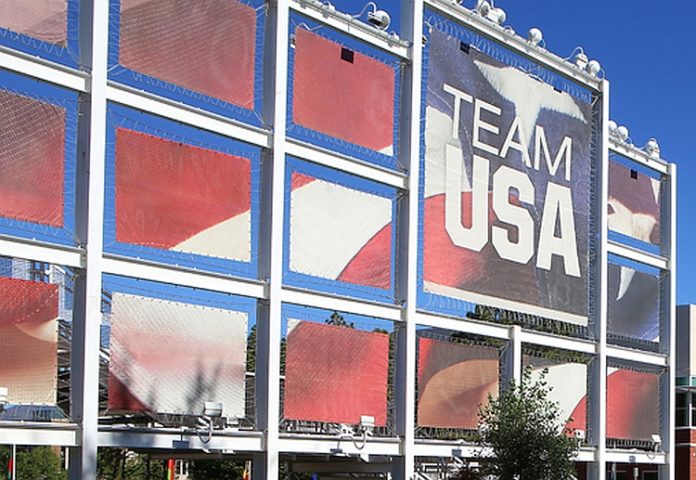
LOS ANGELES 2028: LA28 ticket sale begins, with a mix of some low-cost ones and some very high-priced ones to fill a $2.5 billion budget line

The Sports Examiner: Chronicling the key competitive, economic and political forces shaping elite sport and the Olympic Movement.★

To get the daily Sports Examiner Recap by e-mail: sign up here!

≡ TICKETS ON SALE I ≡

In simplest terms, the $7.145 billion budget for the LA28 Olympic and Paralympic Games organizing committee is really easy to understand. The organizers will receive about $1.4 billion from the International Olympic Committee, and are looking for $2.5 billion from domestic sponsorships, another $2.5 billion from tickets and hospitality, about $350 million in licensing and $400 million from other items such as hotel reimbursements, requested equipment and services and so on. That’s it.

So far, domestic sponsorship commitments are said to be at $2 billion, with two years to go. Good. Now, ticket sales have started with the “pre-sale” to people living in the Southern California area, with sales to all others starting on 9 April.

The opening of the sales window to selected, registered users has generated lots of interest and the usual opening glitches, but many people have reported that (1) they can pick tickets and (2) LA28 seems able to take their money.

There are a lot of Olympic tickets to sell, perhaps 12 million, which means the “average ticket” would need to be sold for $208.33 each to reach $2.5 billion. That’s why they are so expensive.

Readers have sent in messages with some details of some sports and some of the prices are breathtakingly high. For the 16 July afternoon session of track & field at the Los Angeles Memorial Coliseum, there are nine price categories (seating zone maps are as shown on the LA28 sales sites):

● A: $2,460.76
● B: $2,046.50
● C: $1,364.33
● D: $1,116.27
● E: $744.18
● F: $620.15
● G: $403.10
● H: $186.05
● I: $104.19

For the swimming at SoFi Stadium, prices for the opening session of qualifying races on 22 July includes eight price categories:

● A: $1,116.27
● B: $806.20
● C: $558.14
● D: $372.09
● E: $279.07
● F: $161.24
● G: $93.02
● H: $49.61

The 30 July finals session, of course, is more expensive:

● A: $1,860.45
● B: $1,395,34
● C: $1,116.27
● D: $744.18
● E: $558.14
● F: $310.08
● G: $186.05
● H: $104.19

Wrestling, at the Los Angeles Convention Center, costs less. For the qualifying session on 24 July which includes quarterfinals of some classes:

● A: $396.90
● B: $167.44
● C: $86.82
● D: $28.00

The 30 July session with a mix of qualifying, bronze and gold-medal matches costs more:

● A: $682.17
● B: $310.08
● C: $155.04
● D: $74.42

What about the big team sports? For basketball at the Intuit Dome in Inglewood, a preliminary session with two women’s game (teams unknown) costs:

● C: $267.50
● D: $184.50
● E: $152.69
● F: $76.34
● G: $50.90
● H: $28.00

Prices for the women’s bronze-medal match on 28 July are higher:

● A: not on sale yet
● B: not on sale yet
● C: $731.64
● D: $489.88
● E: $407.17
● F: $203.58
● G: $133.61
● H: $106.88

The prices for the men’s bronze-medal match on 29 July are a lot higher:

● A: not on sale yet
● B: not on sale yet
● C: $1,819.53
● D: $1,215.15
● E: $1,011.56
● F: $508.96
● G: $343.55
● H: $106.88

As for football at the Rose Bowl, a women’s quarterfinal listed for 21 July is shown as:

● A: $380.62
● B: $275.17
● C: $188.36
● D: $138.75
● E: $101.54
● F: $28.00

The men’s semi on 24 July and women’s semi on 25 July are both priced thus:

● A: $839.51
● B: $610.09
● C: $417.81
● D: $306.19
● E: $188.36
● F: $28.00

The women’s gold-medal game on 29 July:

● A: $1,304.66
● B: $944.94
● C: $647.30
● D: $473.63
● E: $281.40
● F: $106.50

These prices include, as per California law, all fees and taxes.

If you are looking for a document with an overview of sessions and prices, there isn’t one. LA28 confirmed that no overall ticket catalog is available, for the first time in memory, perhaps ever. The catalog for the initial Paris 2024 sale in 2022 is available here.

Observed: LA28 is getting its ticket process started much earlier than other organizing committees, which helps to generate a lot of revenue earlier in the process that will earn some interest and help to fund operations.

In terms of prices:

● An LA28 announcement reported on 15 January 2026 noted that LA28 said that one million tickets to be available at $28 and stated that there will be “a third of tickets priced under $100.”

● In its report to the International Olympic Committee in Milan on 3 February, our report noted that LA28 Chair Casey Wasserman “reiterated that one million tickets will be available for $28 and two-thirds of all tickets will be priced under $200.”

An LA28 statement to the Los Angeles Times’ Jim Rainey on Friday indicated that half of all tickets would be at $200 or less, so the pricing spread may have changed somewhat.

Are prices high? Yes, they are. Very high for many of the finals and semifinals in the more popular sports. LA28 is a once-in-a-lifetime company and will go out of business permanently sometime in 2029 or early 2030, never to rise again. It has no need to generate everlasting future loyalty among its customers.

It does have an absolute responsibility and a promise to its financial guarantors – the City of Los Angeles and State of California – not to have a deficit and as it is not receiving government funding for its operations, it has to change a lot for sponsorships and for tickets.

Too much? That’s in the eye of the beholder. What is true is that major events like the NFL Super Bowl and now the FIFA World Cup are pricing tickets not simply for their revenue requirements, but to take for themselves money that would be made on the secondary, resale market. If a ticket priced at $100 is actually worth $500 on the open market, sellers are now pricing tickets close to the expected resale value to try and capture that money for themselves.

That’s not a defense of the pricing, it’s an explanation. What is also true is that for pricing at these levels, the organizing committee will be expected to offer a seamless and satisfying fan experience. And the tickets do not come with parking, or public transport and do not include food, drinks or souvenirs. Those are all extra.

For comparison, a visit to Disneyland today costs from $104 to $224 to visit the park. It’s not cheap either.

Receive our exclusive, weekday TSX Recap by e-mail by clicking here.
★ Sign up a friend to receive the TSX Recap by clicking here.
★ Please consider a donation here to keep this site going.

For our updated, 45-sport, 910-event International Sports Calendar for 2026 and beyond, by date and by sport, click here!

PANORAMA: Milan Cortina ‘26 exhibit at U.S. Olympic & Paralympic Museum; new Russia-Ukraine gymnastics flare-up over awards and anthem

The U.S. Olympic & Paralympic Museum in Colorado Springs, Colorado (Photo: USOPM).

The Sports Examiner: Chronicling the key competitive, economic and political forces shaping elite sport and the Olympic Movement.★

To get the daily Sports Examiner Recap by e-mail: sign up here!

≡ THE 5-RING CIRCUS ≡

● U.S. Olympic & Paralympic Museum ● Just weeks following the conclusion of the 2026 Olympic Winter Games in Italy, the USOPM in Colorado Springs, Colorado, is opening “It’s Your Vibe: Team USA at Milano Cortina 2026.”

The exhibition, named after the Games motto, offers some unique items, including:

● “The U.S. flag carried on the ice by Olympic gold medalist Hilary Knight following Team USA’s victory in women’s ice hockey.”

● “A competition skinsuit worn by Olympic speedskater Conor McDermott-Mostowy.”

● “A complete set of official Olympic and Paralympic pins from Milano Cortina 2026.”

● A collection of official Olympic and Paralympic mascot plush figures Tina and Milo – the most popular souvenirs of the Games – including a podium plushie!

There is a lot more, including an Olympic Torch Relay uniform; an Olympic torch and Games medals are expected to be added in the future. The exhibit was made possible through the funding of Judi and Jack Johnson and the David and Eula Wintermann Foundation. It will be open beginning 4 April for a limited – but not yet specified – time.

● Alpine Skiing ● The 2026 U.S. Ski & Snowboard nationals in Vail, Colorado concluded on Tuesday with the Slalom events, with Cooper Puckett, 23, winning the men’s title in 1:33.89 ahead of Jett Seymour (1:34.51) and Jevin Palmquist (1:34.57).

Veteran women’s stars went 1-2, with A.J. Hurt winning in 1:34.05, over Nina O’Brien (1:34.23) and Kjersti Moritz third (1:34.85). It’s the fifth national title for Hurt and second straight in the Slalom.

● Cycling ● The 80th Dwars Door Vlaanderen in Belgium ended with a sprint victory for two-time World Time Trial Champion Filippo Ganna (ITA), who passed Belgian star  Wout van Aert in the final meters to win in 3:48:27 over the 184.6 km course from Roeselare to Waregem.

Van Aert, second last year, attacked on the hilly course with 30 km to go and was clear of the field, but Ganna tirelessly worked his way closer and finally sailed by just before the finish. Norway’s Soren Waerenskjold finished third, as the top 47 riders received the same time.

The women’s race – the 14th – came down to a three-way sprint with Swiss Marlen Reusser, the 2025 Worlds Time Trial gold medalist – winning at the line in 3:09:12 over the 128.8 km course. She finished just ahead of 2023 champ Demi Vollering (NED) and countrywoman Lieke Nooijen, who gapped the field by seven seconds.

Coming Sunday is the famed Ronde van Vlaanderen – the 110th Tour of Flanders – for men and women.

● Football ● The 19 March meeting of the FIFA Council announced that the approvals of the FIFA Women’s World Cup hosting awards for 2031 and 2035 will be delayed to the end of the year at an Extraordinary Congress.

The 2031 bid, led by the U.S. and including Costa Rica, Jamaica and Mexico, was reported last week to be due in part to worries by American host cities over the economic performance (or lack thereof) of the 2026 FIFA World Cup, versus the millions spent to ready the stadia and regions for the event.

Moreover, The Athletic reported that “FIFA has not received crucial government guarantees from the White House,” which it requires on access, duty-free imports and other fee waivers, along with security support.

What is true is that the enthusiasm for the 2031 bid will be judged with reference to what happens in the 11 U.S. host cities for the 2026 World Cup.

● Gymnastics ● In what appears to be a new chapter in the Russia vs. Ukraine struggle, World Gymnastics acknowledges the incident involving AIN athlete Sofiia Ilteriakova during the Hoop Final award ceremony at the 2026 Rhythmic Gymnastics World Cup in Sofia (BUL) on 30 March 2026.”

The event was won by Ukrainian star Taisiia Onofriichuk with the 15-year-old Ilteriakova second, and on the awards stand, the Russian did not face the Ukrainian flag, standing upright and looking straight ahead, without turning during the Ukrainian anthem.

The World Gymnastics statement added:

“The matter is currently under review and all relevant information is being carefully assessed. Any next steps will be considered in accordance with the applicable regulations and established procedures.”

The Russian national coach, Tatyana Sergaeva, told the Russian news agency TASS that Ilteriakova was confused and “flustered” in her first international senior-level competition.

● Shooting ● Peru’s Alessandro De Souza Ferreira equaled the world record of 27 in the men’s Trap final of the ISSF Shotgun World Cup in Tangier (MAR), winning the gold over Driss Haffari (MAR: 25).

Italy went 1-2 in the women’s Trap final, with 2018 World Junior Champion Erica Sessa also equaling the world record in the final, scoring 24 hits to edge London 2012 Olympic champion Jessica Rossi (22).

Receive our exclusive, weekday TSX Recap by e-mail by clicking here.
★ Sign up a friend to receive the TSX Recap by clicking here.
★ Please consider a donation here to keep this site going.

For our updated, 45-sport, 910-event International Sports Calendar for 2026 and beyond, by date and by sport, click here!
MILAN CORTINA 2026: Int’l Testing Agency says no Milan Cortina Olympic positives out of 3,053 tests on 1,848 athletes; it’s still not enough

The Sports Examiner: Chronicling the key competitive, economic and political forces shaping elite sport and the Olympic Movement.★

To get the daily Sports Examiner Recap by e-mail: sign up here!

≡ ITA WINTER GAMES REPORT ≡

There were no official announcements of doping positives during the 2026 Milan Cortina Olympic Winter Games, and on Wednesday, the International Testing Agency said … there weren’t any:

“At this stage, no anti-doping rule violations have been asserted based on the results of the testing conducted during the Games.”

The ITA’s statement summarized the testing program this way:

“Altogether, 3,053 samples were collected both in- and out-of-competition from the opening of the Olympic Villages on 30 January to the Closing Ceremony on 22 February. These samples, comprising 2,180 urine samples, 768 blood samples and 105 Dried Blood Spot (DBS) samples, stemmed from doping controls conducted on 1,848 athletes, representing 63.4% of all participants, a clear increase compared to the 55% of athletes tested during the Olympic Winter Games Beijing 2022.”

This followed an intensive testing regimen prior to the Games, an area which the ITA has stressed to ensure testing of essentially all the medal candidates before the Games:

“During the pre-Games phase, 92% of participating athletes had been tested at least once in the six months leading up to the Games, based on testing conducted by the responsible anti-doping organisations in accordance with the testing recommendations issued by the ITA ahead of Milano Cortina 2026.”

The ITA had a team of 20 at the Milan Cortina Winter Games, helping to oversee the collection and processing of in-competition and out-of-competition samples, which each accounted for 50% of the samples taken. That’s unusual for a Games-time testing environment, where the in-competition collection programs usually dominate.

The top countries tested were those with the top teams, starting with the U.S., Italy, Canada, Germany and Switzerland.

The sports with the most tests started with ice hockey, then cross-country skiing, biathlon, speed skating and alpine skiing.

The ITA keeps all samples for 10 years and will re-analyze at least some of the samples in the future, using improved equipment available at that time.

Observed: This is a showy and happy report from the ITA, and its effort to coordinate an effective anti-doping program prior to the Games is an essential component of its success.

However, it is still astonishing that in a smaller event such as the Olympic Winter Games, with 2,884 athletes entered, that not everyone is tested. Furthermore, it is also remarkable that every athlete is not required to attend a mandatory anti-doping seminar at one of the Olympic Villages, preferably featuring athletes from their own country of region to impress the importance of clean sport.

The only Olympic-sport organization which can support this is the International Olympic Committee and it should insist that athletes taking part in the Games are at least fully aware of what their responsibilities are, as (1) athletes, (2) mentors for other athletes and (3) role models for those they do not meet, but who see them.

Only then can the IOC, the ITA, the World Anti-Doping Agency and others say that they have not just tested, but have tried to teach the importance of anti-doping to those participating at the Games.

Receive our exclusive, weekday TSX Recap by e-mail by clicking here.
★ Sign up a friend to receive the TSX Recap by clicking here.
★ Please consider a donation here to keep this site going.

For our updated, 45-sport, 910-event International Sports Calendar for 2026 and beyond, by date and by sport, click here!

FOOTBALL: U.S. men lose again, this time to Portugal, 2-0, in Atlanta, while FIFA World Cup field fills out with the final six teams

The Sports Examiner: Chronicling the key competitive, economic and political forces shaping elite sport and the Olympic Movement.★

To get the daily Sports Examiner Recap by e-mail: sign up here!

≡ PORTUGAL 2, U.S. MEN 0 ≡

The U.S. men took the field against no. 6 Portugal on Tuesday, again in Atlanta’s Mercedes-Benz Stadium with six changes from his line-up in Saturday’s 5-2 loss to Belgium, and as with the start of the Belgium game, the U.S. generated chances.

Portugal did not have Cristiano Ronaldo on the field, as was the case with their 0-0 draw with Mexico last Saturday. The crowd of 72,297 was especially loud for a strong strike from  U.S. midfield star Christian Pulisic in the 36th minute, which just missed the left edge of the Portugal goal from just outside the box.

On the ensuing possession, a U.S. turnover in the midfield led to a Portugal break into the U.S. box and veteran forward Bruno Fernandes backheeled the ball to running mate Francisco Trincao, who sent a perfect shot from the middle of the box past a diving U.S. keeper Matt Freese for a 1-0 lead in the 37th.

Portugal had the ball for 62% of the time in the half, but it was the U.S. that generated eight shots – three by Pulisic – to just three for Portugal. The Americans had three changes at half, and Portugal brought in seven new players (11 substitutes allowed in this friendly).

The chances were more limited at the start of the half, but Portugal struck again in the 59th, as from a Fernandes corner, substitute forward Joao Felix was able to take the ball down at the top of the box, set up and send a bounding ball to the far left corner of the net for a 2-0 lead.

The U.S. had no ability at all to create solid chances on offense and Portugal, even with so many changes, found holes in the American defense and got several more good looks at Freese.

But there were no more goals and the game ended 2-0, with Portugal steady at 62% possession and more shots in the second half to leave the U.S. with a 12-11 edge.

The U.S. has two more friendlies prior to the World Cup, against Senegal on 31 May in Charlotte, North Carolina, and against Germany on 6 June in Chicago.

The remainder of the World Cup qualifying was concluded on Tuesday, with some amazing results to complete the field of 48:

For Group A: Czech Republic defeated Denmark, 3-1 on penalties, after a 2-2 tie, in Prague (CZE). The Czechs will join Mexico, South Africa and South Korea, in their first World Cup since 2006. .

For Group B: Bosnia & Herzegovina defeated Italy by 4-1 on penalty kicks after a 1-1 tie, in Zenica (BIH). Bosnia & Herzegovina, in the World Cup for the second time, will join Canada, Qatar and Switzerland. The Italians – four-time champions – will have missed three World Cups in a row.

For Group D: Turkey defeated Kosovo, 1-0, in Prishtina (KOS). The Turks will join the U.S., Australia and Paraguay. It’s Turkey’s first appearance since finishing third in 2002, and third all-time.

For Group F: Sweden defeated Poland, 3-2, in Stockholm (SWE). The Swedes will play with Japan, the Netherlands and Tunisia.

For Group I: Iraq’s Aymen Hussein got the go-ahead goal in the 53rd and that was enough for a 2-1 win over Bolivia in Guadalupe (MEX), to join France, Norway and Senegal. Iraq was out-shot 16-7, but is making its second trip to the World Cup, also in 1986.

For Group K: Democratic Republic of the Congo beat Jamaica, 1-0, after extra time, in Guadalajara (MEX), joining Colombia, Portugal and Uzbekistan. It’s the second-ever appearance for the D.R. Congo in the World Cup.

In terms of 48 teams by region, Europe leads with 16, followed by Africa (10), Asia (9), CONCACAF and South America (6 each) and Oceania (1). 

Receive our exclusive, weekday TSX Recap by e-mail by clicking here.
★ Sign up a friend to receive the TSX Recap by clicking here.
★ Please consider a donation here to keep this site going.

For our updated, 45-sport, 910-event International Sports Calendar for 2026 and beyond, by date and by sport, click here!
PANORAMA: Georgia’s Hodge made eligible early for “AIU assistance” (vs. someone); NFL forming professional Flag Football leagues!

The Sports Examiner: Chronicling the key competitive, economic and political forces shaping elite sport and the Olympic Movement.★

To get the daily Sports Examiner Recap by e-mail: sign up here!

≡ THE 5-RING CIRCUS ≡

● Archery ● U.S. Olympic medalists Brady Ellison and Casey Kaufhold won the Recurve titles at the 2026 Vegas Shoot indoor championship, the final leg of the World Archery Indoor World Series.

Ellison won the Vegas Shoot men’s title for the 12th time and third in a row, scoring 886 points to 885 for Santiago Arcila (COL) and Brazil’s three-time Worlds medal winner Marcus d’Almeida. Kaufhold also won her third straight, with 884 points to finish ahead of teammate Catalina GNoriega (880).

The Compound winners were Mike Schloesser (NED) for the men and Ella Gibson (GBR) for the women, the latter winning in a five-way shoot-off!

● Athletics ● Two weeks ago, The Sports Examiner reported on the curious situation of a two-year doping suspension for Adaejah Hodge (IVB), who won the NCAA Indoor women’s 200 m title for Georgia. She tested positive for two metabolic modulators at the 2024 World Athletics U-20 Championships in Peru and was banned from 28 August 2024.

But no one knew it, as the ban was never posted on the Athletics Integrity Unit’s list of ineligible persons. Suddenly, however, she was eligible as of 28 January 2026 and ran for Georgia two days later. And no one knew anything about it.

TSX asked the Athletics Integrity Unit about the secrecy and received this curious reply:

“The AIU’s policy is to announce provisional suspensions and sanctions as soon as possible. Indeed, since its inception in 2017, the AIU has implemented the ground-breaking policy of Public Disclosures regarding all disciplinary matters.

“There are, however, some exceptions to this rule – where Public Disclosure may be delayed – and one of these was the Adaejah Hodge case in which the athlete provided Substantial Assistance to an important ongoing investigation. Announcing her case earlier could have jeopardized the other investigation.

“The timing of the AIU’s announcement related solely to this case and the related investigation – nothing else.”

And no, the AIU was not forthcoming about the subject(s) of the inquiries which Hodge assisted with. Whatever she said was worth a seven-month reprieve that allowed her to become an NCAA champion.

● Flag Football ● Monday marked the next step in the development of Flag:

“The NFL announced today that it is partnering with TMRW Sports to develop and operate a professional flag football league for women and men. The new professional league will launch with support from a broad and influential investor pool, including NFL clubs, established institutional and strategic investors, and current and former NFL players.”

TMRW Sports helped create the TGL golf project, but no timeline was offered other than to note it “is expected to align with the run-up to the 2028 Los Angeles Olympics,” where Flag will debut as a medal sport in the Olympic Games.

Flag is a key strategic element for the NFL to broaden participation in American-style football to women and girls.

● Modern Pentathlon ● On 15 March, the Federation Internationale de Sports d’Obstacles (FISO) voted to dissolve and become a part of the Union Internationale de Pentathlon Moderne (UIPM).

This places obstacle racing as part of the modern pentathlon federation, which has incorporated an obstacle component into its event program, replacing equestrian. The UIPM’s goal is to use obstacle racing as a vehicle for growth.

However, along with the absorption of FISO has come a dispute between it and the International Adventure Racing Association, a separate federation for “adventure racing,” defined as “a multi-discipline sport that originally developed as a multiday, non-stop, expedition-style event in which natural and varied terrain was to be navigated and traversed by teams with minimal outside assistance.” Events can range from hours to up to 10 days, on unmarked courses and can include on-and-off-trail running or trekking, mountain biking and paddling.

FISO has said it governs adventure racing and the IARA, formed in 2023, says it governs the sport. And the IARA has made its position known, with Chair Ross Phillips (GBR) declaring in a 16 March message to the UIPM, seen by The Sports Examiner:

“IARA’s desire has always been to represent the sport of Adventure Racing without the distractions of having to fend off hostile takeovers or by becoming embroiled in political machination associated with mergers it wants nothing to do with. That remains the case. Please be aware, IARA will not back down. We will continue to work strongly for the removal of Adventure Racing as one of the sports listed as a UIPM discipline.”

This is hardly a timely fight for the UIPM, which is working to retain its place in the Olympic Games past 2028 in view of the “Fit for the Future” review by the International Olympic Committee, with a report on the program due in June.

● Nordic Combined ● It’s no secret that the International Olympic Committee has had the Nordic Combined on the possible chopping block for some time. It did not add women’s competitions for the 2026 Milan Cortina Games and a decision may come as soon as June for French Alps 2030.

French athletes attending the biathlon and Nordic Combined national championships in Premanon in eastern France, stood together in a demonstration of support for retaining the Nordic Combined for future Olympic Winter Games. They posed behind a giant sign reading “Sauvons Le Combine Nordique!” – “Let’s save the Nordic Combined!” – and signed a petition noting that the discipline has been part of the Winter Games since the very first edition in 1924!

As for the International Ski & Snowboard Federation, it is optimistic, with Lasse Ottesen (NOR), the FIS Race Director, telling FrancsJeux.com, “Over the last two years, we’ve broken records in terms of youth participation, for both men and women. We’re seeing very positive results.”

Receive our exclusive, weekday TSX Recap by e-mail by clicking here.
★ Sign up a friend to receive the TSX Recap by clicking here.
★ Please consider a donation here to keep this site going.

For our updated, 45-sport, 910-event International Sports Calendar for 2026 and beyond, by date and by sport, click here!

FOOTBALL: FIFA’s Infantino assures Iran it will be safe playing in U.S.; transit games as city bus operators hike costs for World Cup games

The Sports Examiner: Chronicling the key competitive, economic and political forces shaping elite sport and the Olympic Movement.★

To get the daily Sports Examiner Recap by e-mail: sign up here!

≡ FIFA WORLD CUP 2026 ≡

FIFA President Gianni Infantino (SUI) made a surprise visit to the Iran vs. Costa Rica friendly in Antalya (TUR) on Tuesday – won by the Iranians by 5-0 – and met with the Iranian team and offering assurance they will play their FIFA World Cup matches as scheduled, in Inglewood and Seattle.

He told the Mexican daily El Financiero:

“We live in the real world and we know about the extremely difficult situation that the Iranian team is in, but we are working to do everything possible to ensure that they play their matches at the World Cup in the best possible conditions.”

In an Instagram post, Infantino wrote about his meeting with the Iranian team:

“I congratulated Team Melli once again on their qualification for the FIFA World Cup 2026 and for making millions of people in IR Iran and around the world proud. Representing a nation comes with great responsibility, and I encouraged the players to continue inspiring their fans and making their people dream on the global stage.

“Football brings unity and hope, even in the most challenging circumstances, and FIFA will continue to support the team to ensure the best possible conditions as they prepare for the FIFA World Cup. I look forward to seeing them deliver a positive message of humanity and togetherness to the world.”

He told reporters later, “I saw the team, I spoke with the players, with the coach, so everything is fine,” and added that “the matches will take place where the draw is drawn.”

Iran is slated to play New Zealand on 16 June and Belgium on 21 June at SoFi Stadium in Inglewood, California and then on 27 June vs. Egypt in Seattle, Washington.

Beyond the sky-high price of tickets for 2026 World Cup matches, the costs of getting to a stadium by public transit is shaping up as costing more, too. Consider:

● In Boston, the Massachusetts Bay Transit Authority confirmed that rail service to Foxborough Stadium for any of the seven World Cup matches scheduled at Gillette Stadium will cost much more than usual.

While rail service tickets to Foxborough usually costs $8.75, the price for service on days with New England Patriots games and other events at the stadium is usually $20. Now, service for World Cup matches is being planned at $75.

Rail tickets for the Brazil vs. France friendly on 26 March were $30. But for the World Cup, the concept is to sell tickets which will allow not just transportation to the matches, but throughout the network. Rail passes will go on sale on 8 April and the MBTA said the price has not yet been fixed.

● In Los Angeles, the L.A. Metropolitan Transportation Authority said direct service to the World Cup matches at SoFi Stadium in Inglewood from nine stations throughout the area will cost the same as regular Metro fares: $1.75 each way.

Bargain, right? Maybe.

The key is getting to the station and for many people that means parking at or near the station and then getting to their car once they return. That’s where the cost comes in:

“Parking reservations are now available, and pricing will differ by location. Early-bird pricing is currently in effect, ranging from $55 – $95, plus a service fee. Compared to the other parking pricing where rates will be more than two and three times the Metro rates, fans are encouraged to make their plans and book early for discounted Metro parking rates.”

The instructions note that paying for parking means “you are guaranteed a parking space and three round-trip rides to and from the stadium on the day of your match.”

A check of the parking prices showed no change in costs from match to match and pricing varying, depending on location, from $58.99 (including fees) from the North Hollywood Station or Pierce College Station, to $69.71 for the Harbor Gateway Center, to $101.89 for the three stations fairly close to the stadium: Hawthorne/Lennox, Crenshaw Station and El Camino College.

No matter where you are, it will cost you.

Receive our exclusive, weekday TSX Recap by e-mail by clicking here.
★ Sign up a friend to receive the TSX Recap by clicking here.
★ Please consider a donation here to keep this site going.

For our updated, 45-sport, 910-event International Sports Calendar for 2026 and beyond, by date and by sport, click here!

FOOTBALL: In “The Big Bounce,” Rothenberg narrates the rise of football (soccer) in the U.S., from ‘84 to ‘94 to MLS, Brandy Chastain and more

Former U.S. Soccer President Alan Rothenberg, receiving a Lifetime Achievement Award at the 2026 L.A. Sports Awards (TSX photo).

The Sports Examiner: Chronicling the key competitive, economic and political forces shaping elite sport and the Olympic Movement.★

To get the daily Sports Examiner Recap by e-mail: sign up here!

≡ ‘THE BIG BOUNCE” ≡

In “The Big Bounce: The Surge That Shaped the Future of U.S. Soccer,” lawyer turned soccer impresario Alan Rothenberg traces, step by step, the rise of a game which had been forecasted for so long as the future in American sport … and finally got there.

Today’s Major League Soccer, National Women’s Soccer League and the 2026 FIFA World Cup and upcoming 2031 FIFA Women’s World Cup in the U.S. were only distant – and not very realistic – dreams in the early 1980s.

Michigan-born, Rothenberg was a highly-respected and successful attorney in Los Angeles, with a small experience as an investor in the North American Soccer League’s ill-fated Los Angeles Aztecs for three years in the late 1970s, Rothenberg was approached by Los Angeles Olympic Organizing Committee President Peter Ueberroth in 1980. Rothenberg opened the book this way:

“Peter Ueberroth changed my life – and set in motion the events that truly launched soccer in the United States as a major sport. … If you were in the sports business world in Southern California, you heard plenty of informed speculation about how these Olympics would be a bust, financially at least.

“There was fear and panic from some quarters. But not from Peter.”

Rothenberg accepted the role of “Commissioner of Soccer” for the 1984 Games, a position that made him one of 23 staff senior executives of the sports in the Games, but with only part-time duties until 1984 came along. There were staff to handle the day-to-day chores.

His book places you essentially on his shoulder as he walked through about 15 years that changed the status of soccer (football) in the U.S. Staging the 1984 Olympic football tournament was about overcoming doubts from FIFA about using large venues like Pasadena’s Rose Bowl and Stanford Stadium as well as putting the event together. Then this happened:

“Going into the first game at the Rose Bowl, Italy against Egypt on July 29, we obviously weren’t going to print up 103,300 tickets and assume a sellout. … We printed up about 30,000 tickets and hoped they’d all move.

“The afternoon of the match, which started at 7:30 p.m., we could see a lot of fans streaming into the stadium. We were flooded. People were coming. I was wondering what was going to happen if we ran out of tickets. We wanted to avoid a riot. …

“So, we hurried down into the bowels of the Rose Bowl and found old rolls of tickets, like you would see at old movie theaters. It was time to improvise. They would do. … Official attendance for the game was 37,430, though I’m sure the actual number on hand was easily 50,000 or more.”

The Games went beautifully and Rothenberg wanted to do something special, especially with a sell-out coming for the France vs. Brazil final, which drew 101,799 fans in Pasadena. Despite a lid of $10,000 for any purchase by a commissioner (or any department head), Rothenberg signed 10 purchase orders for $9,999 each to get a huge fireworks show at the end of the final match.

And the crowds, the venue, the fireworks and more moved FIFA’s President, Joao Havelange (BRA) and Secretary General Sepp Blatter (SUI):

“The FIFA hierarchy saw the mighty Rose Bowl filled with cheering fans, 100,000 strong, and for the first time felt confident thinking ahead to bringing world soccer’s crown jewel, the World Cup, to the United States.”

Rothenberg remembered:

“Those Olympics also turned out to be the launching pad for the explosion of soccer in the United States – with me unexpectedly thrust front and center.”

FIFA awarded the 1994 World Cup to the U.S. in 1988 and Rothenberg was not involved. But FIFA came calling and asked Rothenberg to take over the organizing committee in 1990. He also needed to become the President of U.S. Soccer and that came to pass, also in 1990, when he defeated unpopular incumbent Werner Fricker.

Now, Rothenberg was still practicing law full-time, was the head of the U.S. federation and charged with making sure the 1994 World Cup was a blazing success.

First, he ensured that the American women’s team was supported for the first FIFA women’s World Championship – later recognized as the first World Cup – in China in 1991. And the U.S. won with an entertaining brand of attacking soccer led by midfielder Michelle Akers. Based on that, Rothenberg asked Havelange in 1992 to add women’s football to the program of the 1996 Olympic Games in Atlanta. It was added.

Now back to the 1994 World Cup. Rothenberg notes, “FIFA expected us to be in small stadiums and we had to persuade them, as well as some of the bidding cities, that we could fill large stadiums.”

He recruited a combination of executives who were soccer experts with limited business experience, some ‘84 Olympic staffers and experts in areas like advertising, music and television. It worked.

But a test was needed and so the “U.S. Cup” was created in summer 1993, with Brazil, England and Germany invited, along with the U.S. And the test was aced:

“The crowds were large and enthusiastic, the matches came off without a significant hitch, and the U.S. team was highly credible, beating England and staying competitive with Germany and Brazil in losses.”

He and his organizing committee could see the success ahead of them in 1994, but finances were always a concern. So a “Family Ticket Sale” was opened early on, to pick up ticket revenue from anyone the organizers had an address for. The allocations sold out quickly, but:

“[R]ather than holding one big press conference and declaring a sellout, we got creative. This was where some shamelessness came in. We went city by city. … We basically stretched a one-say story out over two weeks.”

The result: “Every time we released another batch of tickets, they sold out instantly.”

Rothenberg asked FIFA to be able to sell very high-priced tickets, but FIFA – worried about credibility with fans – said no. Marketed very quietly, the organizers “created effectively the first premier ticket package, which consisted of a good seat (all that buyers really cared about), a match program, a parking pass, and a hot dog. That as it.”

He also had the idea of pricing all 100,000 tickets for the final at the Rose Bowl at $1,000, meaning a $100 million gate. FIFA said no.

There were a lot more bells and whistles to make the ‘94 World Cup stand out. The Final Draw was in Las Vegas, with comic star Robin Williams as the emcee (Rothenberg used the occasion to pitch investors on what became MLS). No Olympic Torch Relay, but a World Cup Trophy Legacy Tour. “SoccerFest” was created as a fan festival in L.A. during the World Cup, based on the NFL Experience, but outdrew it. The Three Tenors concert staged first in Rome for the 1990 World Cup, was replicated, but in Dodger Stadium.

Rothenberg also never forgot U.S. Soccer’s needs. When Chicago Mayor Richard Daley asked about how the city could land the opening game, an arrangement was made for U.S. Soccer to lease and eventually buy an aging mansion to use as its headquarters. The federation only just moved to a new headquarters and training center in Atlanta.

The World Cup was not just great, but monumental. Wrote Rothenberg, “[W]e completely changed the way the World Cup was presented to the public.” The organizing committee also realized a sensational $50 million-plus surplus, which was turned into the U.S. Soccer Foundation – which helped with the seed money for MLS – and that still supports the sport today.

That’s the first half of the book and the second half details how the 1996 Olympic Games in Atlanta did for women’s football what the 1984 Games in Los Angeles had done for the men, leading to the 1999 FIFA Women’s World Cup – whose organizing committee he chaired, after he finished his U.S. Soccer presidency – and the start of the rise of women’s football in the U.S.

He also reviews the difficulties in getting Major League Soccer going and the long road between the start in 1996 and today’s league, dominated by Argentine icon Lionel Messi.

Rothenberg summed up the whole process this way:

“For the men, a successful 1984 Olympics led to a record-breaking 1994 World Cup, which led to a professional league, MLS; which after some incredibly difficult early years has taken hold and continues to grow dramatically.

“Similarly for the women, a successful 1996 Olympics. Followed by a record-setting 1999 World Cup, has led to a professional league, NWSL, taking hold and beginning to experience ‘hockey stick’ growth, following years of difficulties for it and its failed predecessors.”

And, whether as the head of those revolution-starting World Cup organizing committees, or during two dramatic terms as President of the U.S. Soccer Federation from 1990 to 1998, Rothenberg was there. His easy-to-read book lets you tag along.

Receive our exclusive, weekday TSX Recap by e-mail by clicking here.
★ Sign up a friend to receive the TSX Recap by clicking here.
★ Please consider a donation here to keep this site going.

For our updated, 45-sport, 910-event International Sports Calendar for 2026 and beyond, by date and by sport, click here!

PANORAMA: LA28 ticket sales start this week; AIU bans NYC Marathon winner Korir for five years; FIFA sells out World Cup sponsorships

Slovenia’s 2022 World discus champ Kristjan Ceh (Photo: Matthew Quine for Diamond League AG).

The Sports Examiner: Chronicling the key competitive, economic and political forces shaping elite sport and the Olympic Movement.★

To get the daily Sports Examiner Recap by e-mail: sign up here!

≡ THE 5-RING CIRCUS ≡

● Olympic Games 2028: Los Angeles ● The LA28 organizers announced that in addition to the “Official Secondary Ticket Marketplace” providers AXS and Eventim, “other verified resale platforms will include Ticketmaster and Sports Illustrated Tickets.”

The statement noted that “LA28 cannot verify the validity of any tickets sold outside of its verified network and cautions fans to wait for the launch of the verified LA28 resale program before buying or selling resale tickets to LA28 events.”

Ticket sales will begin on 2 April for buyers in Southern California zip codes and those in Oklahoma City for the events there.

● Alpine Skiing ● The U.S. Alpine nationals are in Vail, Colorado, with Isaiah Nelson and River Radamus sharing the men’s Super-G title in 1:08.38 for both, and Bradshaw Underhill third in 1:08.64. The men’s Giant Slalom went to Norway’s Johs Herland (2:34.98) with Erik Read (CAN: 1:20.84) in second.

The women’s Super-G was a close win for World Cup vet Keely Cashman (1:11.69), with Tricia Mangan second (1:11.84) and Logan Grosdider in third (1:12.34). Sunday’s Giant Slalom was a win for Elisabeth Bocock (2:05.10) just ahead of older sister Mary Bocock (2:05.25) and Katie Hensien (2:05.39).

The racing finishes on Tuesday with the Slaloms.

● Athletics ● A huge throw for 2022 World Champion Kristjan Ceh (SLO) in the men’s discus in the thrower’s paradise of Ramona, Oklahoma on Sunday, reaching a world-leading 72.26 m (237-1) on his first throw.

He threw 68.76 m (228-10) on Saturday, but with better winds on Sunday, he also hit 72.05 m (236-4) on his second throw. His big first throw is close to his all-time best of 72.36 m (237-5) from 2023 (making him no. 6 all-time).

The Athletics Integrity Unit banned Kenyan marathon star Albert Korir, the 2021 New York City Marathon winner and two-time runner-up, for five years, after the anti-anemia drug CERA (Continuous Erythropoietin Receptor Activator) was found in samples taken on 3 October, 13 October and 21 October 2025.

Korir, 32, admitted the positives and had a multi-positive sanction of six years reduced by one year for cooperation. He will be eligible again on 7 January 2031 and his results since 3 October 2025 – including his NYC Marathon third-place finish – are nullified.

● Cross Country Skiing ● At the U.S. Spring Nationals in Craftsbury, Vermont, Olympic medal star Ben Ogden won the men’s Sprint in 3:12.11 over JC Schoonmaker and Gus Schumacher, and Schumacher took the 40 km Freestyle Mass Start in 1:35:06.3, ahead of John Steel Hagenbuch (+0.9) and Kevin Bolger (+3.4).

The women’s Sprint went to Canada’s Katherine Weaver (3:51.33) over teammate Olivia Bouffard-Nesbitt (+1.72). The women’s 40 km Free was a tight finish between winner Novie McCabe (1:44:20.9), Kendall Kramer (+0.6) and Alayna Sonnesyn (+1.0).

● Curling ● The men’s World Championship is on in Ogden, Utah, with about a third of the round-robin play completed. So far, Sweden’s seven-time World Champion Niklas Edin’s rink is on top at 4-0, ahead of the Swiss (Marco Hoesli) at 3-1.

The U.S. rink, skipped by 2018 Olympic champ John Shuster, is 2-3 so far, and in eighth place. The top six will advance to the playoffs.

● Diving ● American three-time Olympian Jessica Parratto, 31, announced her retirement from the sport on Monday. She wrote on Instagram:

“The time has come to officially retire from the sport I love While this decision may not come as a surprise to many, making it official gives me a sense of closure on something that has been such a defining part of my life. I want to take a moment to thank everyone who has been part of this journey.”

She won a memorable Tokyo 2020 Olympic silver with Delaney Schnell in the women’s 10 m Synchro and a Worlds bronze with Schnell in 2023. They finished sixth at the Paris 2024 Games. Parratto won a total of 11 U.S. national titles.

● Fencing ● The U.S. Fencing Foundation released its 2025 annual report, reporting more than $412,000 raised from 540 individual donors and a $2.48 million endowment total into early 2026.

No financial statements were included, but the report 27 elite athletes were funded and nine personal coaches, plus 60 entries to North American Cup (NAC) were funded, as well as 31 “Fencing the Gap” grants to clubs across 25 states for grass-roots development programs.

● Figure Skating ● Powered by more than 93,000 votes online, the International Skating Union presented its awards for the 2025-26 season.

Japan’s Olympic silver winner Yuma Kagiyama won for Most Entertaining Program, while World Champion Ilia Malinin of the U.S. won for Best Costume.

Japan’s Ami Nakai, the Olympic women’s bronze medalist, won for Best Newcomer (selected by an ISU jury) and Ice Dance Olympic champs Laurence Founier Beaudry and Guillaume Cizeron (FRA) won for Skaters of the Year (based on a points system).

Coach of the Year honors went to American Philip DiGuglielmo, who guided Olympic champ Alysa Liu this season. The Best Choreographer award recognized France’s Benoit Richaud, for a second time, also in 2024.

● Football ● FIFA announced that all 16 of its global sponsorship packages for the 2026 FIFA World Cup have now been sold and only two regional Supporter Tier packages remain available.

Inside World Football reported Monday:

“The Massachusetts Bay Transportation Authority (MBTA) plans to charge fans around $75 per person for a round-trip ticket from Boston South Station to Gillette Stadium in Foxboro, a mere 27-mile journey. For context, that same ticket costs $20 for a New England Patriots or Revolution game. It was bumped to $30 for last Thursday’s France-Brazil friendly. Come the World Cup, it more than doubles again.”

The story’s final line: “The grift is real. And it’s just getting started.”

● Freestyle Skiing ● The U.S. nationals in Moguls skiing was in Palisades Tahoe, California, with Charlie Mickel taking the men’s Moguls final with 82.38 points, over Asher Michel (81.35). The Dual Moguls went to Michel, who won the final against Camden Lewis.

The Women’s Moguls final was a tight win for Kylie Kariotis (70.34) over Kasey Hogg (70.16), but Hogg won the Dual Moguls final over Evelyn Harris.

● Gymnastics ● Ukraine’s two-time Worlds bronze medalist Taisiia Onofriichuk (UKR) won a tight battle for the All-Around title at the World Gymnastics Rhythmic World Cup in Sofia (BUL) that finished Monday.

Onofriichuk scored 116.600 to edge home favorite and 2025 Worlds runner-up Stiliana Nikolova (BUL: 116.200) and six-time Worlds gold medalist Sofia Raffaelli (115.700). Rin Keys was the top American in 11th at 108.700.

In the apparatus finals, Onofriichuk won on Hoop (30.400), on Ball (29.000) and on Ribbon (29.200). Bulgaria’s Eva Brezalieva won on Clubs (29.650), with Keys fourth (29.000). Keys also finished fifth in Hoop (28.750).

● Shooting ● At the ISSF World Cup in Tangier (MAR), Finn Timi Vallioniemi won the men’s Skeet final, scoring 31/36, just ahead of Domenico Simeone (ITA: 29). American Dustan Taylor was seventh.

Britain’s Bethany Norman, 19, won the women’s Skeet for her first major international win, ahead of 2017 World Champion Dania Jo Vizzi of the U.S., 28-27, in the final.

Competition continues with the Trap events this week.

Receive our exclusive, weekday TSX Recap by e-mail by clicking here.
★ Sign up a friend to receive the TSX Recap by clicking here.
★ Please consider a donation here to keep this site going.

For our updated, 45-sport, 910-event International Sports Calendar for 2026 and beyond, by date and by sport, click here!

LANE ONE: With Grand Slam Track fading away, what does AI say about T&F’s problems in the U.S.? One man asked …

At the starting line of the 2025 World Athletics Championships (Mattia Ozbot for World Athletics).

The Sports Examiner: Chronicling the key competitive, economic and political forces shaping elite sport and the Olympic Movement.★

To get the daily Sports Examiner Recap by e-mail: sign up here!

≡ TRACK & FIELD’S FUTURE? ≡

With last week’s agreement of the creditors committee to a plan to pay them a average of 14-16% instead of 1.5% of what they are owed, it appears that the Grand Slam Track bankruptcy case will be settled in the coming weeks.

The result is that the entity will fade away for some time – maybe forever – as Winners Alliance pumps some more money into an effort to find investors again through the end of the year and try and put on one or more meets in 2027.

There were doubters about Grand Slam Track from the beginning, of course, and some objected to the use of the term “league” as the format had nothing to do with traditional teams. The public debut of the Grand Slam Track concept was at a Los Angeles event on 18 June 2024, with founder Michael Johnson, Sydney McLaughlin-Levrone, Carl Lewis and more.

A little less than five months later, former sprinter and now coach Rae Edwards shared a fascinating series of posts on X, asking ChatGPT what to do about track & field in the United States.

Edwards knows something about this was he was a 10.00 (2010) and 20.17 (2009) man, placing third in the 2009 U.S. nationals at 100 m and was a member of U.S. teams at the 2007 and 2011 Pan American Games. He later transferred allegiance to Nigeria and won an African Championships 100 m bronze in 2014. He competed through 2016 and then came back for a couple of meets in 2019.

He’s a coach in Texas and has been active on social platforms and especially on YouTube with his RaesTakeTV series, tackling issues in track and beyond.

On 13 November 2024, he posted three times on X, reporting on his request to ChatGPT about the status of track & field in the U.S. Here’s what the bot came back with:

“Track and field is technically a professional sport, but it lacks the visibility, infrastructure, and commercial appeal that many other pro sports enjoy. Here are a few key reasons why it struggles to reach the level of mainstream professional recognition:

“1. Limited Revenue and Sponsorships:
“Unlike team sports such as football or basketball, track and field doesn’t generate as much revenue through ticket sales, TV rights, or merchandise. Consequently, it’s less attractive to major sponsors, which limits funding for athletes and events.

“2. Lack of a Consistent League Structure:
“While there are professional track meets and circuits like the Diamond League, the sport lacks a unified, year-round league similar to the NFL, NBA, or European soccer leagues. This fragmented approach makes it harder to build continuous fan engagement or loyalty.

“3. Inconsistent Exposure and Broadcasting:
“Track and field events, other than the Olympics or World Championships, rarely receive prime TV spots or major media coverage. This means that fans don’t get to follow athletes consistently throughout the year, leading to lower overall engagement.

“4. Athlete Visibility and Brand Building:
“Many track and field athletes aren’t household names, making it challenging to attract a broad fan base. Without strong individual brands and personalities, it’s difficult to create fan loyalty and ongoing excitement around the sport.

“5. Limited Team Dynamics:
“Team dynamics often attract fans in other sports, as fans can connect to a local or favorite team. Track and field is primarily an individual sport, which makes it harder to build the same type of fan allegiance.

“6. Olympic Focus:
“Track and field’s strong association with the Olympics means the public often views it as an ‘every-four-years’ sport, focusing primarily on the Olympics rather than year-round events.”

(Don’t look for the posts; Edwards was banned from X and the posts are not available. He shared them with TSX at our request.)

Edwards felt that the “Athlete Visibility and Brand Building” aspect was really important.

I would suggest that nos. 2 – “Lack of a Consistent League Structure” – and 5 – “Limited Team Dynamics” – are the main culprits.

With a four-meet program spread over less than three months, Grand Slam Track was hardly a weekly feature on the sport schedule. Moreover, it has no team structure at all.

Looking at other sports which created start-up leagues, Major League Soccer started in 1996, with 10 teams playing 32 games each from April through September. The WNBA started in 1997, with eight teams playing 28 games each from mid-June to the end of August. They have both grown significantly, albeit in fits and starts and both have attracted significant investment.

The Diamond League has shown good staying power in Europe, but modest success elsewhere; there is only one stop in the U.S., for the annual Prefontaine Classic. U.S. track is in a continuing period of on-field excellence, perhaps as good as in any period in history, but in a long, continuing malaise as a spectator sport.

Edwards’ idea was clever and the chatbot neatly summarized the status of the sport in the U.S.

Johnson said he had raised $30 million to form his “league.” He really raised about $12 million and went bust. But he might be right about the $30 million, to create a 6-8 team league and a weekly dual or triangular meet schedule over 12-14 weeks, culminating in a true team champion.

That might solve the puzzle posed by ChatGPT. Any takers?

Rich Perelman
Editor

Receive our exclusive, weekday TSX Recap by e-mail by clicking here.
★ Sign up a friend to receive the TSX Recap by clicking here.
★ Please consider a donation here to keep this site going.

For our updated, 45-sport, 910-event International Sports Calendar for 2026 and beyond, by date and by sport, click here!
PANORAMA: L.A. to spend $5.3 million to fix sidewalks for 2028; fan dies as Mexico City’s Banorte Stadium reopens; IIHF prez Tardif to retire

IIHF President Luc Tardif (FRA) (Photo: Chris Tanouye/IIHF).

The Sports Examiner: Chronicling the key competitive, economic and political forces shaping elite sport and the Olympic Movement.★

To get the daily Sports Examiner Recap by e-mail: sign up here!

≡ THE 5-RING CIRCUS ≡

● Olympic Games 2028: Los Angeles ● To those who say that the Los Angeles City Council is not preparing for the 2028 Games, a Friday motion popped up to spend $5.282 million for “the repair of pedestrian facilities (sidewalks, curb ramps, crosswalks, etc.) for the LA28 Games.”

The motion would authorize “the Department of Public Works and/or the City Engineer, or designee, to utilize existing and future contracts as appropriate, including emergency pre-qualified on-call contracts, to accelerate repairs.”

This expenditure was included in the Fiscal Year 2025-26 budget “for proactive infrastructure repairs near 2028 Olympic and Paralympic Games venues, fan zones, and key access routes,” and the City “has since conducted a comprehensive infrastructure inventory and assessment near Games venues that identifies sidewalk repairs and related infrastructure improvements needed to ensure corridor safety and accessibility.”

The motion was referred to the Ad Hoc Committee on the Olympic & Paralympic Games, and can be expected to move ahead since funding was already included in the City’s budget.

The spend is actually as much about liability avoidance as any beautification effort as the City has been repeatedly hit with lawsuits over crumbling infrastructure and pedestrian injuries.

● Figure Skating ● American Ilia Malinin rebounded spectacularly from his Olympic experience in Milan to dominate the men’s skating at the ISU World Championships in Prague (CZE) and on Sunday, the International Skating Union paid him a special honor:

“In recognition of his record-breaking feat to land seven quadruple jumps in a single program, the International Skating Union proudly presented the sport’s first-ever ‘Trailblazer on Ice’ Award to the athlete widely known as the ‘Quad God.’ The historic moment took place during the Exhibition Gala of the ISU Figure Skating World Championships 2026 in Prague.”

It was a surprise announcement and was presented by ISU President Jae-Youl Kim (KOR), along with a commemorative ring.

● Football ● The famous Estadio Azteca, now known as the Banorte Stadium, was opened for the Portugal-Mexico match on Saturday after undergoing renovations, and will host the opening match of the 2026 FIFA World Cup.

Sadly, the re-opening day also saw a death just prior to the start of the match, as an unidentified fan, possibly drunk, apparently tried to jump from the second level to the first level of seats, along the exterior of the stadium and fell to the parking area below.

Portugal and Mexico played to a 0-0 tie before 84,130.

● Ice Hockey ● Writing on his 73rd birthday, International Ice Hockey Federation President Luc Tardif (FRA) wrote that he will not seek a second term as federation President in October:

With the IIHF in a strong and stable position, I feel it is the right time to pass the puck to a younger leader. After much deliberation, I have made the decision not to seek re-election as IIHF President, as I believe that it is time for a new leader to take the reins and continue to move our sport forward. I am taking the opportunity to announce this today as I want to ensure that our organization and future leaders prepare themselves for the road ahead.”

This will touch off a scramble, with the IIHF successfully re-integrating the NHL back into Olympic hockey, but dealing with the NHL on preserving the IIHF World Championships as the World Cup of Hockey gets re-started and the question of whether to re-admit Russian teams and on what terms.

≡ RESULTS ≡

● Artistic Swimming ● At the World Aquatics World Cup in Paris (FRA), Russian “neutrals” won the women’s Solo Technical (Vasilina Khandoshka) and both Duet events (Maya Doroskho and Elizaveta Minaeva in the Duet Tech, and Doroshko and Alekjsandra Shmidt in the Duet Free), and the Mixed Technical, with Alina Rumiantseva and Zakhar Trofimov. Russian “neutral” teams won the Tech Technical and Team Free.

Germany’s Klara Bleyer won the women’s Solo Free, while China’s Muye Guo won the men’s Technical and men’s Free. Italy’s Filippo Pelati and Lucrezia Ruggiero won the Mixed Free and Ukraine won the Team Acrobatic event.

● Athletics ● The TEN in San Juan Capistrano, California produced more strong races, including a win for Shelby Houlihan in the women’s race, in 30:50.10, the world leader this year. She was well ahead of Jessica McClain’s 31:15.49 in second.

The men’s 10 was a national record 26:58.58 for Germany’s Mohamed Abdilaahi, followed by a national record of 26:57.07 for Australia’s Ky Robinson and a third national record of 27:20.52 for Mike Foppen (NED).

A trio of women’s world-leading marks at the USATF Winter Throws Championships in Tucson, Arizona, as discus star Valarie Sion (nee Allman) won her 30th straight discus final at 66.02 m (216-7), Rachel Richeson took the hammer at 76.86 m (252-2) and Madison Wiltrout got a javelin lifetime best at 61.29 m (201-1).

The men’s winners included Reggie Jagers in the discus at 65.83 m (215-11), Rudy Winkler in the hammer (80.60 m/264-5) and Marc Minnichello in the javelin, reaching 75.32 m (247-1).

At the Continental Tour Gold Maurie Plant meet in Melbourne (AUS), 2025 World Indoor 60 m runner-up Lachlan Kennedy (AUS) scored wins in the 100 m (10.03) and 200 m (20.38), beating 18-year-old Gout Gout (20.43) in the process.

American star Jacory Patterson took the world lead in the 400 m at 44.41 and Australia’s 19-year-old Cam Myers won the 1,500 m in a world-leading 3:30.42. Home favorite Claudia Hollingsworth took the women’s 1,500 m in 4:01.30, beating World Indoor 1,500 m winner Georgia Hunter Bell (GBR: 4:01.52).

World Champion Nicola Olyslagers (AUS) won the women’s high jump at 1.95 m (6-4 3/4) and Paris Olympic champ Nina Kennedy (AUS: won the vault at 4.72 m (15-5 3/4) over U.S. stars Hana Moll (4.56 m/14-11 1/2) and Amanda Moll (4.36 m/14-3 1/2).

Pretty interesting women’s 800 m at the Clyde Hart Classic in Waco, Texas, with Makenna Herbst winning in 2:04.22, ahead of the supposedly-retired 2016 Olympic 400 hurdles champ Dalilah Muhammad, in a lifetime best of 2:04.51, ahead of 400 m star Alexis Holmes (2:05.64).

It was reportedly the first 800 for Muhammad in 11 years!

● Cycling ● Danish star Jonas Vingegaard took control on the difficult fifth stage of the 105th Volta a Catalunya in Spain and raced to his second big victory in a month after winning Paris-Nice in mid-March.

Vingegaard won the five-climb fifth stage of 153.1 km with a steep uphill finish and took the race lead, then won the four-climb, 158.2 km sixth stage and created a 1:22 lead over France’s Lenny Martinez. That’s how they finished as Sunday’s final stage into Barcelona was the usual sprint finish (Australia’s Brady Gilmore won), with the first 34 riders given the same time.

Vingegaard’s final time was 25:56:36, with Martinez 1:22 back and German Florian Lipowitz third at +1:30. Matthew Riccitello was the top American, in ninth (+5:25).

Friday’s 68th E3 Saxo Classic in and around Harelbeke, Belgium was a second win of the season for Dutch star and two-time defending champion Mathieu van der Poel, who attacked with 42 km left on the 208.8 km course and won in 4:45:15, three seconds up on Per Strand Hagenes (NOR) and Florian Vermeersch (BEL). American Magnus Sheffield was 12th.

The 88th edition of the famed In Flanders Field (nee Gent-Wevelgem) in Belgium was held Sunday, with a spirited breakaway by 2024 runner-up van der Poel and Belgium’s 2021 champion Wout van Aert about 36 km from the end of the 240.8 km ride to Wevelgem, but they were caught with about 1,000 m to go.

Instead, it was Belgium’s Jasper Philipsen, an Alpecin-Premier Tech teammate of van der Poel, who won the final, mass sprint in 5:08:03, ahead of Tobias Andresen (DEN) and 2023 winner Christophe Laporte (FRA). Van Aert was 30th and ver der Poel, 35th.

The women’s race of 135.2 km belonged for the third straight year to Dutch star Lorena Wiebes, who won the final sprint over Fleur Moors (BEL) and Karlijn Swinkels (NED) in 3:31:21.

At the USA Cycling BMX National Championships in Rock Hill, South Carolina, Payton Ridenour repeated as the women’s winner, over 2024 runner-up Carly Kane and 2024 bronzer Lexis Colby. The men’s winner was 2024 champion Kamren Larsen, beating Drew Polk and Rayne Lankford.

At the USA Cycling nationals in BMX Freestyle in South Jordan, Utah, veteran stars took both events, with 2018 World Champion Justin Dowell winning the men’s title over Marcus Christopher and six-time World Champion Hannah Roberts winning the women’s gold, ahead of Angie Marino.

● Fencing ● American William Morrill, 19, took the FIE men’s Sabre World Cup in Budapest (HUN) for his first World Cup victory, getting past Matteo Neri (ITA) by 15-13 in the championship final. France defeated Romania, 45-34, to take the team gold. The U.S. was fourth (Daryl Homer, Antonio Heathcock, Colin Heathcock, Grant Williams), losing to Korea in the bronze-medal match by 45-26.

The FIE women’s Sabre World Cup in Tashkent (UZB) was won by Russian “neutral” Alina Mikhailova, who defeated Bulgarian Yoana Ilieva in the final, 15-6. The Russian “neutral” team won the team title over the U.S. (Maia Chamberlain, Lola Possick, Aleksandra Strzalkowski, Siobhan Sullivan), 45-32.

At the FIE Epee World Cup in Astana (KAZ), Ukraine’s 2018 Worlds bronze winner Roman Svichkar won the men’s final over Kazakhstan’s Ruslan Kurbanov, 15-12, and 2022 World Champion Sera Song (KOR) took the women’s final by 15-11 over Estonia’s Katrina Lehis, the Tokyo Olympic bronze winner.

France won the men’s team final over Italy (45-44) and South Korea won the women’s team title over the U.S. (Hadley Husisian, Charlene Liu, Catherine Nixon, Tierna Oxenreider) by 45-34.

● Figure Skating ● As expected, Olympic gold medalists Laurence Fournier Beaudry and Guillaume Cizeron (FRA) dominated the Ice Dance at the ISU World Championships in Prague (CZE), winning by more than 19 points.

Already the leaders following the Rhythm Dance, the French duo won the Free Dance at 138.07, way ahead of Olivia Smart and Tim Dieck (ESP) at 125.31, then Piper Gilles and Paul Poirier (CAN: 125.07) and Americans Emilea Zingas and Vadym Kolesnik (lifetime best 124.99).

That gave Fournier Beaudry and Cizeron a total of 230.81, the no. 2 score ever and for Cizeron, his fifth Worlds gold (first with Fournier Beaudry). Gilles and Poirier remained in second place and won their third straights Worlds silver! They now have five medals (0-3-2) in the last six editions.

Zingas and Kolesnik won the bronze by placing fourth in both segments and getting a lifetime best score of 209.20, just ahead of Britain’s 2025 bronze winners, Lilah Fear and Lewis Gibson (208.98). The U.S. duo’s first Worlds medal extends the American medal streak in this event to 11 straight Worlds.

● Football ● The U.S. men faced world no. 9 Belgium in a friendly in Atlanta, Georgia in a strong test of preparation for the upcoming FIFA World Cup. The Americans were on offense early and had some excellent chances, but no scores.

In the 39th, defender Antonee Robinson struck a magnificent corner that sailed over most of the Belgian defense and came to midfielder Weston McKennie, whose right-footed strike sent the ball to the far side of the net for a stunning 1-0 lead.

Unfazed, Belgium rallied with a brilliant equalizer in the 45th, as a rocket from forward Jeremy Doku was saved by U.S. keeper Matt Turner, but rebounded out beyond the box. Defender Zeno Debast then sent a right-footed laser through two defenders and into the far corner of the goal, too fast for Turner to react. It was 1-1 and the half ended with Belgium in 59% possession and a 13-8 shots edge.

After a couple of good U.S. chances to open the second half, a block on Doku went to midfielder Alexis Saelemaekers, who pushed the ball back to midfielder Amadou Onana, who hit a blast from the top of the box that skipped past Turner for a 2-1 lead in the 53rd. Quickly afterwards, Belgium was on the attack again and Turner saved a Doku blast and then a header by defender Thomas Meuiner was swatted. But defender Tim Weah was called for a hand ball and striker Charles de Ketelaere converted the penalty for a 3-1 lead in the 59th.

The Belgians took complete control in the 68th, on a brilliant strike from sub striker Dodi Lukebakio, who dribbled from the right side into the middle of the box and delivered a line-drive left-footed score to the top of the net for a 4-1 lead. Lukebakio scored again from the middle of the box in the 82nd for the 5-1 lead.

U.S. sub forward Ricardo Pepi stole a clearing pass in the Belgian box in the 87th and the ball rolled to sub striker Patrick Agyemang, who slammed it home for the 5-2 final. The U.S. actually ended with 51.5% of possession, but Belgium had 21 shots to 12 for the U.S.

The Americans are back at it on Tuesday against no. 5 Portugal, also in Atlanta. The Portuguese, without Cristiano Ronaldo, played in Mexico City Saturday to a 0-0 draw.

● Freestyle Skiing ● The FIS World Cup in Silvaplana (SUI) saw the conclusion of the Slopestyle and Halfpipe seasons, with Olympic champ Birk Ruud (NOR) getting his second win of the season in the men’s Slopestyle, and winning with 83.52 points over Estonian teen star Henry Sildaru (79.41) and American Mac Forehand (78.47). Ruud won the seasonal title at 280, with Sildaru second at 220 and Forehand at 184.

Swiss Sarah Hoefflin, the 2018 Olympic gold medalist, took the women’s Slopestyle win with 80.07, ahead of Kirsty Muir (GBR: 75.54), but Muir was the seasonal winner with 280 points, to 211 for Elena Gaskill (CAN) and 210 for Lara Wolf (AUT).

Sunday’s Halfpipe saw New Zealand’s Luke Harrold get his first win of the season (93.25) over Olympic runner-up Sildaru – age 19 – at 88.00 and Finn Jon Sallinen (85.25). New Zealand’s Finley Melville Ives, the 2025 World Champion, won the seasonal title over American Hunter Hess, 280 to 265.

Olympic women’s bronzer Zoe Atkin (GBR) won the women’s finale at 86.75, beating Mischa Thomas (NZL: 80.75); Atkin also won the seasonal title with 360 points to 290 for 16-year-old Indra Brown (AUS).

● Ski Jumping ● The FIS World Cup was in Planica (SLO) for jumping off of the giant, 240 m ski-flying hill, with another good week for the Prevc family.

Both Domen (men) and Nika (women) have clinched their seasonal titles and Domen the first men’s event on Friday at 471.4 points, ahead of Ren Nikaido (JPN: 451.3) and Daniel Tschofenig (AUT: 443.5). In Sunday’s finale, Beijing 2022 gold medalist Marius Lindvik took the win at 459.5, just ahead of Domen Prevc (453.9) and Johann Andre Forfang (NOR: 441.3).

Domen finished with 2,143 points to 1,194 for Ryoyu Kobayashi (JPN) and 1,159 for Tschofenig.

The women jumped on Saturday, and with a crowd of 30,000 cheering her on, Nika delivered another win, her record 18th of the season, to score 405.3, over Olympic silver winner Eirin Kvandal (NOR: 388.1) and 361.7 for Nozomi Maruyama (JPN). Overall, Nika amassed 2,676 points to 1,870 for Maruyama and 1,628 for double Olympic champ Anna Stroem (NOR).

● Ski Mountaineering ● The very busy ISMF World Cup in Puy-St. Vincent (FRA) also included a Youth World Championships, but in the senior events, Swiss star Remi Bonnet took the Individual Race in 1:26:17.9, almost a minute ahead of William bon Mardion (FRA: 1:27:14.8), and won the Vertical Race in 20:43.8 over Anselme Damevin (FRA: 21:10.7).

Olympic bronze winner Thibault Anselmet (FRA: 3:09.2) took the Sprint over Thomas Bussard (SUI: 3:15.2).

The women’s Individual race was a big win for multi-time World Champion Axelle Gachet Mollaret (FRA: 1:15:53.9), winning over Alba De Silvesto (ITA: 1:18:29.0), and then taking the Vertical Race in 24:23.0, beating teammate Emily Harrop (24:50.7) and De Silvestro (25:29.6).

In the Sprint, Harrop (3:37.9), the Olympic runner-up, led a French 1-2 ahead of Margot Ravinel (FRA: 3:45.7).

● Snowboard ● The FIS World Cup in Silvaplana (SUI) featured the close of the Slopestyle and Halfpipe seasons, with Japan’s Olympic champ Yuto Totsuka winning for the third time in the last four Halfpipe events at 94.00, ahead of Val Guseli (AUS: 91.00) and Chase Blackwell of the U.S. (88.75). Totsuka won the seasonal Halfpipe Crystal Globe with 460 points to 430 for Guseli.

The women’s Halfpipe went to American two-time Worlds medalist Maddie Mastro, for her first medal of the season (85.00) with teammate Maddy Schaffrick second (78.25). Korea’s Ga-on Choi, the Olympic winner, was the seasonal champ with 300 points, to 296 for Japan’s Rise Kudo.

The men’s Slopestyle event was cancelled, so Olympic winner Yuming Su (CHN) took the seasonal title at 140 points to go with his Big Air title. American Judd Henkes (139) was just a point behind.

The women’s Slopestyle final was also cancelled due to high winds, so 16-year-old American Lily Dhawornvej won the seasonal title with 169 points to 160 for Japan’s Olympic bronze winner Kokomo Murase.

● Swimming ● Texas won its second straight NCAA men’s title in Atlanta, Georgia, scoring 445 1/2 points to 416 for Florida and 351 for Indiana.

Canadian Josh Liendo, the 2024 Olympic 100 m Fly runner-up, was the big individual winner. Swimming for Florida, he won the 50-yard Free, 100-yard Free and 100-yard Fly, plus legs on four medal-winning relay teams.

There were multiple double winners, including Maximus Williamson (Virginia) in the 200-yard Free and 200-yard Medley; Hungary’s Olympic Back champ Hubert Kos (Texas) in the 100-yard and 200-yard Back events, and 100-200-yard Breast winner Yamato Okadome (JPN-Cal).

Tunisian distance stars Ahmed Hafnoui (Tokyo 2020 400 m Free gold) and Ahmed Janouadi (2025 World 800-1,500 m golds) – swimming for Florida – both won, in the 500-yard Free and 1,000-yard Free, respectively.

The big stars of the 2025 World Championships were in strong form at the World Athletics Open Water World Cup opener in Somabay (EGY), with German Florian Wellbrock winning the men’s 10 km in 1:50:59.5. touching cleaning ahead of 2025 Worlds Sprint runner-up David Betlehem (HUN: 1:51:04.1) and Domenico Acerenza (ITA: 1:51:05.6).

World Champion Moesha Johnson (AUS) was all alone in the women’s 10 km in 1:58:26.1, with Italy’s Worlds runner-up Ginerva Taddeucci a distant second in 1:59:14.7. Germany, with Wellbrock on anchor, won the Mixed 4×1,500 m relay in 1:09:24.6 over Hungary (1:09:26.9).

Receive our exclusive, weekday TSX Recap by e-mail by clicking here.
★ Sign up a friend to receive the TSX Recap by clicking here.
★ Please consider a donation here to keep this site going.

For our updated, 45-sport, 910-event International Sports Calendar for 2026 and beyond, by date and by sport, click here!
FIGURE SKATING: U.S.’s Malinin takes third ISU Worlds gold in a row in rebound from Olympics, asks for more skater input for the future

U.S. star Ilia Malinin celebrating his 2026 U.S. national title (Photo: Wikipedia via Spirited Michelle)

The Sports Examiner: Chronicling the key competitive, economic and political forces shaping elite sport and the Olympic Movement.★

To get the daily Sports Examiner Recap by e-mail: sign up here!

≡ ISU WORLD CHAMPS ≡

American skating star Ilia Malinin, still just 21, entered the 2025 ISU World Championships as the two-time defending champion. And despite his difficulties at the 2026 Olympic Winter Games in Milan, he dominated the field and won a third straight title in brilliant fashion on Saturday.

Competing at the O2 Arena in Prague (CZE), Malinin already had a big, 111.29 to 101.85 lead on second-place Adam Siao Him Fa (FRA) following the Short Program. As Malinin waited, Olympic silver winner Yuma Kagiyama (JPN) – sixth in the Short Program – mounted a charge with a brilliant Free Skate, scoring 212.87, no. 10 ever at the time and taking the lead at 306.67, a seasonal best.

Two skaters later, Olympic bronze winner Shun Sato (JPN) also performed superbly, scoring 192.70 – just behind his Olympic effort – and moved up to second behind Kagiyama at 288.54. Estonia’s Aleksandr Selevko – third after the Short Program – scored 173.93, suffering a fall, and dropped and Siao Him Fa also struggled, with a fall and scoring only 169.71 and dropping back.

That left Malinin in the same situation was in Milan: last skater, with a big lead coming in. But he met the moment, with a quad Flip, quad Lutz, another quad Lutz, a quad Toe Loop and quad Salchow and more, including his trademark back flip. He said later there was no need for his astonishing Quad Axel. 

The result was a brilliant 218.11, the no. 7 Free Skate score in history – he has four of the seven – and a total of 329.40, the no. 6 score ever. Said the winner:

“I felt really relieved that the season is finally done after the long ups and downs for this whole season. I’m very glad to be here at the World Championships. It was a different change of mindset to come here. All I wanted to do was to skate for myself and enjoy every moment on the ice and just have fun out there. That’s exactly what I did.

“I think this was probably one of the easier World Championships I’ve been to, just because of the amount of pressure I had at the Olympics. Going here I felt like there was almost no pressure at all. I’ve just completely blocked out all the expectations, all the pressure that people put on me. I was really here just to skate for myself and enjoy every moment of these World Championships, and I think I did exactly that.”

He’s still just 21, with Kagiyama at 22, Sato is 22 and then there is Kazakh Mikhail Shaidorov, the Olympic champion, who is also just 21. Wow. Those four have won eight of nine medals in the last three Worlds!

Malinin won his third straight Worlds gold, matching fellow American Nathan Chen, in 2018-19-21 and 12 others before him. He’s the sixth American to win at least three in a row.

Kagiyama won his fifth silver in the last six championships (plus a bronze) and Sato won his first Worlds medal to go along with the Olympic bronze.

The other two Americans, Andrew Torgashev (249.41) and Jacob Sanchez (241.74) placed 10th and 12th overall.

Malinin also voiced some concern over the future of the sport and the changes being instituted by the International Skating Union:

“[T]hey want to change from seven jumps to six jumps. We have to set up our programs completely differently, and especially with last season, how they weren’t sure with how many jumps were going to be there.

“I personally had problems with having to go from six jumps to seven jumps, and that honestly caused me a lot of problems with my previous competitions.

“But in the end, I think that the ISU and everyone who is in charge of making these decisions should really listen to the athletes because to be honest, we’re the reason the ISU is blowing up and really here.

“And because without the skaters, the ISU would not be able to have all of us and this recognition. That’s what I think about it. I think the ISU should really reconsider all of these changes and really give an opportunity and a voice to all of us athletes to really come together and realize what’s better for the sport.”

Receive our exclusive, weekday TSX Recap by e-mail by clicking here.
★ Sign up a friend to receive the TSX Recap by clicking here.
★ Please consider a donation here to keep this site going.

For our updated, 45-sport, 910-event International Sports Calendar for 2026 and beyond, by date and by sport, click here!
SPORTS MEDICINE: South Africa’s Olympic 800 champ Semenya promises class-action suit against new IOC sex-screening rules

South Africa's Olympic and World women's 800 m Champion Caster Semenya.

The Sports Examiner: Chronicling the key competitive, economic and political forces shaping elite sport and the Olympic Movement.★

To get the daily Sports Examiner Recap by e-mail: sign up here!

≡ NEW IOC WOMEN’S RULES ≡

As soon as the International Olympic Committee announced its new rules on “protection of the female category” on Tuesday, everyone knew the next test will come in multiple courts.

The IOC announced, in summary, that for the Los Angeles 2028 Games and onward:

● “Eligibility for any female category event at the Olympic Games or any other IOC event, including individual and team sports, is now limited to biological females, determined on the basis of a one-time SRY gene screening.”

“It is not retroactive and does not apply to any grassroots or recreational sports programmes.”

An appeal of the rules to the Court of Arbitration for Sport is sure and perhaps the first stop, but look for a filing with the European Court of Human Rights as well. And in front of one or both will be South Africa’s two-time Olympic women’s 800 m champion, Caster Semenya.

The 2012 and 2016 Olympic winner and World Champion in 2009-11-17 is now 35 and has been in essentially continuous litigation against World Athletics, whose newest rules adopted in 2025 mirror the IOC’s new rules. Semenya had taken testosterone-reduction treatment from 2010-15, but this was ended with the 2025 ruling in the Dutee Chand case in India. New regulations were issued in 2018 and Semenya has been fighting successive sets of regulations since then.

Semenya told Britain’s Sky News:

“If we have to say women must stop taking part in Olympics, so be it. I will encourage athletes to come together as a class action … because this does not make sense. It does not save women’s sport.

“This regulation is totally shameful. It’s something that her [IOC chief Kirsty Coventry/ZIM] as a president should have not allowed such to happen.”

Asked about the IOC’s insistence that individuals with male-trait “Y” chromosomes have significant advantages throughout their lives relative to sport, Semenya slapped back:

“Based on what? There’s no scientific proof about what has been said. It’s an ideology. …

“There is no respect for women. The minute you start asking a woman to be tested to take part in sports, that’s not dignity. “Testing a girl, a child, it is harmful and it is shameful.”

There are multiple studies on the topic and World Athletics adopted an SRY-gene test in mid-2025, which was fully implemented for the World Athletics Championships in Tokyo (JPN) last September. That rule has not yet been challenged in a court, but may yet be.

Semenya has lost at every stage of her battle with World Athletics, losing the key case in the Court of Arbitration for Sport in April 2019, where the panel found that she was, in fact, discriminated against, but:

“[T]he majority of the Panel accepts that the IAAF has discharged its burden of establishing that regulations governing the ability of female athletes with 46 XY DSD to participate in certain events are necessary to maintain fair competition in female athletics by ensuring that female athletes who do not enjoy the significant performance advantage caused by exposure to levels of circulating testosterone in the adult male range do not have to compete against female athletes who do enjoy that performance advantage.”

Semenya’s appeal was dismissed by the Swiss Federal Tribunal, so she tried the European Court of Human Rights, which noted that the Swiss court had made a significant review, but still found that “limited” and remanded the case back to the Swiss last October for further examination.

Now it looks as if she wants to continue her fight by starting a new one.

Observed: Asked specifically during Tuesday’s announcement for the documentation behind the IOC’s new rules, IOC medical director Dr. Jane Thornton (CAN) said none would be provided and referred to available lists of papers and studies on the topic.

The leader in this space has been World Athletics, with President Sebastian Coe (GBR) announcing the policy recommendation in March 2025, saying:

“We’ve been to the Court of Arbitration on our DSD [differences in sex development] regulations; they’ve been upheld and they’ve again been upheld after appeal, so we will doggedly protect the female category and we’ll do whatever is necessary to do it and we’re not just talking about it.”

The IOC has now joined them, and U.N. Special Rapporteur for Violence Against Women and Girls Reem Alsalem (JOR), who also asked for this kind of test in October 2024.

Receive our exclusive, weekday TSX Recap by e-mail by clicking here.
★ Sign up a friend to receive the TSX Recap by clicking here.
★ Please consider a donation here to keep this site going.

For our updated, 45-sport, 910-event International Sports Calendar for 2026 and beyond, by date and by sport, click here!

PANORAMA: Canadian report says sport deeply underfunded; FIFA dumps a lot more World Cup hotel rooms, this time in Canada

The Sports Examiner: Chronicling the key competitive, economic and political forces shaping elite sport and the Olympic Movement.★

To get the daily Sports Examiner Recap by e-mail: sign up here!

≡ THE 5-RING CIRCUS ≡

● Olympic Games 2028: Los Angeles ● Having already been approved at the Executive Management Committee of the Los Angeles Metropolitan Transportation Authority, the Metro Board approved on a consent vote, the Memorandum of Understanding with the LA28 organizing committee concerning transportation services for the 2028 Games.

The key element of the memorandum of a reliance on outside funding to support any enhanced service program during the 2028 Games:

“Metro Enhanced Services will be funded, if at all, from supplemental grants and awards and/or any cost savings derived from regulatory relief that Metro receives, and/or other new value to Metro pursuant to this Metro MOU (collectively, ‘New Consideration’).

“Notwithstanding any other provision of this Metro MOU to the contrary, whether expressly or by implication, Metro shall not be obligated for any Metro Enhanced Services, in full or in part, unless and until sufficient New Consideration is designated, dedicated or committed to Metro.

“Without limiting the foregoing, to whatever extent that there is insufficient New Consideration to fully support Metro Enhanced Services, the Parties shall collaborate in good faith to mutually agree upon potential service adjustments to preserve performance of Metro Enhanced Services and to the maximum extent commercially reasonable Metro shall perform a pro rata portion of the Metro Enhanced Services commensurate with the actual New Consideration.”

● Canada ● The Future of Sport in Canada Commission delivered its 952-page final report, “Transforming Sport in Canada: Time for Action,” on Tuesday, covering a broad spectrum of topics, including elite sport in the country. The bottom line:

“Sport in Canada stands at a defining moment. The current sport system – fragmented, inconsistent, and too often unsafe – does not meet the expectations of Canadians. The proliferation of organizations and overlapping mandates led to inefficiencies, duplications, a lack of alignment, and confusion, while conflicts of interest, a lack of transparency, and limited oversight of sport organizations has further undermined trust in the sport system.”

In chapter 15, it was noted:

● “According to a Deloitte study commissioned by the Canadian Olympic Committee and the Canadian Paralympic Committee, 90% of National Sport Organizations depend on federal government funding as their primary source of revenue. On average, government funding represents between 47% and 50% of the revenue of National Sport Organizations receiving government funds.”

● “The chronic lack of funding in the Canadian sport system has contributed to the safe sport crisis and undermined National Sport Organizations’ ability to fulfill their basic functions. Inadequate resources negatively impact both the accessibility and quality of their programs.

“In the face of this funding crisis, many organizations have reduced programs and activities, and some may even be forced to cease operating if the funding gaps persist.”

● “It is clear to the Commission that there is an urgent need for an injection of funds to ensure that National Sport Organizations can continue operating. We believe that core funding for sport organizations should be adequate to support core operational requirements and address long-term priorities.

“Importantly, all future funding allocations for national-level sport organizations must be determined in accordance with a new funding strategy that balances support for high-performance and broader sport participation.”

The Commission report recommends the “Government of Canada urgently increase the core funding allocated to National Sport Organizations to account for inflation since 2005. Thereafter, it must regularly review and adjust the funding” regularly based on need and inflation.”

The next step is up to the Canadian government at multiple levels; the report stated that “the Canadian Olympic Committee and Canadian Paralympic Committee Budget 2024 Request, a five-year forecast shows that National Sport Organizations will accumulate a collective deficit of roughly $134 million [~$96.7 million U.S.] attempting to meet their core mandates.

● Badminton ● Spain’s Carolina Marin, 32, the 2016 Olympic women’s Singles champion and a three-time World Champion, announced her retirement due to continuing right knee issues.

The won Worlds golds in 2014, 2015 and 2018 and a Worlds silver in 2023. She won 10 times on the BWF World Tour and was a finalist 22 times, between 2018-24. She suffered a torn anterior cruciate ligament in her right knee during the semifinals and had to withdraw (including forfeiting the bronze-medal match).

● Cycling ● The 143.7 km women’s Ronde van Brugge was held Thursday, with a mass sprint finish won by Britain’s 19-year-old Carys Lloyd, getting to the line ahead of two-time winner Elisa Balsamo (ITA) and Nienke Veenhoven (NED). It’s the fifth straight medal in this event for Balsamo.

It’s the first big career win for Lloyd, in 3:31:23.

● Football ● FIFA continues to release hotel rooms it has booked for the 2026 World Cup period, with 70-80% of its reserved rooms in Vancouver, British Columbia returned. Paul Hawes, president of the British Columbia Hotel Association, noted while this is a normal occurrence prior to a convention or other large event:

“In this case, however, the volume released is higher than typically expected. It appears consistent with what is being seen in other host cities across North America.”

In Toronto, Greater Toronto Hotel Association head Sara Anghel said a significant number of rooms had been released and commented:

“No one is happy with the decision to drop the blocks, and as we see, it’s becoming a pattern across North American cities. So, you know, let that be a lesson … for future host countries or cities.”

FIFA has been confirmed to release large blocks of rooms in Mexico City and Philadelphia so far as well.

Receive our exclusive, weekday TSX Recap by e-mail by clicking here.
★ Sign up a friend to receive the TSX Recap by clicking here.
★ Please consider a donation here to keep this site going.

For our updated, 45-sport, 910-event International Sports Calendar for 2026 and beyond, by date and by sport, click here!

FIGURE SKATING: Malinin shines with third-highest Short Program ever, as Germans Hase and Volodin take impressive Pairs gold at ISU Worlds

Figure skating World Champion Ilia Malinin of the U.S. (Photo: spiritedmichelle via Wikipedia).

The Sports Examiner: Chronicling the key competitive, economic and political forces shaping elite sport and the Olympic Movement.★

To get the daily Sports Examiner Recap by e-mail: sign up here!

≡ ISU WORLD CHAMPS ≡

At the ISU World Championships in Prague (CZE), a crowd of 13,444 came out to the O2 Arena Thursday night to watch the men’s Short Program and the Pairs Free Skate. That meant American star Ilia Malinin, the two-time World Champion, and he started his effort for a third impressively.

He opened with a quad Flip, followed with a triple Axel and a quad Lutz and triple Toe Loop and, of course, included his patented backflip on the way to a lifetime best Short Program score of 111.29!

His prior best was 110.41 at the 2025 Worlds, and it’s the third-highest score ever, behind only the 113.97 by American Nathan Chen in 2022 and 111.82 by Yuzuru Hanyu (JPN) in 2020. Wow. He said afterwards:

“I got to the ice and was in this zone and let everything happen. I was definitely coming back to prove myself that it [his Olympic performance] was a one-time thing, but now I realize this is much more than just skating. It’s being able to go and enjoy and have fun.”

Malinin raced to a significant lead over 2024 Worlds bronze winner Adam Siao Him Fa (FRA: 101.85) and Estonia’s Aleksandr Selevko (96.49), with the Free Skate to come. Americans Andrew Torgashev (89.07) was seventh and Jacob Sanchez was 10th (85.15).

It’s worth remembering that Malinin also had a big lead in the Olympic men’s competition after the Short Program, but had trouble – including a couple of falls – in the Free Skate.

In the Pairs Free Skate, Olympic bronze winners Minerva Hase and Nikita Volodin (GER) had the lead at 79.78, just slightly up on Georgia’s Olympic silver winners Anastasiia Metelkina and Luka Berulava (79.45), with Canadians Lia Pereira and Trennt Michaud in third (75.52).

Pereira and Michaud promptly took the lead in the Free Skate with a lifetime best of 140.57 and a total of 216.09, their first-ever score over 200 points! Metelkina and Berulava suffered a fall that marred an otherwise elegant program, but their 138.96 moved them into the lead at 218.41, and Georgia’s first-ever Worlds Pairs medal!

Hase and Volodin needed 138.64 to win, and they were sensational, rolling through their routine with just a minor error and scored 148.55 (no. 8 ever) and a total of 228.33, their best ever and the no. 7 score in history, for the gold.

The German stars completed their step-by-step move up the podium: third in 2024, silver last year and now the first Germans to win a Pairs gold since 2018.

U.S. national champions Alisa Efimova and Misha Mitrofanov, unable to skate in Milan due to citizenship requirements for Efimova, scored just 0.08 points short of their seasonal best at 135.22 in the Free Skate (fifth best!), and 202.51 overall, finishing sixth.

Katie McBeath and Daniil Parkman finished 12th at 179.60; Emily Chan and Spencer Howe had a difficult Free Skate (three falls) and ended at 169.91, in 16th.

The ISU Worlds continue on Friday with the Ice Dance Rhythm Dance and the Women’s Free Skate. U.S. coverage is offered on NBC’s Peacock streaming service and USA Network.

Receive our exclusive, weekday TSX Recap by e-mail by clicking here.
★ Sign up a friend to receive the TSX Recap by clicking here.
★ Please consider a donation here to keep this site going.

For our updated, 45-sport, 910-event International Sports Calendar for 2026 and beyond, by date and by sport, click here!

INT’L OLYMPIC COMMITTEE: Coventry announces requirement for SRY gene testing for women’s events for LA28

Int’l Olympic Committee Health, Medicine and Science Director Dr. Jane Thornton (CAN) at the IOC’s 26 March 2026 briefing (IOC video screen shot).

The Sports Examiner: Chronicling the key competitive, economic and political forces shaping elite sport and the Olympic Movement.★

To get the daily Sports Examiner Recap by e-mail: sign up here!

≡ “FEMALE CATEGORY” RULES ≡

International Olympic Committee President Kirsty Coventry (ZIM) said that the “protection of the female category” would be one of her priorities and on Thursday (26th), the IOC announced a new policy for women in the Games:

“The policy explains that, for all disciplines on the sports programme of an IOC event, including the Olympic Games and for both individual and team sports, eligibility for any female category is limited to biological females.

“Eligibility for the female category is to be determined in the first instance by SRY gene screening to detect the absence or presence of the SRY gene.

“Based on scientific evidence, the IOC considers that the presence of the SRY gene is fixed throughout life and represents highly accurate evidence that an athlete has experienced male sex development. Furthermore, the IOC considers that SRY gene screening via saliva, cheek swab or blood sample is unintrusive compared to other possible methods.

“Athletes who screen negative for the SRY gene permanently satisfy this policy’s eligibility criteria for competition in the female category. Unless there is reason to believe that a negative reading is in error, this will be a once-in-a-lifetime test.”

This new policy, which replaces a 2021 policy which allowed federations to pretty much do whatever they wanted, follows the lead of World Athletics, which implemented this same policy and required female contestants for its 2025 World Athletics Championships in Tokyo (JPN) last September to comply within about three months and this was successfully achieved.

In terms of the basis for the decision, the IOC’s announcement noted:

“The working group reviewed the latest scientific evidence, including developments since 2021, and reached a clear consensus. Male sex provides a performance advantage in all sports and events that rely on strength, power and endurance. To ensure fairness, and to protect safety, particularly in contact sports, eligibility should therefore be based on biological sex.

“The group also agreed that the most accurate and least intrusive method currently available to verify biological sex is screening for the SRY gene, a segment of DNA typically found on the Y chromosome that initiates male sex development in utero and indicates the presence of testes/testicles.”

There is a small exception, for “athletes with a diagnosis of Complete Androgen Insensitivity Syndrome (CAIS) or other rare differences/disorders in sex development (DSDs) who do not benefit from the anabolic and/or performance-enhancing effects of testosterone.”

Dr. Jane Thornton (CAN), the IOC’s Health, Medicine and Science Director, said at a follow-up news conference:

“We reached consensus that male sex confers performance advantage in all sports and events that rely on strength, power, and/or endurance. And to protect fairness in such sports and events, as well as safety, particularly in contact sports – so combat, collision and projectile sports – that it would be necessary and adequate to base eligibility in competition on biological sex.”

She noted findings that testosterone jumps in males occur three times – in utero, in infancy and in adolescence and continuing from there – and with highly circulating testosterone, “males have larger and stronger skeletal and bone, larger and stronger hearts, larger lung size, more red blood cells and lower body fat than females trained to an equivalent level.

“Together, these attributes afford males individual sex-based performance advantages in sports and events that rely on strength, power and endurance. … Finally, the XY transgender athletes and athletes with certain XY differences and disorders in sex development have anatomical and physiological advantages in line with being male.”

She noted that there is no indication that testosterone suppression or other hormonal treatments eliminates this advantage. And:

“When the working group looked at the magnitude of advantage, that at the elite level, the magnitude is different, depending on the sport or event, but 10-12% advantage in most running or swimming events, 20% male performance advantage in most throwing and jumping events, and male performance advantage can be greater than 100% in events which involve explosive power, so collision, lifting and punching sports.

“This varies across sports, but in particular in contact sports, the strength and power differential between male and female may increase safety risks to female athletes.”

The announcement also specified that the policy relates specifically to Olympic events:

“This policy should be adopted by IFs and other sports governing bodies, such as NOCs, National Federations and Continental Associations, when exercising their responsibility in implementing eligibility rules in relation to IOC events only.”

How the testing is going to be done, who keeps the records and the inevitable legal challenges are all yet to be sorted through. But Coventry’s IOC has made its stand on women in sport, and interestingly, came to the same conclusion as the United Nations Special Rapporteur on Violence Against Women and Girls, Reem Alsalem (JOR), made in 2024, calling for the re-introduction of sex-screening, which the IOC had abandoned in 1999.

Receive our exclusive, weekday TSX Recap by e-mail by clicking here.
★ Sign up a friend to receive the TSX Recap by clicking here.
★ Please consider a donation here to keep this site going.

For our updated, 45-sport, 910-event International Sports Calendar for 2026 and beyond, by date and by sport, click here!

LOS ANGELES 2028: L.A. City Attorney demands LA28 guarantee City’s security costs, especially if not Federally funded

The Sports Examiner: Chronicling the key competitive, economic and political forces shaping elite sport and the Olympic Movement.★

To get the daily Sports Examiner Recap by e-mail: sign up here!

≡ L.A. CITY-LA28 AGREEMENT ≡

Los Angeles City Attorney Hydee Feldstein Soto rang the alarm bell over City costs for security for the 2028 Olympic and Paralympic Games on Tuesday, in a memorandum made public Wednesday night. It included:

“The City has no control over LA28’s expenses, which are paid first, including the salaries, bonuses, and vendor amounts LA28 may choose to expend. Neither party has any control over what the City’s extraordinary expenses ultimately will be even if there are no weather-related issues, security incidents, emergencies or other unanticipated contingencies.

“Nor does either party have any control over the timing or actualization of federal reimbursement to the City. The last LA28 budget was $7.15 billion, but LA28 acknowledges that the latest budget does not include the City’s estimated $1 billion of security funding.

“Although the City’s security cost could potentially be reimbursed by federal funding set aside for law enforcement agencies dedicating services related to the 2028 Games, the City will be competing with multiple agencies for those funds, and, as a result, may not receive sufficient funding to fully reimburse the City for its own use of law enforcement resources.

“Thus, there are two remaining issues in the ECRMA [Enhanced City Resources Master Agreement] that must be resolved in the City’s favor for LA28 to fulfill their promised ‘no cost to taxpayers’ foundational principle – (1) what happens if the federal government does not pay the assumed $1 billion and (2) what happens if the City’s extraordinary expenses exceed $1 billion?

“In either situation, the Office believes that all surplus funds must reimburse the City and its taxpayers first as promised before any surplus funds are available for a legacy or tribute fund.”

The memorandum explained that the LA28 organizers submitted a proposed Enhanced City Resources Master Agreement on 26 February for review by multiple City offices, including the City Attorney. Feldstein Soto noted that the 2021 “Games Agreement” between the City and LA28 is specific in stating that “any Surplus resulting from the planning, organizing and financing and staging of the 2028 Games” will be divided with 20% going to the U.S. Olympic & Paralympic Committee and 80% to a new entity to be formed by LA28, governed by a board of directors comprised of an equal number of LA28 and City designees.

Feldstein Soto stated that as to the Enhanced City Resources Master Agreement proposed by LA28:

“The ECRMA as drafted by LA28 limits the obligation to reimburse City costs before LA28 is permitted to create its own legacy fund with the surplus.”

She writes further:

“The City requires unambiguous language in the ECRMA to foreclose any scenario in which funds might go back to the wealthy backers and investors of the LA28 organization without reimbursing taxpayer-funded extraordinary costs.”

The memo also demands that the Enhanced City Resources Master Agreement includes “transparent audit rights and procedures in response to the heightened risk exposure to the City and LA28 especially given the recent claims against LA28’s chairman, Casey Wasserman.”

This is an angry memorandum and has gone to the unusual step of publicly demanding LA28 “[u]phold the zero-cost principle and promise to the Council and the public.” The Enhanced City Resources Master Agreement was due to be completed, according to the 2021 Games Agreement, by 1 October 2025 and the Feldstein Soto memo notes that what may have been a first draft from LA28 was submitted on 26 February 2026.

The City Attorney report has been initially referred to the Council’s Ad Hoc Committee on the 2028 Olympic and Paralympic Games, chaired by Council President Marqueece Harris-Dawson; it may end up being referred to others as well.

What is true is that LA28, especially chief executive Reynold Hoover, has been lobbying the Trump Administration for security funding and $1 billion was included in the budget passed in summer 2025, for the Federal fiscal year of 2025-26. More is expected in the next budget, due to be released in draft form in the coming weeks. LA28 is also lobbying for Federal support of transportation funding for the Games, but has been much less successful so far.

This is another new element of drama in what appears to be a receding level of trust between the City and the LA28 organizers, but also one that once worked through, can rebuild relations as well.

Receive our exclusive, weekday TSX Recap by e-mail by clicking here.
★ Sign up a friend to receive the TSX Recap by clicking here.
★ Please consider a donation here to keep this site going.

For our updated, 45-sport, 910-event International Sports Calendar for 2026 and beyond, by date and by sport, click here!

PANORAMA: IOC Exec Board hears working group results Thursday; San Jose State may be sued on transgender; Sakamoto leads women’s Short Program

Olympic House in Lausanne, home of the International Olympic Committee (Photo: IOC).

The Sports Examiner: Chronicling the key competitive, economic and political forces shaping elite sport and the Olympic Movement.★

To get the daily Sports Examiner Recap by e-mail: sign up here!

≡ THE 5-RING CIRCUS ≡

● International Olympic Committee ● As promised, the IOC’s “Fit for the Future” working groups, created last September, are coming to a conclusion of their work, and the IOC Executive Board will meet online on Thursday to discuss the progress, followed by a news conference.

The four groups include:

● Commercial Partnerships and Marketing
● Protection of the Female Category
● Olympic Program
● Youth Olympic Games

The “Protection of the Female Category” group has drawn a lot of interest and no matter what the recommended outcome, legal challenges are likely from one side or both.

● Transgender ● On Tuesday, the U.S. Department of Education “issued a Letter of Impending Enforcement Action to San Jose State University (SJSU) for its ongoing refusal to comply with Title IX of the Education Amendments of 1972 (Title IX).

“In January, the Department found that SJSU’s policies allowing males to compete in women’s sports and access female-only facilities deny women equal educational opportunities and benefits. OCR [Office of Civil Rights] submitted to SJSU a proposed Resolution Agreement with terms that would have resolved its Title IX violations. SJSU refused to sign it or attempt to negotiate its terms, and has taken no other action to ensure the safety of its female students and deliver equal educational opportunities.”

The letter included a 10-day deadline, which if not met, could mean “referral to the U.S. Department of Justice (DOJ) and risk of termination of SJSU’s federal funding.”

The notice specified the background as:

“OCR found that beginning in 2022, SJSU actively recruited and allowed a male to compete on the women’s indoor and beach volleyball teams and reportedly instructed members of the coaching staff not to tell the female players that the athlete was a male. As a result, female athletes on the team shared women’s locker rooms and hotel rooms with the male student while being unaware that he is a member of the opposite sex.”

● Athletics ● Russian Sports Minister Mikhail Degtyarev said that Russian youth and junior athletes will be considered for return to international competition by World Athletics in July:

“We’ll see how close we are to the start of international competitions in July at the next World Athletics Executive Committee meeting, where the issue of allowing our juniors and young men to compete based on the IOC decision will be discussed. World Athletics has sent out a circular stating that everyone can travel to Russia for competitions. Over the past two years, we’ve hosted 10 international competitions with athletes from more than 25 countries.”

As for seniors, the TASS story noted, “Russian track and field athletes will be barred from competing in World Athletics competitions starting in 2022, even as neutral athletes, due to the situation in Ukraine.”

It was reported that a two-day “Double London Marathon” is being considered for 2027, which would allow for more than 100,000 runners to participate on 24-25 April 2027. The (one-day) race had 56,540 finishers in 2025 and the elite races would be held on both days, separately for men and women.

The Athletics Integrity Unit banned Tanzanian marathoner Jackline Sakilu “for 10 years from 17 September 2025 for Presence/Use of a Prohibited Substance” including Androsterone, Etiocholanolone, and other metabolites of Testosterone. She had four different doping positives over more than year in 2024 and 2025 and this resulted in the extra-long sanction.

Now 39, Sakilu did not finish at the Paris Olympic marathon in 2024 and has a best of 2:21:17 from March of 2024.

● Cycling ● The 50th edition of the Ronde van Brugge – the Tour of Brugge in Belgium – took place over a flat, 202.9 km route on Wednesday, with a final sprint to the line won by 2019 champion Dylan van Groenewegen (NED), edging home favorite and two-time winner Jasper Philipsen and German Max Kanter, all in 4:15:37. The top 30 riders all received the same time.

The top American was Luke Lamperti (EF Education-EasyPost), finishing ninth.

● Figure Skating ● The ISU World Championships opened in Prague (CZE), with three-time World women’s champ Kaori Sakamoto (JPN) showing excellent form and leading a Japanese 1-2 at 79.31 and Olympic fourth-placer Mone Chiba at 78.45.

They were trailed by Americans Amber Glenn (72.65) and Isabeau Levito (72.16), with three American Sarah Everhardt in ninth at 68.74.

The Pairs Short Program saw Olympic bronze winners Minerva Hase and Nikita Volodin (GER) lead at 79.78, just slightly up on Georgia’s Olympic silver winners Anastasiia Metelkina and Luka Berulava (79.45). Canadians Lia Pereira and Trennt Michaud stand third (75.52) and the Americans were 6-7-11.

Emily Chan and Spencer Howe scored 69.02 as the U.S. leaders, followed by national champions Alisa Efimova and Misha Mitrofanov (67.29). Katie McBeath and Daniil Parkman were 11th at 64.42.

The Pairs Free Skate and the men’s Short Program are slated for Thursday.

● Football ● To no one’s surprise, the Senegal Football Federation (FSF) has filed an appeal with the Court of Arbitration for Sport against the decision of the Confederation of African Football (CAF) over its decision to award the Africa Cup of Nations title to Morocco by a forfeiture score of 3-0.

Per the Court of Arbitration statement, “the FSF appeal seeks to set aside the CAF decision and declare the FSF winners of AFCON. It also requests an immediate suspension of the time limit to submit an appeal brief until the CAF decision is notified with full grounds. The CAF decision rendered on 17 March 2026 was operative only.”

On 18 January, Senegal’s team walked off the field to protest a penalty awarded in stoppage time at the end of the match, but eventually returned and won the game, 1-0, in extra time. It has been surmised that the field exit by Senegal was the basis of the forfeiture, but as noted, the full, written decision has not yet been made public.

FIFA announced the start of the final phase of ticket sales for the 2026 FIFA World Cup, beginning 1 April at 11 a.m. Eastern time. Tickets will be released continuously through the tournament – beginning 11 June – as they become available.

● Gymnastics ● World Gymnastics announced the introduction of the Seiko Rhythmic Gymnastics Real-time Judging Visualization System, at the Rhythmic Gymnastics World Cup in Sofia (BUL) on 28-30 March.

This is not an automated judging system, but a way to show “the timing and details of each judge’s deductions.” All relevant scenes can be relayed quickly for quality control of the judging marks. It is, if successful as planned, to be used at the 2026 Rhythmic World Championships from 12-16 August 2026 in Frankfurt (GER).

Receive our exclusive, weekday TSX Recap by e-mail by clicking here.
★ Sign up a friend to receive the TSX Recap by clicking here.
★ Please consider a donation here to keep this site going.

For our updated, 45-sport, 910-event International Sports Calendar for 2026 and beyond, by date and by sport, click here!

ATHLETICS: World Athletics allows seven (!) U.S. women in World Road Running Champs Half Marathon after trials-race mess

The Sports Examiner: Chronicling the key competitive, economic and political forces shaping elite sport and the Olympic Movement.★

To get the daily Sports Examiner Recap by e-mail: sign up here!

≡ U.S. HALF MARATHON TEAM ≡

After a wild mix-up in the final stages of the U.S. women’s Half Marathon Championships race in Atlanta that saw the top three finishers drawn off the course by an errant lead vehicle due to an emergency in the area, USA Track & Field asked World Athletics to essentially let everyone affected into the World Road Running Championships.

And the World Athletics Council agreed.

World Athletics announced on Wednesday:

“World Athletics has agreed on a strictly one-off basis that USATF will be able to select seven athletes rather than the usual four athletes for the women’s half marathon event at the WRRC in September.

“An extraordinary set of circumstances at the half marathon championships in Atlanta, Georgia, culminated in the breakaway lead pack of three athletes in the women’s race (Jess McClain, Emma Grace Hurley, Ednah Kurgat) being led off course and finishing outside of the automatic qualifying positions.

“In working to find a solution, World Athletics has been sympathetic to the impacted athletes who would otherwise miss out on competing at the WRRC Copenhagen 2026, and understanding of the unprecedented situation USATF – one our leading Member Federations – has found itself in.”

The corresponding USA Track & Field statement explained:

● “The team spots will be offered to the three athletes who were led off course – Jessica McClain, Emma Grace Hurley, and Ednah Kurgat – along with the top three official finishers from the championship race: Molly Born, Carrie Ellwood and Annie Rodenfels. A final spot will go to an athlete based on world rankings as of May 5.

“While only four athletes will be eligible to contribute to team scoring, all seven entrants will be eligible to earn World Athletics ranking points.”

● “For the World Championships, Team USATF will designate 4 scoring athletes and 3 non-scoring athletes. The scorers will be determined with input from the athletes once the final team is known and all athletes have accepted their place on the team.

“Non-scoring athletes will be recognized as official members of Team USATF and eligible for individual ranking points, but will wear a distinct team kit and may not form a pack with scoring athletes during competition.”

● “USATF will cover all expenses associated with the additional entries. Should any non-scoring athletes finish in a prize-eligible position, USATF will also provide the corresponding prize money.”

The World Road Running Championships will be held in Copenhagen (DEN) on 19-20 September, with the women’s Half on the 20th.

Observed: Well, now we have a precedent, despite the World Athletics designation of this on a “strictly one-off basis.”

The unusual nature of the incident at the U.S. Half Marathon Championship race on 1 March will make it hard for a similar request in the future. The radio call that an Atlanta police officer was down and needed assistance about a block from the course caused a shift in personnel at the key intersection where the race was supposed to cross a footbridge, but because emergency vehicles were in the area now, the motorcycle escort and lead vehicle did not cross the bridge, leading the front runners astray.

But someone will come up with some other problem in the future, maybe not from the U.S., but from somewhere else.

For USATF, this is a resolution which should keep them – and the Atlanta Track Club – out of court. The Atlanta Track Club has already matched the prize money that the top three would have won if they had continued on to the finish, about a mile away at the time of the incident. USATF is covering the rest of the costs as if the three race leaders had finished 1-2-3.

This isn’t quite over, as the admonition that the designated U.S. non-scorers – whoever they end up being – “may not form a pack with scoring athletes during competition.” This is to maintain the integrity of the team scoring, with four runners per team. This is also a reason for the different uniforms.

It’s a reasonable solution to a bad situation and easier to do since we’re talking about a road race here and not lanes on a track. Lucky.

Receive our exclusive, weekday TSX Recap by e-mail by clicking here.
★ Sign up a friend to receive the TSX Recap by clicking here.
★ Please consider a donation here to keep this site going.

For our updated, 45-sport, 910-event International Sports Calendar for 2026 and beyond, by date and by sport, click here!

ALPINE SKIING: Shiffrin courts disaster, rebounds to clinch record-tying sixth World Cup title in Norway

American skiing star Mikaela Shiffrin (Photo: Reese Brown/U.S. Ski & Snowboard)

The Sports Examiner: Chronicling the key competitive, economic and political forces shaping elite sport and the Olympic Movement.★

To get the daily Sports Examiner Recap by e-mail: sign up here!

≡ FIS ALPINE WORLD CUP ≡

The situation was clear. In the final race of the FIS Alpine World Cup season, American star Mikaela Shiffrin only had to finish in the top 15 – the scoring places – to assure herself of enough points to win the overall FIS World Cup, for a record-tying sixth time.

She came in with 1,386 points to 1,301 for Germany’s Emma Aicher, in her break-out season, but Shiffrin, 31, noted Tuesday that the Giant Slalom course at Hafjell (NOR) did not look easy.

And starting seventh, Shiffrin’s first run at Hafjell in Norway was anything but smooth and she finished at 1:09.45, in fourth place. It got worse.

She dropped quickly in the standings and after the 16th starter – Aicher – Shiffrin stood 17th and out of the points and Aicher – timing 1:08.16 – was third!

If Aicher, 22, could ace the second run and win, and if Shiffrin didn’t move up, Aicher could steal the seasonal title.

But it didn’t happen. Shiffrin got better – a lot better – on the second run and her 1:09.36 ended up as the seventh-fastest in the field and assured her of being in the points. In fact, when Italian Asja Zenere and U.S. teammate A.J. Hurt were both slower, immediately following, Shiffrin, she had clinched at least 16 points and secured the seasonal Crystal Globe.

Aicher, no longer in contention, skied the final run in 1:10.67 and ended up 27th (last), and dropped from third to 12th in 2:18.63. Poetically, Shiffrin’s total time of 2:18:81 placed her 11th. The seasonal chart showed Shiffrin with 1,410 points to 1,323 for Aicher and 1,049 for Swiss Camille Rast.

Shiffrin was typically gracious on X right afterwards:

So what did Shiffrin achieve? She equaled Austria’s Annemarie Moser-Proell’s women’s record of six World Cup seasonal titles. Moser-Proell won from 1971-75 and in 1979. Shiffrin won in 2017-18-19, in 2022 and 2023 and now again in 2026.

It’s about the only record she didn’t have, as she already has the most World Cup wins by anyone at 110 and a total of 18 Crystal Globes for her six seasonal and 12 discipline titles.

In terms of the final race, Canada’s Valerie Greiner led after the first run and won in 2:16.79, easily ahead of Mina Holtman (NOR: 2:17.22) and Austria’s Julia Scheib (2:17.36). Nina O’Brien of the U.S. tied for eighth (2:18.46), Hurt was 18th (2:19.39) and Paula Moltzan was 25th at 2:20.55.

Scheib won the Giant Slalom Crystal Globe with 720 points, to 511 for Rast. Shiffrin finished fourth at 422.

The men’s season finished with a Slalom and Norway’s Timon Haugan got his second win of the season in 2:03.75, moving up from third after the first run. Swiss Loic Meillard, the first-run leader, ended up second in 2:04.19 and Finland’s Eduard Hallberg took the bronze in 2:04.78.

With an eighth-place finish, Norway’s Atle Lie McGrath won the seasonal Slalom title, 584 to 520 over France’s 2022 Olympic champ, Clement Noel.

Receive our exclusive, weekday TSX Recap by e-mail by clicking here.
★ Sign up a friend to receive the TSX Recap by clicking here.
★ Please consider a donation here to keep this site going.

For our updated, 45-sport, 910-event International Sports Calendar for 2026 and beyond, by date and by sport, click here!

PANORAMA: Debswana Diamonds titles World Athletics Relays for $1.17 mil; World Figure Champs start Thursday, FIFA hit with filing on ticket prices!

The Sports Examiner: Chronicling the key competitive, economic and political forces shaping elite sport and the Olympic Movement.★

To get the daily Sports Examiner Recap by e-mail: sign up here!

≡ THE 5-RING CIRCUS ≡

● Olympic Games ● Tuesday marked the 105th anniversary of the first “Meeting International d’Education Physique Féminine de Sports Athlétiques,” held in Monte Carlo, Monaco, from 24-31 March 1921.

Organized by French women’s activist Alice Milliat and International Sporting Club de Monaco director Camille Blanc, about 100 women from five countries competed in 10 track & field events, with the express goal of getting the International Amateur Athletics Federation to hold women’s events in the Olympic Games.

It led to the 1922 “Women’s Olympiad” in Paris – later the “Women’s World Games” – and more events for women and finally, the IAAF relented and women’s events were eventually introduced at the 1928 Amsterdam Games.

● Athletics ● The Botswana-based Debswana Diamond Company – a partnership between the government and DeBeers – is the title sponsor of the now-Debswana World Athletics Relays in Gaborone (BOT) on 2-3 May.

The announcement notes a 16 million-pula contribution (about $1.168 million U.S.) for title sponsorship for the event. Debswana chief executive Andrew Motsomi explained:

“This partnership represents a powerful opportunity to elevate the World Athletics Relays and contribute to the continued growth of athletics in Botswana, while amplifying our global brand presence.

“As the world turns its attention to Botswana, the home of the men’s 4x400m world champions, we are proud to help showcase world-class competition on our soil. This moment also allows us to share the background of Botswana’s natural diamonds – a story rooted in positive impact, sustainability and national development – alongside the sporting excellence that defines our nation.”

Russian Sports Minister Mikhail Degtyarev said that World Athletics voted at its Council meeting last week to remove the remaining sanctions related to doping on the Russian Athletics Federation:

“The RusAF has completed the so-called three-year ‘quarantine’ under a program stipulating special conditions: all of the set 34 strategic conditions and operational requirements have been fulfilled, new management standards have been introduced, anti-doping work has been restructured, and regional structures have been updated.”

Russian Athletics Federation head Pyotr Fradkov explained that as for Russian athletes competing again:

“We continue to engage with World Athletics on the return of Russian athletes to the world stage, and there are positive signs. We are exploring all possible scenarios and are continuing discussions with [World Athletics head] Sebastian Coe [GBR] regarding the full reinstatement of Russian athletes.”

Russian and Belarusian athletes have been banned over the continuing Russian invasion of Ukraine since February 2022.

● Cycling ● Following the death of Swiss 18-year-old rider Muriel Furrer from a crash at the 2024 World Road Championships in Switzerland, where she was not attended to for more than an hour after her incident, the Union Cycliste Internationale has asked for mandatory location sensors, using the Global Positioning System (GPS) to allow tracking of all riders.

Union Cycliste Internationale President David Lappartient (FRA) explained in a letter sent last week to all teams and races, “It will be phased in and mandatory across different categories.”

The UCI is not requiring that its own system be adopted, but that a system which meets its requirements is installed, with a deadline of 30 April for teams to specify how they will implement it. Many installed systems – weighing as little as two ounces – are placed under the saddle.

● Figure Skating ● The ISU World Championships get started in Prague (CZE) on Wednesday, with some of the Olympic winners missing, but many ready to compete. Among the favorites:

Men: Two-time defending World Champion Ilia Malinin (USA) is entered after his Olympic Free Skate failure, facing Olympic silver winner Yumi Kagiyama (JPN) and bronzer Shun Sato (JPN).

Women: Retiring three-time World Champion Kaori Sakamoto (JPN) will try for a fourth gold after Olympic silver, and will compete with teammate and Olympic bronzer Ami Nakai and American Amber Glenn, whose dynamic Olympic Free Skate catapulted her to fifth overall. U.S. Olympian Isabeau Levito, 12th in Milan, is in the field too.

Pairs: Olympic silver winners Anastasiia Metelkina & Luka Berulava (GEO) and bronze medalists Minerva Hase & Nikita Volodin (GER) are back, and Americans Alisa Efimova & Misha Mitrofanov, who could not compete in Milan, will challenge.

Ice Dance: Olympic champs Laurence Fournier Beaudry and Guillaume Cizeron (FRA) are in and will try for their first Worlds gold as a duo. Olympic bronze winners Piper Gilles & Paul Poirier (CAN) figure to be their best competition.

NBC’s Peacock streaming service will show the event in the U.S., with afternoon coverage (some delayed) on USA Network or NBC.

The International Skating Union unveiled its awards finalists, with Glenn, Malinin and Kagiyama all finalists for “Most Entertaining Program” and Glenn, Malinin and Gilles and Poirier the finalists for “Best Costume.”

The award winners will be announced at the end of the Championships, on Sunday.

● Football ● “Football Supporters Europe (FSE) and Euroconsumers have filed a formal complaint with the European Commission against FIFA, alleging that the football body has abused its monopoly position to impose excessive ticket prices and opaque and unfair purchasing conditions and processes on European fans ahead of the 2026 World Cup.

“FIFA holds a monopoly over ticket sales for the 2026 World Cup and has used that power to impose conditions on fans that would never be acceptable in a competitive market. For many, this is a once-in-a-lifetime experience; fair and transparent access to tickets is essential.”

The complaint alleges six abuses of the sales process – under European law – by FIFA and is asking for an immediate end to dynamic pricing to sales to European consumers, a freeze on pricing at the December 2025 levels and to publish data on remaining tickets and locations before the April ticket sale is opened.

Receive our exclusive, weekday TSX Recap by e-mail by clicking here.
★ Sign up a friend to receive the TSX Recap by clicking here.
★ Please consider a donation here to keep this site going.

For our updated, 45-sport, 910-event International Sports Calendar for 2026 and beyond, by date and by sport, click here!