



















★ The Sports Examiner: Chronicling the key competitive, economic and political forces shaping elite sport and the Olympic Movement.★
★ To get the daily Sports Examiner Recap by e-mail: sign up here! ★
≡ COVENTRY ON MONEY ≡
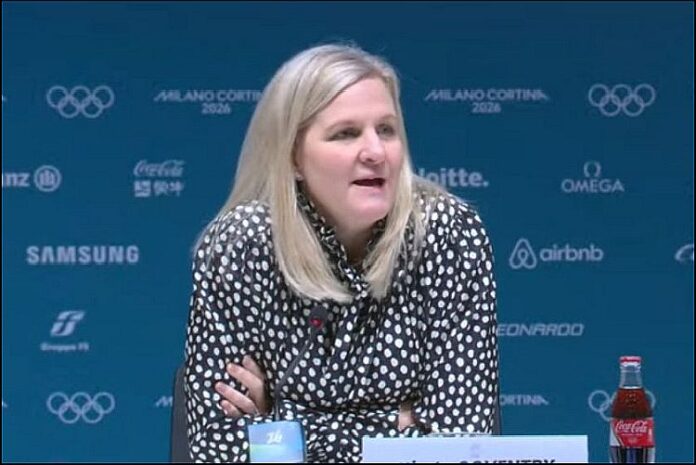
International Olympic Committee President Kirsty Coventry (ZIM) made it clear in an interview with SportNationNZ’s Alex Chapman posted on Friday (22nd) that she is not in favor of prize money payments from the IOC at the Olympic Games:
“I don’t believe in paying athletes and I come from a small country. I came from a sport that doesn’t necessarily pay athletes very well and I still don’t believe we should be paying athletes at the Olympic Games.
“Now I do think we should find more ways to directly impact athletes and find ways to directly help them on their journey to become Olympians, while they’re Olympians and as they’re finding ways into their new career transition, because I think as the Olympic Movement, it’s not just about those athletes that are the best in the world, right?
“It’s about all the athletes that come to the Olympic Games and being able to offer them the same experience and to be able to offer athletes an ability – no matter where they are – to have a little bit of hope and inspiration that they too can become Olympians, and sort of send the message that just because you come from a smaller nation, that may not be known, if you’ve got talent, we’re going to help identify that talent so that you can become an Olympic champion.
“And that was very much my journey. I was an Olympic Solidarity scholarship holder; without that money, I’m not sure I would have been as successful. And I’m so grateful for that. And it’s because of that that I want to be able to have that solidarity model felt across the Movement.”
As Coventry noted, the IOC does pay athletes – a total of 2,150 in 2024 at a cost of $17.6 million – through its Olympic Solidarity program, which distributes money to support athletes and the National Olympic Committees which help send them to the Games.
Chapman asked about the IOC showing athletes’ image and likenesses during the Games and not being paid. Coventry essentially replied that what the athletes get for showing up is the Games itself, an enormously expensive undertaking and to which much of the money the IOC gets is used for:
“They get beautiful venues, they get beautiful villages, they get a beautiful experience and all of that comes from the money that we raise. And that goes into an OCOG [organizing committee] …
“So, again, what I challenge athletes, International Federations that are always asking for more money, National Olympic Committees, the solidarity model is very particular. Now if the entire Movement wants us to change, we would have not as many countries, not as many sports, we’d be very particular on what that would look like. I don’t think that’s the Olympic Games; I don’t think the Olympic Movement thinks that’s the Olympic Games, and so we’ve got to move things forward and we’ve got to do it in a way which is authentic and in a way that allows for everybody to succeed.”
Observed: Coventry has made her position clear, and her reference to “it’s not just about those athletes that are the best in the world, right” indicates that her opposition is to paying prize money at the Games, so that – as the logic goes – the “rich get richer.”
However, Coventry’s logic would apply – as it does for Olympic Solidarity scholarships – to pay athletes for participation in the Games. The Sports Examiner made the case for this policy in a July 2025 column.

★ Receive our exclusive, weekday TSX Recap by e-mail by clicking here.
★ Sign up a friend to receive the TSX Recap by clicking here.
★ Please consider a donation here to keep this site going.
For our updated, 681-event International Sports Calendar for 2026 and beyond, by date and by sport, click here!