Home Blog Page 2

SURFING: USA Surfing offers a strong presentation, backed by the Int’l Surfing Assn., to be re-certified as the U.S. National Governing Body

USA Surfing chief executive Becky Fleischauer during the 18 November USOPC hearing on certifying a new National Governing Body (USOPC video screen shot).

The Sports Examiner: Chronicling the key competitive, economic and political forces shaping elite sport and the Olympic Movement.★

To get the daily Sports Examiner Recap by e-mail: sign up here!

≡ USA SURFING NGB HEARING ≡

After U.S. Ski & Snowboard exited the competition to be named as the recognized National Governing Body for surfing in the United States, the former governing body – USA Surfing – had its second hearing with the U.S. Olympic & Paralympic Committee’s compliance group on Tuesday afternoon.

The online session ran a little over 90 minutes, with lots of charts, slides and testimonials all underscoring the same theme: the newly reconstituted USA Surfing is ready, willing and able to perform as the U.S. NGB for the sport.

It gave back its status as the USOPC’s recognized NGB for surfing in 2021 amid significant financial and governance issues. But in the interim, while it was re-organized, it continued developing surfers and Americans Carissa Moore (Tokyo 2020) and Caroline Marks (Paris 2024) won Olympic golds.

The initial report was from USOPC Senior Auditor Travis Williams, who explained to the Compliance Review Group the results of the latest USA Surfing review:

“Of the 21 applicable standards. USA Surfing was compliant with nine, eight were determined as needs-improvement – three of those needs-improvement were immediately remediated and closed during field work – with three additional items being deficient and one marked as undetermined.”

He noted the areas of concern: athlete representation, athlete safety and financial capability. He added that since the audit took place, “we have received support from USA Surfing for eight of the nine current open audit findings,” but the full reviews have not been completed yet.

So there is work to do, but USA Surfing appears to be chasing down the open issues.

The federation then launched into a detailed presentation, led by chief executive Becky Fleischauer, who explained:

“Today, our focus is simple, demonstrating that USA Surfing is prepared to serve as a surfer-first National Governing Body, one that is aligned, resourced and ready to produce medal success and elevate American surfers on the Olympic stage and across every pathway.”

That was followed by seven more speakers, offering in-depth presentations on every aspect of USA Surfing: athlete development and support, finance, governance, programming and a lot more. The presentations noted:

● The federation believes that with the most recent submittals, it is now compliant with 18 of the 21 standards areas, with two needing improvement and one deficient.

● Funding has completely turned, with $750,000 delivered and $3.5 million committed through 2028 by a private-sector “investor alliance” which will assist USA Surfing in raising even more money.

● High-performance funding for the sport is scheduled to be $1.105 million for 2026, supporting 64 athletes across six International Surfing Association disciplines (of which two are Olympic), with a schedule of nine qualifying events, four training camps and three international scrimmages.

● High-performance funding, raised by USA Surfing, will rise to $1.377 million for 2027 and $1.612 million for 2028, or $4.094 million for the sprint through LA28. This is in addition to any athlete-development grants from the USOPC.

● Attorney Sarah Pflipsen, for 14 years a member of the USOPC’s athlete support structure and now assisting USA Surfing, detailed the wholesale changes to the organization, stating

“I have personally witnessed not only athlete focus and compliant operational, managerial and financial capabilities, but also a cultural shift that gives me – a person who used to be in your very seat – the confidence to know that this isn’t the organization that was decertified many years ago.”

USA Surfing received a full-throated endorsement from the Executive Director of the International Surfing Association, Bob Fasulo (USA), who told the review team:

“As the IOC-recognized International Federation for the sport of surfing, we’ve already gone on record to state that there is currently only one organization that fulfills the requirements, according to Rule 29 of the Olympic Charter, to operate as the NGB for surfing in the United States, and that organization is the ISA-recognized member, USA Surfing.”

Fleischauer closed:

“USA Surfing stands ready to deliver as a strong, collaborative, surf-centered NGB. By re-certifying USA Surfing, you will secure a capable, proven and unified partner for LA28 and beyond. You will strengthen a fully-funded pathway, designed around surfer’s needs.”

There was a half-hour of questions – some quite pointed – about USA Surfing’s funding and staffing, but there were comprehensive answers provided.

The USOPC’s Compliance Review Group has the next task, to sift through the work of its auditors and the USA Surfing responses and decide whether to recommend a USOPC designation of USA Surfing as once again the National Governing Body for the sport.

It was clear from the session that the USA Surfing of today has been significantly upgraded from the dysfunctional, 2021 model. It will be some weeks or months before the USOPC’s review machinery will be able to decide whether to go forward with the revived USA Surfing, or to offer some other solution to this long-running drama.

Receive our exclusive, weekday TSX Recap by e-mail by clicking here.
★ Sign up a friend to receive the TSX Recap by clicking here.
★ Please consider a donation here to keep this site going.

For our updated, 850-event International Sports Calendar for 2025, 2026 and beyond, by date and by sport, click here!

PANORAMA: IOC’s Coventry demands athlete entries without interference; Cortina sliding track approved; U.S. men slam Uruguay in Tampa, 5-1!

The new Eugenio Monti Sliding Center in Cortina d’Ampezzo (ITA) in action (Photo: IBSF).

The Sports Examiner: Chronicling the key competitive, economic and political forces shaping elite sport and the Olympic Movement.★

To get the daily Sports Examiner Recap by e-mail: sign up here!

≡ THE 5-RING CIRCUS ≡

● Paralympic Games 2028: Los Angeles ● The LA28 organizers have conducted two “NOC Open Days” for National Olympic Committees so far, but have delegates from some of the National Paralympic Committees in Los Angeles on Tuesday and Wednesday for presentations and tours.

These “NPC Open Days” feature visits to downtown Los Angeles venues such as the Los Angeles Memorial Coliseum, Los Angeles Convention Center, the Galen Center at the University of Southern California, the Long Beach Convention Center and, of course, the Paralympic Village at UCLA.

● International Olympic Committee ● IOC President Kirsty Coventry (ZIM) reiterated her call for access to sport at a keynote address to the European Olympic Committees in Brussels (BEL):

“Sport must remain a beacon of hope – a place where people can come together in peaceful competition. This is the essence of Olympism: every eligible athlete, team and official must be able to take part without discrimination or political interference.”

She specifically called on host countries and event organizers to pay attention, stating “They must guarantee access for all and respect the universality and autonomy of sport,” and related it to her own experience in Zimbabwe:

“If you had decided to sanction me when my country was going through turmoil, I would not have made it to the Olympic Games. I would not have won my Olympic medals. My path would have been completely different than it is today. Sport changed my life. And I am so grateful for that, and I will fight every day to ensure athletes from every corner of our world have the same possibilities.”

● Athletics ● The Jamaica Gleaner came out with an editorial which questioned the impact on athletes of the announced 2028 Olympic women’s 100 m squeezed into a single day on 15 July 2028. The opinion piece included:

“This newspaper clearly appreciates the additional attention that this scheduling might give the women’s sprinting.

“However, beyond the hoopla, there are questions about the broader implications of the move which deserve answers and which we hope were raised with World Athletics and the IOC by the relevant Jamaican sporting bodies, specifically, the Jamaica Athletics Administrative Association (JAAA) and the Jamaica Olympics Association (JOA). These include what were the considerations for athletes’ health in this compressed format for the women’s 100 metres sprint in Los Angeles; the expectations of performance at these games (and at future competitions if the initiative becomes locked in); and what are the prospects of sprinters breaking world records at events where the preliminary rounds and the final take place within hours, on the same day.

“Elite sprinting is a physiologically gruelling endeavour. Athletes place their bodies – particularly the legs and, most critically, the hamstrings – under tremendous stress. These muscles rapidly contract to drive the leg backward, propelling the body forward with explosive force. At the end of each stride, the muscles must reverse course, decelerating the limb, preparing it to repeat the cycle. That happens in milliseconds.

“This dual demand – forceful propulsion and precise braking – makes the hamstrings both the engine and the safeguard of the sprint. This stress makes these muscles susceptible to injury during races.

But while the hamstrings bear the major burden of the explosion required in sprinting, the entire musculoskeletal system – from the lower back to the tips of the toes – is engaged and strained. Every stride taken by an athlete transmits force through the spine, hips, knees, ankles, and feet. This brings a wide range of muscles and joints into play. All of them suffer fatigue and are vulnerable to injury.

“If not given sufficient time to recover from one race, the more susceptible they will be to injury in the next. Or, the less likely it is that an athlete will deliver her peak performance. …

“With their modern support systems, elite athletes can, through a range of interventions, achieve muscle recovery within 30 minutes to an hour of a race. However, full neuromuscular recovery (where the operations centre in the brain and the spinal cord transmits messages to functional muscles) can take between 24 and 48 hours.

“This matters.”

● Bobsled & Skeleton ● The Italian government’s Olympic construction oversight arm, known by the abbreviation SIMICO, received good news at a ceremony on Tuesday at the new Eugenio Monti Sliding Center in Cortina d’Ampezzo:

“On this occasion, the International Bobsleigh, Skeleton, and Luge Federations presented the Sliding Center with its certifications, certifying its technical suitability and compliance with international standards and regulations.”

So, this track, delayed so long in development and execution, is ready for competition and the IBSF World Cup for bobsled and skeleton this weekend. It’s the first World Cup to be held in Cortina since January 2008 and the new track performed very well during the 120 runs taken during the International Training Week from 7-16 November.

● Boxing ● Impressive turnout for the USA Boxing National Championships coming 6-13 December in Lubbock, Texas, with registration now closed with the limit of 1,000 entries reached in about six weeks since the 1 October opening.

Another 100 are wait-listed for the tournaments at the Lubbock Memorial Civic Center.

● Football ● FIFA noted that its campaign against social-media abuse has led to identification of “11 individuals [who] have been reported to global law enforcement authorities in Argentina, Brazil, France, Poland, Spain, the United Kingdom and the United States following abuse during FIFA competitions, and one case was submitted to Interpol.”

A total of 30,000 posts were flagged by the FIFA Social Media Protection Service so far in 2025.

In addition, “for all identified cases, FIFA is blacklisting individuals responsible for highly abusive behaviour, aiming at preventing them from purchasing tickets for any future FIFA tournaments or events.”

The U.S. men’s National Team faced 15th-ranked Uruguay – a 2026 World Cup qualifier – in a friendly in Tampa, Florida on Tuesday evening in the final match of the November international window, with one of its most impressive performances in years.

The U.S. got a brilliant first goal in the 17th off a free kick in the Uruguay end, with midfielder Sebastian Berhalter sending the ball to midfielder Sergino Dest, who passed it right back and Berhalter stepped up with a right-footed slam that flew to the far side of the Uruguay goal for a 1-0 lead. It was Berhalter’s first international goal.

Then in the 20th, Berhalter took a corner for the U.S. and sent a perfect cross to the far edge of the Uruguay goal and defender Alex Freeman headed it in for his first international goal and a stunning 2-0 lead.

The U.S. continued to pressure and Freeman got a second goal in the 31st for a stunning 3-0 lead, taking a feed on the left side from defender Auston Trusty, dribbling around and through three defenders in the box and ripping a right-footed smash past Uruguay keeper Christopher Flermarin and into the net.

It didn’t stop and forward Diego Luna got a fourth goal in the 42nd, taking a cross from forward Timothy Tillman and sending a right-footed rocket as he rushed forward that Flermarin had no chance to stop.

Uruguay did not back down and got a score of its own, with a magnificent bicycle kick by Giorgan de Arrascaeta at 45+1 from deep in the box after the U.S. failed to clear. Uruguay had 58% of possession in the half, but the U.S. had a 7-6 shots edge … and four goals.

The second half saw tighter defending and more physical play, with Uruguay midfielder Rodrigo Bentancur getting a red card in the 65th for his challenge against Berhalter. Playing 11-on-10, the U.S. scored in the 68th as sub midfielder Gio Reyna sent a laser from beyond the box to the head of sub midfielder Tanner Tessmann, who directed it home for his first international goal.

No more scoring and the game calmed toward the end; Uruguay had 53% possession at the end and the Americans had a 10-9 shots edge. The U.S. is now 3-3-4 (W-L-T) all-time against Uruguay.

● Judo ● Impressive back-to-back gold medals for Nina Cutro-Kelly – age 40 – of the U.S. in the women’s +78 kg class at the 2025 Deaflympics, taking place in Tokyo (JPN) at the famed Budokhan. She won in 2022 and rolled through the 2025 tournament for another title, defeating Oksana Kranchenko (UKR) in the final.

She commented later that while she was the lone American judoka at the 2022 Deaflympics, the U.S. fielded a complete men’s team, and “yesterday this accomplishment was made even cooler by having my whole team there to support me as this old lady risked breaking a hip to become 2 x Deaflympic Champion!“

● Swimming ● This is pretty wild: World Aquatics held its three-meet Swimming World Cup in the U.S. and Canada in 2025, the first time since 2022 in the U.S. and before that, since 2006!

Now, the circuit is heading to the ancient “Silk Road” in 2026 with meets in Baku (AZE) from 1-3 October, Tashkent (UZB: 8-19 October) and Astana (KAZ) from 15-17 October.

The prize pool is stated to remain at $1.2 million, plus world-record bonuses. World Aquatics paid a total of $1.57 million in prizes and bonuses in 2025. Although not stated in the announcement, the races are assumed to be short-course (25 m pool) in advance of the World Short-Course Championships in Beijing (CHN) from 1-6 December.

Receive our exclusive, weekday TSX Recap by e-mail by clicking here.
★ Sign up a friend to receive the TSX Recap by clicking here.
★ Please consider a donation here to keep this site going.

For our updated, 850-event International Sports Calendar for 2025, 2026 and beyond, by date and by sport, click here!

SURFING: U.S. Ski & Snowboard withdraws request to be National Governing Body for surfing; USA Surfing’s second hearing is today

The Sports Examiner: Chronicling the key competitive, economic and political forces shaping elite sport and the Olympic Movement.★

To get the daily Sports Examiner Recap by e-mail: sign up here!

≡ SURFING NGB SELECTION ≡

On Friday, U.S. Ski & Snowboard posted a notice announcing its withdrawal from an effort to become the U.S. National Governing Body for surfing. The statement included:

“[A]after thoughtful consideration, and despite the USOPC’s invitation to participate in its open process, meaningful interest from athletes and commercial partners, and considerable time and effort on behalf of our organization, we have decided not to move forward with the USOPC’s process at this time.

“Despite U.S. Ski & Snowboard reaching out multiple times over the past 18 months, USA Surfing – the National Governing Body that relinquished its certification in 2021 for failure to meet USOPC compliance standards—chose public attacks and uninformed legal threats instead of constructive dialogue and engagement. Considering those factors, U.S. Ski & Snowboard has concluded that our energy and expertise are best used in service to our athletes as they prepare for the upcoming Winter Games.

“We feel progress in sport requires partnership and trust. We remain open to opportunities in the future should the environment become more collaborative.”

That leaves USA Surfing as the lone contender to become – again – the National Governing Body for surfing, as recognized by the U.S. Olympic & Paralympic Committee. However, it will have to satisfy the USOPC’s concerns over funding and governance, two of the issues which led USA Surfing to agree to relinquish its status as the American NGB for the sport in 2021.

U.S. Ski & Snowboard, whose chief executive, Sophie Goldschmidt, formerly led the World Surf League, brought considerable financial and promotional expertise to the table. However, its bid was always going to be hamstrung by the Ted Stevens Olympic & Amateur Sports Act (36 U.S.C. §2205 et seq.), which requires in 36 U.S.C. §220522 (6) that it:

“demonstrates that it is a member of no more than one international sports federation that governs a sport included on the program of the Olympic Games, the Paralympic Games, the Pan-American Games, or the Parapan American Games.”

U.S. Ski & Snowboard is already a member of the International Ski & Snowboard Federation (FIS), which should prevent it from being a National Governing Body for any other sport. But that did not stop it from applying, and it has apparently also applied to be the NGB for skateboarding, which is also on the Olympic program now.

The USOPC told U.S. Ski & Snowboard and USA Surfing, as the only two groups that expressed any interest, that they could apply once the NGB recognition process opened.

USA Surfing, after de-certifying in 2021, has reformed its structure and announced in June a “multi-million-dollar investment from Kamaka Responsible Development and Resin Services” to help support its finances. USA Surfing, which has continued to act as the governing body of the sport in the U.S., has key public support from the International Surfing Association – the recognized International Federation for surfing – as well as the World Surf League, U.S. Board Riders Clubs and Surf Industry Members Association.

USA Surfing also holds tournaments and championships at the Lower Trestles beach near San Clemente, California where the 2028 Olympic surfing tournaments will take place.

Now, USA Surfing will have to demonstrate to the USOPC’s satisfaction that it is now equipped to serve as the U.S. NGB for the sport; its second hearing is scheduled for Tuesday, 18 November.

Receive our exclusive, weekday TSX Recap by e-mail by clicking here.
★ Sign up a friend to receive the TSX Recap by clicking here.
★ Please consider a donation here to keep this site going.

For our updated, 850-event International Sports Calendar for 2025, 2026 and beyond, by date and by sport, click here!

ATHLETICS: USA Track & Field announces record $44.59 million 2024 revenue, but still lost $1.19 million, has –$6.1 million in net assets

The Sports Examiner: Chronicling the key competitive, economic and political forces shaping elite sport and the Olympic Movement.★

To get the daily Sports Examiner Recap by e-mail: sign up here!

≡ USATF DEEPER IN THE RED ≡

USA Track & Field reported, far earlier than usual, a record revenue total of $44,592,809 for 2024, a smashing 21.5% increase over the $36,706,754 in 2023.

This is usually a great cause for celebration, but according to its audited financial statements, USATF lost $1.19 million on the year and saw its net assets drop from –$4.934 million to a –$6.125 million.

The Monday-released financials and the federation’s Form 990 non-profit Federal tax return raise significant questions.

● Where did the added $7.9 million in revenue come from?

It didn’t come from sponsorships, which remained essentially level at $19.474 million, and direct grants from the U.S. Olympic & Paralympic Committee rose only slightly, from $5.827 million to $6.493 million.

There was a huge rise to $6.192 million for “Events and athlete program” revenue from just $1.338 million in 2023: that’s $4.854 million of the total added revenue of $7.9 million. Although not identified in the reports, revenue from the marathon and track & field Olympic Trials appears to be the likely big contributor to this total.

“Member-based programs” revenue (member dues and sanction fees) also rose from $3.850 million to $5.444 million and merchandise sales – in an Olympic year – more than doubled from $1.298 million to $2.780 million. Add those three areas together and it accounts for all of the $7.9 million increase.

● Where did all the money go?

Expenses rose to $45.857 million in 2024, compared to $42.167 million in 2023. There were increases in elite athlete costs ($658,000) and sports performance costs ($2.028 million), which could be expected in an Olympic year. But the merchandise revenue surge was met with a cost increase to $2.550 million, so the program netted only $229,668. “Support services” including administration, communications and marketing rose by about $1.2 million.

That took care of the revenue increases.

● So, what now?

A USATF summary attached to the Form 990 Federal tax return pointed to the deficit of $1.19 million “compared to a forecasted deficit of $1.5 million,” “due to strategic investments related to major international events and athlete programs.”

Further, the summary notes that “Management and the board of directors have introduced a range of revenue-generating and cost-saving initiatives to address its financial position as part of its post-2024 Olympic Games and 2025 business strategy” and “With renewed sponsorships, continued USOPC funding, and controlled spending initiatives, USATF anticipates an operational surplus in 2025.”

As far as sponsorships, a table in the posted Form 990 tax return listed USATF’s sponsorship payments from 2020 through 2024, with the 2024 “excess support payments” listed as:

● $18,168,565: Nike
● $750,000: NBC
● $450,000: Comcast Cable
● $340,000: Toyota
● $256,792: Hershey
● $250,000: Prevagen
● $100,004: Hyperice
● $100,000: Garden of Life
● $99,998: Orlando Health

Another eight companies paid between $25,000-65,000 in 2024.

Let’s be clear, USATF is not broke. It lists assets of $29.730 million, down from $31.509 million at the end of 2023 and a net negative assets total of $6.125 million. But it had $1.227 million in cash at the end of 2024 and $11.104 million in investments, which earned $500,568 during the year.

But it entered 2025 still in financial trouble and was clearly watching expenses during this year, laying off some staff members and neither of the U.S. Grand Prix meets in Los Angeles or New York were held (and not financially supported).

USATF further obtained cash funds in 2024 from its $8 million line of credit, taking out $2.615 million and running its total borrowing up to $7.515 million, closing in on the limit, and bearing interest of 7.75% as of the end of 2024. Further, the line of credit will expire on 5 February 2026.

Observed: This is the earliest USATF has released its tax forms and financial statements in some years, a welcome sign of some better transparency.

And 2025 should be better, in part as noted on page 27 of the audited financial statements:

“In July 2024, USATF and USOPC signed a transfer agreement whereby U.S. Paralympic Track & Field would become part of USATF effective January 1, 2025, unifying U.S. track and field athletes under one organization. As part of this agreement, USATF will receive conditional funding totaling $14,150,000, in annual installments through 2028, to administer and support paralympic track and field.”

Information provided to The Sports Examiner earlier this year pointed to an expected $3.7 million boost from USOPC Paralympic funding for USATF in 2025, with $3.2 million to be expended. That would help produce an operating surplus for sure.

Receive our exclusive, weekday TSX Recap by e-mail by clicking here.
★ Sign up a friend to receive the TSX Recap by clicking here.
★ Please consider a donation here to keep this site going.

For our updated, 850-event International Sports Calendar for 2025, 2026 and beyond, by date and by sport, click here!

LOS ANGELES 2028: L.A. Metro’s proposed San Pedro-to-Long Beach Olympic water taxi service to take as much as twice as long as a bus

The Sports Examiner: Chronicling the key competitive, economic and political forces shaping elite sport and the Olympic Movement.★

To get the daily Sports Examiner Recap by e-mail: sign up here!

≡ 2028 WATER TAXI PROPOSAL ≡

On Thursday, the Los Angeles Metropolitan Transportation Authority’s Executive Management Committee will receive a report on a proposed “water taxi” project between San Pedro and Long Beach, where the sailing competitions during the 2028 Olympic Games will be held.

The project was reviewed in a 44-page document with significant engineering input and distilled into a six-slide presentation that offered a clear overview:

● It would create a “transport-tainment” alternative to driving or taking public transit between the two sailing sites.

● Points of arrival and departure would be the San Pedro West Harbor and Long Beach’s Shoreline Village, close to all of the Long Beach events for the Olympic and Paralympic Games.

● A water-taxi trip – one-way – is estimated at 34 to 59 minutes with loading times of 10-20 minutes.

● The L.A. Department of Transportation’s existing Commuter Express program connects the two areas in 26 minutes.

● Personal automobile travel times were estimated at 18-26 minutes.

The report noted:

“Of that total trip time, 18 minutes of the route are within a currently regulated slow/no-wake zone, meaning that the time cannot be any faster regardless of vessel speed. This vessel trip time is longer than those of current on-land alternatives.”

The service was costed for 47 days, from the start of the Olympic Games on 14 July 2028 and the end of the Paralympic Games on 27 August, even though the Olympic Games close on 30 July and the Paralympics open on 15 August.

There are multiple choices offered for the vehicles to be used:

●$1.344 million for two hybrid-electric boats, carrying up to 350 passengers each, taking 59 minutes for each one-way trip (8 round trips per day).

● $1.084 million for two 150-passenger, diesel-powered boats, taking 34 minutes per trip (12 round trips per day).

● $1.535 million for three 150-passenger, diesel-powered boats, taking 34 minutes per trip (18 round trips per day).

● $751,000 for two, 75-passenger, diesel-powered boats, taking 39 minutes per trip (12 round trips per day).

Metro has championed non-fossil fuel options in all of its services, so the thought of using diesel-fueled boats will be hard for it to support. But the hybrid-electric option is by far the slowest, makes the fewest trips per day, but offers the highest capacity at 5,600 seats per day.

Any such service would, of course, require a long list of permits, and whatever equipment is proposed would have to be matched up with the existing docks and for hybrid-electric boats, the availability of charging facilities. And then there is the question of how much tickets would cost.

The presentation notes three options if Metro wants to move forward with this concept, which was suggested as a promotional project that could be made permanent if successful:

● Contracting with a private operator, which would leave Metro out of the program completely, and eliminate most (if not all) oversight.

● Create a partnership with a private operator and providing some or all of the funding, but with considerable contractual control.

● Undertaking the program as a Metro project, which the presentation labels as “Infeasible.”

The next step is for Metro’s Executive Management Committee to decide if they want to go forward with this idea, and how. It is not required for either the Olympic or Paralympic Games (which does not have sailing on the program) and, as always, is subject to the ever-present questions around security:

“As Games planning progresses, the confirmed perimeters of security zones and vessel security requirements will impact the in-water operations and upland access to water taxi landings. Any security protocols for vessel and/or passenger screening may also require landing site space and additional operational requirements, adding potential impacts to operating costs and service schedules.”

Receive our exclusive, weekday TSX Recap by e-mail by clicking here.
★ Sign up a friend to receive the TSX Recap by clicking here.
★ Please consider a donation here to keep this site going.

For our updated, 850-event International Sports Calendar for 2025, 2026 and beyond, by date and by sport, click here!

PANORAMA: Trump announces “FIFA PASS” program for faster World Cup visa interviews; Milan Cortina torch route set; China’s Gong retires

The Sports Examiner: Chronicling the key competitive, economic and political forces shaping elite sport and the Olympic Movement.★

To get the daily Sports Examiner Recap by e-mail: sign up here!

≡ THE 5-RING CIRCUS ≡

● Olympic Games 2024: Paris ● What’s next for Tony Estanguet, the three-time Olympic canoeing gold medalist who successfully steered the Paris 2024 organizing committee? He told Ouest-France:

“I want to continue working for sport in France. I’m still considering different options: joining an existing structure or creating a new one. My idea is to maintain this spirit of cooperation between public, private, and sporting stakeholders – that was the key to the success of Paris 2024. …

“I’ve been offered the position of Minister of Sport several times. I refused because I think there are other ways to work for sport besides politics. What I want to do is bring people together. If I became minister, I would lose that freedom. However, I have agreed to rejoin the IOC. I’m working a bit on the 2028 Olympics, but I want to stay in France, contributing to French sport.”

● Olympic Winter Games 2026: Milan Cortina ● The full route for the 2026 Olympic Torch Relay was announced Monday, with the major steps starting later this month:

26 Nov.: Lighting of the Olympic Flame at Olympia
26 Nov.-04 Dec.: Torch Relay in Greece
04 Dec.: Transfer of the Olympic Flame in Athens
06 Dec.: Torch Relay in Italy begins in Rome
06 Dec.-06 Feb.: Torch Relay in Italy
06 Feb.: Opening Ceremonies in Milan and Cortina

Along the way, the Italian relay will arrive in Bari on New Year’s Eve, in Cortina – site of the 1956 Winter Games – on 26 January, the date of the opening of those Winter Games.

More than 300 cities will be visited via 10,001 torchbearers across the 12,000 km (7,456 mile) route.

● Olympic Winter Games 2034: Salt Lake City ● International Skating Union President Jae Youl Kim (KOR) and Director General Colin Smith (GBR) attended the ISU Speed Skating World Cup opener in the Salt Lake City, Utah area, witnessing three world records during the three-day meet.

They introduced the ISU’s “Calm Zone” for athlete relaxation to the Speed Skating World Cup and committed to also bringing figure skating and synchronized skating to events to the Salt Lake City area, in addition to the well-known speed skating and Short Track events.

Said Kim, “I like your aspirations to inspire and unite the community through sport, and we would love to join you on the exciting journey leading up to the [2034] Olympics.”

● U.S. Olympic & Paralympic Committee ● The USOPC announced its “Team USA Community Champions” award winners for 2025, including former women’s American triple jump record holder Tori Franklin for “The Live Happii Project” in Chicago and the upper Midwest; Paralympic gold medalist Ezra Frech and father Clayton for the Southern California adaptive sports outreach program, Angel City Sports; Paralympic snowboarding medalist Keith Gabel, a board member of the Aspen Valley Ski & Snowboard Club, and Paris 2024 breaking Olympian Jeffrey Louis with Houston reVision in Houston, Texas, connecting young people with mentors for positive self-development.

● India ● Prize money is reaching deeper and deeper as the Indian Olympic Association announced prizes for the just-completed Asian Youth Games in Bahrain from October for 14-18 year-olds.

Indian medal winners – all 48 – will receive 500,000-300,000-200,000 rupees and fourth-place finishes will receive 50,000 (approx. $5,641-3,384-2,256-564 U.S.).

● Athletics ● The finalists for the World Athletics Fair Play Award were announced Monday:

Emmanouil Karalis (GRE), for helping other vaulters during the World Athletics Championships in Tokyo.

Josh Kerr (GBR), determined to finish the Worlds 1,500 m final despite injury and then meeting with fans despite finishing 14th.

Tim Van de Velde (BEL) who helped Colombia’s injured Carlos San Martin finish in heat three of the men’s 3,000 m Steeplechase, despite the possibility of disqualification.

Fans can vote on the World Athletics social channels, along with the six-member panel with the winner to be announced on 29 November.

Chinese shot put star Lijiao Gong, now 36, won at the Chinese National Games on Sunday at 19.68 m (64-6 1/4) and has retired, ending a superb career that included two World Championships golds in 2017 and 2019 and the Tokyo 2020 Olympic title.

Gong won 16 national title and scored three Olympic medals, also claiming bronze in 2008 and silver in 2012. In all, she won eight Worlds medals, with silvers in 2015 and 2022 and bronzes in 2009-11-13 and 2023.

She set her lifetime best in the right moment, at Tokyo 2020, at 20.58 m (67-6 1/4), ranking her no. 48 on the all-time list, but no. 9 among throwers with bests in the 21st Century, under better doping controls.

● Boxing ● Uzbekistan’s Paris 2024 Olympic men’s 92 kg boxing gold medalist Lazizbek Mullojonov has been banned for three years in an agreement with the International Testing Agency.

Mullojonov, 26, “tested positive for the prohibited substance methasterone metabolites after providing an out-of-competition sample on 11 June 2025.” He did not challenge the test results and by doing so, obtained a one-year reduction in his ban. So:

“The athlete’s period of ineligibility of three years is from 22 July 2025 until 21 July 2028 and the athlete’s competitive results are disqualified from 11 June 2025 (date of sample collection) until 22 July 2025.”

This will remove Mullojonov from the 2028 Olympic boxing tournament, as bouts in the men’s upper weights begin on 15 and 16 July 2028.

● Football ● U.S. President Donald Trump and FIFA President Gianni Infantino (SUI) announced an accelerated program for U.S. visa interviews called “FIFA PASS,” standing for “prioritized appointments scheduling system.”

This applies to individuals who have purchased 2026 FIFA World Cup tickets only; The Associated Press reported:

“Secretary of State Marco Rubio said the administration has dispatched more than 400 additional consular officers around the world to handle the demand for visas, and that in about 80 percent of the globe, travelers to the U.S. can get a visa appointment within 60 days.”

Rubio said the screening process is the same, only the wait for an interview will be shorter.

Trump mentioned again that he would ask Infantino to move matches out of any U.S. host city that he felt was unsafe.

“The U.S. Soccer Federation has appointed Dan Helfrich, former Deloitte Consulting LLP Chair and CEO, as Chief Operating Officer (COO). He will join U.S. Soccer on Jan. 1, 2026, following his retirement from Deloitte in December.”

Helfrich played for Georgetown from 1994-97 and has been the Hoyas’ play-by-play announcer for Georgetown Soccer, since 2025.

● Gymnastics ● USA Gymnastics will revive its American Cup competition in 2026, after ending it in 2020 due to the Covid-19 pandemic. A mixed team event will be held with eight national teams, on 7 March 2026 in Henderson, Nevada; the American Cup was held from 1976 to 2020

The Nastia Liukin Cup for developing women’s Level 10 gymnasts will be paired with the American Cup and held earlier on 7 March.

● Shooting ● At the ISSF World Rifle-Pistol Championships in Cairo (EGY), Ukraine’s Pavlo Korostylov took the men’s 25 m Centre-Fire Pistol title with 584 points, his third career Worlds gold after two in the Standard Pistol in 2018 and 2022! He won over India’s Gurpreet Singh (IND), who also scored 584, but with 18 in the 10-ring to 29 for Korostylov.

France took the men’s 25 m Centre-Fire Pistol Team gold, scoring 1,737 to 1,734 for Ukraine (silver) and South Korea (bronze).

Swiss Adrian Schaub won the men’s 25 m Standard Pistol at 576, over Korea’s Yeongjae Cho, also at 576 but with 15 10s to 18 for the Swiss. Cho led the Koreans to the team title, at 1,711 to 1,700 for China.

China won the men’s 50 m Prone Team event, scoring a world-record 1,881.3 points to 1,880.5 for Switzerland. South Korea won the women’s event at 1,872.8, ahead of Denmark (1,866.1).

In the men’s 300 m Rifle/Prone final, Czech Petr Nymbursky, a two-time Olympian, won his seconds Worlds gold – also in 2023 – scoring 597 points, being one of five with that score! But he had 40 shots of 10, best in the field. German Max Ohlenburger was second with 38 in the 10 ring.

In the mixed 300 m Rifle/Standard, Norway’s Katrine Lund won at 593, ahead of veteran Czech star Jiri Privratsky (589). Lund also won the women’s 300 m Rifle/3 Positions at 588, just beating teammate Jeanette Hegg Duestad (587). The women’s 300 m Rifle/Prone was won by Swiss Anja Senti (598) with 39 10s to 598 and 37 10s for Jenny Vatne (NOR).

The women’s 25 m Pistol was another victory for Olympic champ Jiin Yang of Korea, 40-38, over China’s Qianxun Yao. Yang got a second gold in the team final, with the Koreans winning, 1,757 to 1,753 over China.

Yao won the women’s 25 m Standard Pistol final, 570-569 against Sevval Tarhan (TUR), and she led the Chinese team to gold with a world-record 1,693 points. Hungary was second at 1,659.

Overall, China dominated with 21 medals (12-7-2) to 14 for the Koreans (7-3-4) and 13 for India (3-6-4).

Receive our exclusive, weekday TSX Recap by e-mail by clicking here.
★ Sign up a friend to receive the TSX Recap by clicking here.
★ Please consider a donation here to keep this site going.

For our updated, 850-event International Sports Calendar for 2025, 2026 and beyond, by date and by sport, click here!

PANORAMA: Shiffrin wins 102nd World Cup and 9th Levi Slalom; Algerian boxing champ Khelif plans LA28 return; Stolz wins three in speed skating opener

American speed skating star Jordan Stolz (Photo: ISU).

The Sports Examiner: Chronicling the key competitive, economic and political forces shaping elite sport and the Olympic Movement.★

To get the daily Sports Examiner Recap by e-mail: sign up here!

≡ THE 5-RING CIRCUS ≡

● Olympic Winter Games 2026: Milan Cortina ● The Olympic Truce related to the Milan Cortina Olympic and Paralympic Games will be introduced at the United Nations on 19 November (Wednesday).

Italy, as host country for the 2026 Games, is the primary sponsor. The International Olympic Committee revived the tradition in 1992 and it has been submitted for each Games since.

● Commonwealth Games 2026: Glasgow ● Britain’s Daily Mail reported:

“At present, however, the slimmed-down Commonwealths, which are due to return to Scotland next summer, will leave decisions on transgender participation to the organisations which govern the sports involved, meaning transgender athletes could yet take part alongside biological females.”

The International Olympic Committee has a working group considering the “protection of the female category” under President Kirsty Coventry (ZIM), but has not yet changed its 2015 guidelines, which urge each sport to determine its rules on transgender women.

● Deaflympics ● The 2025 Deaflympics opened at the Tokyo Metropolitan Gymnasium in Japan, with a record 3,081 athletes from 81 countries and territories, plus a refugee team and a “neutral” team. The program includes 21 sports and 209 events and will conclude on 26 November.

● U.S. Sports Marketing ● A first-time trip by 16 American cities or regions interested in hosting international sporting events is being organized for 3-5 December to Lausanne (SUI), home not only to the International Olympic Committee, but also to many of the International Federations for Olympic sports.

The Sports Events and Tourism Association (Sports ETA), a trade association founded in 1992, is organizing the trip and delegates from 11 states and the District of Columbia are participating: Baltimore, Maryland; Boston, Massachusetts; Cleveland, Ohio; Columbus, Ohio; Detroit, Michigan; Las Vegas, Nevada; Miami, Florida; New Orleans, Louisiana; Phoenix, Arizona; Portland, Oregon; Raleigh-Durham, North Carolina; Salt Lake City, Utah; Washington, D.C.; and the State of Florida.

A reception at the Olympic Museum is scheduled for 3 December and one-on-one sessions for 4 December at the Maison du Sport, where many if the IFs have offices.

● Memorabilia ● The Ingrid O’Neil auction no. 99 closed on Saturday, with some noteworthy sales of Olympic torch and related items:

● $16,000: Paris 2024 Olympic torch
● $7,000: London 2012 flame safety lamp
● $3,750: London 1948 Olympic torch

The unique 1956 Melbourne Italian team commemorative boomerang created by the Italian community of Melbourne sold for $140!

● Boxing ● Algerian Olympic women’s 66 kg champion Imane Khelif was reported by Britain’s Daily Mail as saying she will continue her career with an eye toward the LA28 Olympic Games:

“Yes, God willing, I am still determined to achieve another Olympic medal.

“I am working on many surprises that I have not yet announced, but God willing, we will be on the right track.

“In the Paris Olympics and after, and even now, I am still being subjected to campaigns, injustice, and new decisions from international federations, but I currently have a case in the Court of Arbitration for Sport, and God willing, it will be for the best.

“The dream continues, and the work continues, and as for the campaigns and the people who criticize, I say to them, continue, because I am developing.”

World Boxing, now the International Federation for Olympic boxing, is requiring all competitors for the female category to take a one-time sex-screening test and Khelif did not compete at the World Boxing Championships in October.

≡ RESULTS ≡

● Alpine Skiing ● The brilliant American star Mikaela Shiffrin earned her 102nd career FIS World Cup win in Saturday’s Slalom in Levi (FIN), destroying the field on the first run and cruising to the win.

She clocked 56.08 to lead the first run, 1.08 seconds up on Lara Colturi of Albania, a huge margin in skiing. She came back to lead the second run as well in 52.84 and her combined time of 1:48.92 had 1.66 seconds on Colturi (1:50.58), who took silver. Emma Aicher (GER: 1:51.51) was third and American Paula Moltzan was fourth (1:51.66).

Shiffrin extended her record for the most World Cup wins in history and got her ninth win – and fifth straight – in Levi, getting to name a reindeer; no word yet on the newest name. The others were Rudolph (of course), Sven, Mr. Gru, Ingemar, Sunny, Lorax, Grogu and Rori.

Sunday’s men’s Slalom was the first World Cup win for ex-Norwegian Lucas Braathen as a Brazilian skier. He led after the first run and hung on to win in 1:50.72, ahead of defending champ Clement Noel (FRA: 1:51.03) and Eduard Hallberg (FIN: 1:51.29).

Cooper Puckett was the only American finalist, in 26th. Braathen won five World Cup races from 2020-23 representing Norway, but switched allegiance in 2024.

● Archery ● At the World Archery Indoor World Series GT Open in Strassen (LUX), Israel’s Roy Dror, 20, won his fourth career Indoor World Series stage with a 6-5 shoot-off, closest-to-the-center decision over Willem Bakker (NED) in the final. Spain’s Elia Canales won the women’s Recurve title, 6-2, over Korean Duna Lim. American Casey Kaufhold was fourth.

India’s Kushal Dalal won the men’s Compound gold in another shoot-off, with Stephan Hansen of the U.S., after a 148-148 tie. Both shot 10, then 10 again, but Kushal’s arrow was deemed closest to the center. The women’s Compound winner was Britain’s Ella Gibson, 148-147, vs. Elisa Roner (ITA).

● Badminton ● At the BWF World Tour Kumamoto Masters in Japan, the home crowd cheered Kodai Naraoka and Kenta Nishimoto in the all-Japan men’s Singles final, won by Naraoka, 21-11, 10-21, 21-15.

Thailand won twice, with Ratchanok Intanon taking the women’s Singles gold over Gregoria Tunjung (INA), 21-16, 22-10; Thailand also won in Mixed Doubles.

South Korea won in the Men’s Doubles and Malaysia took the women’s Doubles title.

● Curling ● At the U.S. Olympic Trials in Sioux Falls, South Dakota, five-time winner John Shuster’s rink sailed through the men’s round-robin with a 6-0 record, ahead of Danny Casper (4-2), Korey Dropkin (2-4) and Caden Hebert (0-6).

That set up the best 2-of-3 playoffs and Casper pulled off a 7-6 upset in the first match with a point in the 10th end. Shuster came back to lead the second match by 5-3 after eight ends, but Casper flashed a triple in the ninth to take a 6-5 lead. Shuster, however, managed two points in the 10th to even things up with a 7-6 victory.

The third and final play-off match started with Casper taking a 1-0 lead, then Shuster countered with two in the second and Casper scored two in the fourth to lead, 3-2. Shuster evened in the fifth, but Casper took a 5-3 lead in the sixth. Shuster got one back, but two in the eighth gave Casper a 7-4 lead and a late score by Shuster only made the final closer at 7-5.

So, Casper (24) is off to the Olympic qualifier, as an international neophyte, with a best finish of second in the Pan Continental Championships this year but very little experience at the world-class level.

In the women’s competition, Tabitha Peterson’s rink went 5-1 in the round-robin, with Elizabeth Cousins at 3-3 and advancing in a play-off over Delaney Strouse (3-3), and Allory Johnson (1-5) in fourth. Peterson swept the playoff with wins by 8-4 and 8-4 to advance to the Olympic qualifying tournament from 6-13 December in Kelowna (CAN).

● Figure Skating ● The home fans at the ISU Grand Prix Skate America at Lake Placid, New York cheered two wins by American entries, starting with World Ice Dance Champions Madison Chock and Evan Bates in the Rhythm Dance, where they forged an 84.77 to 77.42 lead over Marjorie Lajoie and Zachary Lagha (CAN).

In the Free Dance on Sunday, Chock and Bates won easily, scoring 127.81 to 119.74 for Lajoie and Lagha and won by 212.58 to 197.16. It’s the ninth career Grand Prix gold for the Americans. Fellow Americans Christina Carreira and Anthony Ponomarenko (186.03) and Oona Brown and Gage Brown (182.11), finished 5-6.

In the women’s Singles, Japan’s Rinka Watanabe, second at Skate America in 2024, led the Short Program at 74.35, just ahead of World Champion Alysia Liu of the U.S. (73.35). But Liu won the Free Skate (140.54) with Watanabe third and took the overall win at 214.27. Watanabe’s 210.96 was good for second and Anastasiia Gubanova (GEO: 204.69) was third.

Fellow Americans Starr Andrews (195.28) and Josephine Lee (147.28)) finished 5-12.

Japan’s Kazuki Tomono led the men’s Singles after the Short Program, scoring 95.77, but it was France’s Kevin Aymoz who got his first ISU Grand Prix victory by winning the Free Skate with 252.53 points.

Aymoz scored 159.97 in his Free Skate for second place and moved up from second to first. Mikhail Shaidorov (KAZ), despite two falls, won the Free Skate at 161.42 and totaled 251.09. Tomono fell on his first two elements and was eighth in the Free Skate, but third overall at 245.47. American veteran Jason Brown moved up from fifth to third in the Free Skate, with a 239.59 total. This was Aymoz’s 13th Grand Prix start, but his first win after four silvers.

Two-time World Champions Riku Miura and Ryuichi Kihara (JPN) were dominant winners in Pairs, moving up by winning the Free Skate and scoring 215.99 points. Anastasiia Metelkina and Luka Berulava (GEO), the Short Program winners, were second at 195.73 and Canada’s Kelly Ann Laurin and Loucas Ethier won bronze (182.87).

Americans Emily Chan and Spencer Akira Howe (180.82), Valentina Plazas and Maximiliano Fernandez (163.26) and Olivia Flores and Luke Wang (161.44) finished 5-7-8.

Next up is the Finlandia Trophy in Helsinki next week.

● Football ● The U.S. Men’s National Team got a 2-1 win vs. Paraguay – a World Cup 2026 qualifier – at Chester, Pennsylvania on Saturday, with striker Folarin Balogun getting the winner in the 71st minute off a pass from forward Gio Reyna that deflected off of defender Damian Bobadilla to Balogun, who scored from the center of the box.

Reyna opened the scoring in the fourth minute with a header off the crossbar off a Max Arfsten cross, but Paraguay tied it in the 10th as striker Alex Arce scored on a header. The U.S. ended with 66% of possession and shots were 8-8.

The two teams met for the first time since 2018; the U.S. is now 5-2-2 all-time  against Paraguay and will play no. 15 Uruguay on Tuesday (18th) in Tampa, Florida.

The playoff round began at the FIFA men’s U-17 World Cup in Qatar with the round-of-32; the U.S. lost to Morocco on penalties, 4-3, after a 1-1 tie in regulation. The round-of-16 will be played in Tuesday (18th).

● Judo ● France and Spain were the stars at the IJF World Tour Zagreb Grand Prix in Croatia, with each winning three classes. The French took golds with Enzo Jean in the men’s 60 kg, Arnaud Aregba in the men’s 81 kg and 19-year-old, 2025 World Junior champ Celia Cancan in the women’s +78 kg. The French led all countries with nine total medals (3-4-2).

The Spanish saw wins from David Garcia in the men’s 66 kg, from two-time World Champion Nikoloz Sherazdishvili in the men’s 100 kg and Eva Perez in the women’s 48 kg.

Tokyo 48 kg Olympic winner Distria Krasniqi of Kosovo, the Paris 2024 runner-up at 52 kg, won the women’s 52 kg class. World Champion Shiro Tanaka (JPN) took the women’s 70 kg gold.

● Speed Skating ● The ISU World Cup I in held on the ultra-fast ice of the Olympic Oval in Kearns, Utah, with lots of eyes on 21-year-old, six-time World Champion Jordan Stolz of the U.S., who had a “down year” in 2024 with three medals (0-2-1) at the Worlds.

But the meet also saw world records in three events and Stolz was close in three!

Stolz was on it from the start, winning the men’s 1,000 m in 1:05.66, just 0.29 off the world record, with Pole Damien Zurek (1:06.02) second and Worlds silver medalist Jenning De Boo (NED: 1:06.34) third.

On Saturday, Stolz won the 500 m in 33.88 (0.27 off the world record) with Zurek second in 33.90, and then won the 1,500 m in a lifetime best – and American Record – of 1:40.48 (just 0.31 off the world record), with 2024 Worlds runner-up Zhongyan Ning (CHN: 1:41.02) in second.

He came back for a fourth win on Sunday and just missed in the second 500 m, with De Boo winning in 33.63, a lifetime best and just 0.02 off the world record! Yevgeniy Koshkin (KAZ) was second (33.67) and Stolz was fourth in 33.79.

Dutch star Jorrit Bergsma, now 39, the 2014 Olympic 10,000 m champion, won the men’s Mass Start race in 7:39.20 over Felix Maly (GER: 7:40.17), with Stolz 15th in 7:46.40 in his fifth event of the meet!

Meanwhile, France’s Timothy Loubineaud won the 5,000 m in a world record 6:00.23, busting Swede Nils van der Pohl’s mark of 6:01.56 from 2021, also set in Kearns. Czech Metodej Jilek was second in 6:02.78 and Casey Dawson set an American Record of 6:04.40 in fourth.

The American World Champion trio of Dawson, Emery Lehman and Ethan Cepuran won the men’s Team Pursuit in 3:32.49 – another world record, breaking their own mark of 3:33.66 on the same track in 2024 – way ahead of Norway (3:35.20) and China (3:36.65).

The women’s events saw reigning World Champion Femke Kok (NED) off to a flying start, winning the first of two 500 m races in 36.48, a lifetime best, ahead of American Erin Jackson (36.87), the 2022 Olympic champion.

The second race was on Sunday and Kok was eve better, blasting a world record of 36.09, crushing the 2013 mark of 36.36 by two-time Olympic champion Sang-hwa Lee (KOR). Jackson was second again, in a lifetime best of 36.57.

In the 1,000 m, two-time World Champion Jutta Leerdam (NED) won in 1:12.35, just ahead of Kok (1:12.43). American stars Brittany Bowe (1:13.26) and Jackson (1:13.72 lifetime best) finished 5-8. Dutch star and double World Champion Joy Beune won the 1,500 m (1:51.05 lifetime best) and the 3,000 m (3:53.69 lifetime best). Bowe was fifth in the 1,500 in 1:52.46 and Greta Myers got an American Record of 4:01.66 in the 3,000 m in the second group.

American Mia Manganello, a 2018 Olympic bronze winner in the Team Pursuit, won the women’s Mass Start race in a late dash in 8:25.57, ahead of Canada’s Valerie Maltais (8:25.62) and Bente Kerkhoff (8:25.85). In the Team Pursuit, Japan won in 2:52.13, ahead of the U.S. trio of Bowe, Manganello, and Myers (2:54.01).

Receive our exclusive, weekday TSX Recap by e-mail by clicking here.
★ Sign up a friend to receive the TSX Recap by clicking here.
★ Please consider a donation here to keep this site going.

For our updated, 850-event International Sports Calendar for 2025, 2026 and beyond, by date and by sport, click here!

LOS ANGELES 2028: Agent for Olympic women’s 100 m champ Alfred says one-day 2028 women’s 100 m schedule is inequitable vs. men

Olympic women’s 100 m champion Julien Alfred of St. Lucia (Photo: Diamond League AG).

The Sports Examiner: Chronicling the key competitive, economic and political forces shaping elite sport and the Olympic Movement.★

To get the daily Sports Examiner Recap by e-mail: sign up here!

≡ THE WOMEN’S 100 m ≡

The Los Angeles 2028 Olympic organizers unveiled the detailed event schedule last week, with the women’s 100 m – preliminary round, first round, semifinals and final – all slated to be contested on Saturday, 15 July 2028.

The preliminary round and first round are scheduled for the morning session and the semis and final for the afternoon session. World Athletics President Sebastian Coe explained that the schedule was presented to the women’s star sprinters and was accepted, with its statement including supporting messages from 2023 World women’s 100 m champ Sha’Carri Richardson of the U.S. and 2019 Worlds 200 m winner Dina Asher-Smith (GBR).

Objecting, however, was St. Lucia’s Julian Alfred, the Paris 2024 Olympic 100 m champion and silver medalist in the 2025 World Athletics Championships 100 m. Her agent, former Bahamian sprinter and long-time coach Henry Rolle, explained in a 13 November letter provided to TSX correspondent Karen Rosen and reprinted here in full for the record:

I am writing to publicly clarify why Julien Alfred will not be offering a favorable comment regarding the recently announced LA28 track and field schedule, particularly the placement of the women’s 100 m on day one. While early visibility may be presented as a benefit, visibility without fairness does not constitute progress.

● “Persistent Scheduling Inequities Affecting Women Sprinters

“Across multiple Olympic cycles, the scheduling of women’s short sprint events has repeatedly placed female athletes at a competitive and physiological disadvantage. The most recent Summer Olympics made this unmistakably clear: the women’s 200 m first round occurred less than 12 hours after the women’s 100 m final. For Julien and others, mandatory post-final procedures such as anti-doping control, mixed zone obligations, and media requirements which resulted in returning well after 3:00 a.m. and rising only hours later to prepare for the next event.

“No comparable demands were placed on the men. As the esteemed coach Stephen Francis [JAM] has openly stated, he would have no objection to such scheduling if the men were subjected to the same constraints. They are not. This discrepancy reflects a structural inequity that must be addressed, not justified.

● “A Broader Pattern of Unfairness in Women’s Sport

“These issues extend beyond the track. We have also witnessed deeply concerning inequities in women’s boxing, where female athletes have been placed at clear disadvantages – raising serious questions about governance, safety, and competitive legitimacy. Women athletes should not have to navigate systems that treat them as secondary considerations.

● “Experience and Context

“My perspective is grounded in two decades of coaching at the highest collegiate level. I spent 20 years coaching at Auburn University, primarily coaching women, and won an NCAA championship in Athletics during the same era that the newly elected IOC President, Christy [sic: Kirsty] Coventry, competed [at Auburn] as a collegiate swimmer. Her athletic career was shaped by the Title IX framework, which demanded fairness, equity, and a duty of care for women in sport.

“It is my hope that President Coventry will bring these same principles, principles that supported her own success to the International Olympic Committee and its decision-making processes.

● “Why We Cannot Participate in This Narrative

“Given the continued pattern of inadequate recovery windows, secondary consideration of women’s event structure, and unequal conditions compared to male athletes, we cannot in good conscience contribute to a media narrative praising the current schedule. To do so would misrepresent the lived reality of the athletes and endorse inequity under the guise of promotion.

● “A Commitment to Speaking Openly

“For these reasons, Julien will not be providing a favorable comment for the LA28 announcement. We are, however, engaging with media outlets in France and the United Kingdom to address these concerns more widely and advocate for meaningful systemic change.

“Women athletes deserve equal conditions, equal protection, and equal respect. Anything less is unacceptable.

“Thanks.”

Henry Rolle
Agent for Julien Alfred

Rolle is not alone in his concerns over the schedule. Ron Brumel, a track & field coach in the Los Angeles Unified School District for 31 years, commented to TSX concerning the women’s 400 m and 400 m hurdles schedule:

“Having read that ‘months of planning’ went into the creation of the 2028 Olympics track & field schedule, I found it somewhat hilarious that they came up with overlapping 400/400 hurdles schedules for women.

“Given that Sydney McLaughlin-Levrone is probably the number-one draw in the sport, setting world, or American records with each pressure-packed World or Olympic final, that after ‘months’ of planning, they couldn’t figure out a way to enable the possibility of two world records in a single Games, on her home turf, a possibility?

“Hilarious! And [LA28 Chief Athlete Officer] Janet Evans should know better, even if it is possible for swimmers to amass numerous medals and records at any given Games, due to the (much) shorter recovery times for swimmers vs. athletics in maximum-effort events.

“To run multiple 400s/400 hurdles plus 4×400 relays (mixed and not) would place enormous strain on the phenomenal Ms. McLaughlin-Levrone, with perhaps [Cuban] Alberto Juantorena‘s handling of a 400/800 double [in 1976] as daunting a challenge. This is not to minimize the historic Jesse Owens/Carl Lewis four golds, in events decided by hundredths of seconds, or fractions of a millimeter. All are awesome, and all achieved by men.

“Syd would be the first female to do so, and in what are considered to be track’s most lactate-elevating events, repeatedly. Here’s looking at you kid. We’ll always have Paris. But L.A. would be even better.”

Receive our exclusive, weekday TSX Recap by e-mail by clicking here.
★ Sign up a friend to receive the TSX Recap by clicking here.
★ Please consider a donation here to keep this site going.

For our updated, 850-event International Sports Calendar for 2025, 2026 and beyond, by date and by sport, click here!
OLYMPIC MOVEMENT: Ex-IOC marketing director Payne offers front-row seat on how the IOC grew into a commercial colossus

Michael Payne's memoir of a life in sports marketing: "Fast Tracks and Dark Deal$"

The Sports Examiner: Chronicling the key competitive, economic and political forces shaping elite sport and the Olympic Movement.★

To get the daily Sports Examiner Recap by e-mail: sign up here!

≡ “FAST TRACKS AND DARK DEAL$” ≡

If you’ve always wanted to be an invisible witness in the room when critical decisions are made, or when a crisis hits and has to be resolved, then Fast Tracks and Dark Deal$ from former International Olympic Committee marketing director Michael Payne (IRL) is for you.

Across 585 pages, he offers both a historical panorama and a detailed analysis of how he grew into one of the most successful sports marketers ever and how the International Olympic Committee rocketed to financial stardom in the 20 years following the 1984 Olympic Games in Los Angeles.

He started off as a Freestyle skier, long before it made the Olympic Winter Games program and soon figured out that he didn’t just want to be part of an aerial skiing show, he wanted to run his own show. He did, but with plenty of challenges – including finding sponsors – and he realized:

“I was fortunate enough to stumble upon the inception of a business that I didn’t even realise was a business. Sports marketing wasn’t a field. It was barely a phrase. It was just a handful of dreamers, risk-takers and opportunists attempting to create something from nothing.”

By 1979, Payne decided to put the skis away and try his hand at sports marketing and looked to the emerging players in the market, U.S.-based talent and television agency International Management Group (IMG) and Britain’s emerging sponsorship agency, West Nally. And then there was the German Horst Dassler, the driving force behind the worldwide market leaders in shoes and sporting apparel, adidas, whose influence was so deep that “He operated in the shadows, yet everyone knew where the strings were being pulled.”

Dassler and Patrick Nally created a company, SMPI Monaco, to marry events and sponsors, starting with FIFA and the 1978 FIFA World Cup in Argentina. While Payne struck out at IMG, he scored a three-month trial in late 1979 at West Nally as a junior account executive. And when the London Marathon was founded in 1980, Payne found success in attracting sponsors for the first race in 1981.

The book is replete with recollections of problems and solutions. For the first London Marathon, what was supposed to be a finish-line arch – a “gantry” in British English – was built essentially as a solid wall! Payne order it rebuilt in real time and it was, just in time. Wrote Payne:

“That day, I learned a lesson that would stay with me for the rest of my career: Verify, verify, verify. Never trust that even the most carefully drawn-up plans will work and never assume they will magically fall into place on that day.”

Then there was the famed Bislett Games track & field meet in Oslo (NOR), where Payne and West Nally had arranged for Silk Cut – a British cigarette brand – to be a sponsor for its new “Silk Cut Holidays” travel program. The problem was that tobacco advertising was banned in Norway and the Norwegian Health Minister demanded that all of its signage be removed … during the meet! It was … just as soon as the meet ended.

By 1982, SMPI Monaco imploded, Nally was out and Dassler founded International Sport & Leisure (ISL) in Lucerne (SUI) and Payne moved over in 1983 and was matched with a new undertaking with the International Olympic Committee, which was starting up its own sponsorship concept after seeing the success of Peter Ueberroth and the Los Angeles 1984 Olympic organizers, who had enjoyed enormous, pioneering success in this area. Payne knew very little about the IOC, but found out quickly:

The IOC was small, consisting of one executive director, a couple of managers, and twenty-seven secretaries. It operated from a small, creaky eighteenth-century chateau, Chateau de Vidy, situated on the shoes of Lake Geneva in Lausanne. I had also assumed the IOC was wealthy, with multiple revenue sources. In reality, it was on the verge of bankruptcy.”

What is today the IOC’s “TOP” Olympic sponsorship plan was roughed out by the end of 1983 and when ISL and Payne began talking to potential partners in 1984, “the reaction was far from encouraging.” But there was a clear consensus from potential sponsors that a worldwide sponsorship concept where all rights – around the world – could be bought at once might be worthwhile.

The ISL came up with 44 possible categories for the first TOP program – pretzels were on the list – and Dassler came up with a sales target of $300 million. Many National Olympic Committees agreed but the U.S. Olympic Committee was hardly interested, but “eventually agreed, but only if they secured full veto power over every aspect of the programme and a guaranteed board seat on whichever entity would manage TOP.”

During Payne’s first Olympic Games experience at the Sarajevo 1984 Winter Games, he was working with Japanese executive Ipei Inoh from the ad giant Dentsu, and they had to backtrack to pick up Inoh’s passport, left in a cafe an hour’s drive behind them. Payne supported Inoh and wrote:

“That experience taught me a lesson that would become crucial for the rest of my career, understanding and respecting other cultures isn’t about master formal etiquette or quoting guidebooks; it’s about empathy; stepping into another person’s shoes, especially when it matters most. It sounds simple, but few people practice it, and they wonder why they repeatedly struggle in international negotiations.”

Payne paid homage to the success of the 1984 Games and the Ueberroth’s sponsorship revolution and the organizing committee’s financial surplus of $232.5 million (Payne quotes various figure on the surplus in the book, but $232.5 million is the correct amount). The bottom line:

“Cities that had once shunned the Olympic brand were now racing toward it; within two years, Seoul and Barcelona were proposing nine-figure legacy plans, and by the 1990s, the IOC’s mailbox overflowed with lavish city prospectuses, called ‘bid books.’ Thanks to an eager Southern California travel agent and a razor-thin board vote, the modern Games recognised the power of entrepreneurial show business and never looked back. …

“Ueberroth’s success in delivering the 1984 Games didn’t just revitalize the Olympic Movement; it also fundamentally altered the trajectory of world sport. For the first time, the Olympic Games had proven that they could be staged without bankrupting a city or draining public coffers, and even more remarkably, they could produce a surplus.”

In terms of the TOP program, the ‘84 Games “it affirmed that the vision behind TOP could succeed. We had just witnessed, in real-time, a living case study of everything we hoped to build.”

Payne had been hired at ISL to be the liaison with the Seoul organizers of the 1988 Olympic Games on Korea, but wrote “I was twenty-six years old. And I was in way over my head.”

The TOP program had to obtain two sponsors by March 1986, or the project – seen as a trial – would be disbanded. By late 1985, nothing and multiple LA84 sponsors – such as American Express – had passed. Then, Visa responded with some enthusiasm, as did 3M and Dentsu turned by electronics giant Matsushita – Panasonic – and the project was off and running. Four more joined and TOP I produced $95 million in rights fees. Good enough, but Dassler only saw the beginning, dying of cancer in 1987.

The outcome was startling:

“Visa and 3M, new to sports sponsorship and free of any preconceived notions, set out to redefine the playbook. They didn’t just slap the Olympic rungs onto ads; they made the Games central to their marketing strategies, weaving Olympic themes into advertising, public relations, internal communications, product development, and packaging. The Olympics became the heart of the message, not a late add-on to existing campaigns. The results astonished everyone.”

Visa’s pitch was explosively simple: “If you’re going to the Olympics, bring your camera and your Visa, because the Olympics don’t take place all the time, and this year [1988], they don’t take American Express.”

That was all in the first 110 pages! Payne goes on with story after story, crisis after crisis and how it all got solved. And lots more, such as how the release of pigeons at the 1988 Seoul Games was the last time it happened, after too many settled on the rim of the Olympic cauldron and were killed when the flame was lit. There’s a lot more to the story.

In 1988, Payne moved from ISL directly to the IOC itself, and became the marketing and broadcast rights director to 2004. There were all kinds of sponsor attempts at on-field exposure by Ray-Ban, Mars/M&Ms, Chevrolet, McDonald’s and many others (almost all were defeated) – ambush marketing attempts of every kind, defeated by Payne and IOC member Dick Pound (CAN), the head of the IOC’s Marketing Commission, which oversaw the TOP program.

The narrative glides the reader through the triumphs and tribulations of the Games that followed:

● Atlanta’s dysfunctional relationship with the Atlanta Committee for the Olympic Games in 1996, the problems with results, security, transportation, design and sponsor difficulties with IBM, McDonald’s, Nike, and others.

● How Payne helped trick the Australian government into putting the Olympic Rings onto the Sydney Harbour Bridge.

● How the Salt Lake City bid scandal started, mushroomed out of control and how the IOC worked to manage the damage and ultimately came out reformed and better governed. And dealing with a TOP sponsor-turned-critic in American insurance giant John Hancock.

● How a lunch with an ABC executive started the change of the Winter Games from the same year as the Olympic Games to two years after.

“It was another important lesson, don’t call your boss with problems; call them with solutions.”

In the second half of the book, Payne went into detail on the race for the U.S. television rights for the as-yet-unassigned 2010 Winter and 2012 Olympic Games, in a fascinating showdown between ABC, CBS. FOX and eventual winner NBC.

Payne covers a lot more, including a long reflection and some good stories on Olympic bidding, on why the IOC’s “clean venues” policy remains important, the importance of the Olympic torch relay and comments on all of the Games through the Covid-impacted Games of Tokyo 2020 and Beijing 2022.

He covers his work after he left the IOC in 2004, working with F1 from 2004-16 and as a consultant on Olympic bids, but also as an advisor to International Federations, for example for volleyball and modern pentathlon, and comments on boxing, golf, wrestling and more.

Payne, now 67, observed: “Relationships matter more than rights, vision matters more than process, and timing is always the one variable you can never quite control.”

Chapter 21 on what the future holds is interesting, fun and totally speculative, and Payne’s top-10 lists in the appendices are sure argument-starters.

This is Payne’s third book and easily his broadest in scope. Fast Tracks and Dark Deal$ is being released on Monday, 17 November.

Receive our exclusive, weekday TSX Recap by e-mail by clicking here.
★ Sign up a friend to receive the TSX Recap by clicking here.
★ Please consider a donation here to keep this site going.

For our updated, 850-event International Sports Calendar for 2025, 2026 and beyond, by date and by sport, click here!

TABLE TENNIS: ITTF holds three “disruptors” from its May annual meeting ineligible for Executive Board elections Saturday

The Sports Examiner: Chronicling the key competitive, economic and political forces shaping elite sport and the Olympic Movement.★

To get the daily Sports Examiner Recap by e-mail: sign up here!

≡ ITTF ELECTIONS ≡

/Updated below/The Annual General Meeting of the International Table Tennis Federation on 27 May in Doha (QAT) was headlined by the Presidential election, with incumbent Petra Sorling (SWE) winning a tight, 104-102 victory over ITTF Senior Executive Vice President Khalil Al-Mohannadi of Qatar.

The meeting immediately degenerated into an extremely tense shouting match between supporters of Al-Mohannadi and ITTF Secretary General Raul Calin (ESP) and Executive Vice President Graham Symons (AUS), who were running the vote. The Annual General Meeting was suspended and will resume online on Saturday.

A series of appeals followed, with the ITTF Disciplinary Tribunal finding that the meeting had been properly run, but with Al-Mohannadi filing with the Court of Arbitration for Sport.

Three long-time table officials, all of whom supported Al-Mohannadi, filed candidatures for Executive Board (Vice President) positions: Alaor Azevedo of Brazil, Imre Kovacsics of Hungary and Robert Jjagwe of Uganda, but on Friday, were declared ineligible. An ITTF contact explained to The Sports Examiner:

“The lead-up to the election has been shaped by a series of integrity reviews. The ITTF Nominations Committee confirmed that several candidacies were examined by the Integrity Board following formal complaints and reports. Three candidates – Alaor Azevedo of Brazil, Imre Kovacsics of Hungary and Robert Jjagwe of Uganda – were declared ineligible.

“All three had been associated with the campaign of Khalil Al-Mohannadi, who was defeated by IOC Member Petra Sörling in the presidential election and whose appeals before the ITTF Tribunal were dismissed.

“Four additional candidates withdrew during the review period. According to ITTF sources, one further case remains under examination by the Integrity Board, and no decision has yet been announced.”

Al-Mohannadi has been involved as an ITTF Board member or officer since 1997, Azevedo was head of the Brazil table tennis federation from 1986-92 then from1995 until earlier this year, and was fined in July for “irregularities” in the handling of federation funds in 2016 (an appeal was filed). Kovacsics is the president of the Hungarian federation and Jjagwe was the head of the Ugandan federation for 12 years, with a successor taking over in 2025.

The ITTF Nominations Committee report stated:

● “On 3 June 2025, the Committee received a complaint regarding Mr. Robert Jjagwe’s (UGA) eligibility. Upon deliberation, the Committee deemed him ineligible to stand for election for the ITTF Executive Board 2025-2029. Mr. Jjagwe did not appeal in time and was removed from the ballot.”

● “On 26 August 2025 and 8 September 2025, complaints and new evidence regarding Mr. Imre Kovacsics and Mr. Alaor Azevedo were received. The Committee requested recommendations from the Integrity Unit. After deliberation on 12 November 2025, and review of the Integrity Unit reports, the Committee declared both candidates ineligible due to failure to meet eligibility requirements.”

However:

“Given the timing of the 12 November 2025 decisions and appeal rights under Article 10.26, the Committee resolved to maintain both names on the ballot for 15 November 2025 elections. If elected, their validity depends on (1) filing an appeal to the ITTF Tribunal and (2) the appeal being upheld. The election of either candidate does not confer the right to assume office unless an appeal is upheld.”

The Saturday election of the eight Executive Board members now has 12 candidates, including Virginia Sung of the U.S., who is expected to be elected, in part in view of the continental representation requirements.

/Update: Saturday’s meeting concluded with the election of the eight Executive Board members – Anthony Moore (AUS), Liu Guoliang (CHN), Paul Calle (ECU), Princess Zeina Rashid (JOR), Wahid Oshodi (NGR), Beatrice Romanescu (ROU), Prof. Veli Ozan Cakir (TUR), Virginia Sung (USA) – meaning Azevedo, Kovacsics and Jjagwe were not elected. Al-Mohannadi’s term as Senior Executive Vice President also ended on Saturday./

Observed: The ITTF disciplinary unit has not taken any action against the “disruptors” of the Annual General Meeting in May, though suspensions – if not expulsions – were warranted.

But the Nominations Committee has sidelined Kovacsics, who was one of the speakers during the post-election melee in May, Azevedo and Jjagwe from a chance to continue on the ITTF Board.

Al-Mohannadi’s appeal to the Court of Arbitration for Sport appears to be the last element of his protest from the May meeting. Sorling has plans to move the federation forward and expand interest in the sport beyond its Asian base, expanding interest in Europe and small but growing interest in the Americas.

She can’t get any of those in motion until the rest of her Board is elected and the insurgency in her federation is neutralized. That’s not finished yet, but there appears to be movement in that direction.

Receive our exclusive, weekday TSX Recap by e-mail by clicking here.
★ Sign up a friend to receive the TSX Recap by clicking here.
★ Please consider a donation here to keep this site going.

For our updated, 850-event International Sports Calendar for 2025, 2026 and beyond, by date and by sport, click here!

VOX POPULI: Will European sport will remain independent and ethical – or will it will be bought?

European Shooting Confederation Presidential candidate Karoliina Nissinen (FIN) (Photo courtesy Karoliina Nissinen).

/This is a guest post from Karoliina Nissinen (FIN), a Presidential candidate of the European Shooting Confederation, who has been the head of the International Shooting Sport Federation (ISSF) Academy since early 2024. She previously served in the Finnish Ministries of Interior and Justice. Her opinions are, of course, hers alone./

Last week, I narrowly lost the European Shooting Confederation (ESC) presidential election to the Russian candidate, Alexander Borisovich Ratner, by 56 votes to 37.

What should have been a routine democratic process instead became a troubling example of how money and influence can damage the foundations of sport when transparency and accountability are absent.

What we witnessed before and during the General Assembly in Yerevan, Armenia, raises serious ethical — and potentially legal — concerns. In my view, several actions appeared to breach the International Olympic Committee Code of Ethics, the ISSF Integrity Code, and the ESC’s own Statutes.

This was not only an attack on my candidacy, but an attack on the independence and credibility of European sport — a test of whether money and political influence can override democracy, legality, and fairness.

The events in Yerevan went far beyond any moral boundary and, in my opinion, reached the limits of legality. I am therefore calling on the International Shooting Sport Federation (ISSF) and the International Olympic Committee (IOC) to do their duty: to uphold their own ethical codes, to investigate, and to protect athletes, officials, and federations from actions that are unacceptable and against the rules.

The role and responsibility of institutions such as the IOC and ISSF is to act as supervisory authorities — ensuring compliance with statutes, ethical codes, and integrity principles. They must not allow sport federations to become platforms for individuals or governments currently suspended from international sport to carry out acts that contradict the Olympic Charter and the fundamental principles of integrity.

Alexander Borisovich Ratner has long-standing connections within the Russian sports system. It is widely known in the sports community that he has served for more than three decades in Russian sports organizations and in the Russian Olympic Committee. That is why the ESC Secretariat remains based in the offices of the Russian Shooting Union in Moscow — and not in Lausanne, where the ESC is officially registered.

That explains why, throughout the presidential campaign, all official ESC communication channels — including the website, newsletters, and social media — were reportedly used exclusively to promote Mr. Ratner’s candidacy. Information about my campaign was completely blocked. My name was not even mentioned in official election announcements.

Even more seriously, several member federations that had openly expressed support for my candidacy reported difficulties accessing the online voting system, while others aligned with the Russian side appeared to face no such barriers. And there is more that suggests a coordinated effort to secure Mr. Ratner’s election.

The most shocking moment came just before the vote. According to several delegates who are ready to testify, the incumbent president, Mr. Ratner, publicly promised €200,000 to every member federation — a total of more than €23 million. When asked where the funds would come from, he reportedly pointed to Vladimir Lisin, the Russian businessman seated prominently in the front row, despite having no official role or delegate status. “He has it,” Mr. Ratner allegedly said.

Mr. Lisin, who was president of the Russian Shooting Union and has served as vice president of the Russian Olympic Committee — currently suspended by the IOC — is the owner of the steel giant NLMK, a company that has supplied materials to Russia’s industrial and defense sectors. According to multiple witnesses, his presence and perceived involvement during the election raised serious questions about propriety and influence.

I personally approached Mr. Lisin to ask whether the money being discussed was intended as sponsorship for the ESC — to be distributed fairly among all member federations. His response, as I recall it, was clear: “No. This is money I will give to whoever I want, to whoever I like, and to whoever supports my candidate.”

It was deeply disturbing to witness such behaviour in a European sports assembly — not only for me, but for many delegates present.

As someone who has worked in shooting sport long enough, has served in government roles in Finland for over 20 years, and currently leads the ISSF Academy, I can say with confidence that the ESC’s governance and financial management lack transparency and accountability.

Nobody knows where the millions of euros that Mr. Ratner claims come from his Russian benefactor actually go. No one has seen these funds, and no formal sponsorship agreement has ever been shared with member federations to confirm the existence or purpose of this income.

Although I was expecting to win — since a clear majority of the membership had encouraged me to run — the final result appears to have been shaped by propaganda, financial pressure, and fear spread among delegates. That was enough to shift votes in favour of the Russian candidate.

What happened last week is not only about one election. It is about whether European sport will remain independent and ethical — or whether it will be bought and controlled by state-linked interests currently suspended from international competition because of the war in Ukraine.

This appears to be part of a wider effort by Russian interests to regain influence over international sports federations — and to return to the Olympic Games through financial leverage rather than legitimate reform and participation.

That is why I am calling — publicly and urgently — on the IOC and the ISSF to investigate this matter fully and transparently. They have both the responsibility and the authority to ensure that constitutions and suspension decisions are respected, that integrity is upheld, and that our sport is protected from external influence.

I, along with other delegates, am ready to provide evidence and testimony to ensure that these allegations are properly examined.

This is not about me or one election.

It is about protecting the independence of sport — before it is too late.

Readers should note that Vladimir Lisin served as the ISSF President from 2018 to 2022. Comments may be submitted here.

[≡The Sports Examiner encourages expressions of opinion – we really do – but preferably based on facts. Send comments to [email protected]. We do not guarantee publication of any comment, but all comments submitted will be considered and your submission implies your agreement to publication (and light editing if needed to meet our grammatical and punctuation standards) at our sole discretion. Please include your name and hometown on any comment submitted for publication.≡]

You can receive our exclusive TSX Report by e-mail by clicking here. You can also refer a friend by clicking here, and can donate here to keep this site going.

For our updated, 850-event International Sports Calendar for 2025, 2026 and beyond, by date and by sport, click here!
PANORAMA: Milan Cortina ‘26 reported in cash-flow crunch; analysis shows 65.6% of major-college rev-share to football; Shiffrin in Levi for 9th reindeer!

Famed Ohio Stadium at The Ohio State University (Photo: The Ohio State University).

The Sports Examiner: Chronicling the key competitive, economic and political forces shaping elite sport and the Olympic Movement.★

To get the daily Sports Examiner Recap by e-mail: sign up here!

≡ THE 5-RING CIRCUS ≡

● Olympic Games 2028: Los Angeles ● Attention, 2028 Olympic visa-entrance-to-the-U.S. worriers! Although not a summer-sport event, the International Skating Union’s opening World Cup of the 2025-26 season will take place at the Utah Olympic Oval in Kearns, Utah this weekend.

Under the supervision of the ISU’s “neutrality” policy, three Russian “neutral” skaters – Alexandra Sayutina, Anastasia Semenova, and Ksenia Korzhova – are entered and will compete, with Irina Salnikova as alternate. The Russian news agency TASS reported Thursday:

“The Russians obtained the necessary visas in advance and arrived in the United States approximately two weeks in advance for training” and “all athletes have tested the ice and have no complaints about the training and performance conditions provided.”

Nikolai Gulyaev, president of the Russian Skating Union, is not joining the North American stages after his application for a Canadian visa was denied.

● Olympic Games: Future ● “South Africa initiates its intention to bid for the 2036 and 2040 Olympic Games,” declared Khumbudzo Ntshavheni, Minister in the Office of the President, following a cabinet meeting on Thursday.

Informal discussions have already been held as part of the “continuous dialogue” phase with the International Olympic Committee; at least a half-dozen countries are discussing bids for 2036 or 2040. Ntshavheni noted “Even if we are offered the Games tomorrow, cabinet is confident that we should be able to host them with our facilities.”

South Africa hosted the 2010 FIFA World Cup in nine cities; no host city for its 2036 bid was specified.

● Olympic Winter Games 2026: Milan Cortina ● The Italian daily Il Fatto Quotidiano reported that the 2026 Winter Games organizers are asking for an additional €120 million (about $139.5 million U.S.) in funding guarantee support from the Lombardy and Veneto regions to solve cash flow issues.

The story states that the organizing committee’s agreement with the IOC for monies from television rights sales and a share of TOP sponsorships has 40% coming after the Games. But with payments due to vendors ahead of the Games, more credit is needed now.

● Colleges ● An annual report by the Name-Image-Likeness (NIL) marketplace firm Opendorse showed that spending through NIL commercial and collective transactions reached $2.6 billion for 2024-25 and with payouts directly to players now underway, is expected to rise to $2.75 for the 2025-26 academic year.

In terms of who gets what in the new school revenue-sharing schemes required by the House vs. NCAA settlement, it’s all about football and basketball:

NCAA/Power-4 conference schools: 65.6% of spending on football; 20.3% men’s basketball; 6.6% women’s basketball; 7.5% for all other sports.

NCAA/Group-of-6 conference schools: 61.9% football; 21.4% men’s basketball; 9.4% women’s basketball; 7.3% all other sports.

NCAA/Non-football schools: 55.4% men’s basketball; 10.1% women’s basketball; 7.3% all other sports.

The Power 4 schools – such as top-ranked Ohio State (Ohio Stadium pictured above) – are expected to average $20.5 million in revenue-share payments, with $4.3 million averages for the “Group of 6″ Football Bowl Subdivision schools and $4.5 million for all other NCAA Division I athletic departments.

● Alpine Skiing ● One of the most unique races of the FIS World Cup season comes this weekend with the Slalom races in Levi (FIN), above the Arctic Circle. Besides the usual competitive elements, the winners of the men’s and women’s race “win” a reindeer: that is, they get to name one from the Ounaskievari Reindeer Farm.

American superstar Mikaela Shiffrin has won eight times, giving names to her “herd” such as Rudolph (of course), Sven, Mr. Gru, Ingemar, Sunny, Lorax, Grogu and Rori, in 2013-16-18-19-22 (2)-23-24. The last 14 women’s wins at Levi have been shared between Shiffrin and comebacking Slovakian star Petra Vlhova.

Clement Noel (FRA), the Olympic Slalom champ in 2022, is the men’s defending champion at Levi.

● Football ● Major League Soccer announced a structural change Thursday, moving to a July-to-May schedule, in line with many other leagues worldwide:

“The 2027-28 MLS regular season will begin in mid-to-late July 2027 and conclude with the Audi MLS Cup Playoffs and MLS Cup presented by Audi in late May 2028.

“Like other major international leagues, MLS will observe a midwinter break from mid-December through early February, with no league matches scheduled in January.”

Home games in northern cities will be limited in the cold-weather months; the announcement noted:

“Although the start and end dates of the season will change, the vast majority of MLS matches will still be played within the same general timeframe as today’s schedule. Initial projections for the 2027-28 season indicate that 91% of matches will fall within the current MLS season window.”

The 2025 season schedule began on 22 February with the playoffs lasting until 6 December.

● Shooting ● At the ISSF World Rifle-Pistol Championships in Cairo (EGY), Iran won the women’s 25 m Pistol Team final, 879 to 875 over France. South Korea (874) took the bronze.

● Swimming ● Terrific feature by USA Swimming on superstar sprinter Gretchen Walsh, which included how she got started, thanks to mom Glynis, a former Syracuse University swimmer:

“[She] wanted her daughters to have a sense of water safety and enjoy swimming.

“What she discovered after a few practices was that both her daughters were quite special in the pool.

“‘[Younger sister] Alex excelled right away, but for Gretchen, who her mom describes as a ‘daredevil’ unafraid to try almost everything, it didn’t take right away.

“‘Gretchen was so tiny and thin when she first started swimming that she wore a wet suit to keep warm,’ Glynis said. ‘At first, she didn’t enjoy swimming – not structured swimming, anyway. In fact, one of her first races, she hit the wall and shouted ‘I hate this.’ She quit that same day.

“‘But seeing her sister and friends continue to swim and have fun, she picked it back up, and she’s been in the water ever since.

“Within a few years, Walsh became the youngest swimmer (13) to qualify for and compete at the 2016 U.S. Olympic Trials.”

● Table Tennis ● The International Table Tennis Federation, which had to suspend its Annual General Meeting in May in the face of a near-riot in the room over the Presidential election, has scheduled the rest of the meeting online on Saturday, 15 November.

Elections will take place for the Executive Board, and the ratification of Council members and committee members. Virginia Sung of the U.S. is an Executive Board candidate

Receive our exclusive, weekday TSX Recap by e-mail by clicking here.
★ Sign up a friend to receive the TSX Recap by clicking here.
★ Please consider a donation here to keep this site going.

For our updated, 850-event International Sports Calendar for 2025, 2026 and beyond, by date and by sport, click here!
PARALYMPIC GAMES: Sports ministers of 33 countries issue condemnation of IPC’s readmission of Russia and Belarus

The Sports Examiner: Chronicling the key competitive, economic and political forces shaping elite sport and the Olympic Movement.★

To get the daily Sports Examiner Recap by e-mail: sign up here!

≡ PARALYMPICS QUESTIONED ≡

“We, as Ministers and equivalent senior representatives for sport of our like-minded countries as well as the European Commission, have noted the announcement by the International Paralympic Committee (IPC) of 27 September 2025 that IPC member organisations have voted not to maintain the partial suspensions of the National Paralympic Committees of Belarus and Russia.

“We fully respect and recognise the independence and autonomy of sports organisations, and that this was a vote by the IPC membership. We also maintain a strong belief in the unifying spirit of sport and the Olympic and Paralympic Movements. However, we view this development with serious concern, given that the Russian aggression against Ukraine continues and the Russian and Belarusian breaches of the Olympic Charter remain.”

On Wednesday, a statement from the sports ministers of 33 countries raised questions about the International Paralympic Committee’s votes to reinstate Russia and Belarus, although it appears that no Russian or Belarusian athletes will compete at the Milan Cortina 2026 Winter Paralympic Games in view of either a ban from the relevant International Federation, or a lack of time to qualify.

The statement also pointed to a split with the International Olympic Committee:

● “We note that the IOC in contrast announced on 19 September 2025 that they will be maintaining their stance of ensuring no Russian or Belarusian state representation at the Milan Cortina 2026 Winter Olympic Games. We welcome the IOC’s announcement and their maintenance of their suspension of the Russian Olympic Committee for breaches of the Olympic Charter, including its violation of the territorial integrity of the National Olympic Committee of Ukraine.”

● “We also note the IPC’s update of 23 October that in practice no Russian or Belarusian athletes are now likely to qualify for the Milan Cortina 2026 Winter Paralympic Games. We call upon the IPC to clarify what the decision of their members will mean for paralympic sports events beyond the Milan Cortina 2026 Winter Paralympic Games, and for those areas under the National Paralympic Committee of Ukraine that Russia has temporarily occupied.”

● “We also call upon individual International Federations to continue to follow the IOC stance to ensure no Russian or Belarusian state representation in their sports.”

The signatories came from ministers of countries in Asia, the Americas, Europe and Oceania, but did not include the U.S.: Australia, Austria, Belgium, Canada, Croatia, Cyprus, the Czech Republic, Denmark, Estonia, Finland, France, Germany, Greece, Iceland, Ireland, Italy, Japan, Latvia, Liechtenstein, Lithuania, Luxembourg, the Netherlands, New Zealand, Norway, Poland, Portugal, Romania, Slovenia, South Korea, Spain, Sweden, Ukraine, the United Kingdom, and the European Commission.

The governments signing notably include 2026 Winter Paralympic host Italy, France, host of the 2030 Winter Games and Australia, host of the 2032 Olympic Games.

The International Paralympic Committee’s General Assembly voted down a motion to partially suspend Russia by 91-77 in September, with eight abstentions, allow their return. A motion to partially suspend Belarus failed by 103-63, with 10 abstentions. Motions to completely suspend were defeated by even larger margins.

The immediate impact of the statement is negligible in view of the likely non-participation of Russian and Belarusian athletes at the 2026 Winter Paralympic Games in Italy, but it shows that the issue has not disappeared from the diplomatic radar, notably in Asia – with Japan and South Korea both signing – and in Europe.

The U.S. did not sign and does not have a “sports minister” per se; sports issues are generally handled by the Department of State.

Receive our exclusive, weekday TSX Recap by e-mail by clicking here.
★ Sign up a friend to receive the TSX Recap by clicking here.
★ Please consider a donation here to keep this site going.

For our updated, 850-event International Sports Calendar for 2025, 2026 and beyond, by date and by sport, click here!

LANE ONE: McLaughlin-Levrone coach Bobby Kersee, bemoans lost chance for historic 2028 Olympic 400-400 hurdles double; is there an easy fix?

With some help on scheduling, could Sydney McLaughlin-Levrone win four gold medals at L.A. 2028? (Photo by Hannah Peters/Getty Images for World Athletics)

The Sports Examiner: Chronicling the key competitive, economic and political forces shaping elite sport and the Olympic Movement.★

To get the daily Sports Examiner Recap by e-mail: sign up here!

≡ SYDNEY, OWENS & LEWIS? ≡

“She could do it. She’s proven she’s capable. Yeah, she’s capable of doing it. So why not give her the opportunity?

“We’re a sport fighting for attention. So why do you make this decision? This shows the weakness of our sport. We’ve got the stars but we don’t get any help from the top.”

That’s legendary coach Bobby Kersee, speaking to Scott Reid of the Southern California News Group on Wednesday, on the newly-released track & field schedule for the Los Angeles 2028 Olympic Games.

The schedule shows that a women’s 400 m and 400 m hurdles double is essentially impossible, even for the brilliant McLaughlin-Levrone, the world-record holder and Olympic champion in the 400 m hurdles and the 2025 World Champion – and no. 2 all-time – in the 400 m (full-session times shown; no race times available yet):

15 July-evening (1700-2020): 400 m round 1
18 July-morning (0930-1210): 400 m hurdles round 1
18 July-evening (1550-1855): 400 m semifinals
20 July-evening (1530-1830): 400 m hurdles semifinals and 400 m final
22 July-evening (1405-1820): 400 m hurdles final

Said Kersee, “It could be done if they worked with the schedule. Apparently they don’t feel that that’s important.”

And he noted that unusual doubles, like the unprecedented one that McLaughlin-Levrone could try, have been featured in past Olympic Games:

“I’ve been living with naysayers all my life. Nobody was looking at a 400/800 double and [Cuba’s] Alberto Juantorena did it [in 1976] and it was the biggest story of the Games and they got a world record out of it.

“I don’t understand if they adjust the schedule so Michael Johnson is able to double in the 400 and 200 [in 1996], why not? I just don’t understand it.”

One obvious option and an easy change that could help would be to bring the 400 m hurdles semifinals to the morning session (930-1200), which has a weak program of two field-event qualifying rounds of the women’s high jump and javelin, the first round of the men’s 800 m, the women’s 200 m repechage and the men’s Steeple final.

If switched, McLaughlin could run her 400 m hurdles semi at 10 a.m. and would be able to rest until about 6:20 p.m. for the 400 m final. That might work.

She would have already done a similar two races-in-a-day on the 18th with the 400 m hurdles heats in the morning and 400 m semifinals in the afternoon session. She would get a full day of rest on the 19th and then after the 20th, a full day of rest on the 21st before running the 400 m hurdles final on the 22nd.

McLaughlin-Levrone would also get a rest day on the 23rd and could then run in the women’s 4×400 m relay final on the 24th, the final day of the main track & field program at the Los Angeles Memorial Coliseum. That would be seven 400 m races in eight days. A lot, but not impossible if the 20 July schedule were stretched out.

For those dreaming further, about an iconic Jesse Owens-Carl Lewis-style four golds in a single Games, the available option is for McLaughlin-Levrone to run in the Mixed 4×400 m, which has heats on 16th in the morning and the final in the evening of that day. If she ran the final only – and USA Track & Field has never run its top 400 m stars in the mixed relay – she would still have a rest day on the 17th before two qualifying races on the 18th.

Crazy? Probably. But as Kersee noted, crazy sometimes happens, with a little cooperation. If this wild idea were to be tried, her schedule would be:

15 July-evening (1700-2020): 400 m round 1
16 July-evening (1515-1900): Mixed 4×400 m relay final

18 July-morning (0930-1210): 400 m hurdles round 1
18 July-evening (1550-1855): 400 m semifinals

20 July-morning (0930-1200): 400 m hurdles semifinals
20 July-evening (1530-1830): 400 m final

22 July-evening (1405-1820): 400 m hurdles final

24 July-evening (1635-1825): Women’s 4×400 m relay final

The International Olympic Committee and World Athletics, as well as all of the other International Federations, wail incessantly about how the athlete is the center of everything they do. In order to give McLaughlin-Levrone – in her absolute prime at age 28 – a chance at history and – maybe – a shot at an astounding four Olympic golds, moving one race from the evening session to the morning on the same day doesn’t seem like an insurmountable obstacle.

But someone had better talk to Bobby Kersee first.

Rich Perelman
Editor

Receive our exclusive, weekday TSX Recap by e-mail by clicking here.
★ Sign up a friend to receive the TSX Recap by clicking here.
★ Please consider a donation here to keep this site going.

For our updated, 850-event International Sports Calendar for 2025, 2026 and beyond, by date and by sport, click here!
PANORAMA: Milan Cortina unveils 2026 volunteer uniforms; LA28 looks for head of language services; China wants 2027 Winter Universiade

First look at the volunteer uniforms for the Milan Cortina 2026 Olympic Winter Games, supplied by Salomon (Photo: Milan Cortina 2026).

The Sports Examiner: Chronicling the key competitive, economic and political forces shaping elite sport and the Olympic Movement.★

To get the daily Sports Examiner Recap by e-mail: sign up here!

≡ THE 5-RING CIRCUS ≡

● Olympic Games 2028: Los Angeles ● Here’s another big job now open at the LA28 Olympic and Paralympic organizing committee: Head of Language Services.

The top five priorities for the role are to (1) “Lead the end-to-end planning and execution of Language Services for the Games, including interpretation, signage review, and multilingual communication support”; (2) “Define the scope, service levels, and resourcing model for Language Services in collaboration with the International Olympic Committee (IOC), International Paralympic Committee (IPC), and other key stakeholders”; (3) “Recruit, train, and manage a diverse team of staff, contractors, and volunteers, including professional interpreters, volunteers, and venue-based workforce”; (4) “Implement innovative solutions, such as remote interpretation platforms and translation technologies, to maximize efficiency and service quality;” and (5) “Ensure service delivery meets client group needs at competition venues, non-competition venues, and key Games-time operations centers.”

A massive task; the salary specified is from $126,000 to $180,000 per year, but don’t expect a corner office, or even an office: “The LA28 office is an open floorplan working environment; employees must be able to work efficiently in an open cubicle environment.”

● Olympic Winter Games 2026: Milan Cortina ● The Milan Cortina 2026 organized unveiled their uniforms for the Games, to be worn primarily by the 18,000 volunteers and provided by French mountain apparel and equipment brand Salomon.

Each uniform package includes 17 items with more than 400,000 pieces in all to be distributed. The kit include an outer jacket, shirts, two styles of pants for indoor and outdoor use, hats, gloves, a backpack and X ULTRA 360 MID GORE-TEX hiking boots for those in mountain and outdoor areas.

● World University Games ● The International University Sports Federation (FISU) announced that Jilin (CHN) has applied to host the 2027 Winter World University Games, and if approved after a review process, will be formally selected.

China previously hosted the Winter WUG in 2009 in Harbin. Turin (ITA) hosted the 2025 edition earlier this year, with 1,503 athletes from 54 countries contesting 11 sports.

● Athletics ● The U.S. Anti-Doping Agency banned Indian distance runner Kartik Kumar for three years for multiple prohibited substances, including steroids, from a 27 February 2025 test, based on a referral from a whistleblower.

Kumar trains in the U.S.; his ban started on 10 April 2025. Kumar has bests of 13:37.6 for 5,000 m (2024), 28:01.90 for 10,000 m (2024) and 2:14:19 for the marathon, in 2023.

● Shooting ● At the ISSF World Rifle-Pistol Championships in Cairo (EGY), Norway’s 2022 women’s World 300 m/3 Positions gold medalist Jeanette Hegg Duestad, won the women’s 50 m Rifle/3 Positions gold, moving up from the bronze at the 2022 Worlds.

She maintained the lead from the start and finished at 465.8, enough to win over 17-year-old Emely Jaeggi (SUI: 465.3), the 2023 World Junior silver winner. Britain’s Seonaid McIntosh, the 2018 World Champion, took the bronze at 454.6.

Receive our exclusive, weekday TSX Recap by e-mail by clicking here.
★ Sign up a friend to receive the TSX Recap by clicking here.
★ Please consider a donation here to keep this site going.

For our updated, 850-event International Sports Calendar for 2025, 2026 and beyond, by date and by sport, click here!

ATHLETICS: World Athletics chief Coe says women’s sprinters agreed to all-in-a-day plan for LA28 100 m; will the marathons finish in the Coliseum?

Artist’s rendering of track & field at the Los Angeles Memorial Coliseum at the 2028 Olympic Games (provided by LA28)

The Sports Examiner: Chronicling the key competitive, economic and political forces shaping elite sport and the Olympic Movement.★

To get the daily Sports Examiner Recap by e-mail: sign up here!

≡ THE LA28 T&F SCHEDULE ≡

“It is in the spirit of collaboration between World Athletics, LA28, Olympic Broadcasting Services, IOC and NBC as Host Broadcaster that we have landed on an athletics programme that will start with a bang as our women’s sprinters take centre stage on day one and then the men’s sprinters on day two to maximise and sustain global interest after the Opening Ceremony.”

That’s from World Athletics President Sebastian Coe (GBR) in the federation’s statement after the Wednesday morning release of the LA28 session-by-session schedule, which includes the entire women’s 100 m on 15 July 2028: preliminary and round one in the morning, and the semifinals and finals in the evening session, a schedule never before used in an Olympic Games or World Athletics Championships.

Coe expanded on the all-in-a-day women’s 100 m during a Wednesday morning briefing with reporters, which was impacted by the switch of track & field to the first week of the 2028 Games due to the swimming being moved to SoFi Stadium, which will also be the site of the opening on 14 July:

“In a way, the decision and the opportunity around the rounds of the women’s 100 on the first day was really born of the fact that we’ve gone first week. I actually think, for all sorts of reasons, that it’s a big opportunity for us to go first week, and if my instincts are right – it’s not an exact science, the proof of the pudding is always going to be in the eating – and the L.A. opening ceremony is as good as I think it will be, I think having athletics running straight off the back of that is a good thing for us.

“And we had that discussion in [World Athletics] Council and we sort of played around with it. I wanted to get my head around some of the broadcast numbers in comparison of week one to week two, and I think the Council made a judgement – it’s certainly one I supported – which was let’s do that.

“You’ve then got the added challenge that you can’t eliminate – no athletes can be eliminated – before the opening ceremony, in a competition … so, then we were given the opportunity, which we then took to the women 100-meter runners, ‘Look, you could go first day, you could end up with probably the biggest medal thus far in the Olympic Games being determined on the first night, and it could be you.

“And both our competition teams spent a lot of time speaking to the athletes, speaking to the coaches, and overwhelmingly, they were supportive. And I didn’t honestly know where their judgement would fall.

“And Janet Evans, basically the chair of the athlete’s group at LA28, did exactly the same thing, through her athlete’s council as well. And we sort of cross-indexed that and we’ve gone with it, and the women supported it and the coaches supported it, overwhelmingly. …

“So, I think their view was, look, why would you not want to be starting with that kind of flair, on the back of the first day. So, it was born of logistics, it was also my recognition of how bloody hard it is to pull all this stuff together, and we worked very closely with LA28, we worked closely with the IOC on it, we worked closely with OBS [Olympic Broadcasting Services] and obviously NBC, and we ran a pretty detailed discussion with the athletes that it concerned and that’s where we’ve ended up.

“Personally, I think it’s a good, it’s an innovative thing to do.”

The World Athletics post emphasized:

“Finals will feature in 17 of the 20 sessions, with the schedule carefully crafted to allow the maximum number of potential doubles – such as the 100m & 200m, 200m & 400m (plus relays), 800m & 1500m, 1500m & 5000m, 5000m & 10,000m, and long jump & triple jump.

“This opens the door for stars such as Noah Lyles, Sydney McLaughlin-Levrone and Melissa Jefferson-Wooden to emulate the heroics of LA 1984 Olympic legend Carl Lewis, while also enabling middle- and long-distance doubles reminiscent of past Olympic greats.”

However, the situation for McLaughlin-Levrone in the women’s 400 m – where she is World Champion – and the 400 m hurdles – where she is Olympic Champion – is hardly conducive to contesting both of those events:

15 July-evening: 400 m round 1
18 July-morning: 400 m hurdles round 1
18 July-evening: 400 m semifinals
20 July-evening: 400 m hurdles semifinals and 400 m final
22 July-evening: 400 m hurdles final

Coe explained, just slightly apologetically, as regards McLaughlin-Levrone’s unusual situation:

“We have done our very best here to make sure that we can, where possible, accommodate doubles, You know my view about that; I doubled in L.A. [1984], I doubled in Moscow [1980], it was always accommodated.

“If you look at the women’s 4 and the 4 hurdles, yeah, there will be rounds that are on the same day and there is a two-day gap between finals. And if she chooses to do that, there’s probably no one better suited than Sydney to achieve it.

“I don’t know what her plans are and it will be presumptive of me to suggest anything other than that, but, look, we’ve done our very best to accommodate as many doubles as we possibly can. …

“Anybody that puts a program together, it is complicated and it’s not just like lifting one piece of the jigsaw out and saying, ‘oh well, I can put it somewhere else.’ It doesn’t work like that, so this is never going to be a perfect overlay, but I think we’ve done about as well as we possibly can.”

Although Coe, like LA28’s Evans in her briefing on Tuesday, discouraged any changes being made, the obvious option to help McLaughlin-Levrone would be to move the 400 m hurdles semis from the evening of the 20th – in the same session as the 400 m final – to the morning of the same day, which has a weak and thin schedule of five events – including two field event qualifying rounds – vs. eight events in the evening, including the men’s vault final.

LA28 is also going to have to figure out how to house a few dozen athletes near the Coliseum on days where their schedules – like in the women’s 100 m and men’s and women’s shot – have prelims in the morning and finals in the afternoon. The trip to the UCLA Village and then back again will leave little time to relax, even with weekend traffic.

Coe also spoke about the men’s marathon, which will be on the final day of the Games, on 30 July, explaining that it was a fight to get the medal presentation into the closing ceremony in Paris for 2024, but now:

“It will be the same in L.A., where the [men’s marathon] medals will be presented in the closing ceremony.”

After the track & field competition in the Coliseum closes on 24 July, the half-marathon race walks will be on the 27th, then the women’s marathon on the 29th and the men’s marathon on the 30th.

But these are not shown as finishing in the Coliseum, but only as starting at Venice Beach. So where will these events finish, to give the runners the same feeling of completion as they would get from crossing the line in the Olympic stadium? Coe said in a later statement:

“We would like to see the road events – marathon and race walk – end in the Coliseum. We are in ongoing discussions with LA28 to see if we can make that happen.”

The walks are slated to start at 7:30 a.m. and finish by 11:35 (somewhere), with the marathons starting at 7:15 a.m. and finishing about 10:15 a.m. On 30 July, the closing ceremony will start at 6 p.m. in the Coliseum.

Receive our exclusive, weekday TSX Recap by e-mail by clicking here.
★ Sign up a friend to receive the TSX Recap by clicking here.
★ Please consider a donation here to keep this site going.

For our updated, 850-event International Sports Calendar for 2025, 2026 and beyond, by date and by sport, click here!
OLYMPIC WINTER GAMES: Winter International Federations push back against new events from summer-sport federations; this is about money

The Sports Examiner: Chronicling the key competitive, economic and political forces shaping elite sport and the Olympic Movement.★

To get the daily Sports Examiner Recap by e-mail: sign up here!

≡ WINTER IFs ARE WORRIED ≡

“The Winter Olympic Federations believe, however, that the future of the Olympic Winter Games is not better served by piecemeal proposals, such as the inclusion of Summer IF’s non-Olympic disciplines into the Olympic Winter Games.

“The Winter Olympic Federations are firm in our belief that such an approach would dilute the brand, heritage, and identity that make the Olympic Winter Games unique – a celebration of sports practised on snow and ice, with distinct culture, athletes, and fields of play.”

That’s from a statement issued Wednesday by the Winter Olympic Federations group, the umbrella organization made up of the seven International Federations – for biathlon, bobsled & skeleton, curling, ice hockey, luge, skiing & snowboard and skating – which make up the permanent program of the Olympic Winter Games.

It started with:

“The Winter Olympic Federations are fully committed to innovation, universality, and strengthening the special and clearly differentiated appeal of the Olympic Winter Games.

“In this context, we fully support and greatly appreciate the opportunity created by the IOC President, Kirsty Coventry [ZIM], to review all aspects of the Olympic Movement through the Fit for the Future consultation process. This process invites a wide range of ideas from diverse stakeholders to set a coherent, long-term direction for the Olympic Movement.

“We applaud the IOC’s efforts to continue to modernize the Games in order to engage new audiences, and to explore dynamic and relevant ways to make the Olympic Movement more inclusive yet more sustainable.”

This is about money and exposure.

The specific threat to these winter-sport federations is a push from World Athletics and the Union Cycliste Internationale (UCI) to add sports traditionally held in the winter months, specifically cross country running and cyclo-cross.

In February 2025, French Alps 2030 President Edgar Grospiron (FRA) said that such events were on the long list of proposed additional sports that the organizing committee would consider:

“We will work calmly and study everything on the table with ski mountaineering, speed skiing, telemark, even cross-country or cyclo-cross and why not ice-cross? Afterwards, we will have to budget.”

World Athletics President Sebastian Coe (GBR) said in an October interview that he’s optimistic about the additions:

“I think there’s a good chance it’ll happen. And I think it’s come at the right moment, because Kirsty is certainly prepared to think differently about the programme, and what could go out of the stadium, and that mix between winter and summer. …

“I’ve always wanted to see cross-country back in for all sorts of reasons. Some are emotional. But it also gives Africa a proper presence in the winter Games, which, if we are being honest, it doesn’t really have.

“And sharing the same course in 2030 with cyclocross is really where our thinking is going. We’ve already had good conversations.

“[UCI President David Lappartient is] up for it. I’m up for it. Obviously with the IOC there would have to be a variation in the Charter, because it has to be with snow and ice, and there’s not been an obvious abundance of that recently. But it is, ostensibly, a winter sport, and cross-country would make more sense in the winter.”

And the existing winter federations are worried. Their statement included this from International Bobsled & Skeleton Federation President Ivo Ferriani (ITA):

“Innovation should focus on evolving existing winter sports to attract broader participation and audiences while enhancing the appeal of the Olympic Winter Games.

“A successful example of such evolution is the inclusion of Ski Mountaineering (ISMF), a discipline born from authentic winter environments and emblematic of the continued development of winter sports.”

The ISMF, which is making its Olympic debut at Milan Cortina 2026 is a microscopic federation whose inclusion will barely dent the amounts now paid to the winter federations from the IOC as a share of the television rights sales.

For multiple Winter Olympiads now, the IOC has distributed television rights shares to the seven winter federations in two tiers:

● Tier one (3) is the International Ice Hockey Federation, International Ski & Snowboard Federation, and the International Skating Union, recently about $40-42 million each per Games.

● Tier two (4) are the International Biathlon Union, International Bobsled & Skeleton Federation, World Curling and Federation Internationale de Luge, recently about $20-22 million each per Games.

Payouts from the IOC to the winter federations have been steady since 2010:

● $209 million from Vancouver 2010
● $199 million from Sochi 2014
● $215 million from PyeongChang 2018
● $201 million from Beijing 2022

Simply put, the winter federations see no reason to share any of this money with World Athletics or the UCI (which already receive Olympic Games television rights shares). And they have now – politely, but firmly – said so.

World Athletics and the UCI will counter that the inclusion of their sports will expand the universality of the Winter Games, not only in terms of participation, but also viewership and therefore, television rights in the future.

Too bad that Tug of War – last seen in Antwerp in 1920 – is no longer a part of the Olympic program, summer or winter.

Receive our exclusive, weekday TSX Recap by e-mail by clicking here.
★ Sign up a friend to receive the TSX Recap by clicking here.
★ Please consider a donation here to keep this site going.

For our updated, 850-event International Sports Calendar for 2025, 2026 and beyond, by date and by sport, click here!

LOS ANGELES 2028: LA28’s Ferguson says ticket prices have been set, but no announcements yet; no “dynamic pricing” is planned

Artist's rendering of the LA28 gymnastics venue in downtown Los Angeles (Image: LA28)

The Sports Examiner: Chronicling the key competitive, economic and political forces shaping elite sport and the Olympic Movement.★

To get the daily Sports Examiner Recap by e-mail: sign up here!

≡ LA28 AND TICKETS ≡

While the LA28 Olympic and Paralympic organizers explained the release of the detailed schedule of events in a Tuesday briefing, Chief of Sport and Games Delivery Shana Ferguson also spoke about tickets and an accelerated LA28 offering.

Registration to buy will be coming in January 2026 with sales as early as April 2026, more than a year ahead of the usual time frames. As to prices, she explained in some detail:

● “Ticket prices are certainly a topic of concern and consideration for any Olympic and Paralympic organizing committee. Look, we’ve done years of studies here, we’ve got a really great team who have studied not only, basically, what the market will bear but what these tickets are really worth.

“We have about 14 million tickets to sell across these 51 sports across these 49 venues and have priced the tickets accordingly, utilizing data from past Olympic and Paralympic Games, and certainly other events in the region, to understand really where we should be priced.

“We’re about the fact that tickets will go on sale for this Olympic and Paralympic Games much earlier than it has for any others in the past. Just a note, you can start signing up in January – January 2026 – which is much earlier than usual and we’re excited to see how these tickets do sell.”

“The pricing is set. We’re not doing dynamic pricing. We will have, certainly, more details in the coming weeks and months, because, again, we are going on sale earlier than ever before.

“We understand the concerns that folks will have about secondary ticket markets and ticket pricing and we will address all of those concerns when we do roll out our more-finalized ticket plan.

“We recognize that folks are nervous about ticket prices and that’s always the case when it’s a big sporting event, certainly, and we’ll have more details in the coming weeks and months, for sure.”

One of the problems for ticket buyers prior to the Games is that the athletes and teams who will compete are not known. And in the team sports, the assignment of which teams will play each other at the Games and what times those games will be played won’t be known until – in many cases – just 4-6 weeks prior to the 14 July 2028. Ferguson acknowledged that no “accelerated” draws are anticipated, certainly not in 2026:

“We are really just bullish on getting these tickets out to the public and on sale earlier than has ever been done before, but with that, you know, you run a little bit of a risk of folks knowing or don’t necessarily know who’s going to be playing a particular sport in a particular session on a particular day.”

LA28 chief executive Reynold Hoover told a Los Angeles City Council committee last month:

“We’re proud to announce that single tickets will start at only $28 and we’ll have early-access tickets for locals, who live around the Games venues, as well as L.A. City residents.”

FIFA has drawn significant scrutiny from its dynamic pricing effort for the 2026 World Cup, varying ticket prices in response to sales volume. Olympic and Paralympic tickets have always been sold at a specific price in prior Games.

Observed: The early sale of tickets by LA28 offers multiple advantages, made significantly possible by the use of existing venues; Ferguson said 77% of all sessions will take place in currently-operating sites.

Early sales bring in needed cash, which can be conservatively invested for positive return, given continuing high interest rates. Moreover, by selling tickets so early, LA28 can identify:

● Events which are unexpectedly popular, leading to internal efforts to create more ticket availability;

● Those sports which will need more promotional efforts;

● Help to refine a more detailed support-services plan for transportation, access control, concessions, restrooms and cleaning, based on real-time monitoring of public sales by site and session.

All of this is possible thanks to no long-term construction projects for the Games – except for the City of Los Angeles’s effort with the Los Angeles Convention Center – and with just 23% of all sessions to be held at temporary sites.

Receive our exclusive, weekday TSX Recap by e-mail by clicking here.
★ Sign up a friend to receive the TSX Recap by clicking here.
★ Please consider a donation here to keep this site going.

For our updated, 850-event International Sports Calendar for 2025, 2026 and beyond, by date and by sport, click here!
LOS ANGELES 2028: LA28 unveils session-by-session detailed schedules, including all four rounds of the women’s 100 m on 15 July

The Sports Examiner: Chronicling the key competitive, economic and political forces shaping elite sport and the Olympic Movement.★

To get the daily Sports Examiner Recap by e-mail: sign up here!

≡ LA28 SCHEDULE IN DETAIL ≡

“This schedule represents years of planning to ensure our athletes can compete at their best while inspiring the next generation.”

That’s Shana Ferguson, the LA28 Chief of Sport and Head of Games Delivery, explaining in a news briefing on Tuesday the Wednesday announcement of the detailed 2028 Olympic schedule, including which events will be in which sessions. Look for the links to the schedules on Wednesday (12th) here.

Even a quick look at the schedule shows a historical anomaly on the first full day of competition, as the women’s 100 m – four rounds – will all be run in a single day. The preliminary round – with the slowest runners – and the first round (including the medal contenders) will be run in the morning, between 9 a.m. and 1:30 p.m. The semifinals and finals will be run in the evening session between 5 p.m. and 10:20 p.m. with the two rounds perhaps 45 minutes apart.

The men’s 100 schedule, on the other hand, has the preliminary round and first round on Saturday morning and more than a full day’s rest for the semis and finals on Sunday night.

So, why? Ferguson explained:

“Now the reason to run that women’s 100 meters on the first day is because, my goodness, we want to come out in these Games with a bang, and likely, that race will be among the most watched of all the races in the Games. You just want to start that day one with a massive, massive showcase of the fastest females in the world.”

LA28 Chief Athlete Officer Janet Evans, the four-time Olympic swimming gold medalist, said that agreement to this specific scheduling element was developed with athlete involvement, but without unanimity:

“Yes, we did speak at length with my LA28 Athletes Commission, which includes two athletics female athletes … as well as World Athletics’ Athletes Commission. And yes, athletes always have their knee-jerk reaction first, which is ‘hey, wait, that’s going to be hard,’ and the thing about planning these Games and working with athletes for that is that there’s always going to be a few naysayers, right.

“But it was a largely positive conversation, if you will, and I think, ultimately, it was a little bit like a swimming conversation, which is ‘hey, we’re moving you guys to the second week, but look at the opportunities there’s going to be,’ and with this conversation with the athletics athletes, it is ‘hey, we are going to have you run three 100s on the first day,’ which is something they do in other international competitions. It is only at the Olympics that they have not done this, so this is not new, like a net new thing for the athletes. They have run three 100 meters in competition before in a row, but the trade-offs for us as we presented it to the athletes were incredible, to be the pre-eminent event at the Olympic Games in Los Angeles in 2028 on the first night of competition in the historic Los Angeles Memorial Coliseum.

“And so, I think when we presented it to the athletes that way, there was excitement, and for the few naysayers, the majority of the athletes said to me, ‘just let me know,’ like ‘let me know just what’s going to happen, let me know early, I will start training to run three 100 meters in one day, because it can be done. But I just need to schedule my training and kind of fit my training, how we train,’ which I can’t speak to specifically. But I know in swimming, we would have trained a little bit differently knowing this is something I have to do.

“The majority of athletes did say, ‘let us know, I get it, I understand it, it could be great, let me know,’ and that’s what we’re doing here today.”

The reference to the track & field members of the LA28 Athletes Commission are to Olympic 200/400 m star Allyson Felix, also an IOC member, and Queen Harrison, a 2008 Olympian in the 400 m hurdles.

(Research shows that the women’s 100 m has, as Evans noted, never been run with three or more rounds in a single day in Olympic history, and not either at the World Athletics Championships, which began in 1983. She gave no further details on any other meets at which she contends three or more rounds of the women’s 100 m were run on the same day.)

Those hoping to see U.S. 400 m and hurdles superstar Sydney McLaughlin-Levrone try for a 400-400 hurdles double can forget it. The 400 m rounds are on 15 (a.m.)-18 (p.m.)-20 (p.m.) July (heats-semis-final) and the 400 m hurdles are on 18 (a.m.)-20 (p.m.)-22 (p.m.) July; note the 400 final and the hurdles semis in the same round.

Asked if there could be an appeal on these events to give McLaughlin-Levrone a chance at a historic double, Ferguson said probably not:

“We work extremely close not only with the IOC, but certainly with each of the International Federations – 36 in all – we don’t do any of this schedule development without them. Quite frankly, they are the experts, so we would be foolish to build any of this schedule without them. It is a painstaking process, it is months and months of work, together with the IFs, shoulder-to-shoulder and hip-to-hip on this. We are taking the lead in many cases from the International Federations, so none of this is done without not only their counsel, but all of their input and advice.

I can’t speak to any particular athlete’s schedule and how she or he may be approaching the Games, but can say that we’re arm-in-arm with the International Federations in the development not only of the competition schedule, but so much of what we’re doing with each of these competitions and each of these venues, we simply can’t do without the IFs.”

● “What I will say is that each of these schedules, each of these days, each of these sessions was developed over months and months of deliberation, and so I’m hopeful that we have accounted for any eventualities and won’t necessarily have to deal with any sort of inquiries. At this time, this is the schedule that’s been developed and approved in coordination with the IFs and the IOC.”

“The care and concern that went into this, building the competition schedule, I will tell you that the folks on the team who did it really, truly put a lot of sleepless nights, because they wanted to get this right for every single athlete, regardless of sport. … This is a responsibility we don’t take lightly.”

As for the switch of track & field to the first week (for the first time since 1968), Ferguson said it was about swimming:

“The real reason for this, quite frankly, is the venue share between what we’re calling the ‘2028 Stadium’ which you may know as SoFi Stadium, will be one of the two venues for the opening ceremonies and also the venue for swimming. And in order to transition from opening ceremonies to swimming, we just couldn’t do it, frankly, in the same day, which is what you would need from the swimming competition to start in the first week.

“So big thanks to not only the IOC, but World Athletics and World Aquatics. We were able to flip those two sports so that athletics goes in the first week and swimming in the second week.”

Ferguson said the Paralympic Games schedule is to be released close to the end of the year.

Receive our exclusive, weekday TSX Recap by e-mail by clicking here.
★ Sign up a friend to receive the TSX Recap by clicking here.
★ Please consider a donation here to keep this site going.

For our updated, 850-event International Sports Calendar for 2025, 2026 and beyond, by date and by sport, click here!

PANORAMA: New Tokyo 2020 venues have mixed post-Games usage so far; big 2026 Winter medal bonuses in France; Albrecht will head USA Gymnastics

The Milan Cortina 2026 Olympic Winter Games medals (Photo: Milan Cortina 2026).

The Sports Examiner: Chronicling the key competitive, economic and political forces shaping elite sport and the Olympic Movement.★

To get the daily Sports Examiner Recap by e-mail: sign up here!

≡ THE 5-RING CIRCUS ≡

● Olympic Games 2020: Tokyo ● The Asahi Shimbun reported that while the volleyball venue for the Tokyo 2020 Olympic and Paralympic Games has done well financially, the other waterfront sites built by the Tokyo Metropolitan Government have drawn fewer visitors than hoped for.

The volleyball site, the Ariake Arena, is operated by a consortium led by Japanese ad giant Dentsu, which leased the operating rights from the Tokyo government for 25 years for ¥9.38 billion (~$60.89 million U.S.). The operators split profits from the site with the Tokyo government; this amounted to ¥138 million in 2023 (~$895,676 U.S.).

Other sites are geared to less commercial activities and are funded essentially as parks. The Sea Forest Waterway, site of canoeing and rowing, had about 96,000 users – only 30% of what was planned – and the Canoe Slalom Center had 62,000, about 60% of target. No figures were given for the Tokyo Aquatics Center or smaller facilities for archery, hockey or gymnastics.

Overall, 1.683 million visitors a year were expected, but 993,640 visited in fiscal 2024 (59.0%). On the positive side, the allocation of ¥1.08 billion (~$7.01 million U.S.) was budgeted for maintenance, but only ¥920 million was spent and after the arena profit-share and other revenue was included, the story noted that the net cost was only ¥410 million or about $2.66 million U.S.

● Olympic Games 2028: Los Angeles ● The Canadian Football League Board of Governors approved participation by its players in the flag football tournament at the 2028 Olympic Games, the first of multiple steps to have CFL players selected in 2028:

“The approval permits the CFL to begin working with the CFL Players’ Association, the International Federation of American Football (IFAF) and the relevant Olympic authorities to implement rules governing the participation of CFL players at LA28. In addition to Canadians and Americans, the CFL currently features a total of 37 Global players from 16 countries.”

● Olympic Winter Games 2026: Milan Cortina ● France announced its medal bonuses for the Winter Games, with the same amounts as for Paris 2024: €80,000 for gold, €40,000 for silver and €20,000 for a bronze (about $92,700 ~ 46,350 ~ 23,175 U.S.).

This is an increase from prior Winter Games, with French Sports Minister Marina Ferrari saying in a statement, “Our ambition is clear: to fairly value all disciplines, encourage performance, and support those who proudly carry the colors of France.”

● Greece ● The 1960 Olympic yachting gold in the Dragon Class was won by Greek Crown Prince Constantine, later the final King of Greece from 1964 to 1973, in exile from 1967 until the monarchy was ended in 1973. He was a member of the International Olympic Committee from 1964-74 and then an honorary member.

He lived in exile in Italy and Great Britain, finally returning in 2015; he passed away in 2023. His Olympic gold had been considered stolen. But last week, Greek royal historian Andreas Megos posted on Instagram:

“King Constantine’s gold Olympic medal from the 1960 Rome Olympics has been found among the personal belongings of the Greek Royal Family at the Tatoi Palace.

“The gold Olympic medal was considered lost, stolen since the late 1970s. After the exile of the Greek Royal Family, for decades, the medal was stored in the palace’s warehouses without anyone knowing its fate. It was found among the personal belongings of the royal family, which are kept and maintained in Tatoi by the Directorate for the Management of National Monuments of the Hellenic Ministry of Culture.”

● Curling ● The U.S. Olympic Trials opened in Sioux Falls, South Dakota on Tuesday and will run through the 16th with three squads to be selected, but only one already set to compete at Milan Cortina 2026.

Both the men’s and women’s playoffs feature four teams each, in round-robin play through Friday (14th) and then the best two-of-three finals after that. As the U.S. did not place in the top seven at the 2025 World Championships, they will need to one of the top two teams at the Olympic Qualification Event in Kelowna (CAN) from 5-18 December.

Among the men, John Shuster’s rink will be trying for a sixth straight Olympic Trials win; his team won the 2018 PyeongChang Olympic gold. Korey Dropkin’s team has won two of the last four U.S. titles, in 2021 and 2025 and stands as the most likely challenger.

Tabitha Peterson’s rink has won the last three national titles and four of the last five, with Elizabeth Cousins’ squad second in 2025 and Delaney Strouse the runner-up in 2023.

NBC has more than 100 hours of coverage on USA Network and its Peacock streaming service.

● Football ● Inside World Football reported that spectator parking passes are being sold for the 2026 FIFA World Cup from $75-175 per match, which is more than the $60 lowest ticket prices for group-stage matches.

FIFA is selling parking in conjunction with JustPark; the report notes:

“For the majority of US-based venues, group-stage parking costs $75 per match, which rises to $175 for a semifinal or the third-place game. Lincoln Financial Field in Philadelphia stands alone, listing group-stage parking at $115, with later rounds hitting $145.”

Forward Mathis Albert’s goal in the 78th minute gave the U.S. men a 1-0 win over the Czech Republic and a perfect, 3-0 record in Group I of the 2025 FIFA men’s U-17 World Cup in Qatar.

The Americans finished with a 4-1 goals-against total and advanced to the Round-of-32, where they will face Morocco (1-2) on the 13th. Among the group winners, Italy (Group A), Argentina (D), the U.S. and Austria (L) were the only teams to go undefeated.

The Turkish football betting scandal continues to spread, with the Turkish Football Federation suspending 1,024 players who are alleged to have been involved in betting on football. All have been suspended as of 10 November.

Prosecutors have asked for 17 referees to be detained related to betting after 149 were suspended for betting activities.

● Gymnastics ● USA Gymnastics announced Kyle Albrecht, 37, as its next chief executive, to begin on 1 January 2026.

Albrecht spent nine years at Under Armour on the marketing side, dealing primarily with soccer, which he played as a midfielder at George Washington University. He moved on to Major League Soccer, managing event strategy, new ventures, then the MLS GO recreational program for youth and the MLS NEXT development and training program for teen players, over the past two years.

That reach into youth programming as well as the professional side in sales and marketing made him a quality candidate for USA Gymnastics, now trying to progress after being rebuilt from the Larry Nassar by Li Li Leung, 52, hired in 2019 and who will finish at the federation on 31 December of this year. Albrecht was selected at the end of a three-month search.

● Shooting ● At the ISSF World Rifle-Pistol Championships in Cairo (EGY), Olympic champ Yukun Liu (CHN) pulled out a final-shot win in the final of the men’s 50 m Rifle/3 Positions.

He trailed Aishwary Tomar (IND) going into the final shot by 457.1 to 457.0, but Yun shot 10.1 and Tomar a 9.8 to give Liu the gold by 467.1 to 466.9. It was the first Worlds medal for both. France’s Romain Aufrere took the bronze (454.8).

China scored again in the Mixed Team 10 m Air Pistol, with individual medal winners Qianxun Yao and Kai Hu winning over India’s Esha Singh and Samrat Rana, 16-10.

Receive our exclusive, weekday TSX Recap by e-mail by clicking here.
★ Sign up a friend to receive the TSX Recap by clicking here.
★ Please consider a donation here to keep this site going.

For our updated, 850-event International Sports Calendar for 2025, 2026 and beyond, by date and by sport, click here!

ATHLETICS: Marion Jones’ Instagram post shows her stepping down stairs one at a time, says in follow-up, “that doesn’t mean that I’m falling apart”

Marion Jones in an April 2024 photo from her Flickr album (“MarionJones-5924” by Marion Jones, CC BY-SA 2.0).

The Sports Examiner: Chronicling the key competitive, economic and political forces shaping elite sport and the Olympic Movement.★

To get the daily Sports Examiner Recap by e-mail: sign up here!

≡ MARION’S UPDATE ≡

For those who remember American sprint star Marion Jones as a two-time World Champion in the women’s 100 m in 1997 and 1999 and then as the disgraced, disqualified winner of three gold and two bronze medals at the 2000 Sydney Olympic Games, last week’s Instagram video of her moving slowly down her stairs at home, one step at a time, was astonishing.

The post text referred to her knees: “They’re hanging on by a thread, fam… but we’re still standin” and the video included a start-up text:

“It’s always, ‘Are you Marion Jones?! You were the fastest woman in the world once’ and never ‘how are your knees doing?’”

The reaction was strong; Jones was reportedly diagnosed in 2020 with neuromyelitis optica, an auto-immune inflammatory disease that has damaged her central nervous system. In a follow-up post on Monday (10th), she explained (with some hyperbole):

“Wow, I can’t believe over 12 million people have watched me hobble down my stairs. Here’s a knee update for everyone asking” and then commented in a short video:

“Y’all got me cracking up at these comments all day, wow! Some of y’all sound like, ‘yes, my knees are the same when some of y’all just realized who I am, like ‘wait, is that THE Marion Jones,’ and then there’s a whole other group of y’all ho are treating my creaky and crazy knees like it’s breaking news, like you’ll see it on the ticker on the bottom of SportsCenter, ‘Marion Jones has some jacked-up knees.’

“But I’m going to tell you this, right. My body might hurt sometimes; I’m 50. I have lived a lot of life. I’ve messed up, I’ve rebuilt, I’ve fallen, I’ve gotten back up and yes, some mornings, those stairs win, but just for a second.

“But that doesn’t mean that I’m falling apart, it simply means that I’m human, y’all and I am not trying to look perfect for social media. I don’t wake up in full glam, I don’t always feel strong, BUT I always show up, right!

“And I always talk to you all the same way I talk to myself, with honesty, even when it’s not cute, so if you’re new here, I want to welcome you. This corner is not for any type of filters, it’s about vibes, it’s about real life.

“Some days, I feel powerful and strong and confident, and I tell you, some days I feel creaky, but I’m always showing up, I’m always trying. And so if that’s what you’re looking for, that’s what you’re needing in your life, hey, you are in the right place.”

Jones has indeed lived quite a life, dominating the track & field world from 1997 to 2001 and then making another Olympic team in 2004 and running strongly in 2005 and 2006. But she was identified as having used performance-enhancing drugs in December 2004 as part of the BALCO scandal and she eventually pled guilty in 2007 to lying about taking drugs and being part of a check-fraud case.

Her track career was over and her results after 1 September 2000 were nullified. She served six months in Federal prison from March to September 2008. Jones returned to sports and played for two seasons with Tulsa of the WNBA in 2010-11.

She has been married three times, with three children and now lives in Texas with a long-time partner. Jones has been highly public with her troubles and has been an energetic speaker to audiences of all sizes about making better choices in life.

Jones offers the same engaging smile and personality that made her a national hero in better days, now dealing with age and medical issues that have slowed, but not stopped her.

Receive our exclusive, weekday TSX Recap by e-mail by clicking here.
★ Sign up a friend to receive the TSX Recap by clicking here.
★ Please consider a donation here to keep this site going.

For our updated, 850-event International Sports Calendar for 2025, 2026 and beyond, by date and by sport, click here!

PANORAMA: Culver City adding ‘28 Senegal NOC House? WADA keeps staff out of U.S. due to USADA fight; FIE says countries must admit all athletes, or else!

The medal design for the 2026 World Athletics Cross Country Championships in Tallahassee, Florida (Photo: WXC Tallahassee 2026).

The Sports Examiner: Chronicling the key competitive, economic and political forces shaping elite sport and the Olympic Movement.★

To get the daily Sports Examiner Recap by e-mail: sign up here!

≡ THE 5-RING CIRCUS ≡

● Olympic Games 2028: Los Angeles ● After a long process to approve a major hospitality and public fan festival space for the New Zealand Olympic Committee, Culver City Mayor Dan O’Brien took the occasion of his “State of the City” address last Thursday (6th) to announce he wasn’t stopping there.

Included in his presentation at the Culver Theater was a panel discussion on sports and specifically about Culver City and the 2028 Olympic Games. A video promoting Culver City and its appeal as an “NOC House” location was shown – O’Brien uses it as a recruiting tool – and he welcomed cyclist Rashaan Bahati, born in Lynwood, California and the 2008 U.S. national Criterium champion and Jorrit DeVries, the Dutch Ministry of Economic Affairs’ Chief Representative in California to the panel chat.

O’Brien explained that beyond New Zealand’s program will be a possible NOC House for Senegal, working with the Bahati Foundation, with brings cycling to youth, with programming to be centered in the city’s Media Park, on Venice Boulevard. Other west African nations could also participate.

DeVries is development a business start-up center in southern California to tie in Dutch businesses and capital and while The Netherlands has already secured pre-Games training facilities in Mission Viejo, its NOC headquarters for the Olympic and Paralympic Games will be in the Los Angeles area. Culver City, perhaps? O’Brien brought DeVries in with the idea to begin the discussions with The Netherlands Olympic Committee.

● World Anti-Doping Agency ● The Times (London) reported Monday:

“The World Anti-Doping Agency has blocked its staff from travelling to the US while a federal investigation into the Chinese swimming scandal is continuing.”

The U.S. Office of National Drug Control Policy has withheld U.S. dues from WADA over the January 2021 Chinese swimming mass-positives incident and the U.S. Congress has held hearings and introduced legislation to pressure WADA over what is seen as acquiescence to the no-sanctions decision of the Chinese Anti-Doping Agency.

Reporter Matt Lawton quoted from a report by WADA Director General Olivier Niggli (SUI) from September, which noted:

“Until there is an acceptance from Usada that there was no improper cover-up by Wada of the Chinese swimmers’ case, as well as a commitment to refrain from attacking Wada on that front, any dialogue with Wada at leadership level will remain impossible.”

● Russia ● As far as aquatic sports are concerned, the head of the Russian Aquatics Federation, Dmitry Mazepin, told the Russian news agency TASS:

“We’ve done everything except the flag and anthem. That’s the main goal for 2026.

“After the Winter Olympics, we have a chance to compete under the flag and anthem. If everything goes as it is today, then I believe we’ll have the flag and anthem by May 2026. That’s my prediction.”

World Aquatics is now allowing Russian and Belarusian athletes and teams to compete as “neutrals.”

● Athletics ● The medal design for the 2026 World Athletics Cross Country Championships, to take place in Tallahassee, Florida on 10 January, were revealed, with a Florida theme.

The award was created by 2008 U.S. triple jump Olympian Rafeeq Curry, the 2006 NCAA champion for Florida State and 2011 U.S. Indoor champ. According to the announcement:

“The medal’s engraved lines symbolize both terrain and movement – echoing Florida’s rivers and rolling hills. At the top, radiating sunrays embody Florida’s global moniker, The Sunshine State, while an arrowhead pattern honors the Apalachee people – native tribe in the Tallahassee region – as an acknowledgment of the land’s deep cultural legacy.”

● Bobsled & Skeleton ● A little unusual, but USA Bobsled & Skeleton announced a new sponsorship agreement with Maryland-based Rice Law, which handles personal injury cases. Said Rice Law Managing Partner Randolph Rice, “Like the athletes of USABS, our team believes success comes from preparation, collaboration, and perseverance.”

A new trend?

● Fencing ● The International Fencing Federation (FIE) issued a statement to its member federations on Monday following the refusal of Indonesia to admit Israeli gymnasts to the 2025 FIG World Artistic Championships in Jakarta last month:

“In view of the season 2025-2026 which has just started, and in order to avoid any issue, the FIE Executive Committee would like highlight the following principles: all eligible athletes, teams and sports officials must be able to participate in FIE competitions and events without any form of discrimination, in accordance with the FIE Statutes, the Olympic Charter and the fundamental principles of non-discrimination, autonomy and political neutrality that govern the Olympic
Movement.

“Therefore, the FIE will be extremely vigilant when allocating its competitions and events and will make sure that:

“● It receives all written contractual assurances from the organiser and the highest government authorities of the host country, ensuring that all eligible athletes, sports officials and teams can access the host country and compete without any form of discrimination, including the right to be treated equally as per the applicable protocol for all participants;

“● Such assurances are effectively implemented by the organiser and the host country. Failing that, the FIE will be ready to take appropriate action, including but not limited to postponing, relocating, or cancelling the event.”

These requirements, of course, will not only apply to Israeli competitors, but also the Russian and Belarusian “neutrals” who are eligible to compete under FIE rules. The FIE President, Russian Alisher Usmanov, has “stepped back” from his office, but remains a significant influence.

● Football ● FIFA held a “FIFA Professional Players Consultation Forum” on Sunday (9th) in Rabat, Morocco, with 30 player unions, while the worldwide union FIFPro was not included.

As for the continuing question of player seasons for club and country, “principles” were mentioned again for (1) “At least 72 hours of rest between matches,” (2) “Rest period/holiday of at least 21 days between seasons,” (3) “One rest day per week,” and (4) “Measures to consider long-haul intercontinental trips and climatic conditions.”

FIFPro, which claims 65,000-plus members and 72 national player unions, said it was not invited and that the FIFA meeting “did not involve a meaningful global representation of independent player unions that speak on behalf of players and are an integral part of labour negotiations.” It added:

“FIFA has previously applied similar strategies with agents and fans, creating FIFA-friendly organisations for consultation processes rather than engaging with the recognised football representative bodies. Extending this practice to employment matters and promoting fake or ‘yellow’ unions undermines collective worker representation and runs counter to International Labour Organization (ILO) conventions.”

● Shooting ● At the ISSF World Championships for rifle and pistol in Cairo (EGY), Samrat Rana (IND) upset four-time World Cup winner Kai Hu (CHN) in the final of the men’s 10 Air Pistol on Monday.

Hu had a 223.0 to 222.9 lead going into the final round, but shot 9.5 and 10.8 (20.3) to 10.2 and 10.6 (20.8) for Rana, enough for a 243-7 to 243.4 win. India also got the bronze with Varun Tomar scoring 221.7.

The women’s 10 m Air Pistol gold went to China’s Qianxun Yao, 20, who moved up from third at the 2022 World Juniors and scored 243.0 for the victory. Ho Ching Shing (HKG) was a solid second at 241.2, ahead of Wei Qian (CHN: 221.4) in third.

Receive our exclusive, weekday TSX Recap by e-mail by clicking here.
★ Sign up a friend to receive the TSX Recap by clicking here.
★ Please consider a donation here to keep this site going.

For our updated, 850-event International Sports Calendar for 2025, 2026 and beyond, by date and by sport, click here!
ATHLETICS: Bracy-Williams banned for three years, nine months in doping case, including tampering and whereabouts charges

Fred Kerley and Marvin Bracy-Williams finishing 1-2 at the 2022 World Championships men’s 100 m final (Photo: Hannah Peters/Getty Images for World Athletics).

The Sports Examiner: Chronicling the key competitive, economic and political forces shaping elite sport and the Olympic Movement.★

To get the daily Sports Examiner Recap by e-mail: sign up here!

≡ MAJOR DOPING BAN ≡

Marvin Bracy-Williams was a 2016 U.S. Olympian in the 100 m, ran a lifetime best of 9.85 in 2021 and in 2022 won the World Championships men’s silver in the 100 m in 9.88.

He ran 9.93 in 2023, no. 20 on the world list for the year and then disappeared from the sport due to a provisional suspension from the U.S. Anti-Doping Agency.

Now we know the rest of the story.

On Monday, the U.S. Anti-Doping Agency announced that Bracy-Williams, now 31, has accepted a 45-month suspension:

● “After receiving credible information from a whistleblower in early 2024, USADA immediately opened an investigation which included collecting a targeted out-of-competition urine sample from Bracy-Williams. As a result of that test, Bracy-Williams tested positive for an anabolic agent and was immediately provisionally suspended by USADA on February 5, 2024.”

● “During the investigation – which USADA conducted with Athletics Integrity Unit (AIU) and the U.S. Drug Enforcement Administration (DEA) Orlando District Office, Miami Field Division – it was discovered that Bracy-Williams had initially attempted to tamper with the investigation.

“Soon after his attempted tampering, Bracy-Williams admitted his violations and provided substantial assistance. The positive test and attempted tampering are treated as a single violation under the World Anti-Doping Code because the tampering occurred in connection with Bracy-Williams’ use of testosterone.”

● “Under Article 10.8.1 of the [World Anti-Doping] Code, an athlete who faces an anti-doping rule violation that carries a period of ineligibility of four or more years, like Bracy-Williams did, may receive a one-year sanction reduction if the athlete admits the violation and accepts the asserted sanction within 20 days of notification of the alleged anti-doping rule violation charge. Per the rule, Bracy-Williams qualified for a one-year reduction to the otherwise applicable period of ineligibility.”

● “In addition to the one-year reduction for his admission of his violations, USADA granted Bracy-Williams a significant reduction of his sanction for providing important substantial assistance to the investigation. This resulted in a 21-month period of ineligibility for Bracy-Williams’s violations for his testosterone use and for his attempted tampering.”

But it got worse:

“While the investigation was pending, Bracy-Williams committed a further anti-doping rule violation by accruing his third Whereabouts Failures within a 12-month period while included in USADA’s Registered Testing Pool (RTP).

“The Whereabouts Failures occurred on August 10, 2023, October 4, 2023, and June 4, 2024. The period of ineligibility for a Whereabouts rule violation is 12-24 months but is subject to an increased range in this case because it constitutes Bracy-Williams’s second violation. USADA determined that a 24-month period of ineligibility for the Whereabouts rule violation was appropriate based on the circumstances of the case.”

So, Bracy-Williams received 21 months for the testosterone-and-tampering violation and 24 months for the “whereabouts” failure for a 45-month total. His suspension runs from 5 February 2024, meaning he won’t be eligible until November of 2027, when he will be 33.

USADA chief Travis Tygart indicated that Bracy-Williams was part of a larger doping scheme, in which his assistance was valuable:

“This case is also an example of the importance of cooperation between like-minded-organizations and law enforcement agencies when it comes to eradicating organized doping schemes.

“When the rules are applied as they should be, we can hold people accountable while also pursuing additional anti-doping rule violations and criminal charges. This investigation has already resulted in several impactful outcomes which will be announced at a later date, as the overall investigation continues.”

The U.S. went 1-2-3 in the men’s 100 m at the 2022 Worlds with Fred Kerley (9.86) leading Bracy-Williams (9.88) and Trayvon Bromell (9.88). The top two have been in trouble ever since.

While Bracy-Williams has had his results from 1 June 2023 nullified, Kerley did not make it out of the semis at the 2023 Worlds 100 m, made an astonishing comeback after considerable chaos in his track and personal lives to win a Paris Olympic bronze (9.81) and then had more trouble with police in January 2025, ran in one Grand Slam Track meet and was then suspended due to his arrest.

In August, he was provisionally suspended for “whereabouts” failures by the Athletics Integrity Agency, which he has denied. In September, he signed with the doping-friendly Enhanced Games, to be held in May 2026.

Bromell, on the other hand, has been an inspiration. He was injured in 2024, but roared back in 2025, finishing fourth at the USATF Nationals and made the relay team for the World Championships in Tokyo, running third leg in the heats, with the Americans winning the final with a different line-up (with Bromell receiving a gold medal). At 30 and having run 9.84 this year, he remains a contender.

Receive our exclusive, weekday TSX Recap by e-mail by clicking here.
★ Sign up a friend to receive the TSX Recap by clicking here.
★ Please consider a donation here to keep this site going.

For our updated, 850-event International Sports Calendar for 2025, 2026 and beyond, by date and by sport, click here!
TRANSGENDER: Times of London reports IOC working group moving toward transgender ban, possibly for 2026

Test tubes in a laboratory (Photo by Andrea.exp15 via Wikipedia)

The Sports Examiner: Chronicling the key competitive, economic and political forces shaping elite sport and the Olympic Movement.★

To get the daily Sports Examiner Recap by e-mail: sign up here!

≡ THE LATEST ≡

“It was a very scientific, factual and unemotional presentation which quite clearly laid out the evidence.”

That comment is from a Monday story in The Times (London), referring to a presentation made by International Olympic Committee medical director Dr. Jane Thornton (CAN) at a meeting of the IOC’s “Protection of the Female Category” working group, established on 5 September.

One of four such groups, but the only one whose members have not been identified “to protect the integrity of the group and their work,” apparently received the presentation well. According to The Times report:

“Sources said the presentation by Thornton, a Canadian former Olympic rower, stated that scientific evidence showed there were physical advantages to being born male that remained with athletes, including those who had taken treatment to reduce testosterone levels.”

The Times story indicated that action on the working group’s effort, and a possible ban on transgender women and women with “differences in sexual development” could be presented for approval to the IOC membership as early as the 145th IOC Session at the Milan Cortina Olympic Winter Games in February.

The IOC Executive Board will meet on 9-10 December and the annual Olympic Summit will take place in Lausanne (SUI) on 11 December, where a position could be taken by Olympic “stakeholders.”

In response to an inquiry from the BBC, the IOC responded that “the working group is continuing its discussions on this topic and no decisions have been taken yet.”

Nevertheless, the leak to The Times indicates that there is movement toward the position taken by World Athletics, which imposed a requirement on 30 June 2025 for a once-in-a-lifetime test for the SRY gene, present in males. The concept has been endorsed further by the International Ski & Snowboard Federation (FIS), which has not adopted a timetable, but is working with its member federations on how to implement the requirement, possibly by 2027.

The concept was initially trumpeted by Reem Alsalem (JOR), the United Nations Special Rapporteur for violence against girls and women in an August 2024 report. She explained in an October 2024 news conference:

“In order to ensure, fairness, dignity and safety for all, including females – women and girls, females – we would need to maintain a female-only category in sports, while at the same time also having more ‘open’ categories for those wishing to play sports in categories that do not respond to the sex they were born into.

“That is one thing. The other thing is, as requested by many women and girls in sports, is to bring back – or actually not bring back – is to introduce sex screening, which as you know was discontinued in 1999.

“So that should be sex screening have become a lot more reliable now, cheap, can be administered in a confidential, dignified manner, should be introduced … as an element of – what was that called – eligibility, in female sports.”

“As we know from the many studies that we have, males have a biological advantage in sports, especially during and after puberty, and artificial suppression of testosterone does not do away with this advantage. This is what the scientists and the experts are saying, not to mention pressuring anyone to artificially suppress testosterone in order to qualify for any category also raises ethical and human rights issues, which I also spoke about in the report, and should therefore also not be done.”

The IOC has gone through many phases in the women’s eligibility area and did sex testing until ending it in 1999. It adopted a 2015 “consensus” statement which allowed competitors into the women’s category if their testosterone levels were below a threshold of 10 nmol/L for at least 12 months.

In November 2021, it adopted the IOC Framework on Fairness, Inclusion and Non-Discrimination on the Basis of Gender Identity and Sex Characteristics, which called for preventing an athlete’s entry into a competition based on their self-determined gender identity only on the basis of research that shows a demonstrated advantage.

That appears to be where the IOC is headed now, but with new research, but a sure legal challenge coming to any new regulations. The IOC may find scientific backing for its new position, but the SRY-gene test has been criticized as imperfect, so it will undoubtedly be tested in the Court of Arbitration for Sport, European Court of Human Rights and all other forums which may be available.

Receive our exclusive, weekday TSX Recap by e-mail by clicking here.
★ Sign up a friend to receive the TSX Recap by clicking here.
★ Please consider a donation here to keep this site going.

For our updated, 850-event International Sports Calendar for 2025, 2026 and beyond, by date and by sport, click here!
PANORAMA: U.S.’s Padilla claims history at Trampoline Worlds; American Bak defends rowing Beach Sprint gold; Shibutanis sixth in Ice Dance comeback

Pure joy for Trampoline Worlds gold and silver medal winner Ruben Padilla of the U.S. (Photo: USA Gymnastics).

The Sports Examiner: Chronicling the key competitive, economic and political forces shaping elite sport and the Olympic Movement.★

To get the daily Sports Examiner Recap by e-mail: sign up here!

≡ THE 5-RING CIRCUS ≡

● Olympic Games: China ● The China Media Group, which includes the state-run broadcaster CCTV, announced it has purchased media rights in China for the 2028 and 2032 Olympic Games and the 2026 and 2030 Olympic Winter Games.

No terms were announced, of course.

● Olympic Games 1996: Atlanta ● TSX correspondent Karen Rosen noted a report from the Atlanta Business Chronicle:

“A series of land transactions occurred in late October that will allow Fuqua Development to transform the former site of the Stone Mountain Tennis Center, a long-gone stadium built for the 1996 Summer Olympics, into a Costco-anchored development known as Mountain Marketplace.”

Most of the land for the $200 million project was purchased from Gwinnett County. The retail element will be anchored by Costco, with 248 apartments to be built on six acres on the site.

The Stone Mountain Tennis Center was built for the 1996 Games as a permanent site for tennis for $22 million and after the Games, had a 7,200-seat center court. It closed in 2007 and was transferred to Gwinnett County in 2016. It was then demolished in 2018.

● Freestyle Skiing ● Italian teen star Flora Tabanelli, who won the 2025 World Championship in women’s Big Air, was injured in a training fall last week and diagnosed with a torn anterior cruciate ligament in her right knee.

Still just 17, she will try for rehabilitating the knee rather than surgery in order to maximize her chances to compete in the 2026 Winter Games in Milan Cortina. She is the third Italian star skier to suffer substantial injury, after alpine stars Federica Brignone and Marta Bassino have also been sidelined.

≡ RESULTS ≡

● Badminton ● At the BWF World Tour Korea Open in Gwangju, top seed Jia Heng Jason Teh (SGP) downed Yudai Okimoto (JPN), 21-14, 21-15 in the men’s Singles and top-seeded Pin-Chian Chiu (TPE) defeated Thuy Linh Nguyen (VIE) in the women’s final, 21-16, 21-15.

South Korean won the men’s and Mixed Doubles finals, while Japan took the women’s Doubles.

● Curling ● The defending champions in what was the Grand Slam of Curling “National” made it to the finals once again in Lake Tahoe, Nevada for what appears to be the first time a Grand Slam event has been held outside of Canada! A stop in Las Vegas was scheduled in 2021, but was wiped out by the Covid-19 pandemic.

The women’s final came down to another battle between three-time World Champion Rachel Homan (CAN) – the defending champion here – and four-time World Champion Silvana Tirinzoni (SUI). The match was 2-2 after three ends and 3-3 after five, then Tirinzoni took a 4-3 lead in the sixth. But Homan’s rink upped their game and scored two in the seventh and two in the eighth for the win and a 7-4 final.

The men’s championship saw top-seed Bruce Mouat (SCO) – the defending champion – against no. 2 Matt Dunstone (CAN), the Masters champion from earlier in the season. Mouat’s rink got out to a 2-0 lead right away, but Dunstone tied it in the second end. Dunstone then scored in three more ends and had a 6-4 lead after eight. But Mouat found two in the eighth and a winner in the extra end for the 7-6 win and the trophy.

● Cycling ● At the UCI Urban Cycling World Championships in Riyadh (KSA), French Olympic bronze winner Anthony Jeanjean won his first Worlds gold, taking the men’s BMX Freestyle final, scoring 94.44.

American Marcus Christopher was a close second at 94.02 and Australian Olympic champion – and defending World Champion – Logan Martin won the bronze at 91.68. American Justin Dowell finished sixth at 90.44.

Two-time Worlds silver medalist Sibei Sun (CHN) took her first Worlds gold, scoring 95.86, leading a Chinese sweep with Paris Olympian Jiaqi Sun (93.08) and Xiaotong Fan (92.10) finishing 2-3. Six-time World Champion Hannah Roberts of the U.S. was 10th at 67.66.

● Fencing ● The FIE World Cup season opened with events in Foil and Sabre. At the Foil World Cup in Palma de Mallorca (ESP), Czech Alexander Choupenitch defeated Gergo Szemes (HUN) in the men’s final, 15-10. A Russian “neutral” squad won the team title.

Martina Favaretto (ITA) won the women’s final over Yuka Ueno (JPN), 15-9 and Favaretto led the Italian team over the American entry of Emily Jing, Lee Kiefer, Jaelyn Liu and Lauren Scruggs in the team final, 45-32.

The Sabre World Cup was in Algiers (ALG) was the second career World Cup gold for 19-year-old American Colin Heathcock, winning by 15-12 over Fares Ferjani (TUN). France defeated Romania, 45-40, in the team final.

Korean Ha-young Jeon won the women’s tournament, defeating Sugar Katinka Battai (HUN), 15-12. Jeon led the Korean women to the team title, 45-39, over Battai and Hungary.

● Figure Skating ● The 46th edition of the ISU Grand Prix NHK Trophy was in Osaka (JPN), with Beijing 2022 silver medalist Yumi Kagiyama (JPN) winning the men’s title for the third straight year. He won the Short Program and was second in the Free Skate, edging Shun Sato, the 2024 Grand Prix Final bronzer, by 287.24 to 285.71. Well back in third was Lukas Britschgi (SUI: 246.94). Americans Andrew Torgashev and Jimmy Ma were 10th and 11th at 212.01 and 208.56.

Japan’s three-time World Champion Kaori Sakamoto was an easy winner in the women’s Singles, scoring 227.18 ahead of Sofia Samodelkina (KAZ: 200.00). Americans Sarah Everhardt (186.69) and Elyce Lin-Gracey (162.41) finished fifth and 10th.

Pairs came down to a win for two-time Worlds bronzers Sara Conti and Niccolo Macii (ITA) in the Free Skate – despite a fall – passing Maria Pavlova and Alexei Sviatchenko (HUN), 208.58 to 207.28. China’s Beijing 2022 champions Wenjing Sui and Cong Han led after the Short Program, but were fourth in the Free Skate at 203.79.

Americans Alisa Efimova and Misha Mitrofanov (193.00) and Emily Chan and Spencer Akira Howe (187.40) finished fifth and sixth.

In the Ice Dance, Britain’s World Championships bronze winners, Lilah Fear and Lewis Gibson won both segments and won at 205.88, with Italians Charlene Guignard and Marco Fabbri (198.67) second and Americans Caroline Green and Michael Parsons (187.90) third. Two more American pairs placed 5-6: Katarina Wolfkostin and Dmitriy Tsarevski (182.85) and – in their return to competition – Maia and Alex Shibutani, the 2018 Olympic bronze winners and three-time Worlds medalists, scored 180.50 for sixth.

A video of Alex Shibutani strongly criticizing his sister last month was leaked to social media, and he apologized, saying “Unfortunately, I lost my temper in training and it shouldn’t have happened. I apologized to Maia right after our practice.”

● Football ● North Korea did it again at the FIFA women’s U-17 World Cup in Morocco, winning for the fourth time and defending their 2024 win by a 3-0 shutout of The Netherlands on Saturday in Rabat, with all of its goals in the first half.

North Korea has won this tournament in 2008, 2016, 2024 and 2025 and has won four of the nine times this event has been held. The Dutch won their first medal; Mexico won its second-ever medal with a 3-1 penalty shoot-out win in the bronze-medal game over Brazil, after a 1-1 tie in regulation.

Group stage matches are continuing at the FIFA men’s U-17 World Cup in Qatar, with the U.S. advanced into the playoff round after winning their first two matches. They defeated Burkina Faso in the opener, 1-0 on a Cavan Sullivan goal in the 79th minute and then came from behind to win against Tajikistan, 2-1, on goals from Nimfasha Berchimas (30th) and Sullivan, who got the winner on a penalty in the 61st.

The final U.S. group game will be against the Czechs on the 11th.

● Gymnastics ● There are only two events for trampoline in the Olympic Games – one each for men and women – but American Ruben Padilla had a week to remember at the FIG Trampoline World Championships in Pamplona (ESP).

On Sunday, he won his first Worlds individual trampoline medal, a silver in the men’s Trampoline final, scoring 61.950 behind China’s Zisai Wang (63.470), the Olympic silver medalist from Paris. It was the first time since Stormy Eaton won silver at the 1974 championships that an American man had won an individual trampoline Worlds medal!

But Padilla had already been busy:

● On Friday, he teamed with Trevor Harder, Simon Smith and West Fowler to take the Double Mini Team title with 28 points to 22 for Australia.

● On Saturday, he won gold in the Double Mini final, at 31.300, with Fowler third at 28.800.

Still just 24, Padilla now has six Worlds golds in Double Mini, Double Mini Team and All-Around Team events, plus eight Worlds silvers and two bronzes.

The U.S. won two other medals, with Fowler, Kaden Brown, Xavier Harper and Bailey Mensah winning silver in the men’s Tumbling team final, behind Azerbaijan, 26-22. The women’s Double Mini team of Aliah Raga, Kennedi Roberts, Grace Harder and Susan Gill won gold, scoring 26 points to 23 for defending champion Great Britain.

Overall, the U.S. won six medals (3-2-1) to tie for second with China (4-0-2) and Japan (1-3-2). “Neutral” athletes won 10 medals (4-5-1), of which three golds were won by Belarusians.

● Ice Hockey ● The World Champion U.S. women swept the first two Rivalry Series match-ups against arch-rival Canada, winning 4-1 in Cleveland, on Thursday and 6-1 on Saturday in Buffalo.

After a 1-1 tie through the first period of the opening game, the Americans got three goals in a row from Abbey Murphy for the 4-1 victory. The second match was scoreless through the first period, and the U.S. grabbed a 2-0 lead on scores by star Hilary Knight and Kelly Panek, then Canadian star Marie-Philip Poulin scored to cut the lead to 2-1.

The U.S. outscored Canada 4-0 in the third for the 6-1 win, this time with Knight getting the hat trick with two goals in the period.

The last two games in this series will be on 10 and 13 December, in Edmonton (CAN).

● Rowing ● The World Rowing Beach Sprint Finals was in Antalya (TUR) in 2025, with increased interest as the event will be on the Olympic program in Los Angeles for the first time in 2028.

American Christopher Bak was the men’s star once again, winning the men’s Solo final for the second straight time in 2:33.82 to 3:00.77 for Spain’s Ander Martin. Mathis Nottelet (FRA) took the bronze.

New Zealand’s Emma Twigg, the Tokyo 2020 Olympic winner in the women’s Single Sculls, won the women’s Solo final – at age 38 – in 2:42.70 over Austria’s Magdalena Lobnig (35), the Tokyo bronzer, who finished in 2:56.15. Britain’s Laura McKenzie won the bronze.

In the Open Division races, the U.S. won the Mixed Quadruple Sculls with Cox gold in 2:07.24 over Spain (2:10.32), and won silver in the Mixed Double Sculls with Bak and Sera Busse in 2:16.95, just behind Lithuania’s 2:16.71 with Dominykas Jancionis and Martyna Kazlauskaite.

Bak now has four gold, one silver, and one bronze in Beach Sprint Worlds, the most golds ever and equal with Tunisia’s Hela Mohamed for the most total medals.

● Shooting ● The second edition of the ISSF World Championships for rifle and pistol, separate from the shotgun events, is ongoing in Cairo (EGY), with final-round drama in both 10 m Air Rifle medal rounds.

The men’s 10 m Air Rifle final went to Maximilian Dallinger (GER), a three-time Worlds medalist at 50 m, in a tight 252.0 to 251.7. final-round battle with Swede Victor Lindgren, the Paris Olympic runner-up. China’s Paris Olympic gold medalist Lihao Sheng took the bronze at 229.9.

The women’s 10 m Air Rifle final was also tight, with Korea’s Paris Olympic champ Hyo-jin Ban holding on for a 255.0 to 254.0 victory with China’s 2024 World Junior winner Zifei Wang second. India’s Elavenil Valarivan took the bronze at 232.0.

On Sunday, China’s Sheng and Wang combined for the Mixed Team Air Rifle gold, 16-3, over a second Chinese team in Xinlu Peng and Honghao Wang.

In the men’s 25 m Rapid-Fire Pistol, France’s Clement Bessaguet edged Anish Anish (IND), 31-28 in the final, winning his first Worlds gold after silvers in this event in 2022 and 2023.

In the non-Olympic men’s 50 m Pistol, South Korea won the team title, 1,648 to 1,646, over India. The women’s individual title went to 20-year-old Qianxun Yao, the 2022 World Junior Champion, as she and Nasir Nasirova (AZE) both set a world record of 550, but Yao won with more 10s.

● Table Tennis ● At the WTT Champions in Frankfurt (GER), Japan’s 18-year-old rising star Sora Matsushima won the men’s Singles with a dramatic 11-8, 15-13, 11-13, 18-16, 11-9 (4-1) win over Germany’s Dang Qiu.

The all-Japan women’s final was a tight win for Olympic bronzer Hina Hayata, who won over Miwa Harimoto, 11-4, 11-8, 4-11, 6-11, 11-6, 9-11, 11-9 (4-3).

● Taekwondo ● At the World Taekwondo World Cup Mixed Team Championship in Wuxi (CHN), fourth-seed Brazil defended its 2024 title and won for the third time overall, defeating South Korea in the final, 2-0. China won the bronze, 2-0, over top-seeded Uzbekistan.

Receive our exclusive, weekday TSX Recap by e-mail by clicking here.
★ Sign up a friend to receive the TSX Recap by clicking here.
★ Please consider a donation here to keep this site going.

For our updated, 850-event International Sports Calendar for 2025, 2026 and beyond, by date and by sport, click here!
FOOTBALL: FIFA’s Infantino, ever the promoter, says U.S. will have “horde of barbarians but happy barbarians invading” for 2026 World Cup

FIFA President Gianni Infantino (SUI) speaks at the American Business Forum in Miami on 7 November 2025 (Image: DRM News screen shot).

The Sports Examiner: Chronicling the key competitive, economic and political forces shaping elite sport and the Olympic Movement.★

To get the daily Sports Examiner Recap by e-mail: sign up here!

≡ INFANTINO TALKS AND TALKS ≡

“Well, I really don’t know if Americans realize what is going to happen. Mexicans, they get it probably a bit more because they know more about football. Canadians are even more north, so, but what will happen in this country is something incredible.”

FIFA President Gianni Infantino (SUI) rarely misses an opportunity to talk about football and he was center stage at last week’s American Business Forum in Miami, Florida, about FIFA, the 2026 FIFA World Cup and his relationship with U.S. President Donald Trump, who spoke to the Forum a day earlier.

Infantino was the most energized when he spoke about the impact of the 2026 FIFA World Cup, which will be played in 11 U.S. cities, three in Mexico and two in Canada. Overheated? For sure, but always entertaining … and always looking for money:

“I mean, let me say one more thing first, because after you’re going to conclude, I guess, since we are in a business forum here. So there are business people here as well.

“I need to say one thing about business as well, otherwise they think I’m just, you know. kind of having fun as a president but … the business has to has to also work. So the football GDP, global football GDP is around 300 billion U.S. dollars a year. Out of this $300 billion, 70% is generated in Europe but mainly from outside of Europe. In the U.S. it’s around $10 billion. If the U.S. would be doing – and this is an advice to all business people in this room to invest in FIFA and in football – if the U.S. would be doing one-third of what European countries do, you would speak about $110 billion – instead of $10 – $110 billion GDP in the U.S.

“So this to say that there is such a big potential and I think that those Americans – why I say this – because I think that those Americans who didn’t or don’t realize what is happening next year they will realize it, because this country and Canada and Mexico will be you know, flipped upside down, back up, back down.

“You will have a horde of barbarians, but happy barbarians invading the country with the result that soccer or football will conquer America. This is a country that’s never been conquered for the first time. We will conquer America.

“This I announce it here officially.”

Infantino actually said this before, after the 2022 FIFA World Cup in Qatar, but maybe he forgot. He continued:

“Yes, it is an incredible economic impact of only the World Cup, [that] has an economic impact of around $40 billion, 200,000 jobs which will be created, five, six million people coming here to watch the games but also you know to enjoy their holidays in Miami Beach or anywhere else in beautiful Florida.

“So it moves so much and not just that because the entire world will be focused on North America and Canada, Mexico and the United States next year. I was mentioning the figure of six billion – six billion – people will be watching the World Cup. I mean the [NFL] Super Bowl is watched by 120 million people, 130 [million], we have six billion people watching the World Cup. This means that the eyes of the world will be focused on Miami and the rest of North America.”

Earlier in the session, Infantino was asked by host Carlos Diaz-Rosillo, head of the Adam Smith Center for Economic Freedom at Florida International University, about his relationship with Trump:

“I have a great relationship. I’m really lucky. I have a great relationship with President Trump, who I consider really a close friend. But of course he’s been and is very, very helpful in everything we do for the World Cup. He was the president. He mentioned it today when the U.S., together with Canada and Mexico was awarded the World Cup.

“And he’s really engaged. He has such an incredible energy and this is something that I really admire. He does things. He does what he says. He says what he thinks. He says actually what many people think as well but maybe don’t dare to say and that’s why he’s so successful.

“And I have to say I am a bit surprised sometimes when I read some comments, some negative comments because as far as – I’m not American – but as far as I understand, President Trump was elected in the United States of America. Was quite clearly elected, and when you are in such a great democracy as the United States of America, you should first of all respect the results of the election.

“And then you know, again, he was elected based on a program based on what he said and he’s just implementing what he said he would do. So I think we should all support what he’s doing because I think he’s doing pretty good, and for FIFA even more.”

This did not sit well with some folks, who pointed to FIFA’s policy of political neutrality. Miguel Maduro (POR), the former head of the FIFA Governance Committee told The Athletic:

“While he can recognize the legitimacy of President Trump, he should also recognize that in a democracy, others can oppose his policies. To remain politically neutral requires not to take a position on that political debate, much less to argue that all should support President Trump’s policies. To do so appears a clear violation of the duty of political neutrality imposed on any FIFA official by Article 15 of its Code of Ethics.”

FIFA also announced a “FIFA Peace Prize” which will be awarded for the first time at the FIFA World Cup 2026 Final Draw on 5 December at the Kennedy Center in Washington, D.C. Trump is widely expected to be the first recipient.

Receive our exclusive, weekday TSX Recap by e-mail by clicking here.
★ Sign up a friend to receive the TSX Recap by clicking here.
★ Please consider a donation here to keep this site going.

For our updated, 850-event International Sports Calendar for 2025, 2026 and beyond, by date and by sport, click here!
FIFA WORLD CUP 2026: Fourth FIFA 2026 World Cup qualifying disciplinary summary for 2025 shows 54 more incidents, now 220 for the year!

The Sports Examiner: Chronicling the key competitive, economic and political forces shaping elite sport and the Olympic Movement.★

To get the daily Sports Examiner Recap by e-mail: sign up here!

≡ DISCIPLINE OR CHAOS? ≡

FIFA gives out awards for “Fair Play,” but it also publishes lists of disciplinary sanctions for various issues related to the FIFA World Cup 2026 qualifying matches being played in the five regional confederations in Africa, Asia, Europe, North American and the Caribbean, Oceania and South Africa.

The newest list, published on 5 November contained 54 more incidents which involved 33 federations:

Armenia, Benin, Bosnia & Herzegovina, Bulgaria, Croatia (2 sanctions), Curacao (2), Czech Republic. El Salvador (2), Equatorial Guinea, Gabon, Georgia, Germany, Guatemala, Honduras, Hungary, Indonesia, Italy (2), Kosovo (2), Latvia, Libya, Luxembourg, Norway, North Macedonia, Poland, Romania, Saudi Arabia, Scotland, Serbia, Suriname, Sweden, Switzerland, Turkey, Wales

The heaviest sanction was a CHF 87,500 fine against the Serbian federation involving an 11 October match against Albania, with:

● “Misconduct of players and officials
● “Team misconduct
● “Discrimination and racist abuse
● “Order and security at matches
● “Causing a disturbance during national anthems”

The number of fans allowed to attend the next Serbian match was reduced by 25%.

The Romanian federation was fined CHF 57,000, had its next match spectator limited reduced by 15% and a “prevention plan” is to be implemented due to:

“Discrimination and racist abuse, Order and security at matches, Failure to comply with and implement existing safety rules and take every safety precaution, Invasion or attempted invasion of the field of play, Lighting of fireworks or any other objects, Use of gestures, words, objects or any other means to transmit a message that is not appropriate for a sports event.”

As for players (and one coach), there were 17 involved, from 14 federations, including:

Andorra (2), Armenia, Burundi, Comoros, Gabon, Honduras. Indonesia (2), Luxembourg, Qatar, Sao Tome (coach), Saudi Arabia (2), South Africa, United Arab Emirates, and Zimbabwe.

All but one received a CHF 5,000 fine and suspensions from one to four matches. The UAE’s Matar Obaid Saeed Mesfer Al Dhaheri was sanctioned for “Misconduct of players and officials, Unsporting behaviour towards an opponent or a person other than a match official, Assault on a match official” and received a CHF 10,000 fine and a 16-match suspension!

So, with still some matches to be played, the four reports on 2026 World Cup qualifiers published so far this year:

05 Nov.: 54 incidents (17 players)
07 Oct.: 72 incidents (20 players)
28 Aug.: 41 incidents (10 players)
22 May: 53 incidents (23 players)

All together, that’s 220 incidents this year alone, including sanctions on 70 players.

That’s a lot of sanctions at a lot of matches, especially in a sport which champions fair play.

Receive our exclusive, weekday TSX Recap by e-mail by clicking here.
★ Sign up a friend to receive the TSX Recap by clicking here.
★ Please consider a donation here to keep this site going.

For our updated, 850-event International Sports Calendar for 2025, 2026 and beyond, by date and by sport, click here!
ANTI-DOPING: USADA’s Tygart rips WADA’s “cooperation” idea on Enhanced Games; AIU suspends final dozen Russians from 2011-15 doping program

U.S. Anti-Doping Agency chief executive Travis Tygart at the 17 June 2025 Senate subcommittee hearing on the World Anti-Doping Agency (U.S. Senate video screen shot).

The Sports Examiner: Chronicling the key competitive, economic and political forces shaping elite sport and the Olympic Movement.★

To get the daily Sports Examiner Recap by e-mail: sign up here!

≡ THE BIG PICTURE ≡

World Anti-Doping Agency President Witold Banka (POL) told reporters in London (GBR) on 30 October that he was “very keen” to work with the U.S. Anti-Doping Agency to try and stop the May 2026 Enhanced Games, whose central theme is to be doping-friendly. Banka explained:

“We really want our colleagues from the U.S. to do more to make sure that this event will not happen.

“There are some legal possibilities they can lobby for. USADA has made general comments, but maybe it’s time to try to convince the people who have financed this that it’s dangerous.

“That’s their role and responsibility because the event is going to take place in Las Vegas.”

Last Thursday, USADA chief Travis Tygart slammed back with comments to Inside The Games:

“For an organization reportedly part of a criminal investigation by US law enforcement, the continued and blatantly false attacks from WADA President Banka are a telling smokescreen.

“His attempts to smear America and our U.S. Olympic and professional athletes is a desperate attempt to divert attention away from his failure in allowing China to sweep 23 positive tests under the carpet [in 2021]. This abject failure potentially robbed the world’s clean athletes of 96 medals, including 18 (14 gold) US swimming medals, from the 2021 and 2024 Olympic Games.

“Those who value clean and fair sport should stand up and demand that WADA be fixed.

“We are working closely with our partners FIFA and the [International Testing Agency] to ensure this summer’s World Cup and the 2028 Olympic Games are the cleanest on record, and not a repeat of the 2021 and 2024 Games where certain athletes with positive tests were allowed to compete, win, and in a way, have their own Enhanced Games. The Enhanced Games have nothing to do with our athletes, the World Cup, or the Olympics, and President Banka knows this.”

Tygart, the U.S. Office of National Drug Control Policy and the U.S. Congress have been at odds with WADA since the 2024 disclosure of the positive tests of 23 Chinese swimmers in January 2021, who were cleared by the Chinese Anti-Doping Agency with WADA filing no appeal. The U.S. has withheld its $3.625 million dues payment for 2024 over the issue.

On Friday, the Athletics Integrity Unit announced 12 suspensions of retired Russian athletes who were found to have been doping during the state-sponsored project from 2011-15 run out of the then-head laboratory of the Russian Anti-Doping Agency in Moscow. Data from the RUSADA Moscow Laboratory Information System (LIMS) and the reports by Canadian law professor Richard McLaren were used to determine the doping positives:

None in this group were big stars; two were men:

● “The AIU has banned Marat Ablyazov (Russia) for 4 years from 7 November 2025 for Use of a Prohibited Substance/Method (McLaren and LIMS evidence). DQ results since 3 July 2013″ (100 m: best of 10.36 in 2013).

“The AIU has banned Pavel Ivashko (Russia) for 4 years from 7 November 2025 for Use of a Prohibited Substance/Method (McLaren and LIMS evidence). DQ results since 19 May 2014″ (400 m: 45.25 in 2015; European Junior 400 m winner in 2013).

Ten were women:

● “The AIU has banned Veronika Chervinskaya (Russia) for 2 years from 5 December 2024 for Use of a Prohibited Substance/Method (McLaren and LIMS evidence). DQ results from 25 November 2014 until 8 December 2016″ (100 m hurdles: 13.03 in 2018).

● “The AIU has banned Tatyana (Dektyareva) Dementyeva (Russia) for Use of a Prohibited Substance/Method (McLaren and LIMS evidence). DQ results from 18 July 2014 until 8 December 2014″ (100 m hurdles: 12.68 in 2010; World Championships fifth in 2011).

“The AIU has banned Valeriya Fyodorova (Russia) for Use of a Prohibited Substance/Method (McLaren and LIMS evidence). DQ results from 17 June 2014 until 6 February 2015″ (Triple Jump: 13.69 m/44-11 in 2014; World Junior Champs fourth in 2014).

● “The AIU has banned Inessa Gusarova (Russia) for 2 years from 14 June 2024 for Use of a Prohibited Substance/Method (McLaren and LIMS evidence). DQ results from 16 June 2014 until 16 June 2016″ (800 m: 2:01.00 in 2020).

● “The AIU has banned Svetlana Karamasheva (Russia) for 1 year and 6 months from 17 June 2029 for Use of a Prohibited Substance/Method (McLaren and LIMS evidence). DQ results 26 July 2014 until 7 June 2017″ (1,500 m: 3:59.61 in 2012).

● “The AIU has banned Natalya Kholodilina (Russia) for 2 years from 7 November 2025 for Use of a Prohibited Substance/Method (McLaren and LIMS evidence). DQ results from 6 June 2014 until 13 September 2014″ (20 km Walk: 1:29:49 in 2013).

● “The AIU has banned Yelena Kotulskaya (Russia) for 4 years from 7 November 2025 for Use of a Prohibited Substance/Method (McLaren and LIMS evidence). DQ results since 14 June 2013″ (800 m: 1:57.77 in 2012; European Indoor silver medalist in 2013).

● “The AIU has banned Marina Novikova Pandakova (Russia) for 4 years from 7 November 2025 for Use of a Prohibited Substance/Method (McLaren and LIMS evidence). DQ results since 2 July 2013″ (20 km Walk: 1:27:25 in 2020).

● “The AIU has banned Svetlana Rogozina (Russia) for 2 years from 18 July 2024 for Use of a Prohibited Substance/Method (McLaren and LIMS evidence). DQ results from 15 July 2014 until 23 July 2016″ (800 m: 1:59.54 in 2014).

● “The AIU has banned Margarita (Smirnova) Korneychuk (Russia) for 2 years from 3 June 2024 for Use of a Prohibited Substance/Method (McLaren and LIMS evidence). DQ results from 11 June 2014 until 10 June 2016″ (Heptathlon: 5,798 in 2017).

Even worse was that four of the suspensions were for second- and third-time doping offenses:

● Dektyareva: two-year sanction from 18 December 2014 for a 1st violation.

● Fyodorova: already served a four-year sanction for a 1st violation.

● Kamarasheva: already served a 30-month sanction from 7 June 2017 for a 1st violation, and is currently serving an 8-year sanction from 17 June 2021 for a 2nd violation.

● Kholodilina: already served a two-year sanction from 22 September 2014 for a 1st violation.

The AIU noted that this was the “last batch” of cases from the Moscow lab data for athletics; cases in other sports are ongoing.

Receive our exclusive, weekday TSX Recap by e-mail by clicking here.
★ Sign up a friend to receive the TSX Recap by clicking here.
★ Please consider a donation here to keep this site going.

For our updated, 850-event International Sports Calendar for 2025, 2026 and beyond, by date and by sport, click here!
PANORAMA: On Location lost millions on Paris 2024 hospitality; Russia asking for “phased return” in track & field, suing for 2026 skiing access

Artist's rendering of the stage at the Arena di Verona for the Milan Cortina 2026 Olympic Winter Games closing ceremony (Image: Milan Cortina 2026).

The Sports Examiner: Chronicling the key competitive, economic and political forces shaping elite sport and the Olympic Movement.★

To get the daily Sports Examiner Recap by e-mail: sign up here!

≡ THE 5-RING CIRCUS ≡

● Olympic Games 2024: Paris ● The On Location hospitality sales effort for the Paris 2024 was confirmed as a money loser for its parent, IMG, now part of TKO Group, which owns the UFC mixed martial arts and WWE wrestling programs.

Chief Financial Officer Andrew Schleimer explained during the TKO Group earnings call for the third quarter of 2025:

“[O]ur year-over-year results were impacted by the 2024 Paris Olympics, which was a key driver of the decrease in revenue as well as the increase in adjusted EBITDA and adjusted EBITDA margin as the event was loss-making.”

(“EBITDA” is earnings before income taxes, depreciation and amortization.)

On Location, the official hospitality providers for the International Olympic Committee, was acquired by TKO from Endeavor in October 2024, after the Paris Olympic Games. It provides high-end hospitality services for many top-tier events in many sports, but Paris 2024 was its first as the official Olympic hospitality service. It is already contracted to LA28 and has made substantial guarantees and payments to the organizing committee.

Endeavor reported $899.8 million for the third quarter of 2024 in its events and experiences business, with a loss in adjusted EBITDA of $68.0 million. For the third quarter of 2025, revenue for the IMG “segment” that includes On Location was $337 million but with $61 million in adjusted EBITDA earnings, a $129 million flip! TKO Group’s 2025 third-quarter total revenues were $1.12 billion.

● Olympic Winter Games 2026: Milan Cortina ● The Milan Cortina 2026 organizers announced “Beauty in Action” as the theme of the Winter Olympic closing ceremony that will take place on 22 February 2026 at the historic Arena di Verona.

The venue itself should be spectacular, built by the Romans around 30 of the common era and beautifully preserved. It has been the site of musical performances for more than a century, with opera seasons running since 1913!

Improvements to the walkways and other safety elements are being made as part of the Italian government’s Games support program overseen by government construction management firm Simico.

In terms of the show:

“The official render of the stage that will host the Ceremony at Arena di Verona was unveiled during the event. The set design will be inspired by a drop of water, symbolizing a natural cycle in constant motion that unites mountains, plains, cities, lagoons, the sea and the sky.

“The tribute to water, which, in its solid form is essential for winter sports, will guide the creation of the stage, setting up a completely new look for the Arena. The stage and the public will no longer be separated: the center of the stage will be a big Italian square, alive and everchanging, allowing movement, shiny surfaces, choreographies and scene transformations.

“The athletes, the true protagonists of challenges, dreams and unforgettable achievements, will be at the centre of a shared celebration, which will pay tribute to their courage, hard work and pride in overcoming their limits.”

As expected, the Russian Ski Association and the Russian Paralympic Committee filed on Thursday against the International Ski & Snowboard Federation (FIS) at the Court of Arbitration for Sport to allow Russian athletes to compete for qualifying positions for the Milan Cortina Winter Games as “neutral athletes.”

No hearing date has been set as yet. FIS has declined to allow “neutral” athletes in its competitions.

● Olympic Winter Games 2030: French Alps ● One day after the Olympic Winter closing in Verona, the Olympic flag – which will be handed over during that ceremony – will arrive in Albertville (FRA), the site of the 1992 Winter Games to recognize the beginning of the journey to 2030.

● Russia ● An on-site audit of the Russian Anti-Doping Agency (RUSADA) by the World Anti-Doping Agency is coming soon, but it hasn’t been easy. RUSADA Director General Viktoria Loginova told the Russian news agency TASS:

“Finally, today we can say that, in all likelihood, the audit will take place soon. We are preparing for this. For a long time, the issue was that we couldn’t guarantee the experts’ safety, so the audit was postponed. But we’ve written letters repeatedly, and thanks to the Ministry of Sport’s negotiating position, this step has been taken, and the audit will take place.

“This audit is to determine the extent to which the Court of Arbitration for Sport’s decisions have been implemented, including the payment of certain fines, fees, and everything related to bans. WADA will evaluate all of this. And, of course, the issues of our independence, the issues outlined in the CAS decision.”

The WADA audit is seen as a key test ahead of any consideration for RUSADA’s reinstatement.

● Athletics ● The All-Russian Athletics Federation is proposing a “phased” return of Russian athletes to international competition. Federation Secretary General Alexander Jorjadze, speaking at the “Russia: A Sports Power” forum in Samara explained:

“We proposed a phased return to World Athletics, starting with juniors. This is the paradigm we’re pursuing in our dialogue; it’s slow, but it’s happening. Everything has been communicated to the International Federation Council. There is dialogue, but we can’t set a timeline.

“Our situation is difficult. The All-Russian Athletics Federation is subject to permanent sanctions. As a federation, we are almost completely deprived of all opportunities, and there are other restrictions. The situation is complex, but not a dead end.

“We are in dialogue, it’s not public. The two presidents, Sebastian Coe (GBR/World Athletics) and Petr Mikhailovich Fradkov (ARAF), are in contact. There is a working group on the reinstatement of Russian and Belarusian athletes.”

● Equestrian ● Russian and Belarusian “neutral” teams will be able to compete beginning in 2026, under a decision taken by the Federation Equestre Internationale (FEI) Board on Wednesday.

Russian and Belarusian equestrians had been approved as “neutrals” in individual events, but not teams. Despite a continuing request from the International Olympic Committee for Russian and Belarusian teams not to be allowed in international competitions, some federations are allowing “neutral” teams in aquatics, for example.

Further, the FEI eliminated outside reviews of “neutrality,” deciding “the checks of neutrality will be delegated to the relevant NFs. Appeals will be handled by the FEI. The decision is effective immediately.”

FEI events will also now be allowed to be staged in Belarus, as of January 2026.

● Figure Skating ● The International Skating Union formally revised the results of 2022 European Skating Championships, in which Russian Kamila Valieva won on the ice, but was later famously disqualified for doping.

This moves Russians Anna Shcherbakova and Alexandra Trusova to first and second, with Belgium’s Leona Hendrickx now third.

● Football ● At the FIFA women’s U-17 World Cup in Morocco, defending champion North Korea advanced to the finals once again on Wednesday with a 2-0 win over Brazil. The Netherlands got by Mexico, 1-0, on a 69th-minute goal by Lina Touzani.

The final comes on Saturday (8th),with the Dutch in the medals for the first time ever. North Korea has won the tournament in 2008, 2016 and 2024 and finished second in 2012.

FIFA announced a new “FIFA Peace Prize,” to be awarded at the 2026 FIFA World Cup Draw in Washington, D.C. on 5 December, “to reward individuals who have taken exceptional and extraordinary actions for peace and by doing so have united people across the world.”

The award is to be made annually, with multiple reports indicating that the award will be given to U.S. President Donald Trump, who has a close relationship with FIFA chief Gianni Infantino (SUI).

FIFA announced fan voting has opened for its player of the year awards, with Lindsey Heaps of the U.S. on the list for the top women’s player and Phallon Tullis-Joyce one of six choices for best women’s keeper.

Voting for this phase will run through 28 November; four groups – coaches, captains, football media and fans – will each be weighted as 25% in the survey.

● Sailing ● Dutch star Marit Bouwmeester announced her retirement from competitive sailing and, at 37, will concentrate instead on the Marit Bouwmeester Academy, to promote sailing to children. She explained in a World Sailing post:

“Sport has given me so much; now I want to give something back. Sailing, SUP, canoeing: they should be as natural for kids as swimming or skating.”

Bouwmeester dominated the Laser Radial class, winning silver-gold-bronze-gold at the 2012-16-20-24 Olympic Games, and five World Championships golds in 2011, 2014, 2017, 2020 (plus four silvers!). She was the Rolex World Sailor of the Year winner in 2017 and 2024.

Receive our exclusive, weekday TSX Recap by e-mail by clicking here.
★ Sign up a friend to receive the TSX Recap by clicking here.
★ Please consider a donation here to keep this site going.

For our updated, 850-event International Sports Calendar for 2025, 2026 and beyond, by date and by sport, click here!
GYMNASTICS: Israeli gymnasts, barred by Indonesia from World Gymnastics Championships, were assured they would be safe in Jakarta

The Sports Examiner: Chronicling the key competitive, economic and political forces shaping elite sport and the Olympic Movement.★

To get the daily Sports Examiner Recap by e-mail: sign up here!

≡ INDONESIA’S BAN ALL POLITICS? ≡

The Indonesian government and its Olympic officials have stated and re-stated that they refused to grant entry visas to already-entered Israeli gymnasts for the 2025 FIG World Artistic Championships in Jakarta because of threats to public order if they were allowed to compete.

On 8 October – 11 days prior to the championships – Jakarta Governor Pramono Anung Wibowo said, “Regarding athletes from Israel, as the Governor of Jakarta, under current circumstances, I will not allow their presence.

“There’s no benefit in having Israeli gymnasts compete in Jakarta right now – it would only spark anger.”

Indonesian Minister of Youth and Sports Erick Thohir, also an International Olympic Committee member since 2019, wrote on X on 23 October:

“We at the Ministry of Youth and Sports, as representatives of the Indonesian Government, adhere to the principle of maintaining security, public order, and public interest in every international event organized. This step is in accordance with the provisions of applicable laws and regulations. This principle is also based on the 1945 Constitution, which respects security and public order, as well as the obligation of the Indonesian Government to uphold world order.

“On that basis, Indonesia has taken steps to avoid the arrival of the Israeli delegation at the Gymnastics World Championships. We understand that this decision carries consequences, wherein as long as Indonesia cannot accept the presence of Israel, the IOC has decided that Indonesia cannot host world championships, Olympic events, Youth Olympic Games, and other activities under the Olympic umbrella.”

The International Olympic Committee issued a statement a day earlier, ending talks on Indonesian aspirations to host any future Olympic events and asking the International Federations also to shut Indonesia out until it agrees with the IOC’s position that “all eligible athletes, teams and sports officials must be able to take part in international sports competitions and events without any form of discrimination by the host country, in accordance with the Olympic Charter and the fundamental principles of non-discrimination, autonomy and political neutrality that govern the Olympic Movement.”

But a different story is being told by two of the six Israeli athletes who were to compete in Jakarta, Lihie Raz, the 2020 European Championships women’s Floor bronze winner, and Eyal Indig, who competed in the men’s All-Around at the 2021 World Championships in Japan.

Indig told Fox News Digital:

“The formal reason given by the Indonesian government was that us participating would endanger us, and the other national delegations.

“For us, it was very strange. [Israeli] security did a scan one week before our flight, in Indonesia, they were in Indonesia, and they authorized everything in terms of security. So we had full authorization from Israel security’s team, and you can believe me that they wouldn’t authorize anything that wasn’t safe. And our federation kept telling us it was safe.”

In fact, Indonesia’s senior minister of law, Yusril Ihza Mahendra, confirmed to The Associated Press that the Indonesian gymnastics federation has submitted a request for the six-member Israeli team to be granted visas, but that “the federation has withdrawn the sponsorship letter.”

Indig told Fox News Digital, “one thing I can say is that this incident has nothing to do with the ceasefire. It’s a blatant incident of discrimination on the basis of nationality.”

The question of whether the Indonesian refusal of entry visas for the Israeli gymnasts was warranted becomes important in the IOC’s deliberations into what to do about the Indonesian government and what to do about the feckless Federation Internationale de Gymnastique (FIG), which pathetically acquiesced to the Indonesian government’s demands, in contradiction to its own rules.

Further, the action by the Israel Gymnastics Federation and the six gymnasts against the FIG continues in the Court of Arbitration for Sport, where the Israel side is asked “for FIG to take the necessary measures that guarantee Israeli participation in the championships, or in the alternative, to move or to cancel the championships.” The Court of Arbitration did not grant an injunction to the Israelis, but the matter could result in other sanctions or damages to be paid to the Israeli side.

Receive our exclusive, weekday TSX Recap by e-mail by clicking here.
★ Sign up a friend to receive the TSX Recap by clicking here.
★ Please consider a donation here to keep this site going.

For our updated, 850-event International Sports Calendar for 2025, 2026 and beyond, by date and by sport, click here!
LOS ANGELES 2028: LA28 organizers announce opening of 2028 volunteer program registration, with community works beginning soon

The Sports Examiner: Chronicling the key competitive, economic and political forces shaping elite sport and the Olympic Movement.★

To get the daily Sports Examiner Recap by e-mail: sign up here!

≡ VOLUNTEER PROGRAM OPENS ≡

One of the unexpected, but most lasting legacies of the 1984 Olympic Games in Los Angeles was the use of volunteers as the primary workforce. Unquestioned inside the organizing committee, which already appreciated the deep, existing volunteer ethos long a part of Los Angeles civic life, the attentiveness, enthusiasm and efficiency of the 33,500 volunteers who supported the 1984 Games stunned the Olympic athletes, officials, visitors and especially the International Olympic Committee.

Volunteers have been a crucial part of the Games and every major international sporting event ever since.

On Thursday, the LA28 organizers announced the opening of registration for its 2028 volunteer program – sponsored by Delta Airlines – with the following parameters:

● “Registration is open now for community volunteering. Submit the form below to let us know you’re interested, and you’ll be notified when opportunities become available. Registering does not guarantee a spot.”

● “Community volunteer events kick off in fall 2025 and registered volunteers will be invited to participate via email as opportunities become available.”

● “Games-time volunteering applications will open in the summer of 2026. You don’t need to volunteer in the community to apply for Games-time roles, but early involvement is encouraged.”

The registration process is brief: just six questions, with no personal information other than your name and an e-mail address.

The program comes with a special LA28 emblem featuring an “A” that depicts people working together.

LA28 chief executive Reynold Hoover has talked about the community impact of the LA28 organizing effort in the aftermath of the January wildfires in the area and how the volunteer effort can be extended into the pre-Games period. He added in Thursday’s announcement:

“We are not waiting until 2028 to tap into Los Angeles’ resilience, generosity and grit. This unique initiative channels the spirit of volunteerism long before the Opening Ceremony, and we have the chance to create a model for future Host Cities, as well as a legacy for Los Angeles and the Games.

“Our hope is that this program can be a catalyst for Angelenos to give back to the city they love, unite across communities and help build a stronger city together.”

According to the announcement:

“Launched earlier than standard Games timelines, the LA28 Volunteer Program will support meaningful causes for the surrounding region and will set an elevated benchmark for community engagement while inspiring broader participation and driving lasting impact across the region.”

The Paris 2024 experience is instructive, as it was a great success both in terms of interest, but also in performance:

● 311,351 applications to volunteer in 7 weeks in 2023
● 283,375 public applications; 27,976 from recruitment efforts
● France (134,541), Mexico (13,193) and U.S. (10,177) applied most

● 41,189 volunteers: 34,879 Olympic; 15,823 for Paralympics
● 143 nations represented in the actual volunteer corps
● 60% of Paralympic volunteers were Olympic volunteers

The Paris organizers used both in-person and online training programs to get volunteers ready, beginning in late 2023 but mostly in 2024.

Receive our exclusive, weekday TSX Recap by e-mail by clicking here.
★ Sign up a friend to receive the TSX Recap by clicking here.
★ Please consider a donation here to keep this site going.

For our updated, 850-event International Sports Calendar for 2025, 2026 and beyond, by date and by sport, click here!
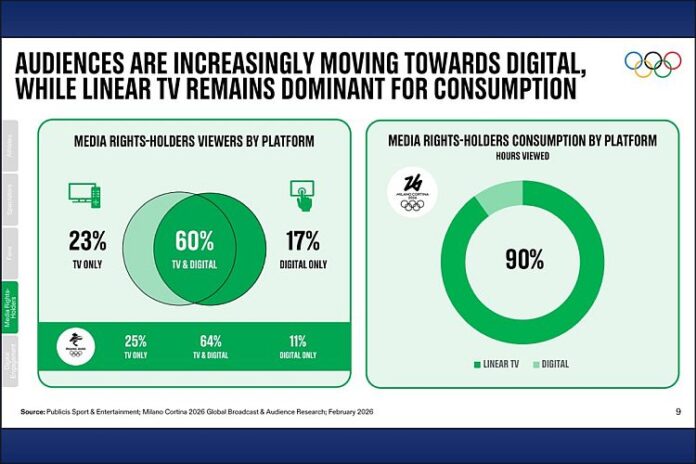
PANORAMA: Poll says 72% of Germans favor a future Olympics; McLaughlin-Levone eyes LA28 double; BALCO doping lab chief Conte passes at 75

Brilliant 2025 World 400 m Championships win for American star Sydney McLaughlin-Levrone (Photo: Dan Vernon for World Athletics).

The Sports Examiner: Chronicling the key competitive, economic and political forces shaping elite sport and the Olympic Movement.★

To get the daily Sports Examiner Recap by e-mail: sign up here!

≡ THE 5-RING CIRCUS ≡

● Olympic Games 2028: Los Angeles ● The International Weightlifting Federation announced the 12 weight classes for 2028, lining up the six men’s and six women’s weights with the full listed of classes contested by the federation:

Men: 65 kg, 75 kg, 85 kg, 95 kg, 110 kg, +110 kg
Women: 53 kg, 61 kg, 69 kg, 77 kg, 86 kg, +86 kg

This compares with the eight classes for men and women in IWF events:

Men: 60 kg, 65 kg, 70 kg, 75 kg, 85 kg, 95 kg, 110 kg, +110 kg
Women: 49 kg, 53 kg, 57 kg, 61 kg, 69 kg, 77 kg, 86 kg, +86 kg

So, the men’s 60 kg and 70 kg classes are merged into 65 kg and 75 kg for Olympic purposes with the four heaviest classes remaining the same. For women, the 49 kg and 57 kg weights are merged into 53 kg and 61 kg. The new IWF classes will be in use from 1 August 2026.

This brings the LA28 record total of events to 353, across a record 36 sports. The Tokyo 2020 Games had 339 events and Paris 2024 had 329.

● Olympic Games: Germany ● A poll for the German magazine Stern showed that 72% of Germans welcome a future Olympic and Paralympic Games, possibly in 2036, 2040 or 2044.

Only 22% were opposed and 6% had no opinion, in a survey of 1,008 adults on 30-31 October.

Where city or regional bids have been rejected in the past, Munich saw strong support for its referendum to bid for the Games, with 66.4% reported in favor. Bids are also being prepared by the Berlin region, Hamburg and Rhine-Ruhr, which successfully hosted the World University Games this year.

The poll asked those in favor of the Games which region they preferred, with Munich in front at 39%, then 24% for Rhine-Ruhr, 15% for Berlin and 11% for Hamburg. Munich hosted the 1972 Olympic Games, the most technically-advanced ever at the time, but permanently marred by the murder of 11 Israeli delegation members by Palestinian terrorists.

The German Sports Confederation (DOSB) expects to make a choice on a candidate and a targeted Games in 2026.

● Olympic Winter Games 2034: Salt Lake City ● Salt Lake Community College, Utah’s largest two-year college with nearly 50,000 students across eight campuses, announced the “relaunch” of its educational outreach program with US Speedskating and the expansion of its “Beyond The Podium” effort with U.S. Ski & Snowboard and USA Climbing.

Made possible by Utah philanthropists Jeff and Helen Cardon, the project offers tuition-free courses and career counseling, plus nutrition guidance and performance testing through the Exercise Science program.

This started with speedskaters in 2018, with 14 Olympians taking part, and 12 more for the Beijing 2022 quadrennial, Now, 19 athletes from the three federations are enrolled, able to continue their studies while training to make the 2026 Milan Cortina team. Said program director Chris Needham, a national-team skater from 2000-10:

“We anticipate more than a dozen will end up competing at the 2026 Winter Olympics. We envision a program that supports around 100 athletes in the lead-up to 2034.”

● Doping ● Victor Conte, whose work in developing performance-enhancing drug solutions for world-class athletes exploded into one of the largest doping scandals in history, died Monday at age 75, according to an X post by his sports nutrition company, SNAC Systems. He had been suffering from pancreatic cancer.

Conte became infamous as the center of a doping scandal involving his Bay Area Laboratory Co-operative (BALCO), with a Federal investigation beginning in 2002. In 2003, coach Trevor Graham (JAM) provided a syringe to the U.S. Anti-Doping Agency which had been used to deliver BALCO drugs, which proved to have prohibited substances.

Conte and three others were indicted in 2004 and Conte pled guilty in 2005 to distributing steroids and money laundering, sentenced to four months in prison. Multiple BALCO clients were identified – and some were sanctioned (including criminal charges) – including baseball stars Barry Bonds and Jason Giambi and a long list of track stars, including Marion Jones, Tim Montgomery, Regina Jacobs, Alvin Harrison, Calvin Harrison, Kevin Toth, Kelli White and others.

Post-BALCO, Conte became a promoter for clean sport and using his sports nutrition background, worked with multiple boxers and his SNAC Systems nutrition company.

● Athletics ● World Athletics announced the finalists for its “athlete of the year” awards, to be presented on 30 November:

Track Athlete of the Year/Men:
● Noah Lyles (USA): World 200 m Champion; 100 m bronze
● Emmanuel Wanyonyi (KEN): World 800 m Champion

Track Athlete of the Year/Women:
● Femke Bol (NED): World 400 m hurdles Champion
● Sydney McLaughlin-Levrone (USA): World 400 m Champion

Field Athlete of the Year/Men:
● Mondo Duplantis (SWE): World vault Champion
● Mattia Furlani (ITA): World long jump Champion

Field Athlete of the Year/Women:
● Tara Davis-Woodhall (USA): World long jump Champion
● Nicola Olyslagers (AUS): World high jump Champion

Out-of-Stadium Athlete of the Year/Men:
● Sabastian Sawe (KEN): London and Berlin Marathons winner
● Alphonce Simbu (TAN): World marathon Champion

Out-of-Stadium Athlete of the Year/Women:
● Peres Jepchirchir (KEN): World marathon Champion
● Maria Perez (ESP): World 20 km and 35 km walks Champion

Fan voting will help select the overall men’s and women’s athletes of the year, on the World Athletics social channels, through 8 November.

Speaking to NBC News, U.S. star Sydney McLaughlin-Levrone said she is definitely eyeing a 400 m-400 m hurdles double in Los Angeles in 2028, if the schedule makes it possible:

“Of course, you can’t pursue everything at one time. You got to take it one at a time and allow your body to really gear up to race some of these really fast races. But yeah, I definitely still think I’d love to dip under 50 at some point [in the hurdles], if time permits, and run faster in the 400 and try to go for that longstanding record.”

McLaughlin-Levrone won the Tokyo and Paris Olympic titles in the hurdles and has set six world records, now at 50.37 last year. In the 400 m, she won the World gold in 2025 in 47.78, moving to no. 2 all-time and close to the 47.60 world mark by Marita Koch (GDR) from 1985.

Asked about Grand Slam Track, for which she was a strong promoter when announced, but still owes millions in athletes fees and vendors, she said she would consider returning in 2026, but:

“I think we’d have to see how it comes back and what the security of it looks like. I think there was a lot of athletes that loved the model, loved what they were able to put out from a product standpoint, but of course, you have to be able to sustain that. And so, we would honestly just have to see what that sustainability looks like before venturing into anything moving forward.”

● Swimming ● USA Swimming announced changes to its TYR Pro Swim Series, with an eye toward mirroring conditions which the U.S. team will face at the upcoming World Championships and the 2028 Olympic Games:

“Certain events will transition to a prelims/semifinals/final format, while one distance event at each meet will be contested as prelims/finals. The change is designed to mirror the racing environment athletes experience at major international meets and enhance long-course racing opportunities throughout the season. With the change, TYR Pro Swim Series meets will expand to four full days of morning and evening sessions as opposed to the traditional three-and-a-half-day format.”

At the four stops in 2026 (Austin in January, Westmont in March, Sacramento in May and Indianapolis in June), specific events will be held with semifinals, or with preliminaries for the 800 m and 1,500 m Freestyles. In those events which have expanded rounds, the winner’s prize will be increased from $1,500 to $3,000.

Receive our exclusive, weekday TSX Recap by e-mail by clicking here.
★ Sign up a friend to receive the TSX Recap by clicking here.
★ Please consider a donation here to keep this site going.

For our updated, 850-event International Sports Calendar for 2025, 2026 and beyond, by date and by sport, click here!
SWIMMING: USA Swimming selects ‘88 gold winner Lang to head the Board; Dressel says he’s not done yet!

American swimming sprint star Caeleb Dressel (Photo: Panam Sports)

The Sports Examiner: Chronicling the key competitive, economic and political forces shaping elite sport and the Olympic Movement.★

To get the daily Sports Examiner Recap by e-mail: sign up here!

≡ USA SWIMMING: CROSSROADS ≡

Olympic swimming relay gold medalist Brent Lang was elected as the new Chair of USA Swimming on Tuesday, to serve through the remainder of the resigned Natalie Coughlin’s term, to September 2029.

Lang won an Olympic men’s 4×100 m Freestyle relay gold at the 1988 Seoul Olympic Games and a 1991 World Championships 4×100 m Free relay gold. He spent more than 20 years at digital care coordination and communications pioneer Vocera Communications, and was Chair and chief executive into 2022, when it was acquired. He is continuing in the high-tech medical field with multiple companies today.

Relative to USA Swimming, Lang crucially served as a board member of USA Gymnastics from 2018-24, joining in the midst of the Larry Nassar abuse scandal and helping to guide the organization through the process of settlement and restructuring.

Lang was only elected to the USA Swimming Board on 27 September to a four-year term by the House of Delegates, but is now Chair less than six weeks later.

He joins USA Swimming at a time when the organization is looking to re-establish dominance in the pool on the international level, find new funding and expand its base of participation among youth swimmers, coaches and parents.

Lang inherits a new executive team at the federation, with Kevin Ring appointed as chief executive on 4 September, coming from sports marketing positions with the PGA of America and Legends Golf. Decorated ex-Stanford and Olympic women’s coach Greg Meehan was hired as National Team Managing Director last April, to take charge of the development and performance of the American swim teams at the World Aquatics Championships and the Olympic Games. Marketing and communications chief Jake Grosser was elevated to Chief Operating Officer last July.

Lang’s election makes a new interview by SwimSwam.com co-founder Mel Stewart, the 1992 Olympic 200 m Butterfly and Medley Relay gold medalist – and Lang’s teammate on the 1991 U.S. World Championships team – with sprint star Caeleb Dressel even more compelling.

Stewart posted the 90-minute-plus talk with Dressel, 29, the nine-time Olympic gold winner, who covered all kinds of things, including about his future. The short answer is, he’s not done yet, saying:

“I’m not ready to be done, and I love the water too much. And kind of the biggest thing after Paris [2024] was I don’t want to let my demons in the sport override how much I love the sport and that be the reason that I end my career early.

“I don’t think that’s fair to swimming, the sport in general. And I don’t think it’s fair to myself. I love it too much to let the bad parts just take control. So, still working on getting a handle of the the bad parts, the baggage.

“But the water’s always been kind to me. It always will be. And I don’t ever want that ever want that to change. So yeah, I mean I’m still putting in a lot of work, but right now it’s just, it’s new. It’s fun. I’m sure there’ll be some hiccups along the way, but I’m game for it. And right now I’m very, very excited for the future.”

Dressel won a Paris 2024 Olympic gold in the men’s 4×100 m Free relay, a silver in the 4×100 m Medley and gold in the Mixed 4×100 m Medley, swimming in the heats. In his individual events, however, he was sixth in the final of the men’s 50 m Free and did not make the final in the 100 m Butterfly. He had won both of those events at the Tokyo 2020 Games.

Dressel said he has left his long-time training base at the University of Florida, explaining that there was nothing wrong there, but that he needs a different situation now.

Asked about the doping-friendly Enhanced Games next May in Las Vegas, Dressel was clear that he is not interested, but noted that the lure of a big payday demonstrates a hot issue in the sport which needs to be addressed:

“I think the bigger issue at hand is you have people willing to sacrifice their whole reputation, their whole swim career because they weren’t getting paid enough within the sport. … I feel like World Aquatics and USA Swimming and all the governing bodies should see the bigger picture here.”

If they weren’t already, Lang, Ring and Meehan are now all on notice.

Receive our exclusive, weekday TSX Recap by e-mail by clicking here.
★ Sign up a friend to receive the TSX Recap by clicking here.
★ Please consider a donation here to keep this site going.

For our updated, 850-event International Sports Calendar for 2025, 2026 and beyond, by date and by sport, click here!
RUSSIA: World Aquatics to allow Russians, Belarusians to take part as “neutrals” in all disciplines, including water polo

The Sports Examiner: Chronicling the key competitive, economic and political forces shaping elite sport and the Olympic Movement.★

To get the daily Sports Examiner Recap by e-mail: sign up here!
≡ “NEUTRAL” POLO TEAMS? ≡

World Aquatics has been in the forefront of allowing Russian and Belarusian athletes to compete internationally on a “neutral” basis, after a review to assure their “neutrality” concerning the Russian invasion of Ukraine.

In a 3 November 2025 letter to World Aquatics member federations, Executive Director Brett Nowicki (USA) explained a further clarification of the eligibility policy:

“We write to update you on a recent decision of the World Aquatics Bureau modifying the Guidelines for Athlete Participation in World Aquatics Events During Periods of Conflict (the ‘Guidelines’).

“In this regard, please be advised that Neutral Athletes are now eligible to participate in all water polo competitions and team events, in addition to individual events. The same eligibility, integrity, and neutrality conditions as previously applied under the Guidelines to individual athletes will continue to be strictly enforced by the Aquatics Integrity Unit.

“In addition, the Guidelines now extend to all Continental-level events, in addition to any World Aquatics event or qualifying competition for the World Championships and/or the Olympic Games, across all disciplines and age categories.”

The Russian news agency TASS reported that this new World Aquatics policy would start beginning on 1 January 2026.

Following the Russian invasion of Ukraine in February 2022, the International Olympic Committee recommended that Russian and Belarusian teams be excluded from international competitions.

The TASS story noted that “Russian athletes will be allowed to take part in competitions in a neutral status and will be banned from associating themselves with Russia in any way.”

However, if implemented in a parallel fashion to World Aquatics’ policy for individual neutrals, the new regulations open the door for Russian and Belarusian teams to compete in team water polo competitions, with all players individually reviewed for “neutrality.”

At the 2025 World Aquatics Championships, Belarusian “neutrals” were entered as “Neutral Athletes A” and Russians as “Neutral Athletes B,” including in relays. Belarusian athletes won a total of three medals (0-1-2) and Russians won 18 (6-8-4), the fifth-highest total overall.

Because of their ban from international competition since 2022, neither Belarus nor Russia are world-ranked in water polo in either the men’s or women’s divisions and will have to work their way back up into ranking contention.

This new policy is out of line with the IOC’s continuing 2022 recommendation on a ban for Russian and Belarusian teams, which matters for the 2028 Olympic Games, but not for World Aquatics’ own competitions from January of 2026 on.

Receive our exclusive, weekday TSX Recap by e-mail by clicking here.
★ Sign up a friend to receive the TSX Recap by clicking here.
★ Please consider a donation here to keep this site going.

For our updated, 850-event International Sports Calendar for 2025, 2026 and beyond, by date and by sport, click here!
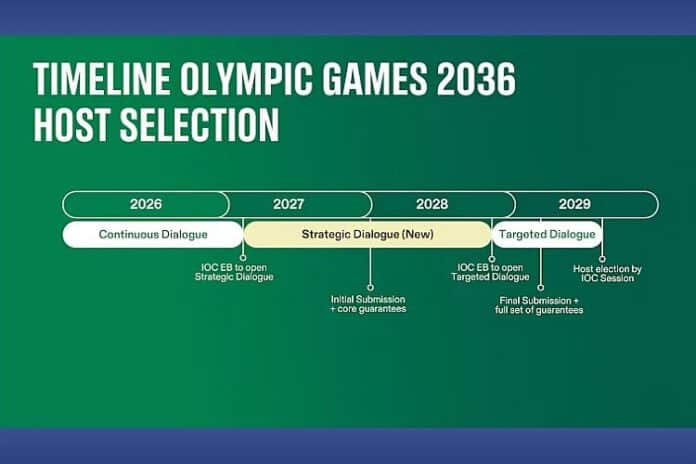
U.S. NATIONAL GOVERNING BODIES: Fascinating numbers on the biggest NGBs by membership, with softball, tennis and ice hockey 1-2-3!

The Sports Examiner: Chronicling the key competitive, economic and political forces shaping elite sport and the Olympic Movement.★

To get the daily Sports Examiner Recap by e-mail: sign up here!

≡ WILD NGB MEMBER STATS ≡

When Americans think about the U.S. Olympic Team, naturally sports like track & field and swimming – where the U.S. wins a lot of medals – come to mind right away, and some of the team sports where the U.S. has been dominant, like basketball.

But diversity, equity and inclusion reports submitted to the U.S. Olympic & Paralympic Committee and published annually since 2013 show that U.S. national federations in hugely-popular sports such as soccer, have no members at all (that’s right, none!).

That’s because their “licensed players” are all part of other organizations, such as those in youth soccer, adult clubs, school teams from middle schools all the way up to the NCAA level, professional leagues and so on. This is the case with the NGB financial leader, the U.S. Soccer Federation, which has many of these organizations associated with it, but not the players, of which it estimates there are 4.2 million in the country.

But there are U.S. National Governing Bodies who do have direct memberships and which oversee competitions in the country, and the 2024 “Demographic Data Report” for each NGB offers pages of details, including membership and the number of athletes on the “National Team” as defined by the NGB. The 2024 statistical leaders, ranked by number of members (with the number of national team athletes – as listed by the NGB – added at the end):

● 1,000,000: USA Softball (128 national team members)
● 700,943: US Tennis Association (29)
● 476,185: USA Volleyball (263)
● 413,729: USA Swimming (108 in 2023)
● 344,500: USA Wrestling (139)
● 301,861: USA Triathlon (18)
● 195,040: USA Gymnastics in 2023 (142)
● 129,178: USA Track & Field (286)
● 82,633: USA Rugby (76)
● 82,523: U.S. Equestrian Federation (76)
/10/
● 78,909: US Rowing (51)
● 65,715: USA Boxing (13)
● 42,000: USA Water Polo (34)
● 41,158: USA Fencing (26)
● 40,638: USA Cycling (99)
● 32,460: USA Archery (39)
● 27,583: USA Field Hockey (80)
● 20,522: USA Weightlifting (44)
● 16,392: US Squash (9)
● 14,894: American Canoe Association (43)
/20/
● 14,344: USA Judo (22)
● 14,000: USA Table Tennis (8)
● 11,540: USA Taekwondo (19)
● 6,390: USA Diving (107)
● 5,842: USA Artistic Swimming (14)
● 5,008: USA Shooting (44)
● 3,364: USA Badminton (0)
● 2,009: US Sailing (6)
● 882: USA Team Handball (67)
● 126: USA Pentathlon (8)
/30/
● 0: USA Baseball (166)
● 0: USA Basketball (63)
● 0: USA Climbing (79)
● 0: USA Golf (4)
● 0: USA Skateboarding (45)
● 0: U.S. Soccer (113)
● 0: USA Surfing (7)
/37/

USA Gymnastics did not enter the number of members in its 2024 report, so the 2023 number is shown; the number of national team members for USA Swimming was an obvious typographical error, so the 2023 total is shown.

As for the winter NGBs, one is far ahead of the rest:

● 672,690: USA Hockey (138)
● 245,986: US Figure Skating (411)
● 39,246: US Ski & Snowboard (238)
● 21,000: USA Curling (29)
● 1,968: US Speedskating (29)
/5/
● 1,432: USA Biathlon (12)
● 383: USA Luge (19)
● 334: USA Bobsled & Skeleton (34)
● 0: USA Ski Mountaineering (16)
/9/

The US Figure Skating report showed an incorrect 60,355 members in 2024, but the federation’s own annual report showed a record of 245,986 in 2023-24.

Just for fun, let’s look at the top NGBs and their membership numbers from five years ago, in 2019, before the pandemic. The eight Olympic NGBs now with 100,000 or more members had, pre-pandemic:

● 620,292: US Tennis Association (+80,651)
● 411,675: USA Swimming (+2,054)
● 385,758: USA Volleyball (+90,427)
● 252,419: USA Wrestling for 2018-19 (+92,081)
● 129,494: USA Triathlon (+98,633)
● 123,956: USA Gymnastics (+71,084)
● 123,829: USA Track & Field (+5,349)
● 77,358: USA Softball (+922,642)

USA Softball’s membership exploded during the pandemic, reporting 563,808 in 2020, then was shown as 104,686 in 2021, 132,639 in 2022 and then one million in 2023 and 2024; the federation states that it has more than 120,000 teams registered in youth and adult leagues for men and women.

Among the winter NGBs, USA Hockey had 636,753 members in 2019 vs. 672,690 now (+35,937); US Figure Skating showed 203,023 members in 2019 and has reached 245,986 in 2024, for a gain of 42,963.

If you’re a fan of diversity, you won’t find a wider set of disparities between sports than in the membership reports. None give a complete picture of the state of their sports in the U.S., since they do not include the enormous participation in high school, NCAA or other sports-sponsoring organizations, such as the enormous soccer infrastructure in the country.

But in the U.S.’s top Olympic medal-producing sports, it is remarkable that swimming and track & field rank fourth and eighth among the top membership NGBs in the U.S.

Receive our exclusive, weekday TSX Recap by e-mail by clicking here.
★ Sign up a friend to receive the TSX Recap by clicking here.
★ Please consider a donation here to keep this site going.

For our updated, 850-event International Sports Calendar for 2025, 2026 and beyond, by date and by sport, click here!
PANORAMA: Dodgers show power of sport in Los Angeles; Kipchoge’s marathon plan going forward; record membership for USA Boxing!

A new frontier for twice women’s 400 m World Champion Femke Bol (NED): the 800 meters! (Photo: Diamond League AG).

The Sports Examiner: Chronicling the key competitive, economic and political forces shaping elite sport and the Olympic Movement.★

To get the daily Sports Examiner Recap by e-mail: sign up here!
≡ THE 5-RING CIRCUS ≡

● Los Angeles ● This is nothing to do with the Olympic Games, but a lot to do with the importance of sports in communities.

Los Angeles is in a difficult period after the wildfires in January, continuing political storms pitting labor against business and the Democrat-dominated City Council and mayor against the Trump Administration, deep financial issues and a lot more, but Saturday’s Major League Baseball World Series win by the hometown Dodgers made things better, for a moment.

In the Los Angeles Times’ “Dodgers Dugout” newsletter (sign-up for free here) on Monday, Assistant Sports Editor Houston Mitchell wrote this:

“On Sunday, I went to my local Walgreens and there in an aisle was a man wearing a Dodgers jersey. I walked by and said ‘Go Dodgers.’ He said ‘Yes!’ and told me how he was able to go see Game 4 at Dodger Stadium. That he will be paying off the tickets for a while, but he now has a cherished memory with his son, even though the Dodgers lost that game. A man nearby overheard and walked over and started talking about the Dodgers. Then a woman overheard and chimed in. Then one of the employees. For about 20 minutes in the middle of a Walgreens in Glendora, about 10 Dodgers fans talked about how great Game 7 was.

“And it hit me. If you took a picture of us, we would look like we had nothing in common. An older white guy, the younger Latino with tattoos everywhere. The mom with two little kids. The middle-aged Black man wearing the Jackie Robinson jersey. The lady stocking the shelves. The Asian man who became a Dodgers fan because of [Shohei] Ohtani and couldn’t stop smiling. And more. It was a true melting pot.

“Sports is the great unifier. If we started talking about other things in life, we probably would disagree about things and wouldn’t spend two minutes together. But for 20 minutes, we were all the same. We were Dodgers fans basking in the glow of what our team did. How it brightened our week. There were high-fives and fist bumps all around when the little group broke up. We probably will never see each other again, but for a brief time we were a family. That’s what sports can do for people, and that’s what the Dodgers did for many more Saturday.”

● Olympic Games 1948: London ● The French National Olympic Committee passed on the sad news of the death of Charles Coste, at 101, who had been the oldest living Olympic gold medalist.

Coste was a member of France’s winning Team Pursuit squad in London in 1948 in his only Olympic appearance. He became a professional rider shortly after and competing until 1959, including three rides in the Giro d’Italia and two entries into the Tour de France.

He was honored as a torchbearer – in his wheelchair – in the opening ceremony of the Paris 2024 Olympic Games, passing the flame to the final torchbearers, Teddy Riner and Marie-Jose Perec.

● Athletics ● Following his 17th-place finish at the New York City Marathon, Kenyan marathon superstar Eliud Kipchoge finished his third marathon of the year, finishing sixth in London, ninth in Sydney and completed his first try in New York. He has now run all of the seven World Marathon Majors.

Kipchoge announced after the race he is starting the “Eliud Kipchoge World Tour,” with races on all seven continents. But was this his last marathon? LetsRun.com’s Jonathan Gault wrote on X:

“Kipchoge’s manager Valentijn Trouw [NED] told me Kipchoge still plans to compete in the elite fields in these races. But Kipchoge’s focus is not zeroed-in on running as fast as possible as it has been over the past two decades. He wants to promote the sport & interact more with fans.”

Dutch star Femke Bol, the two-time women’s 400 m hurdles World Champion explained in an interview with European Athletics her new adventure in the 800 m. She said in part:

“The switch feels really, really nice, really exciting, also really scary. I’m still young [25]. I’m mentally, physically, feeling really fit, and it’s, it’s a really, really big challenge. That’s also why I want to do it while I still feel at my best.

“I also really feel ready for new impulse, new kind of training, new kind of racing, and that makes me really excited.

“I think after the Olympics, you start to re-evaluate everything. Look at the past years, look at the upcoming years. And it was a thought that came to my coach and me at the same time of also wanting to go to the 800 m.”

The Athletics Integrity Unit continues its campaign against “whereabouts” failures and missed tests. Friday’s thread:

“Following our focus on Missed Tests and Whereabouts Failures, let’s now clarify the serious difference between that violation and Evading Doping Control. We are looking closer at what this specific Anti-Doping Rule Violation means and why it carries such a severe consequence.”

● “Rule 2.3 of the World Athletics Anti-Doping Rules lays it out clearly: ‘An Athlete evading Sample Collection; or Refusing or Failing to submit to Sample Collection without compelling justification after notification by a duly authorised Person.’”

● “This isn’t about missed Whereabouts updates nor about a Missed Test when a Doping Control Officer can’t find an athlete during the daily 60-minute time slot for testing. This is about the moment an athlete is notified to test, and chooses not to comply.”

“Three key forms of violation:
“– Evading the doping control officer after notification
“– Refusing to give a sample
“– Failing to provide a sample after being properly notified, without a valid reason”

● “These are serious violations. The standard sanction? Four years. Early admission may reduce that to three. But the principle is simple: Once an athlete is notified, testing is not optional.”

Now you know.

● Boxing ● USA Boxing continues to grow, with Membership Director Lynette Smith announcing in the federation’s “The Neutral Corner” newsletter that registrations for 2025 passed 67,500, another record for the organization.

From a pre-pandemic total of 50,631 in 2019, USA Boxing claimed a record 59,850 in 2023, then surpassed it at 65,712 for 2024 and now more than 67,500 for 2025, with the final total still to be published. That’s at least 33.3% growth since the pre-pandemic total in 2019, and climbing.

Receive our exclusive, weekday TSX Recap by e-mail by clicking here.
★ Sign up a friend to receive the TSX Recap by clicking here.
★ Please consider a donation here to keep this site going.

For our updated, 850-event International Sports Calendar for 2025, 2026 and beyond, by date and by sport, click here!
ATHLETICS: World Athletics’ World Indoor Tour expands to 77 events for 2026, but what kind of meets are included?

The Sports Examiner: Chronicling the key competitive, economic and political forces shaping elite sport and the Olympic Movement.★

To get the daily Sports Examiner Recap by e-mail: sign up here!

≡ WORLD INDOOR TOUR ≡

World Athletics announced that its World Indoor Tour for 2026 has expanded to 77 meets in all, the most ever, with the first event on 13 December in Romania.

The World Indoor Tour is made up of four levels of meets, including “Gold,” “Silver,” “Bronze” and “Challenger.” A 12-page set of regulations (C 1.5) covers the requirements for each level (almost):

Gold:
● Minimum $75,000 prize money
● $7,050 per-event min. prizes for places 1-6
● Minimum 6, up to 9 “core events”; min. 14 events total
● 3,000 seating capacity
● Anti-doping testing required (min. 10)

Silver:
● Minimum $30,000 prize money
● No required events or minimum per meet
● $4,000 per-event min. prize money
● 2,000 seating capacity
● Anti-doping testing required (min. 6)

Bronze:
● Minimum $12,000 prize money
● No required events or minimum per meet
● $2,500 per-event min. prize money
● 1,000 seating capacity
● Anti-doping testing required (min. 4)

Challenger:
● No requirements listed other than approval of the meet by the national federation and submission to the World Athletics calendar.

In terms of athlete payment and support, the rules require for Gold-Silver-Bronze meets:

● “Organisers must pay prize money within 30 days of receipt of the doping control clearance from the Athletics Integrity Unit and complete invoices which must comply with the communicated legal, fiscal and procedural requirements of the Organiser.”

● “Organisers must reimburse an Athlete’s travel expenses. The reimbursement will either be made at the Meeting or within 2 weeks after the Meeting, provided the necessary paperwork (i.e. receipts, invoices etc.) has been given to the Organiser.”

So the requirements are pretty light on the lower end of the scale, for Bronze and Challenger meets. The meet breakdown for 2026:

● 8 Gold-level
● 26 Silver
● 16 Bronze
● 27 Challenger

Thus, the meets which will attract nearly all of the attention will be the eight gold meets:

24 Jan.: New Balance Indoor Grand Prix in Boston
01 Feb.: Millrose Games in New York
03 Feb.: Czech Indoor Gala in Ostrava (CZE)
06 Feb.: World Indoor Tour Gold Madrid in Madrid (ESP)
08 Feb.: INIT Indoor Meeting Karlsruhe in Karlsruhe (GER)
11 Feb.: Belgrade Indoor Meeting in Belgrade (SRB)
19 Feb.: Hauts-de-France Pas-de-Calais Trophee EDF in Lievin (FRA)
22 Feb.: ORLEN Copernicus Cup in Torun (POL)

As with the Diamond League, the schedule is all over the weekly calendar, with five of the eight Gold-level meets taking place within 11 days.

The U.S. has two Silver-level meets listed: the UCS Spirit National Pole Vault Summit in Reno, Nevada on 16-17 January and the Sound Invite in Winston-Salem, North Carolina on 14 February.

There are two Bronze-level meets listed in the U.S.: the Dr. Sander Invitational in New York on 24 January (same day as the New Balance Indoor) and the DeLoss Dodds Invite in Manhattan, Kansas on 30-31 January.

It will be a busy indoor season, but as is usually the case today, hard to follow.

Receive our exclusive, weekday TSX Recap by e-mail by clicking here.
★ Sign up a friend to receive the TSX Recap by clicking here.
★ Please consider a donation here to keep this site going.

For our updated, 850-event International Sports Calendar for 2025, 2026 and beyond, by date and by sport, click here!
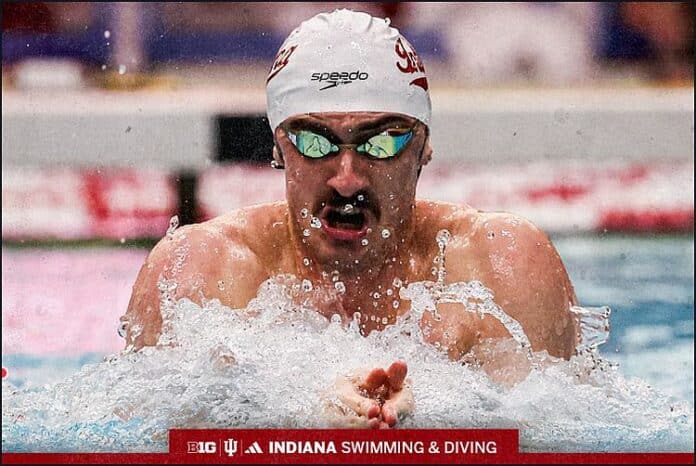
LUGE: Crucial Court of Arbitration for Sport decision opens door for Russian lugers for 2026 Winter Games … maybe

The Court of Arbitration for Sport, in Lausanne (SUI).

The Sports Examiner: Chronicling the key competitive, economic and political forces shaping elite sport and the Olympic Movement.★

To get the daily Sports Examiner Recap by e-mail: sign up here!

≡ NO 2026 RUSSIAN LIFELINE YET ≡

“The Panel considered that the overall exclusion of Russian athletes was not a proportionate measure to achieve the only purpose sought by FIL (i.e. preserve safe racing conditions), since additional measures could be found to conciliate safety with the participation of Russian athletes.

“The Panel ruled that the exclusion of RLF athletes from FIL competitions is maintained, but the prohibition of Russian athletes who satisfy the criteria of AINs to compete is set aside. Consequently, the appeal was partially upheld.

“The request by the six athletes to immediately participate in international events was dismissed.”

That’s from the summary of two decisions announced by the Court of Arbitration for Sport on Friday in cases brought by the Russian Luge Federation (RLF) and six Russian lugers against the Federation Internationale de Luge (FIL), trying to force their way back into international competitions.

They lost, but the Russian federation won a smaller, possible victory. The decision, not yet published in full, could have an impact far wider than the 2026 Olympic Winter Games in Milan Cortina (ITA):

● In June 2025, the FIL Congress extended its ban on Russian athletes from international competitions, “citing risks to the safety of competitions.”

● In July, six Russian athletes and the Russian Luge Federation filed an appeal with the Court of Arbitration, asking for the ban to be overturned and for Russian athletes to be immediately reinstated.

● In the October hearing, the FIL said the ban was for safety reasons and not targeted at Russians over the invasion of Ukraine.

As noted above, the Court of Arbitration for Sport panel came back – once again – to one of its key concepts, of “proportionality.” Is the action of the federation merited as is, or are there lesser measures that it could have taken to still allow Russian athletes to compete?

The panel’s answer was that the luge federation could have and should allow Russians to compete in its competitions if they follow the “International Neutral Athlete” (AIN) program installed by the International Olympic Committee. Successfully implemented for the Paris 2024 Olympic Games, the IOC set up strict “neutrality” criteria and had a three-person panel in place to review all athletes proposed by the National Olympic Committees of Russia and Belarus for the Paris 2024 Games.

All team entries were prohibited since they would need to be identified as “Russia” or “Belarus.”

But this holding settled nothing for the Russians:

(1) The request by the Russian athletes to compete immediately and be able to earn FIL World Cup points in a quest to be able to qualify for Milan Cortina 2026 was denied. Per the panel’s formula, only Russian athletes who are shown to be “neutral” are required to be allowed to compete.

(2) The FIL has no “AIN” criteria or a panel to consider applications. If the FIL decides not to appeal the finding to the Swiss Federal Tribunal – which would take more time – it would still have to come up with its own “AIN” program from scratch.

(3) Further, another case, filed by Russian speed skater Daria Kachanova, a two-time Worlds team-event medalist in 2019 and 2020, challenged a finding by the International Skating Union that she was not a neutral in view of her “affiliation with CSKA Moscow, a sports club controlled by the Ministry of Defence of Russia.” A majority of the panel agreed with the decision by the ISU and Kachanova’s appeal was dismissed.

So, the Russians won a procedural victory for “neutral” athletes to compete, in line with the allowances made by the International Skating Union, which has a very limited qualification path for Russian and Belarusians in individual events.

But no ability to compete. And whether any Russian luge athletes will be able to compete in a FIL competition to try and quality for the Milan Cortina 2026 Winter Games is an open question.

On 21 October, the International Ski & Snowboard Federation (FIS) decided not to allow Russian or Belarusian reinstatement and decided not to implement a “neutral athlete” program. The Russian, of course, are appealing to the Court of Arbitration for Sport, but there is no guarantee that a different panel will use the FIL case as a precedent, or find a different approach.

In a parallel case, decided on 26 September, the European Table Tennis Union ban on Russian and Belarusian participation in its events was overturned in part because the ETTU’s actions were not “proportionate” and its own rules and regulations do not allow for such a ban as imposed. On proportionality, the ETTU case panel wrote:

“[W]hen the issue of proportionality is considered, there is no evidence of any discussion or consideration by the Respondent of steps that might have been taken that were short of a complete ban on Russian participation in ETTU events. Was it feasible to hold ‘closed door’ events, without any public participation? Was it feasible to play matches on neutral grounds / in neutral territories? Would either of those things have alleviated the risk to safety?”

The CAS holdings in the FIL and ETTU cases may also have an impact on the continuing appeal by the Israel Gymnastics Federation and its six gymnasts against the Federation Internationale de Gymnastique (FIG) for its acquiescence when the Indonesian government refused to allow the Israeli team into the country for the 2025 FIG World Artistic Championships.

Did the FIG do all it could, especially when its own statutes require it to cancel or move events when such discrimination occurs?

This appeal, as noted by the CAS announcement, is continuing and the FIL and ETTU cases will certainly have an impact.

The other impact of the FIL and ETTU cases will be – as the ISU has already done – a thorough examination by International Federations and regional bodies on what their Executive Boards can and cannot do according to their own rules. The ISU prepped for this and was ready when the question of Russian and Belarusian participation was raised at the Court of Arbitration for Sport.

Others were not, and are not, as well prepared and as the Israeli situation in gymnastics shows, is not only about Russia’s continuing invasion of Ukraine.

Receive our exclusive, weekday TSX Recap by e-mail by clicking here.
★ Sign up a friend to receive the TSX Recap by clicking here.
★ Please consider a donation here to keep this site going.

For our updated, 850-event International Sports Calendar for 2025, 2026 and beyond, by date and by sport, click here!
PANORAMA: Intuit to sponsor LA28 to retain “Intuit Dome” naming; just 27 prize money T&F meets in U.S. in 2024? World-record Free Skate for Malinin!

Figure skating World Champion Ilia Malinin of the U.S. (Photo: spiritedmichelle via Wikipedia).

The Sports Examiner: Chronicling the key competitive, economic and political forces shaping elite sport and the Olympic Movement.★

To get the daily Sports Examiner Recap by e-mail: sign up here!

≡ THE 5-RING CIRCUS ≡

● Olympic Games 2028: Los Angeles ● Sportico.com reported that the financial and marketing software giant Intuit has become a sponsor of the LA28 organizing committee and as such, will have the “Intuit Dome” name retained instead of the “Inglewood Dome” reference for the 2028 Olympic and Paralympic Games.

LA28 had indicated it was primarily interested in selling naming rights for venues for its temporary sites, but Intuit’s sponsorship also forecloses any other company even trying to obtain visibility at its named arena, which will host basketball.

● Olympic Winter Games 2030 ● World Athletics President Sebastian Coe (GBR) continues to hammer away at getting cross country into the Winter Games. He told The Associated Press on Saturday:

“The new president [Kirsty Coventry/ZIM] is clear they want to put everything on the table at the moment. It’s a very different atmosphere. It’s very much how can we improve together rather than we’ll tell you how to do it. She’s blown some oxygen into the organization.”

Coe notes that adding cross country would allow more African participation in the Winter Games, which is currently minimal. A change in the Olympic Charter would be needed as the current rules limit Winter Games sports to those held on snow or ice.

● Youth Olympic Games 2026: Dakar ● A young lion named “Ayo” – meaning “joy” – is the mascot of the 2026 Youth Olympic Games in Dakar (SEN), announced Friday, in ceremonies marking one year to go.

● International Olympic Committee ● On the sidelines of the International Federation Forum in Lausanne (SUI) last week, the IOC held a consultation session with IF senior officials on Thursday.

An overview of the meeting noted five primary elements: (1) Athletes, (2) the Olympic Games, (3) Reach, Engagement and Revenue Generation, (4) the Olympic Movement, and (5) A Better World, with IOC chief Coventry introducing and closing the seminar. Some interesting details included:

“The Olympic Games topic focused on making events more dynamic, the integration between the Olympic and Paralympic Games, as well as making International Federations more involved in the delivery of the Games to support athletes and utilise them as expert delivery partners.

“Ties look to be strengthened in engagement between the IOC and International Federations too with a pooled rights model to be explored between them, while collaboration is to be encouraged between IFs and Olympic partners.

“It is expected that shared codes will be created to professionalise governance across the IFs and their Member Federations. Increasing sustainability efforts remains a priority, while there is discussion of reforming the revenue distribution model.”

The IFs have been calling for some time for closer collaboration with the IOC to help make their non-Olympic-year events – especially – more meaningful and valuable. It appears the IOC under Coventry is willing to listen, notably the fascinating mention of a “pooled rights model.”

● Anti-Doping ● The World Anti-Doping Agency listed the Anti-Doping Agency of Kenya (ADAK) on its “watchlist” for non-compliance. No sanctions are attached at this stage, with fourth months given for ADAK to implement a corrective plan, by 2 March 2026.

The specific problems were not disclosed, only the “failure to address several critical requirements following an audit carried out by WADA in May 2024.” Kenya has well-documented doping issues, especially in track & field, where it has more than 100 ineligible persons on the Athletics Integrity Unit’s suspension list.

● Indonesia ● Following its meeting last week in Lausanne, the Indonesian Olympic Committee portrayed its meeting with the International Olympic Committee as “positive,” following the Indonesian government’s refusal to allow Israeli athletes to enter the country to compete at the 2025 FIG World Artistic Championships.

Asked for its own statement, the International Olympic Committee press office replied:

“The IOC administration had a fruitful meeting with the NOC of Indonesia on 28 October 2025 to discuss the outcomes of the IOC Executive Board decision and discuss the next steps expected of the Indonesian Government in this regard.”

It did not specify what those steps are; the IOC Executive Board is expected to take up the issue at its December meeting.

● Athletics ● Pete Rea, the head coach of ZAP Endurance running group in Blowing Rock, North Carolina, wrote this as part of a featured story on Road Race Management’s RRM.com:

“In 2024 there were 27 domestic U.S. track and field meets in total (indoor and out) that offered any measure of prize purses for top finishers, and unlike road races where physical space in the competition “arena” is less limited, entry to these track & field meets is extremely selective with only 12-16 competitors often allowed per event.”

Rea offered no further details, but his story further noted the continuing reduction in road-racing prizes as well:

“In the last 20 years prize money available to top runners has been dwindling. While World Marathon Majors (7 in total now) and a handful of select races globally at shorter distances, continue to have deep pockets and resources for the best in the world, total prize money on the global road running circuit has fallen by more than 35% since 1988 according to a 2022 industry study by French Sport publication L’Equipe, with many races reducing prize money or eliminating it entirely over the last two decades.”

Not a pretty picture, with Rea observing that future running stars will need to be more inventive in their own marketing to make a living at the sport.

Following his 17th-place finish at the New York City Marathon on Sunday, Kenyan superstar marathoner Eliud Kipchoge said he’s on to a new goal, reported as the “Eliud Kipchoge World Tour”:

“The tour will see the double Olympic marathon champion run races across all seven continents with the sole purpose of ‘uniting the world through running’. He will complete seven marathons across the continents in the next two years.”

Baylor University reported that legendary Baylor track coach Clyde Hart passed away on Saturday at age 91 in Waco, Texas, after a long fight with cancer.

Hart came to Baylor in 1963 and continued as head coach and later director of track & field until his retirement in 2019. He coached the iconic Michael Johnson, and Olympic champions Jeremy Wariner and Sanya Richards-Ross and was inducted into the U.S. Track & Field and Cross Country Coaches Hall of Fame in 2001.

● Bobsled & Skeleton ● USA Bobsled & Skeleton held its Skeleton Selection Races on Friday and Saturday, with Sara Roderick winning the first two-race set and Kendall Wesenberg winning the second set. Austin Florian won the first men’s race set and Dan Barefoot won the second.

Based on this, the federation named its IBSF World Cup team for the first half of the 2025-26 season, with Florian, Barefoot and Nick Tucker for the men, and Roderick, Wesenberg and Kelly Curtis joining Worlds silver winner Mystique Ro.

Not named was five-time Olympian Katie Uhlaender (2006-10-14-18-22), who was third in the first selection race and disqualified in the second. She is likely now to compete in the North American Cup and/or Europe Cup series and try to work back onto the World Cup team and possibly an Olympic berth for Milan Cortina.

● Football ● The Turkish Football Federation has imposed suspensions on 149 referees and assistant referees of eight to 12 months, who were involved in betting on football matches.

An investigation showed that 371 match officials (out of 571 total) had betting accounts and 152 were “actively gambling.”

Federation chief Ibrahim Haciosmanoglu told CNN on Friday, “There is a moral crisis in Turkish football. There is no such thing as structure. The fundamental problem at the core of Turkish football is an ethical one.”

≡ RESULTS ≡

● Archery ● The World Archery Indoor World Series began with the Swiss Open in Lausanne, with the home team scoring a win in the men’s Recurve final, as Keziah Chabin defeated Israel’s Roy Dror, 6-4. Czech Marie Horackova, the 2023 World Champion, won the women’s Recurve gold, over Italy’s Lucilla Boari, 6-2.

The Compound wins went to Britain’s Ajay Scott and Francesca Aloisi (ITA).

● Athletics ● At the NYC “Abbott Dash to the Finish Line” 5 km race on Saturday morning, former NCAA Division III 5,000 m champ Annie Rodenfels won the pre-New York City Marathon 5k for the third time in a row. She rolled past Weini Kelati, Ellie St. Pierre and Parker Valby in the final 400 m to win in 15:33 to 15:34-15:35-15:37.

The strong performances were noteworthy for St. Pierre – back from maternity – and Valby, finally competing again after a broken bone in her left foot.

The men’s winner was Kenyan Amon Kemboi in another sprint finish, in 13:50, just ahead of Americans Cole Sprout (13:51) and Anthony Rotich (13:52) and Briton Adam Fogg (13:53).

● Badminton ● At the BWF World Tour Hylo Open in Saarbrucken (GER), the Singles finals pitted Denmark and Indonesia in both! Second-seed Jonatan Christie (INA) won the men’s title by 21-14, 21-14 over Magnus Johannesen (DEN), but Mia Blichfeldt (DEN) managed a 21-11, 7-21, 21-12 win over Indonesia’s top-seeded Putri Kusama Wardani.

Denmark won a second title in the Mixed Doubles; Chinese Taipei and France won the men’s and women’s Doubles.

● Figure Skating ● World Champion Ilia Malinin of the U.S. won his second straight ISU Grand Prix Skate Canada Internationale title, this time in Saskatoon, piling up 333.81 points, the second-highest score in history!

Malinin led the Short Program at 104.84, then won the Free Skate at 228.97, the best ever, surpassing his own total of 227.79 from the 2025 World Championships in Boston, Massachusetts. His program included six quadruple jumps, including a quad Flip, quad Lutz, quad Loop, another quad Lutz, quad Toeloop and quad Salchow. He did not include his patented quad Axel, which only he has done in competition; he did include two triple Axels. Wow.

Well back in second was 2024 European runner-up Aleksandr Selevko (EST: 257.21); American Tomoki Hiwatashi was ninth at 230.58.

Worlds bronze winner Mona Chiba (JPN) won the women’s Singles, scoring 217.23 to edge 2023 Worlds runner-up Isabeau Levito of the U.S. (209.77), with 2021 U.S. champ Bradie Tennell fourth at 195.07 and Sarah Everhardt seventh at 174.59. It’s Chiba’s first Grand Prix win.

Canadian stars Deanna Stellato-Dudek and Maxime Deschamps won Pairs for the third straight year, scoring 213.40 and winning both segments. Germans Minerva Hase and Nikita Volodin scored 207.18 for second and Americans Ellie Kam and Danny O’Shea were third at 199.11.

Four-time Worlds medalists Piper Gilles and Paul Poirer (CAN) won in Ice Dance for the sixth straight time at Skate Canada, scoring 202.89. Lithuania’s Alison Reed and Saulius Ambrulevicius finished second (200.92) and Americans Christina Carrera and Anthony Ponomarenko got fourth (191.23). Emily Bratti and Ian Somerville and Leah Neset and Artem Markelov were 9-10 at 166.32 and 165.19.

● Football ● In the quarterfinals of the FIFA women’s U-17 World Cup in Morocco, defending champion North Korea advanced to the semifinals for the fifth time with a decisive 5-1 win over Japan on Saturday. Brazil will be its opponent on 5 November in Rabat, edging Canada on penalties, 5-4, after a 0-0 tie in regulation time.

On Sunday, the Netherlands advanced with a second straight 7-6 penalties win, this time over France, after a 2-2 tie in regulation. Mexico and Italy also went to penalties after a 0-0 draw in regulation, with Mexico moving on with a 5-4 decision.

● Table Tennis ● Paris Olympic silver medalist Truls Moregard scored his first World Table Tennis “WTT Champions” win of 2025 in Montpellier (FRA) on Sunday, defeating Sora Matsushima (JPN) in the men’s final, 11-9, 11-8, 11-7, 11-9. Moregard also won the Europe Smash earlier in the year to confirm his star status.

The women’s final saw Yidi Wang (CHN), the 2021 Worlds bronzer, won her second WTT Champions title of 2025, finally overcoming German Sabine Winter in seven sets: 8-11, 10-12, 11-5., 11-4, 6-11, 12-10, 11-9.

The sixth and final WTT Champions for 2025 will be in Frankfurt (GER) this week.

Receive our exclusive, weekday TSX Recap by e-mail by clicking here.
★ Sign up a friend to receive the TSX Recap by clicking here.
★ Please consider a donation here to keep this site going.

For our updated, 850-event International Sports Calendar for 2025, 2026 and beyond, by date and by sport, click here!

ATHLETICS: Kenya’s Obiri kicks to NYC Marathon course record in 2:19:51, while Kipruto outlasts Mutiso at the line in 2:08:09

Kenya’s Hellen Obiri winning the 2023 women's Boston Marathon (Photo courtesy Boston Athletic Association).

The Sports Examiner: Chronicling the key competitive, economic and political forces shaping elite sport and the Olympic Movement.★

To get the daily Sports Examiner Recap by e-mail: sign up here!

≡ 54th NYC MARATHON ≡

Sunday’s New York City Marathon started in cool, 50 F temperatures on Staten Island, but the running was hot, especially by Kenyan star Hellen Obiri.

The women’s race started first and a group of 14 had separated by the 10 km mark, led by defending champion Sheila Chepkirui (KEN), 2023 winner Obiri, 2022 champ Sharon Lokedi (KEN) and 2024 U.S. Olympic Trials winner Fiona O’Keeffe at 33:53.

But the pace increased and just six were in the front group at 20 km, with Obiri, Chepkirui and O’Keeffe in the lead. At the half, it was down to four, with Chepkirui, Lokedi and Obiri at 1:11:01 and O’Keeffe at 1:11:02. Paris Olympic marathon winner Sifan Hassan (NED) was fifth at 1:11:06 and was working to move up to the leaders. She regained contract in another half-mile, but those five had separated.

Chepkirui kept pushing and dropped Hassan again by 23 km and then dropped O’Keeffe by 25 km. O’Keeffe was three seconds back and Hassan, 17 seconds behind. O’Keeffe worked her way back into the front group by 27 km and Hassan was closing her gap from fifth.

Hassan had caught up by the 18-mile mark with a 5:10 mile to get back with the leaders and they were through 30 km in 1:40:11. Chepkirui went back to the front and started a surge, with Obiri and Lokedi that dropped O’Keeffe and Hassan again.

By 35 km, it was the three prior champs running in front at 1:56:48 and now O’Keefe (1:57:27) and Hassan (1:57:56) comprehensively dropped from contention.

Lokedi – in just her seventh career marathon and fourth in New York – surged after 24 miles and Obiri followed, but Chepkirui fell back, down seven seconds by 40 km (24.9 miles). They were together coming into Central Park and then Obiri put the hammer down with about three-quarters of a mile to go and ran away to win in a course record of 2:19:51! That shattered the 2:22:31 mark from 2003 by Kenyan Margaret Okayo.

Lokedi was second in 2:20:07 and Chepkirui finished third in 2:20:24.

This was Obiri’s eighth career marathon; at 35, she has won four of them, finished second twice and third once. After a sixth in New York in her 2022 debut, she has never finished lower than third, at the Paris Olympic marathon last year. Lokedi completed her seventh career marathon, with five top-three finishes; she has been 1-3-9-2 in New York in the last four.

O’Keeffe, in just her third career marathon, was the top American in fourth in 2:22:49, followed by Annie Frisbie (2:24:12) and then Hassan in sixth (2:24:43). Two more U.S. finishers were in the top 10, with Emily Sisson eighth (2:25:05) and Amanda Vestri ninth (2:25:40).

The men started at 9:06 a.m. local time, 30 minutes behind the women, with 21 in contact through 10 km and Britain’s Paris 5,000 m Olympian Patrick Dever – in his marathon debut – in the lead.

At the half, 21 were still in the lead pack, with Japan’s Yudai Fukuda – running his sixth marathon of the year – in front at 1:05:18. American steeple star Hillary Bor was in front by 25 km as the race narrowed to about 15 challengers. Bor’s pace cut the lead pack to eight, with Kenyan superstar Eliud Kipchoge and defending champ Abdi Nageeye (BEL) both falling back.

By 30 km, eight were in the front, led by 2021 winner Albert Korir (KEN) in 1:32:21, who finished 1-7-2-3 in New York in the past four races. But the race broke up with Kenyan stars Benson Kipruto and Alexander Mutiso, Bor and Dever in front.

By 23 1/2 miles (38 km), Kipruto and Mutiso – the 2024 London winner – had broken away, dropping Bor and Dever. Kipruto, the winner in Boston in 2021, Chicago in 2022 and Tokyo in 2024, kept surging and Mutiso kept coming back.

Kipruto and Mutiso passed 40 km in 1:58:58, with Korir up to third and Dever fourth, both in 2:02:23. In Central Park, Kipruto had the lead, and was 3 m up with 300 m to go.

Mutiso made a final dash in the final 100 m and almost got even, but Kipruto had it on the lean at the line, reported on ESPN2 as 2:08.530 to 2:08.690! Both were 2:08:09 officially.

It’s Kipruto’s fourth World Marathon Major win and 13th top-three finish in 18 career marathons. He’s been in the top three in nine of his last 10 marathons. This was Mutiso’s eighth career marathon, with six medals.

The U.S. had two in the top 10, with Joel Reichow sixth in 2:09:56 and Charles Hicks seventh in 2:09:59. Bor finished 12th (2:10:47) and Kipchoge, possibly in his last competitive marathon – but his first NYC Marathon – was 17th in 2:14:36.

Prize money was $100,000-60,000-40,000-25,000-15,000-10,000-7,500-5,000-2,500-2,000 for men and women for a total of $534,000 combined. An additional prize pool for U.S. finishers was $25,000-15,000-10,000-5,000-3,000 for the top five.

Obiri collected an added $50,000 for destroying the course record.

This was the final World Marathon Majors event of 2025, but the marathon season isn’t over. Of note, the ultra-fast Maraton Valencia Trinidad Alfonso Zurich in Spain comes on 7 December.

Receive our exclusive, weekday TSX Recap by e-mail by clicking here.
★ Sign up a friend to receive the TSX Recap by clicking here.
★ Please consider a donation here to keep this site going.

For our updated, 850-event International Sports Calendar for 2025, 2026 and beyond, by date and by sport, click here!
EQUESTRIAN: FEI General Assembly documents show good financial discipline, but demonstrates even a well-managed federation is underfunded

A Frederiksborg horse (Photo: FEI).

The Sports Examiner: Chronicling the key competitive, economic and political forces shaping elite sport and the Olympic Movement.★

To get the daily Sports Examiner Recap by e-mail: sign up here!

≡ FEI GENERAL ASSEMBLY ≡

The 2025 Federation Equestre Internationale (FEI) General Assembly starts on Tuesday and will continue through 7 November, in Hong Kong, following a very good year in 2024, when the Paris Olympic equestrian competitions in Versailles were spectacular to say the least.

The FEI is also considered to be fairly well managed and its finances demonstrate careful husbanding of financial resources … but also show that even a well-run federation is still significantly dependent on the quadrennial television rights dividend from the International Olympic Committee.

Equestrian, sometimes seen as a sport only for the privileged, is pretty vibrant, with events up 77% from 2009 to 2024, to 4,721, primarily in jumping (1,718), with the U.S. (541) and France (504) hosting the most events last year. The federation has 44,107 registered members (24,879 in jumping) and 79,647 registered horses (52,606 in jumping).

The financial report for 2024 shows a fairly healthy situation (CHF 1 = $1.24 U.S.):

For 2024:
● CHF 84.756 million assets
● CHF 25.475 million reserves
● CHF 68.499 million income
● CHF 67.094 million expenses
● CHF 1.404 million surplus

For 2023:
● CHF 72.325 million assets
● CHF 24.070 million reserves
● CHF 58.462 million income
● CHF 54.963 million expenses
● CHF 3.489 million surplus

So with the Olympic year, revenues went up by 17.2% and expenses went up by 22.1%, both related to the IOC TV dividend of CHF 16.112 million (~$20 million U.S.), of which CHF 12.848 million (~$16 million U.S.) is tucked away, to be distributed to the FEI’s budget in 2025-26-27-28, with another IOC payment coming after the Los Angeles Games.

This is safe and sane financial management. And the budgets filed at the General Assembly for 2025 and for 2026 show a continuation along the same track, but without any breakthroughs:

Budgeted for 2025:
● CHF 57.579 million income
● CHF 57.579 million expenses
● CHF 0 surplus

Budget proposed for 2026:
● CHF 61.348 million income
● CHF 60.837 million expenses
● CHF 0.511 million surplus

Still, it’s worth noting that the FEI’s reserves, even with the Olympic revenue in the bank, are CHF 25.475 million at the end of 2024, against annual spending of CHF 54.093 in 2023, CHF 67.094 million in 2024 and the budget of CHF 57.579 million for 2025.

The FEI spends most of what it takes in and keeps enough for emergencies, essentially. But compared to its expenses, it is underfunded, taking in sponsorship, broadcast and other marketing revenues of just CHF 27.503 million in 2023 and 26.636 million in 2024. The budgets for 2025 and 2026 show just a little more:

2025 commercial revenue: CHF 29.079 million
2026 commercial revenue: CHF 27.908 million

And while sponsorship revenues are shown as CHF 26-27 million per year, the costs of that support are CHF 15-16 million per year. The FEI loses about CHF 4.5 million a year on broadcasting, with income only between CHF 844,000 and 912,000 in ‘25 and ‘26.

So, even what appears to be a well-run federation is still small on the revenue side, and any serious interruption of its revenues would create serious problems very quickly.

This is an issue which is being discussed with more and more urgency by the International Federations with the IOC, including through the Association of Summer Olympic International Federations (ASOIF), whose President is … FEI President Ingmar De Vos (BEL).

He has a big task in front of him, on behalf of all of the other International Federations, and for his own.

Receive our exclusive, weekday TSX Recap by e-mail by clicking here.
★ Sign up a friend to receive the TSX Recap by clicking here.
★ Please consider a donation here to keep this site going.

For our updated, 850-event International Sports Calendar for 2025, 2026 and beyond, by date and by sport, click here!

CANOEING: British slalom canoer Rozentals suspended by Paddling UK for “explicit” Instagram video

The Sports Examiner: Chronicling the key competitive, economic and political forces shaping elite sport and the Olympic Movement.★

To get the daily Sports Examiner Recap by e-mail: sign up here!

≡ CANOEING AND POVERTY? ≡

“The breaches of the Athlete Code of Conduct and Performance Athlete Agreement amounted to gross misconduct invoking the following clauses under 8.6 of the Athlete Disciplinary Policy:

“● Deliberate actions or omissions that bring Paddle UK’s name into serious disrepute.

“● Indecent, offensive or immoral behaviour.

“● Offensive use of social media.”

That’s the decision of the Paddling UK governing body in the case of slalom canoer Kurts Adams Rozentals, 23, who has turned to the explicit-video OnlyFans site to earn money for training, but then showed too much on a mainstream social site. Per the Paddling UK disciplinary notice posted on Friday (31st):

“Paddle UK can confirm that in line with our Athlete Disciplinary Policy, a canoe slalom athlete has been de-selected from the World Class Programme and issued with a two year suspension which is back dated to the time of the offence.

“The decision was issued by a disciplinary panel following an independent investigation led by Sport Integrity and a disciplinary hearing where the athlete presented his case.

“The disciplinary panel found that:

“● the athlete admitted posting an explicit video on their public Instagram profile which was subsequently removed given its explicit nature.

“● the athlete had intentionally misinformed the press that his suspension was related to his OnlyFans social media account.”

Rozentals won a European U-23 Championships bronze in the men’s C-1 class in 2024 and a Worlds U-23 C-1 silver in 2023. He complained publicly in May about the modest funding allocated to him and that he had to turn to the adult-content-allowed OnlyFans site to make money.

The BBC reported Friday that “he uploaded a video of him performing what it called a ‘sexual act’ on an aeroplane to his public Instagram account in March, and that this amounted to gross misconduct.”

Rozentals told the BBC he thought the sanction was “extreme” but also said that while had realized £100,000 from the video from January to May 2025, he received only £16,000 as an annual stipend from Paddling UK (£1 = $1.32 U.S.):

“This ban would have never happened if athletes were funded properly. And while I understand the video could be described as crazy, it was not illegal and certainly shouldn’t be the reason for banning an athlete.”

He continued:

“Looking back now, I probably wouldn’t post something like that. But I remember the state of mind I was in when I did film it and post it. It was the first time in my life I saw real progress in my financial situation. It was the first time I was able to fund the training myself.

“It was the first time I was able to get my mum something nice after her sacrificing everything in order to allow me to chase my dream. And it came from crazy videos like the one that got me banned.

“I saw a direct correlation of me making those type of videos and my life situation improving. So, I was in this state of mind where I knew that all I have to do to continue this, is keep making videos like this. It’s a crazy world we live in. I don’t regret it.”

As the posting was in March 2025, Rozentals will be internationally eligible again sometime in March of 2027, well in advance of the 2027 ICF World Slalom Championships in Spain and a shot at participating in the 2028 Olympic Games in Los Angeles.

Observed: Rozentals’ situation is common to athletes in many Olympic sports which do not have mass public followings and which see very little revenue outside of the quadrennial Olympic television money from the International Olympic Committee.

The last posted financial statements from the International Canoe Federation are from 2023, showing CHF a modest 439,719 in operating revenue and an operating loss of CHF 3.079 million for the year, and CHF 2.006 million operating revenue for 2022 and an annual operating loss of CHF 2.095 million. There were also investment losses which made the final annual results worse (CHF 1 = $1.24 U.S.).

As of the end of 2023, the ICF had CHF 12.851 million in assets and reserves of CHF 10.743 million. It survives, quadrennial to quadrennial, on its IOC television rights sales share.

It’s not a rich sport, for Rozentals or almost anyone else, save for a few superstars who win Olympic, World Championships and World Cup golds. And Rozentals isn’t doing that, at least not yet, and not until 2027 at the earliest.

Receive our exclusive, weekday TSX Recap by e-mail by clicking here.
★ Sign up a friend to receive the TSX Recap by clicking here.
★ Please consider a donation here to keep this site going.

For our updated, 850-event International Sports Calendar for 2025, 2026 and beyond, by date and by sport, click here!

PANORAMA: Valieva doping ban confirmed by Swiss Federal Tribunal; World Athletics robbed of $1.7 million; LA28 names ceremonies producers

The Sports Examiner: Chronicling the key competitive, economic and political forces shaping elite sport and the Olympic Movement.★

To get the daily Sports Examiner Recap by e-mail: sign up here!

≡ THE 5-RING CIRCUS ≡

● Olympic Games 2028: Los Angeles ● British television producer Ben Winston and experienced Olympic and Paralympic show producer Scott Givens (USA) were named by the LA28 organizing committee as Executive Producer and Creative Director, respectively for ceremonies for the 2028 Games. Also:

“FulFive, a new entity composed of Fulwell Entertainment and FiveCurrents, will produce the iconic Ceremonies and be led by Givens and Ryann Lauckner as Co-CEOs of the venture.”

Winston produced the handover ceremony for LA28 that was part of the Paris 2024 Olympic closing ceremonies.

● Olympic Winter Games 2022: Beijing ● The Swiss Federal Tribunal turned away the appeal from Russian skater Kamila Valieva to overturn her doping ban that disqualified her results from the 2022 Winter Games, and she was ordered to pay CHF 7,000 in court costs and CHF 8,000 each to the World Anti-Doping Agency and International Skating Union (CHF 1 = $1.25 U.S.). Per The Associated Press:

“Five Swiss federal judges stated in their verdict published on Thursday that the fresh arguments by Valieva’s team were conjecture and highly questionable, while the [2022] scientist’s report was not conclusive evidence.”

The scientific report, commissioned by the Russian Anti-Doping Agency, said that her positive was more likely from intentional use but that contamination was not “impossible.”

● Olympic Winter Games 2026: Milan Cortina ● Russian Ice Hockey Federation chief Vladislav Tretiak told the Russian news agency TASS that further discussions about Russian team eligibility with the International Ice Hockey Federation are worthless:

“I believe that it is useless asking them [IIHF] about this since we’re not even invited to the congresses; we only participate in them online. They’ve made it clear to us that until the special military operation ends, we won’t be allowed in under any circumstances.”

● SportAccord ● Kelly Fairweather (RSA), who has been the International Olympic Committee Sports Director, the chief executive of the International Hockey Federation (FIH) and the International Tennis Federation (ITF), is joining SportAccord as Managing Director.

Fairweather’s enormous experience across the Olympic Movement is seen as a key to help rebuild and expand the SportAccord convention and new programs which bring the business side of international sport together.

● Athletics ● “Earlier this year World Athletics uncovered the systematic theft of money from the organisation by two employees and a contracted consultant.

“While one of the employees left the organisation before their theft was discovered, another employee and a consultant had their contracts terminated following an internal investigation.

“Detailed cases have been prepared and handed over to the relevant judicial and legal authorities for criminal investigation.”

The Thursday announced noted the thefts totaled about €1.5 million (~$1.74 million U.S.) and was uncovered “by World Athletics’ finance department during the first annual auditing process under a new financial leadership team.” New internal controls have been introduced and the federation will try to recover what it can through the courts.

USA Track & Field announced its nominees for its athletes-of-the-year award, with fan voting how open through 10 November. The nominees for the men’s and women’s track and field categories, for the Jesse Owens and Jackie Joyner-Kersee Awards:

Men:
● Rai Benjamin ~ 400 m hurdles World Champion
● Ryan Crouser ~ Shot World Champion
● Cole Hocker ~ 5,000 m World Champion
● Noah Lyles ~ 200 m World Champion, 100 m bronze
● Cordell Tinch ~ 110 m hurdles World Champion

Women:
● Valarie Allman ~ Discus World Champion
● Tara Davis-Woodhall ~ Long Jump World Champion
● Anna Hall ~ Heptathlon World Champion
● Melissa Jefferson-Wooden ~ 100/200 m World Champion
● Sydney McLaughlin-Levrone ~ 400 m World Champion
● Katie Moon ~ Vault World Champion

Voting is also being held in the Paralympic men’s and women’s categories.

The Court of Arbitration for Sport dismissed an appeal by sprinter Issam Asinga (SUR’ ex-U.S.) from a doping positive in 2023. Asinga, then 18, set the world on notice with World Junior Record of 9.89 in the 100 m and still no. 5 all-time among juniors at 200 m at 19.97.

But he tested positive at an out-of-competition test on 18 July 2023 and was suspended by the Athletics Integrity Unit. He claimed that the positives came from products provided to him by Gatorade during an athlete-of-the-year ceremony. But:

“After considering the evidence, the CAS Panel found that the athlete had failed to establish that, on the balance of probabilities, it was more likely than not that the gummies he ingested prior to his anti-doping test were contaminated with GW1516.” Thus, his four-year ban stands from 9 August 2023.

● Taekwondo ● In the final weight classes to be decided at the 2025 World Taekwondo Championships in Wuxi (CHN), Uzbek Najmiddin Kosimkhojiev won his first career Worlds medal – a gold – over Brazil’s Olympic 68 kg bronzer, Edival Pontes, 4-2, 5-3 in the men’s 74 kg final.

Turkey’s Merve Duncel won her second Worlds gold – adding to her 2023 49 kg class win – with a 6-2, 2-0 victory in the women’s 53 kg final over Saudi Dunya Abutaleb, the 2022 Worlds 49 kg bronze winner.

Overall, China won nine medals (0-1-8) while Turkey (3-2-1) and South Korea (2-2-2) each won six.

● Wrestling ● The National Wrestling Hall of Fame announced its Class of 2026, which includes wrestlers Ben Askren, Tervel Dlagnev, Lee Roy Smith and Shannon Williams-Yancey.

Askren was a Beijing 2008 Olympian and a two-time NCAA champion at Missouri in 2006-07. Dlagnev, competing as a heavyweight, was a two-time Olympian and was elevated to the bronze medal at the London 2012 Games, and won World Championships bronze medals in 2009 and 2014. Smith was a 1983 Worlds silver medalist at 62 kg and won the 1980 NCAA title for Oklahoma State at 142 lbs.

He becomes the third Smith family member in the Hall of Fame, with brothers John Smith and Pat Smith, inducted in 1997 and 2006. They are the second family trio in the Hall, with the Peerys (father Rex and sons Ed and Hugh Peery).

Smith is also retiring next year as the head of the Hall of Fame, a position he assumed in 2004. Williams-Yancey won Worlds silvers in 1991-93-94-97 among seven Worlds appearances and was a four-time U.S. national champion.

Enshrinement will take place on 5-6 June 2026 at the museum, in Stillwater, Oklahoma.

Receive our exclusive, weekday TSX Recap by e-mail by clicking here.
★ Sign up a friend to receive the TSX Recap by clicking here.
★ Please consider a donation here to keep this site going.

For our updated, 850-event International Sports Calendar for 2025, 2026 and beyond, by date and by sport, click here!
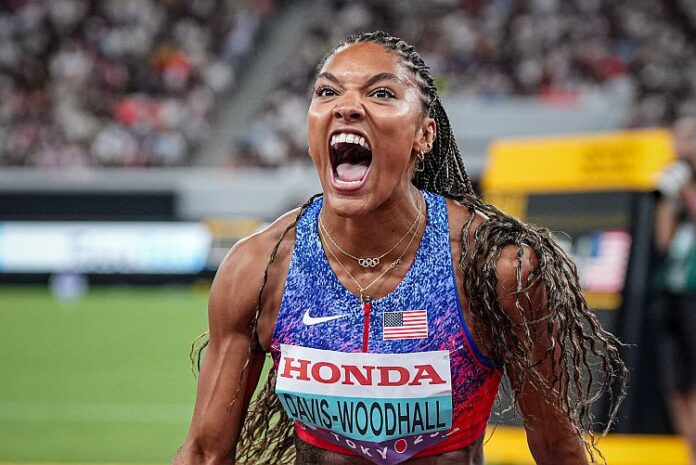
ANTI-DOPING: World Anti-Doping Agency says Chinese doping incident whistleblower search only following up on athlete council request

The Sports Examiner: Chronicling the key competitive, economic and political forces shaping elite sport and the Olympic Movement.★

To get the daily Sports Examiner Recap by e-mail: sign up here!

≡ WADA’S RESPONSE TO ARD ≡

The World Anti-Doping Agency’s head of Intelligence and Investigations, Gunter Younger (GER) told reporters Thursday that it is, indeed, trying to uncover the source of information provided to news media about the 2021 Chinese mass-positives doping incident.

Younger said, “We’re not chasing the whistleblower. What we want to try to find out is how the leak happened and what was the motivation of the leak.”

He said the agency maintains strong protections on behalf of informants, but think the leak could have been politically motivated.

The Russian news agency TASS reported a longer, explanatory statement from WADA:

“A misleading article appeared on a German sports website, in which the authors attempt to present a completely different, erroneous story based on false assumptions and rumors.

“In May 2024, the WADA Athletes’ Council issued a public statement asking WADA’s Intelligence and Investigations Department to investigate the leak of personal data related to cases of unintentional detection of banned substances in samples of Chinese swimmers in 2021.

“This data included highly confidential medical records of athletes, some of whom were minors at the time, and the Athletes’ Council was concerned that the rights of these athletes had been violated by those who leaked confidential information to media outlets, which in turn published the names, photographs, and medical data of these children.

“As for the details of the ongoing investigation, WADA’s Intelligence and Investigations Department operates independently of the organization’s leadership.”

The story by the German ARD channel reported that the inquiry “is being conducted with the consent of President Witold Banka [POL] and director general Olivier Niggli [SUI]”:

“According to information from the ARD doping editorial team, various anti-doping organisations have been asked by WADA in recent months to disclose details that could lead to the identification of possible whistleblowers in connection with the ‘China file’. This happened despite the security risks that such an action entails for potential whistleblowers in Chinese affairs.”

ARD editor Hajo Seppelt (GER) wrote on X:

“What a mockery, how WADA officials twist even the simplest facts in the China case. Instead, they hunt down brave whistleblowers (with the argument that they’ve been urged to do so). I wonder who in WADA leadership can still look themselves in the mirror.”

Questions over the doping positives of 23 Chinese star swimmers at a national meet in January 2021 continues to dog WADA, despite extensive efforts by the agency to clear itself, including a report from the former attorney general of the Swiss canton of Vaud, which raised more questions than it provided answers.

Criticism continues among news media – including ARD – but also by the U.S. Anti-Doping Agency, the U.S. Congress and the U.S. Office of National Drug Control Policy, which has refused to pay the U.S. annual dues of $3.6 million for 2024.

ARD’s summary of the affair and the issues it raised included:

“WADA’s handling of the China affair sparked worldwide criticism, and to this day, athlete organisations accuse it of a lack of consistency and transparency, as well as of bowing to the sporting superpower China. In China, an investigation supervised by state security forces in 2021, shortly before the Tokyo Olympics, concluded that all 23 swimmers who tested positive had been unintentionally contaminated by hotel food during a national competition. However, no evidence or detailed explanations were provided.

“WADA nonetheless accepted the Chinese authorities’ arguments without conducting their own on-site investigation. In addition, the Chinese anti-doping agency, CHINADA, deviated from its own rules and did not publish the suspected cases. WADA did not object to this either. Later, WADA leadership claimed that due to the ongoing Covid pandemic, they had been unable to conduct an independent investigation on the ground in China. They also attempted to argue that the small concentrations of the banned heart medication trimetazidine found in the swimmers’ bodies ruled out intentional doping – a claim strongly doubted by many renowned scientists.”

The controversy continues, seemingly without end.

Receive our exclusive, weekday TSX Recap by e-mail by clicking here.
★ Sign up a friend to receive the TSX Recap by clicking here.
★ Please consider a donation here to keep this site going.

For our updated, 850-event International Sports Calendar for 2025, 2026 and beyond, by date and by sport, click here!

MEMORABILIA: Compact Ingrid O’Neil auction 99 offers wide selection of Olympic medals, some low-opening-bid torches, and a boomerang!

A souvenir boomerang created for the 1956 Olympic Games in Melbourne, now on sale at Ingrid O’Neil Auction 99! (Photo: Ingrid O’Neil Auction 99 catalog).

The Sports Examiner: Chronicling the key competitive, economic and political forces shaping elite sport and the Olympic Movement.★

To get the daily Sports Examiner Recap by e-mail: sign up here!

≡ INGRID O’NEIL AUCTION 99 ≡

You never know what turns up in an auction and the 99th auction of Olympic and related memorabilia from Ingrid O’Neil offers 208 lots with the usual star medals, but also an excellent selection of medals and Olympic torches with modest opening bid pricing.

There are 23 items with opening bids of $5,000 or more:

● $26,000: 1976 Montreal silver medal, with case
● $20,000: 2014 Sochi Winter gold medal, with case
● $18,000: 2014 Sochi Winter silver medal, with case
● $15,000: 1992 Albertville Winter silver medal, with case
● $15,000: 2024 Paris Olympic torch
● $14,000: 2014 Sochi Winter bronze medal, with case
● $9,000: 2000 Sydney silver medal (rowing)
● $8,500: 2008 Beijing silver medal (baseball)
● $8,500: 2020 Tokyo Olympic torch
● $8,000: 1928 St. Moritz Winter gold medal

● $8,000: 1928 Amsterdam gold medal
● $7,000: 1960 Rome Olympic torch
● $7,000: 2012 London Olympic flame security lamp
● $6,500: 1029 Antwerp gold medal
● $6,000: 1920 Antwerp silver medal
● $6,000: 1928 Amsterdam bronze medal
● $6,000: 1932 Los Angeles bronze medal
● $6,000: 1964 Tokyo Olympic torch
● $5,000: 1912 Stockholm silver medal
● $5,000: 1920 Antwerp bronze medal

● $5,000: 1932 Lake Placid Winter participation medal
● $5,000: 1948 St. Moritz Winter bronze medal
● $5,000: 2022 Beijing Winter torch

Bargain hunters will note that the auction also has a significant number of Olympic and Olympic Winter Games torches with starting prices of $2,500 or less:

Olympic Games (8): Berlin 1936, Mexico City 1968, Munich 1972, Moscow 1980, Los Angeles 1984, Barcelona 1992, Beijing 2008, Rio 2016.

Olympic Winter Games (3): Vancouver 2010, Sochi 2014, PyeongChang 2018.

There are also torches from London 1948 and Seoul 1988 with a $3,000 starting bid.

Fans of the 1932 Olympic Games in Los Angeles may like a 15 January 1930 official invitation to attend the Games of the Xth Olympiad – with the dates of the Games to be announced – starting at $140.

There are always some unique, even strange, items which pop up in sales like these and this auction includes:

● A harmonica with printed “Olympia” and the Olympic Rings on the outside, produced for the 1936 Olympic Games in Berlin (starts at $100).

● A Berlin Olympic Village map and miniatures set, with painted wooden houses and trees, in a sort of toy diorama. This starts at $300.

● Best item of all: a souvenir boomerang related to the 1956 Olympic Games in Melbourne (AUS), featuring the Olympic rings, created by the Italian community of Melbourne! It starts at $90; no guarantee that it works!

All of these items are available for bids, with the auction ending on 15 November.

Receive our exclusive, weekday TSX Recap by e-mail by clicking here.
★ Sign up a friend to receive the TSX Recap by clicking here.
★ Please consider a donation here to keep this site going.

For our updated, 850-event International Sports Calendar for 2025, 2026 and beyond, by date and by sport, click here!
ESPORTS: Olympic Esports Games deal with Saudi Arabia ends as Coventry reported uncomfortable with event’s direction; this could be an IOC opportunity

The Sports Examiner: Chronicling the key competitive, economic and political forces shaping elite sport and the Olympic Movement.★

To get the daily Sports Examiner Recap by e-mail: sign up here!

≡ OLYMPIC ESPORTS GAMES ≡

While not a complete surprise, the International Olympic Committee announced the rapid end of its agreement with the Saudi National Olympic Committee to create an “Olympic Esports Games” after just more than a year:

“In the last year, the International Olympic Committee (IOC) and the Saudi Olympic and Paralympic Committee (SOPC) have discussed the concept of the Olympic Esports Games at length in line with the partnership they announced in 2024.

“Recently, the two parties and the Esports World Cup Foundation sat down again and reviewed this initiative. They mutually agreed that they will end their cooperation on the Olympic Esports Games. At the same time, both parties are committed to pursuing their own esports ambitions on separate paths. The IOC, for its part, will develop a new approach to the Olympic Esports Games, taking the feedback from the ‘Pause and Reflect’ process into account, and pursue a new partnership model.

“This approach will be a chance to better fit the Olympic Esports Games to the long-term ambitions of the Olympic Movement and to spread the opportunities presented by the Olympic Esports Games more widely, with the objective of having the inaugural Games as soon as possible.”

The July 2024 deal between the IOC and the Saudi NOC specified the “duration of the partnership between the IOC and the Saudi NOC will be 12 years, with Olympic Esports Games held regularly,” and the first event in 2025.

The 2025 start of the project was pushed back to 2027. The joint IOC-Saudi development committee included the Esports World Cup Foundation and IOC and Saudi representatives.

However, the deal unraveled by mid-year, The Esports Advocate reported:

“On Aug. 23, the Esports World Cup Foundation announced the Esports Nations Cup (ENC), a new tournament promising nations vs. nations competition, taking place every two years. The competitions are being co-developed along with Electronic Arts, Krafton, Tencent, and Ubisoft, according to the announcement. The ENC announcement was made at the New Global Sport Conference in Riyadh, Saudi Arabia.”

That sounds a lot like what an “Olympic Esports Games” would look like, including the participation of major game publishers.

The Esports Advocate report also noted that the structure of the gaming industry has been a problem for the IOC, since there are no parallels to the “international federations” in sport. Instead, there are weak associations of publishers – the International Esports Federation and Global Esports Federation – which do not control the actual games (owned by publishers). The IOC has acknowledged this as a difficulty. And, according to the report:

“Ultimately, the Saudis put forward a proposal to the IOC to create a federation of its own, and then the IOC, under [ex-President Thomas] Bach, agreed to it, but when he was replaced by [Kirsty] Coventry, things shifted. She did not like the proposal because it would not provide a democratic process and would ultimately be under the control of the Saudi government in perpetuity, according to our sources.”

Now, the IOC will have to start over.

Observed: This could be an opportunity for the IOC, rather than a setback. World Rowing introduced its “World Indoor Rowing Championships” in 2018, now with both in-person and online versions. The Union Cycliste Internationale has been holding a “Cycling Esports World Championship” – first using the Zwift platform and then MyWhoosh – since 2020.

This week, World Athletics announced “RUN X,” the first “World Treadmill Championship,” to be held in the fourth quarter of 2026.

So, with several Olympic-sport international federations already involved in in-person electronic competitions, and at least a half-dozen more with true electronic games providing virtual versions of their sport, there is enough to start an “Esports Games” in 2026 or 2027.

The possibility to have an event which combines actual physical activity and electronic gaming underscores the IOC’s interest in exercise and sport, as well as integrating gaming. Further, UCI President David Lappartient (FRA) distinguished himself with his work during the Bach Administration as the Chair of the IOC Esports and Gaming Liaison Group and then Chair of the Esports Commission, a position he still holds, and could lead this effort (he was not the IOC’s delegate to the failed committee working with the Saudis).

Such an event could well be put together by 2027, and if the IOC wishes to make a further statement on building bridges between countries, continents and people, it could consider placing the event in one of the world’s major technology development centers: Israel.

No need to be concerned about whether the event will be financially supported by the Israeli government, which is busy with other matters at present. The event can be paid for, in full, by the Indonesian Olympic Committee, as restitution for preventing Israeli athletes from competing at the 2025 FIG World Artistic Championships.

Indonesian entries, of course, would be welcomed.

Receive our exclusive, weekday TSX Recap by e-mail by clicking here.
★ Sign up a friend to receive the TSX Recap by clicking here.
★ Please consider a donation here to keep this site going.

For our updated, 850-event International Sports Calendar for 2025, 2026 and beyond, by date and by sport, click here!
PANORAMA: Milan Cortina ‘26 marks 100 days to go; big Italian Winter Games prize money! WADA trying to find Chinese whistleblowers?

The Olympic and Paralympic victory platforms for the Milan Cortina 2026 Olympic Winter Games (Photo: Milan Cortina 2026).

The Sports Examiner: Chronicling the key competitive, economic and political forces shaping elite sport and the Olympic Movement.★

To get the daily Sports Examiner Recap by e-mail: sign up here!

≡ THE 5-RING CIRCUS ≡

● Olympic Winter Games 2026: Milan Cortina ● The 2026 Winter Games organizers marked 100 days to go before the 6 February opening of the Games in Milan, revealing the designs of the Olympic and Paralympic podiums.

Concerns continue over the construction of the main ice hockey arena, the PalaItalia Santa Guilia, which is running behind schedule, but is expected to be completed in time.

Organizing committee chief executive Andrea Varnier said more than 850,000 of the total of 1.4 million Olympic and Paralympic tickets had been sold so far.

Italian sports officials confirmed that prize money for its medal winners at the 2026 Winter Games will be the same as for Paris 2024: €180,000 for gold, €90,000 for silver and €60,000 for bronze. Legislation is being worked on to allow the winnings to be tax-free.

That’s about $208,814, $104,407 and $69,605 U.S. Italy’s target is 19 total medals, from a team expected to number about 209.

● World Anti-Doping Agency ● The German ARD channel’s doping editorial team reported Wednesday that the World Anti-Doping Agency is seeking to expose whistleblowers who passed on information about suspected doping cases in China to ARD. Human rights organizations are strongly criticizing the so-called ‘Operation Puncture’.”

The effort, which WADA told ARD “was commissioned by its Athletes’ Commission to conduct such an investigation,” could place such informants in danger, as governments generally do not tolerate such behavior. The story noted that the Athletics Integrity Unit had been contacted by WADA on this issue and “declined to exchange information.”

WADA has been suffering since the ARD expose in 2024 of a mass-doping incident among star Chinese swimmers in January 2021, who were ultimately not sanctioned by the Chinese Anti-Doping Agency (CHINADA), with no appeal filed by WADA. The U.S. government, in protest, has withheld its $3.6 million dues from WADA for 2024, and has not paid in 2025.

● U.S. Olympic & Paralympic Committee ● Now, the USOPC medical staff has its own sponsor for the Milan Cortina Olympic Winter Games in February. The healthcare apparel brand FIGS will outfit about 150 physicians, nurses, trainers and other professionals for the USOPC support team in Italy:

“The official Team USA Medical Team kit features specially designed scrubwear, outerwear, knitwear, and accessories, all of which include distinct Team USA Medical Team emblems in a spirited palette of red, white, and blue. To support the healthcare professionals who work tirelessly behind the scenes to power Team USA’s athletes, FIGS is introducing its new FIBREx fabric, which is making its debut in the Winter Games collection.”

● NCAA ● The Athletic obtained a document from NCAA Division I Cabinet Chair Josh Whitman, who is also the Illinois athletics director that included:

“During its October meeting, the Division I Cabinet determined that, for the remainder of the current [2025-26] academic year and for the rosters competing during the 2026-27 academic year, it will maintain existing eligibility rules as they pertain to student-athletes competing in no more than four seasons of athletics competition in a particular sport over a consecutive five-year period.

“The Cabinet is studying these policies, along with several related eligibility rules, and will later consider what changes, if any, to implement for future academic years. When challenged, the current rules have been upheld by the overwhelming majority of courts.”

Discussion is continuing about extending eligibility to five years, but no changes yet.

● Athletics ● Another Kenyan doping ban from the Athletics Integrity Unit, this time it’s Esphond Cheruiyot “for 3 years from 23 October 2025 for Presence/Use of a Prohibited Substance (Trimetazidine).” His results are nullified from 21 September 2025.

He’s a 2:09:46 (2025, now nullified) marathoner and has a best of 1:01:24 in the Half (2024).

● Football ● The U.S. women completed their international match window with a friendly against New Zealand in Kansas City, Missouri, and a 6-0 rout.

Although not quite as quick as the first-minute goals against Portugal, the U.S. was on offense right away and after getting free on the right side via a back-heel pass from midfielder Lily Yohannes, Michelle Cooper sent a line-drive cross to the far side of the New Zealand goal where the onrushing forward Emma Sears blasted it into the net for the 1-0 lead in the 8th minute.

It took 20 minutes for the Kiwis to get deep into U.S. territory and the American offense was unrelenting, but didn’t get a second goal until defender Emily Sams sent another sharp cross across the goal and striker Catarina Macario pounded a right-footed laser toward goal and it flew off the foot of New Zealand keeper Claudia Dickey for the 2-0 edge in the 34th.

In the 44th, midfield star Rose Lavelle found herself at the top of the box, with room, and sent a loose ball screaming inside the goal post for a 3-0 lead to close the half, with the U.S. taking 85% possession and 18-0 on shots!

The goals kept coming in the second half, with Sears scoring in the 55th, Macario again in the 66th and Sears with the hat trick in the 84th. The Americans finished with 82% possession and a 34-3 shots advantage.

The round-of-16 matches at the FIFA women’s U-17 World Cup in Morocco finished on Wednesday, with Canada pounding Zambia, 6-0; Japan blanking Colombia, 4-0; France ousting Spain on penalties (5-4) after a 4-4 tie and Mexico edging Paraguay, 1–0.

In the quarters, Brazil will face Canada and defending champ North Korea will play Japan in the upper bracket. France and the Netherlands and Mexico and Italy will play in the lower half.

● Taekwondo ● At the World Taekwondo Championships in Wuxi (CHN), Iran’s Abolfazi Zandi, the 2022 World Junior Champion, won his first Worlds medal with a 7-3, 12-8 win over Belarus “neutral” Georgli Gurtsiev in the men’s 58 kg final.

Another World Junior winner – from 2024 – Tunisia’s Wafa Masghouni won on criteria in two rounds against Hungary’s Viviana Marton, the Paris 2024 Olympic champ, 7-7 and 0-0, in the women’s 62 kg championship.

The tournament will finish on Thursday.

Receive our exclusive, weekday TSX Recap by e-mail by clicking here.
★ Sign up a friend to receive the TSX Recap by clicking here.
★ Please consider a donation here to keep this site going.

For our updated, 850-event International Sports Calendar for 2025, 2026 and beyond, by date and by sport, click here!

FENCING: Trio of women fencers file class-action vs. USA Fencing over trans entries in January event; pro-trans ex-USA Fencing Chair explains not running again

The Sports Examiner: Chronicling the key competitive, economic and political forces shaping elite sport and the Olympic Movement.★

To get the daily Sports Examiner Recap by e-mail: sign up here!

≡ THE LATEST ≡

Fox News reported that Paris Epee Olympian Margarita Guzzi Vincenti and two other female fencers have initiated a class-action suit against USA Fencing for allowing transgender females to compete in the January 2025 North American Cup tournament in Kansas City, Missouri. From the complaint:

● “Because Defendant USFA’s youth and cadet policy authorized self-identification ‘without restriction’ and lacked any verification mechanism, biological males under 16 were permitted, and could have been expected, to compete in the women’s event.”

● “Defendant USFA also does not disclose to members or participants whether transgender or non-binary athletes are entered in a given event, leaving female athletes and parents unable to make informed participation decisions.”

● “On information and belief, Defendant USFA never implemented any system to monitor or verify compliance with this requirement. In practice, this lack of oversight allowed biological males to register for and compete in women’s events regardless of whether they had completed any hormone-suppression treatment.”

The suit alleges violations of Title IX of the Education Amendments of 1972 and named former USA Fencing Chair Damien Lehfeldt – who was Chair at the time of the January tournament – in the suit as well. USA Fencing replied with its own statement, noting:

“USA Fencing is aware of the class-action complaint filed in the U.S. District Court for the Western District of Missouri on Oct. 29, and we strongly dispute its allegations. We will address this matter through the legal process and have no further comment at this time.”

Lehfeldt, a long-time coach who was elected Chair in September 2024, chose not to run for re-election as Chair and Dr. Scott Rodgers, a Paralympic medal winner, was elected last week as the new federation Board chief.

Lehfeldt explained his reasons in a Friday post on his TheFencingCoach.com site titled, “I’m Tired, Boss,” which included:

● “When I stepped into this role a year ago, I did it because I love this sport and I wanted to help fix some of what was broken. I knew it would be hard work, but I underestimated just how much of my time and energy it would take. Between my full-time job, young kids, and using nearly all my vacation days to volunteer, I’ve reached a point where I’m simply tired. Add that year with the last quad spent with the Men’s team, and Jesus Christ, I’m exhausted, y’all.”

“And to be even more candid: I didn’t sign up to spend my nights and weekends dealing with lawsuits, death threats, and distractions that pull focus from the real work of governing and growing our sport. I want to get back to fencing, to mentoring, to coaching, and to just being part of the community I love, not constantly defending it in courtrooms and comment sections.”

He noted the federation’s financial and membership successes on his watch, along with myriad technical and community changes to provide more involvement. He added that he’s not walking away:

“As for what’s next: I’m not disappearing. I’ll continue serving as an At-Large Director for at least the next year, and I’ll keep doing everything I can to support good governance and responsible leadership from that seat.”

And he said he will continue to support inclusion, including for trans fencers:

“No matter your race, religion, gender, gender identity, or socioeconomic background – this sport belongs to you. That’s not just a slogan to me; it’s a commitment. And even with the challenges we’ve faced, I’m going to keep fighting for a fencing community that’s open, accessible, and welcoming to all.”

Lehfeldt was pummeled at a 7 May 2025 riotous U.S. House Committee on Oversight and Government Reform subcommittee on Delivering on Government Efficiency which degenerated into name-calling between the Republican and Democrat committee members. Prior, pro-trans statements made by Lehfeldt were highlighted by Republicans and he insisted that physical differences between men and women are not relevant in fencing:

“Ultimately, fencing is a sport of strategy and technique. More than anything else, those elements will most frequently determine who prevails. And when it comes to strategy and technique, neither sex has any inherent advantage. For that reason, among others, transgender status does not confer any inherent advantage over a cisgender fencer.

“Indeed, cisgender women have beaten transgender women in 55% of the bouts for which USA Fencing has data.”

USA Fencing changed its participation policy on Lehfeldt’s watch as of 1 August 2025 to comply with instructions by the U.S. Olympic & Paralympic Committee that all National Governing Bodies align with President Donald Trump’s 5 February 2025 Executive Order 14201, “Keeping Women Out of Men’s Sports” and ban trans women from competing in the women’s category.

Receive our exclusive, weekday TSX Recap by e-mail by clicking here.
★ Sign up a friend to receive the TSX Recap by clicking here.
★ Please consider a donation here to keep this site going.

For our updated, 850-event International Sports Calendar for 2025, 2026 and beyond, by date and by sport, click here!

ATHLETICS: World Athletics’ new “Ultimate Championship” ticket prices and seating revealed; it’s all pretty reasonable!

Ticketed seating for the 2026 World Athletics Ultimate Championships in Budapest (HUN) (Image: World Athletics).

The Sports Examiner: Chronicling the key competitive, economic and political forces shaping elite sport and the Olympic Movement.★

To get the daily Sports Examiner Recap by e-mail: sign up here!

≡ ULTIMATE CHAMPIONSHIP ≡

For track & field, the pillar events of the four-year Olympic cycle has been the same for decades:

Year 0: Olympic Games
Year 1: World Athletics Championships
Year 2: nothing
Year 3: World Athletics Championships
Year 4: Olympic Games

These championship events are supported by a season-long Diamond League, now 15 meets, with a two-day final, usually in Brussels (BEL) and Zurich (ZUI).

Under British President Sebastian Coe, World Athletics is trying to create new interest in the “middle year” between World Championships and drummed up a new “Ultimate Championship” for 2026:

● Three-day event in Budapest (HUN)
● Three-hour show aimed at television
● Scheduled for 11-13 September
● All finals, in 28 events
● $10 million prize money purse

The fields will automatically include invitations to the 2024 Olympic and 2025 World Championships gold medalists, the 2026 Diamond League winner (finals held the week before) and other top stars from the World Athletics Rankings.

Now, tickets are being readied for sale, with Wednesday’s announcement that sales will open on 10 November, but with a pre-sale window from 6-9 November for those who sign up on the meet Web site.

The per-day pricing, for the meet to be held at the National Athletics Centre – site of the 2023 World Athletics Championships – appears to be quite reasonable, as big-event pricing goes these days (layout shown above; prices in Hungarian Forint):

Finish line: 69,000 HUF ($206.00 U.S.) ~ 2 sections at the finish line (pink)

Category 1: 44,000 HUF ($131.37 U.S.) ~ 4 sections on the home straight (yellow)

Category 2: 29,000 HUF ($86.58 U.S.) ~ 13 sections on the backstraight and two close to the start lines for the sprints and lane races (blue)

Category 3: 15,000 HUF ($44.78 U.S.) ~ 14 sections on the turns (purpose)

There are also Category 4 sections (gray), which are not being sold, and will be used for news media, officials, sponsors, guests and athletes. These comprise seven sections on the home straight and four sections on each turn (11 total).

The National Athletics Centre sat 36,000 for the 2023 Worlds, with special second-decks which have been removed for permanent use. The listed capacity of the stadium now is 14,000, but with strong sales, might be augmented.

Receive our exclusive, weekday TSX Recap by e-mail by clicking here.
★ Sign up a friend to receive the TSX Recap by clicking here.
★ Please consider a donation here to keep this site going.

For our updated, 850-event International Sports Calendar for 2025, 2026 and beyond, by date and by sport, click here!

INDONESIA: After Israel gymnastics ban, Indonesian National Olympic Committee meets with IOC, says the “results were positive”

The Sports Examiner: Chronicling the key competitive, economic and political forces shaping elite sport and the Olympic Movement.★

To get the daily Sports Examiner Recap by e-mail: sign up here!

≡ INDONESIA MEETS IOC ≡

Following the brazen refusal of the Indonesian government to allow Israeli athletes into the country for the just-concluded FIG World Artistic Championships in Jakarta, the International Olympic Committee asked representatives of the Indonesian National Olympic Committee to discuss the situation in Lausanne (SUI).

That meeting was on Tuesday afternoon, with Indonesian NOC chief Raja Sapta Oktohari and four members of the NOC’s Executive Committee. Oktohari told Indonesian media that everything went fine:

“Our diplomacy with the IOC went very well and the results were positive. We provided a comprehensive understanding of the current situation, both in gymnastics and in Indonesia in general. From this meeting, we gained a breath of fresh air and a positive meeting point to continue the dialogue constructively.

“Essentially, we have succeeded in improving communication channels with the IOC. They understand Indonesia’s position, and we also understand the IOC’s responsibility to uphold the principle of non-discrimination. Now the focus is no longer on the problems that occurred yesterday, but how we move forward, today and tomorrow, to build a joint solution.”

Oktohari essentially doubled down on the Indonesian government’s action against Israel, in polite, diplomatic language:

“It should also be emphasized that the Indonesian government’s stance reflects the stance of the Indonesian nation. We continue to uphold the values of sportsmanship, we support and uphold the Olympic Charter, but we also want and will always advocate for world peace.

“Communication and transparency will always be the keys to success. Because this is not yet complete, it is still a process towards success.

“We also explained that the Indonesian government’s stance is not just about sport, but also about maintaining and ensuring the safety of all parties involved. This stance also upholds and supports the Olympic Charter and serves as the basis for advocating for world peace.”

Oktohari says he hopes for the best for the future:

“We want this momentum to be a new beginning in strengthening global trust in Indonesia. Good communication, an open attitude, and constructive diplomacy are our path to sustainable solutions.”

The IOC did not make any statement about the meeting on Tuesday. In its unhappy declaration of 22 October, the IOC said it has ended discussions about future Olympic events being held in Indonesia and asked the International Federations to do the same.

It also asked the Federation Internationale de Gymnastique to come to Lausanne to explain its position of meek acquiescence to the Indonesia ban of the already-registered Israeli team.

Receive our exclusive, weekday TSX Recap by e-mail by clicking here.
★ Sign up a friend to receive the TSX Recap by clicking here.
★ Please consider a donation here to keep this site going.

For our updated, 850-event International Sports Calendar for 2025, 2026 and beyond, by date and by sport, click here!