


















★ The Sports Examiner: Chronicling the key competitive, economic and political forces shaping elite sport and the Olympic Movement.★
★ To get the daily Sports Examiner Recap by e-mail: sign up here! ★
≡ WORLD CUP TOURISM ≡
“I’m not as optimistic as I was three months ago, but I’m not ready to call it a bust.”
That’s Harry Carr, senior vice president of commercial optimization at Pivot Hotels & Resorts, speaking for a 12 March post by hospitality and real estate analytics firm CoStar titled “Hoteliers’ optimism weakens as US World Cup demand softer than expected.”
The story’s main findings:
● “There’s little doubt among hoteliers and analysts alike that the World Cup will bring positive hotel demand to each of the 16 host markets.”
● “The latest forecast from CoStar and Tourism Economics projects a 1.7% increase in U.S. revenue per available room for the months of June and July, driven by a 12.7% increase in RevPAR [Revenue Per Available Room] at U.S. host markets for those months.”
● “But questions and concerns about hotel demand not being as positive as expected continue to pile up as the tournament nears, dampening the sentiment surrounding the blockbuster event.”
For example, Carr said that FIFA is returning some of its blocked rooms now, in some cases, the entire block at a hotel, with no reservations made at all. The cut-off dates have been 120 out in some properties, 90 days – mid-March – in others:
“I think it’s just they overcalculated. I don’t know if it’s just the demand itself or the current conditions that are pushing it away, but we are much less bullish about World Cup than we were three months ago.”
Another operator noted pick-up rates by FIFA of just 15%.
Hotels are reacting. Lior Sekler, chief commercial officer at HRI Lodging, said, “We’re opening transient, we are removing length-of-stay restrictions, we’re offering inventory to groups outside of FIFA. We’re kind of like business as usual.”
Jan Freitag, national director of hospitality market analytics at CoStar, opined:
“The overall numbers are likely going to be a little bit disappointing if the trends hold that we’re talking about today. … Maybe what’s going to happen is that we’re going to see this tale of two World Cups, that what happens in June is underwhelming and what happens in July is on par or better.”
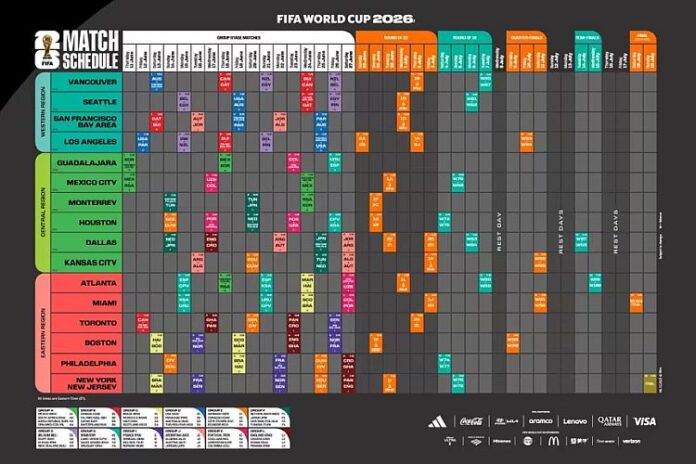
That would be after the group-stage matches conclude and the tournament moved into the elimination stage starting on 28 June and continuing to the final on 19 July.
A Forbes.com review noted comments from CoStar Senior Director of Hospitality Market Analytics Chantal Wu, who said that accommodations demand during the tournament will boost RevPAR by a modest 1.2% in June and 1.5% in July. That’s down from a 1.7% projected increase for tournament time just a month ago, and “only a quarter of the boost received when the U.S. hosted the World Cup in 1994.”
This does not mean that no one is coming. Wu said:
“For some of the larger international gateway markets – Dallas, Los Angeles, Miami and New York – we’re projecting double-digit RevPAR growth for both June and July.”
She did say that Kansas City is projected for a small REVPar decline in June (0.1%) ad 6.3% in July, due to its location and that it is not an international gateway.
But this is not the name-your-price rush that had been expected, based on FIFA’s projections of a 50/50 domestic-international tourism split. And while the demand for tickets is great, to the extent that international travelers do not come, they will be quickly absorbed by local or national demand … who may not even stay in a hotel.

★ Receive our exclusive, weekday TSX Recap by e-mail by clicking here.
★ Sign up a friend to receive the TSX Recap by clicking here.
★ Please consider a donation here to keep this site going.
For our updated, 45-sport, 910-event International Sports Calendar for 2026 and beyond, by date and by sport, click here!