



















★ The Sports Examiner: Chronicling the key competitive, economic and political forces shaping elite sport and the Olympic Movement.★
★ To get the daily Sports Examiner Recap by e-mail: sign up here! ★
≡ BUSINESS vs. LABOR ≡
The continuing tug-of-war between business interests and labor in the City of Los Angeles got hotter at the end of the year and may have to be decided by voters later in 2026.
While this has nothing directly to do with the LA28 Olympic and Paralympic organizing committee, it will have an indirect impact on costs – depending on the outcome – and may have a significant impact on business in the city in the run-up to 2028.
Today’s fight goes back to the approval by the Los Angeles City Council and Mayor Karen Bass of the so-called “Olympic Wage” ordinance that went active in September, raising the minimum wage for many airport and hotel workers at larger hotels to $30.00 per hour on 1 July 2028 in steps from $22.50 per hours in 2025 to $25.00-27.50-30.00 in 2026-27-28.
At the same time, however:
● Business interests filed a petition for an initiative to repeal the City’s business tax, which would remove a projected $805 million from the City’s already-precarious budget and create another financial disaster. The petition was approved for circulation last October.
● L.A. City Council President Marqueece Harris-Dawson filed a motion on 5 December to stretch out the Olympic Wage increases to 2030, starting at $24.00 on 1 July 2026 and then to 25.00-$27.50-29.00-30.00 to 1 July 2030.
Labor groups, notably the activist Unite Here Local 11 union and the L.A. County Federation of Labor railed at the motion, which will be considered by the City Council in future hearings.
In the meantime, the union was busy with its own proposal to revise minimum wages for everyone in the City of Los Angeles, filing a new petition on 29 December 2025.
Labeled the “Olympic Wage Initiative,” it proposes to raise the minimum wage city-wide for businesses with 26 or employees from the current $15.00 per hour to:
● $26.25 on 1 July 2027
● $27.50 on 1 July 2028
● $28.75 on 1 July 2029
● $30.00 on 1 July 2030
Businesses with 25 or fewer employees would also see a raise to $30.00, but in smaller increments to 2032. In both cases, the minimum would be raised annually thereafter by a measure of the Consumer Price Index.
After the usual recitals on how costly it is to live in Los Angeles, the initiative notes:
“Another purpose of this initiative ordinance is to reenact in full through the popular vote certain worker protections in the Citywide Hotel Worker Minimum Wage Ordinance (citations omitted) as they existed as of December 15, 2025 (with amendments in some provisions to increase the protections).
“Reenacting these protections in full through the popular vote is intended to ensure, consistent with state law and the Los Angeles City Charter, that future city councils cannot repeal or amend these protections to weaken or reduce them without the consent of the voters.”
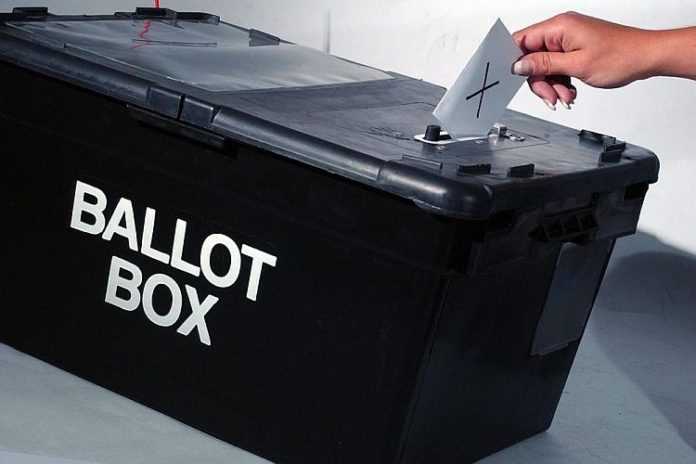
Neither the repeal of the City Business Tax or this new “Olympic Wage” initiative are on the ballot yet for either the June or November 2026 municipal elections. But the race to get both on is underway and if either eventually passes, will have major impacts on the way business is done in the City of Los Angeles, with ripple effects on adjacent cities, Los Angeles County and the State of California.
Observed: Los Angeles is a city at war with itself, which has only intensified as we moved from 2025 to 2026.
For the LA28 organizers, there is nothing to do about either of these initiatives; Olympic and Paralympic organizing committees are temporary and LA28 will close up in 2029. Smartly, LA28 has silently refused to be involved in any way, observing the long-held political neutrality stance of the International Olympic Committee.
But both of these initiatives and other possible ballot measures over sales and other taxes will impact them, possibly significantly and could create an environment of foregoing new community or possibly cultural projects in order to ensure finishing with a surplus at the end of the Games in 2028.
LA28 Chair Casey Wasserman said in a September interview that the first responsibility of the organizers is to ensure there is no deficit:
“We have to pay for these Games ourselves. My job above everything else is to make sure there are zero financial losses. … There may be things we don’t do or have to scale back. My job – full stop – is to make sure we don’t lose a penny. It is the singular driving force for everything we’re doing.”

★ Receive our exclusive, weekday TSX Recap by e-mail by clicking here.
★ Sign up a friend to receive the TSX Recap by clicking here.
★ Please consider a donation here to keep this site going.
For our updated, 45-sport, 910-event International Sports Calendar for 2026 and beyond, by date and by sport, click here!