Home Blog

PANORAMA: Four from U.S. Congress ask WADA on whistleblower search; Jefferson-Wooden, Benjamin in USATF honors; Netflix gets Euro Olympic rights

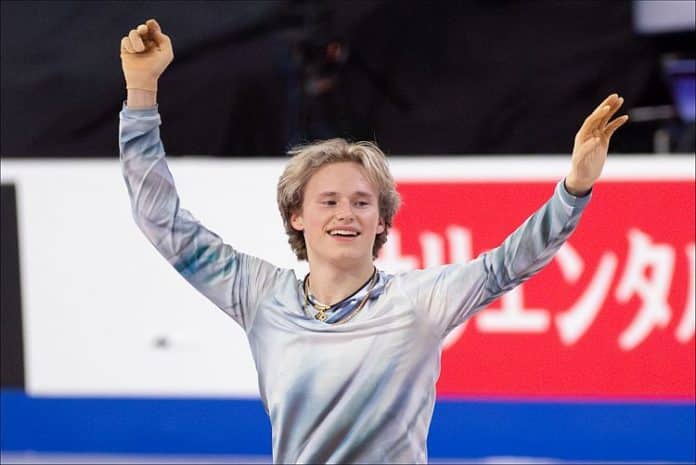
A world title in Tokyo for American 400 m hurdler Rai Benjamin (Photo: Dan Vernon for World Athletics).

The Sports Examiner: Chronicling the key competitive, economic and political forces shaping elite sport and the Olympic Movement.★

To get the daily Sports Examiner Recap by e-mail: sign up here!

≡ THE 5-RING CIRCUS ≡

● Olympic Games 2028: Los Angeles ● The LA28 organizers kicked off their community volunteer effort on International Volunteer Day on Friday with a clean-up of the Venice Beach area that will be the start for the 2028 marathons and triathlon.

The effort was coordinated with Heal The Bay, a long-time advocate for beach health and water safety. Said LA28 chief executive Reynold Hoover:

“Today’s beach cleanup is the beginning of a multi-year volunteer initiative in honor of the 2028 Games that will uplift Los Angeles and engage people across our region in meaningful, service-driven moments.”

● Olympic Games: Television ● Friday’s announcement of the purchase of Warner Bros.-Discovery by Netflix for $72.0 billion in equity and an “enterprise value” of $82.7 billion means that the streaming service will also acquire Olympic television rights.

Warner Bros.-Discovery’s Sports Europe unit holds the streaming rights for the 2026-32 Olympic and Olympic Winter Games, with the European Broadcasting Union holding the over-the-air and cable rights.

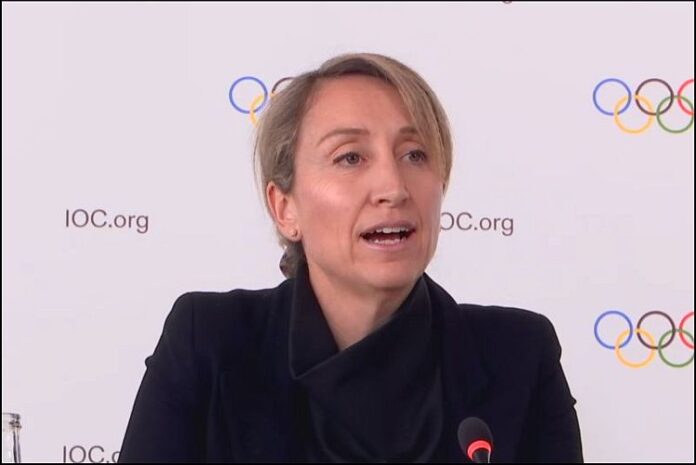
● World Anti-Doping Agency ● Three days after International Olympic Committee chief Kirsty Coventry (ZIM) asked for unity in the anti-doping community, The Associated Press reported on a letter sent by four members of the U.S. Congress asking about the agency’s efforts to find whistleblowers concerning the mass-positives incident of Chinese swimmers in January 2021, that surfaced in news reports in 2024.

“While WADA claims that their motivations are innocent, it appears this investigation’s intent is to intimidate and suppress whistleblowers. If these allegations are accurate, WADA is not defending clean sport but is continuing to defend a cover-up.”

The letter was send by Senators Marsha Blackburn (R-Tennessee) and Chris van Hollen (D-Maryland) and Reps. John Moolenaar (R-Michigan) and Raja Krishnamoorthi (D-Illinois) in a bi-partisan moment. Blackburn’s Senate Sub-Committee on Consumer Protection, Technology and Data Privacy held a hearing on 17 June 2025 titled “WADA Shame: Swimming in Denial over Chinese Doping.”

WADA spokesman James Fitzgerald (IRL) told the AP:

“I can state that WADA I&I is not chasing whistleblowers but rather it is seeking to find out how the leak happened and what was the real motivation behind it. … Politically motivated allegations of a cover-up were made without evidence and have ultimately been proven to be entirely false.”

● Athletics ● USA Track & Field revealed its annual award winners for 2025, with triple World Champion sprinter Melissa Jefferson-Wooden honored with the Jackie Joyner-Kersee Award for best female athlete and Rai Benjamin receiving the Jesse Owens Award for the top male.

Jefferson-Wooden dominated the sprints, winning the Worlds gold in the 100 m, 200 m and as a member of the American 4×100 m relay. Benjamin, the Paris Olympic gold medalist in the 400 m hurdles, won the Worlds gold in Tokyo and earned a silver on the anchor of the men’s 4×400 m relay.

Dennis Mitchell, the 1992 Barcelona Olympic men’s 100 m bronze winner, was selected as Coach of the Year. He was not only Jefferson-Wooden’s coach, but he was also the coach of all four of the U.S. women’s 4×100 relay gold medalists: Jefferson-Wooden, TeeTee Terry, Kayla White and Sha’Carri Richardson. He also coached 200 m medalist Kenny Bednarek and 4×100 m relay winners Christian Coleman and Courtney Lindsey.

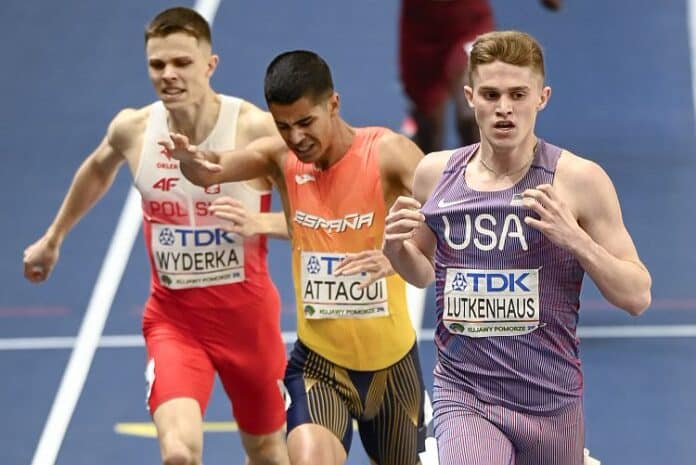
Prep 800 m sensation Cooper Lutkenhaus was named the Youth Athlete of the Year for his amazing 1:42.27 under-18 world record in his second-place finish at the USATF Nationals.

The Para Athletes of the Year were Jadyn Blackwell (T38 100 and 400 m World Champion) and Annie Carey, the T44 women’s long jump world-record setter and gold medalist in the women’s T44 200 m.

● Shooting ● U.S. Skeet stars Vincent Hancock and Sam Simonton were selected as the ISSF Athletes of the Year in Shotgun at the year-end awards presented on Friday in Qatar ahead of the ISSF World Cup Final.

The Norwegian pair of Jon-Hermann Hegg and Jeanette Hegg Duestad won for the men’s and women’s Rifle athletes of the year and China’s Kai Hu and Yujie Sun won the Pistol athletes of the year awards.

Receive our exclusive, weekday TSX Recap by e-mail by clicking here.
★ Sign up a friend to receive the TSX Recap by clicking here.
★ Please consider a donation here to keep this site going.

For our updated, 850-event International Sports Calendar for 2025, 2026 and beyond, by date and by sport, click here!

LOS ANGELES 2028: LA28 says it has reached $2 billion in sponsorships; new study says 2028 Games will offer $13.6 billion-plus economic impact

The Sports Examiner: Chronicling the key competitive, economic and political forces shaping elite sport and the Olympic Movement.★

To get the daily Sports Examiner Recap by e-mail: sign up here!

≡ LA28 AND MONEY ≡

“[W]e estimate that the LA28 Games will generate between $13.6 and $17.6 billion in additional gross domestic product (GDP) for the six-county SCAG region.”

That’s the bottom line from a new study from the Southern California Association of Governments (SCAG) on the economic impact from the 2028 Olympic and Paralympic Games in Los Angeles over the 2024-29 period.

The SCAG region includes the counties of Imperial, Los Angeles, Orange, Riverside, San Bernardino and Ventura, and the three authors noted that the LA28 approach, with no new permanent venues to be built, what the study calls a “low-liability approach.” And the report notes that most of the money spent and generated by the Games will remain at home:

“This analysis shows that the LA28 Games’ local spend requirement appears poised to keep much of the economic impact within the region. While 37 of 41 venues are in Los Angeles County, 33 percent of the expected impact is in the region’s other five counties. The economic impact outside the SCAG region is comparatively small.”

The estimated projected impacts of the 2028 Games in brief:

● $13.62 to $17.63 billion in the Southern California six-county region
● $14.17 to $18.34 billion in California
● $8.96 to $11.97 billion in Los Angeles County (63.2 to 67.9%)
● $2.44 to $2.88 billion in Orange County
● $1.00 to $1.32 billion in Riverside County
● $0.81 to $0.99 billion in San Bernardino County
● $0.40 to $0.46 billion in Ventura County
● $0.01 billion in Imperial County

Now, where does the money come from?

“1. Direct Effects: New spending injected into the region’s economy. This includes the $7.15 billion privately funded operating budget of the LA28 Committee, between $1.89 billion and $2.37 billion in estimate spending by visitors, media, and sponsors, and between $1.25 billion and $4.63 billion in transportation infrastructure investment attributable to the LA28 Games, to develop a low and high scenario.”

● “2. Indirect Effects: The ‘business-to-business,’ or supply chain activity. As businesses in hospitality, event services, construction, logistics, and others receive direct spending, they, in turn, purchase goods and services from other local suppliers, creating a ripple effect.”

● “3. Induced Effects: The household spending that results from new labor income. The wages and salaries paid to employees hired for both direct and indirect activities are spent on local housing, food, and services, generating further economic activity.”

The figures for the LA28 budget are set and the estimate for visitor spending has a 25% spread, but the transportation figure, with a variance of up to 3.7x is obviously questionable. To the extent that the lowest figure is used, it more likely reflects spending on programming which is actually related to the 2028 Games and not to permanent infrastructure being built for decades to come.

Using the lower scenario (reflecting lower transport spending), the economic impact on the region will be felt mostly in 2028:

● $1.59 billion impact in 2024 and prior
● $1.49 billion impact in 2025
● $1.32 billion impact in 2026
● $1.05 billion impact in 2027
● $8.68 billion impact in 2028
● –$0.50 billion impact in 2029

The impact of the 2028 Games will be sizable, but not overwhelming in any way. By contrast, the Los Angeles Economic Development Corporation estimated the Gross County Product for 2024 in Los Angeles County alone at $802.0 billion. That makes the LA28 impact in 2028 alone a little over 1% of the total, assuming 2% growth over the next few years.

A lot of money, but a small part of the overall picture for an economic giant like Los Angeles County.

The report noted that the outlook for LA28 and the Games is, if all goes to plan, bright:

“The ‘no-build’ plan makes the LA28 Games the most sustainable in the modern era, eliminating the carbon footprint and material waste of major construction, while reducing the fiscal liability on the region’s taxpayers. If LA28 can deliver on its promises, it will create a blueprint for a more sustainable, responsible, and socially conscious approach to hosting the world’s premier sporting event.”

Following along with the report’s sunny outlook, LA28 Chair Casey Wasserman confirmed that the organizing committee had hit its $2 billion goal in domestic sponsorship agreements for the end of 2025:

“Surpassing $2 billion in sponsorship more than two-and-a-half years before the LA28 Games arrive is confirmation of our strong position and progress toward delivering a fiscally responsible yet epic event.”

The LA28 budget has $2.517 billion shown for domestic sponsor sales, and after a slow start that included the Covid-19 pandemic, things sped up in 2025, with projections of $2 billion by the end of the year predicted back in February 2025.

U.S. Olympic & Paralympic Properties head John Slusher, who heads the sales effort for the joint venture between LA28 and the U.S. Olympic & Paralympic Committee, told Bloomberg that at least two more “big names” would be joining as sponsors at levels of $100 million or more in 2026.

Receive our exclusive, weekday TSX Recap by e-mail by clicking here.
★ Sign up a friend to receive the TSX Recap by clicking here.
★ Please consider a donation here to keep this site going.

For our updated, 850-event International Sports Calendar for 2025, 2026 and beyond, by date and by sport, click here!

FOOTBALL: FIFA World Cup 2026 Final Draw has Trump, Sheinbaum and Carney picking their countries; Trump gets FIFA Peace Prize

The Sports Examiner: Chronicling the key competitive, economic and political forces shaping elite sport and the Olympic Movement.★

To get the daily Sports Examiner Recap by e-mail: sign up here!

≡ 2026 FINAL DRAW ≡

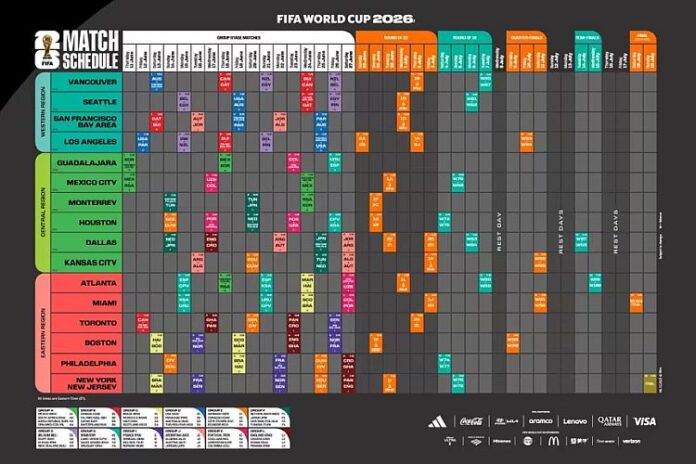
The FIFA World Cup 2026 Final Draw took place Friday at the Kennedy Center in a snowy Washington, D.C., with about 2,000 people watching a series of live performances and videos that finally led to the distribution of the teams into groups for the tournament that will begin next June (with current FIFA World Ranking).

FIFA President Gianni Infantino (SUI) came on for a third time at the 45-minute mark and introduced a surprise group of draw assistants in U.S. President Donald Trump, Mexican President Claudia Sheinbaum and Canadian Prime Minister Mark Carney, to make the first selections.

Canada was selected to be in Group B, then Sheinbaum picked Mexico, assigned to Group A and then Trump for the U.S., in Group A. The rest of the selections followed another musical interlude but finally got started 87 minutes into the show and included (with current FIFA World Ranking):

Group A:
15. Mexico ~ host
22. South Korea
61. South Africa
European Play-Off D winner

Group B:
27. Canada ~ host
17 Switzerland
51. Qatar
European Play-Off A winner

Group C:
5. Brazil
11. Morocco
36. Scotland
84. Haiti

Group D:
14. United States ~ host
26. Australia
39. Paraguay
European Play-Off C winner

Group E:
9. Germany
23. Ecuador
42. Cote d’Ivoire
82. Curacao

Group F:
7. Netherlands
18. Japan
40. Tunisia
European Play-Off B winner

Group G:
8. Belgium
20. Iran
34. Egypt
86. New Zealand

Group H:
1. Spain
16.Uruguay
60. Saudi Arabia
68. Capo Verde

Group I:
3. France
19. Senegal
29. Norway
FIFA Play-Off 2 winner

Group J:
2. Argentina
24. Austria
35. Algeria
66. Jordan

Group K:
6. Portugal
13. Colombia
50. Uzbekistan
FIFA Play-Off 1 winner

Group L:
4. England
10. Croatia
30. Panama
72. Ghana

The assignments of matches to venues and starting times will be announced in another program, coming Saturday at noon Eastern time. Mexico will meet South Africa in the opener in Mexico City on 11 June and the U.S. will meet Paraguay – which it defeated by 2-1 in November – in Inglewood, California on 12 June.

A half-hour into the program, the first FIFA Peace Prize was awarded, as expected, to U.S. President Trump, citing his work in international conflicts, in an administration “marked by actions to pursue peace around the world.”

A massive trophy was awarded, along with a medal which Infantino presented to Trump on stage. Trump put the medal on himself and Infantino read the award certificate. Trump gave short remarks, focused mostly on his efforts to try and settle international difficulties.

The show was hosted by Heidi Klum and Kevin Hart, with interviews by Danny Sanchez with former English star Rio Ferdinand and Samantha Johnson (GBR) hosting the actual draw. The show finished with the Village People singing their 1978 hit, “YMCA”

Receive our exclusive, weekday TSX Recap by e-mail by clicking here.
★ Sign up a friend to receive the TSX Recap by clicking here.
★ Please consider a donation here to keep this site going.

For our updated, 850-event International Sports Calendar for 2025, 2026 and beyond, by date and by sport, click here!

PANORAMA: Olympic Flame arrives in Italy; Ralph Lauren intros U.S. ceremony uniforms; FIFA World Cup 2026 Draw comes Friday

The Milan Cortina 2026 awards ceremonies staff uniforms (Photo: Milan Cortina 2026).

The Sports Examiner: Chronicling the key competitive, economic and political forces shaping elite sport and the Olympic Movement.★

To get the daily Sports Examiner Recap by e-mail: sign up here!

≡ THE 5-RING CIRCUS ≡

● Olympic Winter Games 2026: Milan Cortina ● The Olympic Flame for the 2026 Winter Games was handed to the Italian organizers on Thursday at the Panathenaic Stadium in Athens (GRE).

The Flame moved on to Rome by air – in a lantern! – on Thursday night, and will be formally welcomed in a ceremony in the Piazza del Quirnale on Friday (5th) before the Torch Relay begins its 63-day odyssey on the 6th. The Winter Games will open on 6 February 2026 in Milan.

The Milan Cortina 2026 organizers introduced the uniforms for its award ceremonies crews, which it noted “are intentionally unbranded, ensuring that the spotlight remains exclusively on the athletes and their achievements.”

The design of the Victory Ceremony Uniforms came from a competition among three fashion design schools – IUAV Venezia, Istituto Marangoni di Milano, and Accademia di Brera – with the design from Accademia di Brera selected for “best capturing the vibrant, dynamic, and contemporary Italian spirit that characterizes the Games.”

Ralph Lauren unveiled the opening and closing ceremony uniforms for the U.S. team for the 2026 Olympic Winter Games on Thursday. It’s the 10th straight Games for which Ralph Lauren has outfitted the American team; according to the announcement:

● “The Opening Ceremony uniform features a statement winter-white wool coat with heritage-inspired wooden toggles, an iconic American flag intarsia wool turtleneck sweater and tailored wool trousers.”

● “The Closing Ceremony uniform draws inspiration from vintage ski racing kits, featuring a sporty and modern color-blocked puffer jacket with bold Team USA graphics and a wool turtleneck sweater in a patriotic color palette, paired with a crisp white utility pant.”

● “Both looks are completed with red, white and blue intarsia knit hats and mittens, a leather belt and brown suede alpine boots with spirited red laces. Each item in the uniforms is proudly manufactured in the United States.”

Ralph Lauren is also debuting its Team USA Collection for public purchase, which includes a wider selection of items with a sporting flair using the “red, white and blue palette.”

● International Olympic Committee ● The IOC announced the appointment of five new members of the IOC Athletes’ Commission: Soraya Aghaei Haji Agha (IRI, badminton), Husein Alireza (KSA, rowing), Cheick Sallah Cisse (CIV, taekwondo), Olufunke Oshonaike (NGR, table tennis) and Mariana Pajon (COL, cycling). According to the IOC, the Commission now includes “23 members from all continents (including a member from the Refugee Olympic Team), 13 women and 10 men, representing 15 summer sports and 5 winter sports.”

Eleven candidates are standing for two positions to be elected by athletes attending the Milan Cortina Winter Games.

● Alpine Skiing ● Swiss Olympic and World Downhill champion Corinne Suter, 31, suffered a training crash in St. Moritz on Wednesday with injuries to her left calf, left knee and her right foot.

The Swiss skiing federation said she will not require surgery, but will be out for about a month. The women’s Downhill at the Milan Cortina Winter Games is on 8 February.

● Athletics ● The Athletics Integrity Unit reported a six-year ban for previously-suspended Kenyan distance runner Sheila Chelangat for use of Erythropoietin (EPO) from a 15 September 2024 positive and a follow-up positive on 25 March 2025.

The two positives in a short time period were the grounds for extending the normal four-year ban to six years. Chelangat was a Tokyo Olympian in the 10,000 m and has bests of 31:10.27 for 10,000 m on the track (2021) and a Half Marathon best of 1:06:06 (2024).

● Flying Disc ● The World Flying Disc Federation (WFDF) suffered a loss with the passing of Secretary General Volker Bernardi (GER) last August, but has announced the highly-experienced Jonathan Rigby (GBR) as his successor, beginning on 1 February 2026.

The WFDF is already involved with the Brisbane 2032 organizers to introduce the “Beach 4×4″ event as part of the Olympic program. The recent WFDF World Beach Ultimate Championships in Portimao (POR) attracted a remarkable 2,600 athletes from 38 countries!

● Football ● If you’re interested, the FIFA World Cup 2026 Final Draw will take place Friday (5th) in Washington, D.C. beginning at noon Eastern time and broadcast in the U.S. on FOX.

The show is slated to run two hours and will have the usual added entertainment elements, plus the award of the new “FIFA Peace Prize” in addition to the announcement of who will play who in each of the 12 group-stage pools.

Of the 48 teams to play, 42 have qualified and the remainder will come from play-off tournaments.

The Associated Press reported on two State Department cables which advise “visa applications for businesspeople considering ‘significant investments’ in the United States should be at the top of the list for consideration along with applications from those wanting to travel ‘for major sporting events which showcase American excellence.’”

The story relates that State Department posts “‘should ensure sufficient appointment capacity to accommodate spectators and other fans traveling for events surrounding the [World Cup] tournament,’ said one of the two cables sent Tuesday. ‘These should take priority over all other B1/B2 applications, except those related to American re-industrialization.’”

Secretary of State Marco Rubio previously stated that 400 consular officers have been added to help with visas and that visa appointments are available within 60 days for about 80% of countries worldwide.

Merchandise giant Fanatics announced it has been selected as the “official on-site retail licensee” for the 2026 FIFA World Cup across all 104 tournament matches, and “[i]n addition to in-venue retail, Fanatics will also build out bespoke retail experiences at official FIFA Fan Festival locations within host cities.”

The Fanatics statement noted that it will coordinate its product offers with outside partners:

“Fanatics will work with a variety of world-class brands and official FIFA merchandise partners to curate a robust fan gear assortment for all nations. The company will utilize its on-demand manufacturing capabilities and global supply chain – including local market operations throughout Canada, Mexico and the U.S. – to produce quick-strike products that celebrate unpredictable moments that regularly arise during the tournament.”

The appointment of Fanatics follows its role as retail licensee at the 2025 FIFA Club World Cup.

● Mixed Martial Arts ● Kerrith Brown (GBR), the President of the International Mixed Martial Arts Federation (IMMAF) ripped into the newly-formed Federation of International Mixed Martial Arts (FIMMA) as a usurper, trying to take over the promotion of MMA into the Olympic program. Brown posted a statement on Thursday which included:

“This is not a press release.

“This is thirteen years of real work by athletes, coaches, officials, and national federations who trusted IMMAF to grow the sport the right way.

“Recent announcements from newly created organisations do not change these facts.

“Mixed Martial Arts cannot be reinvented in a press conference.

“It cannot be redefined on a mat to suit political convenience.

“And it cannot bypass the established governance framework of SportAccord, GAISF, and the Olympic Movement.”

He added, “The MMA community knows who has done the real work over the past decade.”

Receive our exclusive, weekday TSX Recap by e-mail by clicking here.
★ Sign up a friend to receive the TSX Recap by clicking here.
★ Please consider a donation here to keep this site going.

For our updated, 850-event International Sports Calendar for 2025, 2026 and beyond, by date and by sport, click here!

LOS ANGELES 2028: L.A. Metro Transit Authority OKs $10 million for community events for 2026 FIFA World Cup, 2028 Games; ‘28 water taxi idea advances

The Sports Examiner: Chronicling the key competitive, economic and political forces shaping elite sport and the Olympic Movement.★

To get the daily Sports Examiner Recap by e-mail: sign up here!

≡ METRO BOARD MEETING ≡

The Thursday morning meeting of the Los Angeles Metropolitan Transportation Authority Board of Directors was dominated by more than two hours of yelling, screaming and complaints about a long-running proposal to build a “gondola” from Union Station in downtown Los Angeles to Dodger Stadium, hotly opposed by the community close to the project and the Los Angeles City Council.

Despite the protests, the item concerning the project was approved as part of a package of items for which public comment had already been heard.

There were other items on the agenda, including three which relate, at least in part, to the 2028 Olympic and Paralympic Games in Los Angeles.

(1) The Board approved, on a 10-0 voice vote, an allocation of $10 million for “Open and Slow Streets” events – programs which eliminate or greatly restrict private auto traffic on designated streets – for the 2026 FIFA World Cup and the 2028 Olympic and Paralympic Games.

This concept has been in place since 2014, the sixth (for 2026) and seventh (2028) editions of the program were up for funding specific to the FIFA World Cup or the 2028 Games:

● The events “[m]ust celebrate the 2026 FIFA World Cup or the 2028 Olympic and Paralympic Games” and “must include arts, culture, or recreation connections.”

● A total of 49 applications were received, requesting $18.5 million in total.

● Funding was recommended for 29 events, with six first-time awardees. The remaining 16 eligible events were placed on a waitlist if future funding becomes available; there were four ineligible submissions.

● Of the 29 which received funding, 28 were granted from $70,000 to $500,000, with one approved for $1.033 million, in the Figueroa Street area in downtown Los Angeles, with multiple venues along the route.

● The 2026 FIFA World Cup sites (13): Bell, Inglewood, Long Beach, Los Angeles (3), Los Angeles County (2), Pasadena, Pico Rivera, Santa Monica, Torrance, and West Hollywood.

● The 2028 Games sites include 16 in all, with 14 for the Olympic Games in Long Beach, Los Angeles (4), Pasadena, Pico Rivera, Pomona, Santa Monica, Santa Clarita, Torrance and three in Los Angeles County, serving multiple communities, plus a Paralympic Games-only program in Los Angeles and a program for both Games in Inglewood.

No funding for events in 2027 is planned; only 2026 and 2028.

(2) A concept for a water taxi from San Pedro to Long Beach during the Games was reviewed, after a report showed that the project was feasible, but with unsure funding and ride times that could be twice as long as using an existing bus line.

Metro Board member Janice Hahn, a longtime representative of the San Pedro area as an L.A. City Council member, Congressional Representative and now a Los Angeles County Supervisor since 2016, asked for the feasibility study and enthusiastically promoted the concept. It requires no funding yet, but could cost up to $1.344 million to operate per the study.

The motion was to have the Metro staff “[d]evelop and issue an industry engagement process (i.e. reverse pitch) to identify private and public operator interest, capabilities, and partnership opportunities to deliver a water-taxi service between San Pedro and Long Beach during the 2028 Games” and was approved by a 10-0 vote.

Whether it actually comes to fruition is in the future; a report back is due in six months.

(3) Metro’s government relations team also noted a continuing pitch for Federal funding for Metro costs for its planned 2028 transportation program of $3.2 billion. The updated description of the 2026 effort included:
.
“In coordination with key stakeholders, Metro will continue to work with officials in the White House, the U.S. Department of Transportation, and Congress to promote and advance the opportunity for the federal government to fund the many mobility enhancing projects being built and being planned across Los Angeles County by our agency and our local, regional and state partners.

“Specifically, Metro is seeking to have funds for a range of mobility projects and transit services directly related to the Games included in the President’s Fiscal Year 2027 Budget.”

Both the Biden and Trump Administrations have rejected any large-scale funding for Metro related to the 2028 Games so far.

In the State government report, it was confirmed that Assembly Bill 1237 for a $5 surcharge to support Metro on tickets sold for the 2026 FIFA World Cup, introduced by Tina McKinnor (D-Los Angeles County), is dead.

McKinnor has agreed to try for a new bill related to the 2028 Games to try and get a ticket surcharge added. Time is short already: the LA28 organizers have indicated that it will begin ticket sales as early as April of 2026.

Receive our exclusive, weekday TSX Recap by e-mail by clicking here.
★ Sign up a friend to receive the TSX Recap by clicking here.
★ Please consider a donation here to keep this site going.

For our updated, 850-event International Sports Calendar for 2025, 2026 and beyond, by date and by sport, click here!

ANTI-DOPING: IOC chief Coventry asks for unity in the anti-doping community to fight cheating, but is not intervening

International Olympic Committee President Kirsty Coventry (ZIM) addressing the World Conference on Doping in Sport in Busan (KOR) (Photo: WADA).

The Sports Examiner: Chronicling the key competitive, economic and political forces shaping elite sport and the Olympic Movement.★

To get the daily Sports Examiner Recap by e-mail: sign up here!

≡ IOC AT THE WORLD CONFERENCE ≡

International Olympic Committee President Kirsty Coventry (ZIM) made an impassioned plea against doping in her address on Tuesday (2nd) to the sixth World Conference on Doping Sport in Busan (KOR).

She also asked the warring factions in the anti-doping community to work together in the future.

First, the anti-doping effort, which Coventry noted has to go beyond just the athletes themselves:

“We all know that athletes are not always the only ones responsible when doping occurs. Too often, they are pressured or enabled by those around them – coaches, doctors, agents, or officials. This is not just an issue of fairness; it is about the health, safety, and wellbeing of athletes. Sometimes, it is a matter of life and death.

“We must encourage athletes who have been pressured into doping to come forward – to show courage by speaking out and helping us expose those who exploit them. This is how we protect others from suffering the same fate.

“We need zero tolerance for anyone who enables doping. Take the example of a doctor found complicit in a doping case: as things stand, the only action we can take is to send that doctor home from the Games and exclude them from future editions. But when that person goes back home, they can simply continue their nefarious work without consequence.

“That cannot be acceptable. It sends the wrong message – to athletes, to parents, and to society. This is why we need the support of governments. Only public authorities have the power to take real, deterrent action – to ensure that anyone who betrays the health and trust of athletes faces serious consequences.”

But she transitioned into the conflicts within the anti-doping community:

“We all share the same responsibility: to build an environment where athletes can trust that they can compete safely and fairly. And that can only happen when we act together, as one team – as one global community.

“But we have to be honest with ourselves: this unity has not always been there in recent years.

“Too often, we’ve seen energy spent on division, finger-pointing, and competing agendas. It has been difficult to watch this divide within our community. There is only one fight that we should be fighting – and that is the fight against doping. But instead, at times, we have been turning on each other. The only people who benefit from this disunity are the drugs cheaters.

“For the sake of the athletes, we need to move past that.”

She continued with her plea for peace inside the anti-doping community, but offered no specific path forward:

“Every single person in this room cares passionately about protecting clean sport. Of course, we will disagree at times, but those differences must never get in the way of our vital objectives.

“If we truly want to be one global anti-doping community that athletes can trust, we have to put our differences aside and pull in the same direction. It’s too easy to point out what others are not doing well enough. The real challenge – the real opportunity – is to be honest about our own weaknesses, to lift each other up, to learn from the past, and to work together as one united team – for the athletes who depend on us to protect them, to protect their right to clean competition.

“We share the same purpose: to protect athletes, to uphold our values, but more importantly to ensure that the next generation continues to believe in sport. What matters is that we keep talking, listening, and challenging each other with mutual respect – always remembering that the next generation of athletes is watching us and holding us accountable.

“So if I have one main request this evening, it is: let’s promise to focus our energy on what truly matters. Let’s put the athletes first, let’s work as one global team, and make sure that our actions match our words.”

The World Anti-Doping Agency has been under pressure since German and American media reports in 2024 surfaced a January 2021 mass-positives incident in China in which 23 star swimmers tested positive for the banned substance trimetazidine, but were not sanctioned by the Chinese Anti-Doping Agency, which claimed the positives resulted from contaminated food. WADA did not investigate the matter on its own and accepted the CHINADA explanation.

WADA later commissioned a report which concluded that the agency showed no bias toward China, but continuing criticism – led by the U.S. Anti-Doping Agency – has been leveled at WADA for not pursuing the case more aggressively and for not following its own rules on provisional suspensions and sanctions.

In response, the U.S. Congress has held hearings on the matter and the U.S. Office of National Drug Control Policy has withheld dues of $3.625 million for 2024 and no indication has been made that 2025 dues have been paid either.

Observed: The IOC certainly could intercede if it desires; it contributes approximately 50% of WADA’s annual budget. But Coventry did not promise to intervene and the positions of the two sides has not changed in months, and shows little promise of movement unless more direct actions are taken by either side, or an outside force, which will apparently not – for now anyway – be the IOC.

Receive our exclusive, weekday TSX Recap by e-mail by clicking here.
★ Sign up a friend to receive the TSX Recap by clicking here.
★ Please consider a donation here to keep this site going.

For our updated, 850-event International Sports Calendar for 2025, 2026 and beyond, by date and by sport, click here!
ATHLETICS: USA Track & Field reply on Board actions: “not taken lightly … the board had no choice but to act in the best interest of the organization”

The Sports Examiner: Chronicling the key competitive, economic and political forces shaping elite sport and the Olympic Movement.★

To get the daily Sports Examiner Recap by e-mail: sign up here!

≡ USATF REPLIES ≡

Late Wednesday, USA Track & Field provided a statement, following The Sports Examiner story posted Tuesday on turmoil within the USATF Board of Directors.

The statement is presented below as received and in full:

Earlier this week, communications between the USATF National Office and three suspended members of USATF were published on a sports website. The letters were accompanied by interpretations and commentary from the involved parties. While USATF does not believe in discussing personal business matters in the public forum, we do believe in facts and transparency.

At a board meeting on November 24, 2025, USATF’s Board of Directors voted to instruct CEO Max Siegel to suspend the memberships of Mike Conley and Kristie Killough-Ali under Regulation 21, Paragraph T of USATF’s bylaws. This regulation grants specific authority to the CEO to intervene in urgent situations involving USATF members or entities. In this case, the board provided the authorization to “protect USATF’s material commercial interests”.

The actions came after outside counsel representing USATF in a defamation lawsuit brought forth by Jim Estes advised the board that Conley and Killough-Ali are likely to be critical witnesses in the case and their positions may be adverse to USATF’s interest in the litigation. Prior to their suspension, both Conley and Killough-Ali were asked to voluntarily resign from their positions within the organization. However, both declined to do so. Killough-Ali has requested a hearing with the board and it will be held this month.

At the same board meeting, the board voted to suspend the membership of Jeré Summers-Hall, also under Regulation 21, Paragraph T of USATF’s bylaws and falling under the category of “protecting athletes or other members from the risk of harm.” This suspension is the result of serious concerns raised by athletes – including multiple Olympic medalists – regarding Summers-Hall’s treatment of athletes, volunteers and the national office staff. The athlete voice is paramount in the governance matters of USATF. Thus, it is imperative that the athlete representative displays and commands civility and respect. Summers-Hall will also have a hearing with the Board of Directors.

These steps were not taken lightly nor without exhaustive efforts to avoid them. However, following failed attempts to intervene, the board had no choice but to act in the best interest of the organization. These decisions were made in near unanimity by a board of directors that, while diverse in their perspectives, remains laser-focused on the business of running a national governing body and putting athletes first.

The story of these unfortunate matters will be dictated by the due process afforded to all parties involved. As such, USATF will not be issuing further statements or sharing further information while the cases move forward.

Receive our exclusive, weekday TSX Recap by e-mail by clicking here.
★ Sign up a friend to receive the TSX Recap by clicking here.
★ Please consider a donation here to keep this site going.

For our updated, 850-event International Sports Calendar for 2025, 2026 and beyond, by date and by sport, click here!
PANORAMA: Brisbane ‘32 introduces Games “vision”; long jump take-off zone idea abandoned; MMA now has three competing federations!

Upper section – with the hidden scene – from the LEGO Editions FIFA World Cup Official Trophy Set (Photo: LEGO).

The Sports Examiner: Chronicling the key competitive, economic and political forces shaping elite sport and the Olympic Movement.★

To get the daily Sports Examiner Recap by e-mail: sign up here!

≡ THE 5-RING CIRCUS ≡

● Olympic Games 2032: Brisbane ● “Believe. Belong. Become. Brisbane 2032”

That is the “vision” for the 2032 Olympic Games, announced Wednesday after a long consultation with more than 6,000 in Australia, including about 3,000 from the State of Queensland, where the Games will take place. The “core beliefs” encapsulated in the vision:

“● Believe – belief in the power of sport and the Australian spirit, which together unlock limitless potential, grit and heart to go further than ever imagined.

“● Belong – a vision in which everyone is welcome at the Games, with every person celebrated, creating a playing field that is fair and fun.

“● Become – a moment of opportunity for Brisbane, Queensland and Australia, harnessing the magic of the Games to become stronger and move into an exciting new era.”

The Brisbane 2032 Games are scheduled from 23 July to 8 August 2032, with the Paralympic Games from 24 August to 5 September.

● Olympic Winter Games: French Alps 2030 ● The International Olympic Committee Coordination Commission for the 2030 Winter Games got a good look this week at the existing sites that will be the backbone of the Games, this time in the Auvergne-Rhône-Alpes region.

The commission visited the well-known venues at Val-d’Isere (alpine skiing), La Plagne (bob-luge-skeleton), Courchevel (alpine skiing-ski jumping), La Clusaz (cross country skiing) and Le Grand-Bornand (biathlon), with commission head Pierre-Olivier Beckers (BEL) explaining:

“Here in the French Alps we are talking about an exemplary project, relying extensively on existing infrastructure. This responsible approach fully aligns with the ambitions, realities and challenges of the host territories. It demonstrates the collective will to design great Games that are sustainable, financially responsible and respectful of their environment.”

● Anti-Doping ● The Associated Press reported on the use of peptides – strings of amino acids that are the components of proteins and can help regulate body processes – as widely-available substances that are fairly easy to acquire and hard to detect:

“Though some peptides — insulin and the newly popular weight-loss dynamo GLP-1 are among the best examples — are time-tested, perfectly legal (with a prescription) and effective, other substances in the category are not legally marketable, either as supplements or prescription or over-the-counter drugs.”

The World Anti-Doping Agency is well aware of the issue and has been working through national and regional anti-doping organizations to stay ahead where possible. But it is a growing challenge.

● Aquatics ● World Aquatics said that it paid prize money of $10.13 million in 2015, with almost half going to swimmers:

● $4.38 million: Swimming
● $1.99 million: Diving
● $1.53 million: Water Polo
● $1.01 million: Artistic Swimming
● $916,000: Open Water Swimming
● $214,000: High Diving

Of the $10.13 million total, $6,000,300 was paid as prize money at the 2025 World Aquatics Championships in Singapore.

● Athletics ● Britain’s The Guardian reported that the World Athletics experiment with a “take-off zone” for the long jump has been ended.

Sean Ingle reported that the idea met with “widespread hostility from athletes” and was closed, with federation chief executive Jon Ridgeon (GBR) explaining:

“The reality is the athletes do not want to embrace it. So we’re not going to do it. You ultimately don’t go to war with your most important group of people.

“Even though I would argue we identified a problem, and found a viable solution, if the athletes don’t want it, fine, we drop it. But I don’t regret looking at that. I think that’s our job as the governing body.”

● Football ● Announcing a tie-in with the 2026 FIFA World Cup, “the LEGO Group will unveil a special product portfolio celebrating football’s biggest stage – with the first product announced, the iconic FIFA World Cup Official Trophy, in collaboration with FIFA.

“Launching in March 2026, this first-ever, official 1:1 detailed replica of world football’s ultimate prize allows fans to bring home a golden piece of the tournament’s magic and display their passion for football ahead of next summer’s biggest global sporting event. The impressive trophy, made of 2,842 LEGO pieces, includes a hidden scene which can be opened via a pullable slip in the upper globe section.”

The trophy kit – measuring 14 1/2 inches tall – will retail for $199.99.

Reversing its announced boycott of Friday’s FIFA World Cup 2026 Final Draw in Washington, D.C., Iran said it would attend with coach Amir Ghalenoei and head of international relations Omid Jamali.

UEFA announced that its Women’s Euro 2029 championship tournament will be held in Germany, in eight cities, chosen over Poland and a joint bid from Denmark and Sweden.

This will be the 15th edition and the third time for Germany as host: first as West Germany in 1989 and then in 2001. In both tournaments, the Germans were the winners!

● Handball ● The Belarusian Handball Federation said that the International Handball Federation will bring Russia and Belarus back into international competitions in 2026. IHF President Hassan Moustafa (EGY) was quoted:

“As the IHF plans to reintegrate the Russian and Belarusian national teams into IHF events starting in 2026, we highly appreciate your patience and cooperation as we work through the final stages of this reintegration.”

Russian and Belarusian teams have been kept out of international competitions per the recommendation of the International Olympic Committee since the Ukraine invasion began in 2022.

● Mixed Martial Arts ● The Federation of International Mixed Martial Arts (FIMMA) held its founding meeting in Athens (GRE) on Wednesday (3rd) with “[r]epresentatives from close to 50 countries and regions worldwide” assembling “to endorse a clear, united path forward for the sport and to support FIMMA’s ambition of securing MMA’s place at the Olympic Games.”

The new federation is being driven by Singapore-based development billionaire Gordon Tang, the head of the Asian Mixed Martial Arts Association, who worked to place the sport on the program of the 2026 Asian Games. According to the announcement, advances are being made for inclusion on regional Games in Africa, the Caribbean and Europe.

The already-established International Mixed Martial Arts Federation (IMMAF), founded in 2012, is understandably unsupportive of the formation of another MMA federation, now the third with the Global Association of Mixed Martial Arts (GAMMA), founded in 2017 in Italy.

In an interview with FrancsJeux.com, IMMAF Board member Bertrand Assoumou (FRA) commented:

“You can’t just show up and say you’re creating an international federation and that you’ll be at the Olympics. There are steps, protocols. I have the impression they’re reinventing the sport: MMA is practiced in a closed arena, which was actually one of our battles when we campaigned for the legalization of MMA in France. It’s not done on a mat or in a boxing ring, but in a cage or a closed ring because it’s a striking and grappling sport. …

“I’m not saying they don’t have the right to exist, but to become an international federation, there’s a process before reaching the Olympic Games. It’s possible that some people have connections with others. MMA doesn’t belong to anyone. However, the fact that federations keep being created isn’t very reassuring; there’s no stability. Some people were with us, then with GAMMA, and now with FIMMA. …

“Ideally, everyone would come together, but that’s not possible. It’s politics; there are always people who want to create their own thing. Someone who truly wants to develop the sport should go where they have the best chance of realizing its potential. That’s not FIMMA, nor GAMMA, it’s IMMAF. If we want to move forward, we need stability. If you believe in a structure, you try to develop it while ignoring ego battles.”

● Shooting ● The U.S. has two finalists for the International Shooting Sport Federation’s athlete of the year in women’s Shotgun in Sam Simonton and Dania Jo Vizzi.

Simonton won the World Championship gold in Skeet, while Vizzi, the 2017 World Champion, won three World Cup medals during the shotgun season. The winners will be announced on Friday.

● Wrestling ● USA Wrestling’s “Living the Dream Medal Fund” awarded $270,000 to eight American wrestlers who won UWW Worlds medals in 2025, including $50,000 prizes to champions Helen Maroulis, Zahid Valencia, Trent Hidlay and Kyle Snyder, $25,000 to silver medalist Levi Haines and $15,000 to bronze winners, Real Woods, Kennedy Blades and Kylie Welker.

The fund is supported by 21 Stewards and since its formation in 2009, has awarded a total of $6.08 million in direct-to-athlete prizes.

Receive our exclusive, weekday TSX Recap by e-mail by clicking here.
★ Sign up a friend to receive the TSX Recap by clicking here.
★ Please consider a donation here to keep this site going.

For our updated, 850-event International Sports Calendar for 2025, 2026 and beyond, by date and by sport, click here!
ATHLETICS: World Athletics approves 2026 schedule for female-category sex tests, to be done at major competitions

The Sports Examiner: Chronicling the key competitive, economic and political forces shaping elite sport and the Olympic Movement.★

To get the daily Sports Examiner Recap by e-mail: sign up here!

≡ GENE TESTING EXPANDS ≡

The World Athletics Council, meeting in Monaco, was informed that 1,015 female athletes took the once-in-a-lifetime SRY gene tests prior to and at the World Athletics Championships in Tokyo (JPN).

The test was announced late, on 30 July 2025 ahead of the 13-21 Worlds, but with cooperation from many of the larger national federations – including USA Track & Field – tests were completed and results provided successfully.

Going into 2026, the testing-requested schedule was made available and will include:

● World Athletics Series events
● World Athletics Ultimate Championship
● Diamond League meetings
● Marathon Major Platinum events

This is more than two dozen events in all and a program for the 2026 World Athletics U-20 Championships in Eugene, Oregon is also being considered:

“Information on the plans for testing at the World U20 Championships will be developed by the end of March 2026, including detailed information on permission protocols for minors.”

The plan is for this testing protocol and eligibility to be gradually extended to cover almost all international competitions by 2030. The World Athletics competition rule 3.5 covering eligibility now reads:

● “3.5.1 In these Rules, ‘biological male’ means someone with a Y chromosome and ‘biological female’ means someone with no Y chromosome, irrespective of their legal sex and/or gender identity.

● “3.5.2 Only the following Athletes may compete in the female category:

“ a. Biological females.

“ b. Biological females who have used testosterone as part of male gender-affirming treatment further to a Therapeutic Use Exemption granted in accordance with World Athletics’ Anti-Doping Rules may not compete in the female category until the passing of a period of time after their last use of testosterone (the period of time will be not shorter than four years and will be determined by World Athletics on a case-by-case basis taking into consideration all relevant factors including the timing, duration, dosages, and effects of the male gender-affirming treatment).

“c. Biological males who have Complete Androgen Insensitivity Syndrome (or another rare disorder of gonadal development) and therefore have not gone through male sexual development including any type of male puberty.

“d. Biological males with a difference of sex development who satisfy the transitional provisions issued by World Athletics.”

For the listed competitions in 2026, “SRY test results will be requested by World Athletics from athletes competing in the female category at the [listed] events during 2026, unless they had a confirmed clear test result at the 2025 World Championships in Tokyo.”

This is an important step for World Athletics, not only for its own competitions, but also for the continuing discussions – in which World Athletics is involved – at the International Olympic Committee level, where President Kirsty Coventry (ZIM) has a working group developing an approach for “protection of the female category.”

Receive our exclusive, weekday TSX Recap by e-mail by clicking here.
★ Sign up a friend to receive the TSX Recap by clicking here.
★ Please consider a donation here to keep this site going.

For our updated, 850-event International Sports Calendar for 2025, 2026 and beyond, by date and by sport, click here!
MILAN CORTINA 2026: Late-finishing Santagiulia ice arena will open for a three-day tournament (and test event) in January

Rendering of the Santa Giulia arena in Milan, by Itinera S.p.A.

The Sports Examiner: Chronicling the key competitive, economic and political forces shaping elite sport and the Olympic Movement.★

To get the daily Sports Examiner Recap by e-mail: sign up here!

≡ SANTAGIULIA ARENA TO OPEN ≡

From 9 to 11 January 2026, the Milano Santagiulia Ice Hockey Arena will be officially inaugurated, hosting the Final Four of the IHL Serie A Championship and the 2025/2026 Italian Cup.”

That’s from a Wednesday announcement that the delayed-in-finishing main ice hockey arena for the 2026 Olympic Winter Games will open for what is in effect a test run with the final of the Italian Cup. Per the statement:

“The January test event will be an important trial ahead of the Games. Seven games are scheduled for a high-adrenaline weekend. The on-ice programme opens on Friday 9 January at 19:00 with the first Italian Cup semifinal. On Saturday 10 January, the second Italian Cup semifinal will take place at 11:00, followed by the two semifinals of the IHL Serie A Final Four at 15:30 and 20:00.

“The grand finale is set for Sunday 11 January with three decisive matches: the IHL bronze medal game at 11:00, followed by the Italian Cup final at 15:30 and the match awarding the 92nd IHL Italian Championship title at 20:00.”

The arena, which is being privately funded and built as a 16,000-seat multi-use arena for the Milan area, was supposed to host the International Ice Hockey Federation’s U-20 Division I-Group B World Championship from 8-14 December.

Because the Santagiulia arena is not ready, that tournament is being played at the smaller Milano Rho ice hockey arena, located in the giant Fiero Milano convention complex, also to be used for the 2026 Winter Games.

There has been continuing concern over the status of the Santagiulia arena from the National Hockey League, with Deputy Commissioner Bill Daly saying in an interview published Wednesday:

“Depends on the percentage you want to place on the possibility the rink doesn’t get completed. If there’s no rink completed, there’s no NHL players going to the Olympics.”

The newest complication came on Monday, when Canadian assistant coach Pete DeBoer told the “Real Kyper & Bourne” radio program:

“Actually, the ice surface, it looks like it’s going to be smaller than NHL rink standards, by probably three or four feet. I don’t understand how that happened.”

● “I don’t believe it’s a huge difference. But I believe there is a difference, and it’s on the smaller, not the bigger side.”

It was later reported that the Santagiulia ice sheet will be 60 m x 30 m or 196.85 feet long and 85.3 feet wide, a little wider, but shorter than the standard 200 feet for an NHL rink. But quite understandable for a European – metric – rink.

ESPN reported that although the slightly different dimensions were not what was agreed between the IIHF, the NHL and the NHL Players Association, it was not believed to be a safety concern and

“The Nashville Predators and Pittsburgh Penguins played games at Avicii Arena in Stockholm, Sweden last month for the Global Series in a rink that was also slightly off from NHL dimensions. The NHL’s solution was to move the lines to account for the missing ice area surface in the neutral zone, rather than either offensive zone.”

The Olympic schedule has the women playing from 5-19 February and the men’s tournament from 11-22 February, utilizing both arenas.

Receive our exclusive, weekday TSX Recap by e-mail by clicking here.
★ Sign up a friend to receive the TSX Recap by clicking here.
★ Please consider a donation here to keep this site going.

For our updated, 850-event International Sports Calendar for 2025, 2026 and beyond, by date and by sport, click here!

ANTI-DOPING: WADA chief Banka calls for enhanced, worldwide powers for intelligence and investigations team at World Conference

World Anti-Doping Agency President Witold Banka (POL) (Photo: WADA).

The Sports Examiner: Chronicling the key competitive, economic and political forces shaping elite sport and the Olympic Movement.★

To get the daily Sports Examiner Recap by e-mail: sign up here!

≡ WORLD CONFERENCE ≡

By 2029, we will establish a global Intelligence & Investigation network spanning all continents. But we must also confront a difficult truth. WADA’s investigators do not have the tools that are available to law enforcement. They cannot seize or access digital devices. They cannot demand the production of evidence.

“They cannot use investigative powers that police rely on every day. This limitation becomes even more critical in countries where doping is not a criminal offense. In those jurisdictions, law enforcement cannot act either.

“This leaves WADA with limited means to investigate even when the need for intervention is clear.

“Despite this, our I&I team delivers results that defy these limitations. Imagine what they could achieve if they had all the tools they need.”

That’s World Anti-Doping Agency President Witold Banka (POL) addressing the sixth World Conference on Doping in Sport in Busan (KOR), with 1,500 delegates and observers at the largest meeting of the anti-doping community and the first since 2019.

Banka then went further:

“This is why I respectfully but firmly call on our stakeholders, including governments, to consider expanding – with appropriate safeguards – the investigative capabilities available to WADA’s I&I Department. Not to punish more athletes. Not to overreach. But to close a gap that criminals exploit, and to enable effective investigations where no other authority has the mandate to act.”

That will be a matter for governments to consider, and the angst created by the Rodchenkov Anti-Doping Act of 2019 (now 21 USC §2401; signed into law in 2020) that allows the U.S. Department of Justice to exercise extra-territorial jurisdiction over doping cases will not make such an agreement easy.

But Banka is being aggressive. He opened with an appreciation for how far the anti-doping movement has come:

“Last month, WADA turned 26. And in those 26 years, global anti-doping has undergone a transformation that few could have predicted in 1999. What was once a fragmented landscape – with different rules, different laws, different expectations – has become a harmonized system built on shared responsibility between governments and the sport movement. Some people doubted the 50–50 model would last. But it has proven to be durable, effective, and indeed essential for the success of the entire global system.

“We acknowledge the leaders who guided WADA through defining moments – Richard Pound [CAN], the late John Fahey [AUS], and Sir Craig Reedie [GBR]. Their stewardship established the institution and strengthened its credibility.

“When I assumed the presidency in 2020, the consequences of Russia’s institutionalized doping scheme were still unfolding. Operation LIMS – WADA’s investigation into the Moscow Laboratory – exposed the truth, and nearly 300 individuals were ultimately sanctioned. That process reaffirmed a fundamental principle: justice in sport may take time, but it will prevail.”

He also warned that the pressure on the anti-doping world is increasing:

“[T]he reality is that doping is evolving at an unprecedented speed. Designer substances, microdosing strategies, new gene technologies, a rise in contamination cases, and increasingly sophisticated trafficking networks are reshaping the threat landscape. The financial stakes in sport have never been higher. Nor has the sophistication of those who want to cheat.

“If we want to stay ahead, science must move at least as fast as those who seek to undermine fairness. This requires investment. Significant investment. And so today I urge governments, the Olympic Movement, and all partners in clean sport to increase support for anti-doping science.

“Empower our laboratories. Accelerate research. Develop the next generation of detection tools. Without decisive action, we risk falling behind forces that do not share our values.”

And he did not miss an opportunity to bash the doping-friendly Enhanced Games, scheduled for May 2026:

“We also stand united against reckless concepts such as the Enhanced Games, which allows for the unregulated use of performance-enhancing substances — abandoning the very principles that give sport meaning. They are not the future of sport – they are a distortion of it.”

Banka also asked for an added emphasis on education: “Education is not an optional extra. It is a must-have. It is the easiest and most effective way to protect athletes and prevent doping.”

Observed: The WADA President did not mention the continuing fight with the U.S. Anti-Doping Agency and the U.S. government – among others – on the WADA response to the 2021 Chinese swimming mass-positives incident, or the subsequent and continuing refusal of the U.S. Office of National Drug Control Policy to pay dues.

But he is asking for more tools to fight doping – more legal backing from governments – following up on the remarks of Athletics Integrity Unit head David Howman (NZL) at the U.S. Anti-Doping Agency’s annual Symposium on Anti-Doping Science in September:

“I suggest we have not reached the ‘ridding’ nirvana, in fact, we are still only catching the dopey dopers and they are getting dopier. Most sophisticated dopers still evade detection.”

So how are Banka and WADA going to get law-enforcement-style permissions? That will a key topic to watch in the future, even if it ends up being a closer cooperation with national or local police powers.

But how would that have helped in the 2021 Chinese swimming mass-positives incident?

Receive our exclusive, weekday TSX Recap by e-mail by clicking here.
★ Sign up a friend to receive the TSX Recap by clicking here.
★ Please consider a donation here to keep this site going.

For our updated, 850-event International Sports Calendar for 2025, 2026 and beyond, by date and by sport, click here!
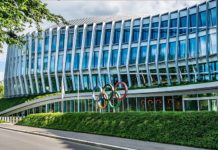
ATHLETICS: USA Track & Field Board at war with itself, suspending two members with the USATF Annual Meeting starting Friday

The Sports Examiner: Chronicling the key competitive, economic and political forces shaping elite sport and the Olympic Movement.★

To get the daily Sports Examiner Recap by e-mail: sign up here!

≡ USATF BOARD TURMOIL ≡

USA Track & Field is experiencing a golden age of performance by American athletes, who won a sensational 34 medals (14 gold) at the 2024 Olympic Games in Paris and 26 medals (16 gold) at the 2025 World Athletics Championships in Tokyo.

Off the field, the federation is navigating significant financial difficulties, ending 2024 with negative net assets of $6.125 million, with $29.730 million in assets and $35.855 million in liabilities.

Now, the USATF Board of Directors is fighting among themselves, dismissing two of its members over the last 10 days:

Jere Summers-Hall, a shot and hammer All-American at Louisville and now an operations specialist for large digital firms, was elected as the Chair of the USATF Athletes Commission in December 2024.

Kristie Killough-Ali, a Chicago attorney, was elected as an Independent Director to the USATF Board in 2018 and whose term will expire in 2026.

The USATF Board did not simply vote Summers-Hall and Killough-Ali off of the Board, but suspended their USATF memberships, making them ineligible for them to attend the USATF Annual Meeting taking place at Lake Buena Vista, Florida this coming Friday and Saturday (5-6 December).

This is especially noteworthy in view of the fact that Summers-Hall submitted 45 proposals and sub-proposals for consideration by the Law & Legislation Committee and then by the membership or other governance bodies as a whole, and Killough-Ali submitted eight.

What’s going on here?

Summers-Hall has been, according to multiple close observers, a relentless inquirer about USATF’s financial affairs, budgeting, expenditures and how athletes – including Paralympic athletes, now under USATF governance – can be further supported, and also how Paralympic athletes can be more deeply incorporated into the USATF governance structure.

On 25 November, she was sent a letter – seen by The Sports Examiner – from the USATF Board which referred to an Executive Session on 24 November:

“During this discussion, the athlete representatives on the Board spoke candidly about concerns they and other athletes have raised regarding the direction of the Athlete’s Commission (‘AC’) under your leadership as Chair.

“The Board received detailed reports of several significant concerns. These include, but are not limited to, allegations that you have not fulfilled the duties of your position by failing to work with the AC to ensure all athlete appointments are made to the organization’s committees; that you have exceeded the authority of your position by making certain decisions and appointments without first obtaining the AC’s input; and that you have harassed and berated other athletes and National Office staff. The athlete representatives also reported that the AC has been unable to advance any of its initiatives over the past year due to the disruption caused by these behaviors. They expressed that, if such conduct continues, athlete engagement in the AC is likely to further decline. In light of these concerns, they requested that the Board take immediate action.

“Given the risk of substantial harm to USATF, including the AC, and after thorough deliberation, the Board moved, seconded, and voted to direct its CEO to take emergency action under USATF Regulation 21-T. Accordingly, your USATF membership is hereby temporarily suspended. Please note, pursuant to Regulation 21-T, you have the right to a hearing before the Board upon your written notice to the National Office within five (5) days of this communication.”

A message sent from the eight USATF athlete members of the Board to the USATF Athlete Commission members on 26 November included:

“The concerns raised regarding Jeré’s conduct and leadership compelled us to act in what we believe is the best interests of both athletes and the broader organization.

“Over the past year, the relationship between the Athletes’ Commission and USATF leadership has deteriorated. After much reflection, it became clear that the Chair’s approach and values no longer align with what athletes need for effective, collaborative representation in our sport.”

Summers-Hall sent a four-page reply on 27 November, which opened with:

“After reviewing the governing documents and applicable federal law, the Board’s emergency action appears to have been taken in violation of the Ted Stevens Olympic and Amateur Sports Act (the ‘Ted Stevens Act’), USOPC Bylaws, and USATF’s own Bylaws and Regulations.

“The cited allegations are not safety or integrity related. They lack specificity, evidence, or any indication of immediate risk. They reflect unsupported internal allegations that should have been addressed, if at all, through regular procedures, not emergency discipline aimed at silencing an athlete’s advocacy carried out in good faith and in the best interests of both athletes and USATF.”

She noted the suspension “appears retaliatory” and requested revocation of her membership suspension and asked for future actions to comply with the Ted Stevens Act and U.S. Olympic & Paralympic Committee requirements.

There was an “emergency meeting” online of the USATF athletes on 1 December, which Summers-Hall – now suspended – was invited to join and during which she explained her position. It eventually ended with the USATF Athletes Commission Board – a group separate from those athletes on the USATF Board of Directors – moving to a private discussion of next steps.

What appears true is that the USATF Board will not allow Summers-Hall to attend the General Meeting in Florida and she will remain suspended pending a Board hearing (where her request to be reinstated is unlikely to be reversed).

Killough-Ali’s temporary suspension was also delivered in a 25 November letter and involve a defamation suit between former USATF staff member and former Board member Jim Estes and the federation, over his consulting role with Chattanooga, Tennessee as a bidder for the 2024 U.S. Olympic Marathon Trials, eventually awarded to Orlando, Florida.

In short, Estes’ suit has involved former USATF Board Chair Mike Conley, the 1992 Olympic men’s triple jump gold medalist and 1993 World Champion and Killough-Ali’s apparent discussions with Conley related to this matter. The 25 November letter included:

After further consultation with outside counsel, the Board discussed the immediacy of discovery and the likelihood that your position will be adverse to USATF. As a result, the Board holds significant legal and ethical concerns regarding your continued involvement in USATF governance committees and other membership functions while Litigation remains pending.

“Although you offered to discuss the matter further with the Board, you did not take actions to resign from the Board and other committees, nor did you volunteer to suspend your USATF membership. Therefore, the Board remains concerned that your continued participation could be detrimental to USATF both with respect to the Litigation specifically and the organization’s broader mission.

“Given the risk of substantial harm to USATF, and after careful deliberation and thoughtful discussion, the Board moved, seconded, and voted to direct its CEO to take emergency action under USATF Regulation 21-T. Accordingly, your USATF membership is hereby temporarily suspended until the Litigation has concluded. Please note, pursuant to Regulation 21-T, you have the right to a hearing before the Board upon your written notice to the National Office within five (5) days of this communication.”

USATF President Curt Clausen, also an attorney, send Killough-Ali a prior letter on 20 November, which asked for her resignation and also included:

“At a minimum, it is likely you will be a critical witness in the Litigation – both with respect to USATF’s defense of Jim Estes’ claims and with respect to USATF’s claims against Mr. Conley. We expect your positions may be adverse to USATF’s interests in the Litigation.”

Killough-Ali replied to Clausen on 24 November, a day before the Board suspension letter arrived and noted, in part:

“1. The concerns reflected in your letter suggest that providing truthful information is inconsistent with loyalty to USATF, the organization. In fact, the opposite is true: honesty, transparency, and legal compliance are essential to fulfilling our fiduciary obligations.

“2. The letter conflates and confuses loyalty for our CEO & COO with loyalty to USATF. My fiduciary duty is owed exclusively to USATF, the organization – not to individual executives. Truthful testimony upholds that duty; suppressing it violates it.

“3. If legally required to testify, I will do so truthfully and in full alignment with my fiduciary duties owed to USATF.”

She called the 20 November letter “the most serious instance of retaliation” and asked for independent legal counsel to help guide the federation through the legal minefield of the Estes case.

Both Killough-Ali and Summers-Hall referred to a non-disclosure agreement that Killough-Ali stated in her reply was from “Attorneys representing the CEO and COO”; Estes’ action against them was dismissed, but the complaint against USATF has been allowed to proceed to the discovery phase.

The non-disclosure agreement was provided to each of the USATF Board members and asked the signees to promise to “not use, disseminate or in any way disclose or otherwise convey any portion of the Confidential Information furnished to it or such other materials described in (1) above to any person.”

The “Confidential Information” included a long list of items, such as financial data, transactions, business strategy, potential event locations and many others. Killough-Ali did not sign it and stated in her reply, “I have NOT breached my fiduciary duty,” and “I remain committed to acting in good faith and in the best interest of USATF, consistent with my fiduciary duties, and look forward to discussing this matter with the Board.”

Summers-Hall also responded on the non-disclosure agreement, noting that the restrictions appeared to limit her ability to talk to Athlete Commission members about information they should know.

She also submitted the non-disclosure agreement to the U.S. Olympic & Paralympic Committee, which, according to Summers-Hill, “the USOPC sent a letter to USATF leadership, now shared with the full [USATF] Board, stating that: [t]he concerns raised about the NDA are reasonable” and should be clarified and more limited.

Meanwhile, the Estes vs. USATF suit goes on and the drama will apparently continue.

All part of being a national federation which was one of six nominees for the World Athletics Member Federations Award for 2025, and won bronze recognition for Best NGB or Organizing Body of the Year at the 2025 Sports Business Awards.”

Receive our exclusive, weekday TSX Recap by e-mail by clicking here.
★ Sign up a friend to receive the TSX Recap by clicking here.
★ Please consider a donation here to keep this site going.

For our updated, 850-event International Sports Calendar for 2025, 2026 and beyond, by date and by sport, click here!
PANORAMA: Russia readying Olympic legal challenge on curling; Nathan Chen voted into U.S. Skating Hall of Fame; SCORE Act advances

World Men's Figure Skating Champion Nathan Chen (Photo: Wikipedia/Aude Mugnier)

The Sports Examiner: Chronicling the key competitive, economic and political forces shaping elite sport and the Olympic Movement.★

To get the daily Sports Examiner Recap by e-mail: sign up here!

≡ THE 5-RING CIRCUS ≡

● Olympic Winter Games 2026: Milan Cortina ● Following its success at the Court of Arbitration for Sport on bobsled, luge, skeleton and skiing, the Russian Curling Federation is readying an appeal of the ban by the World Curling Federation.

In contract to the “neutral athlete” approach by the International Olympic Committee for individuals, it has continued with a recommended ban on all Russian and Belarusian teams. Both World Curling and the International Ice Hockey Federation have kept Russian and Belarusian teams out of their tournaments.

Russian Curling Federation chief Dmitry Svishchev told the Russian news agency TASS: “We haven’t filed a lawsuit yet. But we’ve decided with the Russian Olympic Committee to file a lawsuit with the CAS. This will be done before the New Year. All the documents for the filing are ready.”

The World Curling Olympic Qualification Event is coming up soon, however, from 5-18 December in Kelowna (CAN).

As soon as the International Ski & Snowboard Federation (FIS) statement on the process for “neutral” athletes in its events was published, the Russian Cross Country Skiing Federation was ready for action. Coach Yegor Sorin told TASS:

“We sent the international federation a list of athletes well in advance; it’s practically the entire national team. The next World Cup stage, which will take place this weekend in Trondheim, Norway, will definitely pass us by; we won’t have time to register. Next week, Davos will host the World Cup stage, so we’ll see.

“After Switzerland, there will be the Tour de Ski, which will take place in Italy. I can’t yet assess the likelihood of participating in these competitions, but we are ready to compete in any competition that the FIS allows us to participate in.”

A complication for Sorin is that the FIS regulations require that, as “Individual Neutral Athletes,” the athletes themselves must send a request to be considered as a “neutral,” not their federation.

FIS board member Martti Uusitalo (FIN) told national broadcaster YLE that “The FIS already has a list of athletes from Russia and Belarus who meet the neutrality criteria. As far as I know, successful Russian skiers currently do not meet the neutrality criteria.”

This would specifically include star cross-country skier Alexander Bolshunov, the nine-time Olympic medalist from the 2018 and 2022 Winter Games.

● Collegiate Sports ● The Rules Committee of the U.S. House of Representatives approved Monday the advancement of six bills to the House floor, including H.R. 4312, the “SCORE Act” or, in full, the “Student Compensation and Opportunity through Rights and Endorsements Act.”

According to the Congressional summary, the SCORE Act “provides a framework for the compensation of student athletes for the use of their name, image, or likeness (NIL). This includes addressing certain elements of the court approved agreement to settle the In re College Athlete NIL Litigation (i.e., House settlement).” The bill’s provisions include:

● “[S]tatutorily prohibits institutions, conferences, or interstate intercollegiate athletic associations (e.g., the National Collegiate Athletic Association (NCAA)) from restricting the ability of a student athlete to enter an NIL agreement”;

“[R]equires institutions of higher education that generate $20 million or more in annual revenue from the institution’s intercollegiate athletics activities to (1) provide counseling and medical benefits to student athletes, and (2) establish and maintain at least 16 varsity sports teams”; and

● “Under the bill, student athletes may not be considered employees of an institution, conference, or interstate intercollegiate athletic association.”

The SCORE Act is supported by the NCAA, the large collegiate conferences, and the U.S. Olympic & Paralympic Committee. Its statement emphasized, “The SCORE Act represents meaningful progress to strengthen the future of college sports and preserve pathways essential to the Team USA pipeline. We urge the House of Representatives to pass The SCORE Act in an effort to bring greater stability to the collegiate sport environment.”

Key to the USOPC’s support is the provision that the larger schools be required to maintain the current 16-sport minimum for the Football Bowl Subdivision, ensuring broad sports sponsorship despite revenues coming almost exclusively from football and basketball.

● Canoe-Kayak ● The International Canoe Federation celebrated the opening of its new headquarters in Budapest (HUN), expanding the Hungarian capital as the site of another sports governing body.

World Aquatics announced a major move to Budapest in 2024 and broke ground in October on a combined headquarters and training center to open in 2028. Who will be next?

● Figure Skating ● Olympic men’s champion Nathan Chen, the pioneer of the quadruple-jump era, has been voted into the U.S. Figure Skating Hall of Fame in his first year of eligibility.

Chen won three World Championships golds in 2018-19-21, won three straight ISU Grand Prix Finals in 2017-18-19 and was six-time U.S. champion from 2017 to 2022. He was the first to land five quads in one program, in 2017 and six quads in a single Free Skate, in 2022.

He graduated from Yale University in 2024 and is pursuing a career in medicine.

Chen’s coach, Rafael Arutyunyan, is also being inducted, for his more than 50 years of coaching and success, including fellow Americans Michelle Kwan, Sasha Cohen, Ashley Wagner, Adam Rippon, Mariah Bell and many more.

U.S. Army musician Joseph Inman, the man chosen by the International Skating Union for a committee to create a new scoring system after the 2002 Salt Lake City Olympic scoring debacle, was also voted in. He was a figure skating judge from 1986 to 2018 and was recognized by the ISU with its Gold Award of Merit.

All three will be formally inducted on 9 January in St. Louis, at the U.S. Figure Skating National Championships.

● Football ● The Copa America is supposed to be the South American championship tournament, but it was reported Tuesday that after the Copa was held in the U.S. in 2016 and 2024, it may be held there again in 2028.

As InsideWorldFootball.com observed, “the money coming out of the American market is simply too big to ignore.” However, the placement of the Copa America in the U.S. again is complicated by the 2028 Olympic Games in Los Angeles, with the men’s preliminary football matches to also be played outside of the state of California. But those locations have not yet been announced.

Argentina and Ecuador are also possible sites, but the Inside World Football story asked, “Is it time for CONCACAF and CONMEBOL to consider merging?”

The U.S. men’s National Team will tune up for the 2026 FIFA World Cup with three matches against strong opposition next year, against no. 8 Belgium on 28 March in Atlanta, then no. 6 Portugal in Atlanta on 31 March.

A match against an opponent to be named later is slated for 31 May in Charlotte, North Carolina and then 6 June vs. no. 9 Germany at Solider Field in Chicago in its final pre-World Cup action.

● Shooting ● The International Shooting Sport Federation announced its candidates for its men’s Shotgun athletes of the year, including American star Vincent Hancock, the four-time Olympic champion in Skeet.

In 2025, Hancock won the Worlds gold in men’s Skeet for the fifth time, missing only one shot in the final. The winner, from among Hancock and four others, will be announced Friday.

● Tennis ● U.S. star Serena Williams, now 44, registered once again for the anti-doping testing pool, a required step to return to active play in professional tennis. A six-month testing period is required before a player can return to professional tournaments.

She retired in September 2022, now only as a 23-time Grand Slam title winner, but also a 14-time winner in Doubles and a four-time Olympic gold medalist, in 2012 in Singles but also in 2000-08-12 in Doubles.

Receive our exclusive, weekday TSX Recap by e-mail by clicking here.
★ Sign up a friend to receive the TSX Recap by clicking here.
★ Please consider a donation here to keep this site going.

For our updated, 850-event International Sports Calendar for 2025, 2026 and beyond, by date and by sport, click here!

MILAN CORTINA 2026: Court of Arbitration for Sport says Russian and Belarusian skiers can compete as “neutrals” for Olympic qualification

The Sports Examiner: Chronicling the key competitive, economic and political forces shaping elite sport and the Olympic Movement.★

To get the daily Sports Examiner Recap by e-mail: sign up here!

≡ “NEUTRAL” SKIERS ALLOWED ≡

“Both Panels found that the FIS Statutes protect individuals from discrimination and require the FIS to be politically neutral (Art. 5.2). Consequently, the appeals were partially upheld on the basis that the FIS decision is a blanket exclusion of athletes due to nationality, regardless of whether athletes would meet AIN [“neutral’] eligibility criteria.”

On Tuesday, the Court of Arbitration for Sport issued yet another decision allowing Russian and Belarusian skiers to compete for Olympic qualification as “neutral” athletes and striking down another complete ban by an International Federation.

Appeals to the Court of Arbitration had previously impacted the International Bobsleigh and Skeleton Federation and the International Luge Federation. The International Skating Union had made arrangements in advance to allow a very limited Olympic qualifying path for Russian and Belarusian “neutrals” based on its – ultimately correct – view that the International Olympic Committee would extend its “neutral athlete” program from the Paris 2024 Olympic Games to the Milan Cortina 2026 Winter Games.

The specific background of the dispute with the FIS was summarized thus:

“On 21 October 2025, the FIS Council issued a resolution ‘not to facilitate the participation of Russian and Belarusian athletes as Individual Neutral Athletes (AIN) in FIS qualification events for the OWG and Paralympic Games 2026.’ Two appeals were filed to CAS against this decision, arguing that it is in breach of FIS statutes and contravenes the principles of political neutrality and non-discrimination.

“The first appeal is by the Russian Ski Association (RSF), 12 Russian athletes and para-athletes, and the Russian Paralympic Committee. This case was heard virtually on 1 December 2025. The second appeal is by the Belarusian Ski Union (BSU) and 5 Belarusian athletes. This case was heard virtually on 26 November 2025. The procedures were expedited to accommodate upcoming OWG 2026 qualification events, with operative decisions issued today (without grounds).”

There was an important added note to the Belarusian Ski Union holding:

“Requests by the BSU on how to establish and apply AIN criteria were also dismissed, as they remain under FIS remit.”

Which means that FIS is in control of the AIN process and it issued a statement on Tuesday, taking hold of the situation immediately. It included:

“FIS has acknowledged the CAS decision. All affected athletes who are eligible to request for AIN status – in conformance with the FIS Individual Neutral Athlete Policy – should do so by sending an email to: [email protected] .

“The FIS Individual Neutral Athlete Policy elaborates on the conditions and the process for athletes and support personnel from Russia and Belarus to take part in FIS events. This includes:

“● Athletes may only participate in competitions in the FIS Calendar in an individual and neutral capacity. This means that they cannot participate in competitions which are based on a classification by teams.

“● Support personnel must meet the same eligibility criteria as athletes, and only persons holding a high-level medical or technical function which is essential to the participation of Individual Neutral Athletes may be granted accreditation.

“● Participation in competitions as AIN is conditional on strict neutrality towards the Russian Federation and the Republic of Belarus since the beginning of the war in Ukraine. This requirement is outlined in the following points:

“= No voluntary link with the Russian or Belarusian military or with any other national security agency.

“= No communication associated with Russia or Belarus.

“= No support for the war in Ukraine.”

Once an application is made, then FIS has its own review process, to “verify compliance with the requirements for Individual Neutral Athlete status.” A three-person review panel; of FIS Secretary General Michel Vion (FRA), “[a]n independent sports integrity expert” and “[a] representative of the FIS administration presenting the report of the external due diligence report and anti-doping status.”

No timeline is stated for the reviews to be completed.

Russia has excellent cross-country skiers and if qualified, could be a factor in the Milan Cortina Games. The FIS Cross Country World Cup season has just begun and will continue through 25 January before breaking for the Olympic Winter Games.

Receive our exclusive, weekday TSX Recap by e-mail by clicking here.
★ Sign up a friend to receive the TSX Recap by clicking here.
★ Please consider a donation here to keep this site going.

For our updated, 850-event International Sports Calendar for 2025, 2026 and beyond, by date and by sport, click here!

OLYMPIC GAMES: Authoritative Olympedia.org now fully updated and available, the absolute last word on Olympic facts and statistics

OLYMPIC GAMES: Authoritative Olympedia.org now fully updated and available, the absolute last word on Olympic facts and statistics

The Sports Examiner: Chronicling the key competitive, economic and political forces shaping elite sport and the Olympic Movement.★

To get the daily Sports Examiner Recap by e-mail: sign up here!

≡ OLYMPEDIA.ORG ≡

It’s nice to know you have a source of information you can absolutely depend on.

In the Olympic world, that has been – and again is – Olympedia.org, now fully updated with Paris 2024 Olympic Games and Gwangju 2024 Winter Youth Olympic Games data.

What can you find?

According to Dr. Bill Mallon (USA), one of the originators of the project and an orthopedic surgeon after a stint on the PGA Tour, and one of the world’s foremost Olympic statisticians:

“The database has 100% complete Olympic results – all years, all sports, all events, including demonstration events, Youth Olympic Games, ancient Olympics. The database includes a bio page for every Olympian along with coaches, referees, and administrators. Each bio page has vital data such as date-of-birth, place-of-both, height andweight, clubs, and each athlete’s full Olympic results.

“The website is fully hyper-linked so you can find anything you need fairly easily. In all, the original database on which the website is based has about 150,000,000 data points.

“It is updated daily and full results after every Olympics as will be the case with Milano-Cortina 2026.”

It’s pretty amazing, and truly indispensable. Among the 16 gigabytes of data, you can find (a small sampling):

● Biographies of “Olympic” horses
● Look-up of Olympians who are related
● Olympians who competed in more than one sport
● Olympians who competed for more than one country
● Head-to-head records of countries in team sports

● Lists of all Olympic venues
● List of all Olympic bid competitions and votes
● Highlights of all 293 editions of the original Olympic Games!
● Lists of athlete births, deaths and events held every day of the year!
● Wild lists, such as Olympians who have been in space (one!)

There are biographies on 174,104 Olympic athletes and 1,630,515 results across 65 Olympic and Winter Games.

The development of this astonishing site began in 1997 with four people beginning the work – Mallon, Arild Gjerde (NOR), David Foster (GBR) and the late Magne Teigen (NOR). They gave their team the perfectly-fitting name of the OlyMADMen, with the emphasis on “mad.” There are more than 30 people now involved, from multiple countries.

The project was sufficient deep to be offered on the statistics site www.Sports-Reference.com by 2007. After a long discussion process with the International Olympic Committee, an agreement was made for the IOC to support it in late 2016 and the Olympedia site was opened to the public in May 2020.

The IOC and the OlyMADMen could not reach an agreement on support terms earlier this year, but this has now been completed and the site is fully updated.

As Mallon has noted, it’s not perfect. But the will to make it better and better is there; if you see something wrong, be sure to use the Feedback form and say so!

Receive our exclusive, weekday TSX Recap by e-mail by clicking here.
★ Sign up a friend to receive the TSX Recap by clicking here.
★ Please consider a donation here to keep this site going.

For our updated, 850-event International Sports Calendar for 2025, 2026 and beyond, by date and by sport, click here!
PANORAMA: Russia expects 15-20 in Milan Cortina Games; who invented “kiss & cry”? British swimmers demanding Thames be cleaned!

Mikhail Degtyarev, now the Russian Minister of Sport and President of the Russian Olympic Committee (Photo: Wikipedia via the Office of the President of Russia)

The Sports Examiner: Chronicling the key competitive, economic and political forces shaping elite sport and the Olympic Movement.★

To get the daily Sports Examiner Recap by e-mail: sign up here!

≡ THE 5-RING CIRCUS ≡

● Olympic Winter Games 2026: Milan Cortina ● The Russian sports minister, Mikhail Degtyarev, told Russian Match TV that the Russian “neutrals” presence at the 2026 Winter Games will be small:

“You can count them and it will be no more than 15 to 20. That is the maximum number we can hope to send under the present conditions. Nevertheless, we will be represented. We must broadcast, watch, and support our team. Every victory will be worth its weight in gold, particularly under such difficult circumstances.”

Russian and Belarusian “neutrals” have the possibility to qualify in the skating sports, bobsled, luge and skeleton and possibly in skiing events, depending on the outcome of a Court of Arbitration for Sport case now pending, with the decision to come on or about 10 December.

Russia had 15 athletes qualify as “neutrals” for the 2024 Olympic Games in Paris.

Fun story on the Milan Cortina 2026 Web site on the origin of the “kiss and cry” figure skating area where skaters sit to see their scores. In short:

“The term ‘kiss and cry’ was coined in 1983 by Finnish judge Jane Erkko during the organisation of the world championships in Helsinki. As part of the organising committee, Erkko was creating a map of the facility to share with television stations and decided to give an area beside the rink this unique name.

“The Sarajevo 1984 Olympic Winter Games were the first Olympic Games to officially feature the ‘kiss and cry’. The expression gained popularity in the early 1990s and is now regulated by the International Skating Union.”

● International Paralympic Committee ● While there are those who insist that sport and politics are separate, that is not at all true for the International Paralympic Committee. IPC Deputy Chief Executive Kristina Malloy (CAN) underlined this last week at the “Future in Play: International Forum on Inclusive Sport” in Santiago (CHI):

“The Paris 2024 Call to Action gave guidance to governments on the role of Para sport as a tool to dismantle barriers, changes perceptions, and drive structural reform in sport, education and media systems. A year later this work is being further strengthened with global policy standards and roadmap for collective action. By acting now, governments can leverage sport to reduce inequalities and empower the most marginalised groups, especially the world’s 1.3 billion persons with disabilities.”

Adopted in 2024, the UNESCO-sponsored “Paris 2024 Call to Action” asked U.N. member states to, among many other things:

“Strengthen collaboration across ministries and between different layers of stakeholders to ensure sufficient funding for Para sport as well as for quality physical education inclusive of persons with disabilities.”

● Deaflympics ● The International Committee for Sports for the Deaf, meeting following the Tokyo 2025 Deaflympics, selected Athens, Greece, for the next Games in 2029.

● Basketball ● The U.S. won both the men’s and women’s FIBA 3×3 AmeriCup titles on Sunday in Leon (MEX), as the men defeated Puerto Rico, 21-15, and the women got past Canada, 21-19.

Cameron Forte led the U.S. men with eight points, and was named Most Valuable Player. Allisha Gray scored the deciding two points for the American women on free throws and also won MVP honors.

The U.S. men’s team clubbed Nicaragua by 123-93 in the second of a home-and-home series in the FIBA World Cup 2027 Americas qualifiers on Monday in Atlanta, with forward MarJon Beauchamp again leading the U.S. with 26 points, and guard Kyle Guy and 17 off the bench.

● Football ● FIFA announced that following the 2026 World Cup Final Draw on 5 December (Friday), the actual match schedules and times will be unveiled on Saturday, 6 December at noon Eastern time.

The sites and kick-off times for all 104 matches will be detailed, available on the FIFA YouTube channel and FIFA.com.

After a 3-0 win over Italy last Friday, the American women sailed past Italy in their second match by 2-0 in Ft. Lauderdale, Florida on Monday night.

Striker Catarina Macario scored twice in the first match against the Italians, and took charge of a lead pass from behind the midfield line from forward Lily Yohannes, dribbled into the box and sent a right-footed rainbow over Italian keeper Francesca Durante and into the far side of the net in the 20th minute for the 1-0 lead.

Forward Jaedyn Shaw took a midfield pass from forward Alyssa Thompson, dribbled into the box on the left side, then sent a right-footed spinner that sailed past Durante into the far side of the net in the 41st for the 2-0 halftime edge. The Americans had 64% possession and a 5-2 shots edge.

Both sides had chances in the second half and two U.S. scores were called back for offsides and a foul, and another chance for Shaw was saved by Durante in the 88th. It finished 2-0, with the U.S. at 66% possession and 16-6 on shots. The U.S. finished winning nine of its last 10 matches of 2025.

● Rowing ● World Rowing has been in the forefront of “e-sport” adventures, introducing a an “indoor” championships – using rowing machines – back in 2018. Now, it is expanding with a trial of new “World Rowing Super60 Singapore 2025” concepts in Singapore:

“The Super60 featured three main initiatives: The mass-participation, Super 60 Challenge, where athletes had to row as far as possible in 60 seconds; The Singapore National Indoor Rowing Championships, with 500m, 2000m, and relay races being offered; and the World Rowing Versa Challenge, featuring 16 world-class athletes, including Singapore wild cards.

“The World Rowing Versa Challenge – Indoor Rowing’s premier multi-event championship – arrived in Asia for the first time, attracting top athletes from around the world. Across five intense events, competitors demonstrated extraordinary power, versatility, and endurance.”

Swede Anders Enquist and Britain’s Charlotte Dixon won the Versa Challenge titles last weekend.

Observed: This kind of “connected” sport, which allows simultaneous competitions or measured competitions worldwide is another kind of “e-sport” which can be used to attract participation, beyond the online gaming which so many people are focused on. This sector bears watching more closely in the future; how many Olympic sports could be involved with this type of competition? Cycling and shooting and …?

● Swimming ● The City of Paris’ winning – and costly – effort to renovate the Seine River to allow swimming in advance of the 2024 Olympic Games, after the river had been closed to swimmers since 1923, is raising questions elsewhere.

World Aquatics posted a Friday story of the premiere in Britain of a documentary film, “The Thames Swim Against Sewage”:

Swimmers from across the United Kingdom united for a three-day, 263-kilometre non-stop relay swim [in September] from the source of the River Thames to Westminster, the heart of the nation’s government, to advocate for cleaner waterways.

“In response to the urgent need for action to protect the UK’s rivers, lakes, streams, and seas, a film documenting a relay swim undertaken by eight elite British swimmers premiered last night in London. This group included Paris 2024 Olympians Toby Robinson and Hector Pardoe, as well as world championships competitor Amber Keegan. Emily Forwood, Colleen Blair, Calum Maclean, Jessika Robson, and Daniel Smyth completed the eight-time line-up of elite swimmers taking on the challenge.

“The record-breaking swim attempt was abandoned just outside London due to unsafe water quality, as confirmed by citizen science testing. The film highlights several instances in which the swimmers passed by open sewer drains discharging directly into the Thames, revealing the polluted water they had to navigate. After the relay, Keegan fell ill with symptoms likely due to sewage exposure, despite all the safety precautions taken. Her experience is far from unique; thousands of people report similar illnesses every year.”

Receive our exclusive, weekday TSX Recap by e-mail by clicking here.
★ Sign up a friend to receive the TSX Recap by clicking here.
★ Please consider a donation here to keep this site going.

For our updated, 850-event International Sports Calendar for 2025, 2026 and beyond, by date and by sport, click here!

SPOTLIGHT: Blunt communication helped Laura Dwyer and Steve Emt qualify for Wheelchair Curling Mixed Doubles’ Paralympic debut

Laura Dwyer and Steve Emt are headed to the Milan Cortina Winter Paralympic Games (Photo: USA Curling/Michael Woolheater).

★ The Sports Examiner is delighted to present this important contribution from our patron, the United States Olympic & Paralympic Committee, with a focus on American Paralympic stars. Opinions expressed are those of the USOPC. ★

Emt will be competing in his third Games,
while Dwyer is set for her Paralympic debut.

By Bob Reinert
Red Line Editorial

Any good partnership relies on effective communication. Just ask Laura Dwyer and Steve Emt.

Emt and Dwyer displayed an impressive ability to stay on the same wavelength when they won the mixed doubles event at the U.S. Olympic & Paralympic Team Trials – Curling on 15 November in Sioux Falls, South Dakota.

With the win, the duo punched its ticket to the 2026 Milan Cortina Games, where mixed doubles will make its Paralympic debut.

“It’s exciting, obviously,” said Emt, 55, of DeForest, Wisconsin, who will become the first U.S. wheelchair curler to compete in three Paralympics. “It’s always an honor and a blessing to represent Team USA. It’ll never get old.”

The 48-year-old Dwyer, from Oconomowoc, Wisconsin, will be making her first Paralympic appearance.

“I am really excited for this opportunity, this first time heading to the Paralympics, and with Steve,” Dwyer said. “That’s amazing to be (in the Paralympic mixed doubles debut) and to represent the United States.

Emt and Dwyer defeated Penny Ricker and David Samsa, 9-1, 9-7, to sweep the best-of-three final at the trials. They dominated the opening game and went out to a 6-1 lead in the second before hanging on to win in the extra end after Ricker and Samsa had tied it at 7-7.

Samsa and then-doubles partner Pam Wilson had won a silver medal at the 2023 mixed doubles world championships, the first U.S. podium finish in the event.

“Dave and Penny, first of all, are very formidable opponents,” Emt said. “We know them very well. We knew they weren’t going to go easy. We knew they were going to make a run, and they did. We both made the crucial shots when they were necessary.”

The win at trials isn’t the only success the duo has had this year. Back in March, Dwyer and Emt won the national title in mixed doubles, earning them a spot at the world championships in Scotland. There, the Americans finished in ninth.

During the team trials, Dwyer and Emt’s communication skills were on full display.

As Emt pointed out, it was an area of focus for him and Dwyer, with whom he’s trained and competed in mixed doubles for the past two years.

“That’s the major thing we’ve worked on,” Emt said. “We both love to talk. We love to communicate. In the beginning, it was too much talk. Two years ago, (there was) too much.”

Emt added that they have condensed what they say to each other on the ice surface over the past year.

“What should I say, and what should I hear?” Emt said. “We’ve gotten very good at that. We still have more work to do. We’re going to continue to work on that.”

Because she has much less curling experience than Emt – the national team’s elder statesman – Dwyer has tried to learn as much as possible from her partner.

“I mean, that’s what’s making me continue to get better as a curler,” she said. “Come to find out, we’re not mind readers, and a lot fell through the cracks when we weren’t communicating. Communication, that’s what’s going to propel us moving forward to be tight together and be able to both do our best.”

They can get on each other’s nerves at times, but neither takes offense. U.S. national teammates have joked that the two might want to consider couples therapy.

“We’re cut from the same cloth,” Emt said. “We are very competitive people. We care about each other very much. Our communication’s not for everybody.

“It clicks with Laura and I because that’s the way we are. We’re going to argue, but we know, at the end of the day, we’re in it for the long run and we care about each other, so it’s not a big deal. When you’ve got that ultimate prize in your sights, you’ve got to do all the little things to get there.”

Their competitive nature can lead to some heated exchanges during games, but brutal honesty is often needed during world-class competition.

“If it’s not looking good, we’re going to share that,” Dwyer said. “Sometimes, it sounds harsh. It can sound abrasive, but it’s not. It’s just blunt.”

Dwyer noted that she grew up on a farm. If she didn’t do things right, she would hear it from her dad.

“I’m familiar with that, and I would prefer that,” Dwyer said. “I would rather a direct honesty about what’s going on. Don’t beat around the bush. And that’s where Steve is.”

After a pair of training camps, Dwyer and Emt will take a little time off before ramping up in January and February in preparation for the Paralympics, held 6-15 March in Italy.

They’ll be joined in Milan Cortina by Matthew Thums and Oyuna Uranchimeg – who each competed in the 2022 Games in Beijing – as well as Paralympic newcomers Sean O’Neill, Dan Rose and Katie Verderber.

In the meantime, Dwyer and Emt will keep the lines of communication open as they try to take advantage of the equal opportunities offered to them in recent years by USA Curling and the United States Olympic & Paralympic Committee.

“They’re doing it right,” Emt said. “It’s amazing how far that they have come to allow us to be on the same page (as able-bodied curlers). That’s all we asked for is to be on a level playing surface and given the same opportunities.

“With these opportunities come the expectations, also. We are expected to win a medal. We’re elite athletes. We understand that. And we’re going to do some good things in Italy, for sure.”

Bob Reinert spent 17 years writing sports for The Boston Globe. He also served as a sports information director at Saint Anselm College and Phillips Exeter Academy. He is a contributor to the USOPC on behalf of Red Line Editorial, Inc.

For more, please visit the USOPC Paralympic Educational Hub.

The Sports Examiner: Chronicling the key competitive, economic and political forces shaping elite sport and the Olympic Movement.★

You can receive our exclusive TSX Report by e-mail by clicking here. You can also refer a friend by clicking here, and can donate here to keep this site going.

For our updated, 850-event International Sports Calendar for 2025, 2026 and beyond, by date and by sport, click here!
UTAH 2034: The Utah 2034 wordmark is black and white for a reason; Utah organizers will have about 120 going to see Milan Cortina 2026

Slide from the 1 December 2025 Utah 2034 organizing committee Steering Committee meeting.

The Sports Examiner: Chronicling the key competitive, economic and political forces shaping elite sport and the Olympic Movement.★

To get the daily Sports Examiner Recap by e-mail: sign up here!

≡ STEERING COMMITTEE MEETS ≡

There is lots of chatter – some good, some bad – on the “transition” Utah 2034 logo that debuted last week. During a Utah 2034 Steering Committee meeting on Monday morning, Nate Morley of the Works Collective, who worked closely with lead designer Molly Mazzolini, explained in depth the process of how the mark was created:

“Where did we draw the inspiration? The brief on this project was, essentially, looking at the state holistically and how do we be representative of all that Utah is and the diversity, not only in its peoples and its landscapes, and all the things that Utah is and can be.

“And so we obviously took a look at the landscape, one of the most unique, beautiful landscapes that exist; these other-worldly red-rock shapes that we all know and love from the southern portion of the state, to the dramatic peaks, the snowy, icy mountains that we find throughout the state.

“So we take inspiration from the landscape, we also take inspiration from the history of the state. So looking at indigenous people and some of the legacy that was left there, and then even looking at the urban design of how the city of Salt Lake, for example – or so many cities actually – are laid out in Utah. This incredible, rigid, sort of very organized grid system.

“So our challenge as a design firm was, how do you take the totality of all these inputs: the landscapes, the totality of the state, some of these distinct elements from history … how do you bring it all together in a way that can represent the state?

“We take a snapshot and we see winding canyon roads and peaks and arches and the bobsled course in Park City, and we see canyons in Lake Powell, and the ski runs on a ski resort.

“If we look at the letterforms on the transition logo, what’s interesting about this from our perspective and as we worked with the team at Utah34 is, none of these letterforms are meant necessarily to invoke any one particular element of the state, although you can see elements of all these shapes and forms in the letterforms themselves, but it’s meant to evocative of the state in its entirety.”

Slides accompanying his presentation showed how the letter “A” in “Utah” reflected the famous Delicate Arch in Arches National Park near Moab. Morley emphasized:

“You can see peaks, you can see slot canyons, you can see the line of a skier going down the mountain, you can see all these things represented in the letterforms.”

Mazzolini explained why the mark was presented – at the start – only in monochrome:

“It’s purposefully in black and white right now, as a nod to our Team USA Paralympians, who taught us that black and white is the highest contrast and the best visibility.”

The organizing effort continues apace in Salt Lake City, with the organizing committee’s “listening tour” of state-wide communities continuing. Executive Chair and President Fraser Bullock explained that staying ahead of the task list is not easy:

“The Games are so complicated. You think about most organizations, they have six or seven functions – most companies – we have 48. And so the complexity is almost mind-boggling.

“I remember when I started back in 2002, we had our planning people put together a road map of all the things we needed to go. We had 37,000 milestones and tasks that needed to be done. And it’s almost incomprehensible, 37,000 that needed to be done back then and we’ll have more now with the extended footprint of the [2034] Games.

“So you never want to get behind.”

U.S. Olympic & Paralympic Committee chief executive Sarah Hirshland talked with enthusiasm about its preparations for Milan Cortina:

“Our shipping containers are sitting in the port in Europe, and waiting to be unloaded and spread across the country of Italy, as we do our preparations, our team will start heading over there. We’ve actually got several folks in Milan-Cortina area this week, doing some last-minute preparations. We’ll start heading over in January and getting things set up and to welcome Team USA pretty quickly.”

She was also enthusiastic about the possibilities for the first U.S. medal ever in biathlon (the U.S. won two Worlds silvers in 2025) and on the performance side:

“I think there will be more medals to celebrate than we had at the last Winter Games, it’s always our goal, and Team USA is ready. And I think we’re feeling really optimistic that Italy is ready to welcome us. Of all the things we can say, Italy will be welcoming and Italy will be fun.”

Americans won 25 medals (9-9-7) at the 2022 Winter Games in Beijing (CHN), ranking third in total medals behind Norway (37) and Germany (27).

Utah 2034 chief executive Brad Wilson said a sizable Utah 2034 delegation will be going to the 2026 Games as well:

“On the donor side, we’ve got two waves of approximately 20 people each, and then on the Observer Program side, which includes our staff as well as individuals from our Host Venue communities and other community leaders, we have about 80 individuals who will be joining us. …

“We’re really looking forward to that trip. Even our donors said, ‘put us to work, let us go see the things we need to know to be able to help you plan and create a lasting legacy for our state and our community.’ Of course, the Observer Program is full of busy agendas and a lot of deep-dive work into what it takes to host a Winter Games.

Receive our exclusive, weekday TSX Recap by e-mail by clicking here.
★ Sign up a friend to receive the TSX Recap by clicking here.
★ Please consider a donation here to keep this site going.

For our updated, 850-event International Sports Calendar for 2025, 2026 and beyond, by date and by sport, click here!
ATHLETICS: Shades of 2022, as Duplantis and McLaughlin-Levrone win World Athletics’ Athletes of the Year honors again

Sweden’s vault superstar: Mondo Duplantis (Photo: Mattia Ozbot for World Athletics).

The Sports Examiner: Chronicling the key competitive, economic and political forces shaping elite sport and the Olympic Movement.★

To get the daily Sports Examiner Recap by e-mail: sign up here!

≡ WORLD ATHLETICS AWARDS ≡

A well-deserved repeat of past honors highlighted the World Athletics Awards in Monaco, where Swedish pole vaulter Mondo Duplantis and American star Sydney McLaughlin-Levrone were recognized as the athletes of the year (again):

● Duplantis, 26, won the World Indoor Championships gold in China in March and the World Athletics Championships title in Tokyo, and set world records of 6.27 m (20-6 3/4) indoors in February, 6.28 m (20-7 1/4) in June, 6.29 m (20-7 1/2) in August and 6.30 m (20-8) at the Worlds in September. He has won 36 meets in a row. He said:

“I have a lot of joy that I hope to spread when I’m on the track; I have an immense passion and joy for what I do. I’m so obsessed with pole vaulting and I love pushing myself. I hope that I can inspire the next generation to try athletics, and even pole vaulting. If I can inspire even just a few people to do it, then I feel I’m doing my job.”

● McLaughlin-Levrone, also 26, left the security of the women’s 400 m hurdles in 2025 to try the 400 m. She had already won two Olympic hurdles titles and a Worlds gold in 2022, but set out to see what she could do on the flat. From a 2023 best of 48.74, she took the American Record to 48.29 in the World Championships semifinal in Tokyo, then zoomed to no. 2 all-time at 47.78 to win the Worlds gold in September. And she added another 4×400 m gold, her fifth global relay title as well. She said:

“Track and field is, I believe, the best sport in the world. I want to continue to show the world that we are some of the best athletes around. For me, 2025 was a year of stepping outside of the comfort zone and pushing the bounds of what was mentally and physically possible. I want to continue pushing boundaries in 2026.

Both were deserving and both have a lot more to achieve in their careers. But they have done a lot already. For Duplantis, this is his third overall Athlete of the Year award, also in 2020 and 2022 and his third straight year to win top field-athlete honors. McLaughlin-Levrone won her prior Athlete of the Year accolade in 2022 and also won the women’s track athlete of the year in 2024 to go with her overall Athlete of the Year honors.

They were not the only awardees on a busy night:

Men/Track Athlete of the Year: Emmanuel Wanyonyi (KEN), still just 21, the World Champion in the 800 m in one of the greatest years for that event in history.

Men/Out-of-Stadium Athlete of the Year: Sabastian Sawe (KEN), 30, who ran twice in 2025, winning the London Marathon in a world-leading 2:02:27 in April and then winning the Berlin Marathon in a world-leading 2:02:16 in September.

Women/Field Athlete of the Year: Nicola Olyslagers (AUS), 28, who won the World Indoor title in Nanjing (CHN) in March and – after two Olympic silvers and a 2023 Worlds bronze – finally got her World Championships gold in Tokyo in September. She also finished the year as the world leader with her 2.04 m (6-8 1/4) at the Diamond League Final in Zurich in August.

Women/Out-of-Stadium Athlete of the Year: Maria Perez (ESP), 29, who repeated her 2023 Worlds triumphs in both the 20 km and 35 km women’s walks at the Tokyo World Championships. She won all eight races in 2025 and finished as the world leader at 35 km in 2:38:59.

There were several other awards made during the evening, including the International Fair Play Award, co-sponsored with the International Fair Play Committee (CIFP).

The winner was Belgian Steeplechaser Tim van de Velde, who assisted Colombia’s Carlos San Martin, who was injured during a fall in heat three of the World Championships on 13 September. Van de Velde, who was out of qualifying position, stopped and helped San Martin get across the finish line, at the risk of being disqualified for illegal assistance. He explained:

“The more I look back on the moment, the more I can actually enjoy it. I never had to think twice during the race to make the decision to turn back and support him.

“It was a day in which we both suffered as Carlos crashed into a barrier and I fell at the water jump, but somehow, we made memories for a lifetime. Through our moment we have been able to share those initial feelings of disappointment and that has been a big help in coping with it all. Intense is the right word for that day, but the intensity has made room for a very positive story in the long run. Never could I have imagined getting so much recognition for something that felt very natural to me.”

The World Athletics Awards were instituted in 1988, making 2025 the 38th edition.

Receive our exclusive, weekday TSX Recap by e-mail by clicking here.
★ Sign up a friend to receive the TSX Recap by clicking here.
★ Please consider a donation here to keep this site going.

For our updated, 850-event International Sports Calendar for 2025, 2026 and beyond, by date and by sport, click here!
PANORAMA: Olympic construction worries for hockey and a gondola; World Athletics rejects Grand Slam Track terms; Shiffrin gets 104th World Cup win

The Milan Cortina 2026 slogan: "IT's your vibe!" (Photo: Milan Cortina 2026)

The Sports Examiner: Chronicling the key competitive, economic and political forces shaping elite sport and the Olympic Movement.★

To get the daily Sports Examiner Recap by e-mail: sign up here!

≡ THE 5-RING CIRCUS ≡

● Olympic Winter Games 2026: Milan Cortina ● All of the worry about construction was supposed to be on the now-completed sliding track in Cortina, but it’s the privately-funded Palaitalia Santagiulia arena which is running late.

Milan Cortina 2026 organizing committee Games operations officer Andrea Francisi told The Associated Press:

“There is no Plan B. So necessarily we have to be able to organize the competition in an impeccable manner at Santagiulia.

“There are daily updates in the sense that our team is there working every day. The companies which are involved with the building of the facility have sped up their work significantly.

“We’re monitoring all that daily together with them, there’s great collaboration between us, we’re creating a coordinated plan between their work and our preparations and for the moment we’re healthily optimistic, but 100% we’ll do it.”

Another construction delay has organizers limiting ticket sales for women’s alpine skiing in Cortina, with the Apollonio-Socrepes gondola behind schedule. It is slated to carry spectators up to the Tofane Alpine Skiing center for the women’s skiing.

For now, a 15% reduction in the tickets available for these events has been instituted. The gondola system is meant to carry 2,400 people per hour, using 50 10-passenger cars, reducing the need for buses. The project is being overseen by the Italian government construction oversight agency Simico, which believes it will be completed in time for the Games, which start on 6 February 2026.

● Alpine Skiing ● Rising American star Lauren Macuga, 23, the 2025 Worlds Super-G bronze medalist, is out for the season after tearing her anterior cruciate ligament in her right leg in a training crash in Copper Mountain, Colorado.

She posted on Instagram, “It’s me, I’m what’s broken RIP acl, see you all next year.”

In addition to her Worlds bronze in 2025, Macuga was also fifth in the Downhill and won a gold and silver on the World Cup circuit.

● Athletics ● The Times (London) reported that World Athletics has rejected the Grand Slam Track request to settle its debts for 50 cents on the dollar and has said that the circuit must make good on what it owes its participating athletes.

The story explained that a bankruptcy law firm had contacted creditors and that if (1) creditors did not agree to the half-owed deal, Grand Slam Track would file for bankruptcy, and (2) that “an outside party” was interested in acquiring the circuit, but only if debt-free.

World Athletics is reported to be owed about £30,000 for licensing rights (about $39,705 U.S.).

● Gymnastics ● Following on the permission of the International Gymnastics Federation (FIG) to allow Russian and Belarusian “neutral” participation, the European Gymnastics Union voted on Friday, 27-19, to allow “neutral” entries from the same countries in its events.

● Shooting ● Karoliina Nissinen (FIN), who lost to Russian Alexander Ratner in the late-October election for the presidency of the European Shooting Confederation, has formally asked the International Shooting Sport Federation for a suspension of the election results and of Ratner himself. In a new statement, she explained:

“This was not a free election: it was orchestrated by a single financier and a single candidate. The future of European shooting sport – and the credibility of the ISSF – depend on an independent and thorough investigation.”

She has charged that (1) “The election was chaired by a person who was not lawfully appointed by the General Assembly; voting secrecy was allegedly compromised; and selective remote access reportedly prevented several member federations from fully participating”; (2) “Sanctioned Russian oligarch [and former ISSF President] Vladimir Lisin allegedly pledged €200,000 per federation in exchange for electoral support, exerting undue financial influence on the vote“; (3) “Russian candidate Ratner was permitted to run for ESC President despite Russia’s continued suspension, raising significant compliance and governance concerns,” and (4) “Candidates were reportedly subjected to intimidation, harassment, and discriminatory treatment throughout the electoral process.”

≡ RESULTS ≡

● Alpine Skiing ● The World Championships women’s Giant Slalom silver medalist in 2025, New Zealander Alice Robinson underlined once again that she is an Olympic medal contender at the FIS World Cup at Copper Mountain, Colorado.

On Saturday, she claimed her fifth career World Cup gold – all in the Giant Slalom – by leading after the first run and then winning the second run as well to finish at 1:58.91. Austria’s Julia Scheib moved up from third after the first run to second in 1:59.87 and Thea St. Jernesund (NOR: 1:59.99) took third. Nina O’Brien was the top American, in 11th (2:00.75) and Mikaela Shiffrin was 14th (2:00.99).

Sunday’s Slalom saw U.S. superstar Shiffrin lead five-time Olympic medal winner, Swiss Wendy Holdener, 52.94 to 53.22 after the first run, and had the second-fastest second run to win easily with a combined 1:48.75. German Lena Duerr moved up from ninth after the first run to get second (1:50.32) and rising star Lara Colturi (ALB) was third at 1:50.60, as Holdener faded to fourth.

American Paula Moltzan finished eighth in 1:51.10. It’s win no. 104 for Shiffrin, who has now won all three Slaloms this season, with Colturi finishing 2-2-3.

In the men’s Giant Slalom on Friday, Austria’s Stefan Brennsteiner, 34, got his first career World Cup gold, leading the first run and holding on for a 2:30.98 total, 0.95 ahead of Norway’s Henrik Kristoffersen (2:31.93) and Filip Zubcic (CRO: 2:31.98). River Radamus was the American, in 15th.

● Athletics ● Kenyan star Brigid Kosgei, the former world-record holder, won Sunday’s Shanghai Marathon in 2:16:36, the no. 4 performance of 2025. She led from the start and broke away from Irine Cheptai (KEN) after 30 km and won easily in her third-fastest marathon ever.

Cheptai was second in 2:18:51 with Ethiopia’s Tiruye Mesfin third in 2:20.38.

Ethiopia’s Milkesa Mengesha won the men’s race in 2:06.25 in a final dash over countryman Dawit Wolde (2:06.27).

● Badminton ● At the BWF World Tour Modi India Int’l in Lucknow, Hong Kong’s Jason Gunawan won the men’s Singles with an upset over fifth-seed Srikanth Kidambi (IND), 21-16, 8-21, 22-20, while fifth-seed Hina Akechi (JPN) won the women’s final over no. 4 Neslihan Arin (TUR), 21-16, 21-14.

Malaysia won the men’s Doubles, home favorite India took the women’s Doubles and Indonesia captured the Mixed Doubles final.

● Basketball ● The FIBA men’s 2027 World Cup qualifying in the Americas has begun and the U.S. team of G League players and free agents started with a 102-67 win at Nicaragua on Friday. The Americans had a 59-38 lead at half and never looked back. Forward MarJon Beauchamp led the U.S. with 24 points.

The second game with Nicaragua will be in Atlanta on Monday.

● Biathlon ● The first of two weeks of the IBU World Cup in Oestersund (SWE) started with relays over the weekend. France won the season’s opening race, the 4×6 km in 1:11:17.9 over Italy (1:11:31.7) and the Czech Republic (1:11:48.7), with the U.S. (Chloe Levins, Deedra Irwin, Luci Anderson, Margie Freed) in 16th (1:16:18.1).

The men’s 4×7.5 km was a clear win for Norway (1:11:10.1) ahead of France (1:11:25.4) and Sweden (1:11:34.8). The U.S. was a very commendable fifth, with Paul Schommer, Maxime Germain, Campbell Wright and Sean Doherty (1:12:35.1).

On Sunday, the Single Mixed Relay saw Sebastian Samuelsson and Ella Halvarsson post a decisive win for Sweden, 35:12.1 to 35:31.2 over Norway; the U.S. pair of Schommer and Freed were 18th (38:43.1). The 4 x 6 km Mixed Relay was a clear win for France (1:05:16.5) over Italy (1:05:41.7) and Norway (1:06.21.8). The U.S. was sixth (1:07:10.5) Germain, Wright, Levins and Irwin.

● Bobsled ● American Kaysha Love, the 2025 World Champion, moved up from second at the first IBSF World Cup of the season last week to win on Saturday in Innsbruck (AUT), beating Two-Woman Olympic champ Laura Nolte (GER), 1:52.02 to 1:52.19, with German Lisa Buckwitz, the 2018 Two-Woman Olympic winner (1:52.33) in third.

Americans Elana Meyers Taylor (1:52.80) and 2022 Monobob Olympic winner Kaillie Armbruster Humphries (1:52.82) went 8-9.

In the Two-Woman racing, Nolte (and Deborah Levi) and Love (with Sylvia Hoffman) went 1-2 in 1:47.51 and 1:47.92; Americans Armbruster Humphries (with Jasmine Jones: 1:48.07) and Meyers Taylor (with Azaria Hill: 1:48.28) went 4-6.

The Two-Man was a second straight win for Johannes Lochner (GER, with Georg Fleischauer: 1:45.08) over Olympic champ Francesco Friedrich (GER, with Alexander Schaller: 1:45.13), and Adam Ammour (with Tim Becker: 1:45.89) competing the German sweep. Frank Del Duca and Boone Niederhofer finished fourth for the U.S. in 1:46.18.

Double Olympic champ Friedrich won the Four-Man in 1:43.68, with Lochner second (1:43.96) and Patrick Baumgartner (ITA: 1:44.15) in third. Kris Horn had the fastest U.S. sled, in eighth (1:44.30).

The Skeleton racing was canceled due to insufficient practice time on the newly refurbished track.

● Cross Country Skiing ● The FIS World Cup season began with the winter skiing festival in Ruka (FIN), with more Norwegian men’s wins and Swedish women’s wins.

On Friday, Marten Nyenget won the 10 km Classical over superstar Johannes Klaebo, 22:30.8 to 22:32.9 for a Norwegian 1-2, with Mike Vermeulen (AUT: 22:35.0) in third. Zak Ketterson was the top American, in 14th (23:07.0). Saturday’s Classical Sprint was Klaebo’s 99th career World Cup win, in 2:30.03 over teammates Erik Valnes (+1.21) and Ansgar Evensen (+2.28).

Norway finished its men’s sweep in the Sunday 20 km Freestyle Mass Start, with Harald Amundsen winning in 44:42.5, ahead of teammate Einar Hedegart (44:44.4). Ketterson finished ninth in 44:55.5.

The women’s 10 km Classical was a Swedish 1-3, with Frida Karlsson winning in 25:31.8, Heidi Weng (NOR: 25:42.3) second and Moa Ilar (NOR: 25:50.1) third. American Jessie Diggins, the defending World Cup champ, was fourth in 25:59.4.

Saturday’s Classical Sprint had two more Swedish medalists, but Norway’s Kristine Skistad was the winner in 2:53.22, ahead of Swedes Jonna Sundling (+0.20) and Maja Dahlqvist (+0.20). On Sunday, Sundling, the Olympic sprint champ in 2022, won the tight 20 km Freestyle Mass Start, ahead of Diggins, 50:24.9 to 50:27.2, with Weng third in 50:27.7.

● Cycling ● The third and final UCI BMX Freestyle World Cup for 2025 was in Sakai (JPN), with Jude Jones (GBR) winning a close final from teammate Jordan Clark, 94.74 to 93.24. American Nick Bruce, the 2019 Worlds bronze medalist, was third (91.40), just ahead of Olympic bronzer Anthony Jeanjean (FRA: 91.20).

Sixteen-year-old Miharu Ozawa (JPN) won the women’s final at 95.50, leading a 1-2 with 15-year-old Mio Yoshida (91.40). Australia’s 28-year-old Natalya Diehm got third (86.60).

● Football ● The U.S. women’s National Team got off to a fast start vs. Italy in Orlando, Florida on Friday, with forward Olivia Moultrie scoring in the second minute and then striker Catarina Macario added two second-half goals for a 3-0 victory.

Moultrie banged in a shot from the center of the box off a pass from forward Rose Lavelle for a 1-0 in the second minute, which held up as the halftime score. In the 64th, Macario smashed the ball into the far side of the Italian goal off a pass from midfielder Sam Coffey and then ended with a score from the right side of the goal off an assist from sub forward Lily Yohannes in the 76th for the 3-0 final.

Claudia Dickey got the shutout in goal for the U.S., which had 69% of possession and a 19-7 edge on shots. The U.S. and Italy will meet again on Monday in Ft. Lauderdale, Florida.

● Freestyle Skiing ● American Todd Podmilsak, 21, collected his first career FIS World Cup Big Air gold on Saturday in Secret Garden (CHN), scoring 185.50 to best Dylan Deschamps (CAN: 178.50) and 2025 World Champion Luca Harrington (NZL: 176.00).

It’s Podmilsak’s second World Cup medal ever; fellow American (and 2025 Worlds silver man) Mac Forehand was fourth, scoring 169.50.

Britain’s Kristy Muir won her second career World Cup gold in the women’s final at 174.50, with Naomi Urness (CAN: 165.75) second and Mengting Liu (CHN: 165.25) a close third.

● Judo ● At the IJF World Tour Abu Dhabi Grand Slam in Abu Dhabi (UAE), newly-reinstated Russia, along with Japan and Germany each won two classes as 11 different countries won golds and 26 won medals.

● Luge ● The new Olympic track at Cortina d’Ampezzo was the site for a test event over the weekend, ahead of February’s Winter Games, finishing a full week of international training.

Germany went 1-2 in the women’s Singles, with Merle Fraebel (1:45.770) and two-time World champ Julia Taubitz (1:45.865) finishing 1-2, and American Ashley Farquharson in fourth (1:46.208). In the Doubles, Dajana Eitberger and Magdalena Matschina (GER) in 1:46.415, ahead of Andrea Voetter and Marion Oberhofer (ITA: 1:46.469). The U.S. combo of Chevonne Forgan and Sophia Kirkby were fifth in 1:47.330 and Maya Chan and Sophia Gordon finished 10th (1:48.491).

In the men’s Doubles, German World Champions Hannes Orlamunder and Paul Gubitz won in 1:45.170, just ahead of Americans Marcus Mueller and Ansel Haugsjaa (1:45.404) – the 2023 World Junior Champions – in second. Teammates Dana Kellogg and Frank Ike placed 12th in 1:45.884.

Sunday’s men’s Singles saw 2023 World Champion Jonas Mueller (AUT) win in 1:46.364, just ahead of Latvia’s 2022 Olympic Team bronze winner Kristers Aparjods (1:46.537) and 2017 World Champion Wolfgang Kindl (AUT: 1:46.543). Jonathan Gustafson was the top American, in 14th (1:47.679).

Austria won the Team Relay in 3:42.536, with Germany second in 3:42.822; the U.S. was fifth in 3:43.527.

● Nordic Combined ● The FIS World Cup season opener in Ruka (FIN) saw a familiar winner in 2021 World Cup champ Johannes Lamparter (AUT) taking the Compact 142 m jump and 7.5 km race at 17:38.2, followed by veteran Julian Schmid (GER: 17:45.9) and home favorite Ilkka Herola (FIN: 17:55.2). Ben Loomis was the top American, in 26th (19:16.9).

Saturday’s Gundersen 142 m hill/10 km race was another win for Lamparter in 24:04.7, with Schmid well behind in second at 24:37.4. Sunday’s event, with a 10 km Mass Start, had to be canceled when high winds preventing the jumping from taking place.

● Rugby Sevens ● The HSBC Sevens Series season opened in Dubai (UAE), with France and New Zealand winning the men’s pools and Australia and New Zealand topping the women’s pool groups.

Both the men’s and women’s finals ended with Australia-New Zealand matches in the finals. The Kiwis won both, triumphing by 26-22 in the men’s match and 29-14 in the women.

Fiji took third place in the men’s tournament, defeating France by 24-7 in the bronze match. Japan won the women’s bronze, 22-12, against Fiji.

● Short Track ● The 2025 ISU World Tour finished with the fourth stage in Dordrecht (NED), with Canada continuing to dominate, but also a surprise win for the U.S.

Four-time Worlds gold medalist William Dandjinou won the men’s 1,500 m on Saturday in 2:16.600, ahead of teammate Felix Roussel (2:16.670) and not only won his seventh individual World Tour race, but locked up the overall men’s seasonal title as well.

The surprise came in the men’s 500 m, where American Andrew Heo, 24, won his first-ever World Tour medal, a gold in 42.012, as Canadian star Steven Dubois crossed first but was disqualified! Dandjinou was advanced to second in 42.136. Heo had finished 14-14-89 in the three other World Tour 500 m races, but now he’s a winner:

“Starting from sixth, I just tried to get in a good position, because I knew they were going to fight. I was trying to take advantage, and I was able to execute. It’s my first medal, and for it to be gold is amazing, and it’s good momentum going into the Games. They’re stepping stones – lots of little wins, and this is a big win.”

The men’s 1,000 m went to Korea’s Jung-un Rim in 1:25.877, ahead of China’s 2025 Worlds bronze winner Shaoang Liu (1:26.023). The Netherlands won the men’s 5,000 m relay in 6:48.679, ahead of China (6:48.724).

The women’s racing saw two more win for Canada, specifically for 11-time Worlds medal winner Courtney Sauralt, who won the 1,000 m in 1:27.701 ahead of American Corinne Stoddard (1:27.752) and the 500 m in 42.695, with Stoddard second again at 42.999.

Korea’s World Champion Gil-li Kim won the women’s 1,500 m in 2:26.306 with Sauralt second in 2:26.443 and Stoddard fifth in 2:45.319. The Dutch won the 3,000 m relay in 4:07.916, beating Italy (4:08.127) and the U.S. (4:08.154).

The Mixed Relay also went to The Netherlands in 2:37.430 with the U.S. second in 2:37.947.

Dandjinou took the men’s seasonal title with 876 points over Italian Pietro Sighel (664) and teammate Dubois (590). Sauralt won the women’s seasonal title with 980 points, to 830 for Stoddard.

● Skateboard ● The World Skate Tour: Street was in Kitakyushu (JPN), with a sweep for the hosts, as Sora Shirai scored 90.50 on his last run to win with 170.27 points over countryman Kairi Netsuke (169.78). Japan went 1-2 in the women’s final, with Ibuki Matsumoto needing an 87.25 final run to get past teammate Oda Yumeka, 160.51 to 160.29.

● Ski Jumping ● The FIS women’s World Cup was in Falun (SWE) for two events, with Japan’s Nozomi Maruyama getting her third straight win to open the season, scoring 229.6 points off the 95 m hill. Slovenia’s double 2025 World Champion Nika Prevc was second at 211.1 and Lisa Eder (AUT: 209.3) third.

Before this season, Maruyama, 27, had three career World Cup medals (0-2-1); now she has three golds in a row!

On Sunday, Prevc got her first win of the season at 252.3 points, with Maruyama second at 244.4 and Eirin Kvandal (NOR: 234.4) third.

Two-time Worlds Team gold medalist Anze Lanisek (SLO) got his second straight FIS men’s World Cup victory in Ruka (FIN), on the 142 m hill, after winds shortened the event to one round. He scored 141.0 points to win over Ren Nikaido (JPN: 136.4) and fellow Slovenian Domen Prevc (128.0).

Sunday’s jumping was canceled due to high winds.

● Snowboard ● The first of three straight FIS World Cups to start the season in China was the Big Air in Secret Garden (CHN), with the home fans cheering a 1-2 finish in the men’s final, with 2022 Olympic champion Yiming Su (174.50) and Chunyu Ge (159.50). Americans Brooklyn Depriest (152.25) and Justus Henkes (141.25) finished 5-6.

Japan swept the women’s competition, with Worlds bronzer Mari Fukada (156.75), Worlds runner-up Reira Iwabuchi (145.75) and Miyabi Onitsuka (141.50) on the podium.

Receive our exclusive, weekday TSX Recap by e-mail by clicking here.
★ Sign up a friend to receive the TSX Recap by clicking here.
★ Please consider a donation here to keep this site going.

For our updated, 850-event International Sports Calendar for 2025, 2026 and beyond, by date and by sport, click here!
FOOTBALL: U.S., Mexico, Jamaica and Costa Rica submit joint bid for 2031 FIFA Women’s World Cup, projects 400% rise to $4 billion revenue!

The FIFA Women's World Cup Trophy (Photo: FIFA)

The Sports Examiner: Chronicling the key competitive, economic and political forces shaping elite sport and the Olympic Movement.★

To get the daily Sports Examiner Recap by e-mail: sign up here!

≡ ANOTHER U.S. WORLD CUP ≡

FIFA decided in April that the U.S. would be the main site for the 2031 Women’s World Cup, but the details are only now available as the bid documents were submitted on 28 November.

As expected, the U.S. has teamed with Mexico, Jamaica and Costa Rica to make this a “CONCACAF” bid, but with most of the action in the U.S., as with the men’s 2026 World Cup:

● Expansion of the tournament from 32 teams in 2027 in Brazil to 48 teams, as for the men in 2026, with an expected 104 games.

● Many stadium options for FIFA, with a group of 20 venues offered, with 14 in the U.S., four in Mexico and one each in Jamaica and Costa Rica.

● Multiple additional choices in venues, with 26 added options in the U.S., two more in Mexico and one in Costa Rica.

The 273-page bid was summarized this way:

“We know that a FIFA Women’s World Cup of the scale offered by our four nations will unlock the full potential of this tournament, capitalizing on economic opportunity by bringing more than 4.5 million fans into stadiums, capturing the highest TV viewership ever for a women’s sporting event, and generating more than $4 billion in total revenue. This will create significant investment potential and allow FIFA, along with Jamaica, Costa Rica, Mexico, and the United States, to collectively leave an enduring legacy.”

The venues offered as the primary choices for FIFA utilize 10 of the sites to be used for the 2026 FIFA World Cup, in both the U.S. and Mexico (*= 2026 FIFA World Cup sites):

Costa Rica (1):
San Jose: Estadio Nacional (35,000)

Jamaica (1):
Kingston: National Stadium (37,000)

Mexico (4):
Guadalajara: Estadio Akron (48,000)*
Mexico City: Estadio Banorte (83,000)*
Monterrey: Estadio BBVA (53,000)*
Torreon: Territorio Santos Modelo (30,000)

United States (14):
Atlanta: Mercedes-Benz Stadium (70,000)*
Charlotte: Bank of America Stadium (75,000)
Dallas: AT&T Stadium (92,000)*
Denver: Mile High Stadium (76,000)
Houston: NRG Stadium (72,000)*
Kansas City: Arrowhead Stadium (76,000)*
Los Angeles: Sofi Stadium (70,000)*
Minneapolis: U.S. Bank Stadium (66,000)
Nashville: Geodis Park (25,000)
New York-New Jersey: MetLife Stadium (85,000)*
Orlando: Camping World Stadium (63,000)
San Diego: Snapdragon Stadium (32,000)
Seattle: Lumen Field (69,000)*
Washington, D.C.: Robert F. Kennedy Stadium (65,000)

Compared to the 2026 sites, the same three venues in Mexico are proposed and seven of the 11 U.S. stadia. Of the 14 American venues, 12 are current or former NFL sites and two are smaller facilities used primarily for soccer now (Nashville and San Diego).

This 2031 bid is a grown-up version of the abandoned bid for the 2027 FIFA Women’s World Cup, which would have been a co-host with Mexico. The bid concept then was to offer the same three Mexican venues and 11 American stadiums, including Atlanta, Dallas, Houston, Kansas City, New York-New Jersey and Seattle, but also Boston, Miami, Pasadena, Philadelphia and Santa Clara, which were dropped for 2031.

The 2027 bid summary was:

“We know that a FIFA Women’s World Cup of the scale offered by the United States and Mexico will unlock the full potential of this tournament at a unique moment in time, capitalizing on economic opportunity by bringing over 4.5 million fans into stadiums, capturing the highest TV viewership ever for a women’s sporting event and generating over $3 billion in total revenue.”

That $3 billion revenue figure was jaw-dropping, but the 2031 bid goes 33% further:

“In 2023, the FIFA Women’s World Cup generated $570 million in revenue, breaking
records for both television broadcast (an estimated 2 billion viewers) and live attendance (1.9 million), while inspiring billions around the globe.

“Building on the global momentum of 2026 and FIFA’s projection of $1 billion in revenue for the 2027 tournament, this excitement is expected to reach even greater heights in 2031, with total revenues projected to approach $4 billion.”

The breakdown:

$1.4 billion: marketing and sponsorship
$1.0 billion: broadcast rights
$550 million: tickets
$400 million: concessions-merchandise-parking
$350 million: fan festivals
$300 million: hospitality

Projected ticket prices are shown, with group-stage matches at $35-75-120 and then moving up through the playoffs rounds to the semis at $100-130-450 and the final at $120-350-600.

This compares with the $570 million in total revenue from the 2023 FIFA Women’s World Cup in Australia and New Zealand and FIFA’s goal of $1 billion from the 2027 Women’s World Cup in Brazil.

How does this compare to the 2026 FIFA World Cup? It’s a lot less, but getting closer. FIFA’s projections for 2026 World Cup revenue include $8.911 billion in all:

$3.925 billion: broadcast rights
$3.017 billion: tickets and hospitality
$1.786 billion: marketing and sponsorship
$111 million: licensing
$72 million: other revenues

FIFA expects to spend $3.756 billion in total to put on the 2026 World Cup. No expense calculations were shown in the 2031 Women’s World Cup bid.

The happy part of the revenue projections for the bidders is that FIFA, under its current model where it organizes the tournament itself, the bidding member associations – led by U.S. Soccer – don’t have to do anything. FIFA will do it all.

It’s an impressive bid, with enormous potential in NFL stadiums, but with the underlying assumption that women’s sport will continue to expand between 2025 and 2031 at a break-neck pace. Whether that becomes reality is yet to be seen.

FIFA also published the bid documents for the England-Northern Ireland-Scotland-Wales bid for 2035, with 19 existing stadia offered, of which 14 are in England. Three more venues are to be built or expanded and could be used if desired.

The attendance projections are for 4.5 million tickets sold and a 3.5 billion worldwide television audience, and projections are made for in-stadium revenues:

$393 million: tickets
$148 million: hospitality
$59 million: merchandise
$44 million: concessions

That’s $644 million vs. $1.25 billion for the 2031 bid, apart from broadcast rights, sponsorship and fan fest revenues. However, the British bid also include an expectation of some government funding as well:

“Governments at national and city level are committed to working with FIFA to deliver a safe, inclusive and financially successful tournament. Their contributions will encompass both financial and in-kind support, including the provision of essential public services, event operations and assistance with infrastructure, security and transport.”

What’s next? The formal confirmation of both bids will come at the 76th FIFA Congress in Vancouver, Canada, on 30 April 2026.

Receive our exclusive, weekday TSX Recap by e-mail by clicking here.
★ Sign up a friend to receive the TSX Recap by clicking here.
★ Please consider a donation here to keep this site going.

For our updated, 850-event International Sports Calendar for 2025, 2026 and beyond, by date and by sport, click here!

LANE ONE: Iran to “boycott” FIFA World Cup Draw after U.S. refuses visas; this doesn’t matter, but three things do

The Sports Examiner: Chronicling the key competitive, economic and political forces shaping elite sport and the Olympic Movement.★

To get the daily Sports Examiner Recap by e-mail: sign up here!

≡ FIFA WORLD CUP 2026 ≡

The latest tussle concerning the 2026 FIFA World Cup came Friday when Iran, one of the qualified countries, said it would not attend the 5 December Final Draw in Washington, D.C., as three of its football federation officials were denied visas to enter the U.S.

Iran federation spokesman Amir Mehdi Alavi told the English-language Tehran Times:

“We have informed FIFA that the decisions taken are unrelated to sport and that the members of the Iranian delegation will not participate in the World Cup draw.”

Four officials obtained visas: head coach Amir Ghalenoei, executive director Mehdi Kharati, international relations director Omid Jamali and Alavi. Federation president Mehdi Taj and two others had their applications denied.

The Trump Administration has tightened entry controls considerably via an Executive Order in June, with Iran on a list of 19 countries with restricted entry; exceptions were noted in the Order for:

“any athlete or member of an athletic team, including coaches, persons performing a necessary support role, and immediate relatives, traveling for the World Cup, Olympics, or other major sporting event as determined by the Secretary of State.”

Iran and Haiti are the two World Cup qualifiers impacted by the order.

Nevertheless, the Final Draw will go on next Friday and who plays where will be determined; it will be fascinating to see if Iran and/or Haiti end up placed in groups which play most or all of their matches in Canada or Mexico.

Is this important? As the Iranian noted, this is “unrelated to sport” and all about the long-standing animosity with the U.S. since the Iranian hostage crisis of 1979. So, no.

It is a complete side show to the FIFA World Cup itself, which will expand to 48 teams and 104 matches in 2026 from 32 teams and 64 matches in 2022. 

FIFA President Gianni Infantino (SUI) has said that six billion people around the world; global population estimates are at about 8.2 billion. For the 2022 FIFA World Cup in Qatar, he said five billion people would watch some part of the tournament, with the FIFA follow-up audience review listing 4.792 billion “intended to reflect the total number of people who engaged with the FIFA World Cup Qatar 2022 in any manner, extending beyond TV reach and audience measurement.”

So, a lot of people will have heard something about the 2026 FIFA World Cup, and the Trump Administration has made its success a priority, establishing a White House Task Force. And this is an important proof-of-concept for FIFA, which is organizing the tournament itself – no in-country organizing committees any more – out of its offices in Coral Gables, Florida. FIFA has even talked about expanding its organizing efforts outside of football, assuming its 2026 experiment is successful.

That will depend on three things, which above all else will make the 2026 FIFA World Cup a success. They are basic and obvious, but these are the things that count:

(1) The teams and accompanying officials need to be able to travel, train and compete without undue difficulties.

This is obvious, but in a charged environment like the World Cup and especially in the U.S., this is not to be taken for granted. The security apparatus will be enormous and beyond threats from outsiders, have we forgotten already the Canadian women’s drone-spying scandal that surfaced at the Paris 2024 Olympic Games?

(2) Spectators need to be able to get their purchased tickets and be able to get in and out of the stadia to watch the matches safely.

Again, totally obvious. But for the 2024 Copa America final at Hard Rock Stadium outside of Miami, Florida, an after-action report stated that “20,000 to 30,000 patrons had a plan to arrive early, park off site, then crash the entry gates with overwhelming numbers was not gathered and shared by any intelligence source. Had this information been known, our plan would have been modified for this contingency.”

But the stadium, police and security staff were not ready and the kickoff between Colombia and Argentina was delayed for 82 minutes while the situation was brought under some level of control. Fifty-four people were ejected and 26 people were arrested; the same stadium will host seven World Cup matches.

No doubt Hard Rock Stadium will be heavily secured; but there are a record 16 stadia involved in this World Cup. The enormous attention paid to the tournament make it an attractive target for political protests of all kinds (no, Israel did not qualify).

(3) The broadcast of the matches, on all platforms, has to work perfectly.

This is the least likely of the three core competencies for the tournament to be affected, since all of the venues regularly host major events that are televised and the infrastructure in all (most?) are hardened against difficulties.

While trouble in a stadium directly affects the people attending, trouble with broadcasts will impact millions of viewers worldwide. Here, FIFA has help from its production team but also its broadcast partners, especially those who work in the 2026 stadiums on a continuous basis. In the U.S., FOX has the broadcast rights.

Taking care of those three things will almost guarantee a successful tournament for FIFA and although obvious, are not assured.

A wild card for the entire tournament, which will run for more than a month – 11 June to 19 July – would be civil unrest, possibly tied to 2026 state or local primary elections which will take place during the World Cup period (New York is the only state with a World Cup venue – in New Jersey – an election primary during the World Cup itself.

Fan festivals, which FIFA is very proud of, are less secure than the stadia and could be a target, mostly under the control of the local host committees rather than FIFA itself. And those host cities know it.

And, will there be other conflicts, international, political or cultural, which pop up during the tournament? There’s no “Olympic Truce” for FIFA and the Trump Administration is not going to be taking five weeks off.

All the other elements aren’t that important, because if the teams can play, the fans can see and people can watch the matches, the World Cup will be great. Because, in the end, the players and teams always are.

Rich Perelman
Editor

Receive our exclusive, weekday TSX Recap by e-mail by clicking here.
★ Sign up a friend to receive the TSX Recap by clicking here.
★ Please consider a donation here to keep this site going.

For our updated, 850-event International Sports Calendar for 2025, 2026 and beyond, by date and by sport, click here!

PANORAMA: Grand Slam Track asks vendors to take 50%; Swiss ski star Gut-Behrami out for season after crash; Ukraine dominates Deaflympics

The Sports Examiner: Chronicling the key competitive, economic and political forces shaping elite sport and the Olympic Movement.★

To get the daily Sports Examiner Recap by e-mail: sign up here!

≡ THE 5-RING CIRCUS ≡

● Olympic Games 2024: Paris ● The French government’s Olympic construction management firm, SOLIDEO, announced at its board meeting that the approved total budget of €1.721 billion from December 2023 has been reduced to €1.595 billion (–7.3%) as the enterprise will close at the end of the year. (€1 = $1.16 U.S.)

There are still remaining smaller works in the Athlete Village and Media Village complexes, with completions in 2026 and out to 2028 for some of the final end-use projects. The Grand Paris Aménagement development team will take over the still-to-be-completed work.

● Deaflympics ● The 2025 Deaflympics in Tokyo (JPN) concluded on Wednesday (26th), with Ukraine making the strongest statement, winning a remarkable total of 100 medals (32-39-29) to lead all countries.

The hosts, Japan won 51 (16-12-23), followed by China (50: 12-16-22), then South Korea (42), Iran (37) and the U.S. (36: 17-7-12). The highlight for the American squad was swimmer Carli Cronk – who swims at Notre Dame – who won seven golds in all, including the 200-400 m Freestyles, 100-200 m Butterflys and 400 m Medley and was on the winning U.S. 4×100 m Free and 4×100 m Medley relays. She won an eight medal with a silver in the 50 m Fly, and set world records for the deaf in the 200-400 m Frees and 100-200 m Flys.

A total of 2,911 athletes from 79 nations and territories participated in the Games.

● Alpine Skiing ● Swiss star Lara Gut-Behrami, the two-time overall women’s World Cup champion, will have surgery on her left knee after a bad training crash in Colorado and will miss the rest of the season.

Gut-Behrami, 34, the defending Olympic champ in the women’s Super-G event, had planned to retire after this season, but said in a statement, “My goal is to fully recover from this injury and regain my full performance level. Only then will I know what the future holds for me.”

At the FIS World Cup men’s Super-G at Copper Mountain, Colorado, Swiss superstar Marco Odermatt opened the Super-G season with a tight win over Austrians Vincent Kriechmayr – the 2021 World Champion – and Raphael Haaser, 1:07.70 to 1:07.78 to 1:07.83.

It’s Odermatt’s 47th career World Cup win and 16th in Super-G. Ryan Cochran-Siegle was the top American in 10th in 1:08.53, and Aleksander Aamodt Kilde (NOR), the 2022 Olympic Super-G bronzer, returned to the World Cup for the first time since a brutal January 2024 crash that required major surgery and a long recovery. He was cheered on by fiancee Mikaela Shiffrin of the U.S.

Competition at Copper Mountain continues through Sunday.

● Athletics ● It was reported by The Athletic that Grand Slam Track is asking vendors to settle for half-payment, in order to avoid bankruptcy, and that vendors – as a group – have until 5 December to agree to the offer.

Estimates are that Grand Slam Track owed about $19 million in all after its final meet in Philadelphia on 1 June, and it acquired funding to pay half of what it owed to its athletes, in October.

Kennesaw State junior Brian Limo (KEN) was provisionally suspended by the Athletics Integrity Unit “for Presence/Use of a Prohibited Substance (Salbutamol) & tampering.”

He won the Conference USA 5,000 m in May and has a best of 14:11.93 from earlier in 2025.

● Cycling ● The UCI released a detailed report on the economic impact of the 2025 UCI Mountain Bike World Championships in Valais region of Switzerland, with 110,000 spectators estimated to attend in total, with 48,500 unique (non-duplicated) spectators.

The estimate of unique attendees from outside of Valais was 31,000 – about 65% – spending an estimate CHF 6.0 million while there. (CHF 1 = $1.24 U.S.)

Of the 31,000 out-of-area spectators, 48% were from elsewhere in Switzerland (23.300) and 17% (8,000) from outside the country, primarily from France, Germany and The Netherlands. Spending was mostly on accommodations, meals and transport, with an average spend for international visitors of CHF 178 per day across an average stay of 2.3 days.

The total direct spending on the event was CHF 9.6 million, leading to a total economic impact of CHF 19.3 million when adding in indirect and induced impacts.

This was a two-week event from 30 August to 14 September, with eight different locations and 1,135 riders, 521 support staff and 353 news media.

● Football ● FIFA announced that with a contribution of CHF 120,000 by the Swiss government, two mini-fields will be built in the West Bank area of Palestine in 2026. The total project “is to eventually install eight additional mini-pitches in FIFA Member Association Palestine and FIFA Member Association Israel in a second step.”

The Palestine federation has been asking FIFA for more than 10 years to suspend the Israeli federation, without success thus far.

The FIFA men’s U-17 World Cup in Qatar finished on Thursday, with Portugal winning for the first time with a 1-0 victory over Austria on a 32nd-minute goal from Anisio Cabral.

Brazil, which lost to Portugal in its semifinal on penalties, won the bronze medal with a 4-2 penalty shoot-out win over Italy after a 0-0 tie in regulation time.

Attendance for the tournament averaged 962 per match across 104 matches for a total of 100,073.

Receive our exclusive, weekday TSX Recap by e-mail by clicking here.
★ Sign up a friend to receive the TSX Recap by clicking here.
★ Please consider a donation here to keep this site going.

For our updated, 850-event International Sports Calendar for 2025, 2026 and beyond, by date and by sport, click here!

JUDO: International Judo Federation reinstates Russia without conditions, beginning Friday, as Ukraine furiously objects

The Sports Examiner: Chronicling the key competitive, economic and political forces shaping elite sport and the Olympic Movement.★

To get the daily Sports Examiner Recap by e-mail: sign up here!

≡ RUSSIA REINSTATED ≡

Following the Russian invasion of Ukraine in February 2022, the International Olympic Committee recommended “protective measures” that would keep Russian and Belarusian athletes and teams out of international competitions and all of the International Federations accommodated the request.

The International Judo Federation was one of the first to begin re-admission of Russian and Belarusian athletes as “neutrals” to IJF competitions in April 2023. In May of 2025, Belarusian athletes were re-admitted without restrictions as of 1 June 2025, including competing under their national flag.

On Thursday, the IJF posted a long statement titled “Sport: The Last Bridge for Reconciliation and Peace,” which included:

Sport must remain neutral, independent, and free from political influence. Judo, rooted in the values of peace, unity, and friendship, cannot allow itself to become a platform for geopolitical agendas. The decision to reinstate full national representation reflects the IJF’s confidence in its ethical safeguards, as well as in the strength and integrity of the sport.

“The IJF Executive Committee has therefore voted to permit Russian athletes to compete under their national flag once again, with anthem and insignia in place, beginning with the 2025 Abu Dhabi Grand Slam 2025. This decision reaffirms the IJF’s role as a truly global federation and reinforces its commitment to fair, transparent, and values-driven governance.”

The reinstatement is immediate as the Abu Dhabi tournament begins on Friday (28th).

The Ukranian Judo Federation objected immediately, saying in a statement:

“The Ukrainian Judo Federation expresses its strong protest and categorically condemns the decision of the International Judo Federation (IJF) to allow Russian athletes to participate in international competitions under their national symbols. This decision constitutes a blatant violation of the recommendations of the International Olympic Committee and makes judo the first sport to openly disregard them.

“In its statement, the IJF speaks of ‘building bridges.’ Yet what bridges can be built with a state that kills Ukrainians every day, destroys their homes, and wipes cities and civilian infrastructure off the face of the earth?

“Ukraine pays with the lives of its citizens every day. Among the victims are athletes, coaches, volunteers, and children. At the same time, the IJF calls for ‘inclusivity’ toward representatives of the aggressor state – many of whom have publicly supported the war against Ukraine and are an integral part of the state’s propaganda machine.”

The Ukrainians already boycotted the 2025 IJF World Championships over Belarusian participation and now faces the prospect of possibly not competing at all in IJF events.

Observed: As the Ukrainians noted, the IJF is the first federation to cast off the IOC’s recommendations and fully reinstate Russia. The International Paralympic Committee General Assembly voted to reinstate Russia and Belarus in October, but no Russian or Belarusian athletes will appear in the Winter Paralympic Games in Italy as they have no qualifying pathway.

For judo, however, it has now taken a stand from which it will be difficult to back down in the future. If it can wave away any concerns over Russia’s invasion of Ukraine in the name of sport, then is there any circumstance under which an aggressor nation – or athlete – can ever be restricted from its events?

The answer for now has to be no and the IJF will have a hard time ever explaining why it would ever ban anyone, under any circumstances, from competing in its events in the future. Let’s see how long this holds up.

Receive our exclusive, weekday TSX Recap by e-mail by clicking here.
★ Sign up a friend to receive the TSX Recap by clicking here.
★ Please consider a donation here to keep this site going.

For our updated, 850-event International Sports Calendar for 2025, 2026 and beyond, by date and by sport, click here!

MILAN CORTINA 2026: IOC approves two Russian and one Belarusian figure skaters for 2026 Games

The Sports Examiner: Chronicling the key competitive, economic and political forces shaping elite sport and the Olympic Movement.★

To get the daily Sports Examiner Recap by e-mail: sign up here!

≡ “AIN” APPROVALS ≡

The International Olympic Committee announced on Thursday its approvals for three “neutral” athletes for the 2026 Olympic Winter Games in Milan Cortina, all in figure skating:

● Petr Gummenik (RUS)
● Adeliia Petrosian (RUS)
● Viktoriya Safonova (BLR)

Gummenik won the Internatiuonal Skating Union’s “Skate to Milano” Olympic qualifier in Beijing (CHN) in September, scoring 262.80 to win easily and take one of the five available qualifying positions.

Five places were available in the women’s Singles, won by Petrosian at 209.63; she won both the Short Program and the Free Skate. Safonova placed fourth at 181.91.

While the ISU is not permitting Russian or Belarusian entries in its own competitions, it created a place for “neutral” athletes from Russia and Belarus to compete in Olympic qualifying events, expecting that the IOC would follow the same scenario as it did for the Paris 2024 Olympic Games. And that is exactly what happened.

Limited Russian and Belarusian entries are being allowed in the ISU’s speed skating and Short Track World Cup events for the purpose of trying to qualify for the 2026 Winter Games.

According to the IOC:

“For the Paris 2024 Olympic Games, strict eligibility conditions were established for AINs by the International Olympic Committee (IOC) in December 2023. These conditions will also apply to the Milano Cortina 2026 Olympic Winter Games.

“The Individual Neutral Athlete Eligibility Review Panel (AINERP) evaluates the eligibility of each athlete with a Russian or Belarusian passport to participate in the Milano Cortina 2026 Olympic Winter Games, and that of their support personnel. The IOC has the authority to invite an AIN, and their support personnel, to participate in the Milano Cortina 2026 Olympic Winter Games.

“Participation in the Milano Cortina 2026 Olympic Winter Games is subject to the athletes’ acceptance of the individual invitation and signing of the Conditions of Participation applicable to all participants. The form contains a commitment to respect the Olympic Charter, including ‘the peace mission of the Olympic Movement’.”

The International Biathlon Union, World Curling and the International Ice Hockey Federation are not allowing Russian or Belarusian entries into their competitions and will not have Russian or Belarusian athletes at Milan Cortina 2026.

The International Bobsled and Skeleton Federation was told by its Appeals Tribunal to allow Russian and Belarusian “neutrals” to be allowed to compete for the purpose of attempting to qualify and the International Luge Federation was told the same by the Court of Arbitration for Sport.

The International Ski & Snowboard Federation has also banned Russian and Belarusian participation with an appeal filed to the Court of Arbitration for Sport by the Russian Ski Association. That hearing will take place on 1 December, with a decision expected by 10 December.

Receive our exclusive, weekday TSX Recap by e-mail by clicking here.
★ Sign up a friend to receive the TSX Recap by clicking here.
★ Please consider a donation here to keep this site going.

For our updated, 850-event International Sports Calendar for 2025, 2026 and beyond, by date and by sport, click here!
MIXED MARTIAL ARTS: Billionaire developer Tang announces new International Federation to chase Olympic inclusion for MMA

Asian Mixed Martial Arts Association President Gordon Tang (CAM) (Photo: AMMA).

The Sports Examiner: Chronicling the key competitive, economic and political forces shaping elite sport and the Olympic Movement.★

To get the daily Sports Examiner Recap by e-mail: sign up here!

≡ MMA GOES OLYMPIC? ≡

Mixed Martial Arts has become a commercial success in a short time, raising to worldwide prominence in the 1990s with the formation of Ultimate Fighting Championship (UFC) in 1993 and expanding quickly from there.

Now, with MMA a global business, the inevitable push toward inclusion on the Olympic program has started.

On Thursday. Singapore-based real estate development billionaire Gordon Tang (CAM) held an online news conference to announce the first moves to introducing MMA to the Olympic Movement:

“MMA has hundreds of millions of fans around the world. But despite this global popularity, MMA remains a sport that lacks unified international governance. This is something we want to address today.

“As President of the Asian Mixed Martial Arts Association, I have seen firsthand what can be achieved when everyone works together behind a shared vision. We have seen athletes excel and opportunities open up at major multi-sports events such as the Asian Games.
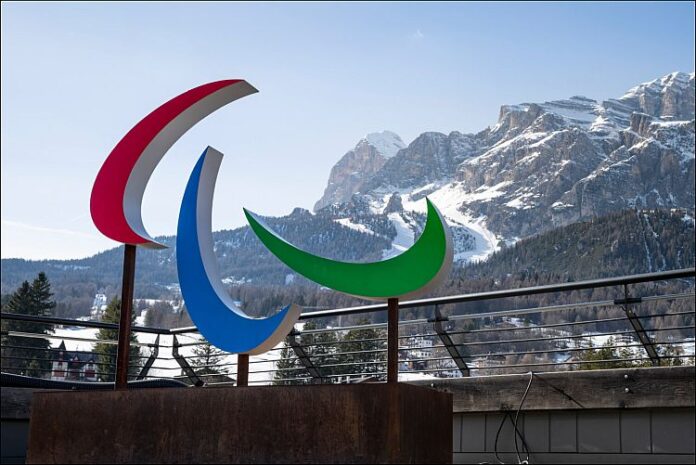
“But this has just been at a continental level. It is not enough for a global sport.

“That is why today we are announcing that on 1 December in Athens – the birthplace of the Olympic Games – we will host the founding meeting of FIMMA: Federation of International Mixed Martial Arts.

“FIMMA is a response to the numerous calls we have received from athletes and from National Federations. Calls for an International Federation that unites the sport under cohesive global governance. An International Federation that drives progress through an ambitious athlete-centered strategy. And an International Federation that delivers long-term sustainable global growth.

“FIMMA will stand as a unifying force. We are ready to collaborate with any and all organisations that share our commitment to protecting and promoting the global interests of MMA and its athletes.

“And with organisations that share our vision for MMA to take its place at the Olympic Games. Amateur MMA for too long has been divided. It’s time to unite our sport and bring it out of the shadow of its professional counterpart. It is time to unlock the enormous global potential we all know exists.

“I and ready to apply all my experience in MMA, sport and business at the service of this vision. Next week, the journey will begin.”

Tang is no stranger to the Olympic Movement, serving as an Executive Board member of the Olympic Council of Asia since 2021. Moreover, Mixed Martial Arts will appear on the program of the 2026 Asian Games in Aichi-Nagoya (JPN).

The Asian Mixed Martial Arts Association was founded in 2022 and held its first championship event in Thailand in 2023 and in Cambodia in 2024. MMA was included in the Asian Youth Games in Bahrain in 2025.

Even so, the new federation will need to create a structure, rules, institute an anti-doping program and begin standing up national federations around the world. Then the process of accreditation will begin, applying for recognition by the International Olympic Committee and joining the Alliance of Independent Recognized Members of Sport (AIMS). Once recognized by the IOC, Tang’s FIMMA could then apply to become a member of the Association of IOC-recognized International Federations (ARISF), and can begin serious lobbying to get onto the Olympic program.

But the idea of creating an International Federation for MMA is not new.

Standing in the way of Tang’s plan, however, is the fact that there is already an International Mixed Martial Arts Federation (IMMAF), founded in 2012 and which has held world championships since 2014. A Swiss non-profit, it lists member federations in 123 countries and was launched with support from UFC. The IMMAF itself is the product of a merger with the World Mixed Martial Arts Association, in 2019. It is not a member of AIMS.

Observed: The outright violence which marks MMA will make it a difficult addition to the Olympic program, which already has boxing, judo, taekwondo and wrestling, not to mention the confusion with the existing IMMAF.

But the popularity of MMA will make it attractive for a future organizing committee to add it, seeing opportunities for increased ticket sales. Tang’s announcement underscored “athlete safety” – to the extent possible in MMA – with no cages to be used and restrictions on specific moves, such as strikes to the head after a knockdown.

Thursday’s announcement is the first step in a long road, but one which seeks to further validate MMA as a “mainstream” sport worldwide. It is not at all clear whether its inclusion would help the IOC’s stance that sports is a vehicle for peace.

Receive our exclusive, weekday TSX Recap by e-mail by clicking here.
★ Sign up a friend to receive the TSX Recap by clicking here.
★ Please consider a donation here to keep this site going.

For our updated, 850-event International Sports Calendar for 2025, 2026 and beyond, by date and by sport, click here!

PANORAMA: Milan Cortina ‘26 unveils “Black Friday” sale! USA Hockey 2026 jerseys honor ‘60 champs; FIFA 2026 World Cup tix sales at 2 million

Jerseys for the U.S. ice hockey teams for the 2026 Olympic Winter Games in Milan (Photo: USA Hockey).

The Sports Examiner: Chronicling the key competitive, economic and political forces shaping elite sport and the Olympic Movement.★

To get the daily Sports Examiner Recap by e-mail: sign up here!

≡ THE 5-RING CIRCUS ≡

● Olympic Winter Games 2026: Milan Cortina ● If you thought “Black Friday” was mostly an American post-Thanksgiving tradition, think again.

The Milan Cortina 2026 organizers unveiled their own “Black Friday” sales program on Wednesday in a news release:

“Starting today, Wednesday 26 November at 4 p.m., the Flash Price Promo will be available for three days only, offering a 20% discount on a selection of events. Tickets for the Cross-Country Skiing of the Nordic Combined competitions will be available at €25 for category B and €60 for category A, offering the opportunity to watch only Cross-Country Skiing competitions of the Nordic Combined that will award medals.

“The special offer also includes the release of additional tickets for Women’s Ice Hockey (starting from €30), as well as Curling, Luge, and Skeleton.

“The 26 of November also marks a symbolic milestone: only 100 days remain before the start of the Milano Cortina 2026 Winter Paralympic Games.

“To celebrate this moment, tickets starting at €10 will be available for the Paralympic Alpine Skiing, Para Biathlon, and other scheduled disciplines.”

Who knew? (€1 = $1.16 U.S.)

● Commonwealth Games ● At the Commonwealth Sport General Assembly in Glasgow (SCO), 57-year-old Dr. Donald Rukare (UGA) was elected as President, following his role as Interim following the resignation of Chris Jenkins (WAL) on 14 April 2025.

A lawyer by trade with a love for swimming, Rukare has been the Chair of the National Council of Sports in Uganda since 2020 and was elected as the President of the Uganda Olympic Committee in 2021.

● World University Games ● Following up an its earlier expression of interest, the International University Sports Federation (FISU) formally awarded the 2027 Winter World University Games to Changchun in the Jilin Province in northern China.

China hosted the 2009 Winter WUG in Harbin and has been host for three summer Universiades, in Beijing in 2001, in 2011 in Shenzhen and Chengdu in 2021. The 2025 Winter WUG in Turin (ITA) had 1,503 athletes from 54 countries competing in 11 sports.

● Team USA ● USA Hockey unveiled the jerseys for the U.S. men’s and women’s ice hockey teams for the Olympic Winter Games at Milan Cortina in 2026, with a special reference to a past champion:

“Designed by Nike and available in white and royal blue, the jersey features bold diagonal ‘USA’ lettering across the chest and a gold-accented USA Hockey crest, a nod to Team USA’s success on the world stage. Inside the collar, the words ‘land of the free, home of the brave’ serve as a powerful reminder to every athlete that wearing this jersey represents something greater than themselves.

“The design pays homage to hockey history, honoring the jersey worn by the 1960 U.S. Olympic Men’s Ice Hockey Team that captured the first-ever Olympic gold medal for the United States.”

Of course, the jerseys will be available for sale, starting on 4 December.

● Equestrian ● The Federation Equestre Internationale (FEI) has suspended American Eventing rider Andrew McConnon for 20 months, ending on 8 September 2026 for horse abuse, and was fined CHF 2,500 (about $3,100 U.S.).

McConnon has competed as a member of the U.S. team at a 2022 Nations Cup competition in Canada; he was being investigated for hitting horses in the head from the saddle during training rides.

● Fencing ● The annual awards from the Federation Equestre Internationale (FIE) were handed out at the FIE Congress in Bahrain last week, including the top performer of the year in women’s Foil, awarded to Olympic champion Lee Kiefer of the U.S.

USA Fencing was also recognized for the top teams in women’s Junior Foil and men’s Junior Sabre, and the Grand Prix of Nations for the top combined teams in three classes: Cadets, Juniors and Veterans.

● Flag Football ● While the U.S. men continued to lead the International Federation of American Football (IFAF) world rankings by a wide margin, Mexico took over the no. 1 spot for the first time from the U.S.

Mexico’s women beat the U.S. at the 2025 World Games and at the IFAF Americas championship and stand no. 1 with 10,987 points to 10,817 for the Americans. Great Britain (8,879), Canada (8,870) and Japan (8.643) are 3-4-5.

The American men are on top with 7,915 points to 7,109 for Austria, 6,871 for Mexico, 6.248 for Italy and 6,121 for France.

Flag football will make its debut as a medal event at the 2028 Olympic Games in Los Angeles.

● Football ● FIFA announced that nearly two million tickets have been sold so far for the 2026 FIFA World Cup, with the Final Draw coming up on 5 December.

Sales have been made in 212 countries and territories and beyond the host countries, the next-highest sales have been in England, Germany, Brazil, Colombia, Spain, Argentina and France. The entry period for the third phase of ticket sales will open on 11 December.

● Ski Jumping ● Slovenia’s two-time Worlds Team champion Anze Lanisek moved from second to first on the second of his jumps – amid difficult wind conditions – off the 132 m hill in Falun (SWE) to win the FIS World Cup competition on Wednesday.

He scored 262.9 points to edge Stephen Embacher (AUT: 259.9) and Slovenian star Domen Prevc (258.7).

● Swimming ● The draft minutes of USA Swimming’s 25 September 2025 Board meeting were obtained by Swimswam.com, which posted them on Wednesday. The federation budget projections for all of 2025 were included and showed:

● Overall revenue was projected down from 2024 from $44.707 million to $37.912 million, primarily due to the 2024 U.S. Olympic Trials, which had a surplus of $5.152 million.

● Membership income was projected down from $24.309 million to $23.987 million and sponsorship income was also down from $5.753 million to a projected $4.719 million.

● Operating expenses were down from $41.523 million (in part due to the Trials) to $38.228 million, so the net was down from $3.185 million surplus in 2024 to a projected loss of $315,221, almost $415,000 short of projections, which had a slight surplus.

After non-operating reserve investments and investment performance was added in, the predicted 2025 net loss will be $2.041 million against a budgeted loss of $1.018 million, a little more than a million more than expected.

This was after budget cutting during the year trimmed expenses by $1.423 million, so it could have been worse.

World Aquatics, continuing its push for sustainability, is looking for a partner to offer an alternative to single-use plastics for open water swimming:

“World Aquatics is seeking sustainable, vegan or biodegradable feeding bottles suitable for use in elite open water swimming competition, and is calling on manufacturers, designers and material specialists to collaborate.”

Innovation has not yet caught up in this area, with endurance swimmers taking in hydration and nutrition during races approaching two hours. The announcement adds, “If your company can support this mission, we want to hear from you.”

● Weightlifting ● Iraq’s 2023 World Championships men’s 96 kg bronze winner Qasim Al-Lami agreed to a seven-year ban for the use of the steroid stanozolol from a positive out-of-competition test on 30 October 2024.

He had previously served a four-year sanction for doping from 2017-21 and as a second-time doper, his penalty is for eight years, with a reduction for accepting the ban, through 8 December 2031. He did not challenge the finding or the penalty.

Receive our exclusive, weekday TSX Recap by e-mail by clicking here.
★ Sign up a friend to receive the TSX Recap by clicking here.
★ Please consider a donation here to keep this site going.

For our updated, 850-event International Sports Calendar for 2025, 2026 and beyond, by date and by sport, click here!

ENHANCED GAMES: Doping-friendly Enhanced Games gets $40 million cash infusion, coming to NASDAQ in $200 mil funding push ahead of 2026 event

The Sports Examiner: Chronicling the key competitive, economic and political forces shaping elite sport and the Olympic Movement.★

To get the daily Sports Examiner Recap by e-mail: sign up here!

≡ CAN MONEY SOLVE EVERYTHING? ≡

The Enhanced Games, announced with considerable fanfare in May to be held for the first time in 2026, had shown few signs of activity outside of the signing of 12 athletes – mostly swimmers – for its May 2026 debut event in Las Vegas.

A lawsuit asking for up to $800 million in damages against the World Anti-Doping Agency, World Aquatics and USA Swimming was dismissed last week and founder Aron D’Souza (AUS) was sidelined as chief executive.

On Wednesday, it was announced that the enterprise had received a $40 million cash injection and will be publicly traded on the NASDAQ exchange, in a complex financial transaction.

A news release explained the company’s expected future business concepts this way:

“Brand partnership revenue is expected to form the foundation of the sports business, anchored by the annual Enhanced Games competition, while media and broadcasting partnerships represent a significant incremental opportunity, leveraging the interest in and global appeal of enhanced athletic competition.

“Beyond live events, Enhanced is developing a comprehensive telehealth and direct-to-consumer business focused on performance medicine products. This division aims to democratize access to performance enhancement tools and protocols, allowing consumers to ‘Live Enhanced’ through scientifically backed products and services. The Company expects to launch this product offering during Q1 2026.”

The sponsorship and broadcast revenue ideas are endemic to the events business, but no announcements in these areas have been made concerning the 2026 event next May. The “performance medicine products” were due to launch in October of 2025, but did not appear. The “telehealth” element is a new product line, but with no added details.

The renewed financing of Enhanced is complex and makes the company a subsidiary of Hong Kong-based conglomerate A Paradise Acquisition Corp. (currently traded on NASDAQ as APAD). The stock will be re-branded for Enhanced, in a transaction that will close in the first quarter of 2026:

“Enhanced closed on a $40 million equity private placement in the form of a Simple Structured Agreement for Future Equity (SAFE), which is convertible into either Enhanced Ltd. shares or public company shares following consummation of the business combination, which provides committed capital to execute on the inaugural 2026 Enhanced Games.

“The SAFE was raised largely from existing Enhanced shareholders in exchange for a partial early release from lock-up of their existing Enhanced securities, and therefore should not be seen as a third party validation of the business combination valuation.”

● “Enhanced Ltd will merge with a wholly owned subsidiary of A Paradise, which will then merge with A Paradise, which will re-domesticate as a Texas corporation and change its name to Enhanced Group Inc.

“Its shares will be listed on NASDAQ under the ticker symbol ENHA in connection with closing and subject to regulatory approvals. The business combination values Enhanced at an enterprise value of $1.2 billion.

“Assuming no redemptions by A Paradise shareholders, the business combination is expected to deliver up to $200 million in gross cash proceeds to Enhanced Group that are currently held in trust by A Paradise. In the case of no redemptions, existing Enhanced shareholders will maintain approximately 81% economic ownership of the combined company, Enhanced Group Inc.”

So what will Enhanced do with the money? The announcement explained:

“Proceeds from the transactions will be strategically allocated across five key growth areas: (i) athlete recruitment and compensation, (ii) Enhanced Games production, (iii) clinical and medical support for athletes, (iv) telehealth and consumer products and (v) general administrative runway to support the Company’s multi-faceted expansion plans.”

What’s next? According to the announcement:

“Enhanced plans an integrated marketing campaign to generate global excitement beginning in December by leveraging athlete news, content highlighting elite sport, athlete storytelling, entertainment and educational content, with a mission of amplifying the Company’s brand and sustaining consumer interest heading into the games and year-round thereafter.”

This transaction rescues Enhanced with significant cash – $40 million from its existing investors and up to $200 million via the mergers – which it can further throw at athletes in an attempt to recruit the 100 or so that it has said it will need for its 2026 Games, with events in track & field, swimming and weightlifting.

The company acknowledged in its August lawsuit complaint that it has had difficulty recruiting swimmers, stating at that present, “Enhanced is unable to meet its goals of recruiting between ‘20-30 elite swimmers,’ for the Enhanced Games, putting in doubt the viability of the enterprise.”

It has, so far, also recruited two track & field athletes, including 2022 World Championships men’s 100 m gold medalist Fred Kerley of the U.S., and two weightlifters. Each event is to have a $500,000 prize purse, with $250,000 for the winner; world-record bonuses will pay $250,000 except for the 50 m Free swim and 100 m dash, which will have $1 million payouts for records.

Observed: Enhanced has solved its immediate funding issues, assuming the planned mergers are completed. Now it faces the question of whether it can convince consumers and sports fans to get interested in a competition program in which athletes can take performance-enhancing drugs to try and break records set by athletes who didn’t use drugs.

With so much competition for the attention of sports fans today, that appears to be an open question.

Receive our exclusive, weekday TSX Recap by e-mail by clicking here.
★ Sign up a friend to receive the TSX Recap by clicking here.
★ Please consider a donation here to keep this site going.

For our updated, 850-event International Sports Calendar for 2025, 2026 and beyond, by date and by sport, click here!

COMMONWEALTH GAMES: India’s Ahmedabad confirmed as host for centennial Commonwealth Games in 2030

The Commonwealth Sport flag (Photo: In Vitrio via Wikipedia).

The Sports Examiner: Chronicling the key competitive, economic and political forces shaping elite sport and the Olympic Movement.★

To get the daily Sports Examiner Recap by e-mail: sign up here!

≡ CENTENNIAL COMMONWEALTHS ≡

As expected, the Indian city of Ahmedabad was selected as the host of the 2030 Commonwealth Games at the Commonwealth Sport General Assembly in Glasgow (SCO) on Wednesday.

Ahmedabad was recommended for selection over Abuja (NGR) by the Commonwealth Sport Executive Committee in October and the General Assembly agreed, giving the Commonwealth Games some security after a rough decade to find host cities:

2022: After Durban (RSA) was selected as the sole bidder in 2015, it withdrew over funding issues and Birmingham (ENG) stepped in as an excellent host, advancing its planned 2026 bid.

2026: The state of Victoria, Australia agreed to host the Games in 2022, but withdrew over costs in July 2023, paying Commonwealth Sport A$380 million (about $247.7 million U.S. in 2025) as a penalty. With a significant amount of that money promised to a replacement host, Glasgow (SCO) – the 2014 Commonwealth Games host – agreed to stage a compact Games with just 10 sports.

2030: Ahmedabad and Abuja both indicated interest, with a more flexible hosting model adopted by Commonwealth Sport. With Ahmedabad selected, Commonwealth Sport indicated it wanted to work with Abuja on a possible hosting in 2034.

For 2030, Ahmedabad – the accepted English name for the city, known as Amdavad in the state of Gujarat – will stage 15-17 sports:

● The core Commonwealth Sport program includes (8): Athletics and Para Athletics, Swimming and Para Swimming, Table Tennis and Para Table Tennis, Bowls and Para Bowls, Weightlifting and Para Powerlifting, Artistic Gymnastics, Netball and Boxing.

● Added sports will come from Archery, Badminton, 3×3 Basketball and 3×3 Wheelchair Basketball, Beach Volleyball, Cricket T20, Cycling, Diving, Hockey, Judo, Rhythmic Gymnastics, Rugby  Sevens, Shooting, Squash, Triathlon and Para Triathlon and Wrestling.  

● The host can also propose up to two new or traditional sports.

Begun as the British Empire Games in 1930 in Hamilton (CAN), India hosted the 2010 Commonwealth Games in New Delhi, marred by disorganization and corruption. Now, it hopes to use the development of the 2030 Commonwealth Games centennial as a springboard to a future Olympic hosting, possibly as early as 2036 (but which is likely to be awarded prior to 2030).

India’s Sports Minister, Mansukh Mandaviya, told supporters, “India is capable of hosting major events and will be among the top-10 sporting nations by 2036 and a top-five by 2047 when the country celebrates 100 years of independence.”

He also noted that India will host the 2029 World Police Games in Ahmedabad, a perfect lead-in to the Commonwealth Games.

Receive our exclusive, weekday TSX Recap by e-mail by clicking here.
★ Sign up a friend to receive the TSX Recap by clicking here.
★ Please consider a donation here to keep this site going.

For our updated, 850-event International Sports Calendar for 2025, 2026 and beyond, by date and by sport, click here!

MILAN CORTINA 2026: Olympic Flame lit indoors at Olympia; torch relay now underway and will reach Italy on 6 December

Transfer of the Olympic Flame to Milan Cortina 2026 at Olympia on 26 November 2025 (Photo: Maja Hitij/Getty Images via the IOC on Flickr).

The Sports Examiner: Chronicling the key competitive, economic and political forces shaping elite sport and the Olympic Movement.★

To get the daily Sports Examiner Recap by e-mail: sign up here!

≡ OLYMPIC FLAME ≡

Once again, a flame lit from the rays of the sun began a lengthy journey from ancient Olympic in Greece and will end up in Milan, Italy for the opening of the Milan Cortina Olympic Winter Games on 6 February 2026..

The International Olympic Committee announcement captured the unique circumstances of this edition of the flame ceremony:

“Because of the wet weather forecast, the flame was lit using the rays of the sun during a rehearsal on Monday, ensuring that the purity of the traditional method was preserved. This flame was then transferred to the official Milano Cortina 2026 Olympic torch during the official ceremony, where Paris 2024 Olympic bronze medallist in rowing Petros Gkaidatzis [GRE] marked the start of the Greek leg of the Olympic Torch Relay as the first torchbearer.

“Petros was then joined by the first Italian torchbearer, two-time Olympic champion Stefania Belmondo [ITA], to run together, before she in turn passed the flame to her compatriot and fellow double Olympic champion, Armin Zoeggeler [ITA].”

The ceremony itself was held at the Archaeological Museum of Olympia, reported to be the first time held indoors since December 1967 for the lighting of the flame for the 1968 Grenoble Olympic Winter Games in France.

The Olympic Flame tradition for the Winter Games began in 1952 in Oslo (NOR) and was lit there for the 1956 and 1960 Winter Games as well. The lighting of the Olympic Flame in Olympia for a Winter Games was first done for the 1964 Winter Games in Innsbruck (AUT).

The schedule ahead:

26 Nov.: Lighting of the Flame at Olympia
26 Nov.-04 Dec.: Torch Relay in Greece
04 Dec.: Transfer of the Olympic Flame in Athens
06 Dec.: Torch Relay in Italy begins in Rome
06 Dec.-06 Feb.: Torch Relay in Italy
06 Feb.: Opening Ceremonies in Milan and Cortina

Along the way, the Italian relay will arrive in Bari on New Year’s Eve, in Cortina – site of the 1956 Winter Games – on 26 January, the date of the opening of those Winter Games.

More than 300 cities will be visited via 10,001 torchbearers across the 12,000 km (7,456 mile) route.

Remarks by IOC President Kirsty Coventry (ZIM) included:

“We are extremely happy that today’s ceremony reminds us what the Games stand for. They are about bringing people together in peaceful competition, in friendship and in respect. As we light the Olympic flame for Milano Cortina, we will carry this light from the past to the present and into the future. And it’s a shared future that we all want to see. This is why we firmly believe in the Olympic Truce. In laying down our differences and wanting to hope for a brighter future.”

Receive our exclusive, weekday TSX Recap by e-mail by clicking here.
★ Sign up a friend to receive the TSX Recap by clicking here.
★ Please consider a donation here to keep this site going.

For our updated, 850-event International Sports Calendar for 2025, 2026 and beyond, by date and by sport, click here!

UTAH 2034: Winter Olympic & Paralympic organizing committee unveils “transitional” logo and new branding for all of Utah

The Sports Examiner: Chronicling the key competitive, economic and political forces shaping elite sport and the Olympic Movement.★

To get the daily Sports Examiner Recap by e-mail: sign up here!

≡ “TRANSITIONAL” 2034 LOGO ≡

The Olympic Winter Games in 2002 was known as the “Salt Lake City” Games, even though many of the events were held outside the city limits.

With many of the same sites being used for the 2034 Olympic Winter Games, it was announced Monday that “Utah 2034″ would be the name for the event, reaching out to the entire state. Said organizing committee President Fraser Bullock:

“From our capital of Salt Lake City out to every corner of our state, the Utah 2034 Olympic and Paralympic Winter Games will be shared by all Utahns.”

At the Salt Lake City International Airport, a “transitional” logo and wordmark was announced, but these are not the logos that will be used for the Games:

“To help the host regions build early awareness and momentum, the IOC allows ‘Transition Logos’ to be created long before the full Brand Identity for the Games. These official marks are limited to typography – without symbols or icons – reserving the full creative expression for the official Games emblem released closer to the Games.”

The actual logo for Utah 2034 will be released in 2029. As for the new marks:

“The Utah 2034 Wordmark is inspired by Utah’s varied landscape, where desert buttes, mountain peaks, and winding rivers create a sense of constant movement and transformation.”

The project was steered by Salt Lake City-based brand consultant Molly Mazzolini, who was advised by a four-person Paralympic working group of Tyler Merren, Danielle Umstead, Joe Walsh and Calahan Young. The artwork was developed in collaboration with a team of outside designers and the Utah Office of Tourism.

A launch event for the new graphics was held Monday at the airport, celebrating 3,000 days to go until the opening of the 2034 Olympic Winter Games and introducing a mammoth new artwork:

“The 12-foot (3.6m) high Utah Together Spectacular is located on the arrival/departure level of the Salt Lake City International Airport, in the heart of Gordon Huether’s The Canyon. It symbolizes Utah’s 29 counties working together in unity as one community to welcome the world in 2034.”

The emphasis on bringing the entire state of Utah together into the development and staging of the 2034 Winter Games is not only a wise political effort, but recognizes the multiple jurisdictions in which the events will be staged:

Kearns: Utah Olympic Oval (speed skating)
Midway: Soldier Hollow Nordic Center (biathlon, cross-country skiing)
Ogden: Snowbasin Resort (alpine skiing)
Park City: Deer Valley Resort (freestyle skiing)
Park City: Utah Olympic Park (bobsled-luge-skeleton, ski jumping)
Park City: Utah Olympic Park (freestyle skiing, snowboard)
Provo: Peaks Ice Arena (ice hockey)
Salt Lake City: Delta Center (ice hockey)
Salt Lake City: Rice-Eccles Stadium (ceremonies, freestyle skiing, snowboard)
Salt Lake City: Salt Palace Convention Center (curling)
West Valley City: Maverik Center (figure skating, short track)

Never too early for merchandise, right? The Monday announcement also introduced “a partnership with LA28 and the U.S. Olympic and Paralympic Committee to produce its first merchandise line, the Utah 2034 Collection.

“A selection of apparel and hardline merchandise with the new Utah 2034 logos is now available on the Olympic Shop at utah2034shop.com. Merchandise will also be available soon at Utah’s legacy venue locations and Team USA Shops.”

Receive our exclusive, weekday TSX Recap by e-mail by clicking here.
★ Sign up a friend to receive the TSX Recap by clicking here.
★ Please consider a donation here to keep this site going.

For our updated, 850-event International Sports Calendar for 2025, 2026 and beyond, by date and by sport, click here!

PANORAMA: Weather forces Olympic Flame ceremony indoors; USADA chief says WADA won’t meet on differences; Quincy Wilson chooses Maryland!

Quincy Wilson finishing his sensational 44.10 men’s 400 m at the 2025 Ed Murphey Classic (Photo: AthleticLive).

The Sports Examiner: Chronicling the key competitive, economic and political forces shaping elite sport and the Olympic Movement.★

To get the daily Sports Examiner Recap by e-mail: sign up here!

≡ THE 5-RING CIRCUS ≡

● Olympic Winter Games 2026: Milan Cortina ● With heavy clouds forecast for Wednesday’s Olympic Flame lighting ceremony in Olympia, Greece, a rehearsal flame was lit from the sun’s rays on Monday and will be the flame actually used in the ceremony.

The Hellenic Olympic Committee noted in a Tuesday post:

“The Olympic Flame Lighting Ceremony will take place on Wednesday, 26 November 2025 at 11:30 at the Archaeological Museum, with the Olympic Flame having been lit during Monday’s rehearsal.”

The Tuesday rehearsal was also indoors at the Museum due to continuing rainfall; British sports historian Philip Barker noted on X:

“The last time an Olympic Flame Ceremony took place in the Museum of Olympic Games of Antiquity in Dec 1967 for Grenoble Winter Olympics.”

The Hellenic Olympic Committee announced that Greek Olympic rowing bronze medalist Petros Gaidatzis will be the first torchbearer on Wednesday.

An expedited process has been adopted for an online hearing on the complaint by the Russian Ski Association against the International Ski & Snowboard Federation (FIS) for 1 December 2025, at the Court of Arbitration for Sport.

The Russians are trying to force FIS to allow Russian (and presumably, Belarusian) athletes to be able to compete, at least as neutrals, in qualifying events for Milan Cortina 2026. The CAS announcement noted:

“After the hearing, the Panel will deliberate. This is an expedited procedure with an operative decision (without grounds) expected on or prior to 10 December 2025.”

FIS has maintained a ban on Russian and Belarusian athletes since 2022.

● Anti-Doping ● A report on October’s Play The Game conference in Tampere (FIN) included comments from former Finnish youth and sport minister Sandra Bergqvist, also a member of the World Anti-Doping Agency Foundation Board, gave ger view of the continuing conflict between WADA and the U.S.:

“I think we need to start over to build up the good work that WADA has been doing for many, many years. Unfortunately, the situation right now is quite infected, so I think we need some new people who can start working all over again.

“WADA needs new leadership. That is the only solution to preserve all the good work WADA has done. I think it is more important now than ever that we are focusing on all the good things that WADA has been doing.”

U.S. Anti-Doping Agency head Travis Tygart, WADA’s fiercest critic over the January 2021 Chinese mass-positives incident and subsequent no-sanctions finding, said he has reached out to WADA President Witold Banka (POL) and Director General Olivier Niggli (SUI) for discussions in June 2024, but they refused. He said he tried to meet with them at the WADA meetings in Saudi Arabia in December:

“Banka and Niggli would not meet. I then sent another letter in June of this year, incredibly respectful and diplomatic, asking once again to sit down and speak with them. They refused to do so.”

He said he has “given up hope” of meeting, but welcomes a third part to bring them together and resolve their issues.

● Athletics ● Prep 400 m star Quincy Wilson – who ran a high school record 44.10 in 2025 – announced he will attend the University of Maryland, and will be coached by two-time Olympic 4×400 m gold medalist Andrew Valmon.

Wilson attends The Bullis School in Potomac, Maryland and decided to stay home instead of heading to South Carolina, Texas A&M, UCLA or USC. Valmon was a U.S. assistant coach for the Paris 2024 Olympic Games, where Wilson won a relay gold himself, running in the preliminary round.

American men’s Steeplechase record holder Evan Jager announced his retirement at age 36 on Monday, having won the Rio 2016 Olympic silver and 2017 World Championships bronze, as well as seven national championships, from 2012-18.

He lowered the American Record to 8:06.81 in 2012 – his first year in the Steeple – then to 8:04.71 in 2014 and 8:00.45 in Paris in 2015, tripping over the final barrier when it appeared that he would win (he ended up second) and break eight minutes! He ranks no. 16 all-time now.

Jager was dogged by injuries later in his career, but made it to the World Championships again in 2022, finishing sixth and he was fourth at the 2024 U.S. Olympic Trials, just missing a third Olympic team.

Chinese long jump star Jianan Wang, the 2022 World Champion and three-time Olympian, tested positive on 1 November 2024 for Terbutaline, an asthma medication which is banned without a Therapeutic Use Exemption.

He was cleared by the Chinese Anti-Doping Agency for no-fault or negligence as its inquiry showed that the positive “was caused by passive inhalation of Terbutaline drug particles diffused into the air whilst the Athlete accompanied a family member undergoing a nebulisation treatment at a local hospital on 31 October and 1 November 2024.”

Once informed, the Athletics Integrity Unit undertook its own investigation, including the use of closed-circuit videotapes of Wang, 29, coming to the hospital to visit the family member, and other documentation and in a Tuesday statement, said it was satisfied with the procedures taken and will not file an appeal against the CHINADA decision.

● Figure Skating ● Russian star Elizaveta Tuktamysheva, 28, announced her retirement, concluding a career in which she was the 2015 World Champion and 2021 Worlds silver medalist, and a six-time winner on the ISU Grand Prix circuit. She said in an interview:

“I think for every skater, figure skating is a little life. Yes, there were some problems, some difficult situations, but there were so many good things in my career, so many happy moments, that I can now say with gratitude that I had a brilliant career, and I regret nothing. I am announcing the end of my athletic career, with no regrets.”

● Football ● On Monday, “the Saudi Fund for Development (SFD) and FIFA have signed a Memorandum of Understanding (MoU) to allocate up to USD 1 billion in concessional loans for the construction and rehabilitation of sports stadiums and essential surrounding infrastructure in developing countries around the world.”

The loans, at discounted interest rates, will “support national governments in designing, financing, and building modern multi-sport venues that meet international standards and serve as hubs for community life, education, and inclusion.”

It was reported that FIFA President Gianni Infantino (SUI) was awarded Lebanese citizenship, announced by Lebanon President Joseph Aoun. Infantino’s wife, Lina Al-Ashqar, is Lebanese and Infantino was said to announce that “FIFA plans to build an international-level stadium in Beirut.”

A class-action lawsuit concerning the chaotic Copa America final at Hard Rock Stadium in Miami Gardens, Florida on 14 July 2024, was settled for $14 million by defendants CONMEBOL, CONCACAF, Best Security, and South Florida Stadium LLC, after some fans without tickets burst into the stadium and actual ticket-holders had to wait for 82 minutes. There were 27 arrests and 55 ejections, but some ticket holders could not get in for the Argentina vs. Colombia match.

Fans claiming damages have to make a filing and if unable to attend at all, can receive up to $2,000 plus up to $300 in travel expenses. Ticket holders who could not access their seats can get up to $100 for inconvenience.

● Ski Jumping ● At the mid-week FIS World Cup in Falun (SWE), three-time World Champion Stefan Kraft (AUT) got his 4th career World Cup gold with a 249.9-point triumph off the 95 m hill, winning the first jump and finishing third on the second. He became the all-time leader in World Cup points scored at 15,811.

Slovenia’s Anze Lanisek was second (247.7) and German Philipp Raimund was third at 244.9. The competitions continue through the weekend.

● Swimming ● Canadian star Penny Oleksiak was banned for two years for “whereabouts” failures between October 2024 and June 2025. Per the International Testing Agency:

“On 15 July 2025, she accepted a voluntary provisional suspension pending resolution of the matter. The athlete did not contest the ADRV and agreed with the consequences proposed by the ITA.”

Oleksiak, now 25, was the co-2016 Olympic women’s 100 m Freestyle gold medalist; her suspension runs from 15 July 2025 through 14 July 2027. Oleksiak’s last championship event appearance was at the 2024 World Aquatics Short-Course (25 m) Championships in Hungary.

● Weightlifting ● A unique Olympic-sport crossover promotion was mounted by the Bahrain Weightlifting Federation during the FIBA 3×3 World Tour Finals in Manama (BRN), with weightlifting demonstrations in the fan festival area and an exhibition, mixed-gender event incorporated into breaks of the 3×3 matches!

It’s an interesting concept for cooperation between International Federations and one which can be widely implemented as a part-entertainment, part-education for fans. Will there be more of these?

Receive our exclusive, weekday TSX Recap by e-mail by clicking here.
★ Sign up a friend to receive the TSX Recap by clicking here.
★ Please consider a donation here to keep this site going.

For our updated, 850-event International Sports Calendar for 2025, 2026 and beyond, by date and by sport, click here!

PANORAMA: Golovkin confirmed as World Boxing chief; Shiffrin wins World Cup no. 103; Stolz storms to three more speed skating golds!

World Boxing President Gennadiy Golovkin of Kazakhstan (Photo: World Boxing).

The Sports Examiner: Chronicling the key competitive, economic and political forces shaping elite sport and the Olympic Movement.★

To get the daily Sports Examiner Recap by e-mail: sign up here!

≡ THE 5-RING CIRCUS ≡

● Boxing ● Former middleweight World Champion Gennadiy Golovkin (KAZ) — “Triple G” – was elected by acclamation as the sole candidate for a three-year term as the President of World Boxing as the federation’s electoral congress in Rome (ITA).

ENHANCED GAMES: Enhanced Games founder D’Souza leaves and its $800 million lawsuit was dismissed; is this the beginning of the end?

The Sports Examiner: Chronicling the key competitive, economic and political forces shaping elite sport and the Olympic Movement.★

To get the daily Sports Examiner Recap by e-mail: sign up here!

≡ ENHANCED SHAKE-UP ≡

Last week was a rough one for the promoters of the doping-friendly Enhanced Games, announced with a splash last May, with founder Aron D’Souza (AUS) telling an audience in Las Vegas:

“When my colleagues and I started out, no one – not one institution, not one organization – had committed to normalizing and celebrating performance medicine. So I made it my cause. …

“In just over a year, we helped change the global conversation, not just about sport, but about health, and science and what it means to be human. Because this isn’t just a sporting event. We’re not just organizing competition. We are in the business of unlocking human potential.

“The idea for the Enhanced Games came to life in 2022, during a moment of reflection where I found myself asking why athletes are still bounded by outdated rules that ignored everything that we know about science. I imagined a new kind of competition, one where science and sport and society could evolve together, where we stop apologizing for progress and started to embrace it.”

The event has been scheduled for 21-24 May 2026 at Resorts Las Vegas, with competitions in swimming, track & field and weightlifting. About 100 athletes are expected to take part and each event is to have a $500,000 prize purse, with $250,000 for the winner; world-record bonuses will pay $250,000 except for the 50 m Free swim and 100 m dash, which will have $1 million payouts for records.

So far, not that many have embraced it:

● On 3 June 2025, about two weeks after the announcement, World Aquatics adopted new By-Law 10, which essentially bans anyone competing or assisting with any event that “embraces” the use of performance-enhancing drugs, from any World Aquatics event.

● So far, a total of 12 athletes have been signed according to the Enhanced Games Web site: eight in swimming, two in track and two in weightlifting. Eleven are men, the lone woman is American swimmer Megan Romano.

● In the lawsuit filed in August by the Enhanced Games against the World Anti-Doping Agency, World Aquatics and USA Swimming, which was dismissed last week in U.S. Federal Court for the Southern District of New York, the decision noted (citations omitted):

“Enhanced alleges that [World Aquatics] By-Law 10 has harmed its ability to recruit personnel, especially the non-enhanced swimmers, that are necessary for its inaugural Games. According to Enhanced, ‘numerous elite swimmers with whom Enhanced had been in discussions to sign on to the Enhanced Games have now refused to participate, expressly citing World Aquatics’ Bylaw . . . and their concerns about the impact on their future Olympic and championship aspirations due to Defendants’ threats of ineligibility.’

“Similarly, ‘[s]everal coaches and trainers . . . declined to participate in the Games,’ citing By-Law 10 as a reason for their refusal. And ‘timekeepers, consultants and operational staff,’ whose roles are critical to putting on swimming events, have also ‘declined to participate out of fear that it would harm their standing and ability to work with World Aquatics and USA Swimming in the future.’

“As a result, Enhanced is unable to meet its goals of recruiting between ‘20-30 elite swimmers,’ for the Enhanced Games, putting in doubt the viability of the enterprise.”

● Last Thursday (20th), three days after the Federal District Court’s decision in Enhanced US LLC vs. World Aquatics et al (25-CV-7096), the Enhanced Games announced:

Maximilian Martin, Co-Founder of Enhanced, has been appointed CEO and assumes all operational leadership duties for the company. Martin is the former CEO and Co-Founder of Bitfield, a bitcoin mining company that was acquired by Northern Data in a €400 million transaction. With Martin’s appointment, Founder Dr. Aron D’Souza has transitioned out of the company’s day-to-day operations, while remaining a shareholder.”

New staff were announced in branding, communications, finance and sports.

So, what now?

The appeal of the Enhanced Games has been based, in large part, on money, and how underpaid athletes can be handsomely rewarded for participating. Moreover, athletes who do not want to use performance-enhancing drugs are also welcome as noted in the District Court decision:

“Enhanced’s events are also open to “non-enhanced” swimmers (i.e., those who follow World Aquatics’s Doping Control Rules). Indeed, competition between enhanced and non-enhanced athletes is ‘a critical element’ of Enhanced’s events and ‘is intended and expected to generate substantial media and fan interest.’”

This isn’t working. The Enhanced Games is a privately-financed project, stridently separate from the Olympic Movement, which champions “clean sport” and after more than a quarter-century since the founding of the World Anti-Doping Agency, has an entrenched anti-doping policing policy, testing and enforcement mechanism.

But there are lots of sports and events which are not part of the Olympic orbit or within the jurisdiction of WADA. And this is why the Enhanced Games lawsuit, asking for more than $800 million in damages, failed.

What is not widely appreciated are the commercial goals of the Enhanced Games.

● D’Souza said last May:

“We’re not exclusively in the business of delivering sport. We’re also in the business of science, and developing and marketing new drug compounds. I want to take a moment to also announce the launch of the Enhanced Performance Products brand. This summer, we’re bringing Enhanced to the American public with our new consumer products.

“This will be the embodiment of Enhanced’s core mission: to inspire humanity with the belief that we can all overcome our limits and become super-human, safely, with the right medical supervision.”

The Enhanced site shows three testosterone products – testosterone is banned by WADA – with launch dates in 2025 and for which “early access” deposits are available. So they are not quite on the market yet.

● Last week’s news release began with “Enhanced, the elite sports competition and performance products company committed to giving athletes and people alike the ability to optimize their health, performance and recovery,” underscoring the importance of the “performance products” aspect of the project as its commercial side.

If Enhanced doesn’t have athletes, it doesn’t have an event. If it doesn’t have products on the market that can be promoted by the Enhanced Games, it has no way to make money. During the launch presentation, it was noted that the broadcast of the Enhanced Games would be “digital-first experience” which likely means self-streaming. Which means little or no broadcaster rights fees; nothing more has been said about this. Nothing has been said about ticket sales.

And that means essentially no return for investors. And that means no Enhanced Games.

Observed: As the calendar turns to 2026, Enhanced (1) needs to sign more athletes for its event in May but more importantly (2) needs to get its products on the market, the key to its finances.

Both are difficult, so it will not be a surprise if the 2026 Enhanced Games is postponed.

Do not look for it to be “canceled.” That’s not the way investors like to exit; a postponement is preferred, with the future still to be determined.

What the Enhanced Games concept has not appreciated is the value placed on the glory of sport and the magnetic pull of the Olympic Games, the Olympic concept and the ideal of sport and peace, as reflected in the current version of the Olympic Oath, taken at the start of each Olympic Games:

“We promise to take part in these Olympic Games, respecting and abiding by the rules and in the spirit of fair play, inclusion and equality. Together we stand in solidarity and commit ourselves to sport without doping, without cheating, without any form of discrimination. We do this for the honour of our teams, in respect for the Fundamental Principles of Olympism, and to make the world a better place through sport.”

Even for significant money, in today’s world, the goals of the Olympic Oath are still hard to argue with.

Receive our exclusive, weekday TSX Recap by e-mail by clicking here.
★ Sign up a friend to receive the TSX Recap by clicking here.
★ Please consider a donation here to keep this site going.

For our updated, 850-event International Sports Calendar for 2025, 2026 and beyond, by date and by sport, click here!

LANE ONE: Intuit announced as an LA28 Founding Partner; could money allow LA28 to change the whole L.A. Olympic governance game in 2026?

The Sports Examiner: Chronicling the key competitive, economic and political forces shaping elite sport and the Olympic Movement.★

To get the daily Sports Examiner Recap by e-mail: sign up here!

≡ GAME CHANGE IN 2026? ≡

The LA28 Olympic and Paralympic Games organizers announced a sixth Founding Partner – its highest sponsor tier – on Friday with financial and marketing software giant Intuit joining, also confirming that its title sponsorship of the Intuit Dome in Inglewood will remain in place during the 2028 Games.

The Intuit Dome will be the site of basketball and is the fourth venue for 2028 to retain its corporate name: the Peacock Theatre (weightlifting and boxing) and Universal Studios (squash) via Comcast; the Honda Center (volleyball) in Anaheim and now the Intuit Dome, thanks to the new venue-naming availability pioneered by LA28.

Intuit will also support the LA28 Small Business Supplier Program “to provide access to resources, mentorship, and opportunities for local businesses to become suppliers for the LA28 Games” and will “also expand its national financial education program for students in the LA community, helping them build real-world skills.”

Intuit also becomes a multi-year partner of the U.S. Olympic & Paralympic Committee.

The Intuit announcement is the fourth Founding Partner for LA28 announced in 2025, with Honda, Google and Starbucks joining early sponsors Comcast and Delta Airlines. The LA28 sales team, headed by John Slusher, is increasingly confident in reaching $2 billion of the $2.517 billion budget line item for domestic sponsorship by the end of 2025.

Also coming in 2026 will be the start of Olympic ticket sales, with registration starting in January and actual sales as early as April 2026. That’s more than a year earlier than every other recent Olympic Games.

LA28 had, for a long time, a budget line of $1.929 billion for tickets and hospitality sales. In March 2025, that number was increased by $569 million – more than 29% – to $2.498 billion. That’s a dramatic show of confidence in ticket and hospitality demand with an estimated 14 million tickets to be available for the Olympic and Paralympic Games.

And that money could start pouring in in the late spring and early summer of next year. Which leads to some interesting possibilities, perhaps in a year from now:

● Thanks to its work in continuously shifting venues to increase efficiency, save money and raise more revenue, LA28 is close to optimizing its site plan for 2028. That means that it should also, by the late summer or early fall of 2026, have a much better grip on its projected costs to stage the Games – Olympic and Paralympic – in 2028.

● As sponsorship sales continue, and with the new opportunity for venue naming rights created by LA28, the organizing committee will know – internally – where it stands financially, with Chief Financial Officer Karen Sturges in the center ring.

● If – and only if – the outlook is bright, and it may well be, LA28 could be a strong position to make a move which will create significant operational freedom for its final year and a half going into the Games:

In concert (of course) with the International Olympic Committee, offer to relieve the City of Los Angeles and the State of California from their financial guarantees.

Both the City and the State are in difficult financial environments. Los Angeles City Council members regularly wail about the calamity that will befall the City if the LA28 organizers have a deficit. Los Angeles is currently contracted to cover the first $270 million of a deficit, then the State of California would pick up the next $270 million and then the City has all of the rest of the liability.

To end the City and State liability would mean the end of the many entanglements that the organizers now have with the City:

● Reports to the City would be reduced; LA28 has already made commitments for local hiring and spending which it will want to monitor itself to show its good faith to the community.

● The City’s focus will turn, quickly, not to whether LA28 will have enough money to cover its expenses, but whether the City itself will be ready. During the difficult budget negotiations earlier in 2025, City officials said there was no comprehensive plan concerning the Games and the City’s roles. That needs to get fixed.

● LA28 will be able to manage its operations without turning for permission to the City for any sites which are within the City limits, or sports which were placed there at some point. At a 27 August meeting of the City Council’s Ad Hoc Committee on the 2028 Olympic and Paralympic Games, the move of diving from the LA84 Foundation/John C. Argue Swim Stadium used for the 1932 Games to the Rose Bowl Aquatics Center was accompanied by a promise to spend $2-3 million to upgrade the 1932 pool. Council member Curren Price Jr., whose district includes the swim stadium, told the committee:

“I’m glad that LA28 has come to the table to ensure that South L.A. is not left behind. They committed investing in the John C. Argue Swim Stadium in Expo Park and delivering a pool that is going to be certified for national and international competition.

“This means that long after the Games, our young people, our athletes and our community are going to have a world-class facility right here in South Los Angeles. This is the kind of legacy that I think we must insist upon, as the host city and as the financial guarantor. …

“This is how we make the Games work for all of L.A., by demanding that every change, every compromise, come with some lasting benefit for all of our residents.”

He also referred to an as-yet unpublicized plan to install added broadband communications towers in the South L.A. are, which could improve online access in the area.

These kinds of “arrangements” would go away. In fact, the City will have to concentrate to completing most of the work on the renovation of the Los Angeles Convention Center to be sure that it is available for the Games, or L.A. will face a multi-million-dollar liability for a last-minute redirection of the sports scheduled there.

And LA28 will weigh, even more than it does now, the spending of every dollar between then and the closing of the Paralympic Games on 27 August 2028.

If the LA28 organizers have a financial surplus from the Games, as the 1932 and 1984 organizing committees did, it is directed to go to a new entity to be co-managed by the City and representatives of LA28. That would end and the LA28 organizers could then create their own legacy foundation to support sport.

There is a long way to go between now and 2028, but if (and only if) the LA28 finances continue to brighten, the opportunity to vaporize the financial “Sword of Damocles” that so worries the L.A. City Council could be a benefit to the City, to the State of California and to the organizing committee.

And, despite losing some feeling of control over the 2028 Games, the L.A. City Council and Mayor Karen Bass (if re-elected, or her successor) would be hard-pressed – in the current economic circumstance – to say no to eliminating any liability for the finances of the LA28 organizers.

Let’s check back on this in a year. It could be epic.

Rich Perelman
Editor

Receive our exclusive, weekday TSX Recap by e-mail by clicking here.
★ Sign up a friend to receive the TSX Recap by clicking here.
★ Please consider a donation here to keep this site going.

For our updated, 850-event International Sports Calendar for 2025, 2026 and beyond, by date and by sport, click here!

PANORAMA: Rams donate $5 million for free LA28 tickets for locals; U.S. Para star Snyder elected to IPC Board; staff shake-up at Enhanced Games

The Sports Examiner: Chronicling the key competitive, economic and political forces shaping elite sport and the Olympic Movement.★

To get the daily Sports Examiner Recap by e-mail: sign up here!

≡ THE 5-RING CIRCUS ≡

● Olympic Games 1984: Los Angeles ● The LA84 Foundation, the living legacy of the Los Angeles Olympic Organizing Committee for the 1984 Games, announced its latest round of grants, to 19 community organizations in six Southern California counties.

A total of $1.781 million was distributed to sports groups in Los Angeles, Orange, Ventura, Imperial, Santa Barbara and Riverside counties:

“The majority of the grantees focus on communities where issues such as cost, transportation, safety and lack of facilities often prevent kids from experiencing the lifelong benefits of sport and play that can lead to an enriched life for young people.”

The grants will offer support through the grantees to aquatics, baseball, basketball, flag football, running, soccer, softball, track & field and volleyball.

● Olympic Games 2028: Los Angeles ● A first donation of $5 million has been made by the NFL Los Angeles Rams for a fund to provide free tickets to the 2028 Games for Los Angeles-area residents.

The LA28 organizing committee announced the creation of the as-yet-unnamed program to collect money to be used for purchasing tickets “via community organizations to distribute within their communities.”

The agreement that brought the Games to Los Angeles in 2017 placed the City of Los Angeles in the position of financial guarantor for any organizing committee deficit, with some of the responsibility shared by the State of California. That has created significant pressure on the LA28 organizers to ensure that the Games run a surplus, as did the organizing committees of the 1932 and 1984 Olympic Games held in L.A.

Thus, LA28 needs to sell its tickets and not give them away, similar to the situation of the Paris 2024 organizing committee, which arranged for government purchases of 401,220 tickets to the Olympic (100,700) and Paralympic (298,600) Games. About 65% went to students and a quarter to sports organization volunteers; the national government spent about €11 million for the tickets (about $12.69 million U.S. today).

The City of Paris and the Ile-de-France region also purchased tickets to be given to youth, staff members and sports volunteers.

The Rams’ donation will be acknowledged during Sunday night’s NBC broadcast of the home game vs. Tampa Bay.

Politico.com reported on new members of the LA28 Board of Directors, adding individuals with close contacts with the Trump Administration, including former U.S. House Speaker Kevin McCarthy and former White House Chief of Staff Reince Priebus, and “Wisconsin Trump mega-donor Diane Hendricks, Patrick Dumont, owner of the Dallas Mavericks and son-in-law of Trump benefactor Miriam Adelson and investment banker Ken Moelis, who was a banker for Trump in the 1990s.”

The story said that the Board also added business consultant Denita Willoughby and philanthropist Maria Hummer-Tuttle, and that Paralympic star Muffy Davis was leaving the Board.

Consideration of the proposed San Pedro-to-Long Beach water taxi service for the Olympic and Paralympic Games period in 2028 was scheduled to be heard on Thursday by the Los Angeles Metropolitan Transportation Authority’s Executive Management Committee, but the item was withdrawn from the agenda.

A TSX overview of the Metro review report and slide presentation on the proposal is here.

● International Paralympic Committee ● The IPC finally finished its elections process with an Extraordinary General Assembly held online, which selected seven at-large members of the IPC Board. Those elected:

● Debra Alexander (RSA)
● Chelsey Gotell (CAN)
● Fernando Riaño (ESP)
● Mohamed Duaij Alkhalifa (BRN)
● Robyn Smith (AUS)
● Miki Matheson (JPN)
● Brad Snyder (USA)

Each will serve four-year terms. Snyder, 41, is a Navy veteran who lost his sight to an explosion while on duty in Afghanistan in 2011. He recovered and stormed to two gold and one silver medal in swimming at the London 2012 Paralympics and three more golds and a silver in 2016. He transitioned to triathlon and won a Tokyo 2020 gold in that sport. He has been a USOPC Board member since 2019.

● U.S. Olympic & Paralympic Committee ● The USOPC announced “Team USA Safe Online,” a project to protect athletes in the digital world:

● “The platform provides Team USA athletes, their families and National Governing Bodies with clear, evidence-based tools to address online harassment, AI-generated deepfakes, doxxing, intimate image abuse, and other emerging online threats. It includes step-by-step guidance for prevention, response and support, as well as resources for parents, coaches and agents.”

● “This is accomplished through a combination of automated monitoring, human expert review and content mitigation in partnership with social media platforms and law enforcement when necessary.”

The program is an extension of the agreement with online safety organization Moonshot to monitor and mitigate online abuse through the 2026 Milano Cortina Winter Games.

● Enhanced Games ● Significant shake-up at the Enhanced Games, where founder “Dr. Aron D’Souza has transitioned out of the company’s day-to-day operations, while remaining a shareholder,” andMaximilian Martin, Co-Founder of Enhanced, has been appointed CEO and assumes all operational leadership duties for the company.”

D’Souza had been the face of the Enhanced Games so far, which is slated to take place in Las Vegas in May 2026. Several more appointments were announced in branding, communications, finance and in sport, where 14-year USOPC veteran Rick Adams has been hired as Chief Sporting Officer. Adams served in sport performance and operations roles with the USOPC; he was hired as the Enhanced Games Senior Vice President for Games Delivery in August 2024.

The announcements come a day after the Enhanced Games’ lawsuit in U.S. Federal Court for anti-trust infringement against the World Anti-Doping Agency, World Aquatics and USA Swimming, was dismissed.

● Athletics ● China’s sprint record holder, Bingtian Su, announced his retirement after competing in the Chinese National Games in Guangzhou on Thursday.

Now 36, he was the World Indoor 60 m silver medalist in 2018 and won an Olympic 4×100 m bronze at the Tokyo 2020 Games. He finishes with bests of 6.42 in 2018 in the indoor 60 m – an Asian Record and no. 6 all-time – and 9.83 in the 100 m from 2021, also the Asian Record and no. 22 on the all-time list.

● Boxing ● India dominated the World Boxing Cup Finals in Noida (IND) with gold medals in nine classes, ahead of Uzbekistan, with four wins in nine finals.

Among the women’s winners was Paris Olympic 66 kg bronzer Nien-chin Chen (TPE), the only Olympic medal winner to claim a gold in Noida.

● Football ● The Caribbean island of Curacao qualified for the 2026 FIFA World Cup finals by winning CONCACAF Group B on Tuesday with a 0-0 draw at Jamaica and finished with a 3-0-3 record and 12 points, ahead of Jamaica (11: 3-1-2).

That makes Curacao the smallest country by population – 156,115 according to The Associated Press – to ever get to the World Cup finals. Iceland had been the smallest at 352,721 in 2018 and Cape Verde also qualified for the 2026 finals at 534,877, the third-smallest ever.

Panama won CONCACAF Group A at 3-0-3 and Haiti qualified for its second World Cup by winning Group C at 3-1-2. Suriname and Jamaica still have a chance, advancing to the inter-confederation playoffs in Mexico in March 2026, with two teams out of six to make it to the World Cup.

The quarterfinals are now set for the FIFA men’s U-17 World Cup, being played in Qatar, with all four games to be played on Friday (21st):

Upper bracket:
● Portugal vs. Switzerland
● Morocco vs. Brazil

Lower bracket:
● Australia vs. Japan
● Italy vs. Burkina Faso

The semis will be played on Monday (24th) and the medal matches on the 27th (Thursday).

Receive our exclusive, weekday TSX Recap by e-mail by clicking here.
★ Sign up a friend to receive the TSX Recap by clicking here.
★ Please consider a donation here to keep this site going.

For our updated, 850-event International Sports Calendar for 2025, 2026 and beyond, by date and by sport, click here!

PANORAMA: U.S. ski star Diggins to retire at season’s end; LA28 Paralympic by-day/sport schedule released; $15 mil bounty for ex-Olympic snowboard drug lord

The Sports Examiner: Chronicling the key competitive, economic and political forces shaping elite sport and the Olympic Movement.★

To get the daily Sports Examiner Recap by e-mail: sign up here!

≡ THE 5-RING CIRCUS ≡

● Paralympic Games 2028: Los Angeles ● The LA28 organizers marked 1,000 days until the opening of the 2028 Paralympic Games by releasing a “first look” at the 23-sport, 560-event sports schedule.

The Games will open on 15 August 2028 at SoFi Stadium and closing at the Los Angeles Memorial Coliseum on 27 August. The first medals events on 16 August will be in Para Athletics, Wheelchair Fencing, Shooting Para Sport, Para Equestrian and Para Cycling Track.

Wheelchair Basketball is the only sport that will run for all 12 days following the opening on 15 August. Sitting Volleyball will go for 11 days as will Para Athletics. Para Swimming and Para Table Tennis will both go for 10 days.

The shortest sport on the program? Para Triathlon, for just two days on 18-19 August. The detailed event schedule is to be announced later.

● Basketball ● U.S. superstars LeBron James and Steph Curry were major contributors to the American gold at the Paris 2024 Olympic Games, but they won’t be in 2028.

Speaking with two-time NBA Most Valuable Player Steve Nash (CAN) on the “Mind The Game” podcast that he co-hosts, James said of 2028, “You already know my answer. Don’t even ask. I will be watching from Cabo.”

Curry explained, “It is the opposite answer of what I told him last year. It was like, God willing, I still have the choice and the physical option to be like, I could actually impact the team. Never say never, but I highly doubt it. Love to be a part of the movement.”

James will be 43 at the time of the 2028 Games in Los Angeles and Curry will be 40.

● Cross Country Skiing ● Jessie Diggins, now 34, the most important skier in American cross-country history, announced that she will retire at the end of the 2025-26 season.

It’s impossible to overstate the impact that Diggins has had, along with already-retired Kikkan Randall, on women’s cross-country in the U.S. Together, they won the first-ever U.S. gold in Olympic cross-country history in the 2018 PyeongChang women’s Team Sprint.

Diggins has gone on to become a dominant force in the sport, winning the seasonal FIS World Cup in 2021, 2023 and 2025 and has a U.S.-record 29 World Cup wins and 79 total World cup medals.

She is a three-time Olympic medalist, adding a stunning 30 km Free silver in 2022 as well as a bronze in Beijing in the women’s Sprint. She owns seven FIS World Championships medals, including golds in the 2013 women’s Team Sprint and the 10 km Free in 2023.

She explained, “I hope I’m remembered not just for the pain cave and ability to suffer deeply for a team that I love and a sport I care about so much, but for the joy, sense of fun on snow, heart-on-sleeve racing, deep vulnerability and openness that I’ve brought to everything I do.”

Diggins is looking to be part of a fourth Olympic Team and for more medals in Milan Cortina; she will be a threat in multiple events. The newfound depth and strength of the American women’s squad, in particular, is a testament to the inspiration that she and Randall have been to a sport in which the U.S. was an afterthought for decades.

● Skiing & Snowboard ● U.S. Ski & Snowboard’s “HERoic Initiative” that increased the number of women’s coaches, expanded education and awarded prize money for the top alpine skier, is being expanded across seven U.S. winter-sport National Governing Bodies with financial support from medicine giant Eli Lilly & Company.

“HERoic will now be an official campaign to celebrate women athletes” as they qualify for the Milan Cortina 2026 Winter Games, with Lilly receiving broadcast visibility, venue signage and social media support from U.S. Ski & Snowboard but also Team USA.

● Snowboard ● One-time Canadian Olympic snowboarder Ryan Wedding now has a $15 million bounty from the U.S. Federal Bureau of Investigation for information leading to arrest and/or conviction as the U.S. government is trying to find him for “allegedly running and participating in a transnational drug trafficking operation that routinely shipped hundreds of kilograms of cocaine from Colombia, through Mexico and Southern California, to Canada, and other locations in the U.S.”

In a Tuesday news conference, U.S. Attorney General Pam Bondi said Wedding and his associates were responsible for more than $1 billion in annual cocaine sales; he is believed to be living in Mexico. According to new indictments filed Wednesday:

“Wedding was accused of ordering the murder of a federal witness—who was executed with five bullets to the head earlier this year – before he could testify against Wedding. Among seven subjects arrested today in Canada was Wedding’s attorney, Deepak Paradkar, who allegedly recommended to Wedding that he have the witness murdered.”

Wedding competed for Canada at the 2002 Salt Lake City Winter Games, finishing 24th in the men’s Parallel Giant Slalom.

● Table Tennis ● The International Table Tennis Federation announced that Steve Dainton (AUS), the federation’s chief executive since 2017, will transition to World Table Tennis, the federation’s commercial arm, as its full-time chief executive, to further expand the sport’s reach and commercial value. He has been with the ITTF since 2005.

The ITTF Secretary General since 2017, Spain’s Raul Calin has been recruited by World Archery to be its new Secretary General as of 1 December 2025. Calin began working with the ITTF as Competition Manager in 2004 and was in the federation’s Asia-Pacific office in Singapore until 2022 when he moved to the ITTF headquarters.

Calin won’t be going far as the offices for both federations are in the Maison du Sport in Lausanne (SUI)!

Receive our exclusive, weekday TSX Recap by e-mail by clicking here.
★ Sign up a friend to receive the TSX Recap by clicking here.
★ Please consider a donation here to keep this site going.

For our updated, 850-event International Sports Calendar for 2025, 2026 and beyond, by date and by sport, click here!

SWIMMING: U.S. District Court dismisses Enhanced Games “$800 million” lawsuit against WADA, World Aquatics and USA Swimming

The Sports Examiner: Chronicling the key competitive, economic and political forces shaping elite sport and the Olympic Movement.★

To get the daily Sports Examiner Recap by e-mail: sign up here!

≡ ENHANCED GAMES’ COURT LOSS ≡

“Defendants’ motion to dismiss the Complaint for failure to state a claim is GRANTED.”

That’s the key finding by U.S. District Judge Jesse Furman in a 33-page opinion issued Monday (17th) that dismissed – with a caveat – the lawsuit filed by the Enhanced Games against the World Anti-Doping Agency, World Aquatics and USA Swimming over their opposition to the doping-friendly Enhanced Games, slated for May 2026 in Las Vegas.

The action was filed in August, with the Enhanced Games claiming “violations of Sections 1 and 2 of the Sherman Act. The lawsuit responds to defendants’ blatantly predatory and illegal campaign to force anyone involved in the sport, including athletes, support staff and officials, to boycott the Enhanced Games and to stop the Enhanced Games from entering the market for international elite swimming.”

The prayer for damages for was $200 million, plus $600 million in trembled and punitive damages and attorney’s fees for a roughly $800 million total.

Judge Furman considered each of the claims made and dismissed the suit for failure (so far) to state an actionable, triable claim for damages. He found – barely – that there was sufficient jurisdiction for Enhanced Games to sue the three defendants, but that the claims under the Sherman Anti-Trust Act for “restraint of trade or commerce” were insufficient:

● As far as WADA is concerned, “Enhanced does not argue that there is direct evidence of WADA’s participation in a conspiracy. Instead, it relies entirely on a host of public statements by WADA condemning the Enhanced Games and encouraging national sports federations, governments, and national anti-doping organizations to work together to reject the Games. …

“Because Enhanced acknowledges that WADA ‘cannot independently ban or otherwise punish athletes that would support Enhanced,’ it is doubtful that these statements alone even constitute the kind of ‘parallel conduct’ that could support an inference of conspiracy to boycott Enhanced.” (citations omitted)

Further:

“The public calls by WADA to other organizations to ‘come together’ to condemn Enhanced are far more plausibly explained by WADA’s relative powerlessness and inability to take concrete action against athletes than evidence of its entry into a conspiracy with either or both of World Aquatics and USA Swimming.”

● As regards USA Swimming’s own communications against the Enhanced Games, “these allegations, even taken together, suffer from the same defect as those made against WADA – they are entirely consistent with USA Swimming’s own ‘independent action’ and motives to ensure ‘clean sport’ in swimming as part of its responsibilities as an [World Aquatics member federation]. They therefore do not make it plausible that USA Swimming entered into a conspiracy or agreement with World Aquatics to exclude Enhanced.”

The charge that USA Swimming is in a conspiracy against the Enhanced Games by following the World Aquatics by-law banning Enhanced Games participants and officials from World Aquatics competitions fails because

“the By-Law explicitly states the Member Federations, such as USA Swimming, are not mandated to apply the policy embodied therein; instead, ‘Member Federations may choose to apply a similar policy for national competitions and events under their jurisdiction.’”

● Charges that World Aquatics and USA Swimming have a monopoly on elite swimmers were also dismissed:

“Defendants argue that the claims fail because Enhanced fails to identify relevant, well-defined markets, because Enhanced fails to plead that World Aquatics has monopoly power in the markets it does identify, and finally, because World Aquatics had legitimate, procompetitive purposes for promulgating By-Law 10, which defeat any antitrust violation.

“The Court need not and does not address the first and third arguments because it agrees with the second — namely, Enhanced fails to plausibly allege that World Aquatics enjoys monopoly (or monopsony) power, a failure that is fatal to all of its Section Two claims.” (citations omitted)

Simply, because the World Aquatics By-Law 10 specifically applies to its own competitions, it cannot be held responsible for any impact of the By-Law by other organizations who are free to apply it or not.

So, the Court dismissed the case, BUT left open the option for the Enhanced Games to file an amended complaint within 30 days, and the opinion noted a couple of possibilities for re-consideration on holding down compensation for swimmers and a characterization of the market as colored by World Aquatics “essential” nature.

Those concepts could also fail with an amended complaint, but the door was left open.

Observed: While this case is not quite dead yet, recent facts can also influence any claim of total monopoly by World Aquatics.

The judge did not address the fact that the Enhanced Games has already announced the signing of a half-dozen swimmers, including former Olympic Games participants, who have agreed to participate next May, a fact which is sure to be cited in any upcoming replies to an amended complaint by World Aquatics.

It also does not bode well for the Enhanced Games that after an initial dust-up in 2018 – which is still being litigated – World Aquatics stood aside as the International Swimming League staged three seasons of indoor swimming meets in 2019, 2020 and 2021. The league was a financial failure, but it had many star swimmers participate, with compensation arranged by that league. World Aquatics, other than ensuring its rules were honored for safety and record purposes, did not stand in the way.

There will surely be an amended complaint filed, but the facts on the ground demonstrate that the Enhanced Games can stage its own swimming events and sign its own swimmers, as it has done. The fact that the Olympic Games and of competing without chemical assistance are attractive is not to held against the Olympic Movement, World Aquatics, USA Swimming or the World Anti-Doping Agency.

Receive our exclusive, weekday TSX Recap by e-mail by clicking here.
★ Sign up a friend to receive the TSX Recap by clicking here.
★ Please consider a donation here to keep this site going.

For our updated, 850-event International Sports Calendar for 2025, 2026 and beyond, by date and by sport, click here!

OLYMPIC TRUCE: United Nations adopts “Olympic Truce” resolution for the 2026 Olympic Winter Games and Paralympic Winter Games

International Olympic Committee President Kirsty Coventry addressing the United Nations on 19 November 2025 (Photo: IOC).

The Sports Examiner: Chronicling the key competitive, economic and political forces shaping elite sport and the Olympic Movement.★

To get the daily Sports Examiner Recap by e-mail: sign up here!

≡ U.N. ADOPTS OLYMPIC TRUCE ≡

The United Nations adopted, by consensus, a resolution introduced by Italy calling for an “Olympic Truce” around the celebration of the 2026 Olympic Winter Games and Paralympic Winter Games in Italy next year, on Wednesday morning in New York.

The five-page resolution most importantly:

“Urges Member States to observe the Olympic Truce individually and collectively, within the framework of the Charter of the United Nations, throughout the period from the seventh day before the start of the XXV Olympic Winter Games until the seventh day following the end of the XIV Paralympic Winter Games, to be held in Milano-Cortina in 2026, in particular, to ensure the safe passage, access and participation of athletes, officials and all other accredited persons taking part in the Olympic Winter Games and the Paralympic Winter Games, and to contribute through other appropriate measures to the safe organization of the Games.”

That period is, specifically, 30 January 2026 through 22 March 2026, following the close of the Winter Paralympic Games.

The concept of the “Olympic Truce” comes from ancient times when the Greek city-states were asked to allow free passage of athletes and others involved in the Olympic Games to and from Olympia, site of the ancient Games.

Today, 165 U.N. member states co-sponsored the resolution; the IOC revived this ancient tradition in 1992. The delegates were thanked by International Olympic Committee President Kirsty Coventry (ZIM), who told the General Assembly:

● “Around the world, conflict and division continue to cause untold suffering. In such a world, sport – and the Olympic Games in particular – can offer a rare space where people meet not as adversaries, but as fellow human beings.

“When athletes come together, they do not see nationality, religion, or background. They see one another as fellow athletes. They compete fiercely, yet they embrace as friends, united by the same hopes and dreams. They respect the sacrifices that each of them has made simply to reach the starting line. They show us what humanity can be at its very best. This is the spirit of the Olympic Truce: a call to set aside what divides us – and rather to focus on what unites us.

“But athletes cannot do this alone. They can only inspire the next generation if they are able to compete. In this divided world, we need to work together to keep sport and politics apart. This means athletes must be able to enter host countries and take part in competitions – not face the threat of being left back at home because they are denied a visa for politically motivated reasons.

“The final list of competitors must be decided by International Federations, not by governments. And athletes must not be judged on where they come from but rather on their sporting merits.”

● “Today, as you adopt this resolution, we are reminded that the Olympic Movement and the United Nations share the same purpose. To bring people together. To uphold human dignity. To build bridges of peace. By protecting sport as a space where everyone can come together as equals, we reinforce these shared values.

“Even in these dark times of division, it is possible to celebrate our shared humanity and inspire hope for a better future. It is about finding that the way forward is to be able to do this together: as athletes, as nations, and as a global community. This is the spirit of the Olympic Games, and it will shine brightly from Milano Cortina to the world.”

The resolution also looked ahead to the next Games, with as the U.N.:

“Decides to include in the provisional agenda of its eighty-second session the sub-item entitled ‘Building a peaceful and better world through sport and the Olympic ideal’ of the item entitled ‘Sport for development and peace’ and to consider the sub-item before the Games of the XXXIV Olympiad and the XVIII Paralympic Games, to be held in Los Angeles in 2028.”

Observed: If you think the Olympic Truce resolution and the accompanying ceremony around it are wastes of time, consider this: Russia’s attack on Ukraine came during the Olympic Truce period between the Olympic Winter Games in Beijing and the Winter Paralympic Games, in February 2022.

That action, in violation of the Olympic Truce, created a lever pulled by the IOC that caused Russian and Belarusian athletes and teams to be sidelined from international competitions, starting in 2022 and continuing in various forms up through today.

The Olympic Truce may seem anachronistic, but it matters, even today.

Receive our exclusive, weekday TSX Recap by e-mail by clicking here.
★ Sign up a friend to receive the TSX Recap by clicking here.
★ Please consider a donation here to keep this site going.

For our updated, 850-event International Sports Calendar for 2025, 2026 and beyond, by date and by sport, click here!

SURFING: USA Surfing offers a strong presentation, backed by the Int’l Surfing Assn., to be re-certified as the U.S. National Governing Body

USA Surfing chief executive Becky Fleischauer during the 18 November USOPC hearing on certifying a new National Governing Body (USOPC video screen shot).

The Sports Examiner: Chronicling the key competitive, economic and political forces shaping elite sport and the Olympic Movement.★

To get the daily Sports Examiner Recap by e-mail: sign up here!

≡ USA SURFING NGB HEARING ≡

After U.S. Ski & Snowboard exited the competition to be named as the recognized National Governing Body for surfing in the United States, the former governing body – USA Surfing – had its second hearing with the U.S. Olympic & Paralympic Committee’s compliance group on Tuesday afternoon.

The online session ran a little over 90 minutes, with lots of charts, slides and testimonials all underscoring the same theme: the newly reconstituted USA Surfing is ready, willing and able to perform as the U.S. NGB for the sport.

It gave back its status as the USOPC’s recognized NGB for surfing in 2021 amid significant financial and governance issues. But in the interim, while it was re-organized, it continued developing surfers and Americans Carissa Moore (Tokyo 2020) and Caroline Marks (Paris 2024) won Olympic golds.

The initial report was from USOPC Senior Auditor Travis Williams, who explained to the Compliance Review Group the results of the latest USA Surfing review:

“Of the 21 applicable standards. USA Surfing was compliant with nine, eight were determined as needs-improvement – three of those needs-improvement were immediately remediated and closed during field work – with three additional items being deficient and one marked as undetermined.”

He noted the areas of concern: athlete representation, athlete safety and financial capability. He added that since the audit took place, “we have received support from USA Surfing for eight of the nine current open audit findings,” but the full reviews have not been completed yet.

So there is work to do, but USA Surfing appears to be chasing down the open issues.

The federation then launched into a detailed presentation, led by chief executive Becky Fleischauer, who explained:

“Today, our focus is simple, demonstrating that USA Surfing is prepared to serve as a surfer-first National Governing Body, one that is aligned, resourced and ready to produce medal success and elevate American surfers on the Olympic stage and across every pathway.”

That was followed by seven more speakers, offering in-depth presentations on every aspect of USA Surfing: athlete development and support, finance, governance, programming and a lot more. The presentations noted:

● The federation believes that with the most recent submittals, it is now compliant with 18 of the 21 standards areas, with two needing improvement and one deficient.

● Funding has completely turned, with $750,000 delivered and $3.5 million committed through 2028 by a private-sector “investor alliance” which will assist USA Surfing in raising even more money.

● High-performance funding for the sport is scheduled to be $1.105 million for 2026, supporting 64 athletes across six International Surfing Association disciplines (of which two are Olympic), with a schedule of nine qualifying events, four training camps and three international scrimmages.

● High-performance funding, raised by USA Surfing, will rise to $1.377 million for 2027 and $1.612 million for 2028, or $4.094 million for the sprint through LA28. This is in addition to any athlete-development grants from the USOPC.

● Attorney Sarah Pflipsen, for 14 years a member of the USOPC’s athlete support structure and now assisting USA Surfing, detailed the wholesale changes to the organization, stating

“I have personally witnessed not only athlete focus and compliant operational, managerial and financial capabilities, but also a cultural shift that gives me – a person who used to be in your very seat – the confidence to know that this isn’t the organization that was decertified many years ago.”

USA Surfing received a full-throated endorsement from the Executive Director of the International Surfing Association, Bob Fasulo (USA), who told the review team:

“As the IOC-recognized International Federation for the sport of surfing, we’ve already gone on record to state that there is currently only one organization that fulfills the requirements, according to Rule 29 of the Olympic Charter, to operate as the NGB for surfing in the United States, and that organization is the ISA-recognized member, USA Surfing.”

Fleischauer closed:

“USA Surfing stands ready to deliver as a strong, collaborative, surf-centered NGB. By re-certifying USA Surfing, you will secure a capable, proven and unified partner for LA28 and beyond. You will strengthen a fully-funded pathway, designed around surfer’s needs.”

There was a half-hour of questions – some quite pointed – about USA Surfing’s funding and staffing, but there were comprehensive answers provided.

The USOPC’s Compliance Review Group has the next task, to sift through the work of its auditors and the USA Surfing responses and decide whether to recommend a USOPC designation of USA Surfing as once again the National Governing Body for the sport.

It was clear from the session that the USA Surfing of today has been significantly upgraded from the dysfunctional, 2021 model. It will be some weeks or months before the USOPC’s review machinery will be able to decide whether to go forward with the revived USA Surfing, or to offer some other solution to this long-running drama.

Receive our exclusive, weekday TSX Recap by e-mail by clicking here.
★ Sign up a friend to receive the TSX Recap by clicking here.
★ Please consider a donation here to keep this site going.

For our updated, 850-event International Sports Calendar for 2025, 2026 and beyond, by date and by sport, click here!

PANORAMA: IOC’s Coventry demands athlete entries without interference; Cortina sliding track approved; U.S. men slam Uruguay in Tampa, 5-1!

The new Eugenio Monti Sliding Center in Cortina d’Ampezzo (ITA) in action (Photo: IBSF).

The Sports Examiner: Chronicling the key competitive, economic and political forces shaping elite sport and the Olympic Movement.★

To get the daily Sports Examiner Recap by e-mail: sign up here!

≡ THE 5-RING CIRCUS ≡

● Paralympic Games 2028: Los Angeles ● The LA28 organizers have conducted two “NOC Open Days” for National Olympic Committees so far, but have delegates from some of the National Paralympic Committees in Los Angeles on Tuesday and Wednesday for presentations and tours.

These “NPC Open Days” feature visits to downtown Los Angeles venues such as the Los Angeles Memorial Coliseum, Los Angeles Convention Center, the Galen Center at the University of Southern California, the Long Beach Convention Center and, of course, the Paralympic Village at UCLA.

● International Olympic Committee ● IOC President Kirsty Coventry (ZIM) reiterated her call for access to sport at a keynote address to the European Olympic Committees in Brussels (BEL):

“Sport must remain a beacon of hope – a place where people can come together in peaceful competition. This is the essence of Olympism: every eligible athlete, team and official must be able to take part without discrimination or political interference.”

She specifically called on host countries and event organizers to pay attention, stating “They must guarantee access for all and respect the universality and autonomy of sport,” and related it to her own experience in Zimbabwe:

“If you had decided to sanction me when my country was going through turmoil, I would not have made it to the Olympic Games. I would not have won my Olympic medals. My path would have been completely different than it is today. Sport changed my life. And I am so grateful for that, and I will fight every day to ensure athletes from every corner of our world have the same possibilities.”

● Athletics ● The Jamaica Gleaner came out with an editorial which questioned the impact on athletes of the announced 2028 Olympic women’s 100 m squeezed into a single day on 15 July 2028. The opinion piece included:

“This newspaper clearly appreciates the additional attention that this scheduling might give the women’s sprinting.

“However, beyond the hoopla, there are questions about the broader implications of the move which deserve answers and which we hope were raised with World Athletics and the IOC by the relevant Jamaican sporting bodies, specifically, the Jamaica Athletics Administrative Association (JAAA) and the Jamaica Olympics Association (JOA). These include what were the considerations for athletes’ health in this compressed format for the women’s 100 metres sprint in Los Angeles; the expectations of performance at these games (and at future competitions if the initiative becomes locked in); and what are the prospects of sprinters breaking world records at events where the preliminary rounds and the final take place within hours, on the same day.

“Elite sprinting is a physiologically gruelling endeavour. Athletes place their bodies – particularly the legs and, most critically, the hamstrings – under tremendous stress. These muscles rapidly contract to drive the leg backward, propelling the body forward with explosive force. At the end of each stride, the muscles must reverse course, decelerating the limb, preparing it to repeat the cycle. That happens in milliseconds.

“This dual demand – forceful propulsion and precise braking – makes the hamstrings both the engine and the safeguard of the sprint. This stress makes these muscles susceptible to injury during races.

But while the hamstrings bear the major burden of the explosion required in sprinting, the entire musculoskeletal system – from the lower back to the tips of the toes – is engaged and strained. Every stride taken by an athlete transmits force through the spine, hips, knees, ankles, and feet. This brings a wide range of muscles and joints into play. All of them suffer fatigue and are vulnerable to injury.

“If not given sufficient time to recover from one race, the more susceptible they will be to injury in the next. Or, the less likely it is that an athlete will deliver her peak performance. …

“With their modern support systems, elite athletes can, through a range of interventions, achieve muscle recovery within 30 minutes to an hour of a race. However, full neuromuscular recovery (where the operations centre in the brain and the spinal cord transmits messages to functional muscles) can take between 24 and 48 hours.

“This matters.”

● Bobsled & Skeleton ● The Italian government’s Olympic construction oversight arm, known by the abbreviation SIMICO, received good news at a ceremony on Tuesday at the new Eugenio Monti Sliding Center in Cortina d’Ampezzo:

“On this occasion, the International Bobsleigh, Skeleton, and Luge Federations presented the Sliding Center with its certifications, certifying its technical suitability and compliance with international standards and regulations.”

So, this track, delayed so long in development and execution, is ready for competition and the IBSF World Cup for bobsled and skeleton this weekend. It’s the first World Cup to be held in Cortina since January 2008 and the new track performed very well during the 120 runs taken during the International Training Week from 7-16 November.

● Boxing ● Impressive turnout for the USA Boxing National Championships coming 6-13 December in Lubbock, Texas, with registration now closed with the limit of 1,000 entries reached in about six weeks since the 1 October opening.

Another 100 are wait-listed for the tournaments at the Lubbock Memorial Civic Center.

● Football ● FIFA noted that its campaign against social-media abuse has led to identification of “11 individuals [who] have been reported to global law enforcement authorities in Argentina, Brazil, France, Poland, Spain, the United Kingdom and the United States following abuse during FIFA competitions, and one case was submitted to Interpol.”

A total of 30,000 posts were flagged by the FIFA Social Media Protection Service so far in 2025.

In addition, “for all identified cases, FIFA is blacklisting individuals responsible for highly abusive behaviour, aiming at preventing them from purchasing tickets for any future FIFA tournaments or events.”

The U.S. men’s National Team faced 15th-ranked Uruguay – a 2026 World Cup qualifier – in a friendly in Tampa, Florida on Tuesday evening in the final match of the November international window, with one of its most impressive performances in years.

The U.S. got a brilliant first goal in the 17th off a free kick in the Uruguay end, with midfielder Sebastian Berhalter sending the ball to midfielder Sergino Dest, who passed it right back and Berhalter stepped up with a right-footed slam that flew to the far side of the Uruguay goal for a 1-0 lead. It was Berhalter’s first international goal.

Then in the 20th, Berhalter took a corner for the U.S. and sent a perfect cross to the far edge of the Uruguay goal and defender Alex Freeman headed it in for his first international goal and a stunning 2-0 lead.

The U.S. continued to pressure and Freeman got a second goal in the 31st for a stunning 3-0 lead, taking a feed on the left side from defender Auston Trusty, dribbling around and through three defenders in the box and ripping a right-footed smash past Uruguay keeper Christopher Flermarin and into the net.

It didn’t stop and forward Diego Luna got a fourth goal in the 42nd, taking a cross from forward Timothy Tillman and sending a right-footed rocket as he rushed forward that Flermarin had no chance to stop.

Uruguay did not back down and got a score of its own, with a magnificent bicycle kick by Giorgan de Arrascaeta at 45+1 from deep in the box after the U.S. failed to clear. Uruguay had 58% of possession in the half, but the U.S. had a 7-6 shots edge … and four goals.

The second half saw tighter defending and more physical play, with Uruguay midfielder Rodrigo Bentancur getting a red card in the 65th for his challenge against Berhalter. Playing 11-on-10, the U.S. scored in the 68th as sub midfielder Gio Reyna sent a laser from beyond the box to the head of sub midfielder Tanner Tessmann, who directed it home for his first international goal.

No more scoring and the game calmed toward the end; Uruguay had 53% possession at the end and the Americans had a 10-9 shots edge. The U.S. is now 3-3-4 (W-L-T) all-time against Uruguay.

● Judo ● Impressive back-to-back gold medals for Nina Cutro-Kelly – age 40 – of the U.S. in the women’s +78 kg class at the 2025 Deaflympics, taking place in Tokyo (JPN) at the famed Budokhan. She won in 2022 and rolled through the 2025 tournament for another title, defeating Oksana Kranchenko (UKR) in the final.

She commented later that while she was the lone American judoka at the 2022 Deaflympics, the U.S. fielded a complete men’s team, and “yesterday this accomplishment was made even cooler by having my whole team there to support me as this old lady risked breaking a hip to become 2 x Deaflympic Champion!“

● Swimming ● This is pretty wild: World Aquatics held its three-meet Swimming World Cup in the U.S. and Canada in 2025, the first time since 2022 in the U.S. and before that, since 2006!

Now, the circuit is heading to the ancient “Silk Road” in 2026 with meets in Baku (AZE) from 1-3 October, Tashkent (UZB: 8-19 October) and Astana (KAZ) from 15-17 October.

The prize pool is stated to remain at $1.2 million, plus world-record bonuses. World Aquatics paid a total of $1.57 million in prizes and bonuses in 2025. Although not stated in the announcement, the races are assumed to be short-course (25 m pool) in advance of the World Short-Course Championships in Beijing (CHN) from 1-6 December.

Receive our exclusive, weekday TSX Recap by e-mail by clicking here.
★ Sign up a friend to receive the TSX Recap by clicking here.
★ Please consider a donation here to keep this site going.

For our updated, 850-event International Sports Calendar for 2025, 2026 and beyond, by date and by sport, click here!

SURFING: U.S. Ski & Snowboard withdraws request to be National Governing Body for surfing; USA Surfing’s second hearing is today

The Sports Examiner: Chronicling the key competitive, economic and political forces shaping elite sport and the Olympic Movement.★

To get the daily Sports Examiner Recap by e-mail: sign up here!

≡ SURFING NGB SELECTION ≡

On Friday, U.S. Ski & Snowboard posted a notice announcing its withdrawal from an effort to become the U.S. National Governing Body for surfing. The statement included:

“[A]after thoughtful consideration, and despite the USOPC’s invitation to participate in its open process, meaningful interest from athletes and commercial partners, and considerable time and effort on behalf of our organization, we have decided not to move forward with the USOPC’s process at this time.

“Despite U.S. Ski & Snowboard reaching out multiple times over the past 18 months, USA Surfing – the National Governing Body that relinquished its certification in 2021 for failure to meet USOPC compliance standards—chose public attacks and uninformed legal threats instead of constructive dialogue and engagement. Considering those factors, U.S. Ski & Snowboard has concluded that our energy and expertise are best used in service to our athletes as they prepare for the upcoming Winter Games.

“We feel progress in sport requires partnership and trust. We remain open to opportunities in the future should the environment become more collaborative.”

That leaves USA Surfing as the lone contender to become – again – the National Governing Body for surfing, as recognized by the U.S. Olympic & Paralympic Committee. However, it will have to satisfy the USOPC’s concerns over funding and governance, two of the issues which led USA Surfing to agree to relinquish its status as the American NGB for the sport in 2021.

U.S. Ski & Snowboard, whose chief executive, Sophie Goldschmidt, formerly led the World Surf League, brought considerable financial and promotional expertise to the table. However, its bid was always going to be hamstrung by the Ted Stevens Olympic & Amateur Sports Act (36 U.S.C. §2205 et seq.), which requires in 36 U.S.C. §220522 (6) that it:

“demonstrates that it is a member of no more than one international sports federation that governs a sport included on the program of the Olympic Games, the Paralympic Games, the Pan-American Games, or the Parapan American Games.”

U.S. Ski & Snowboard is already a member of the International Ski & Snowboard Federation (FIS), which should prevent it from being a National Governing Body for any other sport. But that did not stop it from applying, and it has apparently also applied to be the NGB for skateboarding, which is also on the Olympic program now.

The USOPC told U.S. Ski & Snowboard and USA Surfing, as the only two groups that expressed any interest, that they could apply once the NGB recognition process opened.

USA Surfing, after de-certifying in 2021, has reformed its structure and announced in June a “multi-million-dollar investment from Kamaka Responsible Development and Resin Services” to help support its finances. USA Surfing, which has continued to act as the governing body of the sport in the U.S., has key public support from the International Surfing Association – the recognized International Federation for surfing – as well as the World Surf League, U.S. Board Riders Clubs and Surf Industry Members Association.

USA Surfing also holds tournaments and championships at the Lower Trestles beach near San Clemente, California where the 2028 Olympic surfing tournaments will take place.

Now, USA Surfing will have to demonstrate to the USOPC’s satisfaction that it is now equipped to serve as the U.S. NGB for the sport; its second hearing is scheduled for Tuesday, 18 November.

Receive our exclusive, weekday TSX Recap by e-mail by clicking here.
★ Sign up a friend to receive the TSX Recap by clicking here.
★ Please consider a donation here to keep this site going.

For our updated, 850-event International Sports Calendar for 2025, 2026 and beyond, by date and by sport, click here!

ATHLETICS: USA Track & Field announces record $44.59 million 2024 revenue, but still lost $1.19 million, has –$6.1 million in net assets

The Sports Examiner: Chronicling the key competitive, economic and political forces shaping elite sport and the Olympic Movement.★

To get the daily Sports Examiner Recap by e-mail: sign up here!

≡ USATF DEEPER IN THE RED ≡

USA Track & Field reported, far earlier than usual, a record revenue total of $44,592,809 for 2024, a smashing 21.5% increase over the $36,706,754 in 2023.

This is usually a great cause for celebration, but according to its audited financial statements, USATF lost $1.19 million on the year and saw its net assets drop from –$4.934 million to a –$6.125 million.

The Monday-released financials and the federation’s Form 990 non-profit Federal tax return raise significant questions.

● Where did the added $7.9 million in revenue come from?

It didn’t come from sponsorships, which remained essentially level at $19.474 million, and direct grants from the U.S. Olympic & Paralympic Committee rose only slightly, from $5.827 million to $6.493 million.

There was a huge rise to $6.192 million for “Events and athlete program” revenue from just $1.338 million in 2023: that’s $4.854 million of the total added revenue of $7.9 million. Although not identified in the reports, revenue from the marathon and track & field Olympic Trials appears to be the likely big contributor to this total.

“Member-based programs” revenue (member dues and sanction fees) also rose from $3.850 million to $5.444 million and merchandise sales – in an Olympic year – more than doubled from $1.298 million to $2.780 million. Add those three areas together and it accounts for all of the $7.9 million increase.

● Where did all the money go?

Expenses rose to $45.857 million in 2024, compared to $42.167 million in 2023. There were increases in elite athlete costs ($658,000) and sports performance costs ($2.028 million), which could be expected in an Olympic year. But the merchandise revenue surge was met with a cost increase to $2.550 million, so the program netted only $229,668. “Support services” including administration, communications and marketing rose by about $1.2 million.

That took care of the revenue increases.

● So, what now?

A USATF summary attached to the Form 990 Federal tax return pointed to the deficit of $1.19 million “compared to a forecasted deficit of $1.5 million,” “due to strategic investments related to major international events and athlete programs.”

Further, the summary notes that “Management and the board of directors have introduced a range of revenue-generating and cost-saving initiatives to address its financial position as part of its post-2024 Olympic Games and 2025 business strategy” and “With renewed sponsorships, continued USOPC funding, and controlled spending initiatives, USATF anticipates an operational surplus in 2025.”

As far as sponsorships, a table in the posted Form 990 tax return listed USATF’s sponsorship payments from 2020 through 2024, with the 2024 “excess support payments” listed as:

● $18,168,565: Nike
● $750,000: NBC
● $450,000: Comcast Cable
● $340,000: Toyota
● $256,792: Hershey
● $250,000: Prevagen
● $100,004: Hyperice
● $100,000: Garden of Life
● $99,998: Orlando Health

Another eight companies paid between $25,000-65,000 in 2024.

Let’s be clear, USATF is not broke. It lists assets of $29.730 million, down from $31.509 million at the end of 2023 and a net negative assets total of $6.125 million. But it had $1.227 million in cash at the end of 2024 and $11.104 million in investments, which earned $500,568 during the year.

But it entered 2025 still in financial trouble and was clearly watching expenses during this year, laying off some staff members and neither of the U.S. Grand Prix meets in Los Angeles or New York were held (and not financially supported).

USATF further obtained cash funds in 2024 from its $8 million line of credit, taking out $2.615 million and running its total borrowing up to $7.515 million, closing in on the limit, and bearing interest of 7.75% as of the end of 2024. Further, the line of credit will expire on 5 February 2026.

Observed: This is the earliest USATF has released its tax forms and financial statements in some years, a welcome sign of some better transparency.

And 2025 should be better, in part as noted on page 27 of the audited financial statements:

“In July 2024, USATF and USOPC signed a transfer agreement whereby U.S. Paralympic Track & Field would become part of USATF effective January 1, 2025, unifying U.S. track and field athletes under one organization. As part of this agreement, USATF will receive conditional funding totaling $14,150,000, in annual installments through 2028, to administer and support paralympic track and field.”

Information provided to The Sports Examiner earlier this year pointed to an expected $3.7 million boost from USOPC Paralympic funding for USATF in 2025, with $3.2 million to be expended. That would help produce an operating surplus for sure.

Receive our exclusive, weekday TSX Recap by e-mail by clicking here.
★ Sign up a friend to receive the TSX Recap by clicking here.
★ Please consider a donation here to keep this site going.

For our updated, 850-event International Sports Calendar for 2025, 2026 and beyond, by date and by sport, click here!

LOS ANGELES 2028: L.A. Metro’s proposed San Pedro-to-Long Beach Olympic water taxi service to take as much as twice as long as a bus

The Sports Examiner: Chronicling the key competitive, economic and political forces shaping elite sport and the Olympic Movement.★

To get the daily Sports Examiner Recap by e-mail: sign up here!

≡ 2028 WATER TAXI PROPOSAL ≡

On Thursday, the Los Angeles Metropolitan Transportation Authority’s Executive Management Committee will receive a report on a proposed “water taxi” project between San Pedro and Long Beach, where the sailing competitions during the 2028 Olympic Games will be held.

The project was reviewed in a 44-page document with significant engineering input and distilled into a six-slide presentation that offered a clear overview:

● It would create a “transport-tainment” alternative to driving or taking public transit between the two sailing sites.

● Points of arrival and departure would be the San Pedro West Harbor and Long Beach’s Shoreline Village, close to all of the Long Beach events for the Olympic and Paralympic Games.

● A water-taxi trip – one-way – is estimated at 34 to 59 minutes with loading times of 10-20 minutes.

● The L.A. Department of Transportation’s existing Commuter Express program connects the two areas in 26 minutes.

● Personal automobile travel times were estimated at 18-26 minutes.

The report noted:

“Of that total trip time, 18 minutes of the route are within a currently regulated slow/no-wake zone, meaning that the time cannot be any faster regardless of vessel speed. This vessel trip time is longer than those of current on-land alternatives.”

The service was costed for 47 days, from the start of the Olympic Games on 14 July 2028 and the end of the Paralympic Games on 27 August, even though the Olympic Games close on 30 July and the Paralympics open on 15 August.

There are multiple choices offered for the vehicles to be used:

●$1.344 million for two hybrid-electric boats, carrying up to 350 passengers each, taking 59 minutes for each one-way trip (8 round trips per day).

● $1.084 million for two 150-passenger, diesel-powered boats, taking 34 minutes per trip (12 round trips per day).

● $1.535 million for three 150-passenger, diesel-powered boats, taking 34 minutes per trip (18 round trips per day).

● $751,000 for two, 75-passenger, diesel-powered boats, taking 39 minutes per trip (12 round trips per day).

Metro has championed non-fossil fuel options in all of its services, so the thought of using diesel-fueled boats will be hard for it to support. But the hybrid-electric option is by far the slowest, makes the fewest trips per day, but offers the highest capacity at 5,600 seats per day.

Any such service would, of course, require a long list of permits, and whatever equipment is proposed would have to be matched up with the existing docks and for hybrid-electric boats, the availability of charging facilities. And then there is the question of how much tickets would cost.

The presentation notes three options if Metro wants to move forward with this concept, which was suggested as a promotional project that could be made permanent if successful:

● Contracting with a private operator, which would leave Metro out of the program completely, and eliminate most (if not all) oversight.

● Create a partnership with a private operator and providing some or all of the funding, but with considerable contractual control.

● Undertaking the program as a Metro project, which the presentation labels as “Infeasible.”

The next step is for Metro’s Executive Management Committee to decide if they want to go forward with this idea, and how. It is not required for either the Olympic or Paralympic Games (which does not have sailing on the program) and, as always, is subject to the ever-present questions around security:

“As Games planning progresses, the confirmed perimeters of security zones and vessel security requirements will impact the in-water operations and upland access to water taxi landings. Any security protocols for vessel and/or passenger screening may also require landing site space and additional operational requirements, adding potential impacts to operating costs and service schedules.”

Receive our exclusive, weekday TSX Recap by e-mail by clicking here.
★ Sign up a friend to receive the TSX Recap by clicking here.
★ Please consider a donation here to keep this site going.

For our updated, 850-event International Sports Calendar for 2025, 2026 and beyond, by date and by sport, click here!

PANORAMA: Trump announces “FIFA PASS” program for faster World Cup visa interviews; Milan Cortina torch route set; China’s Gong retires

The Sports Examiner: Chronicling the key competitive, economic and political forces shaping elite sport and the Olympic Movement.★

To get the daily Sports Examiner Recap by e-mail: sign up here!

≡ THE 5-RING CIRCUS ≡

● Olympic Games 2024: Paris ● What’s next for Tony Estanguet, the three-time Olympic canoeing gold medalist who successfully steered the Paris 2024 organizing committee? He told Ouest-France:

“I want to continue working for sport in France. I’m still considering different options: joining an existing structure or creating a new one. My idea is to maintain this spirit of cooperation between public, private, and sporting stakeholders – that was the key to the success of Paris 2024. …

“I’ve been offered the position of Minister of Sport several times. I refused because I think there are other ways to work for sport besides politics. What I want to do is bring people together. If I became minister, I would lose that freedom. However, I have agreed to rejoin the IOC. I’m working a bit on the 2028 Olympics, but I want to stay in France, contributing to French sport.”

● Olympic Winter Games 2026: Milan Cortina ● The full route for the 2026 Olympic Torch Relay was announced Monday, with the major steps starting later this month:

26 Nov.: Lighting of the Olympic Flame at Olympia
26 Nov.-04 Dec.: Torch Relay in Greece
04 Dec.: Transfer of the Olympic Flame in Athens
06 Dec.: Torch Relay in Italy begins in Rome
06 Dec.-06 Feb.: Torch Relay in Italy
06 Feb.: Opening Ceremonies in Milan and Cortina

Along the way, the Italian relay will arrive in Bari on New Year’s Eve, in Cortina – site of the 1956 Winter Games – on 26 January, the date of the opening of those Winter Games.

More than 300 cities will be visited via 10,001 torchbearers across the 12,000 km (7,456 mile) route.

● Olympic Winter Games 2034: Salt Lake City ● International Skating Union President Jae Youl Kim (KOR) and Director General Colin Smith (GBR) attended the ISU Speed Skating World Cup opener in the Salt Lake City, Utah area, witnessing three world records during the three-day meet.

They introduced the ISU’s “Calm Zone” for athlete relaxation to the Speed Skating World Cup and committed to also bringing figure skating and synchronized skating to events to the Salt Lake City area, in addition to the well-known speed skating and Short Track events.

Said Kim, “I like your aspirations to inspire and unite the community through sport, and we would love to join you on the exciting journey leading up to the [2034] Olympics.”

● U.S. Olympic & Paralympic Committee ● The USOPC announced its “Team USA Community Champions” award winners for 2025, including former women’s American triple jump record holder Tori Franklin for “The Live Happii Project” in Chicago and the upper Midwest; Paralympic gold medalist Ezra Frech and father Clayton for the Southern California adaptive sports outreach program, Angel City Sports; Paralympic snowboarding medalist Keith Gabel, a board member of the Aspen Valley Ski & Snowboard Club, and Paris 2024 breaking Olympian Jeffrey Louis with Houston reVision in Houston, Texas, connecting young people with mentors for positive self-development.

● India ● Prize money is reaching deeper and deeper as the Indian Olympic Association announced prizes for the just-completed Asian Youth Games in Bahrain from October for 14-18 year-olds.

Indian medal winners – all 48 – will receive 500,000-300,000-200,000 rupees and fourth-place finishes will receive 50,000 (approx. $5,641-3,384-2,256-564 U.S.).

● Athletics ● The finalists for the World Athletics Fair Play Award were announced Monday:

Emmanouil Karalis (GRE), for helping other vaulters during the World Athletics Championships in Tokyo.

Josh Kerr (GBR), determined to finish the Worlds 1,500 m final despite injury and then meeting with fans despite finishing 14th.

Tim Van de Velde (BEL) who helped Colombia’s injured Carlos San Martin finish in heat three of the men’s 3,000 m Steeplechase, despite the possibility of disqualification.

Fans can vote on the World Athletics social channels, along with the six-member panel with the winner to be announced on 29 November.

Chinese shot put star Lijiao Gong, now 36, won at the Chinese National Games on Sunday at 19.68 m (64-6 1/4) and has retired, ending a superb career that included two World Championships golds in 2017 and 2019 and the Tokyo 2020 Olympic title.

Gong won 16 national title and scored three Olympic medals, also claiming bronze in 2008 and silver in 2012. In all, she won eight Worlds medals, with silvers in 2015 and 2022 and bronzes in 2009-11-13 and 2023.

She set her lifetime best in the right moment, at Tokyo 2020, at 20.58 m (67-6 1/4), ranking her no. 48 on the all-time list, but no. 9 among throwers with bests in the 21st Century, under better doping controls.

● Boxing ● Uzbekistan’s Paris 2024 Olympic men’s 92 kg boxing gold medalist Lazizbek Mullojonov has been banned for three years in an agreement with the International Testing Agency.

Mullojonov, 26, “tested positive for the prohibited substance methasterone metabolites after providing an out-of-competition sample on 11 June 2025.” He did not challenge the test results and by doing so, obtained a one-year reduction in his ban. So:

“The athlete’s period of ineligibility of three years is from 22 July 2025 until 21 July 2028 and the athlete’s competitive results are disqualified from 11 June 2025 (date of sample collection) until 22 July 2025.”

This will remove Mullojonov from the 2028 Olympic boxing tournament, as bouts in the men’s upper weights begin on 15 and 16 July 2028.

● Football ● U.S. President Donald Trump and FIFA President Gianni Infantino (SUI) announced an accelerated program for U.S. visa interviews called “FIFA PASS,” standing for “prioritized appointments scheduling system.”

This applies to individuals who have purchased 2026 FIFA World Cup tickets only; The Associated Press reported:

“Secretary of State Marco Rubio said the administration has dispatched more than 400 additional consular officers around the world to handle the demand for visas, and that in about 80 percent of the globe, travelers to the U.S. can get a visa appointment within 60 days.”

Rubio said the screening process is the same, only the wait for an interview will be shorter.

Trump mentioned again that he would ask Infantino to move matches out of any U.S. host city that he felt was unsafe.

“The U.S. Soccer Federation has appointed Dan Helfrich, former Deloitte Consulting LLP Chair and CEO, as Chief Operating Officer (COO). He will join U.S. Soccer on Jan. 1, 2026, following his retirement from Deloitte in December.”

Helfrich played for Georgetown from 1994-97 and has been the Hoyas’ play-by-play announcer for Georgetown Soccer, since 2025.

● Gymnastics ● USA Gymnastics will revive its American Cup competition in 2026, after ending it in 2020 due to the Covid-19 pandemic. A mixed team event will be held with eight national teams, on 7 March 2026 in Henderson, Nevada; the American Cup was held from 1976 to 2020

The Nastia Liukin Cup for developing women’s Level 10 gymnasts will be paired with the American Cup and held earlier on 7 March.

● Shooting ● At the ISSF World Rifle-Pistol Championships in Cairo (EGY), Ukraine’s Pavlo Korostylov took the men’s 25 m Centre-Fire Pistol title with 584 points, his third career Worlds gold after two in the Standard Pistol in 2018 and 2022! He won over India’s Gurpreet Singh (IND), who also scored 584, but with 18 in the 10-ring to 29 for Korostylov.

France took the men’s 25 m Centre-Fire Pistol Team gold, scoring 1,737 to 1,734 for Ukraine (silver) and South Korea (bronze).

Swiss Adrian Schaub won the men’s 25 m Standard Pistol at 576, over Korea’s Yeongjae Cho, also at 576 but with 15 10s to 18 for the Swiss. Cho led the Koreans to the team title, at 1,711 to 1,700 for China.

China won the men’s 50 m Prone Team event, scoring a world-record 1,881.3 points to 1,880.5 for Switzerland. South Korea won the women’s event at 1,872.8, ahead of Denmark (1,866.1).

In the men’s 300 m Rifle/Prone final, Czech Petr Nymbursky, a two-time Olympian, won his seconds Worlds gold – also in 2023 – scoring 597 points, being one of five with that score! But he had 40 shots of 10, best in the field. German Max Ohlenburger was second with 38 in the 10 ring.

In the mixed 300 m Rifle/Standard, Norway’s Katrine Lund won at 593, ahead of veteran Czech star Jiri Privratsky (589). Lund also won the women’s 300 m Rifle/3 Positions at 588, just beating teammate Jeanette Hegg Duestad (587). The women’s 300 m Rifle/Prone was won by Swiss Anja Senti (598) with 39 10s to 598 and 37 10s for Jenny Vatne (NOR).

The women’s 25 m Pistol was another victory for Olympic champ Jiin Yang of Korea, 40-38, over China’s Qianxun Yao. Yang got a second gold in the team final, with the Koreans winning, 1,757 to 1,753 over China.

Yao won the women’s 25 m Standard Pistol final, 570-569 against Sevval Tarhan (TUR), and she led the Chinese team to gold with a world-record 1,693 points. Hungary was second at 1,659.

Overall, China dominated with 21 medals (12-7-2) to 14 for the Koreans (7-3-4) and 13 for India (3-6-4).

Receive our exclusive, weekday TSX Recap by e-mail by clicking here.
★ Sign up a friend to receive the TSX Recap by clicking here.
★ Please consider a donation here to keep this site going.

For our updated, 850-event International Sports Calendar for 2025, 2026 and beyond, by date and by sport, click here!

PANORAMA: Shiffrin wins 102nd World Cup and 9th Levi Slalom; Algerian boxing champ Khelif plans LA28 return; Stolz wins three in speed skating opener

American speed skating star Jordan Stolz (Photo: ISU).

The Sports Examiner: Chronicling the key competitive, economic and political forces shaping elite sport and the Olympic Movement.★

To get the daily Sports Examiner Recap by e-mail: sign up here!

≡ THE 5-RING CIRCUS ≡

● Olympic Winter Games 2026: Milan Cortina ● The Olympic Truce related to the Milan Cortina Olympic and Paralympic Games will be introduced at the United Nations on 19 November (Wednesday).

Italy, as host country for the 2026 Games, is the primary sponsor. The International Olympic Committee revived the tradition in 1992 and it has been submitted for each Games since.

● Commonwealth Games 2026: Glasgow ● Britain’s Daily Mail reported:

“At present, however, the slimmed-down Commonwealths, which are due to return to Scotland next summer, will leave decisions on transgender participation to the organisations which govern the sports involved, meaning transgender athletes could yet take part alongside biological females.”

The International Olympic Committee has a working group considering the “protection of the female category” under President Kirsty Coventry (ZIM), but has not yet changed its 2015 guidelines, which urge each sport to determine its rules on transgender women.

● Deaflympics ● The 2025 Deaflympics opened at the Tokyo Metropolitan Gymnasium in Japan, with a record 3,081 athletes from 81 countries and territories, plus a refugee team and a “neutral” team. The program includes 21 sports and 209 events and will conclude on 26 November.

● U.S. Sports Marketing ● A first-time trip by 16 American cities or regions interested in hosting international sporting events is being organized for 3-5 December to Lausanne (SUI), home not only to the International Olympic Committee, but also to many of the International Federations for Olympic sports.

The Sports Events and Tourism Association (Sports ETA), a trade association founded in 1992, is organizing the trip and delegates from 11 states and the District of Columbia are participating: Baltimore, Maryland; Boston, Massachusetts; Cleveland, Ohio; Columbus, Ohio; Detroit, Michigan; Las Vegas, Nevada; Miami, Florida; New Orleans, Louisiana; Phoenix, Arizona; Portland, Oregon; Raleigh-Durham, North Carolina; Salt Lake City, Utah; Washington, D.C.; and the State of Florida.

A reception at the Olympic Museum is scheduled for 3 December and one-on-one sessions for 4 December at the Maison du Sport, where many if the IFs have offices.

● Memorabilia ● The Ingrid O’Neil auction no. 99 closed on Saturday, with some noteworthy sales of Olympic torch and related items:

● $16,000: Paris 2024 Olympic torch
● $7,000: London 2012 flame safety lamp
● $3,750: London 1948 Olympic torch

The unique 1956 Melbourne Italian team commemorative boomerang created by the Italian community of Melbourne sold for $140!

● Boxing ● Algerian Olympic women’s 66 kg champion Imane Khelif was reported by Britain’s Daily Mail as saying she will continue her career with an eye toward the LA28 Olympic Games:

“Yes, God willing, I am still determined to achieve another Olympic medal.

“I am working on many surprises that I have not yet announced, but God willing, we will be on the right track.

“In the Paris Olympics and after, and even now, I am still being subjected to campaigns, injustice, and new decisions from international federations, but I currently have a case in the Court of Arbitration for Sport, and God willing, it will be for the best.

“The dream continues, and the work continues, and as for the campaigns and the people who criticize, I say to them, continue, because I am developing.”

World Boxing, now the International Federation for Olympic boxing, is requiring all competitors for the female category to take a one-time sex-screening test and Khelif did not compete at the World Boxing Championships in October.

≡ RESULTS ≡

● Alpine Skiing ● The brilliant American star Mikaela Shiffrin earned her 102nd career FIS World Cup win in Saturday’s Slalom in Levi (FIN), destroying the field on the first run and cruising to the win.

She clocked 56.08 to lead the first run, 1.08 seconds up on Lara Colturi of Albania, a huge margin in skiing. She came back to lead the second run as well in 52.84 and her combined time of 1:48.92 had 1.66 seconds on Colturi (1:50.58), who took silver. Emma Aicher (GER: 1:51.51) was third and American Paula Moltzan was fourth (1:51.66).

Shiffrin extended her record for the most World Cup wins in history and got her ninth win – and fifth straight – in Levi, getting to name a reindeer; no word yet on the newest name. The others were Rudolph (of course), Sven, Mr. Gru, Ingemar, Sunny, Lorax, Grogu and Rori.

Sunday’s men’s Slalom was the first World Cup win for ex-Norwegian Lucas Braathen as a Brazilian skier. He led after the first run and hung on to win in 1:50.72, ahead of defending champ Clement Noel (FRA: 1:51.03) and Eduard Hallberg (FIN: 1:51.29).

Cooper Puckett was the only American finalist, in 26th. Braathen won five World Cup races from 2020-23 representing Norway, but switched allegiance in 2024.

● Archery ● At the World Archery Indoor World Series GT Open in Strassen (LUX), Israel’s Roy Dror, 20, won his fourth career Indoor World Series stage with a 6-5 shoot-off, closest-to-the-center decision over Willem Bakker (NED) in the final. Spain’s Elia Canales won the women’s Recurve title, 6-2, over Korean Duna Lim. American Casey Kaufhold was fourth.

India’s Kushal Dalal won the men’s Compound gold in another shoot-off, with Stephan Hansen of the U.S., after a 148-148 tie. Both shot 10, then 10 again, but Kushal’s arrow was deemed closest to the center. The women’s Compound winner was Britain’s Ella Gibson, 148-147, vs. Elisa Roner (ITA).

● Badminton ● At the BWF World Tour Kumamoto Masters in Japan, the home crowd cheered Kodai Naraoka and Kenta Nishimoto in the all-Japan men’s Singles final, won by Naraoka, 21-11, 10-21, 21-15.

Thailand won twice, with Ratchanok Intanon taking the women’s Singles gold over Gregoria Tunjung (INA), 21-16, 22-10; Thailand also won in Mixed Doubles.

South Korea won in the Men’s Doubles and Malaysia took the women’s Doubles title.

● Curling ● At the U.S. Olympic Trials in Sioux Falls, South Dakota, five-time winner John Shuster’s rink sailed through the men’s round-robin with a 6-0 record, ahead of Danny Casper (4-2), Korey Dropkin (2-4) and Caden Hebert (0-6).

That set up the best 2-of-3 playoffs and Casper pulled off a 7-6 upset in the first match with a point in the 10th end. Shuster came back to lead the second match by 5-3 after eight ends, but Casper flashed a triple in the ninth to take a 6-5 lead. Shuster, however, managed two points in the 10th to even things up with a 7-6 victory.

The third and final play-off match started with Casper taking a 1-0 lead, then Shuster countered with two in the second and Casper scored two in the fourth to lead, 3-2. Shuster evened in the fifth, but Casper took a 5-3 lead in the sixth. Shuster got one back, but two in the eighth gave Casper a 7-4 lead and a late score by Shuster only made the final closer at 7-5.

So, Casper (24) is off to the Olympic qualifier, as an international neophyte, with a best finish of second in the Pan Continental Championships this year but very little experience at the world-class level.

In the women’s competition, Tabitha Peterson’s rink went 5-1 in the round-robin, with Elizabeth Cousins at 3-3 and advancing in a play-off over Delaney Strouse (3-3), and Allory Johnson (1-5) in fourth. Peterson swept the playoff with wins by 8-4 and 8-4 to advance to the Olympic qualifying tournament from 6-13 December in Kelowna (CAN).

● Figure Skating ● The home fans at the ISU Grand Prix Skate America at Lake Placid, New York cheered two wins by American entries, starting with World Ice Dance Champions Madison Chock and Evan Bates in the Rhythm Dance, where they forged an 84.77 to 77.42 lead over Marjorie Lajoie and Zachary Lagha (CAN).

In the Free Dance on Sunday, Chock and Bates won easily, scoring 127.81 to 119.74 for Lajoie and Lagha and won by 212.58 to 197.16. It’s the ninth career Grand Prix gold for the Americans. Fellow Americans Christina Carreira and Anthony Ponomarenko (186.03) and Oona Brown and Gage Brown (182.11), finished 5-6.

In the women’s Singles, Japan’s Rinka Watanabe, second at Skate America in 2024, led the Short Program at 74.35, just ahead of World Champion Alysia Liu of the U.S. (73.35). But Liu won the Free Skate (140.54) with Watanabe third and took the overall win at 214.27. Watanabe’s 210.96 was good for second and Anastasiia Gubanova (GEO: 204.69) was third.

Fellow Americans Starr Andrews (195.28) and Josephine Lee (147.28)) finished 5-12.

Japan’s Kazuki Tomono led the men’s Singles after the Short Program, scoring 95.77, but it was France’s Kevin Aymoz who got his first ISU Grand Prix victory by winning the Free Skate with 252.53 points.

Aymoz scored 159.97 in his Free Skate for second place and moved up from second to first. Mikhail Shaidorov (KAZ), despite two falls, won the Free Skate at 161.42 and totaled 251.09. Tomono fell on his first two elements and was eighth in the Free Skate, but third overall at 245.47. American veteran Jason Brown moved up from fifth to third in the Free Skate, with a 239.59 total. This was Aymoz’s 13th Grand Prix start, but his first win after four silvers.

Two-time World Champions Riku Miura and Ryuichi Kihara (JPN) were dominant winners in Pairs, moving up by winning the Free Skate and scoring 215.99 points. Anastasiia Metelkina and Luka Berulava (GEO), the Short Program winners, were second at 195.73 and Canada’s Kelly Ann Laurin and Loucas Ethier won bronze (182.87).

Americans Emily Chan and Spencer Akira Howe (180.82), Valentina Plazas and Maximiliano Fernandez (163.26) and Olivia Flores and Luke Wang (161.44) finished 5-7-8.

Next up is the Finlandia Trophy in Helsinki next week.

● Football ● The U.S. Men’s National Team got a 2-1 win vs. Paraguay – a World Cup 2026 qualifier – at Chester, Pennsylvania on Saturday, with striker Folarin Balogun getting the winner in the 71st minute off a pass from forward Gio Reyna that deflected off of defender Damian Bobadilla to Balogun, who scored from the center of the box.

Reyna opened the scoring in the fourth minute with a header off the crossbar off a Max Arfsten cross, but Paraguay tied it in the 10th as striker Alex Arce scored on a header. The U.S. ended with 66% of possession and shots were 8-8.

The two teams met for the first time since 2018; the U.S. is now 5-2-2 all-time  against Paraguay and will play no. 15 Uruguay on Tuesday (18th) in Tampa, Florida.

The playoff round began at the FIFA men’s U-17 World Cup in Qatar with the round-of-32; the U.S. lost to Morocco on penalties, 4-3, after a 1-1 tie in regulation. The round-of-16 will be played in Tuesday (18th).

● Judo ● France and Spain were the stars at the IJF World Tour Zagreb Grand Prix in Croatia, with each winning three classes. The French took golds with Enzo Jean in the men’s 60 kg, Arnaud Aregba in the men’s 81 kg and 19-year-old, 2025 World Junior champ Celia Cancan in the women’s +78 kg. The French led all countries with nine total medals (3-4-2).

The Spanish saw wins from David Garcia in the men’s 66 kg, from two-time World Champion Nikoloz Sherazdishvili in the men’s 100 kg and Eva Perez in the women’s 48 kg.

Tokyo 48 kg Olympic winner Distria Krasniqi of Kosovo, the Paris 2024 runner-up at 52 kg, won the women’s 52 kg class. World Champion Shiro Tanaka (JPN) took the women’s 70 kg gold.

● Speed Skating ● The ISU World Cup I in held on the ultra-fast ice of the Olympic Oval in Kearns, Utah, with lots of eyes on 21-year-old, six-time World Champion Jordan Stolz of the U.S., who had a “down year” in 2024 with three medals (0-2-1) at the Worlds.

But the meet also saw world records in three events and Stolz was close in three!

Stolz was on it from the start, winning the men’s 1,000 m in 1:05.66, just 0.29 off the world record, with Pole Damien Zurek (1:06.02) second and Worlds silver medalist Jenning De Boo (NED: 1:06.34) third.

On Saturday, Stolz won the 500 m in 33.88 (0.27 off the world record) with Zurek second in 33.90, and then won the 1,500 m in a lifetime best – and American Record – of 1:40.48 (just 0.31 off the world record), with 2024 Worlds runner-up Zhongyan Ning (CHN: 1:41.02) in second.

He came back for a fourth win on Sunday and just missed in the second 500 m, with De Boo winning in 33.63, a lifetime best and just 0.02 off the world record! Yevgeniy Koshkin (KAZ) was second (33.67) and Stolz was fourth in 33.79.

Dutch star Jorrit Bergsma, now 39, the 2014 Olympic 10,000 m champion, won the men’s Mass Start race in 7:39.20 over Felix Maly (GER: 7:40.17), with Stolz 15th in 7:46.40 in his fifth event of the meet!

Meanwhile, France’s Timothy Loubineaud won the 5,000 m in a world record 6:00.23, busting Swede Nils van der Pohl’s mark of 6:01.56 from 2021, also set in Kearns. Czech Metodej Jilek was second in 6:02.78 and Casey Dawson set an American Record of 6:04.40 in fourth.

The American World Champion trio of Dawson, Emery Lehman and Ethan Cepuran won the men’s Team Pursuit in 3:32.49 – another world record, breaking their own mark of 3:33.66 on the same track in 2024 – way ahead of Norway (3:35.20) and China (3:36.65).

The women’s events saw reigning World Champion Femke Kok (NED) off to a flying start, winning the first of two 500 m races in 36.48, a lifetime best, ahead of American Erin Jackson (36.87), the 2022 Olympic champion.

The second race was on Sunday and Kok was eve better, blasting a world record of 36.09, crushing the 2013 mark of 36.36 by two-time Olympic champion Sang-hwa Lee (KOR). Jackson was second again, in a lifetime best of 36.57.

In the 1,000 m, two-time World Champion Jutta Leerdam (NED) won in 1:12.35, just ahead of Kok (1:12.43). American stars Brittany Bowe (1:13.26) and Jackson (1:13.72 lifetime best) finished 5-8. Dutch star and double World Champion Joy Beune won the 1,500 m (1:51.05 lifetime best) and the 3,000 m (3:53.69 lifetime best). Bowe was fifth in the 1,500 in 1:52.46 and Greta Myers got an American Record of 4:01.66 in the 3,000 m in the second group.

American Mia Manganello, a 2018 Olympic bronze winner in the Team Pursuit, won the women’s Mass Start race in a late dash in 8:25.57, ahead of Canada’s Valerie Maltais (8:25.62) and Bente Kerkhoff (8:25.85). In the Team Pursuit, Japan won in 2:52.13, ahead of the U.S. trio of Bowe, Manganello, and Myers (2:54.01).

Receive our exclusive, weekday TSX Recap by e-mail by clicking here.
★ Sign up a friend to receive the TSX Recap by clicking here.
★ Please consider a donation here to keep this site going.

For our updated, 850-event International Sports Calendar for 2025, 2026 and beyond, by date and by sport, click here!

LOS ANGELES 2028: Agent for Olympic women’s 100 m champ Alfred says one-day 2028 women’s 100 m schedule is inequitable vs. men

Olympic women’s 100 m champion Julien Alfred of St. Lucia (Photo: Diamond League AG).

The Sports Examiner: Chronicling the key competitive, economic and political forces shaping elite sport and the Olympic Movement.★

To get the daily Sports Examiner Recap by e-mail: sign up here!

≡ THE WOMEN’S 100 m ≡

The Los Angeles 2028 Olympic organizers unveiled the detailed event schedule last week, with the women’s 100 m – preliminary round, first round, semifinals and final – all slated to be contested on Saturday, 15 July 2028.

The preliminary round and first round are scheduled for the morning session and the semis and final for the afternoon session. World Athletics President Sebastian Coe explained that the schedule was presented to the women’s star sprinters and was accepted, with its statement including supporting messages from 2023 World women’s 100 m champ Sha’Carri Richardson of the U.S. and 2019 Worlds 200 m winner Dina Asher-Smith (GBR).

Objecting, however, was St. Lucia’s Julian Alfred, the Paris 2024 Olympic 100 m champion and silver medalist in the 2025 World Athletics Championships 100 m. Her agent, former Bahamian sprinter and long-time coach Henry Rolle, explained in a 13 November letter provided to TSX correspondent Karen Rosen and reprinted here in full for the record:

I am writing to publicly clarify why Julien Alfred will not be offering a favorable comment regarding the recently announced LA28 track and field schedule, particularly the placement of the women’s 100 m on day one. While early visibility may be presented as a benefit, visibility without fairness does not constitute progress.

● “Persistent Scheduling Inequities Affecting Women Sprinters

“Across multiple Olympic cycles, the scheduling of women’s short sprint events has repeatedly placed female athletes at a competitive and physiological disadvantage. The most recent Summer Olympics made this unmistakably clear: the women’s 200 m first round occurred less than 12 hours after the women’s 100 m final. For Julien and others, mandatory post-final procedures such as anti-doping control, mixed zone obligations, and media requirements which resulted in returning well after 3:00 a.m. and rising only hours later to prepare for the next event.

“No comparable demands were placed on the men. As the esteemed coach Stephen Francis [JAM] has openly stated, he would have no objection to such scheduling if the men were subjected to the same constraints. They are not. This discrepancy reflects a structural inequity that must be addressed, not justified.

● “A Broader Pattern of Unfairness in Women’s Sport

“These issues extend beyond the track. We have also witnessed deeply concerning inequities in women’s boxing, where female athletes have been placed at clear disadvantages – raising serious questions about governance, safety, and competitive legitimacy. Women athletes should not have to navigate systems that treat them as secondary considerations.

● “Experience and Context

“My perspective is grounded in two decades of coaching at the highest collegiate level. I spent 20 years coaching at Auburn University, primarily coaching women, and won an NCAA championship in Athletics during the same era that the newly elected IOC President, Christy [sic: Kirsty] Coventry, competed [at Auburn] as a collegiate swimmer. Her athletic career was shaped by the Title IX framework, which demanded fairness, equity, and a duty of care for women in sport.

“It is my hope that President Coventry will bring these same principles, principles that supported her own success to the International Olympic Committee and its decision-making processes.

● “Why We Cannot Participate in This Narrative

“Given the continued pattern of inadequate recovery windows, secondary consideration of women’s event structure, and unequal conditions compared to male athletes, we cannot in good conscience contribute to a media narrative praising the current schedule. To do so would misrepresent the lived reality of the athletes and endorse inequity under the guise of promotion.

● “A Commitment to Speaking Openly

“For these reasons, Julien will not be providing a favorable comment for the LA28 announcement. We are, however, engaging with media outlets in France and the United Kingdom to address these concerns more widely and advocate for meaningful systemic change.

“Women athletes deserve equal conditions, equal protection, and equal respect. Anything less is unacceptable.

“Thanks.”

Henry Rolle
Agent for Julien Alfred

Rolle is not alone in his concerns over the schedule. Ron Brumel, a track & field coach in the Los Angeles Unified School District for 31 years, commented to TSX concerning the women’s 400 m and 400 m hurdles schedule:

“Having read that ‘months of planning’ went into the creation of the 2028 Olympics track & field schedule, I found it somewhat hilarious that they came up with overlapping 400/400 hurdles schedules for women.

“Given that Sydney McLaughlin-Levrone is probably the number-one draw in the sport, setting world, or American records with each pressure-packed World or Olympic final, that after ‘months’ of planning, they couldn’t figure out a way to enable the possibility of two world records in a single Games, on her home turf, a possibility?

“Hilarious! And [LA28 Chief Athlete Officer] Janet Evans should know better, even if it is possible for swimmers to amass numerous medals and records at any given Games, due to the (much) shorter recovery times for swimmers vs. athletics in maximum-effort events.

“To run multiple 400s/400 hurdles plus 4×400 relays (mixed and not) would place enormous strain on the phenomenal Ms. McLaughlin-Levrone, with perhaps [Cuban] Alberto Juantorena‘s handling of a 400/800 double [in 1976] as daunting a challenge. This is not to minimize the historic Jesse Owens/Carl Lewis four golds, in events decided by hundredths of seconds, or fractions of a millimeter. All are awesome, and all achieved by men.

“Syd would be the first female to do so, and in what are considered to be track’s most lactate-elevating events, repeatedly. Here’s looking at you kid. We’ll always have Paris. But L.A. would be even better.”

Receive our exclusive, weekday TSX Recap by e-mail by clicking here.
★ Sign up a friend to receive the TSX Recap by clicking here.
★ Please consider a donation here to keep this site going.

For our updated, 850-event International Sports Calendar for 2025, 2026 and beyond, by date and by sport, click here!

OLYMPIC MOVEMENT: Ex-IOC marketing director Payne offers front-row seat on how the IOC grew into a commercial colossus

Michael Payne's memoir of a life in sports marketing: "Fast Tracks and Dark Deal$"

The Sports Examiner: Chronicling the key competitive, economic and political forces shaping elite sport and the Olympic Movement.★

To get the daily Sports Examiner Recap by e-mail: sign up here!

≡ “FAST TRACKS AND DARK DEAL$” ≡

If you’ve always wanted to be an invisible witness in the room when critical decisions are made, or when a crisis hits and has to be resolved, then Fast Tracks and Dark Deal$ from former International Olympic Committee marketing director Michael Payne (IRL) is for you.

Across 585 pages, he offers both a historical panorama and a detailed analysis of how he grew into one of the most successful sports marketers ever and how the International Olympic Committee rocketed to financial stardom in the 20 years following the 1984 Olympic Games in Los Angeles.

He started off as a Freestyle skier, long before it made the Olympic Winter Games program and soon figured out that he didn’t just want to be part of an aerial skiing show, he wanted to run his own show. He did, but with plenty of challenges – including finding sponsors – and he realized:

“I was fortunate enough to stumble upon the inception of a business that I didn’t even realise was a business. Sports marketing wasn’t a field. It was barely a phrase. It was just a handful of dreamers, risk-takers and opportunists attempting to create something from nothing.”

By 1979, Payne decided to put the skis away and try his hand at sports marketing and looked to the emerging players in the market, U.S.-based talent and television agency International Management Group (IMG) and Britain’s emerging sponsorship agency, West Nally. And then there was the German Horst Dassler, the driving force behind the worldwide market leaders in shoes and sporting apparel, adidas, whose influence was so deep that “He operated in the shadows, yet everyone knew where the strings were being pulled.”

Dassler and Patrick Nally created a company, SMPI Monaco, to marry events and sponsors, starting with FIFA and the 1978 FIFA World Cup in Argentina. While Payne struck out at IMG, he scored a three-month trial in late 1979 at West Nally as a junior account executive. And when the London Marathon was founded in 1980, Payne found success in attracting sponsors for the first race in 1981.

The book is replete with recollections of problems and solutions. For the first London Marathon, what was supposed to be a finish-line arch – a “gantry” in British English – was built essentially as a solid wall! Payne order it rebuilt in real time and it was, just in time. Wrote Payne:

“That day, I learned a lesson that would stay with me for the rest of my career: Verify, verify, verify. Never trust that even the most carefully drawn-up plans will work and never assume they will magically fall into place on that day.”

Then there was the famed Bislett Games track & field meet in Oslo (NOR), where Payne and West Nally had arranged for Silk Cut – a British cigarette brand – to be a sponsor for its new “Silk Cut Holidays” travel program. The problem was that tobacco advertising was banned in Norway and the Norwegian Health Minister demanded that all of its signage be removed … during the meet! It was … just as soon as the meet ended.

By 1982, SMPI Monaco imploded, Nally was out and Dassler founded International Sport & Leisure (ISL) in Lucerne (SUI) and Payne moved over in 1983 and was matched with a new undertaking with the International Olympic Committee, which was starting up its own sponsorship concept after seeing the success of Peter Ueberroth and the Los Angeles 1984 Olympic organizers, who had enjoyed enormous, pioneering success in this area. Payne knew very little about the IOC, but found out quickly:

The IOC was small, consisting of one executive director, a couple of managers, and twenty-seven secretaries. It operated from a small, creaky eighteenth-century chateau, Chateau de Vidy, situated on the shoes of Lake Geneva in Lausanne. I had also assumed the IOC was wealthy, with multiple revenue sources. In reality, it was on the verge of bankruptcy.”

What is today the IOC’s “TOP” Olympic sponsorship plan was roughed out by the end of 1983 and when ISL and Payne began talking to potential partners in 1984, “the reaction was far from encouraging.” But there was a clear consensus from potential sponsors that a worldwide sponsorship concept where all rights – around the world – could be bought at once might be worthwhile.

The ISL came up with 44 possible categories for the first TOP program – pretzels were on the list – and Dassler came up with a sales target of $300 million. Many National Olympic Committees agreed but the U.S. Olympic Committee was hardly interested, but “eventually agreed, but only if they secured full veto power over every aspect of the programme and a guaranteed board seat on whichever entity would manage TOP.”

During Payne’s first Olympic Games experience at the Sarajevo 1984 Winter Games, he was working with Japanese executive Ipei Inoh from the ad giant Dentsu, and they had to backtrack to pick up Inoh’s passport, left in a cafe an hour’s drive behind them. Payne supported Inoh and wrote:

“That experience taught me a lesson that would become crucial for the rest of my career, understanding and respecting other cultures isn’t about master formal etiquette or quoting guidebooks; it’s about empathy; stepping into another person’s shoes, especially when it matters most. It sounds simple, but few people practice it, and they wonder why they repeatedly struggle in international negotiations.”

Payne paid homage to the success of the 1984 Games and the Ueberroth’s sponsorship revolution and the organizing committee’s financial surplus of $232.5 million (Payne quotes various figure on the surplus in the book, but $232.5 million is the correct amount). The bottom line:

“Cities that had once shunned the Olympic brand were now racing toward it; within two years, Seoul and Barcelona were proposing nine-figure legacy plans, and by the 1990s, the IOC’s mailbox overflowed with lavish city prospectuses, called ‘bid books.’ Thanks to an eager Southern California travel agent and a razor-thin board vote, the modern Games recognised the power of entrepreneurial show business and never looked back. …

“Ueberroth’s success in delivering the 1984 Games didn’t just revitalize the Olympic Movement; it also fundamentally altered the trajectory of world sport. For the first time, the Olympic Games had proven that they could be staged without bankrupting a city or draining public coffers, and even more remarkably, they could produce a surplus.”

In terms of the TOP program, the ‘84 Games “it affirmed that the vision behind TOP could succeed. We had just witnessed, in real-time, a living case study of everything we hoped to build.”

Payne had been hired at ISL to be the liaison with the Seoul organizers of the 1988 Olympic Games on Korea, but wrote “I was twenty-six years old. And I was in way over my head.”

The TOP program had to obtain two sponsors by March 1986, or the project – seen as a trial – would be disbanded. By late 1985, nothing and multiple LA84 sponsors – such as American Express – had passed. Then, Visa responded with some enthusiasm, as did 3M and Dentsu turned by electronics giant Matsushita – Panasonic – and the project was off and running. Four more joined and TOP I produced $95 million in rights fees. Good enough, but Dassler only saw the beginning, dying of cancer in 1987.

The outcome was startling:

“Visa and 3M, new to sports sponsorship and free of any preconceived notions, set out to redefine the playbook. They didn’t just slap the Olympic rungs onto ads; they made the Games central to their marketing strategies, weaving Olympic themes into advertising, public relations, internal communications, product development, and packaging. The Olympics became the heart of the message, not a late add-on to existing campaigns. The results astonished everyone.”

Visa’s pitch was explosively simple: “If you’re going to the Olympics, bring your camera and your Visa, because the Olympics don’t take place all the time, and this year [1988], they don’t take American Express.”

That was all in the first 110 pages! Payne goes on with story after story, crisis after crisis and how it all got solved. And lots more, such as how the release of pigeons at the 1988 Seoul Games was the last time it happened, after too many settled on the rim of the Olympic cauldron and were killed when the flame was lit. There’s a lot more to the story.

In 1988, Payne moved from ISL directly to the IOC itself, and became the marketing and broadcast rights director to 2004. There were all kinds of sponsor attempts at on-field exposure by Ray-Ban, Mars/M&Ms, Chevrolet, McDonald’s and many others (almost all were defeated) – ambush marketing attempts of every kind, defeated by Payne and IOC member Dick Pound (CAN), the head of the IOC’s Marketing Commission, which oversaw the TOP program.

The narrative glides the reader through the triumphs and tribulations of the Games that followed:

● Atlanta’s dysfunctional relationship with the Atlanta Committee for the Olympic Games in 1996, the problems with results, security, transportation, design and sponsor difficulties with IBM, McDonald’s, Nike, and others.

● How Payne helped trick the Australian government into putting the Olympic Rings onto the Sydney Harbour Bridge.

● How the Salt Lake City bid scandal started, mushroomed out of control and how the IOC worked to manage the damage and ultimately came out reformed and better governed. And dealing with a TOP sponsor-turned-critic in American insurance giant John Hancock.

● How a lunch with an ABC executive started the change of the Winter Games from the same year as the Olympic Games to two years after.

“It was another important lesson, don’t call your boss with problems; call them with solutions.”

In the second half of the book, Payne went into detail on the race for the U.S. television rights for the as-yet-unassigned 2010 Winter and 2012 Olympic Games, in a fascinating showdown between ABC, CBS. FOX and eventual winner NBC.

Payne covers a lot more, including a long reflection and some good stories on Olympic bidding, on why the IOC’s “clean venues” policy remains important, the importance of the Olympic torch relay and comments on all of the Games through the Covid-impacted Games of Tokyo 2020 and Beijing 2022.

He covers his work after he left the IOC in 2004, working with F1 from 2004-16 and as a consultant on Olympic bids, but also as an advisor to International Federations, for example for volleyball and modern pentathlon, and comments on boxing, golf, wrestling and more.

Payne, now 67, observed: “Relationships matter more than rights, vision matters more than process, and timing is always the one variable you can never quite control.”

Chapter 21 on what the future holds is interesting, fun and totally speculative, and Payne’s top-10 lists in the appendices are sure argument-starters.

This is Payne’s third book and easily his broadest in scope. Fast Tracks and Dark Deal$ is being released on Monday, 17 November.

Receive our exclusive, weekday TSX Recap by e-mail by clicking here.
★ Sign up a friend to receive the TSX Recap by clicking here.
★ Please consider a donation here to keep this site going.

For our updated, 850-event International Sports Calendar for 2025, 2026 and beyond, by date and by sport, click here!

TABLE TENNIS: ITTF holds three “disruptors” from its May annual meeting ineligible for Executive Board elections Saturday

The Sports Examiner: Chronicling the key competitive, economic and political forces shaping elite sport and the Olympic Movement.★

To get the daily Sports Examiner Recap by e-mail: sign up here!

≡ ITTF ELECTIONS ≡

/Updated below/The Annual General Meeting of the International Table Tennis Federation on 27 May in Doha (QAT) was headlined by the Presidential election, with incumbent Petra Sorling (SWE) winning a tight, 104-102 victory over ITTF Senior Executive Vice President Khalil Al-Mohannadi of Qatar.

The meeting immediately degenerated into an extremely tense shouting match between supporters of Al-Mohannadi and ITTF Secretary General Raul Calin (ESP) and Executive Vice President Graham Symons (AUS), who were running the vote. The Annual General Meeting was suspended and will resume online on Saturday.

A series of appeals followed, with the ITTF Disciplinary Tribunal finding that the meeting had been properly run, but with Al-Mohannadi filing with the Court of Arbitration for Sport.

Three long-time table officials, all of whom supported Al-Mohannadi, filed candidatures for Executive Board (Vice President) positions: Alaor Azevedo of Brazil, Imre Kovacsics of Hungary and Robert Jjagwe of Uganda, but on Friday, were declared ineligible. An ITTF contact explained to The Sports Examiner:

“The lead-up to the election has been shaped by a series of integrity reviews. The ITTF Nominations Committee confirmed that several candidacies were examined by the Integrity Board following formal complaints and reports. Three candidates – Alaor Azevedo of Brazil, Imre Kovacsics of Hungary and Robert Jjagwe of Uganda – were declared ineligible.

“All three had been associated with the campaign of Khalil Al-Mohannadi, who was defeated by IOC Member Petra Sörling in the presidential election and whose appeals before the ITTF Tribunal were dismissed.

“Four additional candidates withdrew during the review period. According to ITTF sources, one further case remains under examination by the Integrity Board, and no decision has yet been announced.”

Al-Mohannadi has been involved as an ITTF Board member or officer since 1997, Azevedo was head of the Brazil table tennis federation from 1986-92 then from1995 until earlier this year, and was fined in July for “irregularities” in the handling of federation funds in 2016 (an appeal was filed). Kovacsics is the president of the Hungarian federation and Jjagwe was the head of the Ugandan federation for 12 years, with a successor taking over in 2025.

The ITTF Nominations Committee report stated:

● “On 3 June 2025, the Committee received a complaint regarding Mr. Robert Jjagwe’s (UGA) eligibility. Upon deliberation, the Committee deemed him ineligible to stand for election for the ITTF Executive Board 2025-2029. Mr. Jjagwe did not appeal in time and was removed from the ballot.”

● “On 26 August 2025 and 8 September 2025, complaints and new evidence regarding Mr. Imre Kovacsics and Mr. Alaor Azevedo were received. The Committee requested recommendations from the Integrity Unit. After deliberation on 12 November 2025, and review of the Integrity Unit reports, the Committee declared both candidates ineligible due to failure to meet eligibility requirements.”

However:

“Given the timing of the 12 November 2025 decisions and appeal rights under Article 10.26, the Committee resolved to maintain both names on the ballot for 15 November 2025 elections. If elected, their validity depends on (1) filing an appeal to the ITTF Tribunal and (2) the appeal being upheld. The election of either candidate does not confer the right to assume office unless an appeal is upheld.”

The Saturday election of the eight Executive Board members now has 12 candidates, including Virginia Sung of the U.S., who is expected to be elected, in part in view of the continental representation requirements.

/Update: Saturday’s meeting concluded with the election of the eight Executive Board members – Anthony Moore (AUS), Liu Guoliang (CHN), Paul Calle (ECU), Princess Zeina Rashid (JOR), Wahid Oshodi (NGR), Beatrice Romanescu (ROU), Prof. Veli Ozan Cakir (TUR), Virginia Sung (USA) – meaning Azevedo, Kovacsics and Jjagwe were not elected. Al-Mohannadi’s term as Senior Executive Vice President also ended on Saturday./

Observed: The ITTF disciplinary unit has not taken any action against the “disruptors” of the Annual General Meeting in May, though suspensions – if not expulsions – were warranted.

But the Nominations Committee has sidelined Kovacsics, who was one of the speakers during the post-election melee in May, Azevedo and Jjagwe from a chance to continue on the ITTF Board.

Al-Mohannadi’s appeal to the Court of Arbitration for Sport appears to be the last element of his protest from the May meeting. Sorling has plans to move the federation forward and expand interest in the sport beyond its Asian base, expanding interest in Europe and small but growing interest in the Americas.

She can’t get any of those in motion until the rest of her Board is elected and the insurgency in her federation is neutralized. That’s not finished yet, but there appears to be movement in that direction.

Receive our exclusive, weekday TSX Recap by e-mail by clicking here.
★ Sign up a friend to receive the TSX Recap by clicking here.
★ Please consider a donation here to keep this site going.

For our updated, 850-event International Sports Calendar for 2025, 2026 and beyond, by date and by sport, click here!

VOX POPULI: Will European sport will remain independent and ethical – or will it will be bought?

European Shooting Confederation Presidential candidate Karoliina Nissinen (FIN) (Photo courtesy Karoliina Nissinen).

/This is a guest post from Karoliina Nissinen (FIN), a Presidential candidate of the European Shooting Confederation, who has been the head of the International Shooting Sport Federation (ISSF) Academy since early 2024. She previously served in the Finnish Ministries of Interior and Justice. Her opinions are, of course, hers alone./

Last week, I narrowly lost the European Shooting Confederation (ESC) presidential election to the Russian candidate, Alexander Borisovich Ratner, by 56 votes to 37.

What should have been a routine democratic process instead became a troubling example of how money and influence can damage the foundations of sport when transparency and accountability are absent.

What we witnessed before and during the General Assembly in Yerevan, Armenia, raises serious ethical — and potentially legal — concerns. In my view, several actions appeared to breach the International Olympic Committee Code of Ethics, the ISSF Integrity Code, and the ESC’s own Statutes.

This was not only an attack on my candidacy, but an attack on the independence and credibility of European sport — a test of whether money and political influence can override democracy, legality, and fairness.

The events in Yerevan went far beyond any moral boundary and, in my opinion, reached the limits of legality. I am therefore calling on the International Shooting Sport Federation (ISSF) and the International Olympic Committee (IOC) to do their duty: to uphold their own ethical codes, to investigate, and to protect athletes, officials, and federations from actions that are unacceptable and against the rules.

The role and responsibility of institutions such as the IOC and ISSF is to act as supervisory authorities — ensuring compliance with statutes, ethical codes, and integrity principles. They must not allow sport federations to become platforms for individuals or governments currently suspended from international sport to carry out acts that contradict the Olympic Charter and the fundamental principles of integrity.

Alexander Borisovich Ratner has long-standing connections within the Russian sports system. It is widely known in the sports community that he has served for more than three decades in Russian sports organizations and in the Russian Olympic Committee. That is why the ESC Secretariat remains based in the offices of the Russian Shooting Union in Moscow — and not in Lausanne, where the ESC is officially registered.

That explains why, throughout the presidential campaign, all official ESC communication channels — including the website, newsletters, and social media — were reportedly used exclusively to promote Mr. Ratner’s candidacy. Information about my campaign was completely blocked. My name was not even mentioned in official election announcements.

Even more seriously, several member federations that had openly expressed support for my candidacy reported difficulties accessing the online voting system, while others aligned with the Russian side appeared to face no such barriers. And there is more that suggests a coordinated effort to secure Mr. Ratner’s election.

The most shocking moment came just before the vote. According to several delegates who are ready to testify, the incumbent president, Mr. Ratner, publicly promised €200,000 to every member federation — a total of more than €23 million. When asked where the funds would come from, he reportedly pointed to Vladimir Lisin, the Russian businessman seated prominently in the front row, despite having no official role or delegate status. “He has it,” Mr. Ratner allegedly said.

Mr. Lisin, who was president of the Russian Shooting Union and has served as vice president of the Russian Olympic Committee — currently suspended by the IOC — is the owner of the steel giant NLMK, a company that has supplied materials to Russia’s industrial and defense sectors. According to multiple witnesses, his presence and perceived involvement during the election raised serious questions about propriety and influence.

I personally approached Mr. Lisin to ask whether the money being discussed was intended as sponsorship for the ESC — to be distributed fairly among all member federations. His response, as I recall it, was clear: “No. This is money I will give to whoever I want, to whoever I like, and to whoever supports my candidate.”

It was deeply disturbing to witness such behaviour in a European sports assembly — not only for me, but for many delegates present.

As someone who has worked in shooting sport long enough, has served in government roles in Finland for over 20 years, and currently leads the ISSF Academy, I can say with confidence that the ESC’s governance and financial management lack transparency and accountability.

Nobody knows where the millions of euros that Mr. Ratner claims come from his Russian benefactor actually go. No one has seen these funds, and no formal sponsorship agreement has ever been shared with member federations to confirm the existence or purpose of this income.

Although I was expecting to win — since a clear majority of the membership had encouraged me to run — the final result appears to have been shaped by propaganda, financial pressure, and fear spread among delegates. That was enough to shift votes in favour of the Russian candidate.

What happened last week is not only about one election. It is about whether European sport will remain independent and ethical — or whether it will be bought and controlled by state-linked interests currently suspended from international competition because of the war in Ukraine.

This appears to be part of a wider effort by Russian interests to regain influence over international sports federations — and to return to the Olympic Games through financial leverage rather than legitimate reform and participation.

That is why I am calling — publicly and urgently — on the IOC and the ISSF to investigate this matter fully and transparently. They have both the responsibility and the authority to ensure that constitutions and suspension decisions are respected, that integrity is upheld, and that our sport is protected from external influence.

I, along with other delegates, am ready to provide evidence and testimony to ensure that these allegations are properly examined.

This is not about me or one election.

It is about protecting the independence of sport — before it is too late.

Readers should note that Vladimir Lisin served as the ISSF President from 2018 to 2022. Comments may be submitted here.

[≡The Sports Examiner encourages expressions of opinion – we really do – but preferably based on facts. Send comments to [email protected]. We do not guarantee publication of any comment, but all comments submitted will be considered and your submission implies your agreement to publication (and light editing if needed to meet our grammatical and punctuation standards) at our sole discretion. Please include your name and hometown on any comment submitted for publication.≡]

You can receive our exclusive TSX Report by e-mail by clicking here. You can also refer a friend by clicking here, and can donate here to keep this site going.

For our updated, 850-event International Sports Calendar for 2025, 2026 and beyond, by date and by sport, click here!