Home Blog

MILAN CORTINA 2026: Int’l Testing Agency says no Milan Cortina Olympic positives out of 3,053 tests on 1,848 athletes; it’s still not enough

The Sports Examiner: Chronicling the key competitive, economic and political forces shaping elite sport and the Olympic Movement.★

To get the daily Sports Examiner Recap by e-mail: sign up here!

≡ ITA WINTER GAMES REPORT ≡

There were no official announcements of doping positives during the 2026 Milan Cortina Olympic Winter Games, and on Wednesday, the International Testing Agency said … there weren’t any:

“At this stage, no anti-doping rule violations have been asserted based on the results of the testing conducted during the Games.”

The ITA’s statement summarized the testing program this way:

“Altogether, 3,053 samples were collected both in- and out-of-competition from the opening of the Olympic Villages on 30 January to the Closing Ceremony on 22 February. These samples, comprising 2,180 urine samples, 768 blood samples and 105 Dried Blood Spot (DBS) samples, stemmed from doping controls conducted on 1,848 athletes, representing 63.4% of all participants, a clear increase compared to the 55% of athletes tested during the Olympic Winter Games Beijing 2022.”

This followed an intensive testing regimen prior to the Games, an area which the ITA has stressed to ensure testing of essentially all the medal candidates before the Games:

“During the pre-Games phase, 92% of participating athletes had been tested at least once in the six months leading up to the Games, based on testing conducted by the responsible anti-doping organisations in accordance with the testing recommendations issued by the ITA ahead of Milano Cortina 2026.”

The ITA had a team of 20 at the Milan Cortina Winter Games, helping to oversee the collection and processing of in-competition and out-of-competition samples, which each accounted for 50% of the samples taken. That’s unusual for a Games-time testing environment, where the in-competition collection programs usually dominate.

The top countries tested were those with the top teams, starting with the U.S., Italy, Canada, Germany and Switzerland.

The sports with the most tests started with ice hockey, then cross-country skiing, biathlon, speed skating and alpine skiing.

The ITA keeps all samples for 10 years and will re-analyze at least some of the samples in the future, using improved equipment available at that time.

Observed: This is a showy and happy report from the ITA, and its effort to coordinate an effective anti-doping program prior to the Games is an essential component of its success.

However, it is still astonishing that in a smaller event such as the Olympic Winter Games, with 2,884 athletes entered, that not everyone is tested. Furthermore, it is also remarkable that every athlete is not required to attend a mandatory anti-doping seminar at one of the Olympic Villages, preferably featuring athletes from their own country of region to impress the importance of clean sport.

The only Olympic-sport organization which can support this is the International Olympic Committee and it should insist that athletes taking part in the Games are at least fully aware of what their responsibilities are, as (1) athletes, (2) mentors for other athletes and (3) role models for those they do not meet, but who see them.

Only then can the IOC, the ITA, the World Anti-Doping Agency and others say that they have not just tested, but have tried to teach the importance of anti-doping to those participating at the Games.

Receive our exclusive, weekday TSX Recap by e-mail by clicking here.
★ Sign up a friend to receive the TSX Recap by clicking here.
★ Please consider a donation here to keep this site going.

For our updated, 45-sport, 910-event International Sports Calendar for 2026 and beyond, by date and by sport, click here!


FOOTBALL: U.S. men lose again, this time to Portugal, 2-0, in Atlanta, while FIFA World Cup field fills out with the final six teams

The Sports Examiner: Chronicling the key competitive, economic and political forces shaping elite sport and the Olympic Movement.★

To get the daily Sports Examiner Recap by e-mail: sign up here!

≡ PORTUGAL 2, U.S. MEN 0 ≡

The U.S. men took the field against no. 6 Portugal on Tuesday, again in Atlanta’s Mercedes-Benz Stadium with six changes from his line-up in Saturday’s 5-2 loss to Belgium, and as with the start of the Belgium game, the U.S. generated chances.

Portugal did not have Cristiano Ronaldo on the field, as was the case with their 0-0 draw with Mexico last Saturday. The crowd of 72,297 was especially loud for a strong strike from  U.S. midfield star Christian Pulisic in the 36th minute, which just missed the left edge of the Portugal goal from just outside the box.

On the ensuing possession, a U.S. turnover in the midfield led to a Portugal break into the U.S. box and veteran forward Bruno Fernandes backheeled the ball to running mate Francisco Trincao, who sent a perfect shot from the middle of the box past a diving U.S. keeper Matt Freese for a 1-0 lead in the 37th.

Portugal had the ball for 62% of the time in the half, but it was the U.S. that generated eight shots – three by Pulisic – to just three for Portugal. The Americans had three changes at half, and Portugal brought in seven new players (11 substitutes allowed in this friendly).

The chances were more limited at the start of the half, but Portugal struck again in the 59th, as from a Fernandes corner, substitute forward Joao Felix was able to take the ball down at the top of the box, set up and send a bounding ball to the far left corner of the net for a 2-0 lead.

The U.S. had no ability at all to create solid chances on offense and Portugal, even with so many changes, found holes in the American defense and got several more good looks at Freese.

But there were no more goals and the game ended 2-0, with Portugal steady at 62% possession and more shots in the second half to leave the U.S. with a 12-11 edge.

The U.S. has two more friendlies prior to the World Cup, against Senegal on 31 May in Charlotte, North Carolina, and against Germany on 6 June in Chicago.

The remainder of the World Cup qualifying was concluded on Tuesday, with some amazing results to complete the field of 48:

For Group A: Czech Republic defeated Denmark, 3-1 on penalties, after a 2-2 tie, in Prague (CZE). The Czechs will join Mexico, South Africa and South Korea, in their first World Cup since 2006. .

For Group B: Bosnia & Herzegovina defeated Italy by 4-1 on penalty kicks after a 1-1 tie, in Zenica (BIH). Bosnia & Herzegovina, in the World Cup for the second time, will join Canada, Qatar and Switzerland. The Italians – four-time champions – will have missed three World Cups in a row.

For Group D: Turkey defeated Kosovo, 1-0, in Prishtina (KOS). The Turks will join the U.S., Australia and Paraguay. It’s Turkey’s first appearance since finishing third in 2002, and third all-time.

For Group F: Sweden defeated Poland, 3-2, in Stockholm (SWE). The Swedes will play with Japan, the Netherlands and Tunisia.

For Group I: Iraq’s Aymen Hussein got the go-ahead goal in the 53rd and that was enough for a 2-1 win over Bolivia in Guadalupe (MEX), to join France, Norway and Senegal. Iraq was out-shot 16-7, but is making its second trip to the World Cup, also in 1986.

For Group K: Democratic Republic of the Congo beat Jamaica, 1-0, after extra time, in Guadalajara (MEX), joining Colombia, Portugal and Uzbekistan. It’s the second-ever appearance for the D.R. Congo in the World Cup.

In terms of 48 teams by region, Europe leads with 16, followed by Africa (10), Asia (9), CONCACAF and South America (6 each) and Oceania (1). 

Receive our exclusive, weekday TSX Recap by e-mail by clicking here.
★ Sign up a friend to receive the TSX Recap by clicking here.
★ Please consider a donation here to keep this site going.

For our updated, 45-sport, 910-event International Sports Calendar for 2026 and beyond, by date and by sport, click here!

PANORAMA: Georgia’s Hodge made eligible early for “AIU assistance” (vs. someone); NFL forming professional Flag Football leagues!

The Sports Examiner: Chronicling the key competitive, economic and political forces shaping elite sport and the Olympic Movement.★

To get the daily Sports Examiner Recap by e-mail: sign up here!

≡ THE 5-RING CIRCUS ≡

● Archery ● U.S. Olympic medalists Brady Ellison and Casey Kaufhold won the Recurve titles at the 2026 Vegas Shoot indoor championship, the final leg of the World Archery Indoor World Series.

Ellison won the Vegas Shoot men’s title for the 12th time and third in a row, scoring 886 points to 885 for Santiago Arcila (COL) and Brazil’s three-time Worlds medal winner Marcus d’Almeida. Kaufhold also won her third straight, with 884 points to finish ahead of teammate Catalina GNoriega (880).

The Compound winners were Mike Schloesser (NED) for the men and Ella Gibson (GBR) for the women, the latter winning in a five-way shoot-off!

● Athletics ● Two weeks ago, The Sports Examiner reported on the curious situation of a two-year doping suspension for Adaejah Hodge (IVB), who won the NCAA Indoor women’s 200 m title for Georgia. She tested positive for two metabolic modulators at the 2024 World Athletics U-20 Championships in Peru and was banned from 28 August 2024.

But no one knew it, as the ban was never posted on the Athletics Integrity Unit’s list of ineligible persons. Suddenly, however, she was eligible as of 28 January 2026 and ran for Georgia two days later. And no one knew anything about it.

TSX asked the Athletics Integrity Unit about the secrecy and received this curious reply:

“The AIU’s policy is to announce provisional suspensions and sanctions as soon as possible. Indeed, since its inception in 2017, the AIU has implemented the ground-breaking policy of Public Disclosures regarding all disciplinary matters.

“There are, however, some exceptions to this rule – where Public Disclosure may be delayed – and one of these was the Adaejah Hodge case in which the athlete provided Substantial Assistance to an important ongoing investigation. Announcing her case earlier could have jeopardized the other investigation.

“The timing of the AIU’s announcement related solely to this case and the related investigation – nothing else.”

And no, the AIU was not forthcoming about the subject(s) of the inquiries which Hodge assisted with. Whatever she said was worth a seven-month reprieve that allowed her to become an NCAA champion.

● Flag Football ● Monday marked the next step in the development of Flag:

“The NFL announced today that it is partnering with TMRW Sports to develop and operate a professional flag football league for women and men. The new professional league will launch with support from a broad and influential investor pool, including NFL clubs, established institutional and strategic investors, and current and former NFL players.”

TMRW Sports helped create the TGL golf project, but no timeline was offered other than to note it “is expected to align with the run-up to the 2028 Los Angeles Olympics,” where Flag will debut as a medal sport in the Olympic Games.

Flag is a key strategic element for the NFL to broaden participation in American-style football to women and girls.

● Modern Pentathlon ● On 15 March, the Federation Internationale de Sports d’Obstacles (FISO) voted to dissolve and become a part of the Union Internationale de Pentathlon Moderne (UIPM).

This places obstacle racing as part of the modern pentathlon federation, which has incorporated an obstacle component into its event program, replacing equestrian. The UIPM’s goal is to use obstacle racing as a vehicle for growth.

However, along with the absorption of FISO has come a dispute between it and the International Adventure Racing Association, a separate federation for “adventure racing,” defined as “a multi-discipline sport that originally developed as a multiday, non-stop, expedition-style event in which natural and varied terrain was to be navigated and traversed by teams with minimal outside assistance.” Events can range from hours to up to 10 days, on unmarked courses and can include on-and-off-trail running or trekking, mountain biking and paddling.

FISO has said it governs adventure racing and the IARA, formed in 2023, says it governs the sport. And the IARA has made its position known, with Chair Ross Phillips (GBR) declaring in a 16 March message to the UIPM, seen by The Sports Examiner:

“IARA’s desire has always been to represent the sport of Adventure Racing without the distractions of having to fend off hostile takeovers or by becoming embroiled in political machination associated with mergers it wants nothing to do with. That remains the case. Please be aware, IARA will not back down. We will continue to work strongly for the removal of Adventure Racing as one of the sports listed as a UIPM discipline.”

This is hardly a timely fight for the UIPM, which is working to retain its place in the Olympic Games past 2028 in view of the “Fit for the Future” review by the International Olympic Committee, with a report on the program due in June.

● Nordic Combined ● It’s no secret that the International Olympic Committee has had the Nordic Combined on the possible chopping block for some time. It did not add women’s competitions for the 2026 Milan Cortina Games and a decision may come as soon as June for French Alps 2030.

French athletes attending the biathlon and Nordic Combined national championships in Premanon in eastern France, stood together in a demonstration of support for retaining the Nordic Combined for future Olympic Winter Games. They posed behind a giant sign reading “Sauvons Le Combine Nordique!” – “Let’s save the Nordic Combined!” – and signed a petition noting that the discipline has been part of the Winter Games since the very first edition in 1924!

As for the International Ski & Snowboard Federation, it is optimistic, with Lasse Ottesen (NOR), the FIS Race Director, telling FrancsJeux.com, “Over the last two years, we’ve broken records in terms of youth participation, for both men and women. We’re seeing very positive results.”

Receive our exclusive, weekday TSX Recap by e-mail by clicking here.
★ Sign up a friend to receive the TSX Recap by clicking here.
★ Please consider a donation here to keep this site going.

For our updated, 45-sport, 910-event International Sports Calendar for 2026 and beyond, by date and by sport, click here!

FOOTBALL: FIFA’s Infantino assures Iran it will be safe playing in U.S.; transit games as city bus operators hike costs for World Cup games

The Sports Examiner: Chronicling the key competitive, economic and political forces shaping elite sport and the Olympic Movement.★

To get the daily Sports Examiner Recap by e-mail: sign up here!

≡ FIFA WORLD CUP 2026 ≡

FIFA President Gianni Infantino (SUI) made a surprise visit to the Iran vs. Costa Rica friendly in Antalya (TUR) on Tuesday – won by the Iranians by 5-0 – and met with the Iranian team and offering assurance they will play their FIFA World Cup matches as scheduled, in Inglewood and Seattle.

He told the Mexican daily El Financiero:

“We live in the real world and we know about the extremely difficult situation that the Iranian team is in, but we are working to do everything possible to ensure that they play their matches at the World Cup in the best possible conditions.”

In an Instagram post, Infantino wrote about his meeting with the Iranian team:

“I congratulated Team Melli once again on their qualification for the FIFA World Cup 2026 and for making millions of people in IR Iran and around the world proud. Representing a nation comes with great responsibility, and I encouraged the players to continue inspiring their fans and making their people dream on the global stage.

“Football brings unity and hope, even in the most challenging circumstances, and FIFA will continue to support the team to ensure the best possible conditions as they prepare for the FIFA World Cup. I look forward to seeing them deliver a positive message of humanity and togetherness to the world.”

He told reporters later, “I saw the team, I spoke with the players, with the coach, so everything is fine,” and added that “the matches will take place where the draw is drawn.”

Iran is slated to play New Zealand on 16 June and Belgium on 21 June at SoFi Stadium in Inglewood, California and then on 27 June vs. Egypt in Seattle, Washington.

Beyond the sky-high price of tickets for 2026 World Cup matches, the costs of getting to a stadium by public transit is shaping up as costing more, too. Consider:

● In Boston, the Massachusetts Bay Transit Authority confirmed that rail service to Foxborough Stadium for any of the seven World Cup matches scheduled at Gillette Stadium will cost much more than usual.

While rail service tickets to Foxborough usually costs $8.75, the price for service on days with New England Patriots games and other events at the stadium is usually $20. Now, service for World Cup matches is being planned at $75.

Rail tickets for the Brazil vs. France friendly on 26 March were $30. But for the World Cup, the concept is to sell tickets which will allow not just transportation to the matches, but throughout the network. Rail passes will go on sale on 8 April and the MBTA said the price has not yet been fixed.

● In Los Angeles, the L.A. Metropolitan Transportation Authority said direct service to the World Cup matches at SoFi Stadium in Inglewood from nine stations throughout the area will cost the same as regular Metro fares: $1.75 each way.

Bargain, right? Maybe.

The key is getting to the station and for many people that means parking at or near the station and then getting to their car once they return. That’s where the cost comes in:

“Parking reservations are now available, and pricing will differ by location. Early-bird pricing is currently in effect, ranging from $55 – $95, plus a service fee. Compared to the other parking pricing where rates will be more than two and three times the Metro rates, fans are encouraged to make their plans and book early for discounted Metro parking rates.”

The instructions note that paying for parking means “you are guaranteed a parking space and three round-trip rides to and from the stadium on the day of your match.”

A check of the parking prices showed no change in costs from match to match and pricing varying, depending on location, from $58.99 (including fees) from the North Hollywood Station or Pierce College Station, to $69.71 for the Harbor Gateway Center, to $101.89 for the three stations fairly close to the stadium: Hawthorne/Lennox, Crenshaw Station and El Camino College.

No matter where you are, it will cost you.

Receive our exclusive, weekday TSX Recap by e-mail by clicking here.
★ Sign up a friend to receive the TSX Recap by clicking here.
★ Please consider a donation here to keep this site going.

For our updated, 45-sport, 910-event International Sports Calendar for 2026 and beyond, by date and by sport, click here!
FOOTBALL: In “The Big Bounce,” Rothenberg narrates the rise of football (soccer) in the U.S., from ‘84 to ‘94 to MLS, Brandy Chastain and more

Former U.S. Soccer President Alan Rothenberg, receiving a Lifetime Achievement Award at the 2026 L.A. Sports Awards (TSX photo).

The Sports Examiner: Chronicling the key competitive, economic and political forces shaping elite sport and the Olympic Movement.★

To get the daily Sports Examiner Recap by e-mail: sign up here!

≡ ‘THE BIG BOUNCE” ≡

In “The Big Bounce: The Surge That Shaped the Future of U.S. Soccer,” lawyer turned soccer impresario Alan Rothenberg traces, step by step, the rise of a game which had been forecasted for so long as the future in American sport … and finally got there.

Today’s Major League Soccer, National Women’s Soccer League and the 2026 FIFA World Cup and upcoming 2031 FIFA Women’s World Cup in the U.S. were only distant – and not very realistic – dreams in the early 1980s.

Michigan-born, Rothenberg was a highly-respected and successful attorney in Los Angeles, with a small experience as an investor in the North American Soccer League’s ill-fated Los Angeles Aztecs for three years in the late 1970s, Rothenberg was approached by Los Angeles Olympic Organizing Committee President Peter Ueberroth in 1980. Rothenberg opened the book this way:

“Peter Ueberroth changed my life – and set in motion the events that truly launched soccer in the United States as a major sport. … If you were in the sports business world in Southern California, you heard plenty of informed speculation about how these Olympics would be a bust, financially at least.

“There was fear and panic from some quarters. But not from Peter.”

Rothenberg accepted the role of “Commissioner of Soccer” for the 1984 Games, a position that made him one of 23 staff senior executives of the sports in the Games, but with only part-time duties until 1984 came along. There were staff to handle the day-to-day chores.

His book places you essentially on his shoulder as he walked through about 15 years that changed the status of soccer (football) in the U.S. Staging the 1984 Olympic football tournament was about overcoming doubts from FIFA about using large venues like Pasadena’s Rose Bowl and Stanford Stadium as well as putting the event together. Then this happened:

“Going into the first game at the Rose Bowl, Italy against Egypt on July 29, we obviously weren’t going to print up 103,300 tickets and assume a sellout. … We printed up about 30,000 tickets and hoped they’d all move.

“The afternoon of the match, which started at 7:30 p.m., we could see a lot of fans streaming into the stadium. We were flooded. People were coming. I was wondering what was going to happen if we ran out of tickets. We wanted to avoid a riot. …

“So, we hurried down into the bowels of the Rose Bowl and found old rolls of tickets, like you would see at old movie theaters. It was time to improvise. They would do. … Official attendance for the game was 37,430, though I’m sure the actual number on hand was easily 50,000 or more.”

The Games went beautifully and Rothenberg wanted to do something special, especially with a sell-out coming for the France vs. Brazil final, which drew 101,799 fans in Pasadena. Despite a lid of $10,000 for any purchase by a commissioner (or any department head), Rothenberg signed 10 purchase orders for $9,999 each to get a huge fireworks show at the end of the final match.

And the crowds, the venue, the fireworks and more moved FIFA’s President, Joao Havelange (BRA) and Secretary General Sepp Blatter (SUI):

“The FIFA hierarchy saw the mighty Rose Bowl filled with cheering fans, 100,000 strong, and for the first time felt confident thinking ahead to bringing world soccer’s crown jewel, the World Cup, to the United States.”

Rothenberg remembered:

“Those Olympics also turned out to be the launching pad for the explosion of soccer in the United States – with me unexpectedly thrust front and center.”

FIFA awarded the 1994 World Cup to the U.S. in 1988 and Rothenberg was not involved. But FIFA came calling and asked Rothenberg to take over the organizing committee in 1990. He also needed to become the President of U.S. Soccer and that came to pass, also in 1990, when he defeated unpopular incumbent Werner Fricker.

Now, Rothenberg was still practicing law full-time, was the head of the U.S. federation and charged with making sure the 1994 World Cup was a blazing success.

First, he ensured that the American women’s team was supported for the first FIFA women’s World Championship – later recognized as the first World Cup – in China in 1991. And the U.S. won with an entertaining brand of attacking soccer led by midfielder Michelle Akers. Based on that, Rothenberg asked Havelange in 1992 to add women’s football to the program of the 1996 Olympic Games in Atlanta. It was added.

Now back to the 1994 World Cup. Rothenberg notes, “FIFA expected us to be in small stadiums and we had to persuade them, as well as some of the bidding cities, that we could fill large stadiums.”

He recruited a combination of executives who were soccer experts with limited business experience, some ‘84 Olympic staffers and experts in areas like advertising, music and television. It worked.

But a test was needed and so the “U.S. Cup” was created in summer 1993, with Brazil, England and Germany invited, along with the U.S. And the test was aced:

“The crowds were large and enthusiastic, the matches came off without a significant hitch, and the U.S. team was highly credible, beating England and staying competitive with Germany and Brazil in losses.”

He and his organizing committee could see the success ahead of them in 1994, but finances were always a concern. So a “Family Ticket Sale” was opened early on, to pick up ticket revenue from anyone the organizers had an address for. The allocations sold out quickly, but:

“[R]ather than holding one big press conference and declaring a sellout, we got creative. This was where some shamelessness came in. We went city by city. … We basically stretched a one-say story out over two weeks.”

The result: “Every time we released another batch of tickets, they sold out instantly.”

Rothenberg asked FIFA to be able to sell very high-priced tickets, but FIFA – worried about credibility with fans – said no. Marketed very quietly, the organizers “created effectively the first premier ticket package, which consisted of a good seat (all that buyers really cared about), a match program, a parking pass, and a hot dog. That as it.”

He also had the idea of pricing all 100,000 tickets for the final at the Rose Bowl at $1,000, meaning a $100 million gate. FIFA said no.

There were a lot more bells and whistles to make the ‘94 World Cup stand out. The Final Draw was in Las Vegas, with comic star Robin Williams as the emcee (Rothenberg used the occasion to pitch investors on what became MLS). No Olympic Torch Relay, but a World Cup Trophy Legacy Tour. “SoccerFest” was created as a fan festival in L.A. during the World Cup, based on the NFL Experience, but outdrew it. The Three Tenors concert staged first in Rome for the 1990 World Cup, was replicated, but in Dodger Stadium.

Rothenberg also never forgot U.S. Soccer’s needs. When Chicago Mayor Richard Daley asked about how the city could land the opening game, an arrangement was made for U.S. Soccer to lease and eventually buy an aging mansion to use as its headquarters. The federation only just moved to a new headquarters and training center in Atlanta.

The World Cup was not just great, but monumental. Wrote Rothenberg, “[W]e completely changed the way the World Cup was presented to the public.” The organizing committee also realized a sensational $50 million-plus surplus, which was turned into the U.S. Soccer Foundation – which helped with the seed money for MLS – and that still supports the sport today.

That’s the first half of the book and the second half details how the 1996 Olympic Games in Atlanta did for women’s football what the 1984 Games in Los Angeles had done for the men, leading to the 1999 FIFA Women’s World Cup – whose organizing committee he chaired, after he finished his U.S. Soccer presidency – and the start of the rise of women’s football in the U.S.

He also reviews the difficulties in getting Major League Soccer going and the long road between the start in 1996 and today’s league, dominated by Argentine icon Lionel Messi.

Rothenberg summed up the whole process this way:

“For the men, a successful 1984 Olympics led to a record-breaking 1994 World Cup, which led to a professional league, MLS; which after some incredibly difficult early years has taken hold and continues to grow dramatically.

“Similarly for the women, a successful 1996 Olympics. Followed by a record-setting 1999 World Cup, has led to a professional league, NWSL, taking hold and beginning to experience ‘hockey stick’ growth, following years of difficulties for it and its failed predecessors.”

And, whether as the head of those revolution-starting World Cup organizing committees, or during two dramatic terms as President of the U.S. Soccer Federation from 1990 to 1998, Rothenberg was there. His easy-to-read book lets you tag along.

Receive our exclusive, weekday TSX Recap by e-mail by clicking here.
★ Sign up a friend to receive the TSX Recap by clicking here.
★ Please consider a donation here to keep this site going.

For our updated, 45-sport, 910-event International Sports Calendar for 2026 and beyond, by date and by sport, click here!
PANORAMA: LA28 ticket sales start this week; AIU bans NYC Marathon winner Korir for five years; FIFA sells out World Cup sponsorships

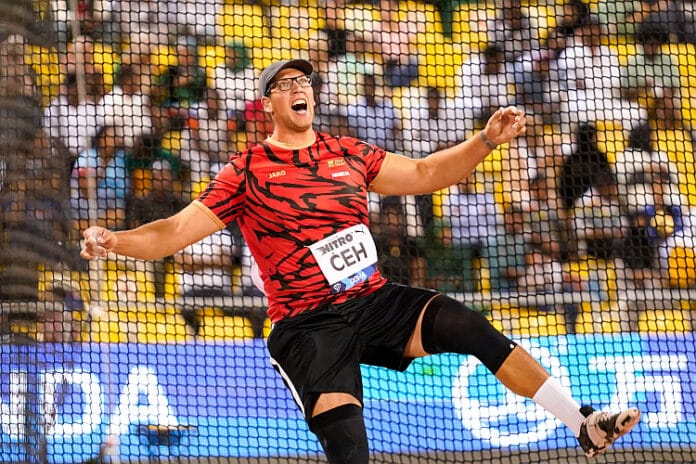
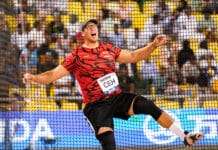
Slovenia’s 2022 World discus champ Kristjan Ceh (Photo: Matthew Quine for Diamond League AG).

The Sports Examiner: Chronicling the key competitive, economic and political forces shaping elite sport and the Olympic Movement.★

To get the daily Sports Examiner Recap by e-mail: sign up here!

≡ THE 5-RING CIRCUS ≡

● Olympic Games 2028: Los Angeles ● The LA28 organizers announced that in addition to the “Official Secondary Ticket Marketplace” providers AXS and Eventim, “other verified resale platforms will include Ticketmaster and Sports Illustrated Tickets.”

The statement noted that “LA28 cannot verify the validity of any tickets sold outside of its verified network and cautions fans to wait for the launch of the verified LA28 resale program before buying or selling resale tickets to LA28 events.”

Ticket sales will begin on 2 April for buyers in Southern California zip codes and those in Oklahoma City for the events there.

● Alpine Skiing ● The U.S. Alpine nationals are in Vail, Colorado, with Isaiah Nelson and River Radamus sharing the men’s Super-G title in 1:08.38 for both, and Bradshaw Underhill third in 1:08.64. The men’s Giant Slalom went to Norway’s Johs Herland (2:34.98) with Erik Read (CAN: 1:20.84) in second.

The women’s Super-G was a close win for World Cup vet Keely Cashman (1:11.69), with Tricia Mangan second (1:11.84) and Logan Grosdider in third (1:12.34). Sunday’s Giant Slalom was a win for Elisabeth Bocock (2:05.10) just ahead of older sister Mary Bocock (2:05.25) and Katie Hensien (2:05.39).

The racing finishes on Tuesday with the Slaloms.

● Athletics ● A huge throw for 2022 World Champion Kristjan Ceh (SLO) in the men’s discus in the thrower’s paradise of Ramona, Oklahoma on Sunday, reaching a world-leading 72.26 m (237-1) on his first throw.

He threw 68.76 m (228-10) on Saturday, but with better winds on Sunday, he also hit 72.05 m (236-4) on his second throw. His big first throw is close to his all-time best of 72.36 m (237-5) from 2023 (making him no. 6 all-time).

The Athletics Integrity Unit banned Kenyan marathon star Albert Korir, the 2021 New York City Marathon winner and two-time runner-up, for five years, after the anti-anemia drug CERA (Continuous Erythropoietin Receptor Activator) was found in samples taken on 3 October, 13 October and 21 October 2025.

Korir, 32, admitted the positives and had a multi-positive sanction of six years reduced by one year for cooperation. He will be eligible again on 7 January 2031 and his results since 3 October 2025 – including his NYC Marathon third-place finish – are nullified.

● Cross Country Skiing ● At the U.S. Spring Nationals in Craftsbury, Vermont, Olympic medal star Ben Ogden won the men’s Sprint in 3:12.11 over JC Schoonmaker and Gus Schumacher, and Schumacher took the 40 km Freestyle Mass Start in 1:35:06.3, ahead of John Steel Hagenbuch (+0.9) and Kevin Bolger (+3.4).

The women’s Sprint went to Canada’s Katherine Weaver (3:51.33) over teammate Olivia Bouffard-Nesbitt (+1.72). The women’s 40 km Free was a tight finish between winner Novie McCabe (1:44:20.9), Kendall Kramer (+0.6) and Alayna Sonnesyn (+1.0).

● Curling ● The men’s World Championship is on in Ogden, Utah, with about a third of the round-robin play completed. So far, Sweden’s seven-time World Champion Niklas Edin’s rink is on top at 4-0, ahead of the Swiss (Marco Hoesli) at 3-1.

The U.S. rink, skipped by 2018 Olympic champ John Shuster, is 2-3 so far, and in eighth place. The top six will advance to the playoffs.

● Diving ● American three-time Olympian Jessica Parratto, 31, announced her retirement from the sport on Monday. She wrote on Instagram:

“The time has come to officially retire from the sport I love While this decision may not come as a surprise to many, making it official gives me a sense of closure on something that has been such a defining part of my life. I want to take a moment to thank everyone who has been part of this journey.”

She won a memorable Tokyo 2020 Olympic silver with Delaney Schnell in the women’s 10 m Synchro and a Worlds bronze with Schnell in 2023. They finished sixth at the Paris 2024 Games. Parratto won a total of 11 U.S. national titles.

● Fencing ● The U.S. Fencing Foundation released its 2025 annual report, reporting more than $412,000 raised from 540 individual donors and a $2.48 million endowment total into early 2026.

No financial statements were included, but the report 27 elite athletes were funded and nine personal coaches, plus 60 entries to North American Cup (NAC) were funded, as well as 31 “Fencing the Gap” grants to clubs across 25 states for grass-roots development programs.

● Figure Skating ● Powered by more than 93,000 votes online, the International Skating Union presented its awards for the 2025-26 season.

Japan’s Olympic silver winner Yuma Kagiyama won for Most Entertaining Program, while World Champion Ilia Malinin of the U.S. won for Best Costume.

Japan’s Ami Nakai, the Olympic women’s bronze medalist, won for Best Newcomer (selected by an ISU jury) and Ice Dance Olympic champs Laurence Founier Beaudry and Guillaume Cizeron (FRA) won for Skaters of the Year (based on a points system).

Coach of the Year honors went to American Philip DiGuglielmo, who guided Olympic champ Alysa Liu this season. The Best Choreographer award recognized France’s Benoit Richaud, for a second time, also in 2024.

● Football ● FIFA announced that all 16 of its global sponsorship packages for the 2026 FIFA World Cup have now been sold and only two regional Supporter Tier packages remain available.

Inside World Football reported Monday:

“The Massachusetts Bay Transportation Authority (MBTA) plans to charge fans around $75 per person for a round-trip ticket from Boston South Station to Gillette Stadium in Foxboro, a mere 27-mile journey. For context, that same ticket costs $20 for a New England Patriots or Revolution game. It was bumped to $30 for last Thursday’s France-Brazil friendly. Come the World Cup, it more than doubles again.”

The story’s final line: “The grift is real. And it’s just getting started.”

● Freestyle Skiing ● The U.S. nationals in Moguls skiing was in Palisades Tahoe, California, with Charlie Mickel taking the men’s Moguls final with 82.38 points, over Asher Michel (81.35). The Dual Moguls went to Michel, who won the final against Camden Lewis.

The Women’s Moguls final was a tight win for Kylie Kariotis (70.34) over Kasey Hogg (70.16), but Hogg won the Dual Moguls final over Evelyn Harris.

● Gymnastics ● Ukraine’s two-time Worlds bronze medalist Taisiia Onofriichuk (UKR) won a tight battle for the All-Around title at the World Gymnastics Rhythmic World Cup in Sofia (BUL) that finished Monday.

Onofriichuk scored 116.600 to edge home favorite and 2025 Worlds runner-up Stiliana Nikolova (BUL: 116.200) and six-time Worlds gold medalist Sofia Raffaelli (115.700). Rin Keys was the top American in 11th at 108.700.

In the apparatus finals, Onofriichuk won on Hoop (30.400), on Ball (29.000) and on Ribbon (29.200). Bulgaria’s Eva Brezalieva won on Clubs (29.650), with Keys fourth (29.000). Keys also finished fifth in Hoop (28.750).

● Shooting ● At the ISSF World Cup in Tangier (MAR), Finn Timi Vallioniemi won the men’s Skeet final, scoring 31/36, just ahead of Domenico Simeone (ITA: 29). American Dustan Taylor was seventh.

Britain’s Bethany Norman, 19, won the women’s Skeet for her first major international win, ahead of 2017 World Champion Dania Jo Vizzi of the U.S., 28-27, in the final.

Competition continues with the Trap events this week.

Receive our exclusive, weekday TSX Recap by e-mail by clicking here.
★ Sign up a friend to receive the TSX Recap by clicking here.
★ Please consider a donation here to keep this site going.

For our updated, 45-sport, 910-event International Sports Calendar for 2026 and beyond, by date and by sport, click here!
LANE ONE: With Grand Slam Track fading away, what does AI say about T&F’s problems in the U.S.? One man asked …

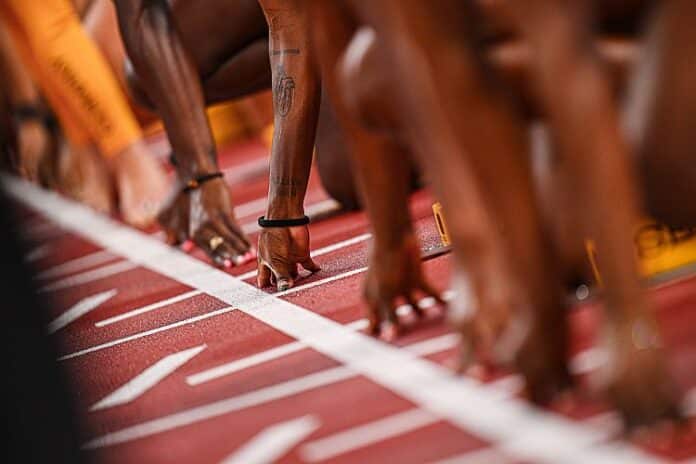
At the starting line of the 2025 World Athletics Championships (Mattia Ozbot for World Athletics).

The Sports Examiner: Chronicling the key competitive, economic and political forces shaping elite sport and the Olympic Movement.★

To get the daily Sports Examiner Recap by e-mail: sign up here!

≡ TRACK & FIELD’S FUTURE? ≡

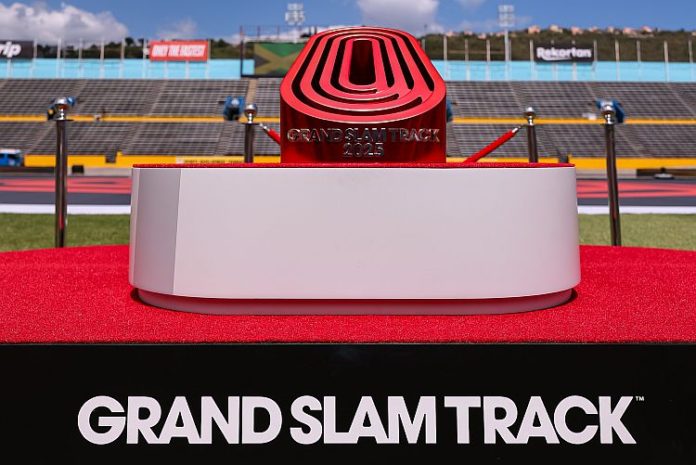
With last week’s agreement of the creditors committee to a plan to pay them a average of 14-16% instead of 1.5% of what they are owed, it appears that the Grand Slam Track bankruptcy case will be settled in the coming weeks.

The result is that the entity will fade away for some time – maybe forever – as Winners Alliance pumps some more money into an effort to find investors again through the end of the year and try and put on one or more meets in 2027.

There were doubters about Grand Slam Track from the beginning, of course, and some objected to the use of the term “league” as the format had nothing to do with traditional teams. The public debut of the Grand Slam Track concept was at a Los Angeles event on 18 June 2024, with founder Michael Johnson, Sydney McLaughlin-Levrone, Carl Lewis and more.

A little less than five months later, former sprinter and now coach Rae Edwards shared a fascinating series of posts on X, asking ChatGPT what to do about track & field in the United States.

Edwards knows something about this was he was a 10.00 (2010) and 20.17 (2009) man, placing third in the 2009 U.S. nationals at 100 m and was a member of U.S. teams at the 2007 and 2011 Pan American Games. He later transferred allegiance to Nigeria and won an African Championships 100 m bronze in 2014. He competed through 2016 and then came back for a couple of meets in 2019.

He’s a coach in Texas and has been active on social platforms and especially on YouTube with his RaesTakeTV series, tackling issues in track and beyond.

On 13 November 2024, he posted three times on X, reporting on his request to ChatGPT about the status of track & field in the U.S. Here’s what the bot came back with:

“Track and field is technically a professional sport, but it lacks the visibility, infrastructure, and commercial appeal that many other pro sports enjoy. Here are a few key reasons why it struggles to reach the level of mainstream professional recognition:

“1. Limited Revenue and Sponsorships:
“Unlike team sports such as football or basketball, track and field doesn’t generate as much revenue through ticket sales, TV rights, or merchandise. Consequently, it’s less attractive to major sponsors, which limits funding for athletes and events.

“2. Lack of a Consistent League Structure:
“While there are professional track meets and circuits like the Diamond League, the sport lacks a unified, year-round league similar to the NFL, NBA, or European soccer leagues. This fragmented approach makes it harder to build continuous fan engagement or loyalty.

“3. Inconsistent Exposure and Broadcasting:
“Track and field events, other than the Olympics or World Championships, rarely receive prime TV spots or major media coverage. This means that fans don’t get to follow athletes consistently throughout the year, leading to lower overall engagement.

“4. Athlete Visibility and Brand Building:
“Many track and field athletes aren’t household names, making it challenging to attract a broad fan base. Without strong individual brands and personalities, it’s difficult to create fan loyalty and ongoing excitement around the sport.

“5. Limited Team Dynamics:
“Team dynamics often attract fans in other sports, as fans can connect to a local or favorite team. Track and field is primarily an individual sport, which makes it harder to build the same type of fan allegiance.

“6. Olympic Focus:
“Track and field’s strong association with the Olympics means the public often views it as an ‘every-four-years’ sport, focusing primarily on the Olympics rather than year-round events.”

(Don’t look for the posts; Edwards was banned from X and the posts are not available. He shared them with TSX at our request.)

Edwards felt that the “Athlete Visibility and Brand Building” aspect was really important.

I would suggest that nos. 2 – “Lack of a Consistent League Structure” – and 5 – “Limited Team Dynamics” – are the main culprits.

With a four-meet program spread over less than three months, Grand Slam Track was hardly a weekly feature on the sport schedule. Moreover, it has no team structure at all.

Looking at other sports which created start-up leagues, Major League Soccer started in 1996, with 10 teams playing 32 games each from April through September. The WNBA started in 1997, with eight teams playing 28 games each from mid-June to the end of August. They have both grown significantly, albeit in fits and starts and both have attracted significant investment.

The Diamond League has shown good staying power in Europe, but modest success elsewhere; there is only one stop in the U.S., for the annual Prefontaine Classic. U.S. track is in a continuing period of on-field excellence, perhaps as good as in any period in history, but in a long, continuing malaise as a spectator sport.

Edwards’ idea was clever and the chatbot neatly summarized the status of the sport in the U.S.

Johnson said he had raised $30 million to form his “league.” He really raised about $12 million and went bust. But he might be right about the $30 million, to create a 6-8 team league and a weekly dual or triangular meet schedule over 12-14 weeks, culminating in a true team champion.

That might solve the puzzle posed by ChatGPT. Any takers?

Rich Perelman
Editor

Receive our exclusive, weekday TSX Recap by e-mail by clicking here.
★ Sign up a friend to receive the TSX Recap by clicking here.
★ Please consider a donation here to keep this site going.

For our updated, 45-sport, 910-event International Sports Calendar for 2026 and beyond, by date and by sport, click here!
PANORAMA: L.A. to spend $5.3 million to fix sidewalks for 2028; fan dies as Mexico City’s Banorte Stadium reopens; IIHF prez Tardif to retire

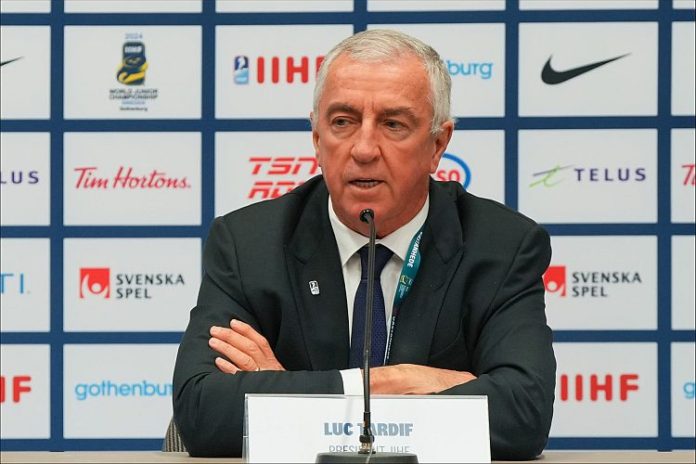
IIHF President Luc Tardif (FRA) (Photo: Chris Tanouye/IIHF).

The Sports Examiner: Chronicling the key competitive, economic and political forces shaping elite sport and the Olympic Movement.★

To get the daily Sports Examiner Recap by e-mail: sign up here!

≡ THE 5-RING CIRCUS ≡

● Olympic Games 2028: Los Angeles ● To those who say that the Los Angeles City Council is not preparing for the 2028 Games, a Friday motion popped up to spend $5.282 million for “the repair of pedestrian facilities (sidewalks, curb ramps, crosswalks, etc.) for the LA28 Games.”

The motion would authorize “the Department of Public Works and/or the City Engineer, or designee, to utilize existing and future contracts as appropriate, including emergency pre-qualified on-call contracts, to accelerate repairs.”

This expenditure was included in the Fiscal Year 2025-26 budget “for proactive infrastructure repairs near 2028 Olympic and Paralympic Games venues, fan zones, and key access routes,” and the City “has since conducted a comprehensive infrastructure inventory and assessment near Games venues that identifies sidewalk repairs and related infrastructure improvements needed to ensure corridor safety and accessibility.”

The motion was referred to the Ad Hoc Committee on the Olympic & Paralympic Games, and can be expected to move ahead since funding was already included in the City’s budget.

The spend is actually as much about liability avoidance as any beautification effort as the City has been repeatedly hit with lawsuits over crumbling infrastructure and pedestrian injuries.

● Figure Skating ● American Ilia Malinin rebounded spectacularly from his Olympic experience in Milan to dominate the men’s skating at the ISU World Championships in Prague (CZE) and on Sunday, the International Skating Union paid him a special honor:

“In recognition of his record-breaking feat to land seven quadruple jumps in a single program, the International Skating Union proudly presented the sport’s first-ever ‘Trailblazer on Ice’ Award to the athlete widely known as the ‘Quad God.’ The historic moment took place during the Exhibition Gala of the ISU Figure Skating World Championships 2026 in Prague.”

It was a surprise announcement and was presented by ISU President Jae-Youl Kim (KOR), along with a commemorative ring.

● Football ● The famous Estadio Azteca, now known as the Banorte Stadium, was opened for the Portugal-Mexico match on Saturday after undergoing renovations, and will host the opening match of the 2026 FIFA World Cup.

Sadly, the re-opening day also saw a death just prior to the start of the match, as an unidentified fan, possibly drunk, apparently tried to jump from the second level to the first level of seats, along the exterior of the stadium and fell to the parking area below.

Portugal and Mexico played to a 0-0 tie before 84,130.

● Ice Hockey ● Writing on his 73rd birthday, International Ice Hockey Federation President Luc Tardif (FRA) wrote that he will not seek a second term as federation President in October:

With the IIHF in a strong and stable position, I feel it is the right time to pass the puck to a younger leader. After much deliberation, I have made the decision not to seek re-election as IIHF President, as I believe that it is time for a new leader to take the reins and continue to move our sport forward. I am taking the opportunity to announce this today as I want to ensure that our organization and future leaders prepare themselves for the road ahead.”

This will touch off a scramble, with the IIHF successfully re-integrating the NHL back into Olympic hockey, but dealing with the NHL on preserving the IIHF World Championships as the World Cup of Hockey gets re-started and the question of whether to re-admit Russian teams and on what terms.

≡ RESULTS ≡

● Artistic Swimming ● At the World Aquatics World Cup in Paris (FRA), Russian “neutrals” won the women’s Solo Technical (Vasilina Khandoshka) and both Duet events (Maya Doroskho and Elizaveta Minaeva in the Duet Tech, and Doroshko and Alekjsandra Shmidt in the Duet Free), and the Mixed Technical, with Alina Rumiantseva and Zakhar Trofimov. Russian “neutral” teams won the Tech Technical and Team Free.

Germany’s Klara Bleyer won the women’s Solo Free, while China’s Muye Guo won the men’s Technical and men’s Free. Italy’s Filippo Pelati and Lucrezia Ruggiero won the Mixed Free and Ukraine won the Team Acrobatic event.

● Athletics ● The TEN in San Juan Capistrano, California produced more strong races, including a win for Shelby Houlihan in the women’s race, in 30:50.10, the world leader this year. She was well ahead of Jessica McClain’s 31:15.49 in second.

The men’s 10 was a national record 26:58.58 for Germany’s Mohamed Abdilaahi, followed by a national record of 26:57.07 for Australia’s Ky Robinson and a third national record of 27:20.52 for Mike Foppen (NED).

A trio of women’s world-leading marks at the USATF Winter Throws Championships in Tucson, Arizona, as discus star Valarie Sion (nee Allman) won her 30th straight discus final at 66.02 m (216-7), Rachel Richeson took the hammer at 76.86 m (252-2) and Madison Wiltrout got a javelin lifetime best at 61.29 m (201-1).

The men’s winners included Reggie Jagers in the discus at 65.83 m (215-11), Rudy Winkler in the hammer (80.60 m/264-5) and Marc Minnichello in the javelin, reaching 75.32 m (247-1).

At the Continental Tour Gold Maurie Plant meet in Melbourne (AUS), 2025 World Indoor 60 m runner-up Lachlan Kennedy (AUS) scored wins in the 100 m (10.03) and 200 m (20.38), beating 18-year-old Gout Gout (20.43) in the process.

American star Jacory Patterson took the world lead in the 400 m at 44.41 and Australia’s 19-year-old Cam Myers won the 1,500 m in a world-leading 3:30.42. Home favorite Claudia Hollingsworth took the women’s 1,500 m in 4:01.30, beating World Indoor 1,500 m winner Georgia Hunter Bell (GBR: 4:01.52).

World Champion Nicola Olyslagers (AUS) won the women’s high jump at 1.95 m (6-4 3/4) and Paris Olympic champ Nina Kennedy (AUS: won the vault at 4.72 m (15-5 3/4) over U.S. stars Hana Moll (4.56 m/14-11 1/2) and Amanda Moll (4.36 m/14-3 1/2).

Pretty interesting women’s 800 m at the Clyde Hart Classic in Waco, Texas, with Makenna Herbst winning in 2:04.22, ahead of the supposedly-retired 2016 Olympic 400 hurdles champ Dalilah Muhammad, in a lifetime best of 2:04.51, ahead of 400 m star Alexis Holmes (2:05.64).

It was reportedly the first 800 for Muhammad in 11 years!

● Cycling ● Danish star Jonas Vingegaard took control on the difficult fifth stage of the 105th Volta a Catalunya in Spain and raced to his second big victory in a month after winning Paris-Nice in mid-March.

Vingegaard won the five-climb fifth stage of 153.1 km with a steep uphill finish and took the race lead, then won the four-climb, 158.2 km sixth stage and created a 1:22 lead over France’s Lenny Martinez. That’s how they finished as Sunday’s final stage into Barcelona was the usual sprint finish (Australia’s Brady Gilmore won), with the first 34 riders given the same time.

Vingegaard’s final time was 25:56:36, with Martinez 1:22 back and German Florian Lipowitz third at +1:30. Matthew Riccitello was the top American, in ninth (+5:25).

Friday’s 68th E3 Saxo Classic in and around Harelbeke, Belgium was a second win of the season for Dutch star and two-time defending champion Mathieu van der Poel, who attacked with 42 km left on the 208.8 km course and won in 4:45:15, three seconds up on Per Strand Hagenes (NOR) and Florian Vermeersch (BEL). American Magnus Sheffield was 12th.

The 88th edition of the famed In Flanders Field (nee Gent-Wevelgem) in Belgium was held Sunday, with a spirited breakaway by 2024 runner-up van der Poel and Belgium’s 2021 champion Wout van Aert about 36 km from the end of the 240.8 km ride to Wevelgem, but they were caught with about 1,000 m to go.

Instead, it was Belgium’s Jasper Philipsen, an Alpecin-Premier Tech teammate of van der Poel, who won the final, mass sprint in 5:08:03, ahead of Tobias Andresen (DEN) and 2023 winner Christophe Laporte (FRA). Van Aert was 30th and ver der Poel, 35th.

The women’s race of 135.2 km belonged for the third straight year to Dutch star Lorena Wiebes, who won the final sprint over Fleur Moors (BEL) and Karlijn Swinkels (NED) in 3:31:21.

At the USA Cycling BMX National Championships in Rock Hill, South Carolina, Payton Ridenour repeated as the women’s winner, over 2024 runner-up Carly Kane and 2024 bronzer Lexis Colby. The men’s winner was 2024 champion Kamren Larsen, beating Drew Polk and Rayne Lankford.

At the USA Cycling nationals in BMX Freestyle in South Jordan, Utah, veteran stars took both events, with 2018 World Champion Justin Dowell winning the men’s title over Marcus Christopher and six-time World Champion Hannah Roberts winning the women’s gold, ahead of Angie Marino.

● Fencing ● American William Morrill, 19, took the FIE men’s Sabre World Cup in Budapest (HUN) for his first World Cup victory, getting past Matteo Neri (ITA) by 15-13 in the championship final. France defeated Romania, 45-34, to take the team gold. The U.S. was fourth (Daryl Homer, Antonio Heathcock, Colin Heathcock, Grant Williams), losing to Korea in the bronze-medal match by 45-26.

The FIE women’s Sabre World Cup in Tashkent (UZB) was won by Russian “neutral” Alina Mikhailova, who defeated Bulgarian Yoana Ilieva in the final, 15-6. The Russian “neutral” team won the team title over the U.S. (Maia Chamberlain, Lola Possick, Aleksandra Strzalkowski, Siobhan Sullivan), 45-32.

At the FIE Epee World Cup in Astana (KAZ), Ukraine’s 2018 Worlds bronze winner Roman Svichkar won the men’s final over Kazakhstan’s Ruslan Kurbanov, 15-12, and 2022 World Champion Sera Song (KOR) took the women’s final by 15-11 over Estonia’s Katrina Lehis, the Tokyo Olympic bronze winner.

France won the men’s team final over Italy (45-44) and South Korea won the women’s team title over the U.S. (Hadley Husisian, Charlene Liu, Catherine Nixon, Tierna Oxenreider) by 45-34.

● Figure Skating ● As expected, Olympic gold medalists Laurence Fournier Beaudry and Guillaume Cizeron (FRA) dominated the Ice Dance at the ISU World Championships in Prague (CZE), winning by more than 19 points.

Already the leaders following the Rhythm Dance, the French duo won the Free Dance at 138.07, way ahead of Olivia Smart and Tim Dieck (ESP) at 125.31, then Piper Gilles and Paul Poirier (CAN: 125.07) and Americans Emilea Zingas and Vadym Kolesnik (lifetime best 124.99).

That gave Fournier Beaudry and Cizeron a total of 230.81, the no. 2 score ever and for Cizeron, his fifth Worlds gold (first with Fournier Beaudry). Gilles and Poirier remained in second place and won their third straights Worlds silver! They now have five medals (0-3-2) in the last six editions.

Zingas and Kolesnik won the bronze by placing fourth in both segments and getting a lifetime best score of 209.20, just ahead of Britain’s 2025 bronze winners, Lilah Fear and Lewis Gibson (208.98). The U.S. duo’s first Worlds medal extends the American medal streak in this event to 11 straight Worlds.

● Football ● The U.S. men faced world no. 9 Belgium in a friendly in Atlanta, Georgia in a strong test of preparation for the upcoming FIFA World Cup. The Americans were on offense early and had some excellent chances, but no scores.

In the 39th, defender Antonee Robinson struck a magnificent corner that sailed over most of the Belgian defense and came to midfielder Weston McKennie, whose right-footed strike sent the ball to the far side of the net for a stunning 1-0 lead.

Unfazed, Belgium rallied with a brilliant equalizer in the 45th, as a rocket from forward Jeremy Doku was saved by U.S. keeper Matt Turner, but rebounded out beyond the box. Defender Zeno Debast then sent a right-footed laser through two defenders and into the far corner of the goal, too fast for Turner to react. It was 1-1 and the half ended with Belgium in 59% possession and a 13-8 shots edge.

After a couple of good U.S. chances to open the second half, a block on Doku went to midfielder Alexis Saelemaekers, who pushed the ball back to midfielder Amadou Onana, who hit a blast from the top of the box that skipped past Turner for a 2-1 lead in the 53rd. Quickly afterwards, Belgium was on the attack again and Turner saved a Doku blast and then a header by defender Thomas Meuiner was swatted. But defender Tim Weah was called for a hand ball and striker Charles de Ketelaere converted the penalty for a 3-1 lead in the 59th.

The Belgians took complete control in the 68th, on a brilliant strike from sub striker Dodi Lukebakio, who dribbled from the right side into the middle of the box and delivered a line-drive left-footed score to the top of the net for a 4-1 lead. Lukebakio scored again from the middle of the box in the 82nd for the 5-1 lead.

U.S. sub forward Ricardo Pepi stole a clearing pass in the Belgian box in the 87th and the ball rolled to sub striker Patrick Agyemang, who slammed it home for the 5-2 final. The U.S. actually ended with 51.5% of possession, but Belgium had 21 shots to 12 for the U.S.

The Americans are back at it on Tuesday against no. 5 Portugal, also in Atlanta. The Portuguese, without Cristiano Ronaldo, played in Mexico City Saturday to a 0-0 draw.

● Freestyle Skiing ● The FIS World Cup in Silvaplana (SUI) saw the conclusion of the Slopestyle and Halfpipe seasons, with Olympic champ Birk Ruud (NOR) getting his second win of the season in the men’s Slopestyle, and winning with 83.52 points over Estonian teen star Henry Sildaru (79.41) and American Mac Forehand (78.47). Ruud won the seasonal title at 280, with Sildaru second at 220 and Forehand at 184.

Swiss Sarah Hoefflin, the 2018 Olympic gold medalist, took the women’s Slopestyle win with 80.07, ahead of Kirsty Muir (GBR: 75.54), but Muir was the seasonal winner with 280 points, to 211 for Elena Gaskill (CAN) and 210 for Lara Wolf (AUT).

Sunday’s Halfpipe saw New Zealand’s Luke Harrold get his first win of the season (93.25) over Olympic runner-up Sildaru – age 19 – at 88.00 and Finn Jon Sallinen (85.25). New Zealand’s Finley Melville Ives, the 2025 World Champion, won the seasonal title over American Hunter Hess, 280 to 265.

Olympic women’s bronzer Zoe Atkin (GBR) won the women’s finale at 86.75, beating Mischa Thomas (NZL: 80.75); Atkin also won the seasonal title with 360 points to 290 for 16-year-old Indra Brown (AUS).

● Ski Jumping ● The FIS World Cup was in Planica (SLO) for jumping off of the giant, 240 m ski-flying hill, with another good week for the Prevc family.

Both Domen (men) and Nika (women) have clinched their seasonal titles and Domen the first men’s event on Friday at 471.4 points, ahead of Ren Nikaido (JPN: 451.3) and Daniel Tschofenig (AUT: 443.5). In Sunday’s finale, Beijing 2022 gold medalist Marius Lindvik took the win at 459.5, just ahead of Domen Prevc (453.9) and Johann Andre Forfang (NOR: 441.3).

Domen finished with 2,143 points to 1,194 for Ryoyu Kobayashi (JPN) and 1,159 for Tschofenig.

The women jumped on Saturday, and with a crowd of 30,000 cheering her on, Nika delivered another win, her record 18th of the season, to score 405.3, over Olympic silver winner Eirin Kvandal (NOR: 388.1) and 361.7 for Nozomi Maruyama (JPN). Overall, Nika amassed 2,676 points to 1,870 for Maruyama and 1,628 for double Olympic champ Anna Stroem (NOR).

● Ski Mountaineering ● The very busy ISMF World Cup in Puy-St. Vincent (FRA) also included a Youth World Championships, but in the senior events, Swiss star Remi Bonnet took the Individual Race in 1:26:17.9, almost a minute ahead of William bon Mardion (FRA: 1:27:14.8), and won the Vertical Race in 20:43.8 over Anselme Damevin (FRA: 21:10.7).

Olympic bronze winner Thibault Anselmet (FRA: 3:09.2) took the Sprint over Thomas Bussard (SUI: 3:15.2).

The women’s Individual race was a big win for multi-time World Champion Axelle Gachet Mollaret (FRA: 1:15:53.9), winning over Alba De Silvesto (ITA: 1:18:29.0), and then taking the Vertical Race in 24:23.0, beating teammate Emily Harrop (24:50.7) and De Silvestro (25:29.6).

In the Sprint, Harrop (3:37.9), the Olympic runner-up, led a French 1-2 ahead of Margot Ravinel (FRA: 3:45.7).

● Snowboard ● The FIS World Cup in Silvaplana (SUI) featured the close of the Slopestyle and Halfpipe seasons, with Japan’s Olympic champ Yuto Totsuka winning for the third time in the last four Halfpipe events at 94.00, ahead of Val Guseli (AUS: 91.00) and Chase Blackwell of the U.S. (88.75). Totsuka won the seasonal Halfpipe Crystal Globe with 460 points to 430 for Guseli.

The women’s Halfpipe went to American two-time Worlds medalist Maddie Mastro, for her first medal of the season (85.00) with teammate Maddy Schaffrick second (78.25). Korea’s Ga-on Choi, the Olympic winner, was the seasonal champ with 300 points, to 296 for Japan’s Rise Kudo.

The men’s Slopestyle event was cancelled, so Olympic winner Yuming Su (CHN) took the seasonal title at 140 points to go with his Big Air title. American Judd Henkes (139) was just a point behind.

The women’s Slopestyle final was also cancelled due to high winds, so 16-year-old American Lily Dhawornvej won the seasonal title with 169 points to 160 for Japan’s Olympic bronze winner Kokomo Murase.

● Swimming ● Texas won its second straight NCAA men’s title in Atlanta, Georgia, scoring 445 1/2 points to 416 for Florida and 351 for Indiana.

Canadian Josh Liendo, the 2024 Olympic 100 m Fly runner-up, was the big individual winner. Swimming for Florida, he won the 50-yard Free, 100-yard Free and 100-yard Fly, plus legs on four medal-winning relay teams.

There were multiple double winners, including Maximus Williamson (Virginia) in the 200-yard Free and 200-yard Medley; Hungary’s Olympic Back champ Hubert Kos (Texas) in the 100-yard and 200-yard Back events, and 100-200-yard Breast winner Yamato Okadome (JPN-Cal).

Tunisian distance stars Ahmed Hafnoui (Tokyo 2020 400 m Free gold) and Ahmed Janouadi (2025 World 800-1,500 m golds) – swimming for Florida – both won, in the 500-yard Free and 1,000-yard Free, respectively.

The big stars of the 2025 World Championships were in strong form at the World Athletics Open Water World Cup opener in Somabay (EGY), with German Florian Wellbrock winning the men’s 10 km in 1:50:59.5. touching cleaning ahead of 2025 Worlds Sprint runner-up David Betlehem (HUN: 1:51:04.1) and Domenico Acerenza (ITA: 1:51:05.6).

World Champion Moesha Johnson (AUS) was all alone in the women’s 10 km in 1:58:26.1, with Italy’s Worlds runner-up Ginerva Taddeucci a distant second in 1:59:14.7. Germany, with Wellbrock on anchor, won the Mixed 4×1,500 m relay in 1:09:24.6 over Hungary (1:09:26.9).

Receive our exclusive, weekday TSX Recap by e-mail by clicking here.
★ Sign up a friend to receive the TSX Recap by clicking here.
★ Please consider a donation here to keep this site going.

For our updated, 45-sport, 910-event International Sports Calendar for 2026 and beyond, by date and by sport, click here!
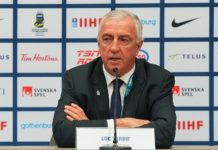
FIGURE SKATING: U.S.’s Malinin takes third ISU Worlds gold in a row in rebound from Olympics, asks for more skater input for the future

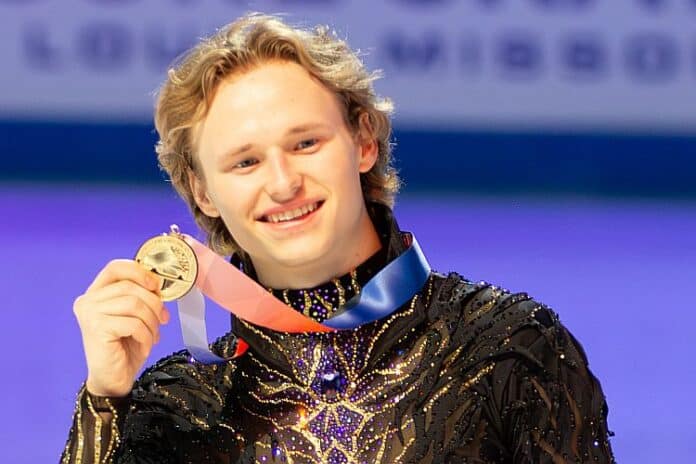
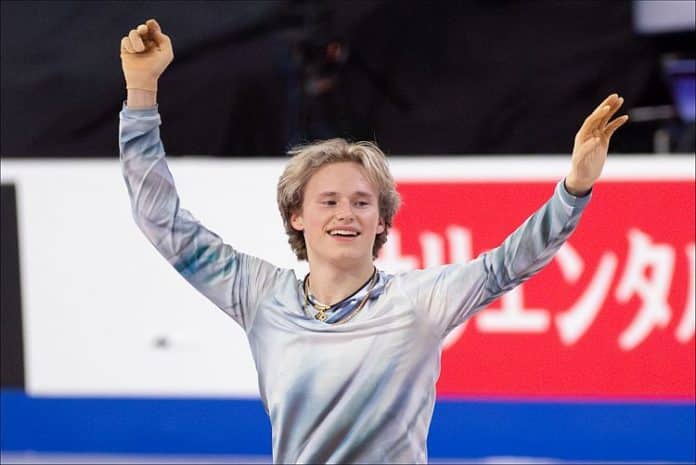
U.S. star Ilia Malinin celebrating his 2026 U.S. national title (Photo: Wikipedia via Spirited Michelle)

The Sports Examiner: Chronicling the key competitive, economic and political forces shaping elite sport and the Olympic Movement.★

To get the daily Sports Examiner Recap by e-mail: sign up here!

≡ ISU WORLD CHAMPS ≡

American skating star Ilia Malinin, still just 21, entered the 2025 ISU World Championships as the two-time defending champion. And despite his difficulties at the 2026 Olympic Winter Games in Milan, he dominated the field and won a third straight title in brilliant fashion on Saturday.

Competing at the O2 Arena in Prague (CZE), Malinin already had a big, 111.29 to 101.85 lead on second-place Adam Siao Him Fa (FRA) following the Short Program. As Malinin waited, Olympic silver winner Yuma Kagiyama (JPN) – sixth in the Short Program – mounted a charge with a brilliant Free Skate, scoring 212.87, no. 10 ever at the time and taking the lead at 306.67, a seasonal best.

Two skaters later, Olympic bronze winner Shun Sato (JPN) also performed superbly, scoring 192.70 – just behind his Olympic effort – and moved up to second behind Kagiyama at 288.54. Estonia’s Aleksandr Selevko – third after the Short Program – scored 173.93, suffering a fall, and dropped and Siao Him Fa also struggled, with a fall and scoring only 169.71 and dropping back.

That left Malinin in the same situation was in Milan: last skater, with a big lead coming in. But he met the moment, with a quad Flip, quad Lutz, another quad Lutz, a quad Toe Loop and quad Salchow and more, including his trademark back flip. He said later there was no need for his astonishing Quad Axel. 

The result was a brilliant 218.11, the no. 7 Free Skate score in history – he has four of the seven – and a total of 329.40, the no. 6 score ever. Said the winner:

“I felt really relieved that the season is finally done after the long ups and downs for this whole season. I’m very glad to be here at the World Championships. It was a different change of mindset to come here. All I wanted to do was to skate for myself and enjoy every moment on the ice and just have fun out there. That’s exactly what I did.

“I think this was probably one of the easier World Championships I’ve been to, just because of the amount of pressure I had at the Olympics. Going here I felt like there was almost no pressure at all. I’ve just completely blocked out all the expectations, all the pressure that people put on me. I was really here just to skate for myself and enjoy every moment of these World Championships, and I think I did exactly that.”

He’s still just 21, with Kagiyama at 22, Sato is 22 and then there is Kazakh Mikhail Shaidorov, the Olympic champion, who is also just 21. Wow. Those four have won eight of nine medals in the last three Worlds!

Malinin won his third straight Worlds gold, matching fellow American Nathan Chen, in 2018-19-21 and 12 others before him. He’s the sixth American to win at least three in a row.

Kagiyama won his fifth silver in the last six championships (plus a bronze) and Sato won his first Worlds medal to go along with the Olympic bronze.

The other two Americans, Andrew Torgashev (249.41) and Jacob Sanchez (241.74) placed 10th and 12th overall.

Malinin also voiced some concern over the future of the sport and the changes being instituted by the International Skating Union:

“[T]hey want to change from seven jumps to six jumps. We have to set up our programs completely differently, and especially with last season, how they weren’t sure with how many jumps were going to be there.

“I personally had problems with having to go from six jumps to seven jumps, and that honestly caused me a lot of problems with my previous competitions.

“But in the end, I think that the ISU and everyone who is in charge of making these decisions should really listen to the athletes because to be honest, we’re the reason the ISU is blowing up and really here.

“And because without the skaters, the ISU would not be able to have all of us and this recognition. That’s what I think about it. I think the ISU should really reconsider all of these changes and really give an opportunity and a voice to all of us athletes to really come together and realize what’s better for the sport.”

Receive our exclusive, weekday TSX Recap by e-mail by clicking here.
★ Sign up a friend to receive the TSX Recap by clicking here.
★ Please consider a donation here to keep this site going.

For our updated, 45-sport, 910-event International Sports Calendar for 2026 and beyond, by date and by sport, click here!
SPORTS MEDICINE: South Africa’s Olympic 800 champ Semenya promises class-action suit against new IOC sex-screening rules

South Africa's Olympic and World women's 800 m Champion Caster Semenya.

The Sports Examiner: Chronicling the key competitive, economic and political forces shaping elite sport and the Olympic Movement.★

To get the daily Sports Examiner Recap by e-mail: sign up here!

≡ NEW IOC WOMEN’S RULES ≡

As soon as the International Olympic Committee announced its new rules on “protection of the female category” on Tuesday, everyone knew the next test will come in multiple courts.

The IOC announced, in summary, that for the Los Angeles 2028 Games and onward:

● “Eligibility for any female category event at the Olympic Games or any other IOC event, including individual and team sports, is now limited to biological females, determined on the basis of a one-time SRY gene screening.”

“It is not retroactive and does not apply to any grassroots or recreational sports programmes.”

An appeal of the rules to the Court of Arbitration for Sport is sure and perhaps the first stop, but look for a filing with the European Court of Human Rights as well. And in front of one or both will be South Africa’s two-time Olympic women’s 800 m champion, Caster Semenya.

The 2012 and 2016 Olympic winner and World Champion in 2009-11-17 is now 35 and has been in essentially continuous litigation against World Athletics, whose newest rules adopted in 2025 mirror the IOC’s new rules. Semenya had taken testosterone-reduction treatment from 2010-15, but this was ended with the 2025 ruling in the Dutee Chand case in India. New regulations were issued in 2018 and Semenya has been fighting successive sets of regulations since then.

Semenya told Britain’s Sky News:

“If we have to say women must stop taking part in Olympics, so be it. I will encourage athletes to come together as a class action … because this does not make sense. It does not save women’s sport.

“This regulation is totally shameful. It’s something that her [IOC chief Kirsty Coventry/ZIM] as a president should have not allowed such to happen.”

Asked about the IOC’s insistence that individuals with male-trait “Y” chromosomes have significant advantages throughout their lives relative to sport, Semenya slapped back:

“Based on what? There’s no scientific proof about what has been said. It’s an ideology. …

“There is no respect for women. The minute you start asking a woman to be tested to take part in sports, that’s not dignity. “Testing a girl, a child, it is harmful and it is shameful.”

There are multiple studies on the topic and World Athletics adopted an SRY-gene test in mid-2025, which was fully implemented for the World Athletics Championships in Tokyo (JPN) last September. That rule has not yet been challenged in a court, but may yet be.

Semenya has lost at every stage of her battle with World Athletics, losing the key case in the Court of Arbitration for Sport in April 2019, where the panel found that she was, in fact, discriminated against, but:

“[T]he majority of the Panel accepts that the IAAF has discharged its burden of establishing that regulations governing the ability of female athletes with 46 XY DSD to participate in certain events are necessary to maintain fair competition in female athletics by ensuring that female athletes who do not enjoy the significant performance advantage caused by exposure to levels of circulating testosterone in the adult male range do not have to compete against female athletes who do enjoy that performance advantage.”

Semenya’s appeal was dismissed by the Swiss Federal Tribunal, so she tried the European Court of Human Rights, which noted that the Swiss court had made a significant review, but still found that “limited” and remanded the case back to the Swiss last October for further examination.

Now it looks as if she wants to continue her fight by starting a new one.

Observed: Asked specifically during Tuesday’s announcement for the documentation behind the IOC’s new rules, IOC medical director Dr. Jane Thornton (CAN) said none would be provided and referred to available lists of papers and studies on the topic.

The leader in this space has been World Athletics, with President Sebastian Coe (GBR) announcing the policy recommendation in March 2025, saying:

“We’ve been to the Court of Arbitration on our DSD [differences in sex development] regulations; they’ve been upheld and they’ve again been upheld after appeal, so we will doggedly protect the female category and we’ll do whatever is necessary to do it and we’re not just talking about it.”

The IOC has now joined them, and U.N. Special Rapporteur for Violence Against Women and Girls Reem Alsalem (JOR), who also asked for this kind of test in October 2024.

Receive our exclusive, weekday TSX Recap by e-mail by clicking here.
★ Sign up a friend to receive the TSX Recap by clicking here.
★ Please consider a donation here to keep this site going.

For our updated, 45-sport, 910-event International Sports Calendar for 2026 and beyond, by date and by sport, click here!
PANORAMA: Canadian report says sport deeply underfunded; FIFA dumps a lot more World Cup hotel rooms, this time in Canada

The Sports Examiner: Chronicling the key competitive, economic and political forces shaping elite sport and the Olympic Movement.★

To get the daily Sports Examiner Recap by e-mail: sign up here!

≡ THE 5-RING CIRCUS ≡

● Olympic Games 2028: Los Angeles ● Having already been approved at the Executive Management Committee of the Los Angeles Metropolitan Transportation Authority, the Metro Board approved on a consent vote, the Memorandum of Understanding with the LA28 organizing committee concerning transportation services for the 2028 Games.

The key element of the memorandum of a reliance on outside funding to support any enhanced service program during the 2028 Games:

“Metro Enhanced Services will be funded, if at all, from supplemental grants and awards and/or any cost savings derived from regulatory relief that Metro receives, and/or other new value to Metro pursuant to this Metro MOU (collectively, ‘New Consideration’).

“Notwithstanding any other provision of this Metro MOU to the contrary, whether expressly or by implication, Metro shall not be obligated for any Metro Enhanced Services, in full or in part, unless and until sufficient New Consideration is designated, dedicated or committed to Metro.

“Without limiting the foregoing, to whatever extent that there is insufficient New Consideration to fully support Metro Enhanced Services, the Parties shall collaborate in good faith to mutually agree upon potential service adjustments to preserve performance of Metro Enhanced Services and to the maximum extent commercially reasonable Metro shall perform a pro rata portion of the Metro Enhanced Services commensurate with the actual New Consideration.”

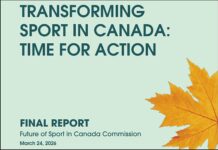
● Canada ● The Future of Sport in Canada Commission delivered its 952-page final report, “Transforming Sport in Canada: Time for Action,” on Tuesday, covering a broad spectrum of topics, including elite sport in the country. The bottom line:

“Sport in Canada stands at a defining moment. The current sport system – fragmented, inconsistent, and too often unsafe – does not meet the expectations of Canadians. The proliferation of organizations and overlapping mandates led to inefficiencies, duplications, a lack of alignment, and confusion, while conflicts of interest, a lack of transparency, and limited oversight of sport organizations has further undermined trust in the sport system.”

In chapter 15, it was noted:

● “According to a Deloitte study commissioned by the Canadian Olympic Committee and the Canadian Paralympic Committee, 90% of National Sport Organizations depend on federal government funding as their primary source of revenue. On average, government funding represents between 47% and 50% of the revenue of National Sport Organizations receiving government funds.”

● “The chronic lack of funding in the Canadian sport system has contributed to the safe sport crisis and undermined National Sport Organizations’ ability to fulfill their basic functions. Inadequate resources negatively impact both the accessibility and quality of their programs.

“In the face of this funding crisis, many organizations have reduced programs and activities, and some may even be forced to cease operating if the funding gaps persist.”

● “It is clear to the Commission that there is an urgent need for an injection of funds to ensure that National Sport Organizations can continue operating. We believe that core funding for sport organizations should be adequate to support core operational requirements and address long-term priorities.

“Importantly, all future funding allocations for national-level sport organizations must be determined in accordance with a new funding strategy that balances support for high-performance and broader sport participation.”

The Commission report recommends the “Government of Canada urgently increase the core funding allocated to National Sport Organizations to account for inflation since 2005. Thereafter, it must regularly review and adjust the funding” regularly based on need and inflation.”

The next step is up to the Canadian government at multiple levels; the report stated that “the Canadian Olympic Committee and Canadian Paralympic Committee Budget 2024 Request, a five-year forecast shows that National Sport Organizations will accumulate a collective deficit of roughly $134 million [~$96.7 million U.S.] attempting to meet their core mandates.

● Badminton ● Spain’s Carolina Marin, 32, the 2016 Olympic women’s Singles champion and a three-time World Champion, announced her retirement due to continuing right knee issues.

The won Worlds golds in 2014, 2015 and 2018 and a Worlds silver in 2023. She won 10 times on the BWF World Tour and was a finalist 22 times, between 2018-24. She suffered a torn anterior cruciate ligament in her right knee during the semifinals and had to withdraw (including forfeiting the bronze-medal match).

● Cycling ● The 143.7 km women’s Ronde van Brugge was held Thursday, with a mass sprint finish won by Britain’s 19-year-old Carys Lloyd, getting to the line ahead of two-time winner Elisa Balsamo (ITA) and Nienke Veenhoven (NED). It’s the fifth straight medal in this event for Balsamo.

It’s the first big career win for Lloyd, in 3:31:23.

● Football ● FIFA continues to release hotel rooms it has booked for the 2026 World Cup period, with 70-80% of its reserved rooms in Vancouver, British Columbia returned. Paul Hawes, president of the British Columbia Hotel Association, noted while this is a normal occurrence prior to a convention or other large event:

“In this case, however, the volume released is higher than typically expected. It appears consistent with what is being seen in other host cities across North America.”

In Toronto, Greater Toronto Hotel Association head Sara Anghel said a significant number of rooms had been released and commented:

“No one is happy with the decision to drop the blocks, and as we see, it’s becoming a pattern across North American cities. So, you know, let that be a lesson … for future host countries or cities.”

FIFA has been confirmed to release large blocks of rooms in Mexico City and Philadelphia so far as well.

Receive our exclusive, weekday TSX Recap by e-mail by clicking here.
★ Sign up a friend to receive the TSX Recap by clicking here.
★ Please consider a donation here to keep this site going.

For our updated, 45-sport, 910-event International Sports Calendar for 2026 and beyond, by date and by sport, click here!
FIGURE SKATING: Malinin shines with third-highest Short Program ever, as Germans Hase and Volodin take impressive Pairs gold at ISU Worlds

Figure skating World Champion Ilia Malinin of the U.S. (Photo: spiritedmichelle via Wikipedia).

The Sports Examiner: Chronicling the key competitive, economic and political forces shaping elite sport and the Olympic Movement.★

To get the daily Sports Examiner Recap by e-mail: sign up here!

≡ ISU WORLD CHAMPS ≡

At the ISU World Championships in Prague (CZE), a crowd of 13,444 came out to the O2 Arena Thursday night to watch the men’s Short Program and the Pairs Free Skate. That meant American star Ilia Malinin, the two-time World Champion, and he started his effort for a third impressively.

He opened with a quad Flip, followed with a triple Axel and a quad Lutz and triple Toe Loop and, of course, included his patented backflip on the way to a lifetime best Short Program score of 111.29!

His prior best was 110.41 at the 2025 Worlds, and it’s the third-highest score ever, behind only the 113.97 by American Nathan Chen in 2022 and 111.82 by Yuzuru Hanyu (JPN) in 2020. Wow. He said afterwards:

“I got to the ice and was in this zone and let everything happen. I was definitely coming back to prove myself that it [his Olympic performance] was a one-time thing, but now I realize this is much more than just skating. It’s being able to go and enjoy and have fun.”

Malinin raced to a significant lead over 2024 Worlds bronze winner Adam Siao Him Fa (FRA: 101.85) and Estonia’s Aleksandr Selevko (96.49), with the Free Skate to come. Americans Andrew Torgashev (89.07) was seventh and Jacob Sanchez was 10th (85.15).

It’s worth remembering that Malinin also had a big lead in the Olympic men’s competition after the Short Program, but had trouble – including a couple of falls – in the Free Skate.

In the Pairs Free Skate, Olympic bronze winners Minerva Hase and Nikita Volodin (GER) had the lead at 79.78, just slightly up on Georgia’s Olympic silver winners Anastasiia Metelkina and Luka Berulava (79.45), with Canadians Lia Pereira and Trennt Michaud in third (75.52).

Pereira and Michaud promptly took the lead in the Free Skate with a lifetime best of 140.57 and a total of 216.09, their first-ever score over 200 points! Metelkina and Berulava suffered a fall that marred an otherwise elegant program, but their 138.96 moved them into the lead at 218.41, and Georgia’s first-ever Worlds Pairs medal!

Hase and Volodin needed 138.64 to win, and they were sensational, rolling through their routine with just a minor error and scored 148.55 (no. 8 ever) and a total of 228.33, their best ever and the no. 7 score in history, for the gold.

The German stars completed their step-by-step move up the podium: third in 2024, silver last year and now the first Germans to win a Pairs gold since 2018.

U.S. national champions Alisa Efimova and Misha Mitrofanov, unable to skate in Milan due to citizenship requirements for Efimova, scored just 0.08 points short of their seasonal best at 135.22 in the Free Skate (fifth best!), and 202.51 overall, finishing sixth.

Katie McBeath and Daniil Parkman finished 12th at 179.60; Emily Chan and Spencer Howe had a difficult Free Skate (three falls) and ended at 169.91, in 16th.

The ISU Worlds continue on Friday with the Ice Dance Rhythm Dance and the Women’s Free Skate. U.S. coverage is offered on NBC’s Peacock streaming service and USA Network.

Receive our exclusive, weekday TSX Recap by e-mail by clicking here.
★ Sign up a friend to receive the TSX Recap by clicking here.
★ Please consider a donation here to keep this site going.

For our updated, 45-sport, 910-event International Sports Calendar for 2026 and beyond, by date and by sport, click here!

INT’L OLYMPIC COMMITTEE: Coventry announces requirement for SRY gene testing for women’s events for LA28

Int’l Olympic Committee Health, Medicine and Science Director Dr. Jane Thornton (CAN) at the IOC’s 26 March 2026 briefing (IOC video screen shot).

The Sports Examiner: Chronicling the key competitive, economic and political forces shaping elite sport and the Olympic Movement.★

To get the daily Sports Examiner Recap by e-mail: sign up here!

≡ “FEMALE CATEGORY” RULES ≡

International Olympic Committee President Kirsty Coventry (ZIM) said that the “protection of the female category” would be one of her priorities and on Thursday (26th), the IOC announced a new policy for women in the Games:

“The policy explains that, for all disciplines on the sports programme of an IOC event, including the Olympic Games and for both individual and team sports, eligibility for any female category is limited to biological females.

“Eligibility for the female category is to be determined in the first instance by SRY gene screening to detect the absence or presence of the SRY gene.

“Based on scientific evidence, the IOC considers that the presence of the SRY gene is fixed throughout life and represents highly accurate evidence that an athlete has experienced male sex development. Furthermore, the IOC considers that SRY gene screening via saliva, cheek swab or blood sample is unintrusive compared to other possible methods.

“Athletes who screen negative for the SRY gene permanently satisfy this policy’s eligibility criteria for competition in the female category. Unless there is reason to believe that a negative reading is in error, this will be a once-in-a-lifetime test.”

This new policy, which replaces a 2021 policy which allowed federations to pretty much do whatever they wanted, follows the lead of World Athletics, which implemented this same policy and required female contestants for its 2025 World Athletics Championships in Tokyo (JPN) last September to comply within about three months and this was successfully achieved.

In terms of the basis for the decision, the IOC’s announcement noted:

“The working group reviewed the latest scientific evidence, including developments since 2021, and reached a clear consensus. Male sex provides a performance advantage in all sports and events that rely on strength, power and endurance. To ensure fairness, and to protect safety, particularly in contact sports, eligibility should therefore be based on biological sex.

“The group also agreed that the most accurate and least intrusive method currently available to verify biological sex is screening for the SRY gene, a segment of DNA typically found on the Y chromosome that initiates male sex development in utero and indicates the presence of testes/testicles.”

There is a small exception, for “athletes with a diagnosis of Complete Androgen Insensitivity Syndrome (CAIS) or other rare differences/disorders in sex development (DSDs) who do not benefit from the anabolic and/or performance-enhancing effects of testosterone.”

Dr. Jane Thornton (CAN), the IOC’s Health, Medicine and Science Director, said at a follow-up news conference:

“We reached consensus that male sex confers performance advantage in all sports and events that rely on strength, power, and/or endurance. And to protect fairness in such sports and events, as well as safety, particularly in contact sports – so combat, collision and projectile sports – that it would be necessary and adequate to base eligibility in competition on biological sex.”

She noted findings that testosterone jumps in males occur three times – in utero, in infancy and in adolescence and continuing from there – and with highly circulating testosterone, “males have larger and stronger skeletal and bone, larger and stronger hearts, larger lung size, more red blood cells and lower body fat than females trained to an equivalent level.

“Together, these attributes afford males individual sex-based performance advantages in sports and events that rely on strength, power and endurance. … Finally, the XY transgender athletes and athletes with certain XY differences and disorders in sex development have anatomical and physiological advantages in line with being male.”

She noted that there is no indication that testosterone suppression or other hormonal treatments eliminates this advantage. And:

“When the working group looked at the magnitude of advantage, that at the elite level, the magnitude is different, depending on the sport or event, but 10-12% advantage in most running or swimming events, 20% male performance advantage in most throwing and jumping events, and male performance advantage can be greater than 100% in events which involve explosive power, so collision, lifting and punching sports.

“This varies across sports, but in particular in contact sports, the strength and power differential between male and female may increase safety risks to female athletes.”

The announcement also specified that the policy relates specifically to Olympic events:

“This policy should be adopted by IFs and other sports governing bodies, such as NOCs, National Federations and Continental Associations, when exercising their responsibility in implementing eligibility rules in relation to IOC events only.”

How the testing is going to be done, who keeps the records and the inevitable legal challenges are all yet to be sorted through. But Coventry’s IOC has made its stand on women in sport, and interestingly, came to the same conclusion as the United Nations Special Rapporteur on Violence Against Women and Girls, Reem Alsalem (JOR), made in 2024, calling for the re-introduction of sex-screening, which the IOC had abandoned in 1999.

Receive our exclusive, weekday TSX Recap by e-mail by clicking here.
★ Sign up a friend to receive the TSX Recap by clicking here.
★ Please consider a donation here to keep this site going.

For our updated, 45-sport, 910-event International Sports Calendar for 2026 and beyond, by date and by sport, click here!

LOS ANGELES 2028: L.A. City Attorney demands LA28 guarantee City’s security costs, especially if not Federally funded

The Sports Examiner: Chronicling the key competitive, economic and political forces shaping elite sport and the Olympic Movement.★

To get the daily Sports Examiner Recap by e-mail: sign up here!

≡ L.A. CITY-LA28 AGREEMENT ≡

Los Angeles City Attorney Hydee Feldstein Soto rang the alarm bell over City costs for security for the 2028 Olympic and Paralympic Games on Tuesday, in a memorandum made public Wednesday night. It included:

“The City has no control over LA28’s expenses, which are paid first, including the salaries, bonuses, and vendor amounts LA28 may choose to expend. Neither party has any control over what the City’s extraordinary expenses ultimately will be even if there are no weather-related issues, security incidents, emergencies or other unanticipated contingencies.

“Nor does either party have any control over the timing or actualization of federal reimbursement to the City. The last LA28 budget was $7.15 billion, but LA28 acknowledges that the latest budget does not include the City’s estimated $1 billion of security funding.

“Although the City’s security cost could potentially be reimbursed by federal funding set aside for law enforcement agencies dedicating services related to the 2028 Games, the City will be competing with multiple agencies for those funds, and, as a result, may not receive sufficient funding to fully reimburse the City for its own use of law enforcement resources.

“Thus, there are two remaining issues in the ECRMA [Enhanced City Resources Master Agreement] that must be resolved in the City’s favor for LA28 to fulfill their promised ‘no cost to taxpayers’ foundational principle – (1) what happens if the federal government does not pay the assumed $1 billion and (2) what happens if the City’s extraordinary expenses exceed $1 billion?

“In either situation, the Office believes that all surplus funds must reimburse the City and its taxpayers first as promised before any surplus funds are available for a legacy or tribute fund.”

The memorandum explained that the LA28 organizers submitted a proposed Enhanced City Resources Master Agreement on 26 February for review by multiple City offices, including the City Attorney. Feldstein Soto noted that the 2021 “Games Agreement” between the City and LA28 is specific in stating that “any Surplus resulting from the planning, organizing and financing and staging of the 2028 Games” will be divided with 20% going to the U.S. Olympic & Paralympic Committee and 80% to a new entity to be formed by LA28, governed by a board of directors comprised of an equal number of LA28 and City designees.

Feldstein Soto stated that as to the Enhanced City Resources Master Agreement proposed by LA28:

“The ECRMA as drafted by LA28 limits the obligation to reimburse City costs before LA28 is permitted to create its own legacy fund with the surplus.”

She writes further:

“The City requires unambiguous language in the ECRMA to foreclose any scenario in which funds might go back to the wealthy backers and investors of the LA28 organization without reimbursing taxpayer-funded extraordinary costs.”

The memo also demands that the Enhanced City Resources Master Agreement includes “transparent audit rights and procedures in response to the heightened risk exposure to the City and LA28 especially given the recent claims against LA28’s chairman, Casey Wasserman.”

This is an angry memorandum and has gone to the unusual step of publicly demanding LA28 “[u]phold the zero-cost principle and promise to the Council and the public.” The Enhanced City Resources Master Agreement was due to be completed, according to the 2021 Games Agreement, by 1 October 2025 and the Feldstein Soto memo notes that what may have been a first draft from LA28 was submitted on 26 February 2026.

The City Attorney report has been initially referred to the Council’s Ad Hoc Committee on the 2028 Olympic and Paralympic Games, chaired by Council President Marqueece Harris-Dawson; it may end up being referred to others as well.

What is true is that LA28, especially chief executive Reynold Hoover, has been lobbying the Trump Administration for security funding and $1 billion was included in the budget passed in summer 2025, for the Federal fiscal year of 2025-26. More is expected in the next budget, due to be released in draft form in the coming weeks. LA28 is also lobbying for Federal support of transportation funding for the Games, but has been much less successful so far.

This is another new element of drama in what appears to be a receding level of trust between the City and the LA28 organizers, but also one that once worked through, can rebuild relations as well.

Receive our exclusive, weekday TSX Recap by e-mail by clicking here.
★ Sign up a friend to receive the TSX Recap by clicking here.
★ Please consider a donation here to keep this site going.

For our updated, 45-sport, 910-event International Sports Calendar for 2026 and beyond, by date and by sport, click here!
PANORAMA: IOC Exec Board hears working group results Thursday; San Jose State may be sued on transgender; Sakamoto leads women’s Short Program

Olympic House in Lausanne, home of the International Olympic Committee (Photo: IOC).

The Sports Examiner: Chronicling the key competitive, economic and political forces shaping elite sport and the Olympic Movement.★

To get the daily Sports Examiner Recap by e-mail: sign up here!

≡ THE 5-RING CIRCUS ≡

● International Olympic Committee ● As promised, the IOC’s “Fit for the Future” working groups, created last September, are coming to a conclusion of their work, and the IOC Executive Board will meet online on Thursday to discuss the progress, followed by a news conference.

The four groups include:

● Commercial Partnerships and Marketing
● Protection of the Female Category
● Olympic Program
● Youth Olympic Games

The “Protection of the Female Category” group has drawn a lot of interest and no matter what the recommended outcome, legal challenges are likely from one side or both.

● Transgender ● On Tuesday, the U.S. Department of Education “issued a Letter of Impending Enforcement Action to San Jose State University (SJSU) for its ongoing refusal to comply with Title IX of the Education Amendments of 1972 (Title IX).

“In January, the Department found that SJSU’s policies allowing males to compete in women’s sports and access female-only facilities deny women equal educational opportunities and benefits. OCR [Office of Civil Rights] submitted to SJSU a proposed Resolution Agreement with terms that would have resolved its Title IX violations. SJSU refused to sign it or attempt to negotiate its terms, and has taken no other action to ensure the safety of its female students and deliver equal educational opportunities.”

The letter included a 10-day deadline, which if not met, could mean “referral to the U.S. Department of Justice (DOJ) and risk of termination of SJSU’s federal funding.”

The notice specified the background as:

“OCR found that beginning in 2022, SJSU actively recruited and allowed a male to compete on the women’s indoor and beach volleyball teams and reportedly instructed members of the coaching staff not to tell the female players that the athlete was a male. As a result, female athletes on the team shared women’s locker rooms and hotel rooms with the male student while being unaware that he is a member of the opposite sex.”

● Athletics ● Russian Sports Minister Mikhail Degtyarev said that Russian youth and junior athletes will be considered for return to international competition by World Athletics in July:

“We’ll see how close we are to the start of international competitions in July at the next World Athletics Executive Committee meeting, where the issue of allowing our juniors and young men to compete based on the IOC decision will be discussed. World Athletics has sent out a circular stating that everyone can travel to Russia for competitions. Over the past two years, we’ve hosted 10 international competitions with athletes from more than 25 countries.”

As for seniors, the TASS story noted, “Russian track and field athletes will be barred from competing in World Athletics competitions starting in 2022, even as neutral athletes, due to the situation in Ukraine.”

It was reported that a two-day “Double London Marathon” is being considered for 2027, which would allow for more than 100,000 runners to participate on 24-25 April 2027. The (one-day) race had 56,540 finishers in 2025 and the elite races would be held on both days, separately for men and women.

The Athletics Integrity Unit banned Tanzanian marathoner Jackline Sakilu “for 10 years from 17 September 2025 for Presence/Use of a Prohibited Substance” including Androsterone, Etiocholanolone, and other metabolites of Testosterone. She had four different doping positives over more than year in 2024 and 2025 and this resulted in the extra-long sanction.

Now 39, Sakilu did not finish at the Paris Olympic marathon in 2024 and has a best of 2:21:17 from March of 2024.

● Cycling ● The 50th edition of the Ronde van Brugge – the Tour of Brugge in Belgium – took place over a flat, 202.9 km route on Wednesday, with a final sprint to the line won by 2019 champion Dylan van Groenewegen (NED), edging home favorite and two-time winner Jasper Philipsen and German Max Kanter, all in 4:15:37. The top 30 riders all received the same time.

The top American was Luke Lamperti (EF Education-EasyPost), finishing ninth.

● Figure Skating ● The ISU World Championships opened in Prague (CZE), with three-time World women’s champ Kaori Sakamoto (JPN) showing excellent form and leading a Japanese 1-2 at 79.31 and Olympic fourth-placer Mone Chiba at 78.45.

They were trailed by Americans Amber Glenn (72.65) and Isabeau Levito (72.16), with three American Sarah Everhardt in ninth at 68.74.

The Pairs Short Program saw Olympic bronze winners Minerva Hase and Nikita Volodin (GER) lead at 79.78, just slightly up on Georgia’s Olympic silver winners Anastasiia Metelkina and Luka Berulava (79.45). Canadians Lia Pereira and Trennt Michaud stand third (75.52) and the Americans were 6-7-11.

Emily Chan and Spencer Howe scored 69.02 as the U.S. leaders, followed by national champions Alisa Efimova and Misha Mitrofanov (67.29). Katie McBeath and Daniil Parkman were 11th at 64.42.

The Pairs Free Skate and the men’s Short Program are slated for Thursday.

● Football ● To no one’s surprise, the Senegal Football Federation (FSF) has filed an appeal with the Court of Arbitration for Sport against the decision of the Confederation of African Football (CAF) over its decision to award the Africa Cup of Nations title to Morocco by a forfeiture score of 3-0.

Per the Court of Arbitration statement, “the FSF appeal seeks to set aside the CAF decision and declare the FSF winners of AFCON. It also requests an immediate suspension of the time limit to submit an appeal brief until the CAF decision is notified with full grounds. The CAF decision rendered on 17 March 2026 was operative only.”

On 18 January, Senegal’s team walked off the field to protest a penalty awarded in stoppage time at the end of the match, but eventually returned and won the game, 1-0, in extra time. It has been surmised that the field exit by Senegal was the basis of the forfeiture, but as noted, the full, written decision has not yet been made public.

FIFA announced the start of the final phase of ticket sales for the 2026 FIFA World Cup, beginning 1 April at 11 a.m. Eastern time. Tickets will be released continuously through the tournament – beginning 11 June – as they become available.

● Gymnastics ● World Gymnastics announced the introduction of the Seiko Rhythmic Gymnastics Real-time Judging Visualization System, at the Rhythmic Gymnastics World Cup in Sofia (BUL) on 28-30 March.

This is not an automated judging system, but a way to show “the timing and details of each judge’s deductions.” All relevant scenes can be relayed quickly for quality control of the judging marks. It is, if successful as planned, to be used at the 2026 Rhythmic World Championships from 12-16 August 2026 in Frankfurt (GER).

Receive our exclusive, weekday TSX Recap by e-mail by clicking here.
★ Sign up a friend to receive the TSX Recap by clicking here.
★ Please consider a donation here to keep this site going.

For our updated, 45-sport, 910-event International Sports Calendar for 2026 and beyond, by date and by sport, click here!
ATHLETICS: World Athletics allows seven (!) U.S. women in World Road Running Champs Half Marathon after trials-race mess

The Sports Examiner: Chronicling the key competitive, economic and political forces shaping elite sport and the Olympic Movement.★

To get the daily Sports Examiner Recap by e-mail: sign up here!

≡ U.S. HALF MARATHON TEAM ≡

After a wild mix-up in the final stages of the U.S. women’s Half Marathon Championships race in Atlanta that saw the top three finishers drawn off the course by an errant lead vehicle due to an emergency in the area, USA Track & Field asked World Athletics to essentially let everyone affected into the World Road Running Championships.

And the World Athletics Council agreed.

World Athletics announced on Wednesday:

“World Athletics has agreed on a strictly one-off basis that USATF will be able to select seven athletes rather than the usual four athletes for the women’s half marathon event at the WRRC in September.

“An extraordinary set of circumstances at the half marathon championships in Atlanta, Georgia, culminated in the breakaway lead pack of three athletes in the women’s race (Jess McClain, Emma Grace Hurley, Ednah Kurgat) being led off course and finishing outside of the automatic qualifying positions.

“In working to find a solution, World Athletics has been sympathetic to the impacted athletes who would otherwise miss out on competing at the WRRC Copenhagen 2026, and understanding of the unprecedented situation USATF – one our leading Member Federations – has found itself in.”

The corresponding USA Track & Field statement explained:

● “The team spots will be offered to the three athletes who were led off course – Jessica McClain, Emma Grace Hurley, and Ednah Kurgat – along with the top three official finishers from the championship race: Molly Born, Carrie Ellwood and Annie Rodenfels. A final spot will go to an athlete based on world rankings as of May 5.

“While only four athletes will be eligible to contribute to team scoring, all seven entrants will be eligible to earn World Athletics ranking points.”

● “For the World Championships, Team USATF will designate 4 scoring athletes and 3 non-scoring athletes. The scorers will be determined with input from the athletes once the final team is known and all athletes have accepted their place on the team.

“Non-scoring athletes will be recognized as official members of Team USATF and eligible for individual ranking points, but will wear a distinct team kit and may not form a pack with scoring athletes during competition.”

● “USATF will cover all expenses associated with the additional entries. Should any non-scoring athletes finish in a prize-eligible position, USATF will also provide the corresponding prize money.”

The World Road Running Championships will be held in Copenhagen (DEN) on 19-20 September, with the women’s Half on the 20th.

Observed: Well, now we have a precedent, despite the World Athletics designation of this on a “strictly one-off basis.”

The unusual nature of the incident at the U.S. Half Marathon Championship race on 1 March will make it hard for a similar request in the future. The radio call that an Atlanta police officer was down and needed assistance about a block from the course caused a shift in personnel at the key intersection where the race was supposed to cross a footbridge, but because emergency vehicles were in the area now, the motorcycle escort and lead vehicle did not cross the bridge, leading the front runners astray.

But someone will come up with some other problem in the future, maybe not from the U.S., but from somewhere else.

For USATF, this is a resolution which should keep them – and the Atlanta Track Club – out of court. The Atlanta Track Club has already matched the prize money that the top three would have won if they had continued on to the finish, about a mile away at the time of the incident. USATF is covering the rest of the costs as if the three race leaders had finished 1-2-3.

This isn’t quite over, as the admonition that the designated U.S. non-scorers – whoever they end up being – “may not form a pack with scoring athletes during competition.” This is to maintain the integrity of the team scoring, with four runners per team. This is also a reason for the different uniforms.

It’s a reasonable solution to a bad situation and easier to do since we’re talking about a road race here and not lanes on a track. Lucky.

Receive our exclusive, weekday TSX Recap by e-mail by clicking here.
★ Sign up a friend to receive the TSX Recap by clicking here.
★ Please consider a donation here to keep this site going.

For our updated, 45-sport, 910-event International Sports Calendar for 2026 and beyond, by date and by sport, click here!
ALPINE SKIING: Shiffrin courts disaster, rebounds to clinch record-tying sixth World Cup title in Norway

American skiing star Mikaela Shiffrin (Photo: Reese Brown/U.S. Ski & Snowboard)

The Sports Examiner: Chronicling the key competitive, economic and political forces shaping elite sport and the Olympic Movement.★

To get the daily Sports Examiner Recap by e-mail: sign up here!

≡ FIS ALPINE WORLD CUP ≡

The situation was clear. In the final race of the FIS Alpine World Cup season, American star Mikaela Shiffrin only had to finish in the top 15 – the scoring places – to assure herself of enough points to win the overall FIS World Cup, for a record-tying sixth time.

She came in with 1,386 points to 1,301 for Germany’s Emma Aicher, in her break-out season, but Shiffrin, 31, noted Tuesday that the Giant Slalom course at Hafjell (NOR) did not look easy.

And starting seventh, Shiffrin’s first run at Hafjell in Norway was anything but smooth and she finished at 1:09.45, in fourth place. It got worse.

She dropped quickly in the standings and after the 16th starter – Aicher – Shiffrin stood 17th and out of the points and Aicher – timing 1:08.16 – was third!

If Aicher, 22, could ace the second run and win, and if Shiffrin didn’t move up, Aicher could steal the seasonal title.

But it didn’t happen. Shiffrin got better – a lot better – on the second run and her 1:09.36 ended up as the seventh-fastest in the field and assured her of being in the points. In fact, when Italian Asja Zenere and U.S. teammate A.J. Hurt were both slower, immediately following, Shiffrin, she had clinched at least 16 points and secured the seasonal Crystal Globe.

Aicher, no longer in contention, skied the final run in 1:10.67 and ended up 27th (last), and dropped from third to 12th in 2:18.63. Poetically, Shiffrin’s total time of 2:18:81 placed her 11th. The seasonal chart showed Shiffrin with 1,410 points to 1,323 for Aicher and 1,049 for Swiss Camille Rast.

Shiffrin was typically gracious on X right afterwards:

So what did Shiffrin achieve? She equaled Austria’s Annemarie Moser-Proell’s women’s record of six World Cup seasonal titles. Moser-Proell won from 1971-75 and in 1979. Shiffrin won in 2017-18-19, in 2022 and 2023 and now again in 2026.

It’s about the only record she didn’t have, as she already has the most World Cup wins by anyone at 110 and a total of 18 Crystal Globes for her six seasonal and 12 discipline titles.

In terms of the final race, Canada’s Valerie Greiner led after the first run and won in 2:16.79, easily ahead of Mina Holtman (NOR: 2:17.22) and Austria’s Julia Scheib (2:17.36). Nina O’Brien of the U.S. tied for eighth (2:18.46), Hurt was 18th (2:19.39) and Paula Moltzan was 25th at 2:20.55.

Scheib won the Giant Slalom Crystal Globe with 720 points, to 511 for Rast. Shiffrin finished fourth at 422.

The men’s season finished with a Slalom and Norway’s Timon Haugan got his second win of the season in 2:03.75, moving up from third after the first run. Swiss Loic Meillard, the first-run leader, ended up second in 2:04.19 and Finland’s Eduard Hallberg took the bronze in 2:04.78.

With an eighth-place finish, Norway’s Atle Lie McGrath won the seasonal Slalom title, 584 to 520 over France’s 2022 Olympic champ, Clement Noel.

Receive our exclusive, weekday TSX Recap by e-mail by clicking here.
★ Sign up a friend to receive the TSX Recap by clicking here.
★ Please consider a donation here to keep this site going.

For our updated, 45-sport, 910-event International Sports Calendar for 2026 and beyond, by date and by sport, click here!
PANORAMA: Debswana Diamonds titles World Athletics Relays for $1.17 mil; World Figure Champs start Thursday, FIFA hit with filing on ticket prices!

The Sports Examiner: Chronicling the key competitive, economic and political forces shaping elite sport and the Olympic Movement.★

To get the daily Sports Examiner Recap by e-mail: sign up here!

≡ THE 5-RING CIRCUS ≡

● Olympic Games ● Tuesday marked the 105th anniversary of the first “Meeting International d’Education Physique Féminine de Sports Athlétiques,” held in Monte Carlo, Monaco, from 24-31 March 1921.

Organized by French women’s activist Alice Milliat and International Sporting Club de Monaco director Camille Blanc, about 100 women from five countries competed in 10 track & field events, with the express goal of getting the International Amateur Athletics Federation to hold women’s events in the Olympic Games.

It led to the 1922 “Women’s Olympiad” in Paris – later the “Women’s World Games” – and more events for women and finally, the IAAF relented and women’s events were eventually introduced at the 1928 Amsterdam Games.

● Athletics ● The Botswana-based Debswana Diamond Company – a partnership between the government and DeBeers – is the title sponsor of the now-Debswana World Athletics Relays in Gaborone (BOT) on 2-3 May.

The announcement notes a 16 million-pula contribution (about $1.168 million U.S.) for title sponsorship for the event. Debswana chief executive Andrew Motsomi explained:

“This partnership represents a powerful opportunity to elevate the World Athletics Relays and contribute to the continued growth of athletics in Botswana, while amplifying our global brand presence.

“As the world turns its attention to Botswana, the home of the men’s 4x400m world champions, we are proud to help showcase world-class competition on our soil. This moment also allows us to share the background of Botswana’s natural diamonds – a story rooted in positive impact, sustainability and national development – alongside the sporting excellence that defines our nation.”

Russian Sports Minister Mikhail Degtyarev said that World Athletics voted at its Council meeting last week to remove the remaining sanctions related to doping on the Russian Athletics Federation:

“The RusAF has completed the so-called three-year ‘quarantine’ under a program stipulating special conditions: all of the set 34 strategic conditions and operational requirements have been fulfilled, new management standards have been introduced, anti-doping work has been restructured, and regional structures have been updated.”

Russian Athletics Federation head Pyotr Fradkov explained that as for Russian athletes competing again:

“We continue to engage with World Athletics on the return of Russian athletes to the world stage, and there are positive signs. We are exploring all possible scenarios and are continuing discussions with [World Athletics head] Sebastian Coe [GBR] regarding the full reinstatement of Russian athletes.”

Russian and Belarusian athletes have been banned over the continuing Russian invasion of Ukraine since February 2022.

● Cycling ● Following the death of Swiss 18-year-old rider Muriel Furrer from a crash at the 2024 World Road Championships in Switzerland, where she was not attended to for more than an hour after her incident, the Union Cycliste Internationale has asked for mandatory location sensors, using the Global Positioning System (GPS) to allow tracking of all riders.

Union Cycliste Internationale President David Lappartient (FRA) explained in a letter sent last week to all teams and races, “It will be phased in and mandatory across different categories.”

The UCI is not requiring that its own system be adopted, but that a system which meets its requirements is installed, with a deadline of 30 April for teams to specify how they will implement it. Many installed systems – weighing as little as two ounces – are placed under the saddle.

● Figure Skating ● The ISU World Championships get started in Prague (CZE) on Wednesday, with some of the Olympic winners missing, but many ready to compete. Among the favorites:

Men: Two-time defending World Champion Ilia Malinin (USA) is entered after his Olympic Free Skate failure, facing Olympic silver winner Yumi Kagiyama (JPN) and bronzer Shun Sato (JPN).

Women: Retiring three-time World Champion Kaori Sakamoto (JPN) will try for a fourth gold after Olympic silver, and will compete with teammate and Olympic bronzer Ami Nakai and American Amber Glenn, whose dynamic Olympic Free Skate catapulted her to fifth overall. U.S. Olympian Isabeau Levito, 12th in Milan, is in the field too.

Pairs: Olympic silver winners Anastasiia Metelkina & Luka Berulava (GEO) and bronze medalists Minerva Hase & Nikita Volodin (GER) are back, and Americans Alisa Efimova & Misha Mitrofanov, who could not compete in Milan, will challenge.

Ice Dance: Olympic champs Laurence Fournier Beaudry and Guillaume Cizeron (FRA) are in and will try for their first Worlds gold as a duo. Olympic bronze winners Piper Gilles & Paul Poirier (CAN) figure to be their best competition.

NBC’s Peacock streaming service will show the event in the U.S., with afternoon coverage (some delayed) on USA Network or NBC.

The International Skating Union unveiled its awards finalists, with Glenn, Malinin and Kagiyama all finalists for “Most Entertaining Program” and Glenn, Malinin and Gilles and Poirier the finalists for “Best Costume.”

The award winners will be announced at the end of the Championships, on Sunday.

● Football ● “Football Supporters Europe (FSE) and Euroconsumers have filed a formal complaint with the European Commission against FIFA, alleging that the football body has abused its monopoly position to impose excessive ticket prices and opaque and unfair purchasing conditions and processes on European fans ahead of the 2026 World Cup.

“FIFA holds a monopoly over ticket sales for the 2026 World Cup and has used that power to impose conditions on fans that would never be acceptable in a competitive market. For many, this is a once-in-a-lifetime experience; fair and transparent access to tickets is essential.”

The complaint alleges six abuses of the sales process – under European law – by FIFA and is asking for an immediate end to dynamic pricing to sales to European consumers, a freeze on pricing at the December 2025 levels and to publish data on remaining tickets and locations before the April ticket sale is opened.

Receive our exclusive, weekday TSX Recap by e-mail by clicking here.
★ Sign up a friend to receive the TSX Recap by clicking here.
★ Please consider a donation here to keep this site going.

For our updated, 45-sport, 910-event International Sports Calendar for 2026 and beyond, by date and by sport, click here!
ALPINE SKIING: Shiffrin wins season-ending Slalom, but race for the seasonal Crystal Globe will go down to Wednesday’s Giant Slalom

Record-setter: American skiing superstar Mikaela Shiffrin (courtesy U.S. Ski & Snowboard Association; copyright Reese Brown)

The Sports Examiner: Chronicling the key competitive, economic and political forces shaping elite sport and the Olympic Movement.★

To get the daily Sports Examiner Recap by e-mail: sign up here!

≡ SHIFFRIN vs. AICHER ≡

American skiing superstar Mikaela Shiffrin did what she needed to do and won the final FIS World Cup Slalom at Hafjell (NOR) on Tuesday, but it was not enough to win the seasonal title.

The race with German Emma Aicher will come down to the final race of the season, on Wednesday, also at Hafjell, in the Giant Slalom finale.

But Shiffrin was superb on Tuesday, taking the first run in 1:07.79, ahead of two-time Olympic Slalom medalist Wendy Holdener (SUI: 1:08.89), with Aicher in fourth place.

Shiffrin had the sixth-fastest second run and won easily in 2:07.61, with Holdener staying in second (2:08.93) and Aicher moving up to third in 2:08.97. American Paula Moltzan, third after the first run, fell back to fifth overall in 2:09.44. Said Shiffrin:

“This season has been so exciting, quite like a whirlwind with all the wonderful races that we had, and with the Olympics and everything.

“It’s been really pushing at a high level for a long time, and I am grateful for it. I’m grateful to have the chance to be getting into the start each time, and to push my own level.”

She sets records every time she races and Tuesday was no exception. She won her record 110th World Cup race and record 73rd Slalom and won the Slalom discipline seasonal title for a record ninth time. She won nine of the 10 Slaloms held this season, the most ever for a single event by a women’s skier.

The race left Shiffrin in first place in the overall season standings with 1,386 points, to 1,301 for Aicher, meaning Aicher would have to win Wednesday’s Giant Slalom and Shiffrin would have to be 16th or lower.

Looking a little more closely at the last five Giant Slalom World Cup performances for each (“DNQ” means did not qualify for a second run):

Shiffrin: 6th-5th-4th-3rd-5th
● Season: 398 points ~ 4th overall

Aicher: DNQ-19th-DNQ-10th-4th
● Season: 113 points ~ 17th overall

Shiffrin, however, is taking nothing for granted:

“I’m actually not confident at all, you saw today anything can happen. I never skied on this slope in GS, it looks not super easy.

“So, I have to have good tactics, a good mentality, to try to have some energy in the muscles, and then to give full gas, like big energy. But nothing is secure, we just breathe and see.”

The men’s Giant Slalom season ended on Tuesday, with Brazilian Olympic winner Lucas Pinheiro Braathen winning his second World Cup G-S of the season and taking the seasonal title with 547 points to 495 for Swiss overall winner Marco Odermatt and teammate Loic Meillard (486).

The Brazilian led after the first run in 1:11.24, then maintained a strong second run – eighth best in the field – to win in 2:20.65. Meillard, third after the first run, finished in 2:21.23 for second and Norway’s Atle McGrath moved up from fifth to third in 2:21.52.

River Radamus was the top American, in 14th place (2:23.24).

It was the first-ever Crystal Globe for Brazil; Pinheiro Braathen won the Slalom seasonal title in 2023 for Norway and has a shot to do so again on Wednesday in the Slalom finale.

Receive our exclusive, weekday TSX Recap by e-mail by clicking here.
★ Sign up a friend to receive the TSX Recap by clicking here.
★ Please consider a donation here to keep this site going.

For our updated, 45-sport, 910-event International Sports Calendar for 2026 and beyond, by date and by sport, click here!
ATHLETICS: Grand Slam Track agrees with unsecured creditors on new plan to allow “reorganization” to go through

The Sports Examiner: Chronicling the key competitive, economic and political forces shaping elite sport and the Olympic Movement.★

To get the daily Sports Examiner Recap by e-mail: sign up here!

≡ GRAND SLAM TRACK ≡

Prior to the Grand Slam Track hearing at the U.S. Bankruptcy Court in Delaware on 12 March, the Official Committee of Unsecured Creditors filed a motion to be able to file a complaint against the league and its primary funder, Winners Alliance, and seek millions of dollars in damages specifically against Winners, an arm of the Professional Tennis Players Association.

That got the attention of Grand Slam Track and Winners, and a Monday afternoon filing disclosed:

“Subsequent to the hearing, the Debtor [Grand Slam Track], the Committee, and Winners Alliance engaged in intensive settlement discussions and reached an agreement regarding the modified terms of the Plan, which the Committee now supports.”

This means that the amended reorganization plan now submitted is expected to be approved, meaning:

● Athletes, owed about $7.0 million, will receive $4.9 million or about 70% of the amount due, down from 85% in the prior filing.

Grand Slam Track did make payments of as much as 50% of amounts due to athletes previously; for those performers, the added amount from the plan means they will receive as much as 85% of the total amounts they were owed.

● General Unsecured Creditors, owed about $12.9 million, will receive an estimated 14-16% of their claims, up from just 1.5% before, from a fund of $1,264,550 plus a return of $500,000 paid to founder Michael Johnson as a pay-down of a personal loan which he made to Grand Slam Track in May 2025.

That additional money for the General Unsecured Creditors is coming from the amount owed to athletes, and the return of the payment to Johnson, which had been objected to as preferential treatment. Moreover, according to the new plan, the list of claimants “shall not include any Claims of Winners Alliance, the Debtor’s former or current officers, directors, or Insiders,” impacting claims by Johnson and Grand Slam Track President Stephen Gera.

A letter from the Official Committee of Unsecured Creditors to its members explained:

“The Committee carefully considered the potential alternative of attempting to obtain standing from the Bankruptcy Court to pursue identified litigation claims and causes of action against third parties.

“After carefully considering this potential alternative and its strengths and weakness, the Committee concluded that the recoveries offered to all unsecured creditors under the Plan are superior to any likely alternative, including, without limitation, the pursuit of potential litigation claims against third parties.”

With this in hand, the submission to the Bankruptcy Court was approved by Judge Karen B. Owens and the plan confirmation ballots are being circulated for approval. Once returned, by 9 April, the plan will be approved and the distributions will begin.

What happens to Grand Slam Track?

Winners Alliance, despite having thrown more than $18 million into the project, is ready to do more. The filing explains the go-forward plan:

“The Reorganized Debtor’s long-term go-forward business plan involves raising sufficient funds to host at least one event in 2027.

“To the extent the Reorganized Debtor is unable to raise sufficient funds to host at least one event in 2027 and to implement its go-forward longer term business plan successfully, the Reorganized Debtor will wind down its business affairs and discontinue operations.

“The Reorganized Debtor’s long-term viability will not impact recoveries to Creditors under this Plan, as the New Value Contribution will be made available for Distributions in accordance with this Plan irrespective of whether the Reorganized Debtor is ultimately able to raise sufficient funds to implement a long-term business plan (in addition to the funds the Reorganized Debtor will receive from Winners Alliance to conduct its fundraising process through December 31, 2026).”

This promising but ultimately unhappy chapter in track & field history now appears to be winding up, although it remains to be seen if there are others who want to underwrite another version of Grand Slam Track.

Receive our exclusive, weekday TSX Recap by e-mail by clicking here.
★ Sign up a friend to receive the TSX Recap by clicking here.
★ Please consider a donation here to keep this site going.

For our updated, 45-sport, 910-event International Sports Calendar for 2026 and beyond, by date and by sport, click here!
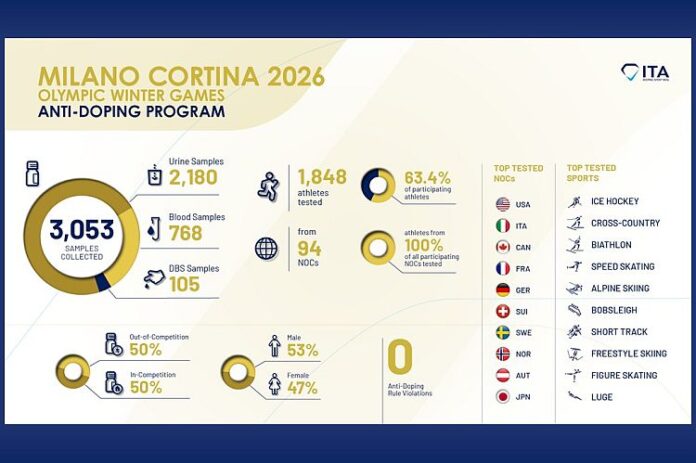
PANORAMA: Shiffrin racing for historic women’s World Cup title Tuesday; Johnson still owed $2.478 million from Grand Slam Track

American skiing superstar Mikaela Shiffrin (USA)

The Sports Examiner: Chronicling the key competitive, economic and political forces shaping elite sport and the Olympic Movement.★

To get the daily Sports Examiner Recap by e-mail: sign up here!

≡ THE 5-RING CIRCUS ≡

● Alpine Skiing ● The race for the women’s FIS World Cup seasonal title – the Crystal Globe – has come down to the final two races of the season, on Tuesday and Wednesday in Hafjell, Norway.

Right now, American star Mikaela Shiffrin is in front with 1,286 points, with German Emma Aicher – the 2026 Olympic Downhill silver winner – right behind at 1,241. The remaining events are better for Shiffrin, but Aicher is capable. This season:

Aicher:
24 Mar.: Slalom ~ 1x silver, 3x bronze
25 Mar.: Giant Slalom ~ no World Cup medals

Shiffrin:
24 Mar.: Slalom ~ 8x gold, 1x silver (season winner)
25 Mar.: Giant Slalom ~ 1x bronze

Points are scored down to 30 places, with 100-80-60-50-45-40-36-32-29-26 for the top 10.

With a win on Tuesday in the Slalom, Shiffrin could lock up the seasonal title, if Aicher finishes sixth or worse. With eight wins so far, Shiffrin has tied her own mark for most Slalom wins in a season (also in 2018-19); if she gets a ninth, it will be the most ever for a women’s skier in a single event, breaking her own mark.

If Shiffrin, 31, does win, it will be her sixth seasonal Crystal Globe and she would tie Annemarie Moser-Proell (AUT: 1969-80) for the most ever, maybe the only major record she does not yet have. New star Aicher is looking for her first seasonal World Cup, at age 22, having been 15th last season.

● Athletics ● The head of the Italian track & field federation, Stefano Mei, noted Italy’s strong performance at the World Athletics Indoor Championships and told reporters, “This week, we will be discussing with the Italian government the possibility of hosting the World Championships in Rome in 2029 or 2031.”

Rome’s Stadio Olimpico was the site of the second IAAF World Championships way back in 1987, but Rome successfully hosted the 2024 European Championships. Mei added, “We’re presenting ourselves with a strong business card after the last five seasons.”

Bids for 2029 and/or 2031 are due by 3 April, with a decision anticipated in September. The 2027 meet will be held in Beijing (CHN).

Worth noting from the World Athletics Council meeting prior to the World Indoors was the announcement of Odisha in India and Astana in Kazakhstan to host the Indoor Championships in 2028 and 2030.

This will be especially important for India, trying to be named as the host of the 2036 Olympic Games and showing that it is lining up events ahead of time to show its developing abilities. The centennial Commonwealth Games will be held in Ahmedabad in 2030.

The selection of Odisha is also a signal of an expectation that India will get its doping problems in athletics under control. India, along with Kenya, has had the highest number of ineligible persons on the Athletics Integrity Unit list for several years running.

Reviewing the Grand Slam Track latest filing of assets and liabilities shows that founder Michael Johnson is still owed a lot of money. He is shown as a creditor for:

● $2,245,565.46 for an unsecured loan to the project
● $205,766.67 for unpaid wages
● $26,772.23 for unreimbursed travel expenses

The total is $2,478,104.36; if the plan of reorganization which proposed by Grand Slam Track goes through, he will receive about 1.5% of this – $37,171.56 – as his share of the proposed payment to unsecured creditors.

● Bobsled & Skeleton ● The USA Bobsled & Skeleton national championships were held in Lake Placid, New York, with Grady Mercer and Seth Baylus winning the Two-Man in 1:53.25 and Sydney Milani taking the women’s Monobob in 2:13.16.

In Skeleton, Austin Florian won the men’s Singles title in 1:49.40, and Michelle Toukan was the women’s winner in 1:53.30, ahead of Kendell Wesenberg (1:53.40).

● Cycling ● The come-from-a-crash to win performance by Slovenian star Tadej Pogacar to take Saturday’s 117th Milan-Sanremo meant that he – at 27 – has now won four of the five famed “Monument” races in cycling.

These are the five ancient, one-day races in the sport, that go back before World War I:

● Milan-Sanremo (ITA: 1907)
● Ronde van Vlaanderen (BEL: 1913) ~ a.k.a. Tour of Flanders
● Paris-Roubaix (FRA: 1896)
● Liege-Bastogne-Liege (BEL: 1892)
● Il Lombardia (ITA: 1905)

These are the most prestigious one-day races in the sport, ranking only behind the Grand Tours: Giro d’Italia, Tour de France and Vuelta a Espana.

Only three Belgian riders – Rik Van Looy (1958-65), Eddy Merckx (1966-76) and Roger De Vlaeminck (1970-79) – have won all five and only Merckx has won each more than once. But Pogacar is catching up quickly, with one at Milan-Sanremo, two Tour of Flanders, three wins at Liege-Bastogne-Liege and five at Il Lombardia. All he needs is Paris-Roubaix, coming on 12 April.

● Fencing ● At the FIE Foil Grand Prix in Lima (PER), two-time World Champion Alice Volpi won her third career Grand Prix gold with a 15-11finals victory over American Lauren Scruggs, the Pais 2024 silver medalist. Volpi barely got to the final, winning over 18-year-old American newcomer Katerina Lung, by 15-14, in the semis. It’s Lung’s first international medal!

Italy’s world no. 2 Guillaume Bianchi won the men’s tournament with a 15-12 victory over Russian “neutral” Kirill Borodachev.

● Skating ● The International Skating Union is asking fans to help shape its future, with a “Global Fan Survey” to inform the federation on what fans want in four key areas:

“Fan interest, engagement, and connection to ice-skating
● “Viewing habits and how audiences follow ISU events
● “Digital and media consumption trends
● “Perceptions of the sport and opportunities for growth”

The 10-minute questionnaire is being offered in eight markets, in seven languages – English, French, German, Italian, Japanese, Korean, and Mandarin – and is available here, through 17 April. For those who provide an e-mail address, there is also a drawing for some signed Olympic memorabilia.

Receive our exclusive, weekday TSX Recap by e-mail by clicking here.
★ Sign up a friend to receive the TSX Recap by clicking here.
★ Please consider a donation here to keep this site going.

For our updated, 45-sport, 910-event International Sports Calendar for 2026 and beyond, by date and by sport, click here!

LOS ANGELES 2028: “Superbloom” design concept for 2028 Games pulls from city stories and landscapes to form a scalable, colorful grid

A conceptual look of the LA28 “Superbloom” scheme applied to a road race (Image: LA28).

The Sports Examiner: Chronicling the key competitive, economic and political forces shaping elite sport and the Olympic Movement.★

To get the daily Sports Examiner Recap by e-mail: sign up here!

≡ ”L.A. IN FULL BLOOM” ≡

“If you remember the Games, you remember this visual wrapper. And, think of LA28, we want our Games to feel like a celebration, and every decision that we made reflects back to our city. So it goes beyond decoration … we want to pull from the city to inform every design decision.”

That’s the introduction to the “L.A. in Full Bloom” design concept of the LA28 Olympic and Paralympic Games organizing committee, explained to reporters in a Monday morning webinar, by Ric Edwards, LA28’s Vice President of Brand and Executive Design Director.

“When we thought about our North Star, we landed on a phenomenon called the ‘Superbloom,’” a fairly rare explosion of wildflowers in color in the Southern California deserts.

Geoff Engelhardt, the LA28 Head of Brand Design, explained that the “Superbloom” concept was engineered to work within the existing infrastructure of the Southern California area:

“We took this wonderful North Star concept and we started to synthesize how the design elements, how the toolkit comes to life. And ultimately, as Ric said, we looked to the city for inspiration.

“And we were inspired by different thematics and stories that really make this city great. And what we were able to do was develop 13 blooms, which are representative of 13 stories and 13 thematics.”

Seven of these were named, including “World Stage,” “Desert Vegetation,” “The Flame,” “Hollywood” as in the sign, “The Light,” “Culinary Crossroads,” and “First People.” The shapes across the 13 bands of the “Bloom” are explained as “an emotive representation of a concrete or abstract fixture directly derived from the individual bloom”:

Engelhardt said that the 13 individual “blooms” were woven together to develop a 12-row linear grid, the Superbloom, which was then – uniquely – tied together in a loop to make it infinitely expandable both horizontally and vertically.

The color palette will be used to “re-imagine” the look and feel of the competition venues to make them seem and feel new to visitors in 2028, even for facilities like the Los Angeles Memorial Coliseum, now more than 100 years old (a concept for an indoor diving facility is shown below).

The design system has been described and regulated in a 250-page document which will guide other users in actually applying it to sites, but also signage, uniforms, souvenirs and all kinds of other items involved with the 2028 Games.

Asked about their references to the past, it was noted that discussions were had with designers involved with the Olympic Games in Athens (2004), London (2012), Rio de Janeiro (2016) and Paris (2024), but no one who worked on the 1984 Games in Los Angeles, famous for the “Festive Federalism” design program. Edwards said the design team, however, consciously decided to “lean into the legacy” of the ‘84 Games, notably in the color palette.

As for the dozens of LA28 logos with the changing “A,” these will all be available for use as part of the program, especially with the availability of digital signage in so many of the Games venues, allowing for multiple marks to work with the multiple elements of the Superbloom program.

A small “Superbloom” collection of merchandise has been introduced, including shirts, hoodies, caps and a pin, from $14 to $120.

Receive our exclusive, weekday TSX Recap by e-mail by clicking here.
★ Sign up a friend to receive the TSX Recap by clicking here.
★ Please consider a donation here to keep this site going.

For our updated, 45-sport, 910-event International Sports Calendar for 2026 and beyond, by date and by sport, click here!

LOS ANGELES 2028: LA28 organizers introduce “Look of the Games,” using the Southern California “Superbloom” as the base of inspiration

The Los Angeles 2028 design theme: "Superbloom" (Image: LA28)

The Sports Examiner: Chronicling the key competitive, economic and political forces shaping elite sport and the Olympic Movement.★

To get the daily Sports Examiner Recap by e-mail: sign up here!

≡ DESIGN AND LOOK ≡

Following a consistent path of trying to push forward Games-critical programs such as sports scheduling, ticket sales and volunteer recruitment as early as possible, the LA28 organizing committee introduced baseline elements of its design concept on Monday, more than two years ahead of the Games. The key element:

“At the heart of the Look of the Games is the concept of the Superbloom, a rare and electric occurrence in which dormant wildflower seeds, awakened by just the right conditions.”

This is a Southern California desert phenomenon of an explosion of wildflowers, painting huge areas with color, created by heavy earlier rains. The design program, in short, uses “13 blooms that make up the full Superbloom are inspired by the people, cultures and landscapes of LA. Its energetic warmth is meant to make all feel welcome.”

The early release gives “Games stakeholders” a lot of lead time to use the design concept “into their own materials” according to the organizing committee’s statement.

The program starts with a palette of four key colors:

● “Poppy” (orange)
● “Scarlet Flax” (magenta)
● “Bluebell” (blue)
● “Sagebrush” (green)

These are arranged, layered and pulled into patterns into “blooms” which can be adapted to multiple forms and uses.

The program also includes serifed and sans-serif typefaces:

As the announcement underscores, this is a format and a baseline which will be used in many ways at the Games. The long road ahead for the design effort was underlined by the absence of any use or showcase of any of the dozens of LA28 emblems or the Olympic Rings or the Paralympic Agitos.

Receive our exclusive, weekday TSX Recap by e-mail by clicking here.
★ Sign up a friend to receive the TSX Recap by clicking here.
★ Please consider a donation here to keep this site going.

For our updated, 45-sport, 910-event International Sports Calendar for 2026 and beyond, by date and by sport, click here!

PANORAMA: Diggins wins fourth career World Cup X-C title at home; U.S. World Champs dominate NFL in flag matches; new 50 m free world record!

American cross-country skiing star Jessie Diggins (Photo: Wikipedia via Stein Langorgen).

The Sports Examiner: Chronicling the key competitive, economic and political forces shaping elite sport and the Olympic Movement.★

To get the daily Sports Examiner Recap by e-mail: sign up here!

≡ THE 5-RING CIRCUS ≡

● Iran ● As part of its continuing internal repression amid the continuing attacks from the U.S. and Israel, the Iranian regime hanged 19-year-old national team wrestler Saleh Mohammadi and two additional Iranian men, Mehdi Ghasemiand and Saeed Davoudi, on 19 March, allegedly for killing two police officers earlier in the year.

United World Wrestling said in a 27 February statement that Mohammadi was at risk and called for a “fair, transparent, and impartial trial, conducted in full respect of fundamental rights, and reaffirms its opposition to the death penalty in all circumstances.”

The International Olympic Committee, in a statement to Fox Digital, said:

“The IOC, as a civil, non-governmental organization, has neither the remit nor the ability to change the laws or political system of a sovereign country. This is the legitimate role of governments and the respective intergovernmental organizations.

“The IOC is a sports organization whose remit and success is based on bringing the world together in peaceful competition. We have to be realistic about the IOC’s ability to directly influence global and national affairs.

“At the same time, we will continue to work with our Olympic stakeholders to help where we can, often through quiet sports diplomacy. The IOC remains in touch with the Olympic community from Iran.”

The activist group Global Athlete called for the IOC “to immediately suspend the Iranian National Olympic Committee and all Iranian national sports organizations,” in view of the execution.

● Athletics ● In the continuing Grand Slam Track bankruptcy case, the schedule of assets and liabilities filed on Friday shows the circuit’s total indebtedness now stands at $41.579 million, up from $40.680 million on 22 January.

The added debt came from new money to fund the bankruptcy proceeding from Winners Alliance, which us also the largest creditor of all and wants to put more money in to “re-start” the project.

The new filing shows five priority unsecured claims and 340 non-priority claims, with Winners Alliance owed the most at $12.113 million, beyond another $5.020 million in secured claims.

The next hearing is slated for 16 April, at the U.S. Bankruptcy Court in Delaware.

● Baseball ● The World Baseball Classic championship game had the most viewers for a non-World Series game in the U.S. since the 2015 All-Star Game, with an average viewing audience of 10.78 million on FOX and FOX Deportes.

In fact, 2026 produced the top three most-watched telecasts in WBC history, with the U.S.-Dominican semifinal at 7.37 million and U.S.-Mexico pool match at 5.02 million. Seven games were at 2.98 million or more, compared to only two others ever before (both finals).

The entire WBC averaged 1.29 million viewers per game on FOX-FS1-FS2, way ahead of the 2023 tournament, at just 506,000.

≡ RESULTS ≡

● Alpine Skiing ● The FIS World Cup Final started in Kvitfjell (NOR) with the Downhill and Super-G events, and the third win of the season for Italy’s Laura Pirovano in the women’s Downhill on Saturday.

As the 14th starter, she rolled through the course in 1:30.85 and took the lead from American Olympic Champion Breezy Johnson (1:31.10) with German Kira Weidle-Winkelmann (GER: 1:31.10) in third. Fellow American Jackie Wiles was 14th in 1:32.03. Pirovano won her third Downhill in a row and took the season title, 536-453 from German Emma Aicher, with Johnson third (413) and Lindsey Vonn fifth (400) despite her injuries.

On Sunday, Italian star Sofia Goggia got her 29th career World Cup win in the Super-G, in 1:29.23, just ahead of 2022 Olympic Downhill champ Corinne Suter (SUI: 1:29.55) and Weidle-Winkelmann (1:29.83). Aicher was fourth and moved to within 45 points of American Mikaela Shiffrin (22nd) for the overall World Cup lead. Keely Cashman was the top American, in 10th (1:30.78). Goggia won the seasonal Super-G trophy, her first.

The men’s Downhill on Saturday was the 25th career World Cup win for Dominik Paris (ITA), winning in 1:45.37, followed by Olympic champ Franjo von Allmen (SUI: 1:45.56) and Austria’s Vincent Kriechmayr (1:45.97). American Ryan Cochran-Siegle was 16th (1:47.09). Swiss star Marco Odermatt had already won the seasonal title; he finished with 706 points to 515 for von Allmen.

The Super-G on Sunday was a repeat: Paris won, in 1:26.81, beating Kriechmayr (1:26.88) with Raphael Haaser (1:27.19) taking third. Swiss star Marco Odermatt had already clinched the seasonal Super-G title. Olympic silver winner Cochran-Siegle was 12th (1:28.60).

● Badminton ● At the BWF World Tour Orleans Open in France, the all-French men’s Singles final saw second-seeded Alex Lanier defeat Toma Junior Popov, 21-11, 21-13, while Nozomi Okuhara (JPN) took the women’s gold, 21-15, 21-15 over Pitchamon Opatiniputh (THA).

China won the men’s Doubles, Japan took the women’s Doubles and the home French got a second gold in the Mixed Doubles.

● Biathlon ● The final stage of the IBU World Cup was in Oslo (NOR), starting with another win for Norway’s suddenly dominant Sturla Holm Laegreid, who won his fourth race in a row with a victory in the 10 km Sprint in 25:21.4 (1 penalty), ahead of France’s Olympic relay gold medalists Emilien Jacquelin (25:25.3/1) and Eric Perrot (25:26.0/1). Campbell Wright of the U.S. was 11th (26:19.1/2).

The 12.5 km Pursuit was nearly the same: Laegreid won again, in 30:31.4 (0), followed by Perrot (30:31.4/0) and then Jacquelin (31:42.6/2). Wright was 13th (33:16.2).

The “Laegreid Express” was finally stopped on Sunday, as Norwegian teammate Johan-Olav Botn won the 15 km Mass Start in 37:15.6 (0), followed by Phillip Nawrath (GER: 37:19.3/0) and Perrot (37:29.3/2), with Lagreid fourth (37:36.2/1). Wright was 12th (38:57.8/4). Perrot won the seasonal trophy with 1,198 points, to 929 for Laegreid; Wright was 13th (604).

The women’s races featured Sweden’s famed Oeberg sisters. The 7.5 km Sprint went to four-time Olympic medalist Hanna Oeberg in 20:20.4 (0), followed by Italy’s Olympic Pursuit winner Lisa Vittozzi (20:40.5/0) and then Elvira Oeberg in third (20:40.5/0). Margie Freed was the top American, in 13th (21:39.0/0).

The 10 km Pursuit was more of the same: Hanna won in 30:14.0 (3), followed very closely by France’s Olympic Individual winner Julia Simon (30:14.5/1) and then Elvira in 30:37.2 (1). Freed was 28th as the top American again (33:02.1/3).

On Sunday, the 12.5 km Mass Start, Vittozzi won her third gold of the season in 34:58.9 (1), over Hanna Oeberg (35:03.1/1); Freed was 21st (37:27.3/2). France’s Lou Jeanmonnot won her first seasonal title, scoring 1,135 points to 958 for Hanna Oeberg.

● Cross Country Skiing ● The FIS World Cup finished up in Lake Placid, New York, with a celebration for retiring American star Jessie Diggins, who won her fourth career seasonal World Cup title!

The races, however, continued Sweden’s run of success, with Olympic Sprint champ Linn Svahn winning the 10 km Classical in 29:04.4, ahead of double Olympic champ Frida Karlsson (29:05.8) and Norway’s Heidi Weng (29:26.5). Diggins was fifth in 29:36.9.

Saturday’s Freestyle Spring was a Swedish sweep, with Svahn (2:52.58), Jonna Sundling (+0.46) and Maja Dahlqvist (+1.54). Diggins was ninth, reaching the semifinals.

On Sunday, the 20 km Freestyle Mass Start was another Swedish 1-2, for Sundling (48:17.1) and Svahn (48:20.6), with Weng third (48:21.3). Diggins – despite a late crash – was 12th in 48:33.6 in what is promised to be her final competitive race.

All together, Diggins totaled 2,303 points to 1,922 for Moe Ilar (SWE), and 1,623 for Dahlqvist. Diggins finishes, at age 34, as the greatest American cross-country skier of all time, with four FIS World Cup seasonal titles in 2021-24-25-26, 31 World Cup wins, four Olympic medals (1-1-2) and seven World Championships medals (2-3-2). She and Kikkan Randall, the Olympic Sprint winners in 2018, have been the bedrock on which the American cross-country program has been built.

The men’s seasonal race was already clinched by Norwegian superstar Johannes Hoesflot Klaebo, and he was back from a crash last week to win the 10 km Classical in 26:44.5, beating teammates Andreas Ree (26:59.2) and Mattis Stenshagen (27:08.5). Gus Schumacher of the U.S. was seventh in 27:25.0.

Italy’s 2017 World Champion Federico Pellegrino took the Freestyle Sprint in 2:35.01, ahead of Lars Heggen (NOR: +1.24) and Anton Grahn (SWE: +1.28). JC Schoonmaker of the U.S. made it to the semifinals.

Klaebo was challenged in the 20 km Mass Start, but got to the line first ahead of teammate Harald Amundsen, 41:57.0 to 41:57.8. The Norwegian sweep was completed by Einar Hedegart (41:59.5), with Schumacher 20th as the top American (43:09.6). Klaebo was the seasonal overall winner with 2,301 points, to 1,848 for Amundsen and 1,443 for Pellegrino; Schumacher was seventh (1,113).

● Curling ● The World Curling Women’s World Championship finished in Calgary (CAN), with Switzerland (Xenia Schwaller, skip) and Kerri Einarson’s Canadian squads topping the round-robin standings at 11-1 and 10-2.

In the playoffs, the Swiss defeated Sweden (Isabella Wrana) in the semifinals by 8-5 and Einarson swamped Japan and Satsuki Fujisawa by 11-3. In the championship, Schwaller struck first with two points in the second end, only to be matched by Einarson in the fourth. But the Swiss got two in the fifth, were tied at 4-4 in the seventh and then hit for two points in the eighth, to lead by 6-4. Einarson got to 6-5 in the ninth, but a final point from the Swiss gave them a 7-5 victory and the Worlds gold.

This was the third straight Canada-Swiss Worlds final, with the Canadians (Rachel Homan) winning in 2024 and 2025. Swiss teams had won the four titles before that.

Wrana and Sweden won the bronze, 8-5, over Japan. The U.S., skipped by Delaney Strouse, was 2-10 and did not advance.

● Cycling ● Even a crash with 33 km to go could not stop Slovenian superstar Tadej Pogacar from claiming his first win in the famed UCI World Tour Milan-Sanremo.

Pogacar crashed along with eight others with 33 km left, but was back in contact with the peloton just six km later and attacked with 24 km left. The only ones to follow were two-time Olympic Mountain Bike champ Tom Pidcock (GBR) and defending champ Mathieu van der Poel (NED) and the Dutchman gave way with 8 km left. It came down to a sprint and Pogacar won – after being second the last two years – in 6:35:49 over the 298 route from Pavia to Sanremo, with Pidcock in the same time. Van der Poel led a parade of riders four seconds back.

Pogacar has now won four of the five Monument races, missing only Paris-Roubaix, coming up on 12 April.

Belgian women’s star Lotte Kopecky won the women’s Milan-Sanremo – 156 km from Genova to Samremo – in 3:47:17, winning a sprint duel to the line over Noemi Ruegg (SUI), Eleonora Gasparrini (ITA) and Dutch star Puck Pieterse, who attacked on the final climb, but was caught for the final sprint.

At the Pan American Championships road races in Colombia, Costa Rica’s Jason Huertas won a mass sprint to the line in the men’s 197.6 km road race in and around Monteria, with Cesar Macias (MEX) second and Leonardo Cobarrubia (ARG) third, all in 4:31:44.

The women’s road race (120.6 km) was a mass sprint finish, won by Catalina Soto (CHI) over Julieta Benedetti (ARG), both in 2:59:20, with the first 25 riders given the same time.

The men’s Time Trial (43.1 km) was won by Walter Bargas (COL: 48:56..03) over Eder Frayre (MEX: +0:54.38), and the women’s Time Trial was a U.S. 1-2 with Kristen Faulkner winning in 38:31.21 and Emily Ehrlich second (+31.84).

● Flag Football ● The World Champion U.S. men’s team had no trouble routing two teams of NFL players three times in the Fanatics Flag Football Classic in Los Angeles on Saturday, held at BMO Stadium, which will be the site of the Olympic competition in 2028.

The U.S. won the first game, against Wildcats Flag Football Club by 39-14, with quarterback Nico Caseres completing 4-5 passes for 53 yards and three touchdowns; Darrell Doucette competed 3-3 passes for 27 yards and also had a rushing touchdown. Wildcats quarterback Joe Burrow completed 13-20 passes for 133 yards and one touchdown.

The second game was a 43-16 win for the U.S. over Founders FFC, with Caseres completing 14-14 passes for 186 yards and three touchdowns; Doucette was 4-4 for 36 yards and two touchdowns. Jalen Hurts was 7-11 for Founders for 69 yards and Tom Brady was 6-8 for 61 yards and two touchdowns.

The Wildcats beat Founders, 34-26, with Burrow 7-7 for 87 yards and two touchdowns; Hurts was 10-15 for 155 yards and two touchdowns in a losing cause. In the final, “championship” game, the U.S. defeated the Wildcats again, 24-14, with Caseras 10-14 for 93 yards and a touchdown; Douchette also threw a touchdown on his one pass play. Douchette also rushed four times for 46 yards and scored twice for the winners. Burrow was 10-14 for 76 yards and a touchdown.

● Freestyle Skiing ● At the FIS Big Air World Cup in Tignes (FRA), Olympic champ Tormod Frostad (NOR) got his first medal of the season, winning at 186.50, ahead of teammate Leo Landroe (171.00) and American Troy Podmilsak (170.50). Podmilsak won the seasonal title with 260 points, over Luca Harrington (NZL: 200).

The women’s Big Air was a second-straight win for Canada’s Naomi Urness (166.75) in her first World Cup season in the event, winning over Anni Karava (FIN: 166.00). Urness also took the seasonal Crystal Globe, scoring 340 points to 230 for Karava.

In Slopestyle, Italian Miro Tabanelli got his first medal of the season – a gold – scoring 83.31 in the best-of-two rounds event, ahead of Olympic champ Birk Ruud (NOR: 83.08). British star Kirsty Muir won the women’s event (82.78) against Canadian Elena Gaskell (76.60).

The Ski Cross World Cup in Craigleith (CAN) saw the second win of the season for Youri Duplessis-Kergomard in the first men’s final, over Canada’s Jared Schmidt. On Sunday, Italy’s Federico Tomasini got his first medal of the season, crossing ahead of Kaleb Barnum (CAN).

The first women’s final was a win for Olympic silver medalist Fanny Smith (SUI), crossing ahead of Hannah Schmidt (ITA). On Sunday, Swedish superstar – and two-time Olympic champ – Sandra Naeslund won for the ninth time this season, beating Marielle Berger Sabbatel (FRA) and Smith to the line.

The season finishes next week in Sweden.

● Judo ● Eight countries earned wins at the IJF World Tour Tbilisi Grand Slam in Georgia, led by Israel, which took three golds, from Izhak Ashpiz in the men’s 60 km class, Timna Nelson Levy in the women’s 57 kg and Raz Hershko in the women’s +78 kg division.

France (including 2017 World Champion Audrey Tcheumeo at 78 kg), Georgia, Turkey and Russia each won twice.

● Ski Jumping ● The FIS World Cup moved to the giant ski-flying hill in Vikersund (NOR) – 240 m – for men and women’s competition, with Austrian Olympic Team gold medalist Stefan Embacher winning the first men’s event, scoring 459.1 points, beating Japan’s Tomofumi Naito (446.8) and Norway’s Johann Andre Forfang (443.7). American Tate Frantz was 17th.

The women’s Saturday jumping was the third win of the season for Norway’s Eirin Kvandal (425.9), ahead of Frida Westman (SWE: 420.5) and seasonal champion Nika Prevc (SLO: 411.3).

On Sunday, dangerous wind conditions cut the women’s jumping to one round, won by Kvandal at 236.2, over Prevc (232.1) and double Olympic champ Anna Stroem (NOR: 223.2).

The men’s event was canceled because of the wind.

● Ski Mountaineering ● The ISMF World Cup in Val Martello (ITA) was shortened by the cancellation of the Individual Race due to unsafe conditions. The Mixed Relay was held on Saturday, with Austria’s Johanna Hiemer and Paul Verbnjak winning easily in 35:42.3, well ahead of Alba De Silvestro and Michele Boscacci (ITA: 36:08.4).

Sunday’s Sprint was another win for Olympic champ Oriol Cardona Coll (ESP: 2:56.8), over Arno Lietha (SUI: 2:58.9). French Olympic runner-up Emily Harrop won the women’s Sprint in 3:21.5, with Olympic fifth-placer Giulia Murada (ITA: 3:29.3) in second.

● Snowboard ● At the FIS World Cup in Flachau (AUT) for Slopestyle, Canada’s Eli Bouchard got his first medal of the season, winning at 81.11 points, ahead of American Justus Henkes (76.91), also winning a first medal this season. The women’s winner was 2023 World Champion Mia Brookes (73.25) over two-time Olympic champ Anna Gasser (AUT: 72.43). American Lily Dhawornvej took the bronze at 66.61.

The Parallel Slalom World Cup in Winterberg (GER) concluded the season, with Korea’s 2018 Parallel Giant Slalom runner-up Sang-ho Lee winning the final over Christoph Karner (AUT). Italy’s Maurizio Bormolini had already wrapped up the seasonal men’s title.

The women’s race was a fourth win this season for Italian Lucia Dalmasso, the Olympic Parallel Giant Slalom bronzer beating Olympic silver winner Sabine Payer (AUT) in the final. Japan’s Tsubaki Miki won the overall seasonal title, with Dalmasso second.

● Swimming ● A sensational world record in the men’s 50 m Freestyle, as Australian star and Olympic champ Cameron McEvoy posted a brilliant 20.88 to win at the China Open in Shenzhen, with $10,000-8,000-6,000 prizes for the top three finishers.

McEvoy, 31, took out the 20.91 mark by Brazil’s Cesar Cielo from the supersuit era, in 2009, and finished well ahead of American star Jack Alexy (21.57) and Rio 2016 100 m Free champ Kyle Chalmers (AUS: 22.01).

McEvoy had gone 21.06 in 2023 and now has four of the top 11 times in history.

At the NCAA women’s championships in Atlanta, Georgia, Virginia won its sixth straight title, with 589 points, ahead of Stanford (380.5) and Texas (376.5).

U.S. Olympic star Torri Huske was the big individual winner, taking the 100-yard Fly (48.49), 50-yard Free (20.66) and 100 yard Free (45.17). Virginia’s Claire Curzan was the other multiple individual winner, in the 100-yard Back (48.24) and 200-yard Back (1:46.10). Virginia won all four relays.

Receive our exclusive, weekday TSX Recap by e-mail by clicking here.
★ Sign up a friend to receive the TSX Recap by clicking here.
★ Please consider a donation here to keep this site going.

For our updated, 45-sport, 910-event International Sports Calendar for 2026 and beyond, by date and by sport, click here!

ATHLETICS: American Lutkenhaus, 17, wins World Indoors 800 gold; Charlton equals 60 hurdles world record as U.S. wins 18 medals!

A World Indoor gold for American teen Cooper Lutkenhaus! (shown winning his heat; photo: Adam Nurkiewicz for World Athletics).

The Sports Examiner: Chronicling the key competitive, economic and political forces shaping elite sport and the Olympic Movement.★

To get the daily Sports Examiner Recap by e-mail: sign up here!

≡ WORLD INDOOR CHAMPS ≡

The final day of the 2026 World Athletics Indoor Championships in Torun (POL) had tons of energy and intensity, and a big day for the U.S. with an impressive 18 total medals.

But it was a 17-year-old Texan who shined brightest, in the men’s 800 m. American champ Cooper Lutkenhaus, 17, had been the best through the heats, and took the lead of the start. Belgian Elliott Crestan, the 2025 runner-up, had a small lead at 400 m – 51.91 to 52.02 – then Lutkenhaus took over again.

But Crestan pushed – along with Australia’s Peter Bol – and Crestan took the bell in 1:18.06. Lutkenhaus waited, then went to the lead and was not headed, holding on to the finish in 1:44.24 to 1:44.38 over Crestan.

Spain’s Mohamed Attaoui passed Bol around the turn and was third (1:44.66), with Bol fourth (1:45.14).

Lutkenhaus’ win is the third straight for the U.S., after Bryce Hoppel and Josh Hoey, and he’s now the youngest individual medalist in World Indoors history! He ran with poise way beyong his years. He now has three of the 10 fastest indoor 800s in American history.

The rest of the meet was just as dramatic:

● Men/1,500 m: Spain’s Mariano Garcia, the 2022 World 800 m champ, was at the front of a close pack with three laps to go and Garcia and World Champion Isaac Nader (POR) led with 400 m left.

Garcia and Nader took the bell and the leader extended the down the backstraight, and no one could catch either of them. Garcia’s form almost failed in the final straight, but he flailed his arms and kept his balance to win in 3:39.63 to 3:40.06.

Australia’s Adam Spencer got third over Sweden’s Sam Pihlstrom, 3:40.26 to 3:40.59. American champ Nathan Green was sixth in 3:40.78.

● Men/4×400 m: The morning heats saw the U.S. lead the first race with Elija Godwin, Demarius Smith and Chris Robinson, but T.J. Tomlyanovich was passed on the final lap by both the Dutch (3:04.66) and Portugal (3:04.75) to finish third in 3:04.85, but advanced as a time qualifier. Belgium (3:05.25) won heat two over Hungary (3:05.67).

The U.S. subbed in Justin Robinson to start and world-record man Khaleb McRae for the anchor in the final. Belgium (Jonathan Saccor: 45.83) and the U.S. were 1-2 after the first leg (46.15 for Robinson), with Chris Robinson taking the lead with a lap to go and gave a huge lead (45.16) to Smith. But as Belgium’s Julien Watrin closed, Smith pushed away (45.56) and McRae had a clear lead on the anchor.

Belgian star Alexander Doom was chasing, but McRae rolled to the win in a dominant in 3:01.52 (and 44.65), the no. 7 performance in history. The Belgians ran 3:03.29 for silver and Jamaica was third in 3:05.99.

● Men/Long Jump: Defending champion Mattia Furlani opened with a quality 8.16 m (26-9 1/4) jump, but was quickly passed by world leader Bozhidar Saraboyukov (BUL) at 8.22 m (26-11 3/4). Then Gerson Balde (POR) passed Furlani, at 8.17 m (26-9 3/4).

Furlani improved in round two to 8.25 m (27-0 3/4) to re-take the lead, but he was passed again, first by Cuban Jorge Hodelin (8.26 m/27-1 1/4) and then Saraboyukov again, at 8.31 m (27-3 1/4).

Fulani finally got back to the lead in the fifth round, equaling his lifetime best at 8.39 m (27-6 1/2), but Balde – eighth in this meet last year – exploded in round six, taking over at a world-leading – and lifetime best! – 8.46 m (27-9 1/4). Furlani had the last chance, but could not respond and settled for silver. Balde is now equal-8th all-time indoors. Wow.

Americans Jeremiah Davis moved up to fifth in round five at 8.21 m (26-11 1/4) and that’s where he finished. Teammate Steffin McCarter (7.89 m/25-10 3/4) finished 12th.

● Men/Shot: New Zealand’s Tom Walsh was looking for a fourth Indoor gold, after wins in 2016, 2018 and 2025, but he was second after three rounds to American Jordan Geist after three rounds, 21.64 m (71-0) to 21.21 m (69-7). U.S. champ Roger Steen was a close third at 21.17 m (69-5 1/2) in round three.

Walsh was improving, however, to 21.28 m (69-9 3/4) in round four, then took the lead at 21.66 m (71-0 3/4) in round five. Geist had two more fouls – four in a row – then did not improve and Walsh was the winner for a fourth time! He finished with his best of the day – 21.82 m (71-7 1/4) – for a finishing touch.

Steen also improved, to 21.22 m (69-7 1/2) in round five and 21.49 m (70-6 1/4) in the final round, but had to settle for bronze. Third American Josh Awotunde reached 20.96 m (68-9 1/4) for sixth.

● Women/800 m: What would Olympic champ Keely Hodgkinson (GBR) do? Already the world-record holder indoors at 1:54.87, and she took the lead right away. Nigist Getachew (ETH), Audrey Werro (SUI) and American Addy Wiley were in line, but Hodgkinson was running away at the bell.

She was unchallenged to the bell in 1:55.30 – the second-fastest time in history – and Wiley was in third with 100 m to go, with Werro the clear silver medalist in 1:56.64 and then Wiley with the bronze in 1:58.36, a lifetime best and no. 3 all-time U.S. Getachew was fourth in 1:59.73.

Hodgkinson claimed Britain’s first-ever win in this event in World Indoor Champs history.

● Women/1,500 m: Paris 1,500 m runner-up Jessica Hull got out to the lead right away, but then Ethiopia’s Birke Haylom sailed away, taking a lead of more than two seconds by the 600 m mark. At 800, Haylom was 3.31 up at 2:05.30 over Paris Olympic bronzer Georgia Hunter Bell (GBR) and Hull.

By the bell, the gap had closed to 0.26 with Hunter Bell and Hull moving in and then they took over on the turn. Hunter Bell had the lead with a half-lap left and was unchallenged to the line in a world-leading 3:58.53 – no. 9 all-time – with Hull at 3:59.45. American Nikki Hiltz used her usual late charge to get third at the line in 3:59.68 – no. 3 all-time U.S. – over Agathe Guillemot (FRA: 3:59.71). Haylom finished fifth in 4:01.34 and American Gracie Morris in seventh in 4:03.75.

● Women’s 60 m hurdles: Two-time European champ Nadine Visser (NED) led the heats at 7.82 along with world-record holder (and two-time defending champ) Devynne Charlton (BAH). Americans Alia Armstrong (7.85) and Danae Dyer (7.90) both advanced easily. In the semis, Visser won the first race in 7.82, then home favorite Pia Skrzyszowska (POL) and World 100 m hurdles winner Dita Kambundji (SUI) were 1-2 in a fast 7.76, taking the 2026 world lead! Dyer was fourth (7.92).

Charlton blasted out of the blocks and won heat three – taking back the world lead while looking relaxed – at 7.74, with Armstrong second in 7.84.

Charlton was in lane six in the final, with Skrzyszowska inside her in five and Kambundji in four and Charlton was out and never headed, blasting to the finish and equaling her own 2024 world record in 7.65! It’s her third World Indoor gold in a row, the first time ever in this event!

Behind her, Visser was second but Skrzyszowska rushed to the line and Visser got the silver as both timed 7.73 (7.723 to 7.728), and Kambundji was fourth 7.75. Armstrong finished sixth in 7.85. Visser won her second Worlds Indoor medal, after a bronze in 2018.

● Women/4×400 m: Poland won heat one over the Netherlands, 3:28.06 to 3:28.11, while the U.S. – Paris Peoples, Brianna White, Abbey Glynn, Shamier Little – won heat two in 3:28.36 over Great Britain (3:29.31).

For the final, the U.S. had Bailey Lear, Rosey Effiong, Peoples and Little, with Lear and Effiong back from the 2025 winning team. Lear got to the lead early and the U.S. passed second (51.47) to Poland’s Natalia Bukowiecka. Effiong (50.83) settled into second behind Myrte van der Schoot (NED) and took the lead with 100 m to go and she passed to Peoples in the lead.

Peoples (52.02) led Nina Franke (NED) by a meter with 50 m to go but passed to Little by … only a little. Little had three chasers and was steady through the first lap and she held everyone off for the win with a final push in the final 20 m to take gold in 3:25.81 (50.99). Dutch anchor Eveline Sallberg was a clear second in 3:26.00 and Spain passed Poland for bronze in 3:26.04 to 3:26.17.

● Women/Vault: Things cleared up at 4.80 m (15-9) as 2024 World Indoor champ Molly Caudery (GBR) and 2025 World Indoor runner-up Tina Sutej (SLO) both cleared on their first attempts and took the lead. No one else cleared and there was a three-way tie for the bronze among Amalie Svabikova (CZE), Imogen Ayris (NZL) and 2025 bronzer Angelica Moser (SUI).

The bar went up to 4.85 m (15-11) and Caudery got over on her second try for the win, with Sutej missing her tries and getting silver. American Jessica Mercier got a lifetime best of 4.70 m (15-5) and finished ninth. U.S. champ Chloe Timberg was 12th at 4.35 m (14-3 1/4).

● Women/Long Jump: World leader and 2024 European bronze medalist Agate de Sousa (POR) took the lead in round three at 6.82 m (22-4 1/2), then backed that up with a 6.81 m (22-4 1/4) in the fourth. Just behind, with a seasonal best of 6.80 m (22-3 3/4) was Natalia Linares (COL), but Italian star Larissa Iapichino, the 2025 European Indoor champ, got untracked in round five and took the lead at 6.84 m (22-5 1/4)!

That did not faze de Sousa, who responded at the end of the round with her best of the day at 6.92 m (22-8 1/2). Iapichino improved to 6.87 m (22-6 1/2) on her last try, but had to settle for silver. American Jasmine Moore, the Olympic bronzer in 2024, was seventh at 6.70 m (21-11 3/4) and Monae Nichols was eighth (6.66 m (21-10 1/4).

● Women/Pentathlon: American Anna Hall, the 2025 World Heptathlon champ, led the 60 m hurdles at 8.18, was second in the high jump at 1.84 m (6-0 1/2) and fifth in the shot (14.23 m/46-8 1/4) to stand second after the morning session at 2,926 points. Dutch star Sofie Doktor, the 2024 Worlds bronze winner, was second in the hurdles and won the high jump and shot.

In the long jump, Dokter won again at 6.52 m (21-4 3/4) with Hall in fifth (6.21 m (20-4 1/2), so the Dutch leader had a 3,956 to 3,878 lead on Kate O’Connor (IRL) and 3,841 for Hall in third, with one event left.

The 800 finale was going to Hall against the clock and she won in 2:06.32, the fastest ever in the World Indoor pent, with Ireland’s 2025 runner-up Kate O’Connor closest in 2:10.26. Doktor was fifth in 2:12.27 and that was enough for Doktor to win with a world-leading 4,888 to 4,860 for Hall for silver. O’Connor took the bronze at 4,839.

Allie Jones of the U.S. did not finish, scoring 2,994 through four events, then did not start in the 800 m.

/Updated/This was a strong American team, but hardly the best, but the U.S. dominated with 18 total medals (5-7-6) with the next best performance from Australia (0-2-3), Spain (1-2-2) and Italy (3-2-0) with five each.

On the placing table, scoring all events from first to eighth (8-7-6-5-4-3-2-1), the American squad scored 164 points to 58 for Poland, 54 for the Netherlands, and 52 for Jamaica.

Receive our exclusive, weekday TSX Recap by e-mail by clicking here.
★ Sign up a friend to receive the TSX Recap by clicking here.
★ Please consider a donation here to keep this site going.

For our updated, 45-sport, 910-event International Sports Calendar for 2026 and beyond, by date and by sport, click here!
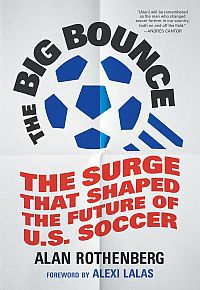
BOXING: World Boxing approves Paris Olympic champ Lin for competition in female category going forward

The Sports Examiner: Chronicling the key competitive, economic and political forces shaping elite sport and the Olympic Movement.★

To get the daily Sports Examiner Recap by e-mail: sign up here!

≡ LIN PASSES SEX TEST ≡

World Boxing confirmed on Friday that Olympic women’s 57 kg champion Yu-ting Lin (TPE) is eligible to compete in the female category:

“World Boxing can confirm that, following an appeal by the National Federation, the boxer is eligible to take part in the forthcoming Asian Boxing Championships in Mongolia, 29 March – 10 April 2026.

“The appeal process was conducted in line with World Boxing’s Sex Eligibility policy which was introduced in August 2025 and includes mandatory sex testing, to determine the eligibility of male and female athletes that want to participate in its competitions.”

The process was hardly straightforward, as the decision came as the result of an appeal:

“Following an initial test in 2025, the National Federation for boxing in Chinese Taipei began an appeal process on behalf of one of its boxers and submitted a series of medical documents that were reviewed and analysed by World Boxing’s Medical Committee.

“Following the conclusion of the appeal process, and in line with World Boxing’s Sex Eligibility policy, World Boxing wrote to the CTBA. The letter stated: ‘The World Boxing Medical Committee considered and evaluated the medical documentation presented and determined that the boxer was deemed to be female and eligible to compete in the female category.’”

World Boxing adopted a comprehensive testing policy in August 2025 that includes:

“all athletes over the age of 18 that want to participate in a World Boxing owned or sanctioned competition need to undergo a once-in-a-lifetime PCR (polymerase chain reaction) test to determine their sex and their eligibility to compete in either the male or female category. The PCR test is a laboratory technique used to detect specific genetic material, in this case the SRY gene, which reveals the presence of the Y chromosome that is an indicator of male biological sex.”

An appeal process is also included, with evidence reviewed by the World Boxing Medical Committee.

In Lin’s case, she competed in the women’s division and won World Championships medals when the sport was governed by AIBA/IBA in 2018 (54 kg gold), 2019 (57 kg bronze), and 202 (57 kg gold). At the 2023 Worlds, Lin won a bronze medal at 57 kg, but was disqualified by the IBA – without any further documentation – for failing “eligibility” requirements.

Much more attention has been paid to Algeria’s women’s 66 kg Olympic winner Imane Khelif, also disqualified by the IBA for “eligibility” in 2023, but had already won a Worlds silver in 2022 competing under the AIBA/IBA rules.

Khelif has said she would also take the required World Boxing text, but it also preparing to debut as a professional fighter on 23 April in Paris. She is licensed to fight as a woman by the French federation.

Receive our exclusive, weekday TSX Recap by e-mail by clicking here.
★ Sign up a friend to receive the TSX Recap by clicking here.
★ Please consider a donation here to keep this site going.

For our updated, 45-sport, 910-event International Sports Calendar for 2026 and beyond, by date and by sport, click here!

ATHLETICS: Duplantis wins fourth straight World Indoors vault, Ehammer gets world hep record, seven medals (no gold) for U.S.!

One more world title for Sweden’s vault icon Mondo Duplantis! (Photo: Christel Saneh for World Athletics).

The Sports Examiner: Chronicling the key competitive, economic and political forces shaping elite sport and the Olympic Movement.★

To get the daily Sports Examiner Recap by e-mail: sign up here!

≡ WORLD INDOOR CHAMPS ≡

The second day of the 2026 World Athletics Indoor Championships in Torun (POL) had the women’s 60 m and the men’s 60 m hurdles as the featured events, running all three rounds on the same day!

In the women’s 60, the morning qualifying was led by Jamaica’s Brianna Lyston (heat six) and Olympic 100 m champ Julien Alfred (LCA: heat 4), both in 7.06. Just behind were Italy’s Zaynab Dosso, American Jacious Sears and Britain’s Dina Asher-Smith, all at 7.07. American Jaslyn Gardner was fourth in heat one (7.27) and was eliminated.

In the semis, 2024 World Indoor winner Alfred was behind Sears at 40 m, but sped up and leaned at the line for first in 7.04, with Sears also in 7.04, then Lyston at 7.05. The second semi was fast, with Dosso winning in 7.00 and impressive, with Asher-Smith (7.03) equaling her lifetime best (and the national indoor record). Jamaica’s Jonielle Smith got a lifetime best of 7.03 to emerge in the final 20 m to win semi three, ahead of Patrizia van der Weken (LUX: 7.05).

Alfred was in five for the final, with Smith outside in six and Dosso, Asher-Smith and Sears inside. Dosso had the best start in the middle of the track and was being pressured by Sears, with Alfred coming. At the line, Dosso leaned hard, Sears continued though and they were 1-2 in 7.00 and 7.03, with Alfred leaning to get the bronze, also in 7.03.

It’s a third straight medal for Dosso: bronze in 2024, silver in 2025 and now gold. Sears won her first international championship medal.

In the men’s 60 m hurdles, the morning qualifying was led by American Trey Cunningham, the 2022 Worlds 110 m hurdles runner-up, at 7.45 by winning heat six. Fellow American Dylan Beard won heat two in 7.50. In the semis, Wilhem Belocian (FRA) – the World indoor 2025 runner-up – got out well in race one and won easily in 7.42, with Beard second in 7.46, but appeared to hurt his right leg at the finish. Cunningham was in semi two and raced away from the field, winning in 7.35. That’s a lifetime best and now no. 5 all-time and no. 3 all-time U.S.! Jamaica’s Demario Prince was a distant second in 7.53.

Polish fans cheered for Jakub Szymanski in semi three, taking the lead after hurdle two and finishing in 7.42. Beard was hurt and scratched out of the final.

In the final, Cunningham was in lane four, with Belocian in three and Szymanski in five. Szymanski was out well, Cunningham hit the first hurdle and Szymanski held on to win on the lean in 7.40. Spain’s Enrique Llopis was out well and got the silver in 7.42, with Cunningham in third in 7.43. The top five were within 0.05.

● Men/400 m: In the two-section final, it was Chris Robinson of the U.S. getting out in front and holding on from Attila Molnar (HUN), 45.55 to 45.71.

Khaleb McRae of the U.S., the world-record holder, was in lane five with Christopher Morales Williams (CAN) – the fastest ever – outside of him in six. McRae was out well and had the lead at the bell. McRae moved away on the backstraight, but Morales Williams came on hard on the straight and won in 44.76. McRae held on for silver in 45.03, then Jereem Richards (TTO: 45.39) was a clear third and on time, won the bronze.

● Men/3,000 m: World 5,000 m champ Cole Hocker of the U.S. was one of the favorites, but this was a loaded field, including American teammate and 2024 runner-up Yared Nuguse and Britain’s 2024 winner Josh Kerr.

There were 12 in contention with three laps left and Addisu Yihune (ETH) in the lead. At the bell, it was Yihune, Kerr and Ethiopian Steeple star Getnet Wale leading, then Kerr burst to the lead and Hocker moved up to third. On the final turn and to the line, it was Kerr sprinting and getting to the finish first in 7:35.56. Hocker sprinted hard and just got past France’s Yann Schrub at the line, in 7:35.70 to 7:35.71, with Nuguse fifth in 7:47.08.

A second World Indoor 3,000 m gold for Kerr and Hocker got his second World Indoor silver; he was second in the 2024 World Indoor 1,500 m.

● Men/High Jump: European Indoor champ Oleh Doroshchuk (UKR) cleared four straight bars up to and including 2.30 m (7-6 1/2) and that was good enough for the gold medal. The only other man to clear 2.30 was Mexico’s Erick Portillo, who got a lifetime best on his third try and took the silver. Both missed all three tries at 2.33 m (7-7 3/4).

Tying for third were Sang-hyeok Woo (KOR) and Raymond Richards (JAM), both getting over 2.26 m (7-5).

● Men/Vault: All eyes were on world-record holder Mondo Duplantis (SWE), but Australia’s two-time Worlds bronzer Kurtis Marschall and Greek Worlds silver winner Manolo Karalis were also perfect through 5.85 m (19-2 1/4).

Things started shaking up at 5.95 m (19-6 1/4), with Karalis clearing right away and Norway’s Sondre Guttormsen and American champion Zach Bradford also clearing. Four other missed and passed to 6.00 m (19-8 1/4), and Duplantis made only his third jump of the day at 6.00, a make that placed him in the lead.

Marschall cleared on his first to equal his lifetime best, Karalis on his second and no one else could clear, although Guttormsen passed (!). Bradford finished fifth. Now to 6.05 m (19-10 1/4), with Karalis over right away and Duplantis passing; Marschall and Guttormsen both missed their tries, with Marschall taking the bronze.

Now to 6.10 m (20-0), with Duplantis over immediately and Karalis passing. On to 6.15 m (20-2), and Duplantis cleared. So Karalis came back at 6.20 m (20-4), a height he had never cleared. He missed as he hit the bar with his chest and then passed to the next height, with two tries left.

Duplantis kept the pressure on, clearing 6.25 m (20-6) on his first try, and Karalis missed twice to settle for the silver medal. So, Duplantis had his fourth World Indoor gold – 2022-24-25-26 – and decided not to try for more.

American Chris Nilsen, the Tokyo 2020 runner-up, cleared 5.70 m (18-8 1/4) and was ninth.

Men/Heptathlon: Leader Simon Ehammer (SUI) won the 60 m hurdles with a heptathlon-world best of 7.52, with American Heath Baldwin next best at 7.80, a lifetime best. Ehammer then led the vault at 5.30 m (17-4 1/2) and was set to challenge the world indoor record in the 1,000 m, of 6.645 by Ashton Eaton of the U.S. in 2012.

Going into the final event, Ehammer had 5,808 points to 5,453 for Baldwin and 5,409 for fellow American Kyle Garland. Ehammer paced evenly and won in style, finishing fourth in the race and finishing with a world-record 6,670!

Baldwin finished third in the 1,000 and grabbed the silver medal at 6,337, and Garland won the bronze at 6,245. It’s Baldwin’s first international medal; Garland got a bronze to go along with his Worlds decathlon bronze last year.

● Women/400 m: This was a two-section final and the home crowd roared for  Pole Natalia Bukowiecka as she passed by 2024 runner-up Lieke Klaver (NED) to win in 50.83, to 51.02.

Heat winner Lurdes Manuel (CZE) got to the lead in the second semi and rolled to the line to win in 50.76, a lifetime best and good for the gold medal! Haiti’s Wadeline Venlogh was second in 51.07 as Norway’s Henriette Jaeger faded on the turn and Bukowiecka and Klaver ended up with silver and bronze.

● Women/3,000 m: The race immediately slowed to a tactical crawl, Micol Majori (ITA) passing 1,500 m 4:48.03. By 2,000 m, Steeple star Norah Jeruto (KAZ) was just in front of Australian Olympic 1,500 m runner-up Jess Hull, but still slow. So slow, in fact, that Hull was tripped and fell into Ethiopia’s defending champ Freweyni Hailu at the 1,250 m mark (Spain’s Marta Garcia was eventually disqualified).

Hailu regained contact quickly by 1,700 m, with Jeruto continuing to lead Hull at 2,000 m. Italian star Nadia Battoclietti – the Olympic 10,000 m silver medalist – went by Jeruto on the inside at 2,300 m, and took the lead from Hull, with American Emily Mackay in third.

Battoclietti, Hull, Mackay and Alishign Bawerke (ETH) were at the front with two laps left and Hull took over with 300 m to go. At the bell, it was Hull and Battoclietti and Mackay, with Battolcetti taking over on the turn and she rolled home to win in 8:57.64 and Mackay holding off Hull at the line for silver, 8:58.12 to 8:58.18.

American Margot Appleton was 14th in 9:12.57. Mackay won the bronze in this event in 2024 and now has silver.

● Women/Triple Jump: Venezuela’s world-record holder Yulimar Rojas was back in action, but it was Cuba’s Lleyanis Perez, the 2025 World Indoor and outdoor champ, to the front in round one at 14.88 m (48-10). And Perez extended to 14.95 m (49-0 3/4) – equaling Rojas’ world lead – in round two.

Rojas fired up into second in round four to reach 14.86 m (48-9), with Senegal’s Saly Sarr into third at 14.70 m (48-2 3/4). Neither could improve and Perez was the winner for a second straight year and with a medal for the third straight year.

American Jasmine Moore, the Olympic bronzer, finished seventh at 14.33 m (47-0 1/4) in the first round. Teammate Ryann Porter was 16th at 13.01 m (42-8 1/4).

● Mixed 4×400 m: Belgium’s Jonathan Saccor got out to the lead on the first leg and passed first, but behind him, American Jevon O’Bryant passed to Sara Reifenrath, who was flattened in a collision with Jamaica and the Netherlands. That essentially eliminated the U.S. and the Dutch, who finished 4-5.

The Belgians ran away and won with a world-best 3:15.60, with Spain second in 3:16.96. Jamaica finished third, but was disqualified for a lane violation on the first exchange, so Poland took the bronze in 3:17.44. The U.S. ended up fifth in 3:21.35.

Not a lot of qualifying on Saturday, but the performances were impressive:

● Men/800 m: American star Cooper Lutkenhaus was the fastest qualifier, winning semi two in a fast 1:44.29, ahead of Spain’s Mohamed Attaoui (1:44.48). Sean Dolan of the U.S. was third in heat three in 1:46.45 and did not advance to the final.

● Women/800 m: World-record holder Keely Hodgkinson (GBR) and American Addy Wiley were the top two in qualifying, both in semi one, in 1:58.53 and 1:58.75. Swiss Audrey Werro, the Diamond League winner last year, won semi three in 1:59.27 and was next fastest.

One more day to go, as the World Indoors concludes on Sunday; the meet is being shown in the U.S. on NBCD’s Peacock streaming service and NBCSN (where available).

Receive our exclusive, weekday TSX Recap by e-mail by clicking here.
★ Sign up a friend to receive the TSX Recap by clicking here.
★ Please consider a donation here to keep this site going.

For our updated, 45-sport, 910-event International Sports Calendar for 2026 and beyond, by date and by sport, click here!

ATHLETICS: Gold for U.S. sprint star Anthony and shot icon Jackson as World Indoor Champs open in Poland

Seiko's official photo finish of the men's 60 m final at the 2026 World Athletics Indoor Championships.

The Sports Examiner: Chronicling the key competitive, economic and political forces shaping elite sport and the Olympic Movement.★

To get the daily Sports Examiner Recap by e-mail: sign up here!

≡ WORLD INDOOR CHAMPS ≡

The 2026 World Athletics Indoor Championships in Torun (POL) got going on Friday, with the men’s 60 m the featured event.

There were no surprises in the heats, and in the semis, Jamaica’s Bryan Levell won semi one in 6.53, with an amazing tie for second – to the 1000ths – for Simon Verherstraeten (BEL) and Taymir Burnet (NED) in 6.56 (6.553!).

American Trayvon Bromell, who won this meet in 2016, was fastest in the heats at 6.52, and lined up against Paris 100 m silver winner Kishane Thompson (JAM). Bromell was off perfectly and led after a step and rolled through the finish in a world-leading 6.42 (!), with Thompson a clear second in 6.47. Bromell equaled his lifetime best, equal-sixth all-time.

Ex-world leader Jordan Anthony, the U.S. champ, was in semi three, and was smooth and quick, winning over defending champion Jeremiah Azu (GBR), equaling his lifetime best at 6.43, to 6.45.

The final had Anthony in four, Azu in five, Bromell in six and Thompson in seven. Anthony had a good start and no one could head him. Azu stayed close, but Bromell was not in contention early and did not move up to challenge.

Anthony ran 6.41, now the world lead in 2026 and now equal-fourth on the all-time list and the equal-eighth performance all-time! A long review of the photo showed Thompson moving up to get second over Bromell, both in 6.45 (6.447 to 6.448). Azu closed well for fourth in 6.46.

Anthony won the NCAA Indoors for Arkansas in 2025, turned pro later in the year and now is the U.S. Indoor and World Champion in the 60. At 21, he is one to watch, for sure.

● Men/Triple Jump: Defending champion Andy Diaz (ITA) got to the lead in round one with a world-leading 17.47 m (57-3 3/4) and stayed there through the first three rounds, ahead of Jamaica’s Jordan Scott, at 17.33 m (56-10 1/4). Algeria’s Yassir Triki, the 2024 runner-up, solidified his hold on third in the fourth round at 17.30 m (56-9 1/4).

None of the top three could improve and Diaz won back-to-back golds, and Scott won his first international championship medal. American Russell Robinson reached 16.53 m (54-2 3/4) and finished 10th.

● Women/High Jump: Olympic champ Yaroslava Mahuchikh (UKR) and World Champion and defending indoor champ Nicola Olyslagers (POL) were the headliners and those two were both perfect through 1.99 m (6-6 1/4), as was Angelina Topic (SRB), the 2025 Worlds bronzer and Ukraine’s Yuliia Levchenko.

The bar went to 2.01 m (6-7) and Mahuchikh upped the ante immediately and cleared … and no one else could! She tried 2.06 m (6-9), but missed all three, but collected her second World Indoor gold, previously in 2022.

The other three had the same cards – no misses through 1.99 – and shared a three-way silver! American Charity Hufnagel was ninth at 1.89 m (6-2 1/4).

● Women/Shot Put: Two-time World Champion Chase Jackson of the U.S. has a silver and two bronzes in this meet, but no golds. But she got after it early and took the lead at 19.96 m (65-6) in round two.

She then extended to 20.14 m (66-1) in round four, as two-time defending champion Sarah Mitton (CAN) moved into second position in the fourth at 19.78 m (64-10 3/4). Neither could improve and they finished 1-2 and Jackson got her first World Indoor gold! Swede Axeline Johansson got a national record at 19.75 m (64-9 3/4) in third.

Abria Smith of the U.S. reached 18.66 m (61-2 3/4) in round one, then improved to 18.86 m (61-10 1/2) in round four, to finish seventh.

Lots of qualifying on day one, of course:

● Men/400 m: Canada’s Christopher Morales Williams, the fastest ever in this event at 44.49 (but not the world record holder due to an equipment technicality), led all qualifiers at 45.51, with the U.S. advancing both entries to the semis: official world-record man Khaleb McRae won heat six in 46.09 and Chris Robinson won heat two in 46.34.

In the semis, Robinson trailed Brazil’s Matheus Lima coming into the final turn, but Robinson turned on the jets to win in 45.46 and qualify for the final; Lima was second in 45.71. Morales Williams sprinted into the lead off the final turn in semi two and won in 45.35, with Brian Tinega (KEN: 45.75) in second.

Hungary’s Attila Molnar was semi three in 45.81 and McRae led from the start in semi four and won in 45.39, the second-fastest of the day.

● Men/800 m: Belgium’s Elliott Crestan, second last year, led the qualifying from heat three in 1:45.51. Sean Dolan of the U.S. qualified on time in 1:46.17 as third in heat six and teen Cooper Lutkenhaus advanced as second in heat two in 1:46.24.

● Men/1,500 m: Heat three produced the best times, with Spain’s Mariano Garcia winning in 3:38.19. U.S. champion Nathan Green was third in heat one in 3:40.97 and advanced, but Luke Houser was fourth in heat two (3:43.87) and did not advance to the final.

● Women/400 m: Lurdes Manuel (CZE) led with a 51.08 to win heat six; the U.S. qualified Bailey Lear (51.87) in third in heat four to the semifinals. Rosey Effiong (52.13), third in heat two, did not advance.

In the semis, Manuel got a lifetime best to win easily in 50.96; Lear was third in 52.07 and did not advance to the final. Poland’s Natalia Bukowiecka was a clear winner in semi two in 51.41, then Dutch star Lieke Klaver, the 2024 World Indoor silver winner, won semi three in 51.23. Norway’s Henriette Jaeger won heat four in 50.95 and ex-American Wadeline Venlogh (HAI) got into the final with a second-place 52.04.

● Women/800 m: Eloisa Corso (ITA) had the fastest qualifier, from heat six, in 1:59.07. Addy Wiley of the U.S. won heat three in 2:00.85; Valery Tobias was disqualified in heat four for a lane infringement (stepping on the line). World record holder Keely Hodgkinson (GBR) won heat one in 2:00.32.

● Women/1,500 m: Ethiopia’s Birke Haylom won heat two in 4:10.66 and was the fastest on the day. American Gracie Morris was third in heat three in 4:12.57 and was a time qualifier. U.S. champ Nikki Hiltz was second in heat one (4:16.32) and advanced easily.

The men’s heptathlon started on Friday, with Swiss star Simon Ehammer, the 2024 winner, taking the 60 m (6.69) and the long jump (8.15 m/26-9) and scored 3,698 points. American Kyle Garland, the 2025 Worlds decathlon bronzer, won the high jump at 2.14 m (7-0 1/4) and has 3,660.

Third is American Heath Baldwin, at 3,510, who was second in the high jump. The 60 m hurdles, vault and 1,000 m are on Saturday.

Receive our exclusive, weekday TSX Recap by e-mail by clicking here.
★ Sign up a friend to receive the TSX Recap by clicking here.
★ Please consider a donation here to keep this site going.

For our updated, 45-sport, 910-event International Sports Calendar for 2026 and beyond, by date and by sport, click here!

FOOTBALL: FIFA Council approves expanded, $14 billion revenue target for 2027-30, following up on $13 billion from 2022-26

The Sports Examiner: Chronicling the key competitive, economic and political forces shaping elite sport and the Olympic Movement.★

To get the daily Sports Examiner Recap by e-mail: sign up here!

≡ FIFA ROLLING IN DOUGH ≡

Using its expanded line-up of worldwide tournaments, including Club World Cups for men and women, FIFA is projecting a $14 billion revenue haul from 2027-30, expanding on its jump to a projected $13 billion from 2022-26.

It expects more in television rights and sponsorships than the current cycle, but less from tickets and hospitality since the men’s World Cup is not in the U.S.:

● $6.064 billion in broadcast rights (+800 million from 2023-26)
● $4.592 billion in sponsorships (+1.246 billion)
● $2.659 billion in tickets and hospitality (–$938 million)
● $458 million in licensing (+$58 million)
● $227 million in other income (–$166 million)

Of this $14.000 billion total, 26% is contracted now, but this does include 36% of the $4.592 billion in sponsorships, as of 31 December 2025. So FIFA is off to a good start, with a heavy schedule ahead:

2027: FIFA Women’s World Cup in Brazil
2028: FIFA Women’s Club World Cup (site tbd)
2029: FIFA Club World Cup (site tbd)
2030: FIFA World Cup in Argentina, Paraguay, Uruguay, Morocco, Portugal, Spain

The budget section describes broadcast assumptions for the 2030 World Cup to include the currently-planned 48-team, 104-match program, not the proposed one-time, centennial expansion to 64 teams (128 games) requested by the South American hosts, currently allocated one match each.

The U.S. World Cup television rights will be up for 2030, with Fox having held the U.S. English-language rights from 2015 to 2026.

FIFA expects to spend $3.303 billion on the 2030 World Cup alone.

Revenue in 2027 is forecast at $1.202 billion, with $800 million to be spent on the Women’s World Cup and other, smaller events.

FIFA’s 2025 revenue was $2.661 billion, about 9% above budget, thanks to the new Club World Cup:

● $2.126 billion revenue
● $1.000 billion broadcast rights from DAZN
● $669 million in sponsorships
● $411 million in tickets ($261 million) and hospitality ($150 million)
● $5 million in licensing
● $41 million in concessions, parking, host city fees

The tournament cost $839 million to stage and another $1.0 billion in prize money and $287 million for a to-be-established “solidarity” fund. That accounts for all $2.261 billion in revenue.

The remaining $535 million in FIFA revenues last year was mostly from sponsorships ($296 million), and smaller amounts from the FIFA Intercontinental Cup and some licensing.

Interestingly, FIFA lost money in 2025, with $3.169 billion in expenses:

● $2.043 billion on competitions and events
● $748 million on development ane education
● $51 million on football governance
● $72 million on marketing and broadcasting expense
● $254 million on FIFA governance and administration

This is normally the case for FIFA, losing money in the first three years of a quadrennial, then enjoying a huge cash injection from the men’s World Cup in the final year.

However, to say that FIFA is rich is beyond doubt. The financials show total assets of $9.479 billion and reserves of $2.699 billion, riding a wave of popularity for its biggest events and the benefit of holding the new 2025 Club World Cup in the U.S. and having the 2026 World Cup mostly in the U.S., along with Canada and Mexico.

Receive our exclusive, weekday TSX Recap by e-mail by clicking here.
★ Sign up a friend to receive the TSX Recap by clicking here.
★ Please consider a donation here to keep this site going.

For our updated, 45-sport, 910-event International Sports Calendar for 2026 and beyond, by date and by sport, click here!

PANORAMA: L.A. Metro forwards LA28 agreement to Board; FEMA hands out $625 million in Federal World Cup support; AAU Sullivan Award finalists!

The AAU Sullivan Award (Photo: AAU).

The Sports Examiner: Chronicling the key competitive, economic and political forces shaping elite sport and the Olympic Movement.★

To get the daily Sports Examiner Recap by e-mail: sign up here!

≡ THE 5-RING CIRCUS ≡

● Olympic Games 2028: Los Angeles ● The Executive Management Committee of the Los Angeles Metropolitan Transportation Authority approved the draft Memorandum of Understanding with the LA28 organizing committee, which will be forwarded to the full Metro Board for approval.

Seleta Reynolds, Metro’s Chief Innovation Officer, noted that the document clearly defines what Metro’s roles are:

“Baseline services are the services that we have in play every day for the riders that we move around in this county. Enhanced services would be anything different or extra that we would do specifically to serve the event in 2028.

“It also does not obligate Metro to provide any enhanced services absent outside funding. It’s very clear that we are not providing these services on the backs of our existing riders, at the expense of our baseline services.”

The Memorandum does not yet include three annexes to be negotiated on security and other matters.

The Metro staff noted that it is continuing to pursue $379 million in State funding related to the 2028 Games, as well as Federal funding. Metro will receive $9.6 million in Federal funds to support its 2026 FIFA World Cup transit efforts.

● Paralympic Winter Games 2026: Milan Cortina ● NBC said it had a strong audience for the 2026 Winter Paralympics, with 22.7 million total viewers:

“The record 22.7 million total viewers for Milan Cortina 2026 is up 90% vs. Beijing 2022 (11.9 million) and up 47% vs. the Summer Games in Paris in 2024 (15.4 million).

“Milan Cortina Paralympic viewership on NBC and Peacock averaged a Total Audience Delivery (TAD) of 1.1 million viewers, up 24% vs. Beijing.

“Primetime coverage on NBC and Peacock on Saturday, March 7, from 8-10 p.m. ET, averaged 1.4 million viewers, making it the most-watched Winter Paralympics telecast on record. The program included highlights of the Opening Ceremony and the first day of competition.”

And as expected, the sled hockey final between the Americans and Canada was also a big draw:

“Team USA’s 6-2 win over Canada in the sled hockey gold medal game on March 15 averaged a TAD of 1.2 million viewers across NBC, Peacock, and CNBC (11 a.m.-1 p.m. ET), making it the most-watched sled hockey game on record, surpassing the prior record of 869,000 viewers set at the Sochi 2014 Paralympic Winter Games when Team USA defeated Russia, 1-0, in the gold medal game on NBC (12 p.m.-2:20 p.m. ET).”

● AAU Sullivan Award ● The nominees for the 96th AAU Sullivan Award are down to nine:

● Olivia Babcock, volleyball (Pittsburgh)
● Azzi Fudd, basketball (Connecticut)
● Blake Horvath, football (Navy)
● Alysa Liu, figure skating (2025 World Champion)
● Tatyana McFadden, para track & field (2025 NYC Marathon runner-up)
● Fernando Mendoza, football (Indiana)
● Mikaela Shiffrin, alpine skiing (2025 Team Combined World Champion)
● Braden Smith, basketball (Purdue)
● Zahid Valencia, wrestling (2025 World 86 kg Champion)

The list has three Olympic athletes and one Paralympian; the winner will be announced on 7 April at the New York Athletic Club.

● Athletics ● The World Athletics World Indoor Championships will commence on Friday in Torun (POL), with 674 athletes from 118 federations set to take part. World Athletics President Sebastian Coe (GBR) was enthused at Thursday’s news conference and also had news about the future:

“This is the 21st edition of the World Indoor Championships and the pinnacle of our global indoor season.

“I’m delighted to announce right here that the World Athletics Council this morning awarded the next two editions to Odisha in India in 2028 and Astana, Kazakhstan in 2030. So the future of the World Athletics Indoor Championships is looking bright and assured.”

One of the heavy favorites in indoor women’s 800 m world-record holder Keely Hodgkinson (GBR), who explained, “This is the one medal I don’t have, so it would be really great to box that one off. I will be happy to make the start line this time but until I cross the finish line I’m not going to jinx anything.”

American Anna Hall, the 2025 World Champion in the heptathlon is also looking for a first indoor title:

“These will be my first World Indoor Championships and I am so excited to be here. I have wanted to do these championships for a very long time.

“When you are chasing a first gold [in 2025], you think that when you win a world title you are going to be this crazy, different person. It didn’t change much at all, although I now get great introductions. But I definitely still feel unsatisfied and I have many things I want to chase.”

The meet takes place over three days and will be shown in the U.S. on NBC’s Peacock streaming service and the revived NBCSN channel, where available.

● Boxing ● World Boxing announced Executive Board approval of nine more national federations, bringing the total to 168. The new federations are in Belarus, Cyprus, Mozambique, Niue, Papua New Guinea, Russia, Tanzania, Tonga and Zambia. Regarding Russia and Belarus:

“World Boxing will seek guidance from the International Olympic Committee (IOC) on the conditions for participation in its competitions. It is expected these will follow the AIN procedure – ‘Athlètes Individuels Neutres’ (Individual Neutral Athletes) – deployed by the IOC for Russian and Belarusian athletes that competed at the recent 2026 Winter Olympic Games in Milan Cortina.

“Adopting the AIN procedure would mean that boxers from Russia and Belarus will participate as individual athletes without a flag or national anthem. World Boxing will also conduct a series of checks to ensure that Russian and Belarusian boxers who want to participate in its competitions do not have a history of supporting the war in Ukraine and are not members of clubs linked to the army or police force.”

There are now 44 federations which have Executive Board approval, but still must be confirmed by the World Boxing Congress, later this year.

● Curling ● The World Curling women’s World Championship is continuing in Calgary (CAN), with the top six of 13 teams moving on to the playoffs. Through nine matches so far in the round-robin, Switzerland – skipped by Xenia Schwaller – and Canada (two-time Worlds medalist Rachel Einarson) are both 8-1, followed by Japan (Satsuki Fujiwara: 6-2) and Sweden (Isabella Wrana) and South Korea (Eun-ji Gim) at 6-3.

The U.S. team, skipped by Delaney Strouse, is at 1-8, with three matches left.

● Football ● The FIFA Council confirmed that the 2026 World Cup should be played as planned, including Iran’s matches in Inglewood, California and Seattle, Washington, with FIFA President Gianni Infantino (SUI) explaining:

“FIFA is looking forward to all teams participating at the FIFA World Cup to compete in a spirit of fair play and mutual respect. We have a schedule. We will soon have the 48 competing teams confirmed, and we want the FIFA World Cup to go ahead as scheduled.”

Bids for the 2031 and 2035 FIFA Women’s World Cup for Costa Rica, Jamaica, Mexico and the U.S. (2031), and England, Northern Ireland, Scotland and Wales (2035), will be voted on at an Extraordinary Congress before the end of 2026.

The Federal Emergency Management Agency (FEMA) announced Wednesday that it has “awarded $625 million to empower all 11 cities hosting FIFA World Cup 2026 matches to bolster security preparations ahead of the tournament, in close coordination with the White House Task Force on the FIFA World Cup 2026.”

The money is primarily for security purposes, although it can also be used “to pay for increased police and emergency response at FIFA venues, hotels and transportation hubs.”

Not every host region received the same amount; shares were based on the number of matches and size of the stadia involved. FEMA also recently distributed $250 million to support host-area defenses “to detect, identify, track or mitigate the unlawful use” of drones.

Both allocations came from the 2025 “One Big Beautiful Bill Act.”

The FIFA Council announced a decision on the request to exclude or punish Israel for allowing club play in territory claimed by the Palestinian Football Association:

“FIFA should take no action given that, in the context of the interpretation of the relevant provisions of the FIFA Statutes, the final legal status of the West Bank remains an unresolved and highly complex matter under public international law.

“FIFA should continue to promote dialogue and offer mediation between the Palestine Football Association and The Israel Football Association at an operational level. In this context, FIFA will continue to facilitate structured engagement and monitor developments.”

On a distinct matter, a filing against Israel by the Palestinian association for racist conduct at matches held in Israel was upheld by the FIFA Disciplinary Committee and the Israeli Football Association was fined CHF 150,000, but has the right to appeal.

Receive our exclusive, weekday TSX Recap by e-mail by clicking here.
★ Sign up a friend to receive the TSX Recap by clicking here.
★ Please consider a donation here to keep this site going.

For our updated, 45-sport, 910-event International Sports Calendar for 2026 and beyond, by date and by sport, click here!

LANE ONE: Pathetic statement implies the United Nations is for transgenders in women’s sports; another U.N. expert said no in 2024!

The Sports Examiner: Chronicling the key competitive, economic and political forces shaping elite sport and the Olympic Movement.★

To get the daily Sports Examiner Recap by e-mail: sign up here!

≡ SEX SCREENING PUSHBACK ≡

Under pressure from women athletes and seeing the results of some research work compiled by World Athletics and other International Federations, International Olympic Committee President Kirsty Coventry (ZIM) announced shortly after taking office in June 2025 that she would set up a review of the “protection of the female category.”

This resulted in a September 2025 formation of a “Protection of the Female Category Working Group,” to “consist of experts and IFs. The names of the members of the working group will remain confidential for now to protect the integrity of the group and their work.”

Shortly before, on 30 July 2025, World Athletics – the leader among the federations in research and regulations in this area – issued a new requirement for anyone wishing to compete in the female category for the 2025 World Athletics Championships in Tokyo (JPN):

“All athletes wishing to compete in the female category at the World Championships are required to undergo a once-in-a-lifetime test for the SRY gene – a reliable proxy for determining biological sex. This is to be conducted via a cheek swab or blood test, whichever is more convenient.”

There have been occasional stories in European outlets that the IOC’s working group will lean in the direction of the same kind of qualification requirement for the Olympic Games, at least in some sports.

Coventry, asked repeatedly about this, said in December:

“We’ve got the working group and they’re working very well, with all of the stakeholders … we’re going to find ways of trying to find a consensus that has all aspects covered. It’s maybe not going to be the easiest thing to do, but we are going to try our best to be sure than when are talking about the female category, we are protecting the female category and doing that in the most fair way and in finding a consensus for everybody to be able to at least believe in and get behind in.”

She expected to be able to announce results of this work by the end of the first quarter or 2026, or perhaps just a little later, so now is the time for the opponents to get out their megaphones.

And they have.

A 25 February 2026 “Joint Statement on Fairness, Inclusion and Non-Discrimination in Sport” from the United Nations Human Rights Council condemns the movement toward sex screening and insists that – essentially – transgender women should be allowed to compete in women’s competitions. It says so plainly:

“Discrimination on grounds of sex and gender is prohibited. The Committee on the Elimination of Discrimination against Women has clarified that discrimination against women includes discrimination based on gender, as also affirmed by the Working Group on discrimination against women and girls, and that the Convention’s protections extend to trans and intersex women in their right to participate in sport.

“The Special Rapporteur in the field of cultural rights has warned that indiscriminate bans of trans, genderdiverse and intersex women from women’s sport – or categorising them as ‘male’ – is inconsistent with international human rights standards. United Nations mandate holders have further cautioned that rigid, binary definitions of sex risk reinforcing harmful stereotypes and eroding progress toward substantive gender equality.”

And for extra emphasis, there was this:

“[B]lanket bans on the participation of transgender women in the female category raise serious concerns. Such measures presume uniform advantage without adequate evidence, rely on categorical exclusions rather than individualised assessment, and risk imposing disproportionate burdens on a small and already marginalised group.

“Mandatory genetic sex testing likewise raises concerns in relation to privacy, bodily integrity, informed consent and data protection, particularly where athletes are compelled to undergo testing under threat of ineligibility and where sensitive personal data may be processed or disclosed without adequate safeguards.”

This is nothing new and has already been rejected, notably by the Court of Arbitration for Sport. In considering the case of athletes with “differences in sex development” in the Semenya vs. IAAF in 2019, the panel noted:

● “[T]his case involves a complex collision of scientific, ethical and legal conundrums. It also involves incompatible, competing rights.”

● “The Panel considers that, once it is recognised that the reason for organising competitive athletics into separate male and female categories rests on the need to protect one group of individuals against having to compete against individuals who possess certain insuperable performance advantages derived from biology rather than legal status, it follows that it may be legitimate to regulate the right to participate in the female category by reference to those biological factors rather than legal status alone.”

That’s the whole issue in a nutshell. The Court of Arbitration panel’s conclusion was this:

“Claimants were unable to establish that the DSD Regulations were ‘invalid’. The Panel found that the DSD Regulations are discriminatory but the majority of the Panel found that, on the basis of the evidence submitted by the parties, such discrimination is a necessary, reasonable and proportionate means of achieving the IAAF’s aim of preserving the integrity of female athletics.”

That was in 2019. The scientific research has advanced considerably since then as have the World Athletics regulations.

Beyond the Court of Arbitration holding, which has not been reversed in any further hearing by multiple other courts, there was another voice that should be considered.

The U.N. Human Rights Council’s statement attempts to present a “United Nations” position on the matter, but very conveniently – actually, pathetically – skips and does not mention the findings of the United Nations Special Rapporteur on Violence Against Women and Girls, Reem Alsalem (JOR).

She reported in August 2024 on this exact issue and said in an October 2024 news conference:

“In order to ensure, fairness, dignity and safety for all, including females – women and girls, females – we would need to maintain a female-only category in sports, while at the same time also having more ‘open’ categories for those wishing to play sports in categories that do not respond to the sex they were born into.

“That is one thing. The other thing is, as requested by many women and girls in sports, is to bring back – or actually not bring back – is to introduce sex screening, which as you know was discontinued in 1999.

“So that should be sex screening have become a lot more reliable now, cheap, can be administered in a confidential, dignified manner, should be introduced … as an element of – what was that called – eligibility, in female sports.”

Alsalem also dealt specifically with the worries of the new U.N. statement, back in 2024:

“According to international human rights law, differential treatment on prohibited grounds may not be discriminatory if it is based on reasonable and objective criteria, it pursues a legitimate aim its effects are appropriate and proportional to the legitimate aim pursued and it is the least intrusive option to achieve the intended result.

“Maintaining separate-sex sports is a proportional action that corresponds to legitimate aims within the meaning of article 26 of the International Covenant on Civil and Political Rights and does not automatically result in the exclusion of transgender persons from sports, nor does it require invasive sex screenings.

“When combined with other measures, such as open categories, fairness in sports can be maintained while ensuring the ability of all to participate – a course of action followed by several professional sports associations.”

Coventry wants a general consensus on this issue and is looking for common ground in a sporting world where athletics and swimming are in a different reality than equestrian.

The IOC’s findings will be delivered soon enough, and need not take any more time to consider the ill-conceived, one-sided and childlike protests from the pro-transgender crowd in one corner of the U.N. bureaucracy.

Rich Perelman
Editor

Receive our exclusive, weekday TSX Recap by e-mail by clicking here.
★ Sign up a friend to receive the TSX Recap by clicking here.
★ Please consider a donation here to keep this site going.

For our updated, 45-sport, 910-event International Sports Calendar for 2026 and beyond, by date and by sport, click here!

PANORAMA: Next World Baseball Classic in ‘29 or ‘30?; Clark MVP of U.S. 5-0 romp in FIBA qualifiers; fly Iran from Mexico for World Cup L.A. games?

The 2026 FIFA World Cup “Trionda” ball by adidas (Photo: adidas).

The Sports Examiner: Chronicling the key competitive, economic and political forces shaping elite sport and the Olympic Movement.★

To get the daily Sports Examiner Recap by e-mail: sign up here!

≡ THE 5-RING CIRCUS ≡

● Olympic Winter Games 2026: Milan Cortina ● The Hockey Hall of Fame in Toronto (CAN) announced its 2026 Olympic display on Monday, which includes the pucks used for the gold-medal, overtime goals scored by Americans Megan Keller and Jack Hughes.

Hughes had remarked in an ESPN story that he would like the puck himself, to give to his father. The Hall of Fame announcement included a comment from President Jamie Dinsmore:

“These donated items represent defining moments on the world’s biggest stage and carry powerful stories of national pride and hockey history at its highest level.

“The Olympic ’26 display will help ensure that these unforgettable Olympic moments are preserved for our guests from around the world to experience.”

The Hall of Fame has received items related to the Games from the International Ice Hockey Federation, since the 1998 Nagano Games, the first to feature NHL players.

● Russia ● Russian President Vladimir Putin once again campaigned for Russia to be re-integrated without conditions into international sports. During a Wednesday meeting with government members, Putin said:

“With the recent change of the [executive] team within the International Olympic Committee, I would hope they would stop their tricks and stop using international sports as a tool of political struggle.”

Russia has placed high hopes in better treatment from IOC President Kirsty Coventry (ZIM) than from predecessor Thomas Bach (GER). Under Coventry, the IOC has told the worldwide sports federations they could re-integrate Russian and Belarusian “youth” athletes and teams as they see fit, despite the continuing Russian invasion of Ukraine. But no decisions have been made on allowing Russia to return to the Games on any basis other than as “neutrals.”

● Baseball ● The sixth World Baseball Classic concluded on Tuesday evening with Venezuela’s 3-2 win over the U.S., with the real winner being the tournament itself.

The Associated Press reported that “This year’s WBC drew 1,619,839 fans for 47 games, a 24% increase over the previous high of 1,306,414 in 2023. The initial tournament in 2006 drew 740,451 for 39 games.”

The question now is what happens next. Major League Baseball Commissioner Rob Manfred said:

“There’s no resemblance to where we started in 2006. This one, I feel like it went to a different level. …

“The issue for us is whether we do it in ‘29 or in ’30, three years or four years? I’m getting a lot of email from people today saying don’t make us wait four more years for this.

“I do think a three- or four-year cycle is probably about right for the event. The timing is going to turn on what we do with respect to related sorts of international efforts. I remain optimistic about the Olympics and obviously if we play in the Olympics it’s a short time from July of ‘28 ’till the spring of 29 and that’s something we’ll have to take into account. I’m not saying it’s outcome determinative, but it’s something we’ll have to think about.”

Discussions have swirled around an expanded All-Star break in 2028 to accommodate the All-Star Game and the six-day Olympic tournament in Los Angeles. The World Baseball Classic took just 13 days from start to finish, played in Tokyo (JPN), San Juan (PUR) and in Houston and Miami in the U.S. and could be wholly or partially fit into a mid-season break in the future.

● Basketball ● The Olympic and World Champion U.S. women’s team cruised through the remaining two games of the FIBA World Cup Qualifying Tournament in San Juan (PUR), defeating New Zealand on Sunday, 101-46 and then easing past Spain on Tuesday by 84-70. The U.S. finished 5-0.

Guard Rhyne Howard had 18 points to lead the Americans against New Zealand, with guard Caitlin Clark scoring 14. Spain, fifth in Paris in 2024, was a bigger challenge, but got off to a 43-32 lead halftime edge and won by 14. Guard Kahleah Cooper led with 20, followed by guard Kelsey Plum with 18 and forward Dearica Hamby, with 14.

Clark, playing for a U.S. senior team for the first time, was recognized as the Most Valuable Player, averaging 11.6 points per game. She was joined on the All-Star Five by Plum among the U.S. players.

The FIBA Women’s Basketball World Cup 2026 will take place in Berlin (GER) between 4-13 September.

● Football ● The Town of Foxborogh, Massachusetts approved on Tuesday the license for seven FIFA World Cup 2026 matches to be held at Gillette Stadium, in view of the guarantees it received for funding of an expected $7.8 million in security costs. It had been unwilling to approve the matches unless these costs were agreed to be paid by someone other than the town.

The newest idea to handle the Iranian team situation for the 2026 FIFA World Cup? Inside World Football suggested placing Iran in Mexico except for game-days against New Zealand and Belgium on 15 June and 23 June and then have the team take a short flight to Los Angeles International Airport and then bus to SoFi Stadium.

For the third match against Egypt in Seattle on 26 June, Iran could fly there from Mexico, or should they move to Canada? The Group G winner plays in Seattle on 1 July and the runner-up in Arlington, Texas on 3 July in the Round of 32; a third-place team could play in Vancouver (CAN) or East Rutherford, New Jersey.

The on-the-field result of the 18 January 2026 African Cup of Nations final in Rabat (MAR), where Senegal defeated Morocco by 1-0 after extra time, was reversed by the African Football Confederation and Morocco was handed the win on a 3-0 forfeit.

According to the confederation statement published Tuesday:

“The CAF Appeal Board decided that in application of Article 84 of the Regulations of the CAF Africa Cup of Nations (AFCON), the Senegal National Team is declared to have forfeited the Final Match of the TotalEnergies CAF Africa Cup of Nations (AFCON) Morocco 2025 (‘the Match’), with the result of the Match being recorded as 3–0 in favour of the Fédération Royale Marocaine de Football (FRMF).”

During the match, the Senegal team walked off the field to protest a penalty awarded to Morocco in the 98th minute and stay away for about 15 minutes. Senegal finally returned, the penalty was missed and Senegal won in the 94th minute on a Papa Gueye goal.

Sanctions against the Moroccan federation in the same holding for multiple other issues, including ball boys continuously removing the Senegal goalkeeper’s towel ($50,000 fine), interference with the referees around the video review area ($100,000 fine) and the use of “laser pens” by supporters ($10,000 fine).

Senegal’s federation has called the decision a sham and has promised an appeal to the Court of Arbitration for Sport.

Iranian media reported that the women’s national team, including five members who initially asked for asylum in Australia, but decided to return, are in Iran. They flew into Turkey and took a bus into Iran and were met by officials at the border.

Two players stayed in Australia after Iran was eliminated in the Women’s Asian Cup tournament, and continue to be supported there.

● Skating ● The International Skating Union is inviting inquiries and then bids to acquire all of the federation’s broadcast and sponsorship and licensing rights in a single package.

It’s a move to try and free the ISU from the marketing task and try to lock up value for the long term. No specifics were given and interested parties are asked to signal interest by 26 March.

Receive our exclusive, weekday TSX Recap by e-mail by clicking here.
★ Sign up a friend to receive the TSX Recap by clicking here.
★ Please consider a donation here to keep this site going.

For our updated, 45-sport, 910-event International Sports Calendar for 2026 and beyond, by date and by sport, click here!

OLYMPIC GAMES: Marketing guru Burns explains how Olympic sponsorship cannot be viewed in traditional sports terms

The Sports Examiner: Chronicling the key competitive, economic and political forces shaping elite sport and the Olympic Movement.★

To get the daily Sports Examiner Recap by e-mail: sign up here!

≡ UNIQUELY OLYMPIC ≡

“Deloitte, an IOC TOP Partner, measures fandom across four key areas: addressable value, digital brand value, extendibility, and cultural relevance. FandomIQ tracks real-time fan engagement by detecting sentiment spikes during live matches. Analytics platforms analyze ticket sales, merchandise purchases, social media sentiment, Net Promoter Scores, and customer lifetime value. The New England Patriots even examine behavioral patterns at Gillette Stadium to predict retention.

“All of these tools work effectively. And all of them assume something that doesn’t exist in the Olympic context: a fixed, ongoing, identity-defining allegiance to a specific competitive entity.

“The Olympics don’t provide any of these things. Most viewers can’t name a single athlete in most Olympic sports before the competition begins. They don’t follow archery or judo between Olympic cycles. There’s no season, no fixture list, no league standings. The behavioral infrastructure that traditional fandom relies on simply isn’t present.”

That’s from a brilliant and important Linkedin essay by American marketing expert Terrence Burns, who has contributed to successful Olympic sponsorship campaigns ranging from Allianz to Delta Air Lines to Samsung and has been a strategist for six winning Olympic bids over 30 years.

In a lengthy piece, he explains – in a clear, concise way – how Olympic marketing is different and has to be different from the traditional sports marketing approach used for professional leagues in baseball, basketball, football, golf, hockey, tennis and so on.

Just some highlights; please take the time to read it all. But:

● “Unlike professional competitions, the Olympics are organized by country rather than by club. Viewers don’t need to choose a franchise or follow a season-long rivalry. Identification is immediate and temporary.

“That structure gives even casual viewers a reason to invest emotionally, without requiring any of the ongoing allegiance that traditional fandom depends on.”

● “I’ll agree that Olympic team sports like basketball and ice hockey do carry some of that tribal energy. People pick sides; they want their country to win. But those teams, that specific collection of athletes, only exist for a few weeks.

“They don’t play a season together, and they don’t have a home arena. There are no season tickets, and the roster changes every four years. Whatever tribal attachment forms, it forms fast, and then the team dissolves. That’s a different phenomenon than following the Lakers or the Maple Leafs across an 82-game season.”

● “Nielsen data consistently show that the Olympic primetime audience is about 56 percent female, nearly the mirror image of the NFL Super Bowl (54 percent male). The most anticipated Paris 2024 event, according to Gallup, was women’s gymnastics.

“The Science Media Centre in Spain found that a significant portion of Olympic viewers don’t follow any sporting events between Games; they engage intensely for two weeks and then disappear from the sports scene for four years. A fan engagement model based on season-ticket retention doesn’t address these viewers.”

Burns follows through on what this means for potential sponsors who have interest in investing in the Olympic Games – or Olympic sports – but can’t see the parallels to annual leagues:

“If the goal is to create year-round engagement plans based on 365-day content cycles, that misunderstands the cyclical nature of Olympic connection. What’s most misguided, in my view, is the effort to reduce the Olympic audience to just a sports audience, even though many of the viewers I’ve described don’t see themselves as sports fans at all.

“Most people who love the Olympics come for the stories, for human achievement, for national pride expressed through participation rather than winning, and for the rare experience of the entire world focusing on the same thing without arguing.”

And Burns is clear – where so many others aren’t – about how to approach the Games:

“And to those who’d say I’m being romantic about the Olympics, that at the end of the day it’s a sports property and needs to be marketed like one: the Olympics generate more reach than any sports property on earth. Five billion people for Paris.

“That reach exists precisely because the Olympics aren’t just a sports property. Treat them like one, and you voluntarily shrink your addressable audience to the fraction that behaves like traditional sports fans, abandoning the majority of people actually watching. …

“People who love the Olympic Games aren’t just fans of a sport. They’re part of a celebration of what humanity can become when it chooses to unite. Any marketer who tries to reduce that to the same tactics used to sell beer during Thursday Night Football is missing the point and letting down every brand that invests in the Games.”

Observed: Burns’ commentary – and there is much more – is a needed, and accessible, addition to help guide interest in the Olympic Movement, not only the Olympic Games, but the Paralympic Games and some of the individual sports and programs that are part of each event.

In a word, the Games are “different” and Burns does an excellent, concrete and informed job of explaining what “different” is. Well done.

Receive our exclusive, weekday TSX Recap by e-mail by clicking here.
★ Sign up a friend to receive the TSX Recap by clicking here.
★ Please consider a donation here to keep this site going.

For our updated, 45-sport, 910-event International Sports Calendar for 2026 and beyond, by date and by sport, click here!

FOOTBALL: Hotel analytics firm sees weak demand for FIFA World Cup visitors and spending as FIFA cancels room bookings

The Sports Examiner: Chronicling the key competitive, economic and political forces shaping elite sport and the Olympic Movement.★

To get the daily Sports Examiner Recap by e-mail: sign up here!

≡ WORLD CUP TOURISM ≡

“I’m not as optimistic as I was three months ago, but I’m not ready to call it a bust.”

That’s Harry Carr, senior vice president of commercial optimization at Pivot Hotels & Resorts, speaking for a 12 March post by hospitality and real estate analytics firm CoStar titled “Hoteliers’ optimism weakens as US World Cup demand softer than expected.”

The story’s main findings:

“There’s little doubt among hoteliers and analysts alike that the World Cup will bring positive hotel demand to each of the 16 host markets.”

● “The latest forecast from CoStar and Tourism Economics projects a 1.7% increase in U.S. revenue per available room for the months of June and July, driven by a 12.7% increase in RevPAR [Revenue Per Available Room] at U.S. host markets for those months.”

● “But questions and concerns about hotel demand not being as positive as expected continue to pile up as the tournament nears, dampening the sentiment surrounding the blockbuster event.”

For example, Carr said that FIFA is returning some of its blocked rooms now, in some cases, the entire block at a hotel, with no reservations made at all. The cut-off dates have been 120 out in some properties, 90 days – mid-March – in others:

“I think it’s just they overcalculated. I don’t know if it’s just the demand itself or the current conditions that are pushing it away, but we are much less bullish about World Cup than we were three months ago.”

Another operator noted pick-up rates by FIFA of just 15%.

Hotels are reacting. Lior Sekler, chief commercial officer at HRI Lodging, said, “We’re opening transient, we are removing length-of-stay restrictions, we’re offering inventory to groups outside of FIFA. We’re kind of like business as usual.”

Jan Freitag, national director of hospitality market analytics at CoStar, opined:

“The overall numbers are likely going to be a little bit disappointing if the trends hold that we’re talking about today. … Maybe what’s going to happen is that we’re going to see this tale of two World Cups, that what happens in June is underwhelming and what happens in July is on par or better.”

That would be after the group-stage matches conclude and the tournament moved into the elimination stage starting on 28 June and continuing to the final on 19 July.

A Forbes.com review noted comments from CoStar Senior Director of Hospitality Market Analytics Chantal Wu, who said that accommodations demand during the tournament will boost RevPAR by a modest 1.2% in June and 1.5% in July. That’s down from a 1.7% projected increase for tournament time just a month ago, and “only a quarter of the boost received when the U.S. hosted the World Cup in 1994.”

This does not mean that no one is coming. Wu said:

“For some of the larger international gateway markets – Dallas, Los Angeles, Miami and New York – we’re projecting double-digit RevPAR growth for both June and July.”

She did say that Kansas City is projected for a small REVPar decline in June (0.1%) ad 6.3% in July, due to its location and that it is not an international gateway.

But this is not the name-your-price rush that had been expected, based on FIFA’s projections of a 50/50 domestic-international tourism split. And while the demand for tickets is great, to the extent that international travelers do not come, they will be quickly absorbed by local or national demand … who may not even stay in a hotel.

Receive our exclusive, weekday TSX Recap by e-mail by clicking here.
★ Sign up a friend to receive the TSX Recap by clicking here.
★ Please consider a donation here to keep this site going.

For our updated, 45-sport, 910-event International Sports Calendar for 2026 and beyond, by date and by sport, click here!

PANORAMA: Venezuela wins WBC, 3-2, over U.S.; ITA reports 852 therapeutic-use exemptions asked in 2025; Iran talks Mexico for FIFA World Cup

The Sports Examiner: Chronicling the key competitive, economic and political forces shaping elite sport and the Olympic Movement.★

To get the daily Sports Examiner Recap by e-mail: sign up here!

≡ THE 5-RING CIRCUS ≡

● Anti-Doping ● The International Testing Agency unveiled a reporting “dashboard” on the applications for Therapeutical Use Exemptions – being allowed to take a banned substance in order to treat a specific medical condition – which shows 3,528 applications between 2019 and 2025.

These are only for TUE applications that come to the ITA, and the number has expanded as the agency has become the doping administrator for an expanding number of federations. In recent years, there were 631 in 2023, 777 in 2024 and 852 in 2025.

Of the total of 3,528 from 2019-25, 2361 were approved (66.9%), 903 were not needed or withdrawn (25.6%), 75 were denied (2.1%) and there are 186 cases pending (5.3%).

The sports with the most applications included equestrian (379), cycling (323), gymnastics (227), archery (208) and aquatics (193); track & field is not included since it has its own Athletics Integrity Unit.

The no. 1-requested exemption? It’s for Methylphenidate, a stimulant used to treat attention deficit hyperactivity disorder (ADHD), with 944 requests among the 3,528 total applications.

● Athletics ● The Athletics Integrity Unit announced another Kenyan doping sanction on Tuesday, with Nancy Jalegat Meto suspended “for 2 years from 5 February 2026 for Presence/Use of a Prohibited Substance (Furosemide).”

Meto is a 2:19:31 marathoner, from December 2021. Now 40, she has not raced since.

● Baseball ● The World Baseball Classic championship match pits the U.S. and Venezuela in Miami, 73 days after Venezuelan strongman Nicolas Maduro was captured by U.S. forces.

The Venezuelans were on offense early, and a hit, walk, wild pitch, and sacrifice fly by Maikel Garcia scored Salvador Perez for a 1-0 lead in the third. Wilyer Abreu gave them a 2-0 lead in the fourth with a solo home run, and the U.S. offense was silent.

Four Venezuelan pitchers had allowed just two U.S. hits and down to their final four outs, Bobby Witt Jr. drew a two-out walk from Andres Machado and then Bryce Harper exploded with a massive home run to center field and a 2-2 tie!

But Venezuela was not deterred the took the lead again in the top of the ninth, on a walk to Luis Arraez and a center-field double by Eugenio Suarez that scored pinch-runner Javier Sanoja for the 3-2 lead.

Daniel Palencia pitched a 1-2-3 ninth and Venezuela won its first World Baseball Classic title, with the U.S. losing in the title game for the second WBC in a row.

Venezuelan pitching, which gave up seven runs to the Dominican Republic in pool play and five to Japan in an 8-5 quarterfinal win, yielded only two runs to Italy and two to the U.S. in the semis and finals.

● Cycling ● Although it’s not supposed to be, professional cycling is often a contact sport, such as the attack on American Matteo Jorgenson after the difficult penultimate stage of the 61st Tirreno-Adriatico in Italy last Saturday.

Jorgenson, riding for the Dutch team Visma-Lease A Bike, finished third in that sixth stage, ending in Camerino, but was met at his team bus and attacked by Spanish rider Javier Romo (Movistar team-Spain), who grabbed Jorgenson by the neck and screamed at him.

The incident was apparently generated by an action taken by Jorgenson during the race, but which was not seen on the race broadcast. The two were separated and Jorgenson continued into the bus and moved on to the Sunday finale, where he moved up from third overall to second.

A team spokesman said later of the in-race situation, “It was just a race incident, nothing special.” There was no report of further escalation on Sunday, with Jorgenson finishing second overall and Romo, 12th.

● Fencing ● USA Fencing announced it will be participating as a part of the America250 celebrations taking part this year:

“Plans include live fencing experiences and demonstrations at America250 events, athlete appearances by U.S. Olympians and Paralympians at celebrations nationwide, collaborative storytelling through the Our American Story program highlighting the diverse backgrounds of the fencing community, volunteer engagement through the America Gives initiative, and patriotic celebrations at USA Fencing’s national events leading up to and including the Fourth of July.

“USA Fencing’s 2026 Summer Nationals and July Challenge, held June 28 through July 6 in Portland, Ore., will feature America250 activations during the event.”

America250 “Programming Partners” with Olympic ties include the U.S. Olympic & Paralympic Committee, the U.S. Soccer Federation and now, USA Fencing.

● Flag Football ● Exhibition matches between the World Champion United States men’s team and two teams of current and former NFL players will take place at BMO Stadium in Los Angeles on Saturday (21st), the site of the 2028 Olympic competition.

The “Fanatics Flag Football Classics” was to be played in Riyadh (KSA), but was relocated in view of the conflict in Iran and is slated for 1-5:30 p.m. Pacific time. The games will be played under International Federation of American Football (IFAF) rules and refereed by IFAF officials.

NFL owners have approved the participation of team players for Olympic competition; the exhibitions will offer an interesting contrast between a championship flag team and NFL players.

● Football ● Given the continuing conflict, Iranian representatives in Mexico said they were trying to get FIFA to move their 2026 World Cup matches from the U.S. to Mexico, with Mexican President Claudia Sheinbaum telling reporters Tuesday:

“They are discussing with FIFA whether it’s feasible because they were going to hold the (games) in the United States. They are looking into whether they can hold (them) in Mexico, and we will inform you when the time comes. Mexico has relations with all countries in the world. We’ll see what FIFA decides and then we’ll announce it.”

FIFA’s statement was straightforward: “FIFA is looking forward to all participating teams competing as per the match schedule announced on Dec. 6, 2025.”

Iran plays New Zealand and Belgium in Inglewood, California in its first two matches and then Egypt in Seattle in its third group match. None of those teams seem interested in moving.

Receive our exclusive, weekday TSX Recap by e-mail by clicking here.
★ Sign up a friend to receive the TSX Recap by clicking here.
★ Please consider a donation here to keep this site going.

For our updated, 45-sport, 910-event International Sports Calendar for 2026 and beyond, by date and by sport, click here!

ATHLETICS: Georgia’s Hodge wins NCAA Indoor women’s 200 m, and Athletics Integrity Unit announces an expired doping ban two days later?

The Sports Examiner: Chronicling the key competitive, economic and political forces shaping elite sport and the Olympic Movement.★

To get the daily Sports Examiner Recap by e-mail: sign up here!

≡ AIU AND ADAEJAH HODGE ≡

If the situation surrounding British Virgin Islands sprinter Adaejah Hodge – who just won the NCAA women’s Indoor 200 m title for Georgia on Saturday, with the Athletics Integrity Unit announcing a two-year ban on Monday – sounds confusing, it’s not.

But it was handled with precision, privately.

As a high school sprint star at the Monteverde Academy in Florida, Hodge was a Paris Olympian in 2024 and then competed in Lima (PER) at the World Athletics U-20 Championships, finishing second in the women’s 100 m and winning the 200 m. But she also produced positive tests for GW501516 sulfone and GW501516 sulfoxide, classified as metabolic modulators and banned under the World Anti-Doping Code.

The Athletics Integrity Unit announced her case results on Monday (16th), explaining that she had been suspended (apparently secretly) from the date of her positive test in Lima on 28 August 2024, and her results from the World U-20s were nullified. From there:

● Hodge did not compete following the World U-20s during the remainder of 2024 and not at all in 2025.

● The AIU agreed that Hodge did not ingest the prohibited substances intentionally and was not trying to gain an advantage.

● Although the AIU announcement of her sanction did not come until Monday, she was, in fact, eligible earlier. The AIU case note stated that the “Parties agree that a period of 7 months of the otherwise applicable period of Ineligibility in the Athlete’s case shall be suspended for Substantial Assistance in accordance with Rule 10.7.1 ADR. The Athlete therefore became eligible from and including 28 January 2026.”

Despite the public announcement of the case results on 16 March, Georgia knew about this much earlier and she debuted on 30 January as a redshirt frosh, taking the world lead in the women’s 200 m in 22.53, and continued through the indoor season. She won the SEC 200 m title on 28 February and was second in the NCAA 60 m and won the 200 m on 14 March.

She was eligible, but no one knew it. As the NCAA is not a signatory to the World Anti-Doping Code, but maintains its own eligibility standards, it does not have to pay attention to what the AIU is doing. But it seemed odd.

Georgia followed the assigned sanctions perfectly and Hodge returned to competition exactly as allowed. They knew where the AIU stood, but no one else did.

Observed: The Athletics Integrity Unit has a hard-won, enviable reputation for relentlessly pursuing doping cases and making the results public, including at each step of the suspension and sanctions process.

However, in this case, the AIU failed to inform the public and it is not to the AIU’s credit that no public announcement of a doping case which had ended on 28 January was withheld until 16 March. Georgia certainly knew.

Further, Hodge was not shown in the AIU’s “Global List of Ineligible Persons” through 1 March 2026, despite the fact that no resolution of the case had been announced by then.

A check of a copy of the AIU ineligible list as of 1 January 2026 did not show her on that list either.

What went on here?

Receive our exclusive, weekday TSX Recap by e-mail by clicking here.
★ Sign up a friend to receive the TSX Recap by clicking here.
★ Please consider a donation here to keep this site going.

For our updated, 45-sport, 910-event International Sports Calendar for 2026 and beyond, by date and by sport, click here!

ANTI-DOPING: World Anti-Doping Agency Executive Board to continue discussions on government non-payment of dues; U.S. bill now $11.4M

The Sports Examiner: Chronicling the key competitive, economic and political forces shaping elite sport and the Olympic Movement.★

To get the daily Sports Examiner Recap by e-mail: sign up here!

≡ WADA EXECUTIVE BOARD ≡

The continuing conflict between the World Anti-Doping Agency and the U.S. government on the non-payment of dues was not resolved at Tuesday’s meeting of the WADA Executive Board, held online.

Instead, the matter of non-payment by any government will be discussed further later:

“The ExCo discussed the issue of the voluntary withholding of contributions to WADA by Governments, following which, it referred the matter for further discussion at the next meeting of the ExCo in September 2026, and subsequently at the Foundation Board level.”

● WADA Director General Olivier Niggli (SUI) explained: “The withholding of contributions by Governments for political or other voluntary reasons remains a serious topic of concern for all WADA’s stakeholders. Funding instability has a direct effect on the functioning and development of the World Anti-Doping Program.”

The Agency issued an unhappy statement last Friday concerning an Associated Press story that “WADA might ban United States government officials from the LA 2028 Summer Olympic Games and the FIFA World Cup over unpaid dues,” and that a proposal to do so might come out of the Executive Board meeting. Such an action could only be taken by the WADA Foundation Board, which will not meet until November.

The Friday WADA statement noted specifically “that the rules would not apply retroactively, the [2026] FIFA World Cup, LA [2028] and Salt Lake City [2034] Games would not be covered.”

The AP story quoted WADA communications director James Fitzgerald (IRL) and added in the WADA-noted statement in an updated version of its story.

At the root of all of this is the continuing fight between the U.S. Anti-Doping Agency, the U.S. Office of National Drug Control Policy and the U.S. Congress over WADA’s actions – or lack thereof – over the mass-positives incident involving 23 Chinese swimming stars in January 2021. WADA accepted the China Anti-Doping Agency’s conclusion that the positive for the banned substance Trimetazidine were due to food contamination and did not insist on provisional suspensions as required under the rules of the World Anti-Doping Code, or appeal to the Court of Arbitration for Sport.

In the meantime, WADA confirmed dues payments owed by the United States Office of National Drug Control Policy to WADA as:

2024: $3,624,983
2025: $3,842,482
2026: $3,957,756

The total is $11,425,221, in limbo as the fight continues between WADA, the U.S. Anti-Doping Agency, the U.S. Congress and the U.S. ONDCP.

The WADA Executive Committee did give the go-ahead for discussions with Saudi Arabia on the establishment of a regional office in Riyadh (KSA), with the Saudi government to “provide USD 14.25 million over five years to set up and operate the regional office and to support the implementation of anti-doping capacity-building, educational programs and related activities in the MENA region.”

This regional office would be focused on anti-doping programs in 20 Arabic-speaking countries in the Middle East and North Africa.

Receive our exclusive, weekday TSX Recap by e-mail by clicking here.
★ Sign up a friend to receive the TSX Recap by clicking here.
★ Please consider a donation here to keep this site going.

For our updated, 45-sport, 910-event International Sports Calendar for 2026 and beyond, by date and by sport, click here!

LOS ANGELES 2028: LA28 “Memorandum of Understanding” with Metro says transit agency will offer service up to the amount of money it receives

The Sports Examiner: Chronicling the key competitive, economic and political forces shaping elite sport and the Olympic Movement.★

To get the daily Sports Examiner Recap by e-mail: sign up here!

≡ METRO-LA28 MEMO ≡

A long-referred-to, but only-now-seen Memorandum of Understanding between the LA28 organizing committee and the Los Angeles Metropolitan Transportation Authority has surfaced on the agenda for the Metro Executive Management Committee meeting on Thursday, 19 March.

In the 15-page document, the financial responsibilities of the two parties are spelled out quite clearly in terms of function:

● Metro will continue to provide and is responsible for, “[t]he level and range of Metro public transportation services customarily provided by Metro were the 2028 Games not occurring,” as of 1 July 2028.

● As for added or “enhanced” services for the 2028 Games period:

“Metro Enhanced Services will be funded, if at all, from supplemental grants and awards and/or any cost savings derived from regulatory relief that Metro receives, and/or other new value to Metro pursuant to this Metro MOU (collectively, ‘New Consideration’).

“Notwithstanding any other provision of this Metro MOU to the contrary, whether expressly or by implication, Metro shall not be obligated for any Metro Enhanced Services, in full or in part, unless and until sufficient New Consideration is designated, dedicated or committed to Metro.

“Without limiting the foregoing, to whatever extent that there is insufficient New Consideration to fully support Metro Enhanced Services, the Parties shall collaborate in good faith to mutually agree upon potential service adjustments to preserve performance of Metro Enhanced Services and to the maximum extent commercially reasonable Metro shall perform a pro rata portion of the Metro Enhanced Services commensurate with the actual New Consideration.”

LA28 expects Metro to provide spectator transportation services for the Games, which can also be used by the LA28 staff (volunteer, paid and contractors). But whatever those services is going to be, it will have to come from someone other than Metro or LA28. Same for attendant security costs.

Both entities are lobbying the Federal government for transportation funding; the amount sought was originally $3.2 billion, but considerably less now as the number of buses expected to be needed has come down from 2,700 to 1,747 as of January, with 834 donated buses currently for donation or loan to the agency.

The MOU specifies that costs for such services to be paid by users – spectators and possibly workforce – will be determined later.

Metro did make an important concession to LA28 regarding its bus and rail advertising inventory, on the interior and exterior of buses and rail cars, and at stations and stops:

● “Metro agrees to make system media inventory locally available for sale to LA28, IOC, and/or their respective sponsors for that priority option period from June 30, 2026, through July 1, 2027. It is not required that sponsors or LA28 buy all available inventory.”

● “Metro agrees not to sell advertising assets to brands that compete with the 2028 Olympic and Paralympic Games sponsors during the Games period from June 12, 2028, through September 4, 2028. LA28 shall work in good faith to work with Metro and its media operators to update them on sponsor competitor sensitivities as new partners are on board.”

The agreement envisions an LA28-operated “marketplace” to sell Metro’s ad spaces, but there is no agreement that all of Metro’s advertising spaces be purchased, or that existing advertisers be protected.

Additional detail in exhibits are pending; a complete “statement of work” by Metro is due by 30 June 2026, a marketing and licensing deal is due by 30 October 2026 and the “Games Security Plan” by 31 December 2027.

The agenda item for Thursday’s meeting asks for the approval of the Memorandum of Understanding as drafted and without the exhibits.

Observed: The MOU as presented maintains the expected stance of both LA28 and Metro on funding, that is, Metro will provide service to the extent it receives Federal funding. More information on the Federal budget for the 2026-27 fiscal year is expected by the end of the month.

Metro’s agreement on its advertising inventory contains no guarantees as to sales – a possible risk – but does offer direct presentation by LA28 to Olympic and Paralympic sponsors, with no cap on pricing and no added commissions, a possible benefit.

Receive our exclusive, weekday TSX Recap by e-mail by clicking here.
★ Sign up a friend to receive the TSX Recap by clicking here.
★ Please consider a donation here to keep this site going.

For our updated, 45-sport, 910-event International Sports Calendar for 2026 and beyond, by date and by sport, click here!

PANORAMA: Vonn tells critics, “stop telling me what I should … do”; Ethiopia’s Tesfay roars to 2:10:51 debut marathon! MLB strike could hit ‘28 Games!

American ski star Lindsey Vonn (Photo: Wikipedia via Palsternakka).

The Sports Examiner: Chronicling the key competitive, economic and political forces shaping elite sport and the Olympic Movement.★

To get the daily Sports Examiner Recap by e-mail: sign up here!

≡ THE 5-RING CIRCUS ≡

● Olympic Games 2028: Los Angeles ● The LA28 organizers noted that registration for the lottery for the first ticket sale in April is closing soon:

“Fans must register at tickets.la28.org by 11:59:59 p.m. PDT on March 18 for an opportunity to secure a time slot for Drop 1 (April 9-19) or the LA and OKC Locals Presale (April 2-6). …

“Individuals who are randomly selected to participate in the first ticket drop will be notified via email between March 31 and April 7 with information and time slots.”

More than five million have already registered, from 197 countries and territories.

Interim Major League Baseball Players Association head Bruce Meyer said that current negotiations over a new labor deal could impact whether major-league players are part of the 2028 Olympic baseball competition. He explained on the sidelines of the World Baseball Classic in Miami:

“If we’re in a situation where games are being missed in ’27, that could have an impact on playing the Olympics after that. … If we don’t have a season, we’re not going to play in the Olympics.”

And there are many details yet to be settled, similar to the questions raised for NHL players to participate in the Winter Games:

“The federations involved, the IOC, we still have a lot of issues to work out with the league. Pretty much everything other than the qualifying – issues like insurance, transportation, and a whole variety of issues. … Housing, lodging, security is all still under discussion.”

● Paralympic Winter Games: Milan Cortina 2026 ● In case you missed it, Ukrainian biathlete Maksym Murashkovskyi told The Athletic that AI tool ChatGPT helped him win a silver medal in the men’s 12.5 km vision-impaired Individual Race on 8 March:

“For the past six months, I have been training with ChatGPT. It was not only tactics. It was half of my training plan, motivation, etcetera. So it was a huge volume of all of my training.

”I used it as a psychologist, coach and, sometimes, as a doctor.”

He added that it had already helped him at the January 2026 Para Biathlon World Cup in Poland:

“I also won a few medals there [3], and even a gold. So I can give great credit to ChatGPT. I believe in it, it is a revolutionary technology.”

● Alpine Skiing ● U.S. star Lindsey Vonn, continuing to recovery from her crashes in Switzerland and Italy, posted on Sunday:

“No, I’m not ready to discuss my future in skiing. My focus has been on recovering from my injury and getting back to normal life. I was already retired for 6 years and have an amazing life outside of skiing. It was incredible to be #1 in the world again at 41 years old and set new records in my sport, but at my age, I’m the only one that will decide my future.

“I don’t need anyone’s permission to do what makes me happy. Maybe that means racing again, maybe that doesn’t. Only time will tell. Please stop telling me what I should or should not do. I’ll let you know when I decide.”

She added in a later post:

“Also… just because I’m not ready to talk about retiring, doesn’t mean I’m racing… it means I’m not ready to think about it yet. Rehab and recovery first…decide on where I go next in life later. Lots of life left to live. Will cross that bridge when I get to it.”

She has plenty of people talking to her; Vonn has 959,415 followers on X alone!

● Athletics ● An emerging star at 10,000 m has turned into a marathon superstar as 28-year-old Foyten Tesfay (ETH) won the Zurich Maraton Barcelona in Spain on Sunday in a sizzling 2:10:51, the second-fastest performance in history, in her marathon debut!

An Ethiopian national team member since 2019, she was seventh in the Paris Olympic women’s 10,000 m and ran a brilliant Half Marathon in Valencia (ESP) in October 2024, in 1:03:21 for second, moving to no. 3 all-time.

Now she stands second all-time in the marathon and is the second to break 2:11; only world-record-setter Ruth Chepngetich (KEN) – now suspended for doping – is faster with her 2:09:56 from Chicago in 2024.

Tesfay passed the halfway mark in 1:05:05, then finished in 1:05:46, saying she had the idea to try for a world record, but was hindered by winds on the course in the second half. Wow.

Uganda’s Abel Chelangat won the men’s race by 2:04:56 to 2:04:59 over Kenyan Patrick Mosin.

Georgia’s Adaejah Hodge (IVB) just won the NCAA women’s Indoor 200 m championship in a world-leading and national indoor record of 22.22, and was second in the women’s 60 m in 7.15.

On Monday, the Athletics Integrity Unit announced that Hodge has been suspended “for 2 years, from 28 August 2024 (with 7 months suspended, i.e. until 27 January 2026), for the Presence/Use of Prohibited Substances (GW501516 sulfone and GW501516 sulfoxide). DQ results since 28 August 2024.”

Hodge helped Georgia win the NCAA women’s title; no announcement on Hodge’s status has been made by Georgia yet. The NCAA is not a signatory to the World Anti-Doping Code and maintains its own doping and eligibility rules.

Under an agreement with the AIU, Hodge admitted the doping positive, which is being considered as not intentional.

Following the hearing in the U.S. Bankruptcy Court in Delaware regarding the Grand Slam Track bankruptcy process, the Court has allowed the organization to solicit votes with a 9 April deadline for return, to approve or disapprove the plan.

The plan as submitted would pay 85% of the $7.0 million in claims to the 184 athletes who are owed money, and 1.5% of the $12.9 million owed to unsecured vendors who were owed money from Grand Slam Track in 2024.

The Court has set a date of 16 April 2026 to approve the plan, depending on the outcome of the voting by the different classes of creditors.

With the 2026 World Indoor Championships coming up this week, World Athletics and the International Fair Play Committee are inviting fans to submit “fair play” nominations to be considered for the 2026 “Fair Play” award at the end of the year.

Nominations can be made by electronic mail to [email protected] and will be reviewed by a jury before being narrowed to three finalists for a fan vote late in 2026.

● Baseball ● The second World Baseball Classic semifinal is Monday night in Miami, with Venezuela facing tournament surprise Italy. And the Italians jumped out in front, 2-0, in the second, thanks to three straight walks and a force-out.

It was 2-1 going into the seventh, when a walk and four straight two-out singles by Jackson Chourio, Ronald Acuna Jr., Maikel Garcia and Luis Arraez brought in three runs and sent the Venezuelans to a 4-2 advantage. And a parade of six different relievers shut down the Italian offense and sent Venezuela to its first-ever World Baseball Classic final, against the U.S.

The WBC final will be on Tuesday, also in Miami.

● Basketball ● The second FIBA 3×3 Champions Cup, a new competition just below the annual World Championships, was held in Bangkok (THA) from 13-15 March, with the U.S. squad of Riley Battin, James Parrott, Caden Pierce and Justin Pierce finishing 2-1 in group play, then edging Serbia in the semis by 15-14 and winning the title by 19-14 over Spain in the final.

The U.S. women – Shakira Austin, Veronica Burton, Allisha Gray and Naz Hillmon – were 3-0 in group play, but lost to Azerbaijan by 22-20 in the semis, then swamped Canada, 20-10, for the bronze. The Netherlands won the women’s gold, 21-12, over Azerbaijan.

● Football ● Five of the seven Iranian women’s national team members who asked for asylum in Australia have rejoined the team in Malaysia. Two players are apparently are still in Australia.

The players were branded as “traitors” for not singing the national anthem before their first match at the Asian Women’s Cup in Gold Coast (AUS). Iran lost all three of its group matches and was eliminated on 8 March.

The Iranian team is staying in Malaysia for now as the conflict in Iran continues.

The Iraqi request to postpone its 2026 FIFA World Cup playoff match in Monterrey (MEX) on 31 March has resulted in FIFA chartering a private plane to transport the team from Baghdad.

The Iraqi federation confirmed that it will travel and play either Bolivia or Suriname.

● Ice Hockey ● The National Hockey League said that the February 2028 World Cup of Hockey will be played with group matches and a quarterfinal in Calgary (CAN) and Prague (CZE), with the semis and final in Edmonton (CAN).

Eight teams are expected to participate; the last World Cup of Hockey was held in 2016.

Receive our exclusive, weekday TSX Recap by e-mail by clicking here.
★ Sign up a friend to receive the TSX Recap by clicking here.
★ Please consider a donation here to keep this site going.

For our updated, 45-sport, 910-event International Sports Calendar for 2026 and beyond, by date and by sport, click here!

LANE ONE: Paralympic Winter athletes asked for the Games to be held earlier for better snow; there’s a straightforward way to do this!

The Paralympic logo against the northern Italian mountains (Photo: OIS/Thien-An Truong).

The Sports Examiner: Chronicling the key competitive, economic and political forces shaping elite sport and the Olympic Movement.★

To get the daily Sports Examiner Recap by e-mail: sign up here!

≡ PARALYMPIC WINTER DATES ≡

Canadian Paralympic skier Kurt Oatway, a gold and bronze medal winner in his career, said last week of the snow conditions in Cortina (ITA):

“These Games need to be held a month earlier. Every year it’s soft, it’s slush. It’s spring skiing, and that’s not really real ski racing.”

Of his five events at the 2026 Paralympic Winter Games, he won a bronze in the Sitting Downhill, was eighth in the Sitting Slalom and did not finish in three other events.

American snowboarder Amy Purdy, a three-time Paralympic medal winner in 2014 and 2018, retired in 2022, but commented in a video:

“I don’t believe that the Paralympics should be happening right now.

“You have athletes with disabilities who have trained their entire lives to showcase their abilities and what the possibilities are, just like the Olympians do. But they show up in the worst conditions ever.

“Snow gets so soft and so slushy, it grabs onto your snowboard, it grabs onto your skis. Imagine being a cross-country skier, and not having arms, and getting stuck in slush.”

Many more had similar comments.

A study funded by the International Olympic Committee and published last November has been cited for the proposition that there soon will be no more places to hold the Olympic or Paralympic Winter Games. The Sports Examiner’s review of the study revealed this as the actual conclusion:

“Under a more probable mid-range emission scenario, 52 locations remain climate-reliable for the OWG in the 2050s and 46 in the 2080s. The scheduling of the PWG in March put it at higher risk, with only 22 climate-reliable locations in the 2050s and 16 in the 2080s.

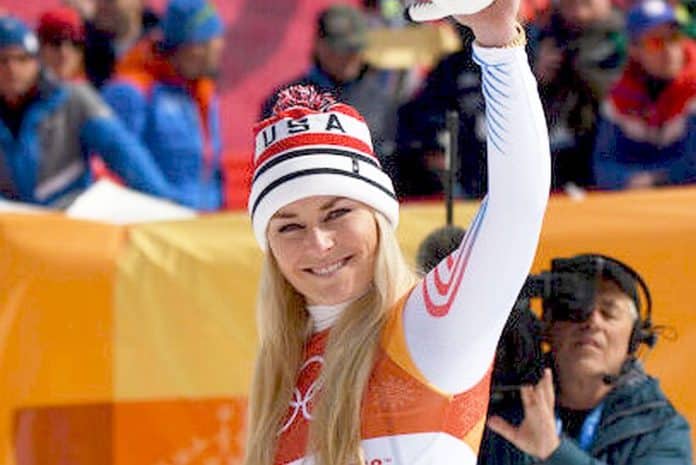
“When a more stringent minimum snow depth requirement was applied, the number of reliable locations declined slightly for both OWG and PWG, signifying the importance of advanced sustainable snowmaking as an adaptation strategy.

“While it is inevitable that climate change will impact the geography and development of winter sports to some degree, a reassuring finding is that even with a diminished pool of potential host locations, with continued adaptation, the OWG-PWG can endure as a genuinely global celebration of sport.”

The real issue isn’t cold or snow, it’s the time on the calendar and the Winter Paralympics have always come after the Olympic Winter Games, which are held in February. So, given the turnover time, that places the Winter Paralympics in March.

There are all kinds of solutions being proposed. Move the Olympic Winter Games into January and have the Winter Paralympics in February. Put the Paralympics first, in January. Hold them concurrently.

There is a better approach.

One of the problems for the Paralympic Winter Games is that it comes so close to the Olympic Winter Games that it is overshadowed. There is also the issue of qualifying events and their schedule in the lead-up to the Games.
The answer to all of these problems is really quite simple: move the Paralympic Winter Games to the year before the Olympic Winter Games.

Consider the numbers for 2026:

Olympic: 2,884 entries from 92 delegations
Paralympic: 611 athletes + 84 guides from 55 delegations

Olympic: 116 events in 16 disciplines
Paralympic: 79 events in six disciplines

Olympic: 5,560 beds in three Villages and 11 hotels
Paralympic: 1,823 beds in three Villages

The Winter Paralympics makes sense as a stand-alone event in the year prior to the Olympic Winter Games:

● It creates significant promotional opportunities for the Paralympic Movement, away and apart from the Olympic Games.

● The size and scale are not so overwhelming as to require the Olympic-sized build-up beforehand.

● Innovations directed to the Paralympic Games can be offered, unencumbered by having to deal with a much larger Olympic Games beforehand.

And it solves the snow and cold issues, while also informing on any changes needed for the Olympic Winter Games in the year following. Moreover, it eliminates the need for test events for those sports which will use the same venues for the Paralympic and Olympic Winter programs, and will save and money for the organizing committee.

Such a change will also force organizing committees to be ready earlier, a desirable situation from the standpoint of the International Olympic Committee, International Paralympic Committee and the various International Federations.

There are real positives to this, along with the negatives of change being difficult for everyone.

Is such a thing possible? Not right away, and certainly not for the French Alps 2030 organizers, who are still getting their act together and don’t need any more pressure.

The Utah 2034 organizers could absolutely pull this off and in style, but they are already contracted to February and March dates for the 2034. As a way to further energize their existing civic, volunteer and professional base, a 2033 Winter Paralympics might be interesting. The IOC is working with the possible Swiss organizers for 2038 and such an arrangement would be very possible there.

So it can be done soon, but not right away.

It should be noted that while this kind of change could significantly improve conditions for the Winter Games, it does not appear warranted – now – for the Paralympic Games.

At Paris 2024, there were 4,433 Paralympic athletes and 549 events in 22 sports and 18 venues. That’s a lot to build up a year in advance of an even bigger Olympic Games and then tear down. So, the summer Paralympic Games needs to stay – for now – after the Olympics are held and take advantage of the existing infrastructure and the systems which worked already.

Rich Perelman
Editor

Receive our exclusive, weekday TSX Recap by e-mail by clicking here.
★ Sign up a friend to receive the TSX Recap by clicking here.
★ Please consider a donation here to keep this site going.

For our updated, 45-sport, 910-event International Sports Calendar for 2026 and beyond, by date and by sport, click here!

WORLD ANTI-DOPING AGENCY: WADA rips Associated Press story that says action could be taken vs. Trump, U.S., for dues failure

The Sports Examiner: Chronicling the key competitive, economic and political forces shaping elite sport and the Olympic Movement.★

To get the daily Sports Examiner Recap by e-mail: sign up here!

≡ WADA REPLIES TO AP ≡

A Friday story by The Associated Press started with this:

“The World Anti-Doping Agency is considering rewriting its rules to try barring President Donald Trump and all U.S. government officials from attending the LA Olympics in 2028 in a move that could also have implications for the World Cup being hosted by the U.S. this summer.

“The proposal, on the agenda for next Tuesday’s meeting of the global drug-fighting watchdog’s executive committee, is the latest maneuver to come out of a yearslong refusal of the U.S. government to pay its annual dues to WADA. The refusal is part of the American government’s unanimous, bipartisan protest of the agency’s handling of a case involving Chinese swimmers and other issues.”

WADA, normally quite deliberate and calm in its communications, replied the same day with an unusually direct commentary on the story. Headlined, “WADA statement on misleading Associated Press article,” it begins with:

“The World Anti-Doping Agency (WADA) notes today’s Associated Press (AP) article alleging that WADA might ban United States government officials from the LA 2028 Summer Olympic Games and the FIFA World Cup over unpaid dues.

“Despite WADA having provided AP with the facts, the article is entirely misleading. In fact, prior to the publication of the article, WADA specifically responded to the AP journalist – Eddie Pells – that, even if proposals that were being discussed amongst stakeholders were introduced, ‘given that the rules would not apply retroactively, the FIFA World Cup, LA and Salt Lake City Games would not be covered.’ Mr. Pells chose to omit this one statement from his article, presumably because it undermined his story.

“In fact, discussions related to the issue of governments unilaterally withholding funding from WADA have been ongoing since early 2020 and have nothing specifically to do with the U.S. A working group involving representatives of governments, the Sport Movement and WADA was set up in 2022, a period when the U.S. was still paying its annual contribution.”

WADA also noted, specific to the AP story’s focus on the WADA Executive Board meeting on Tuesday:

“To be clear, any decision on this matter would be for the WADA Foundation Board, which is comprised of worldwide governments, the Sport Movement and independent members. The next Foundation Board meeting is scheduled for November 2026.”

The AP story quoted WADA communications director James Fitzgerald (IRL) and added in the WADA-noted statement in an updated version of its story.

At the root of all of this is the continuing fight between the U.S. Anti-Doping Agency, the U.S. Office of National Drug Control Policy and the U.S. Congress over WADA’s actions – or lack thereof – over the mass-positives incident involving 23 Chinese swimming stars in January 2021. WADA accepted the China Anti-Doping Agency’s conclusion that the positive for the banned substance Trimetazidine were due to food contamination and did not insist on provisional suspensions as required under the rules of the World Anti-Doping Code, or appeal to the Court of Arbitration for Sport.

In response, the U.S. Office of National Drug Control Policy has not paid the U.S. dues to WADA of $3.625 million for 2024 or $3.842 million for 2025 (and $3.958 million due for 2026). And the feud goes on, with WADA insisting it did nothing wrong and the U.S. side insisting WADA did not do nearly enough.

The dispute has no end in sight, and as WADA has noted, will not impact the 2026 FIFA World Cup or the 2028 Olympic Games in Los Angeles or the 2034 Winter Games in Salt Lake City.

Receive our exclusive, weekday TSX Recap by e-mail by clicking here.
★ Sign up a friend to receive the TSX Recap by clicking here.
★ Please consider a donation here to keep this site going.

For our updated, 45-sport, 910-event International Sports Calendar for 2026 and beyond, by date and by sport, click here!

PANORAMA: Shiffrin wins record-tying 8th Slalom; modern pent federation absorbs obstacle; glass basketball floor replaced at Big XII Tourney

Back atop the podium again: American skiing superstar Mikaela Shiffrin (Photo: Andreaze via Wikipedia)

The Sports Examiner: Chronicling the key competitive, economic and political forces shaping elite sport and the Olympic Movement.★

To get the daily Sports Examiner Recap by e-mail: sign up here!

≡ THE 5-RING CIRCUS ≡

● Olympic Games 2028: Los Angeles ● The Los Angeles City Council passed on Friday, by 12-0, a resolution that “calls for a thorough and transparent review” of the involvement of LA28 Chair Casey Wasserman with the late child-sex trafficker Jeffrey Epstein.

The resolution itself is not binding on anyone and is not expected to impact Wasserman’s position as Board Chair of the LA28 organizing committee. The LA28 Board Executive Committee previously confirmed Wasserman to continue as Chair as its inquiry found no other information than had been already disclosed publicly in a dump of millions of pages of U.S. Justice Department files from the Epstein case.

● Athletics ● Rowan University’s Seth Clevenger won the NCAA Division III Indoor men’s 5,000 m championship on Friday in 13:35.55, but on the awards podium, all of the other place winners immediately walked off as soon as he received his award, and then reformed and had a separate, celebratory photograph taken.

Clevenger formerly ran at Iowa State, and has been accused by former teammates of taking peptides, which are banned under NCAA rules, in 2025. A 2 March story on LetsRun.com explained that “[t] former teammates of Seth Clevenger from his days at Iowa State told LetsRun.com that during the 2025 cross country season, Clevenger admitted to them that he used a peptide, which is a banned substance under NCAA rules; one of those teammates said the peptide in question was BPC-157, which promotes healing in muscles.”

He was suspended from the Iowa State team in October 2025 for violating team rules. A statement posted on Clevenger’s Instagram page on 20 February 2026 from his attorney stated that “Seth Clevenger is not taking and has not taken drugs to enhance his running performance. An inquiry was conducted during his time at Iowa State University, during which Seth underwent testing and was cleared of any wrongdoing.”

● Basketball ● In a situation which could have wide-reaching implications, the German-made ASB GlassFloor – which is approved by FIBA – was abandoned after the quarterfinal round of the Big XII men’s tournament in Kansas City, Missouri.

After three days, 12 games, an injury to Texas Tech star guard Christian Anderson and multiple instances of slipping, conference commissioner Brett Yormark said Thursday:

“After consultation with the coaches of our four Semifinal teams, I have decided that in order to provide our student-athletes with the greatest level of comfort on a huge stage this weekend, we will transition to a hardwood court for the remainder of the Tournament.”

The Big XII used the LED floor for its women’s tournament, the first time it has been used in a U.S. championship event and now in the men’s tournament, for three of the five rounds.

Given its certification by FIBA, the floor is a candidate for use at the 2028 Olympic Games in Los Angeles.

● Football ● The Iranian men’s football team posted a statement on Instagram on Thursday that pushes back against any exclusion from the 2026 FIFA World Cup, including a suggestion from U.S. President Donald Trump that it not compete:

“The World Cup is a historic and international event, and its governing body is FIFA – not any individual country. Iran’s national team, with strength and a series of decisive victories achieved by the brave sons of Iran, was among the first teams to qualify for this major tournament.

“Certainly, no one can exclude Iran’s national team from the World Cup; the only country that could be excluded is one that merely carries the title of ‘host’ yet lacks the ability to provide security for the teams participating in this global event.”

The Iranian sports minister has said that Iran cannot come to the World Cup in view of the U.S. and Israeli actions against the regime. Iran has matches slated for 15 June and 21 June in Inglewood, California and 26 June in Seattle, Washington.

● Modern Pentathlon ● As expected, the International Obstacle Course Federation voted to be absorbed into the Union Internationale de Pentathlon Moderne, on Sunday:

“The historic vote took place at the 12th FISO Congress and World Obstacle General Assembly, in which 96.2% of the members present voted in favour of the dissolution of FISO, with 3.8% abstaining and no delegates voting against the motion.

“It means that UIPM (Union Internationale de Pentathlon Moderne) will become the sole governing body for the Obstacle Sports community worldwide on 10 August 2026, following the last-ever FISO World Championships. And the dissolution of FISO will pave the way for the completion of integration processes at national and regional levels.”

The transition period will run through the end of 2027, with the goal made clear in the announcement:

“As UIPM is the only IOC-recognised International Federation governing Obstacle Sports, the joining of the two sporting movements enables all Pentathlon Multisports and standalone Obstacle Sports to be considered for inclusion in future Olympic Games.”

≡ RESULTS ≡

● Alpine Skiing ● Two-time World Champion Vincent Kriechmayr (AUT) got his second win of the season at the FIS men’s World Cup in Courchevel (FRA) in Friday’s Downhill, in 1:47.26, just 9/100ths up on Italy’s Giovanni Franzoni (1:47.35) and 0.31 ahead of World Cup seasonal winner Marco Odermatt (SUI: 1:47.57). American Olympic medal winner Ryan Cochran-Siegle was 12th in 1:48.72.

Heavy snow canceled the Super-G events on Saturday and Sunday, so Odermatt clinched the Super-G seasonal title, his fourth.

At the Women’s World Cup in Are (SWE), Austria’s Julia Scheib got her fifth win of the season in the Giant Slalom, winning in 2:22.41, moving up from second after the first run. American Paula Moltzan, third after the first run, moved up to silver in 2:22.77 for her fifth medal of the season, ahead of Alice Robinson (NZL: 2:23.16).

Seasonal leader Mikaela Shiffrin of the U.S. was fifth in 2:24.63, moving up from 12th after the first run, but lost some points to German Emma Aicher, fourth in 2:24.15.

Sunday’s Slalom was all Shiffrin, as she roared to an 0.51-second lead on Aicher after the first run and was second on the second run to win in 1:43.35, to 1:44.29 for Aicher. Moltzan was fifth in 1:45.18.

Shiffrin won her eighth Slalom of the season, a mark only she (in 2018-19) and Croatian star Janica Kostellic have achieved. There’s one more race this season; Shiffrin also won her ninth seasonal Slalom title and her 109th World Cup win.

The race for the overall World Cup title is very much alive between Shiffrin (1,286) and Aicher (1,140). There are four races left next week in Norway: Kvitfjell for a Downhill and Super-G and a Giant Slalom and Slalom in Hafjell. Look for Aicher to be in all four; Shiffrin will probably race the Super-G as well as the tech events to close the season.

● Athletics ● Another great show at the NCAA Indoor Championships in Fayetteville, Arkansas, with world-leading performances in five events:

Men/200 m: 19.95, Garrett Kaalund (USA-USC)
Men/60 m hurdles: 7.36, Ja’Kobe Tharp (USA-Auburn) in heats
Men/60 m hurdles: 7.32, Tharp in final
Men/Heptathlon: 6,503, Peyton Bair (USA-Oregon)

Women/200 m: 22.28, Adaejah Hodge (IVB-Georgia) in heats
Women/200 m: 22.22, Hodge in final
Women/400 m: 50.28, Ella Onojuwevwo (NGR-LSU) in heats

Auburn’s Kayinsola Ajayi (NGR), last year’s runner-up, won the men’s 60 m in 6.45 – he’s no. 2 in the world for 2026 – just ahead of Arkansas’ Jelani Watkins (6.48), then Kaalund became only the second man in history to go sub-20 indoors, scaring the world mark of 19.92 by Frankie Fredericks (RSA) from 1996 and scoring the collegiate record.

Nigeria’s Samuel Ogazi (Alabama) won the 400 m in 44.57, moving him to no. 4 all-time and close to the new “world record” of 44.52 by American Khaleb McRae earlier this year. The fastest-on-record 44.49 by Christopher Morales Williams (CAN) in 2024 could not be ratified for technical reasons. Florida’s Justin Braun was second in 44.67 and is now ninth all-time.

Habtom Samuel (ERI-New Mexico) won the men’s 5,000 m in 13:36.58 and looked like the winner of the men’s 3,000 m over Northern Arizona’s Colin Sahlman (7:41.66), but was disqualified for impeding Sahlman on the final curve.

France’s Jonathan Seremes (Texas Tech) zoomed to no. 2 in the world in the triple jump, winning at 17.25 m (56-7 1/4), a lifetime best.

In the women’s 200 m, Hodge moved to no. 6 all-time and won easily over Gabrielle Mathews (JAM-Florida: 22.55). After her world-leading heat, Onojuwevwo was only third in the 400 m final, as Georgia’s Dejanea Oakley (JAM) was the winner of race one in 50.47 and Onojuwevwo was second in race two.

BYU frosh Jane Hedengren impressed with a double in the 3,000 m (8:36.61 meet record) and 5,000 m (15:00.12), beating Alabama’s defending champ Doris Lemngole (KEN). Nigerian Temitope Adeshina (NGR) bounced up to equal-4th on the world list, winning the high jump at 1.97 m (6-5 1/2).

Arkansas, in front of home fans, won the men’s team title with 73 1/2 points with Oregon a distant second at 40. Georgia won the women’s title, 53-44, over Oregon.

Kenyan star Hellen Obiri won the NYC Half Marathon for the second time – previously in 2023 – in a dominating 1:06:33, with defending champion Sharon Lokedi (KEN) a distant second in 1:07:10. Emily Sisson was the top American, in sixth at 1:09:06.

South Africa’s Adriaan Wildschutt was a decisive men’s winner in 59:30, ahead of Zouhair Talbi of the U.S. in 59:41.

● Badminton ● At the BWF World Tour Swiss Open in Basel, Japan’s Yushi Tanaka took the men’s Singles title, 21-18, 21-12 over Alwi Farhan (INA), and top-seeded Putri Kusana Wardani (INA) won the women’s gold over Supanida Katethong (THA), 21-11, 21-15.

Chinese Taipei won the men’s Doubles and China swept the women’s and Mixed Doubles.

● Baseball ● Four crazy quarterfinals set the stage for the World Baseball Classic semifinals in Miami, with the U.S. squeezing through and defending champion Japan stunningly eliminated.

The first quarter was a route, as the Dominican Republic was up 7-0 after three on South Korea and then scored three more in the seventh for a run-rule-shortened 10-0 win in Miami. In Houston, the U.S. was up 3-0 after three and then 5-0 after the top of the sixth, but Canada closed to 5-3 on a two-run Bo Naylor homer. But the Americans got three scoreless innings from relievers David Bednar, Garrett Whitlock and Mason Miller and closed out the win.

On Saturday, Italy’s underdog dream continued, taking a 4-1 lead at the end of the first and scoring in just one other inning – four in the fourth – and held on for an 8-6 over against Puerto Rico in Houston. It was 8-2 going into the eighth, but four Puerto Rican runs made it close, but they could not do more.

The most dramatic was the last quarter, in Miami, with defending champ Japan taking a 4-2 lead on Venezuela in the third on a three-run Shota Morishita homer. But from there, Japan was stifled by four Venezuelan relievers. Meanwhile, Maikel Garcia hit a two-run homer in the fifth and Wilyer Abreu hit a three-run shot in the sixth. One more Venezuelan run in the eighth made it an 8-5 final. Japan, three-time champions, were stunningly out.

As semifinalists and the top two teams from the Americas (other than the host U.S.), the Dominican Republic and Venezuela qualified to play in the 2028 Olympic Games in Los Angeles.

The tournament has moved to another level in 2026, with 1,247,357 attending through 44 games, an average of 28,349 per game. That’s more than the entire 2023 tournament already (1,165,857), with three games left. The 2023 average was 24,805, which was the highest ever.

Sunday’s first semifinal was a taut match-up between the Dominicans and the U.S., with Junior Caminero swatting a two-out homer in the bottom of the second for a 1-0 D.R. lead. But that did not last, as Gunnar Henderson and Roman Anthony slugged solo homers for a 2-1 U.S. lead in the fourth.

It remained that way, thanks to some slick U.S. fielding and Dominican center fielder Julio Rodriguez stealing a solo home run at the wall from the U.S.’s Aaron Judge in the fifth. The Dominicans mounted a rally in the seventh, with two on and one out, but reliever David Bednar struck out Fernando Tatis Jr. and Ketel Marte to end the inning.

The U.S. could not add to the lead, but relievers Garrett Whitlock and Mason Miller got the Dominicans out in the eighth and ninth to preserve the 2-1 win and send the Americans to the championship game once again. The Dominicans came in averaging 10 runs a game, but had only the Caminero homer on Sunday.

The second semi will be Monday with Venezuela and Italy and the final will be Tuesday, all in Miami.

● Basketball ● The U.S. sent a powerful squad to the FIBA Women’s World Cup Qualifier in San Juan (PUR), crushing Senegal by 110-46 on Wednesday, with guard Rhyne Howard leading with 21 points off the bench and 17 more from sub guard Caitlin Clark.

The Americans then raced past host Puerto Rico by 91-48 on Thursday (12th), behind 16 points from guard Paige Bueckers, 14 from center Imani McGee-Stafford and 12 from guard Kelsey Plum. The Americans had a 46-19 halftime lead.

On Saturday, the U.S. led Italy by 50-30 at halftime, and cruised home to a 93-59 win, with guard Kahleah Cooper leading the scoring with 15 and subs Bueckers and Clark scoring 12 each.

The U.S. is already qualified for the 2027 FIBA Women’s World Cup, but plays in the qualifiers to help develop team chemistry and tactics.

● Beach Volleyball ● At the each Pro Tour Elite 16 in Joao Pessoa (BRA), American two-time Worlds medal winners Kristen Nuss Cruz and Taryn Brasher (USA), won the women’s title over Olympic champions Ana Patricia Ramos and Duda Lisboa (BRA), 21-16, 21-19. It’s the 12th career FIVB seasonal tournament title for the American pair.

In the third-place match, Americans Megan Kraft and Kelly Cheng got past Claudia Scampoli and Giada Bianchi (ITA), 22-20, 21-12.

The men’s final had Olympic and World Champions David Ahman and Jonatan Helvig (SWE) winning in straight sets over surprise finalists, Remi Bassereau and Calvyn Aye (FRA), 21-16, 21-18.

Americans Taylor Crabb and Andrew Benesh won the third-place match over top-seeded Evandro Oliveira Jr. and Arthur Lanci (BRA), in straight sets.

● Biathlon ● Norwegian star Sturla Holm Lagreid agonizingly confessed to cheating on his girlfriend after winning an Olympic bronze back on 10 February. Since then, he hasn’t been off the podium!

He won another Olympic bronze and two silvers, then a silver and gold at the Kontiolahti World Cup in Finland and at the IBU World Cup in Otepaa (EST), he won his second and third races in a row!

He took the men’s Sprint in 23:28.5 (0) over French star Emilien Jacquelin (23:39.2/0), then won the 12.5 km Pursuit in 34:41.0 (1), again over Jacquelin (37:14.4/5) with American Campbell Wright fourth in 37:30.0 (2).

Lagreid won again in the Single Mixed Relay, with Karoline Knotton, in 40:39.3 (8) over Sweden (42:17.45/13).

In the women’s events, French Olympic gold winner Julia Simon won her second straight World Cup race in the 7.5 km Sprint in 21:29.5 (0) over Olympic Pursuit winner Lisa Vittozzi (ITA: 21:32.4/0) and then Vittozzi won the 10 km Pursuit in 33:33.7 (2), with Finn Suvi Minkkinin (33:59.9/1) in second. Two-time Olympic medalist Lou Jeanmonnot (FRA) was third in both races.

In the 4×6 km Mixed Relay, Sweden was a clear winner in 1:16:32.0 (14), followed by Switzerland (1:17:00.6/6), and the U.S. (1:17:06.6/14), which won its first World Cup medal ever in this event, with Maxime Germain, Wright, Deedra Irwin and Margie Freed.

● Cross Country Skiing ● With seasonal winner Johannes Hoesflot Klaebo (NOR) recovering from his fall after being fallen on by American Ben Ogden during the Sprint semifinals, Norway continued to shine – so to speak, in very foggy conditions – at the FIS World Cup in Oslo (NOR). The famed 50 km Freestyle Mass Start on Saturday was a home sweep, with 24-year-old, three-time Olympic medalist Einar Hedegart winning in 1:51:38.2, barely ahead of Harald Amundsen (1:51.38.6) and Olympic 50 km silver winner Martin Nyenget (1:51:39.3). Zak Ketterson was the top American, in 18th.

Sweden swept the women’s podium, with double Olympic winner Frida Karlsson at 2:07:48.2, followed by Linn Svahn (2:09:36.2) and Jonna Sundling (2:09:36.6). American Jessie Diggins, the seasonal leader, was sixth at 2:09:46.8 and clinched the seasonal Distance title and is close to the overall title, in her final season.

● Cycling ● Two-time Tour de France winner Jonas Vingegaard (DEN) made it clear that he’s a contender for all honors this season after dominating the 84th running of Paris-Nice. He won the race in 25:25:11, some 4:23 ahead of Colombian Daniel Martinez.

Vingegaard won stages 4 and 5 and had a 3:22 lead going into the final stage, and dueled with France’s Lenny Martinez on the sprint into Nice, finishing second, but adding to his lead. He’s aiming for the Giro d’Italia in May.

At the 61st Tirreno-Adriatico in Italy, Mexico’s 22-year-old star Isaac Del Toro cemented his lead with a win in stage six and continued his brilliant season, which also included a win at the UAE Tour.

Del Toro had a 23-second lead on Giulio Pellizarri (ITA) after the fifth stage, then scored a three-second win in stage six and expanded his lead over Pellizarri to 42 seconds and 43 seconds on American Matteo Jorgenson. The final, seventh stage was won by Italy’s Jonathan Milan and Del Toro finished in 28:02:14, with Jorgenson moving up to second, 40 seconds back. Pellizarri was third (+0:42).

At the Women’s World Tour’s 27th Trofeo Alfredo Binda, Dutch rider Karlijn Swinkels got the biggest win of her career, conquering the 146.1 km course in 3:53:17 and winning a final sprint into Cittiglio over countrywoman Anna van der Breggen (same time). Norway’s Mie Ottestad was just behind (+0:03).

● Freestyle Skiing ● Canada’s Reece Howden didn’t score an Olympic medal in 2026, but he did the next best thing at the FIS World Cup in Montafon (AUT), beating the man who won – Italian Simone Deromedis – in the men’s Ski Cross final. Howden got his sixth win of the season, with Deromedis second and Swiss Alex Fiva, the Olympic bronze medalist, in third.

Olympic gold and bronze medalist Sandra Naeslund (SWE) won her eighth World Cup race of the season – out of 12 held – by beating Olympic gold winner Daniela Maier (GER) in the final, with Italian Jole Galli in third.

● Gymnastics ● Stars were out at the Artistic World Cup in Antalya (TUR), with Paris 2024 gold medalist Rhys McClenaghan (IRL) winning on Pommel Horse at 13.900, Paris 2024 bronze winner Chia-Hung Tang taking the Horizontal Bar at 15.200 and 2022 World Champion Adem Asil (TUR) winning on Rings at 14.533.

Paris All-Around winner Oka Shinnosuke was the clear winning on Parallel Bars at 14.700, and the younger brother of Paris double gold winner Carlos YuloEldrew Yulo (PHI) – won on Floor at 14.100. He’s 18. Norway’s Sebastian Sponevik won on Vault, scoring 14.250.

The women’s events were split between Russian Lyudmilla Roshchina, who won Vault (13.4873) and Floor (13.333) and teammate Milana Laiumova, winner on Bars (14.233) and Beam (12.766).

At the Trampoline World Cup in Alkmaar (NED), China’s Paris 2024 Olympic runner-up Zisai Wang won a tight battle over Olympic champ Ivan Litvonovich (BLR ”neutral”) by 65.860 to 65.200, with China’s Olympic bronzer Langyu Van third at 64.340. American star Ruben Padilla was seventh (62.250).

Russian “neutral” Iana Lebedeva, the 2021 World bronzer, was the class of the women’s event, scoring 58.510 over teammate Anzhela Bladtseva (57.000) and Xinyi Fan (CHN: 56.880).

The U.S. pair of Padilla and Elijah Vogel finished second in the men’s Synchro (51.930); Padilla and Maia Amano finished third in the Mixed Synchro (50.790) and Amano and Cheyenne Webster were seventh (43.480) in the women’s Synchro.

● Nordic Combined ● Familiar faces at the FIS World Cup finale in Oslo (NOR), where Austria’s Johannes Lamparter won the 134 m jumping and 10 km race in 22:47.3, winning his sixth race of the year; he’s the seasonal champion, his second.

He beat the Oftebro brothers, with triple Olympic champ Jens second (23:19.2) and older brother Einar third (23:41.2); they finished 2-3 on the season.

The women’s race – 134 m jumping and 5 km – went to seasonal winner Ida Marie Hagen (NOR) in 13:55.2, ahead of American veteran Tara Geraghty-Moats, enjoying a comeback of sorts at age 32 (14:36.8). Finn Minja Korhonen was just barely third (14:36.8) and American Alexa Brabec fourth (14:46.7). Brabec finished second in the seasonal standings in a break-out season for her.

● Rugby Sevens ● In the sixth stage of the HSBC Sevens Series in Harrison, New Jersey, Australia and Argentina won the men’s pools and Australia and New Zealand both went 3-0 in the women’s pools.

But neither of the men’s pool winners got to the title match, which had South Africa winning a defensive battle over Fiji, 10-7. Argentina took the bronze, 10-7, over Australia, 26-10.

The women’s championship was another Australia v. New Zealand match-up, this time won by the Kiwis, 22-21. The U.S. got the bronze, 26-17, over Fiji.

South Africa leads the men’s standings with 106 points to 104 for Fiji and 86 for Australia. New Zealand (118) leads Australia (110) and the U.S, (86) in the women. The eight Division 1 teams, and the top 4 SVNS Division 2 teams will now advance to the three-stage World Championship tournament, beginning in April in Hong Kong.

● Short Track ● There were nine Short Track events at the 2026 Olympic Winter Games, and of those winners, only four repeated – two in relays – at the ISU World Championships in Montreal (CAN).

The Canadians, expected to do very well at the Games, got some redemption from its lone Olympic winner, Steven Dubois, who despite being ill, defended his men’s 500 m title from 2025 in 40.153, over Olympic winner Jens Van’t Wout (NED: 40.329).

Van’t Wout won the Olympic 1,000 m and 1,500 m, but it was 1,000 m bronzer Jong-un Kim (KOR) who won both. Kim won the 1,000 m in 1:25.805 with an ill Van’T Wout second (1:26.315) and Kim took the 1,500 m in 2:14.974 – flying into the lead over the final half-lap – over Thomas Nadalini (ITA: 2:15.218).

Canada won the 5,000 m relay, over China, 6:56.578 to 6:58.309.

Dutch star Xandra Velzeboer won the Olympic 500 and 1,000 m titles and Korea’s Gil-li Kim won the 1,500. Velzeboer was on it in Montreal, taking the 500 m in 41.761 over teammate Selma Poutsma (42.026) and Italy’s Chiara Betti (42.228). But Kim got to the line first in the 1,000 m, edging Velzeboer, 1:28.843 to 1:28.852, with Italian Elisa Confortola third (1:28.920).

Kim then defended her Olympic title in the 1,500 m in 2:31.003, with Velzeboer second again, in 2:31.298. American Corinne Stoddard, a hard-luck story at the Games, but the Olympic bronzer, won bronze again in 2:31.386.

Netherlands won the women’s 3,000 m relay in 4:10.419, beating Italy (4:10.570). In the Mixed 2,000 m relay, Italy won as it did during the Games, in 2:39.275 to 2:39.405 for Canada.

● Ski Jumping ● There were fresh faces on the podium for the FIS World Cup in Oslo (NOR), jumping off the 134 m hill, with Swiss Gregor Deschwarden (35) getting his first career World Cup gold, scoring 263.1, ahead of Austria’s Maximilian Ortner (261.7) and Japan’s Naoki Nakamura (251.7). The U.S.’s Kevin Bickner was 12th (237.2).

On Sunday’s Japan’s Tomofumi Naito got his first World Cup win, in a wind-shortened, single-round event, scoring 128.7 vs. 128.6 for Slovenian star Anze Lanisek and 127.6 for Finn Antti Aalto. American Tate Frantz was 10th (117.5).

The women’s Saturday competition was very much to form, with Slovenia’s team gold medalist Nika Prevc winning for the 16th time in 28 events this season, scoring 228.5. Japan’s Olympic bronzer Nozomi Maruyama (226.1) was a close second and double Olympic winner Anna Stroem was third (224.1).

Two-time Worlds silver winner Yuki Ito (JPN) won on Sunday for the first time in two years, scoring 225.6 to edge Maruyama (225.1) and Stroem (222.2).

● Snowboard ● At the FIS World Cup in Parallel Giant Slalom in Val St. Come (CAN), Swiss Dario Caveziel, the 2023 Worlds runner-up, got his first win and second medal of the season on Saturday, winning the final over Italian Edwin Coratti. Canada’s Arnaud Gaudet won the “Small Final” for third over Walker Overstake of the U.S.

Olympic champion Benjamin Karl won the Sunday race over five-time winner this season, Mauricio Bormolini (ITA), with teammate Mirko Felicetti taking the bronze.

German Ramona Hofmeister, the 2018 Olympic bronzer, won her third women’s final of the season, over Japan’s 2023 World Champion, Tsubaki Miki, who has wrapped up the seasonal title. Olympic bronze winner Lucia Dalmasso took the bronze.

On Sunday, Dalmasso took her third win of the season, finishing ahead of countrywoman Jasmin Coratti in the final. Hofmeister won the bronze.

At the World Cup in SnowCross in Montafon (AUT), Austria’s Jakob Dusek, the 2023 World Champion and Milan Cortina bronzer, took the men’s final over Germany’s Leon Ulbricht. Swiss Sina Siegenthaler got her first win (and first medal) of the season, winning against Australia’s Olympic champ, Josie Baff, and Britain’s Charlotte Bankes, the 2021 World Champion.

● Table Tennis ● At the WTT Champions in Chongqing (CHN), the Olympic bronze winner Felix Lebrun (FRA) won over Ruibo Wen (CHN), 4-1 (11-5, 11-8, 9-11, 11-7, 13-11), for his second career WTT Champions win, previously in 2024.

Miwa Harimoto (JPN) won her biggest title ever, and defeated Man Kuai (CHN) by 4-3 (11-6, 9-11, 7-11, 11-9, 11-6, 9-11, 11-5) in the final. Out of 18 WTT women’s tournaments, she is only the fourth non-Chinese to win and three of those have been from Japan.

Receive our exclusive, weekday TSX Recap by e-mail by clicking here.
★ Sign up a friend to receive the TSX Recap by clicking here.
★ Please consider a donation here to keep this site going.

For our updated, 45-sport, 910-event International Sports Calendar for 2026 and beyond, by date and by sport, click here!

WINTER PARALYMPIC GAMES: Milan Cortina closes with celebration of inclusion, reflection and passing of the flag to French Alps 2030

Milan Cortina Paralympic mascot Milo, with DJ Gabriele Capponi, during the closing ceremony of the 2026 Games, in Cortina (Photo OIS/Giovanni Zenoni).

The Sports Examiner: Chronicling the key competitive, economic and political forces shaping elite sport and the Olympic Movement.★

To get the daily Sports Examiner Recap by e-mail: sign up here!

≡ THE CLOSING ≡

Titled “Italian Souvenir,” the show at the Cortina Olympic Ice Stadium brought together the athletes and a lavish cultural program to say good-bye to five weeks of Olympic and Paralympic events in northern Italy.

The parade of flagbeaers took a lot less time than the parade of athletes during the opening; Austria had sibling skiers Veronika Aigner and Johannes Aigner, who won nine medals between them (Veronika 4-1-0, Johannes 3-0-1), which would have placed them 12th overall by themselves!

The volunteers – 18,000 in all for both Games – were thanked for their role in making the events work, and dance performances which underscored the importance of inclusion and that everyone can achieve.

A “living postcard” from Cortina was formed on the floor, leading to the protocol ceremonies and the handover to the French Alps 2030 organizers. The Paralympic flag was presented by Deputy Milan Mayor Anna Scavuzzo and Cortina Mayor Gianluca Lorenzi to International Paralympic Committee Andrew Parsons (BRA), who passed to Presidents of the French regions that will host in 2030: Renaud Muselier from Provence-Alpes Côte d’Azur and Fabrice Pannekoucke from Auvergne-Rhône-Alpes.

Organizing committee President Giovanni Malago expressed thanks to the governmental authorities, to the spectators and the athletes and more, and added:

“Now, to every member of the Milano Cortina 2026 team, I say: Stra-or-di-na-ri! – You have been truly extraordinary.

“The challenge was immense, yet you met it with great determination – and tonight we can say that we have fulfilled our mission and honoured Italy’s name as best we could.”

IPC chief Parsons spoke in both English and Italian – well received by the crowd – insisted on the importance of the Games:

“These Games offered something powerful and refreshing: proof that sport can unite us through respect, fairness and human achievement. Paralympians, you rose above pressure, expectation and global tension to keep the focus where it belongs: on you and your sport.

“You expanded the imagination of the world. You have shown that excellence is universal and that determination knows no boundaries. Every race and every match told a story; a story of resilience and a story of possibility. A story that will inspire long after these Games close.”

And he reflected on the true mission of the Paralympics:

“[P]erhaps the greatest legacy of these Games is the shift in perception created by Paralympians.

“When the world watched a skier launch down a mountain, or a Para ice hockey team battle on the ice, something changed. Old stereotypes faded. New possibilities appeared.

“Children with disabilities saw role models who look like them in fierce competition at the highest level of sport. Families, teachers, and communities now see ability where once they saw only disability.

“This is the true legacy of the Paralympic Movement.

“As the Paralympic flame is extinguished, the spirit it represents does not fade. It travels home with every athlete, every spectator, and every viewer, every one of them watching tonight inspired by these remarkable days.”

A completely fitting ending used snow globes as a way to encapsulate the Games in Milan, Cortina and more . Then, the cauldrons were extinguished and the dance party started with the Italian band Planet Funk.

Italy has a lot to be proud of in both Games, of course. Despite continuous criticism in home media, the events took place mostly without incident in generally good conditions and in generally good weather, although the weather warmed unseasonably at the end of the Paralympics. The final costs, of course, have yet to be tallied.

There was a record 611 athletes at this Games (plus 84 guides), from a record 55 National Paralympic Committees. On the field, snow and ice, Italy was magical during both the Olympic and Paralympic Games. During the Olympic Winter Games, Italy won 30 medals (10-6-14), way ahead of its prior high of 20 from Lillehammer 1994.

For the Paralympics, Italy again won the most medals ever in a Winter Games, totaling 16 (7-7-2), surpassing 13 was back in Lillehammer (NOR) in 1994. The seven golds was more than double the prior high of three, last achieved in Salt Lake City in 2002.

This was a success for Italy, for the much-doubted organizing committee headed by Andrea Varnier and for the athletes who competed brilliantly in both events. It was the athletes, especially, who brought the emotion and brilliance to the Games, but very well staged and supported by the organizing committee and the host regions.

Planners, creators and stage hands are important, even if they are hardly noticed when the show goes on. And this show was excellent.

Receive our exclusive, weekday TSX Recap by e-mail by clicking here.
★ Sign up a friend to receive the TSX Recap by clicking here.
★ Please consider a donation here to keep this site going.

For our updated, 45-sport, 910-event International Sports Calendar for 2026 and beyond, by date and by sport, click here!

WINTER PARALYMPIC GAMES: U.S. wins fifth straight sled hockey gold, plus cross-country wins from Adicoff and Peterson!

The U.S. sled hockey team celebrates a fifth straight gold-medal win in Milan (Photo: OIS/Joel Marklund)

The Sports Examiner: Chronicling the key competitive, economic and political forces shaping elite sport and the Olympic Movement.★

To get the daily Sports Examiner Recap by e-mail: sign up here!

≡ GAMES UPDATE ≡

The U.S. team finished off the final day of the 2026 Winter Paralympic Games with a brilliant sled hockey win before a record crowd of 11,500 at the Milan Santaguilia Arena, giving the Americans a fifth straight gold in the event, and their third Paralympic victory of the day.

The hockey final had been much anticipated and the attendance set a new high for a Paralympic sled hockey match, improving on the 8,992 that saw the Italy-U.S. match on 7 March.

A tight game turned on a U.S. penalty in the third period. A Jake Wallace power-play goal was the only scoring in the first, but Canada tied the game on a power-play score by Liam Hickey at 1:45 of the second. The Americans went up 3-1 by the end of the period on goals by Kayden Beasley (6:29) and Wallace again (9:52).

Wallace got a hat trick with a third score at 1:42 of the third and at 4-1, it looked like a possible American runaway. But strong checking created chances for the Canadians and Hickey scored at 2:06 of the period to close to 4-2.

Then everything changed. With the Canadians applying more pressure, David Eustace was called for a delay-of-game penalty for a puck that popped into the stands. Now, Canada had a chance to close in, but instead, the U.S. was on offense and scoring ace Declan Farmer smashed the puck into the net at 11:20 – it took replay to give the goal to him instead of Wallace on a tip – and the short-handed score made it 5-2.

Canada pulled keeper Corbin Watson and Brody Roybal was almost instantly alone on a fast break and scored an empty-netter for the 6-2 final, while still short-handed. The U.S. finished with a 26:15 shots edge and a record fifth Paralympic title in a row. Defender Josh Pauls won his fifth Paralympic gold for the U.S.

It also made more history as the first “triple” ever with the Americans winning the men’s and women’s hockey golds and the Paralympic gold, all in the same year.

China won the bronze over the Czech Republic, 3-2.

At the Tesoro Cross Country Stadium, the U.S. scored three more medals, including Sydney Peterson winning the women’s Standing 20 km Interval Start. She had the lead by the 2.6 km split and led the rest of the way, finishing in 47:25.8, with Norway’s Vilde Nilsen second in 50:41.4. Fellow American Danielle Aravich was 11th in 53:37.2.

It was Peterson’s third gold of the Games – also in the 10 km Standing and the 4×2.5 km relay – plus a silver in the standing Sprint.

U.S. star Jake Adicoff, already the Sprint, 10 km and relay gold medalist, won his fourth 2026 Paralympic gold in the men’s Visually-Impaired 20 km Interval Start. Working with guide Peter Wolter, Adicoff won in 42:17.4, far clear of Ukraine’s Oleksandr Kazik (with Serhii Kucheriavyi: 48:11.6).

Adicoff, now 30, has a career total of eight Paralympic medal, five of which are gold.

In the women’s Sitting 20 km Interval Start, Korea’s Yun-ji Kim was a clear winner in 58:23.3, ahead of Anja Wicker (GER: 59:17.4), then Americans Oksana Masters (59:34.5) and Kendall Gretsch (1:01:24.9). For Masters, this is Winter Paralympic medal no. 19, the most ever by an American and her 24th Paralympic medal in total.

Overall, the four medals on Sunday brought to the U.S. total to 24 total, including 13 golds, five silvers and six bronzes. This equals the American team high for Winter Paralympic golds going back to 1998; the last time the U.S. won more was at Lillehammer in 1994 with 24!

The 24 total medals was also the most in a European Winter Paralympics since Lillehammer; the U.S. had 12 medals in Turin (2006) and 18 in Sochi (2014). It was also the second-most medals since 2002 in Salt Lake City (43); the U.S. had 36 in PyeongChang in 2018, but that was down to 20 in Beijing in 2022.

As expected, China led the medal table with 44 total (15-13-16).

Six athletes won five medals at the same, including Masters (4-0-1); Austrian skier Veronika Aigner, who won the first gold of the Games, also ended with five (4-1-0). Aigner, Masters and Adicoff were the only four-time gold winners.

Receive our exclusive, weekday TSX Recap by e-mail by clicking here.
★ Sign up a friend to receive the TSX Recap by clicking here.
★ Please consider a donation here to keep this site going.

For our updated, 45-sport, 910-event International Sports Calendar for 2026 and beyond, by date and by sport, click here!

WINTER PARALYMPIC GAMES: U.S. cross-country mixed relay wins 10th gold for Team USA in Tesoro

A fourth 2026 Winter Paralympic Games gold for U.S. star Oksana Masters! (Photo: OIS/Matteo Colombo).

The Sports Examiner: Chronicling the key competitive, economic and political forces shaping elite sport and the Olympic Movement.★

To get the daily Sports Examiner Recap by e-mail: sign up here!

≡ GAMES UPDATE ≡

Just six finals on Saturday on the penultimate day of the Winter Paralympic Games, but a 20th medal and a 10th gold for the U.S., once again at the Tesoro Cross-Country Skiing Stadium:

Para Cross Country Skiing:
Mixed 4×2.5 km relay ~ Gold: United States (Josh Sweeney, Oksana Masters, Sydney Peterson, Jake Adicoff)

Sweeney started and handed off in second place to Masters, who was in third at her hand-off to Peterson, who then fell back to fourth place at the end of her leg. Adicoff – with guide Reid Coble – already the winner of the visually-impaired Sprint and 10 km, was 48.4 seconds down – as expected – but took off and was in second place by the 8.7 km mark and roared to the lead with the fastest anchor in the field and crossed in 23:24.2 with his third gold of the Games!

Adicoff overtook Ukraine’s Liudmyla Liashenko, who won silver at 23:36.7, with China third in 23:56.5, and the American star was immediately tackled by Masters at the finish! Said Adicoff afterwards:

“You can’t talk about the last leg without talking about the first three. Those were some crazy performances from our team. It made skiing our part of the race a lot easier. It was hard, but it was fun.

“We knew that we were going to be in a bit of a time deficit, but that’s how this relay is set up. That’s how our team is set up. So it was part of the plan. It’s still incredibly stressful but stress is reduced by watching some teammates really rip it out there.”

Asked about wrapping up Adicoff at the finish, Masters explained:

“I’m a very passionate, aggressive person, and I was just so excited. I was so happy for Jake, because I know he’s chasing that clean sweep in cross-country skiing. To be able to do my part for him, it just felt so good that he is on his way to achieving his dreams.”

As for being on the receiving end, Adicoff said:

“It was initially a hug, and then she kind of put all her weight into it, and then all of a sudden I was on the ground. She goes crazy, she’s got a lot of passion. She takes that to the racecourse and to the celebrations afterwards.”

There are 10 events on Sunday, plus the closing ceremony in Cortina d’Ampezzo. China leads the medal table with 38 total (14-11-13) and the U.S. is second with 20 (10-5-5), equaling its total from the Beijing 2022 Games, with a day to go.

The U.S. Olympic & Paralympic Committee announced that biathlete and cross-country skier Kendall Gretsch and alpine skier Andrew Kurka were selected as flagbearers for the closing ceremony on Sunday. Per the USOPC:

“Gretsch and Kurka were chosen by a vote of fellow Team USA athletes led by the Team USA Athletes’ Commission, which serves as the representative group and voice of Team USA athletes.”

Receive our exclusive, weekday TSX Recap by e-mail by clicking here.
★ Sign up a friend to receive the TSX Recap by clicking here.
★ Please consider a donation here to keep this site going.

For our updated, 45-sport, 910-event International Sports Calendar for 2026 and beyond, by date and by sport, click here!

WINTER PARALYMPIC GAMES: More gold for Team USA as Gretsch, Elliott and Delson all score wins in Biathlon and Snowboard

Americans Noah Elliott (l) and Mike Schultz celebrate a 1-3 Snowboard/Bank Slalom finish at the 2026 Winter Paralympics (Photo: OIS/Kirsty Wigglesworth).

The Sports Examiner: Chronicling the key competitive, economic and political forces shaping elite sport and the Olympic Movement.★

To get the daily Sports Examiner Recap by e-mail: sign up here!

≡ GAMES UPDATE ≡

There were only three finals in the entire Winter Paralympic Games on Thursday, but 13 on Friday and Team USA got back to the business of winning more medals: five in all.

Para Biathlon:
Women/Sprint sitting ~ Gold: Kendall Gretsch

This was the first-ever Sprint Pursuit and Gretsch was a dominant winner at 11:33.1 (0 penalties), ahead of Korea’s Yun-ji Kim (11:41.6/2) and German Anja Wicker (12:39.1/0). Fellow Americans Oksana Masters (13:51.1/3) and Erin Martin (17:37.5/2) finished sixth and 11th.

It’s Gretsch’s fourth medal of this Games and first gold and she was surprised:

“It’s just so exciting. I was a little bit shocked. I didn’t really know until I saw the finish line, and saw that I was ahead that I had actually won the race. I thought that I was still in second. Definitely shock and I’m just really excited and proud of this result.

“Going into the second shooting I was still behind. I saw her [Kim] leaving the shooting, and so if she had been clean I was like, ‘Oh, she’s way far ahead of me’. But I think that’s when she had missed, on the second shooting, and that’s where I passed her.”

Para Snowboard:
Men/Banked Slalom (SBLL1) ~ Gold: Noah Elliott
Men/Banked Slalom (SBLL1) ~ Bronze: Mike Schultz

Elliott – with possibly the best moustache in the Games – won this race at the PyeongChang 2018 Paralympics and was the leader after the first run in 58.96, and that held up throughout the rest of the competition! Elliott celebrated by getting a better time of 58.94 on the second run for his second gold in the event.

Japan’s Daichi Oguri stood second after the first round at 1:00.09 and Schultz was third at 1:00.59. Oguri improved to 59.02 to secure silver and Schultz had to improve, to 1:00.05 to get the bronze over China’s Zhongwei Wu (1:00.35).

Elliott was emotional afterwards:

“I’m so, so proud. Oh, my god, my emotions. It was so hard for me not to cry coming across that finish line. And I’m sure it’s going to happen during the medal ceremony.

“I’ve worked so hard, and this is my ‘Redemption Games’. And to be able to stand atop the podium today, hear our national anthem, I couldn’t be more proud. This is what it’s all about. This is why we do what we do to try to get that top position. It just all hit me.

“I had such a bad injury in 2022. I had my femur bone come through my amputated leg, and so I actually competed like that [at Beijing 2022].

“I didn’t think I was going to even be able to go and do it, but it was just a great Games for me, and I couldn’t be more proud to come back after a surgery, get back on the grind, work hard, set those goals in the gym, work out, and just get better at snowboarding and show up here.”

Said Schultz, now 44, in his final Paralympics:

“Oh man, these boys are fast. You know, over the last couple of seasons, they’ve been pushing me beyond my comfort zone and that’s one of the reasons why I’m like, you know what, it’s time.

“There’s lots of reasons, but my goal this year was to be at my best during these Games. And I believe I achieved that. You know, I came up a little short in border cross, not making it to the big final. But I was in the fight and I’m like, ‘Here we go – last shot, two runs in banked slalom.’

“Let’s just lay everything out on the table and that’s what I did. And man, to come after my first run I was like, ‘Yeah, I’m feeling it. I’m feeling it today.’

“And then the second run, I’m like, ‘I got to pick up the pace. You know, I want to bump up into that silver spot.’ I don’t know if I could have caught Noah. But to be on the podium and bring home a medal in my last Paralympic Games is, man, that feels good. That feels good.”

Schultz won his fourth career Paralympic medal (1-2-1); Elliott also has four (2-1-1).

Women/Banked Slalom (SB-LL2) ~ Gold: Kate Delson
Women/Banked Slalom (SB-LL2) ~ Bronze: Brenna Huckaby

Two-time defending champion Huckaby (1:04:02) and fellow American Delson (1:03.75) were second and first after the first run, then Lisa Bunschoten-Vos (NED) moved into the lead on her final run at 1:03.53. Huckaby improved to 1:03.98 but was second, with Delson up. And she ripped off a winning time of 1:02.99 to take the gold.

Delson, 20, won her first Paralympic gold after a silver in the SnowCross final:

“It feels unreal to have a gold medal. I didn’t know if gold is my color, I like silver [laughing].

“It feels great and to have my family and friends here, as well as a really, really good friends who came out to watch today, means everything. I was just stoked to be here, I think it’s such a fun course. I got to get a medal with my teammate, one of my best friends in the world, that’s unreal.”

Huckaby, 30, won her fifth career Paralympic medal (3-0-2) and added:

“It was really hard for me today, and these girls are really good. I didn’t know I had it. It’s just really hard. And so whenever I finished on the podium, I was just shocked.

“I knew I wanted to try and beat my first time. I wanted to try and get on the top spot. I heard that Lisa had beaten my time, so I knew at that time I was in third.

“And I was like, ‘Don’t tell me anything else. I’m just going to go out there and leave it out, everything on the line’. And that’s what I did. I did the best that I could, and I’m really, really happy with it.”

Team USA has 19 medals so far (9-5-5), second overall behind China, which leads with 33 total medals (12-9-12).

The four-time defending champion U.S. sled hockey team qualified for the gold-medal final with a 6-1 win over the Czech Republic. They will play the winner of Canada vs. China on Sunday.

There are still 16 finals remaining in the Games, which close on Sunday. With 19 total medals so far, the U.S. looks to surpass its total of 20 from the 2022 Winter Paralympics in Beijing (CHN), although the 36 from PyeongChang 2018 appears out of reach.

Receive our exclusive, weekday TSX Recap by e-mail by clicking here.
★ Sign up a friend to receive the TSX Recap by clicking here.
★ Please consider a donation here to keep this site going.

For our updated, 45-sport, 910-event International Sports Calendar for 2026 and beyond, by date and by sport, click here!

PANORAMA: U.S., Canada on to World Baseball Classic playoffs; Norwegian star Klaebo’s win streak ends; U.S. World Cup training site in Irvine

Cover of the 26-page German sports confederation questionnaire for the four cities/regions competing to be the country’s Olympic bidder! (Image: DOSB).

The Sports Examiner: Chronicling the key competitive, economic and political forces shaping elite sport and the Olympic Movement.★

To get the daily Sports Examiner Recap by e-mail: sign up here!

≡ THE 5-RING CIRCUS ≡

● Olympic Games: Future ● It was reported that the German sports confederation (DOSB) has sent a 26-page questionnaire to the four cities/regions seeking to be the national bidder for a future Olympic Games, to be returned by 4 June.

The five major areas of interest are international appeal and national acceptance; sports and operations, vision and legacy, costs and financing, and proposed infrastructure projects. The four competing groups are Berlin, Hamburg, Munich and the Rhine-Ruhr region, for a Games in 2036, 2040 or 2044.

The DOSB will decide which Games to bid for and expects to select a city or region on 26 September.

● Athletics ● Sad news of the passing of 1956 Olympic men’s 1,500 m champion Ron Delany (IRL), who won immortality with a blazing kick to win in Melbourne, on 11 March at age 91.

He was a four-time NCAA winner at Villanova for coach Jumbo Elliott, in 1956 (1,500 m), 1957 (mile), and 1958 (880 yards and mile). He set world indoor records in the mile in 1958 (4:03.4), then twice in 1959 (4:02.5 and 4:01.4). He finished with bests of 1:48.0 (880 yards: 1961), 3:41.4 for 1,500 m (1956) and 3:57.5 for the mile, in 1958.

● Baseball ● World Baseball Classic pool play concluded with two dramatic, but one-sided games to fill out the quarterfinal bracket.

In Group A, Canada sailed past Cuba, 7-2, to win the group at 3-1 and advances along with host Puerto Rico. Cuba finished at 2-2 and did not advance to the playoffs for the first time in its World Baseball Classic history.

In Group B, Italy pounded Mexico by 9-1 before a mostly-disappointed crowd of 39,894 in Houston. That left Italy (4-0) as the surprise group winner and the U.S. (3-1) second and moving on to the quarterfinals. Mexico finished at 2-2.

The quarters start on Friday:

In Houston:
● 13th: U.S. vs. Canada
● 14th: Puerto Rico vs. Italy

In Miami:
● 13th: South Korea vs. Dominican Republic
● 14th: Venezuela vs. Japan

The semis will be on 15-16 March in Miami and the final on 17 March.

The U.S. vs. Mexico game on Monday (9th) drew a big television audience of 4.72 million on broadcast television on FOX in the U.S. and 5.02 million when including FOX Deportes.

Sports Media Watch reported that’s the biggest audience for any U.S. broadcast of World Baseball Classic ever, and “averaged an audience on par with last year’s League Championship Series games.”

● Cross Country Skiing ● Six-time Olympic gold medalist Johannes Hoesflot Klaebo was injured after a crash in the semifinal heat of the men’s Classical Sprint at the FIS World Cup in Drammen (NOR).

American Ben Ogden, the Olympic Sprint silver winner, tripped and fell across Klaebo’s skis and Klaebo fell backward and hit his head on the melting snow. As required, he was taken to a hospital, but was apparently not seriously injured. The fall ended Klaebo’s streak of six straight World Cup race wins.

Norway’s Ansgar Evensen won the Sprint in 2:31.24, ahead of Jiri Tuz (CZE: +0.31) and Kristian Kollerud (NOR: +0.34).

The women’s Sprint went to Sweden’s 2022 Olympic champ Jonna Sundling, in 2:59.64, ahead of Kristine Skistad (NOR: +0.77) and Nadine Faehndrich (SUI: +1.59). American seasonal leader Jessie Diggins reached the semifinals.

● Cycling ● Two-time Tour de France winner Jonas Vingegaard (DEN) is destroying the field in the 84th running of Paris-Nice, with a 3:22 edge after five of the eight stages.

He was seventh after stage three, then zoomed to a 41-second win in the hilly fourth stage and routed the field by 2:02 on the hilly fifth stage, with a 20 km solo to the finish. Vingegaard was third in this race in 2023, but is primed to win now. Colombia’s Daniel Martinez is second, but well back at +3:22 and no one else is within five minutes of the Danish star.

At the 61st Tirreno-Adriatico in Italy, home favorite Giulio Pellizzari lead after four of seven days by just two seconds over Mexico’s Isaac Del Toro and 21 seconds on Slovenian star – and two-time winner – Primoz Roglic. American Matteo Jorgenson is fourth at +0:34.

Dutch star Mathieu van der Poel won both stage two and stage four, but sits 15th at +1:06 after a rough opener in the individual Time Trial. The last two stages have some significant climbing, so the race remains open.

● Football ● U.S. Soccer will have its FIFA World Cup 2026 training center at Great Park in Irvine, California in Orange County, about an hour south of SoFi Stadium, where the American team will play two of its three matches.

Receive our exclusive, weekday TSX Recap by e-mail by clicking here.
★ Sign up a friend to receive the TSX Recap by clicking here.
★ Please consider a donation here to keep this site going.

For our updated, 45-sport, 910-event International Sports Calendar for 2026 and beyond, by date and by sport, click here!

FOOTBALL: Town of Foxborough satisfied on security funding; Trump prefers Iran not come; California rep wants FIFA to reduce ticket prices!

The Sports Examiner: Chronicling the key competitive, economic and political forces shaping elite sport and the Olympic Movement.★

To get the daily Sports Examiner Recap by e-mail: sign up here!

≡ FIFA WORLD CUP 2026 ≡

An agreement for $7.8 million in security funding for the town of Foxborough, Massachusetts related to the FIFA World Cup matches at Gillette Stadium was reached on Thursday. A joint statement by the town, the Boston Soccer 2026 host committee and Kraft Sports + Entertainment included:

“Kraft Sports + Entertainment, Boston Soccer 2026, and the Town of Foxborough have reached an understanding collectively that will allow Boston Soccer 2026 and the Town of Foxborough to finalize the details needed to approve an event license at the March 17 public hearing and ensure a safe and successful FIFA World Cup 2026 tournament at Gillette Stadium this summer.

“As part of this arrangement, the Town of Foxborough will not incur any cost or financial burden related to the FIFA World Cup, with Boston Soccer 2026 providing advance funding for security-related capital expenditures and the full extent of deployment that public safety officials have determined is needed to execute the event with Kraft Sports + Entertainment’s backing.”

The town was clear that it would not fund the security requirements, nor would it advance the costs and receive reimbursement. Seven matches are scheduled for the stadium, beginning on 13 June.

U.S. President Donald Trump wrote Thursday morning on Truth Social:

“The Iran National Soccer Team is welcome to The World Cup, but I really don’t believe it is appropriate that they be there, for their own life and safety.”

Trump had said earlier that Iran is “welcome” to come, but took a harder line on Thursday. The Iranian sports minister said this week that “definitely it’s not possible for us to take part in the World Cup.”

The Iranian team is scheduled to face New Zealand in Inglewood, California on 15 June, Belgium in Inglewood on 21 June and Egypt in Seattle on 26 June.

California Rep. Sydney Kamlager-Dove (D-California) and 68 other members of Congress sent a letter to FIFA asking for a reduction in the cost of tickets for the FIFA World Cup, including:

“Both American fans and international visitors should have access to tickets at affordable prices. The extreme high demand for World Cup tickets should not be a green light for price gouging at the expense of the people who make the World Cup the most-watched sporting event in the world.

“When the tri-nation model for the 2026 World Cup was announced and confirmed in 2018, FIFA emphasized an inclusive tournament experience, including the availability of hundreds of thousands of low-cost tickets, some projected at approximately $21, to allow fans to follow their teams across all host cities in North America.

“That vision of an accessible, global celebration, welcoming 48 national teams and their supporters from every corner of the world, has been undermined by a dynamic priced ticketing model that is financially exclusionary and stands in stark contrast to the vision presented. This pricing structure has made tickets for all stages of FWC games unaffordable for many fans who have already confirmed travel for this monumental international sporting event.”

The letter further complains that FIFA is not paying anything to help host cities fund the required fan festivals, and that “local governments have had to garner additional funding of up to $150 million per city for infrastructure improvements, transportation, and security preparations.”

It closes with questions to FIFA, asking for remaining tickets to be priced affordably, to commit to static pricing in the future and, for future tournaments, either pay for fan festivals or allow sponsorship categories for local community to sell to underwrite the costs.

No deadline for a reply was included. FIFA has said it has more than 500 million requests for the 6-7 million tickets that will be available for the World Cup, beginning on 11 June.

Receive our exclusive, weekday TSX Recap by e-mail by clicking here.
★ Sign up a friend to receive the TSX Recap by clicking here.
★ Please consider a donation here to keep this site going.

For our updated, 45-sport, 910-event International Sports Calendar for 2026 and beyond, by date and by sport, click here!

ATHLETICS: Duplantis gets world record no. 15 at his own meet in Uppsala, Sweden, at 6.31 m (20-8 1/2); will he ever catch Bubka?

He did it again! Sweden's Mondo Duplantis with another world record! (Photo: Matthew Quine for Diamond League AG)

The Sports Examiner: Chronicling the key competitive, economic and political forces shaping elite sport and the Olympic Movement.★

To get the daily Sports Examiner Recap by e-mail: sign up here!

≡ MONDO CLASSIC ≡

No reason not to set a world record when you’re at your own meet and that’s exactly what Swedish star Mondo Duplantis did at the Mondo Classic indoors in Uppsala (SWE) on Thursday, clearing 6.31 m (20-8 1/2) on his first try.

He had eight outstanding competitors against him, but only Norway’s Sondre Gottormsen could clear 6.00 m (19-8 1/4) and he would end up second, ahead of American stars Zach Bradford and Sam Kendricks, both of whom cleared 5.90 m (19-4 1/4) to place 3-4. Australia’s Kurtis Marschall was fifth, also at 5.90 m.

Duplantis cleared 5.65 m (18-6 1/2) on his first try, then 5.90 m on his first and 6.08 m (19-11 1/4) on his first, winning the meet. The bar immediately went to a world-record 6.31 m, and he snaked over the bar, leaving it twitching, but still on!

Still just 26, Duplantis has been re-writing the record book with regularity, with 15 world marks so far:

2020: 2 ~ 6.17 mi (20-2 3/4) and 6.18 mi (20-3 1/4)
2021: 0
2022: 3 ~ 6.19 mi (20-3 3/4), 6.20 mi (20-4), 6.21 m (20-4 1/2)
2023: 2 ~ 6.22 mi (20-4 3/4), 6.23 m (20-5 1/4)
2024: 3 ~ 6.24 m (20-5 1/2), 6.25 m (20-6), 6.26 m (20-7 1/4)
2025: 4 ~ 6.27 mi (20-6 3/4), 6.28 m (20-7 1/4), 6.29 m (20-7 1/2), 6.30 m (20-8)
2026: 1 ~ 6.31 mi (20-8 1/2)

That’s seven set indoors and eight set outdoors, and since getting over 6.19 m in March 2022, he has been hammering out world records quickly:

● 6.19 mi (2022): required 6 tries in 2020, 30 in 2021 and 15 in 2022 (51 total)
● 6.20 mi (2022): required 3 tries to clear, across 1 more meet
● 6.21 m (2022): required 2 tries (1 more meet)
● 6.22 mi (2023): required 9 tries (3 more meets)
● 6.23 m (2023): required 16 tries (6 more meets)
● 6.24 m (2024): required 7 tries (3 more meets)
● 6.25 m (2024): required 18 tries (6 more meets)
● 6.26 m (2024): required 2 tries (1 more meet)
● 6.27 mi (2025): required 3 tries (2 more meets)
● 6.28 m (2025): required 7 tries (3 more meets)
● 6.29 m (2025): required 11 tries (4 more meets)
● 6.30 m (2025): required 3 tries (1 more meet)
● 6.31 mi (2026): required 4 tries (2 more meets)

(The number of meets noted counts only competitions where he tried a world-record height, not every other meet he competed in between records.)

Although he has vaulted higher than anyone else, the question can still be asked whether he is the greatest vaulter in history.

The reason to ask is because the track & field athlete with the most world records in history is another vaulter, former Soviet and Ukrainian star Sergey Bubka. According to the World Athletics’ Progression of World Records book (2024 ed.), the athletes with the most ratified world marks – combining indoor and outdoor – are:

● 27: Sergey Bubka (URS-UKR): pole vault, 1984-94
● 22: Paavo Nurmi (FIN): distances, 1922-31
● 22: Werner Hardmo (SWE), distances, 1943-45

In terms of counting, Bubka had an edge because when he competed, indoor and outdoor records were ratified separately. In 2000, the rule was changed and Duplantis can set a record anywhere, indoors or out, but does not get separate credit.

Duplantis is only 26; Bubka set records between the ages of 20-30 and competed into 2001, when he was 37. And at the rate he is producing records – five in little more than a year – Duplantis could catch Bubka, perhaps in 2029?

Receive our exclusive, weekday TSX Recap by e-mail by clicking here.
★ Sign up a friend to receive the TSX Recap by clicking here.
★ Please consider a donation here to keep this site going.

For our updated, 45-sport, 910-event International Sports Calendar for 2026 and beyond, by date and by sport, click here!

ATHLETICS: Winners Alliance says it will fund exploratory effort to re-start Grand Slam Track if bankruptcy plan adopted

The Sports Examiner: Chronicling the key competitive, economic and political forces shaping elite sport and the Olympic Movement.★

To get the daily Sports Examiner Recap by e-mail: sign up here!

≡ GRAND SLAM TRACK ≡

Ahead of Thursday’s hearing at the U.S. Bankruptcy Court in Delaware, a new filing by Grand Slam Track explains its plan to go forward if its plan is approved to liquidate its existing debt.

The key language is this:

“The Reorganized Debtor intends to re-launch the ‘Grand Slam Track’ concept under a new, updated business model where professional track athletes can compete in a defined series of competitions. The competitions will seek to expand on the most promising aspects of the ‘Grand Slam Track’ concept, including advance commitments from participating athletes, more predictable scheduling and clearer presentation to broadcasters, sponsors, and audiences, in a league that will operate alongside existing international and domestic track competitions.

“Upon the Effective Date of the Plan, the Reorganized Debtor will obtain funding from Winners Alliance in order to ensure that the Reorganized Debtor has sufficient funds to conduct a comprehensive effort to attract investments to implement the Reorganized Debtor’s goforward business plan. Such funding from Winners Alliance will allow the Reorganized Debtor to maintain basic business operations and engage in extensive fundraising efforts through at least December 31, 2026.

“The Debtor believes that such a timeline will provide sufficient time for the Reorganized Debtor to be able to obtain sufficient investments to be able to implement its long-term business plan. The Debtor estimates that the total cost of maintaining basic business operations and conducting a fundraising process will be in the $1.4 million range but the Debtor continues to evaluate such cost estimates and reserves the right to modify such estimates.

“The Reorganized Debtor’s long-term go-forward business plan involves raising sufficient funds to host at least one event in 2027, provided, however, that to the extent the Reorganized Debtor is unable to raise sufficient funds to host at least one event in 2027 and to implement its go-forward longer term business plan successfully, the Reorganized Debtor will wind down its business affairs and discontinue operations.”

The new “Grand Slam Track” would retain Michael Johnson as founder and chief executive and Stephen Gera as President.

The filing included letters of support from three athletes: sprint stars Kenny Bednarek and Melissa Jefferson-Wooden – both of whom were big winners in the three meets held – and hurdler Freddie Crittenden. The letters are essentially the same in format and language and were signed electronically.

The proposed reorganization plan classifies creditors into three broad classes:

● Winners Alliance, an arm of the Professional Tennis Players Association, which has $5.0 million in secured debt.

● Athlete claims of $7.0 million, to whom the plan would pay 85%; there are 184 athletes listed as claimants in this class.

● “General Unsecured Claims” of $12.9 million, who would get just 1.5% of their claims paid.

There are also some small claimants who would receive 85-100% of their claims, with the combined totals about $131,300.

A vote on the plan is being challenged by the Official Committee of Unsecured Creditors, which seeks to file a lawsuit to essentially claim that Winners Alliance is the de facto controller and owner of Grand Slam Track and is responsible for all of the debt to all parties and must pay damages in addition.

If approved, a vote on the plan would be taken in April. A hearing is underway today in Delaware.

Receive our exclusive, weekday TSX Recap by e-mail by clicking here.
★ Sign up a friend to receive the TSX Recap by clicking here.
★ Please consider a donation here to keep this site going.

For our updated, 45-sport, 910-event International Sports Calendar for 2026 and beyond, by date and by sport, click here!